Privacy, Surveillance, Intelligence, and Transparency in Public Safety Technology
 Skydio
Flock Automated License Plate Readers (ALPR) and Skydio Drone as First Responder (DFR) are wildly different.
Flock* ALPR and Skydio DFR: Two public safety technologies, both use cameras, both are undeniably making an impact in increasing criminal apprehensions in communities across the country, but that’s where the similarities end.
As debates about surveillance, privacy, intelligence, transparency, accountability, and civil liberties happen in city halls across the country, sometimes public safety technologies get conflated in the discussion. Understanding the differences between Flock ALPR and Skydio DFR is important as communities determine what public safety technologies are right for them.
What is Drone as First Responder?
A brief overview of Skydio DFR.
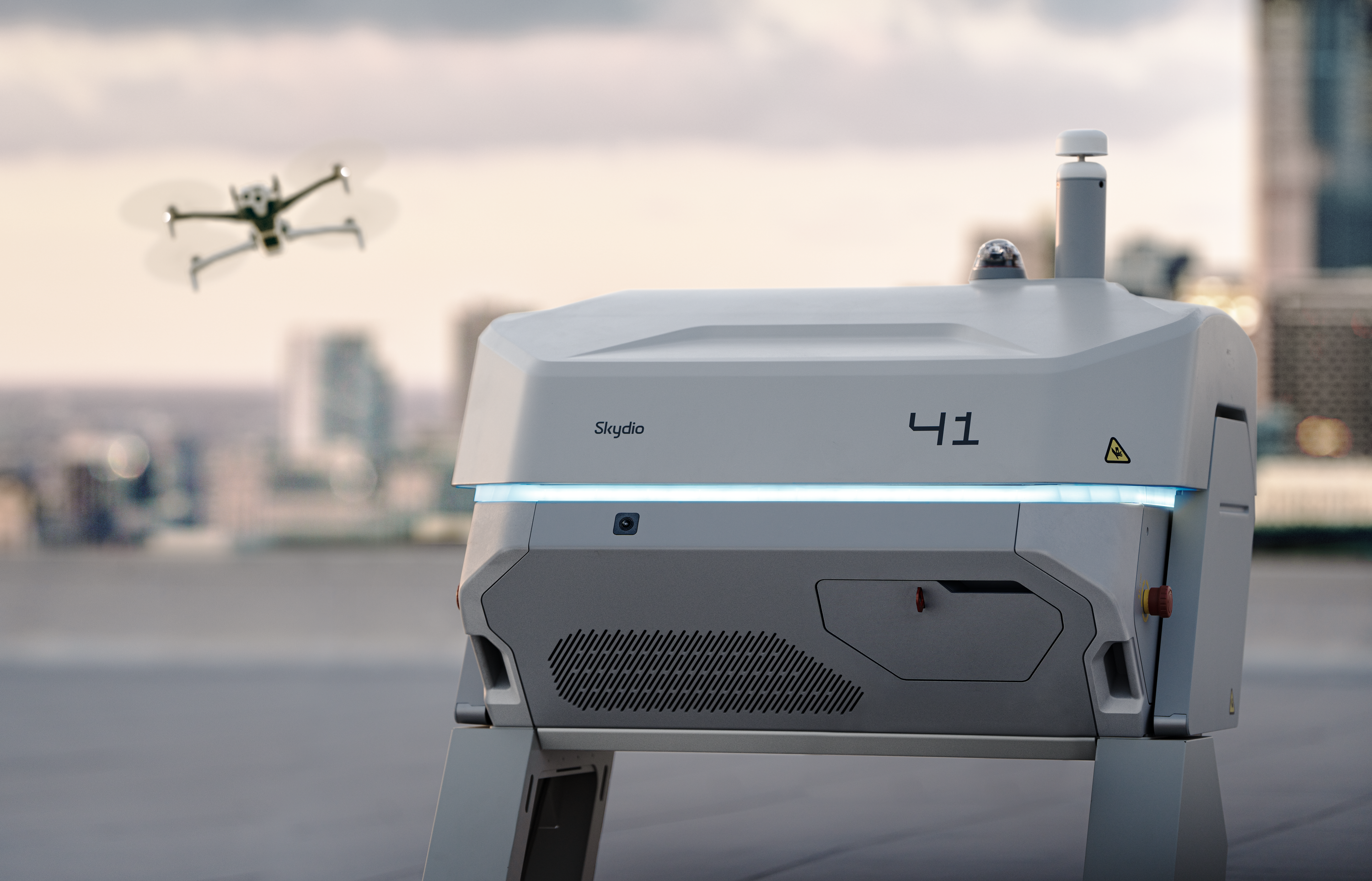
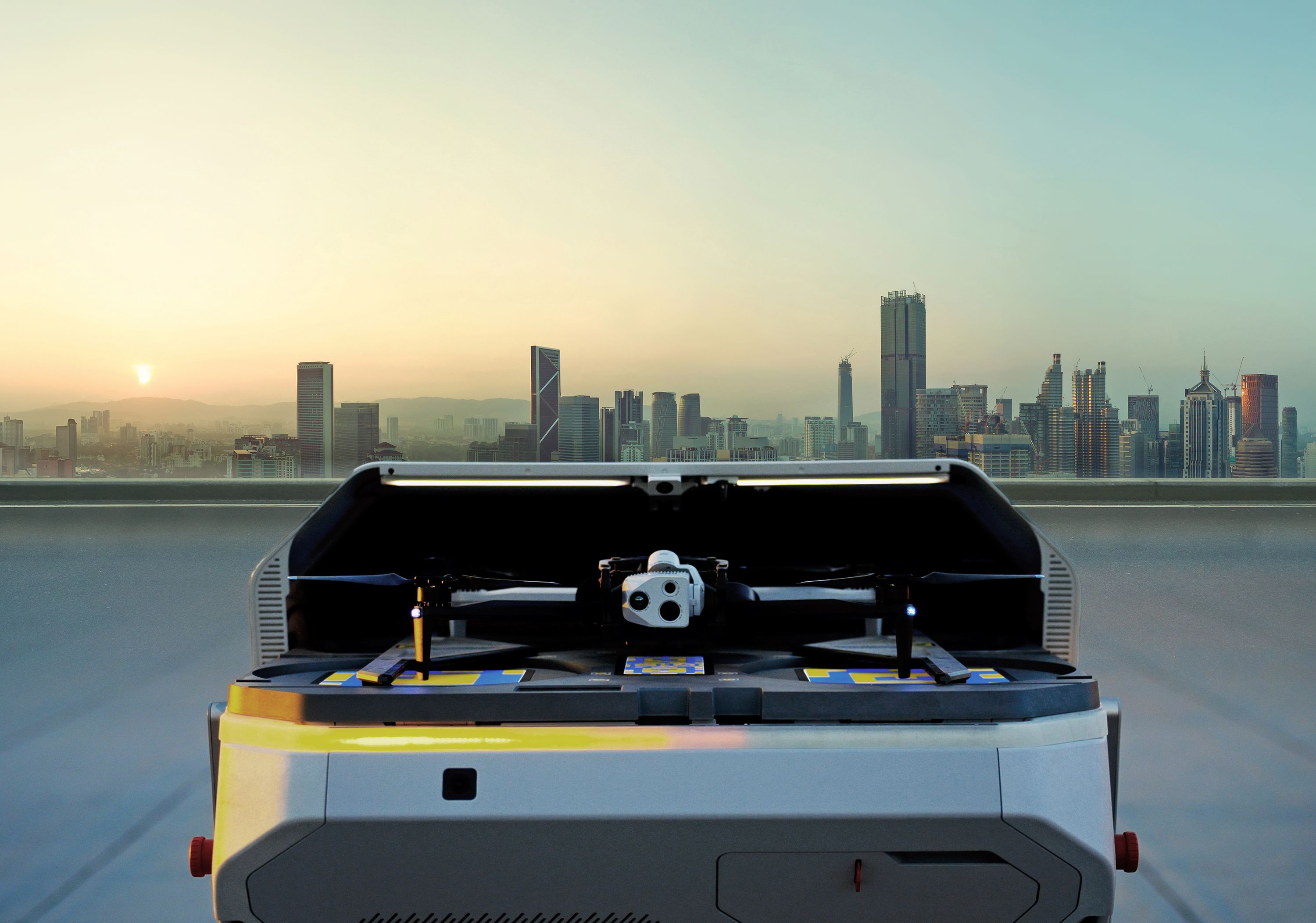
The fundamental purpose of DFR is to respond to a request for help, providing intelligence to first responders. Used by law enforcement and fire service, agency-owned drones are pre-positioned in network-connected docking stations within the community. When a Call for Service (Americans call 911 approximately 250 million times every year) comes in, a human drone operator launches the nearest docked drone and flies it to the scene of the incident.
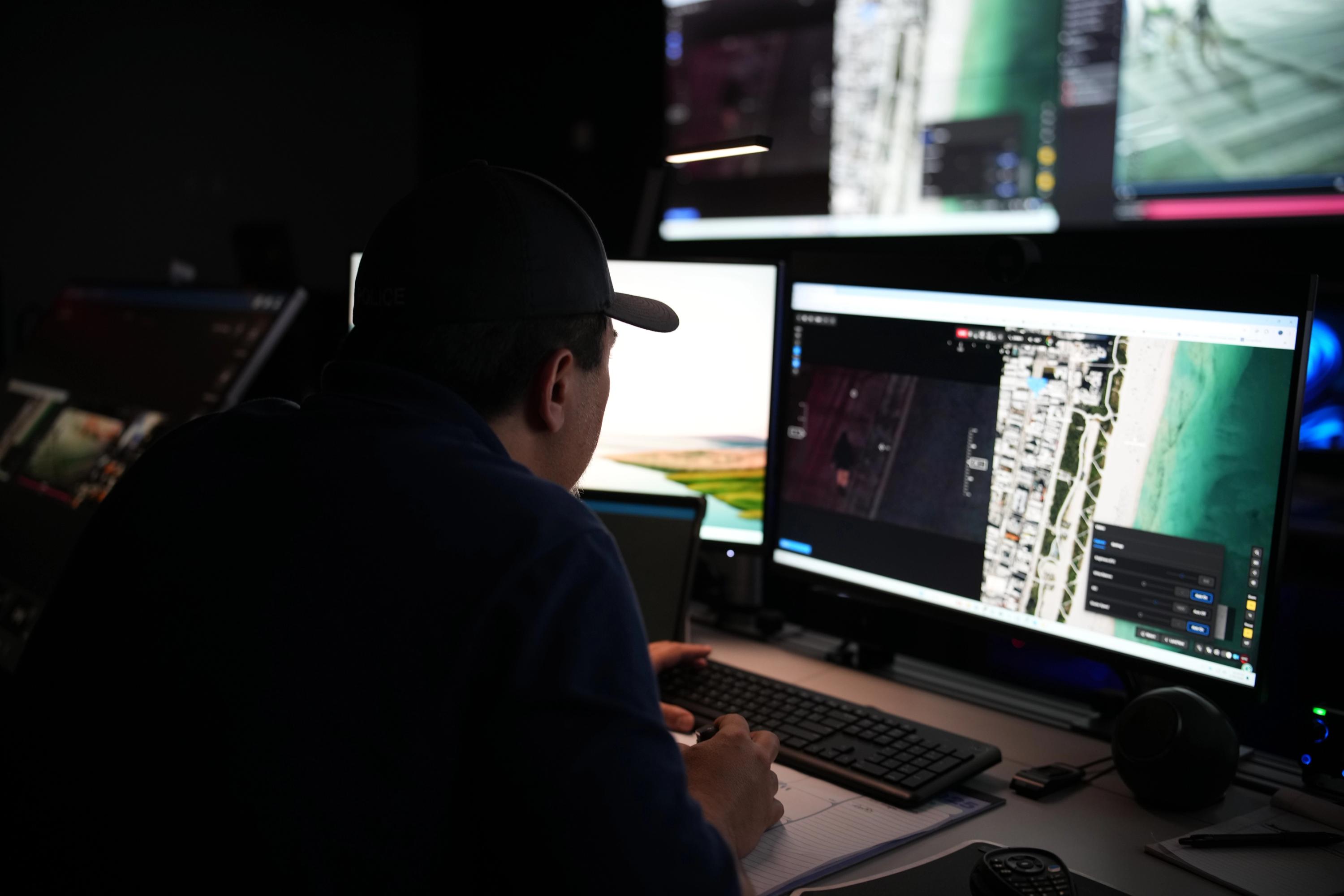
The drone’s live feed can be shared with first responders en route and command staff, allowing for rapid development of a response strategy using the video intelligence to make a safer and more effective decision. While on scene, DFR also provides the added benefit of documenting everything the officers do. Once the incident is resolved, or the drone is no longer needed, the human operator flies it back to its docking station, and the video file is uploaded into a secure digital evidence management system alongside body camera footage and other digital files, and deleted within the Skydio solution. Agencies typically choose the number of DFR drones based on the volume of Calls for Service they receive annually. Most cities and counties have less than 10 of these DFR drones today.
Skydio Drone as First Responder has many parallels to Body Worn Cameras. Both must be activated by a real, accountable person before any video capture. Both are stored as evidence by police departments. Both are subject to applicable state and local public-records laws. And both help ensure public accountability and transparency because they document actions and outcomes on the ground. The difference is that in DFR, situational awareness can be achieved with real-time intelligence before a first responder arrives and therefore influence outcomes for the better. More on this here: Transparency Is Foundational to Drone-as-First-Responder Success.
What is the difference between DFR and ALPR?
A brief overview of the Flock ALPR network.
Flock has built a nationwide ALPR “dynamic surveillance network” connecting public safety agencies, private businesses, and homeowners associations. Flock cameras are always-on, capturing an image and recording data on every single vehicle or person that passes in front of them, and feeding it into the FlockOS platform. Flock uses this data to create a searchable database of each license plate, the make, model, and color of the vehicle, and any identifying marks (such as bumper stickers and dents). Places with large numbers of cameras generate millions of database records a month.
Flock stores images for as long as the participating agency allows, with the default recently set to 7 days. City and county deployments range from 10s to 1000s of cameras.
The Flock network is designed for jurisdictions to share data with agencies across the country, allowing an agency in one state to stop a suspected stolen vehicle even if it crosses state lines into another. This includes both custom “hot-listing”, where an agency puts a plate into the database to receive an alert whenever the plate drives past a Flock ALPR camera, or taps into federal systems that aggregate criminal data. Local police agencies receive alerts of hot-list matches in their jurisdiction and can choose to act on that information.
Flock FreeForm search allows someone with access to the database to query identifying information such as gender, clothing type and color. Flock Nova combines multiple databases, allowing the linking of ALPR data with other kinds of identifying information, to enable a user’s ability to surveil a target’s movements wherever they travel in the Flock network.
Flock ALPR is akin to a fixed security camera, continuously monitoring everything in view. Unlike security cameras, which are affixed to private buildings, the Flock cameras are installed on poles at public intersections throughout a city. And like home systems such as Ring and Nest, Flock uses AI to identify and tag objects that can be searched for after the fact.
Highlight of Key Differences
| Flock ALPR Network | Skydio Drone as First Responder (DFR) | |
|---|---|---|
| When is data captured by the camera? | Flock collects data all day, every day, for every single one of its cameras across the U.S. Cameras are designed to be always on. | Skydio DFR only collects data when a named public safety pilot launches a drone. Pilots will only launch a drone for an authorized police, fire, or EMS mission, such as responding to a 911 call, and will only activate video recording when approved by policy. |
| What is captured by the camera? | Flock data capture is pervasive. Every vehicle that passes by is recorded regardless of whether it is involved in criminal activity. | DFR missions are launched to respond to a specific call at a specific place, with protections to minimize any incidental observation unrelated to the call for service. Agencies may either choose not to record while in transit to and from the call to further reduce capture of unrelated media, or record the entire flight to maximize accountability for what the pilot chose to observe. |
| Do police or other public safety agencies control when images and videos are captured? | Flock cameras are always recording regardless of what the police are doing. | A DFR flight only happens when a named, accountable person employed by the public safety agency launches a pre-approved police, fire, or EMS mission. Pre-approved missions are defined by local agency policy, but are generally regarded as:
|
| What happens to the images and videos? | ALPR data is always stored on servers controlled by Flock. | Skydio DFR is designed to automatically and securely upload media to an agency’s digital evidence management system in the same way that Body Worn Camera media is handled. Once uploaded, the Skydio drone and system deletes its copy of the media, and the agency controls access to the digital evidence. |
| Is 3rd party sharing of data built into the solution? | Yes. Flock’s value is based on sharing public safety agencies' data with other federal, state, and local agencies. | No. There is no mechanism for third parties (including other public safety agencies) to request access to drone footage or data or to set up automatic data sharing out of state. |
| Can somebody search across historical images and videos for people or vehicles using identifying information? | Flock uses AI to tag identifying information (vehicle type or the color of a shirt), which can be used to search for people, vehicles, and license plates throughout a city, across cities, and across states for as long as the footage exists. | No. Skydio DFR does not store any data to track or search for any person or vehicle across flights, nor is there a mechanism to perform any search within and across video files. |
| What is publicly disclosed about usage of the solution? | Flock offers an optional transparency portal where agencies can post copies of their policies, aggregate data on how many cameras they have and how many plates they have read, and who the agency is sharing data with. This enables agencies to inform the public about their policies, usage metrics, how many cameras they have, and who has been granted data-sharing access. It does not show where Flock cameras are placed nor any specific information that would allow for external auditing of what data has been captured. | Skydio DFR offers agencies the ability to publish a transparency portal that details each flight, the path, the direction of the camera, the date and time of flight, and the purpose of the flight, allowing community members to keep up to date on every drone flight. Each community is different, and agencies get to configure the portal to post information specific to their own policies. |
| Who owns the solution? | Flock ALPR cameras are owned, installed, serviced, and controlled by Flock. Agencies must subscribe to Flock for access to the Flock ALPR network as a service. Access is leased to the participating customer. | Skydio DFR drones and docking stations are owned by, and under the direct control of, the agency operating them. |
| Can drones read license plates? | Flock resells drones made by DJI and has stated publicly that their “drones are now equipped with flying ALPR cameras.” | Skydio DFR has no ALPR capabilities at all. On its website, Skydio uses license plates as an example of the level of camera resolution available at various distances, but only a human operator can read the license plate. There is no automated capture of a license plate. |
| Flock ALPR Network | Skydio Drone as First Responder (DFR) | |
|---|---|---|
| When is data captured by the camera? | Flock collects data all day, every day, for every single one of its cameras across the U.S. Cameras are designed to be always on. | Skydio DFR only collects data when a named public safety pilot launches a drone. Pilots will only launch a drone for an authorized police, fire, or EMS mission, such as responding to a 911 call, and will only activate video recording when approved by policy. |
| What is captured by the camera? | Flock data capture is pervasive. Every vehicle that passes by is recorded regardless of whether it is involved in criminal activity. | DFR missions are launched to respond to a specific call at a specific place, with protections to minimize any incidental observation unrelated to the call for service. Agencies may either choose not to record while in transit to and from the call to further reduce capture of unrelated media, or record the entire flight to maximize accountability for what the pilot chose to observe. |
| Do police or other public safety agencies control when images and videos are captured? | Flock cameras are always recording regardless of what the police are doing. | A DFR flight only happens when a named, accountable person employed by the public safety agency launches a pre-approved police, fire, or EMS mission. Pre-approved missions are defined by local agency policy, but are generally regarded as:
|
| What happens to the images and videos? | ALPR data is always stored on servers controlled by Flock. | Skydio DFR is designed to automatically and securely upload media to an agency’s digital evidence management system in the same way that Body Worn Camera media is handled. Once uploaded, the Skydio drone and system deletes its copy of the media, and the agency controls access to the digital evidence. |
| Is 3rd party sharing of data built into the solution? | Yes. Flock’s value is based on sharing public safety agencies' data with other federal, state, and local agencies. | No. There is no mechanism for third parties (including other public safety agencies) to request access to drone footage or data or to set up automatic data sharing out of state. |
| Can somebody search across historical images and videos for people or vehicles using identifying information? | Flock uses AI to tag identifying information (vehicle type or the color of a shirt), which can be used to search for people, vehicles, and license plates throughout a city, across cities, and across states for as long as the footage exists. | No. Skydio DFR does not store any data to track or search for any person or vehicle across flights, nor is there a mechanism to perform any search within and across video files. |
| What is publicly disclosed about usage of the solution? | Flock offers an optional transparency portal where agencies can post copies of their policies, aggregate data on how many cameras they have and how many plates they have read, and who the agency is sharing data with. This enables agencies to inform the public about their policies, usage metrics, how many cameras they have, and who has been granted data-sharing access. It does not show where Flock cameras are placed nor any specific information that would allow for external auditing of what data has been captured. | Skydio DFR offers agencies the ability to publish a transparency portal that details each flight, the path, the direction of the camera, the date and time of flight, and the purpose of the flight, allowing community members to keep up to date on every drone flight. Each community is different, and agencies get to configure the portal to post information specific to their own policies. |
| Who owns the solution? | Flock ALPR cameras are owned, installed, serviced, and controlled by Flock. Agencies must subscribe to Flock for access to the Flock ALPR network as a service. Access is leased to the participating customer. | Skydio DFR drones and docking stations are owned by, and under the direct control of, the agency operating them. |
| Can drones read license plates? | Flock resells drones made by DJI and has stated publicly that their “drones are now equipped with flying ALPR cameras.” | Skydio DFR has no ALPR capabilities at all. On its website, Skydio uses license plates as an example of the level of camera resolution available at various distances, but only a human operator can read the license plate. There is no automated capture of a license plate. |
Ultimately, Flock ALPR and Skydio DFR are quite different technologies in their purpose, their use, their cross-agency sharing privileges, and scope of what and when they capture valuable data.
*Note: We compare Flock’s version of ALPR because it is a market leader and has been very visible in the news lately. The details provided about how Flock’s ALPR works reflect Skydio’s current understanding but may not be 100% accurate when you read this post, including because Flock’s practices may change.