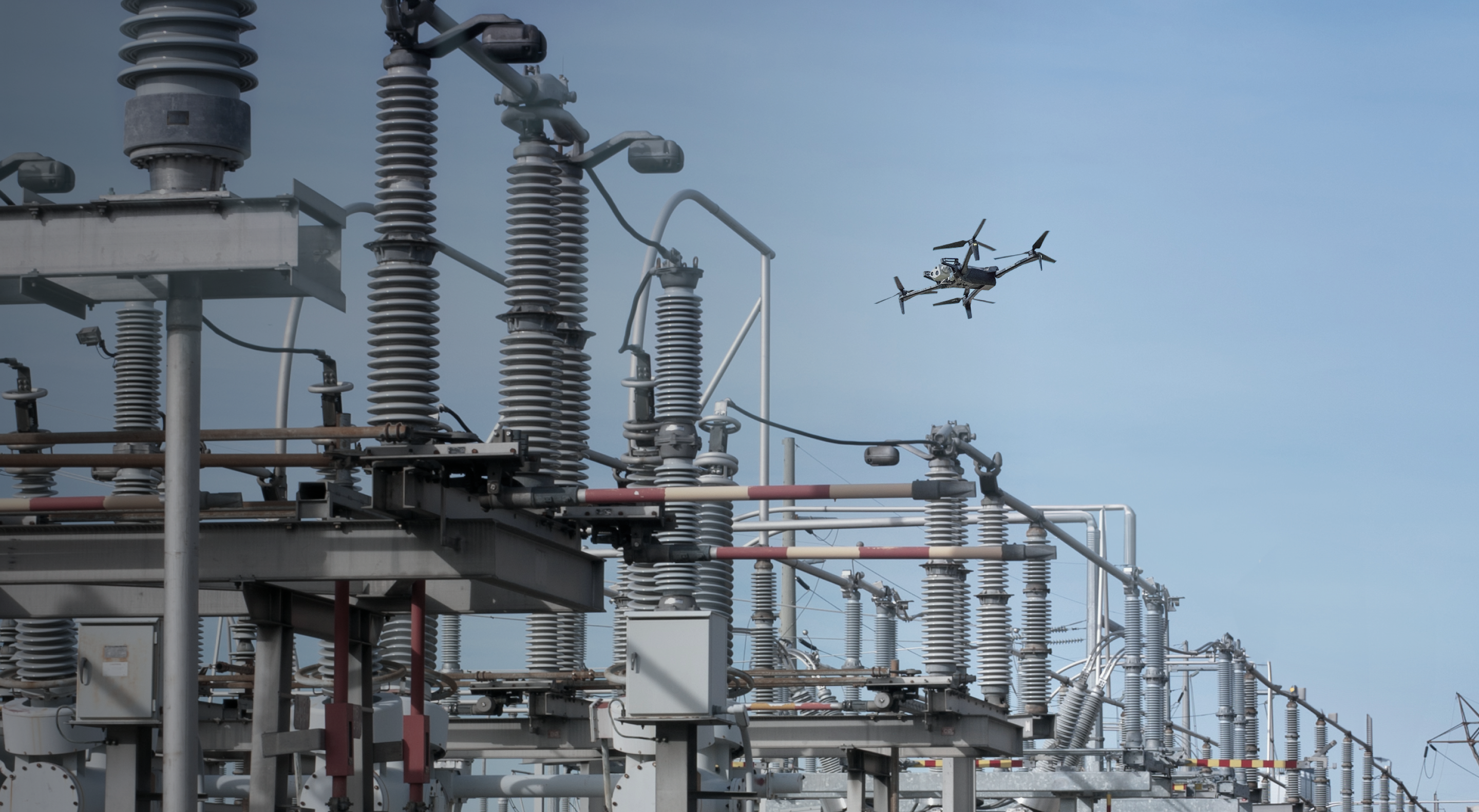

How U.S. Border Patrol is improving safety with security drones
Hear Quinn Palmer (CBP) discuss the diverse uses of small UAS in U.S. border patrol security during a panel at UAS Innovation Day in Washington D.C. Read the full blog post on how the U.S. Border Patrol is improving safety with security drones. Read the post.
- The Border Patrol's executive agent for all of CBP, it's a component within
- CBP, a little bit about CBP,
- Customs and Border Protection. Um, one of the components,
- we're the executive agent
- for all of CBP. We're the most prolific user within the
- agency
- of small unmanned aircraft systems.
- Uh, we have about 500, uh, assets operationalized throughout
- the United States. We have about 2,000 operators trained,
- certified.
- Um, and CBP, responsible for border security, but also,
- uh, the, the regulating and facilitating, uh, legitimate trade and
- travel into the United States, so all air, sea, and airports
- of entry.
- So we, our operational domain, if you will, our,
- our environments cover the
- gamut of the continental United States,
- uh, 13,000 miles of
- linear land border, uh, double that in coastal maritime
- environments. Um,
- we piloted, uh, small UAS as an
- agency
- tin- and tacitly in '15, but really, um, first couple of, of,
- uh, assets were, were procured and, and testing began in earnest in
- '17,
- uh, obviously, uh, GOTS systems, um, in partnership with some of
- our DoD, uh, partners.
- Um, and we've since grown, so there was, it went from five, you know, five years
- ago to 500, uh, and we're, we're nearing our full operational
- capability in terms of inventory size,
- um, finding every day, you know, different use cases, mission sets.
- We base our full operational capability based on, it's an acquisition plan,
- it's acquisition plan language, but it's based on the operational
- requirement
- as defined by the different field locations. Okay. And that fluctuates.
- Mm-hmm.
- And, uh, as the capability fluctuates, it'll, it'll, it'll, you know,
- translate into a different assortment of what and where
- needs to be deployed when. Right. The ISR, uh, is, is the bread and butter.
- Um, obviously the Border Patrol being the mo-
- more prolific user, uh, within CBP,
- um, we have about three drones flying at any
- minute of any day.
- Mm-hmm. So, and that's, it's, it doesn't sound like much, but
- when you think about
- most of our drones only fly for 30 minutes, it's pretty...
- We're, we're putting some mileage on them.
- Um, and that is the ISR mission, the, the, the detection, um,
- classification, identification of
- folks coming illegally into the United States or, or, or smuggling contraband to
- the United States. But, uh, we also have a significant trade mission
- and we
- see, um, utility in the future, uh, you know, with, uh,
- different type of, uh, sensor arrays that maybe become isotope or radiation
- sniffers. Uh, we're utilizing it for natural disasters,
- obviously providing
- situational awareness as a response agency, mapping.
- Um, you know, we make better training products for
- drones. Yeah.
- So we're, we're, we're, we've, we've got them, uh, at every niche
- and corner
- within the agency, and again, they're, they're being developed every day.
- The time savings and the safety associated with our tower climbers [laughs] -
- Right, right ... uh, it's just, it's, it's become a very significant piece of,
- um,
- fu- potential future investments. Yeah.
- I, I see the, the one to many, um, really is
- requiring more of a system of systems- Mm-hmm ...
- uh, infrastructure, which, which we currently do not, um,
- field, uh, for various reasons. Um, but, uh, the one-to-one
- works for us,
- and I was listening to the conversation, uh, hard act to follow by the way, uh, the
- gentleman you had up here just a minute ago.
- Um, I was listening and he made a very salient point in
- that I would, I would
- foot stomp, um,
- so if I buy a million, million-dollar system
- that requires a million-dollar piece
- of infrastructure to be able to fly BVLOS,
- first of all,
- we're domestic, so we have a completely different set of
- issues and constraints and
- guardrails than in, in military theater of operations.
- And a completely different- Uh- ... number of zeros on the budgets. Yeah.
- Yeah.
- So versus I might get the same coverage, you know, at one
- fiftieth the cost with the smalls. Mm-hmm.
- Uh, it, it is more manpower, uh, intensive,
- so I need more operators to fly more
- smalls obviously. However, I've got people out there anyway-
- Mm-hmm ... uh, in those locations.
- Um, they're coordinating with
- the guy or the girl bes- to the right or to their left.
- There's, there's magic that happens,
- um, when the team is, is,
- is, um, integrated to that extent, you know, and, and you're offering up this
- new capability. We use sUAS not necessarily as a detection
- capability, I know I
- mentioned that earlier, but it's more of a response capability.
- Mm-hmm. Mm-hmm.
- So we've got a detection,
- uh, we've got a, a sensor alert from, from some- somewhere,
- uh, in, in our, our laydown,
- and we're responding. We're using that as, uh, overwatch.
- We're using our ISR basically as overwatch and for officer safety reasons.
- One thing that we learned, um, very quickly,
- um, obviously the impetus behind,
- uh, uh, our, our, our engagement with the small UAS, uh,
- pilot
- program was to, to kind of cover that delta that manned aviation was not
- able to cover, that it can't be everywhere.
- There just aren't enough manned aviation assets or pilots and
- so in, in doing that, we also very quickly discovered, wow,
- they're
- in, in, in very specific situations, they're so much more
- effective because of the covertness, the nature of the drone themselves.
- I mean, you hear a helicopter coming five miles
- away.
- If you're trying to get away from the authorities, you're gonna begin
- your,
- you know, your, your plan to escape a lot sooner.
- Uh, but when you're being surveilled and we get to, uh, initiate, if you will,
- that
- first contact, we, we, you know, sustain that initiative, not only is it
- safer for our, our folks- Mm-hmm ...
- that are potentially walking into a violent, uh, confrontation, but, um,
- if it's 20 folks, now you, you pick the time and the
- place of that first, uh, contact, and now you've, you've got that group
- wrapped up versus
- now I've, I've got to chase down six that went east and five that went west and
- six, and they- Mm-hmm ... uh, what would take five hours to, to
- locate 20 people trying to abscond from you really only takes that first
- 10 minutes of initial contact. That's an efficiency that
- translates into real dollars. Mm-hmm. Labor costs.
- Mentioned a little bit ago, you know-
- Integrating to a systems of systems, there's a cost burden associated to
- that right
- now, given the environments that we operate in.
- I mean, a lot of, uh, the capacity type infrastructure
- that we would need to
- facilitate that type of... It's just there's no commercial entry.
- Right.
- So,
- um, but also in the law enforcement, I, I...
- And so we don't wanna, we don't wanna bite I...
- bite the, the, the AI, ML elephant in one, one swallow,
- right? We need to, we need to measure, uh, and walk that in responsibly
- and conscientiously. B- From, from my perspective, and I...
- And that's what I mean by specificity.
- From a law enforcement, um, mission set,
- we, we need to do our due diligence to ensure
- that we're not incorporating bias
- into the information that we're collecting,
- which ultimately could be evidentiary.
- And, you know, we don't want to create complicated case
- law. Mm-hmm.
- So where AI can be used in our operations, I think it's gonna be,
- it's gonna be measured- Yeah ... uh, as in terms of application.
- But absolutely. I mean, it is a shiny object in the room, and,
- and man, we,
- we, we salivate over the potentials and possibilities, right?
- The threat, uh, that we're seeing and the capability,
- our adversaries across the
- border or the, the transnational narcotics
- or smuggling organizations, they're very
- well-funded, you know, and have access to all...
- everything that is conceivably sold on, on, on the internet.
- So
- very conscious of that, and we see that, um, potentially whatever, you know,
- cognition engines that are running to, to provide better OPSEC or- Right ...
- um, to, to give our folks, um,
- the i- you know, the, the... So that our network of systems, right,
- has a sensor array or a capability to establish, "Oh, we-
- we're starting to be
- jammed, and it's starting to intens- intensify," or this- Mm-hmm ...
- or, or, um, "By the way, you've just, you know, been spoofed," kind of.
- Having that type of information, which we can't get right now post mishap
- or post
- accident, post mis- post incident,
- that's very important because we want to build pattern of life of our adversaries.
- It's in... That's the intelligence part- Yeah ...
- that provides us the intelligence of how to operate more effectively and
- efficiently. Mm-hmm. Best laid plans of mice and men, you know?
- As soon as the first round goes down range, it's, it's- Mm-hmm ...
- it's not really relevant. Um,
- and, and that's what, what do you want to train to?
- What do, what do you wanna
- culturalize, um, your folks to? And it should
- be... If you're gonna put them in violent
- situations, obviously you want to be
- somewhat simplistic. Mm-hmm. Mm-hmm.
- And then
- it, it... You don't want to overload. It should be... It's, it's not...
- I know it's not the, the, the purpose is, is, is, is to take some of that
- off of it. But where to go in the future, we definitely look
- towards greater integration, and so that we can use, uh, some of
- the, the benefits of autonomy- Mm-hmm ...
- to provide better health and welfare for our fleet, um,
- which is, you know, a significant increase to
- or enhancement to airspace
- safety. Yeah. Not just off- officer safety.
- Um,
- obviously
- we like better c- you know, sensor capabilities, better payloads,
- you know,
- better... The far- farther reaching camera.
- Um, we, we see, um... But, but battery, but endurance
- is, is the key. Right. Yeah. I had a guy tell me yesterday,
- as a matter of fact,
- we, we, we, we field nine different platforms as part
- of our
- deployment strategy, and we're rolling, uh, one out here this week, first
- class. And I was asking one of our seasoned, uh,
- pilots what he thought about it,
- and he's like, "I like it 'cause I can turn the camera
- backwards.
- 'Cause if my battery's getting ready to die and I need to fly home, I can still
- work the group." So he's squeezing out every half second he can.
- For us, it starts at the ground level.
- I mean, there's constraints, um, about poli...
- Technology is gonna move faster than pol- uh, policy- Right ...
- is in the United States CONUS. So that's one major difference between,
- um, uh, perhaps DOD and, and DHS.
- Um, so they're gonna take advantage of the,
- the time,
- the expedite, expedited time window in, in that regard.
- But, um,
- so we have constraints we already know we, uh, from a po- from a policy
- standpoint, from FAA standpoint.
- So
- we give that to the field, those constraints, and then
- let them tell us what they need, and then we go and, and dialogue.
- We dialogue with industry, and we, we've got a s- we've got an
- entire, um, section of our team,
- uh, dedicated to, um, making contact and keeping
- the pulse on industry. Where are they going? Mm-hmm.
- Uh, military partners, DOJ partners.
- See, but the very first thing that comes to my mind is reliability.
- I mean, if you're, if you're... If we're, we're trying to inculcate this
- capability, right, as, as something that's, that's reliable,
- that's something that
- we plan to, we train to, that we deploy with a high degree
- or level of confidence- Mm-hmm ... it's gotta be reliable.
- You know, we've gotta, we've gotta be able to be able to pair
- when it's needed to
- be paired and, and, and so on and so forth.
- The safeguard, you know, the fail-safes have to work,
- those kinds of things. Yeah.
- That's, that's... Not seeing that, uh, from a, a
- lot- Mm-hmm ... of the, the assets that are
- available in the marketplace. Um,
- some folks are doing it a lot better than others.
- Um, but that's,
- that's what we're looking at right now.
- The capability, uh, to our, to the policy is kind of
- w- where it can be. We're always looking, you know, to gain an edge there,
- obviously. But, um,
- right now we're looking for, you know, a good faith partnership with industry
- that
- provides customer service, reliability, you know, a standardized
- product- Mm-hmm ... across maybe they have multiple platforms,
- but the,
- but the, the, the, the GUI and those k- those kinds of things.
- Mm-hmm. Mm-hmm. Um, obviously, uh, Border Patrol is stretched pretty thin,
- um, not just money, but personnel.
- So that I would say that localized, that would be my
- first take on it. But, you know, the, the other part of it, to go along with the
- acquisition process, because we have, we have, uh, I'm assuming, uh, similar
- rules, uh, with the DOD in terms of like
- cybersecurity standards and vetting and,
- and what does that look like, you know? Um, I...
- We've made use of, of the DOD. Uh, thanks for any of the folks that
- are here from
- DIU. The, the SRR and the blue, uh, ones
- and, and, and then, you know, the, the tranche twos and as, as we go on, and
- potentially the greens and
- I would like to see some kind of, you know, some kind of standard,
- some kind of
- capability that the federal government, uh, provides for
- all of the stakeholders- Mm-hmm ...
- um, so that we can get, we can get through that process,
- and then which would open
- al- also potentially the door for, uh, you know,
- different types of systems. Right. Right.
- You know, that, that kind of like expands the marketplace.
- So I, I, I think that's probably gonna happen in
- the future because the demand will
- just start to... Manpower is the issue of the day. Mm-hmm. Mm-hmm.
- The manpower is the issue of the day for most all law enforcement and organizations
- throughout the country.
- Um, if we take a man out of the loop, um, then we are making progress
- theoretically, right? It's, it's,
- it's the common, common thought,
- and I would agree with that to some extent, um,
- so that the integration, uh, onto a COP or a system of systems and
- remote, uh, remote deployed, um,
- aircraft, those are all gonna be benefits
- and advantages, uh, in the
- future. Mm-hmm. Like I said, I still think we need to walk
- that egg 'cause we don't
- know, um,
- uh, what that means fr- from a law enforcement perspective on all
- those downstream, uh, second or third order effects that'll come into
- play. So, I mean, again, I, I hate to, hate to create bad case law.
- I mean, that's just, that's not, that's not good for the entirety of the
- community,
- um, or it, or, or it complicates further integration of
- AI.
- You know, we don't wanna like,
- um, misstep. You wanna, you wanna, um, you wanna,
- y- you know, kind of in- instill, um, specific behavior.
- It's, it's training, it's muscle memory.
- It's, it's a confidence that
- I have r- I have a high degree of reliability in my
- kit, that it's gonna
- perform the way I was trained to use it, and it's, it's gonna be there when I need
- it. That's why, go back to something from a pre-
- your previous talk, I think
- miniaturization actually from, um, not just the tactical standpoint,
- but just I think that's really what we're most interested in. Mm-hmm.
- 'Cause we,
- we could see this, um, being not trained as a specific
- niche capability within our agency.
- Maybe it's trained in basic training in the future, you know, at the
- General Academy, and
- we're talking about
- the behavior becomes one and a part of, uh,
- conducting the mission. But the difficulty's been executive buy-in
- to some extent,
- you know, and talking about, you know, integrating this new cap- capability and
- that old regimental sense- Yep ... going back to the previous conversation.
- That's the inve- not just the fiscal investment
- that associates, but, you know, the
- changes to potentially doctrine, but also, um,
- management, you know, management of our forces
- and the deployment and the lay down
- and what that means. So not from the field level. Yep. Nope.
- We've got nine operationalized. We've got probably about a dozen, uh,
- several test
- articles in play currently. But modularity, absolutely.
- Um,
- and, and even if there are trade-offs, the utility of, uh, of that
- modular concept will, would, would pay dividends.
- We don't really... I, we, we give a lot of,
- uh, uh, briefs and, and, uh, to foreign partners that
- come and, and, and that, you know, sit down and say, "Hey,
- how do you organize
- your, your drone operations, your drone program?"
- And the very first thing we tell
- them is,
- "Do not
- buy a drone and try and make it do what you want it to do.
- Buy a drone that's made to do what it does and use it
- that way."
- But... And that's just because there's been a
- kind of a lack of modular, but we, we
- definitely would love to be able to see that.
- I don't know that it'll ever be a one size fits all for all of the mission sets and
- categories. Mm-hmm. But, but wherever we can find that efficiency,
- absolutely.
- That's,
- you know, that's just good business.
Watch Time
15 Mins 36 Secs