Beyond the Build - Skydio X10: Autonomy
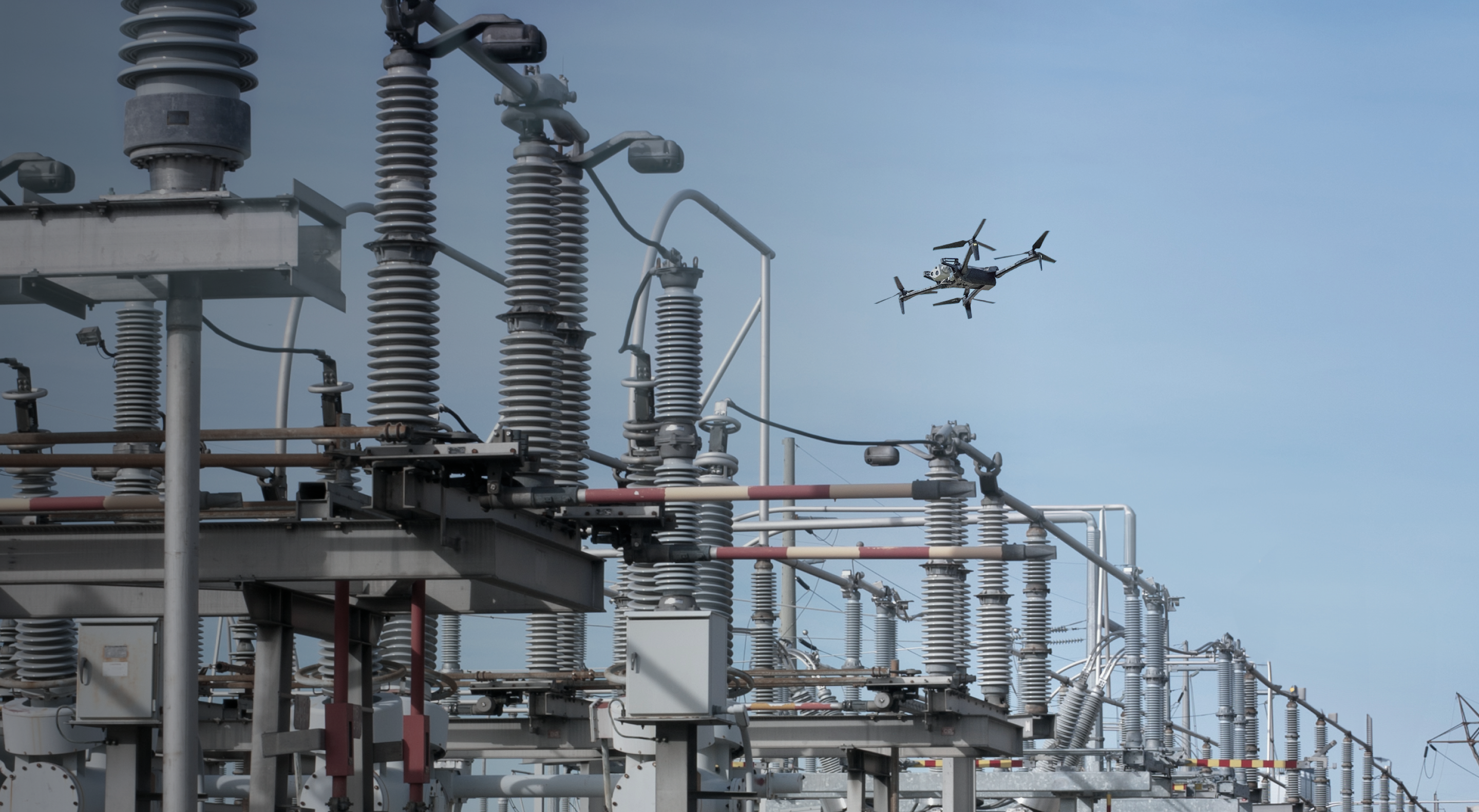
Powered by breakthrough AI, the X10 drone achieves unmatched spatial and semantic understanding of environments through 360-degree computer vision. This deep understanding allows X10 to autonomously fly complex missions, inspect infrastructure, track subjects, and capture optimal data with minimal input.
- I think the biggest obstacle that the utility industry faces in terms
- of
- implementing drones is that drones are just really hard to fly.
- When I was a company commander, uh, in the middle point,
- point of the Iraq War, our
- companies were deploying for seven months, and they would be back in the US for
- five months. And in a five-month period of time,
- you had to train up your Marines
- on some very, very complicated tasks.
- So the easier it is to fly, the easier it is to maintain,
- those all add
- up.
- Our second generation drones were the first drones that really
- were autonomous
- enough to operate in unknown, complex environments.
- Now, with our third generation of drone, we are fundamentally
- upgrading both the camera package with custom-designed
- navigation cameras, and also a compute
- package by having the NVIDIA Orin and state-of-the-art Qualcomm Snapdragon
- chips that have 10X the deep learning capability.
- With increased compute power, we're able to process these cameras at
- higher
- resolution, and then we're a- also able to see in lower light
- and higher dynamic
- range scenarios. And so we're going to be able to really
- fundamentally
- upgrade what our, our drones can do.
- As we were able to build a whole camera from scratch as a custom
- design, every single part of it was optimized for its maximum
- functionality, which is very hard to get with off-the-shelf
- components.
- We're able to go to, like, more than 2X the sensor resolution
- that we had compared
- to our previous generation. So wh- what that means is, like,
- our sensor resolution
- is so much better than what we had before that we should be able to detect and
- avoid, like, much smaller obstacles with much higher
- accuracy.
- So that resulted in what we, what I consider is a, is a
- best-in-class navigation camera.
- One of the things that we're doing is we're supporting, uh, IR or thermal
- subject detection for the very first time, building a lot of these features that
- enable operators to have a better sense of, uh, their
- surroundings and, and that's what situational awareness
- is all about.
- Right now, we're enabling the ability to autonomously
- track, uh, vehicles and people from very far
- away, um, in daytime and at night, primarily talking
- about doing that on the long-wave infrared or the thermal camera.
- Uh,
- the data collection piece is hard.
- One of the big things is that the thermal feed
- is actually registering a
- temperature signature, and so we don't have colors, for example,
- of the
- clothes that people are wearing, which are typically used by the tracking, uh,
- component. And so we could even use, for example, a
- detection-only approach and per-frame detections rather than using
- a detection
- plus tracking approach, which is computationally more efficient for
- higher
- resolution cameras.
- We demonstrated against a variety of different backgrounds that we're able
- to, um, track subjects very effectively.
- Having a really powerful camera and sensor package combined
- with much more powerful computing allows us to be able to
- build for years on top of this platform to add more and more AI
- functionality and make the drone more powerful because we have the
- foundations of the hardware.
- Ultimately, the improved autonomy makes the barrier of
- entry even
- easier because it takes the burden off of the user to have to be
- perfect. At the end of the day, you're not looking to make pilots.
- You're looking to give your existing frontline personnel the tools that they
- need and the skills that they need to do their jobs more
- efficiently and more
- safely. [gentle music]
Watch Time
3 Mins 21 Secs