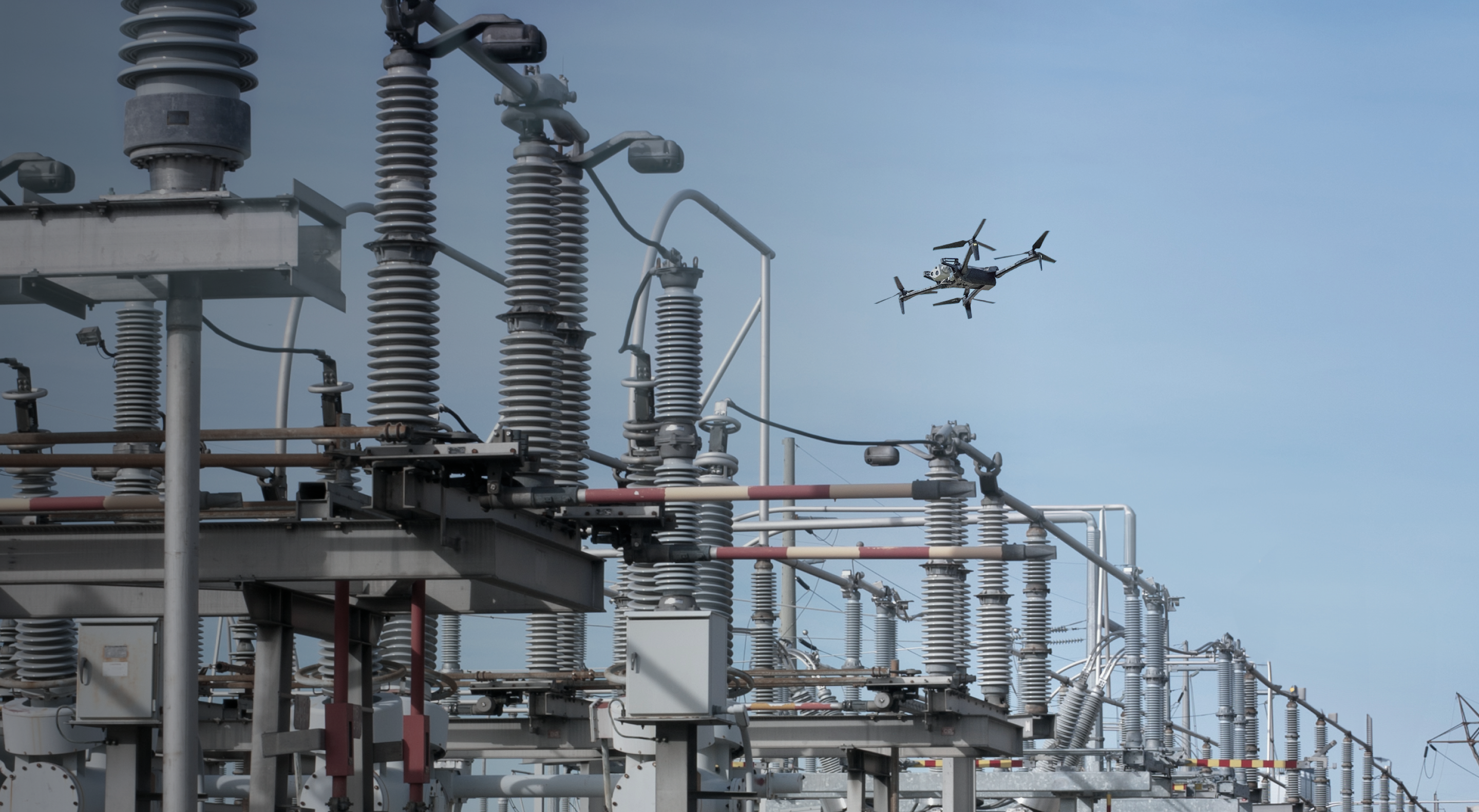

From innovation to action: How Skydio technology is transforming the home front and front lines | Skydio Ascend '24
Explore the groundbreaking ways Skydio commercial innovations are also used in defense-critical tasks. This session delves into how our customer-driven engineering process drives dual-use advancements, from radio frequency resilience to advanced visual navigation systems, and the ability to operate in austere locations. Discover how our autonomous drone technology is rugged enough to withstand all manner of battlefield conditions. We’ll also preview how Skydio is ready to meet the challenges of the Replicator Initiative with our multi-drone capabilities, designed for distributed, autonomous operations with human oversight.
- Well, thanks for joining us, everybody.
- Thanks for coming.
- I know that you've just had lunch, so we'll try and keep it upbeat
- and everything
- on track. But I really want to thank everybody for
- coming out because I think we've
- got some really interesting stuff to discuss today.
- We're gonna talk with a couple of experts in two different areas
- where we're focused on for defense and government.
- But I know that Adam mentions how Skydio is supporting defense and government in
- the keynote yesterday. Skydio is one of the only drone companies in our
- class that has dedicated people that go around the world to support our
- customers in every region. We have Skydio in
- every, uh, US Five Eye nation. We've had Skydio employees
- go from Philippines to, uh, Australia, New Zealand.
- We've had Skydio help train US forces.
- We've helped provide humanitarian aid in Haiti.
- Uh, we work with multinational forces in
- Europe, help train the UK, and
- Skydio has a presence and a dedicated interest in helping
- defense
- forces do their jobs even better around the world.
- But none of this would, wouldn't, would be possible without some incredibly
- talented, um, engineers and without having a
- dedicated staff of highly experienced prior military
- veterans that serve now at Skydio.
- And so we're honored to have two of those such people here today.
- So I wanted to embarrass them, I mean, explain a little bit of their
- backgrounds, um, today, but we'll start with Mark.
- Mark's got 27 years in the Air Force, a fighter pilot, been on 30
- missions, flown in combat. He's worked for the joint staff,
- he's worked at FEMA,
- and he's done a ton of great work, um, not only in the military, but also
- worked for M- Microsoft and Shield AI in the world of technology.
- Scale AI.
- Or Scale AI, uh, [laughs] pardon me, um, to really
- advance what we're able to do with defense forces.
- And then we have Kyle. Kyle is an engineer and a scientist,
- and his accomplishments are pretty impressive,
- so I wrote them down.
- I have to read them. But he's got a career of leading
- and developing innovative
- autonomy solutions. He founded Raytheon BBN Technologies'
- Unmanned
- Innovations Lab. He built situational awareness tools for
- first responders.
- He's was a visiting scientist at the University of Edinburgh for Artificial
- Intelligence Applications Institute.
- He's developed the Android Team Awareness Kit and the TAK server for d-
- uh, military and law enforcement.
- Developed CCAST with DARPA, which is gonna pave the way for, uh, autonomous
- collaborative teaming with drones.
- Uh, he's been a senior scientist and engineer, but one thing
- that I did want to
- mention that I think is most important, that he also plays the drums, the piano,
- and the ukulele.
- [laughs]
- So, uh, he's totally qualified in every aspect of
- anything you need to be able to
- accomplish.
- [laughs]
- So I, I wanted to kick that over first to Mark to,
- to talk maybe on
- the overview, if you could, Mark, about what we're doing to help
- defense and government advance their capabilities around the world.
- Sure. So I guess we should have brought some
- guitars and ukuleles.
- That's right.
- We could have done all this to music. Awesome. Uh,
- appreciate everyone being here.
- Thanks for your time. Uh, we're, we're here to talk about innovation, uh,
- and taking innovation to action. I don't think you can divorce
- the concept of innovation from this idea of resilience,
- and part of it is making a product that is resilient.
- Uh, and another part of it, to pick on a thread that General Ryan
- and I spoke about
- earlier today, I think it takes a resilient organization,
- uh,
- that can continue to learn and adapt and be part of this innovative engine.
- So since I'm gonna tell a little story about resilience, we should probably start
- with a definition. You can read the screen there.
- I'm a pretty simple guy. I'm a product of the Alabama Public School
- System.
- So when I think of resilience, I just think of it as the ability to take
- a
- blow and then get back up and keep operating.
- So that's my operational definition for this discussion.
- So when you're building a product that is resilient, there are a couple of
- different ways to do it, okay? You can
- get thousands of requirements, and in a hundred years, you can
- develop the Death Star, okay? And it is so
- impenetrable, okay, that you're not worried about taking a
- blow because
- it's not going to affect you. Problem with that is that there are still
- vulnerabilities, and we all know a little farm boy from
- Tatooine, uh, ended up taking one shot and taking this thing
- down. So that's one way of building resilience.
- Uh, it tends to take a lot of time, a lot of effort, and you're still not
- 100%, uh, invulnerable. The other way of doing this is
- make a whole bunch of really small things, okay,
- get them, start them out at the 80% level, and then just rapidly
- iterate over time. So I tend to fall into
- that category where I
- think that is the better option. And if you're going to do that, it
- implies that you can do things quickly.
- And again, I am a recovering fighter pilot,
- so I'm an adherent of this gentleman,
- John Boyd, who operationalized this idea of an OODA
- loop, and
- the key part of that is being able to operate at a faster pace,
- uh, than your competitor, and that's how you win.
- So, uh, I'm gonna tell a story right now, uh, about
- some resilience in action, if you will.
- And some of this is organizational, and then some of it is kind of product and
- feature-focused. So this organizational resilience story
- starts in Ukraine. Uh, in 2022, we all
- know that the Russians invaded Ukraine, and the Russi- or the
- Ukrainians, in their attempt to defend themselves,
- basically used every
- and all technologies that they could find, and they found a niche
- with small UAS.
- Uh, when the war kicked off in 2022, the donor
- community came to Skydio and they said, "We need
- everything you got. Send it over."
- There was one little problem with this.
- The drone that we had at the time, uh, was based on
- requirements from the United States Army, and this is not their fault.
- We're all slaves to this requirement system.
- Uh, but the Army was leaning forward in
- 2015-ish and
- wrote a bunch of requirements for a drone that finally got delivered in
- 2018 to 19-ish. And so those were the drones on the shelf,
- and they had a single-band radio that we were pretty
- sure was not going to operate well in Ukraine.
- But people said, "People are dying. They need these things.
- Get them over there now." So we did.
- As predicted, they didn't perform very well.
- And we at Skydio took a huge reputational hit when these
- things didn't work, even though we're like,
- "We're pretty sure these aren't gonna
- do what you need." So we could have stopped right there and
- wrung our hands and went, "Well, you know, this customer needs this.
- We're just gonna keep doing that." But we didn't, okay?
- We kept engaging, and we sent, uh...
- At current time, we've, uh, been to Ukraine roughly 30-ish times
- in, in the past two years. And over the course of that,
- it took us a little while
- to get going, we were able to develop a multiband radio.
- And now, with that radio, it performed a little bit better,
- and we realized...
- And by the way, if anyone questions whether small UAS
- are actually having a
- strategic impact,
- all you need to look at is the expense and the time and the effort the Russians
- have executed trying to deny the strategic capability to
- the, to the Ukrainians. And so the way they have tried to deny
- that
- capability is through electronic warfare, both radio jamming, uh,
- to deny the controller the capability of communicating with the drone, and
- also GPS denial, uh, or global navigation system.
- And together, that was very effective at limiting the use of
- drones in
- Ukraine. As we've developed our multiband radio,
- it's a
- software-defined capability, we realized the next step was we needed to
- create some sort of frequency hopping.
- And Kyle is gonna cover a lot of the technology, uh, and how we actually did
- that, but it was... We stayed with it, and we kept iterating, and the
- pace of that iteration kept getting faster.
- And the final result of that, I can't read this, it's in Ukrainian, uh,
- but in July of this year, uh, previously we passed a bunch of
- electronic warfare tests with the Ministry of Interior, but in July of this year,
- we passed the, uh, very, very demanding electronic warfare test for
- the
- Ministry of Defense. And by the way, I was sweating it out
- because literally this thing happened, and it started
- raining. And a lot of our technology is based on some visual navigation
- techniques,
- and I'm like, "Oh my goodness, is this gonna work?"
- And it worked flawlessly.
- So after almost 30 minutes of, uh, of flying time, the drone came back
- and landed
- roughly 20 feet away from the operator.
- So they were blown away, and when it came to the GPS
- spoofing, uh, testing that they wanted to do, we literally
- broke their test. They, they just couldn't wrap their mind
- around how our drone was actually avoiding the GPS spoofing.
- So, uh, after about 40, 40 minutes to an hour of trying to
- explain to them what happened, they finally got it, and they're like,
- "Oh my
- goodness. We've never seen this before." So a
- successful operational test, and we
- now have these drones on the front lines, uh, and the, the users are using them.
- We're trying to get more over there, uh, as fast as we can.
- But through this process, we have learned
- the Russians aren't gonna stop innovating, so we can't stop innovating.
- Uh, and getting back to this resilience
- mindset, uh, in addition
- to the 30 trips we've already made, in order for us to
- maintain this pace of innovation that we now recognize we have to do,
- we are making investments to have permanent party, full-time Skydio
- employees in the country of Ukraine.
- We've already hired a couple, and we're, uh, looking for more.
- And oh, by the way, we are working across the, uh, Ukrainian, uh,
- technology ecosystem to help integrate new sensors, new
- devices, uh, on, on the drone. So it's, uh, an incredible, uh,
- journey that we've had so far, and we're very proud of,
- of what we've done.
- And I will say it is frustrating sometimes when I read
- news articles that come out, and they're all pointing back to this
- period two years
- ago, and I just... I want to say, "Go talk to them now," okay?
- "G- g- go find these people who are actually flying
- and then talk to them today,
- because this is a fundamentally different story than the one you've gotten from two
- years ago." Uh, this innovation, uh, drive doesn't
- stop, uh, with Ukraine. Uh, we have worked and,
- and we're proud to have
- partnered with multiple organizations from the US Army, uh,
- to, to many other organizations to develop
- third-party payloads, whether that
- be for lethal action or, as you can see on the right,
- the picture of AATAC, which
- by the way, this guy is the father of TAC.
- He designed the whole thing. And so the ability to integrate into those
- ecosystems
- is part of this next innovation drive that we have going.
- Uh, also, what we are learning, and General Ryan and I spoke about this
- earlier
- today,
- the, the seen part of what was going on in Ukraine is the,
- the tactical ISR with the lethal action from the FPV drones,
- but there's a vast array of stuff that no one is seeing, okay?
- And this is where people are starting to use drones in innovative
- ways.
- And what you're seeing here are some real videos of 3D
- scans that a group of Russian, or excuse me, Ukrainian lawyers from
- the Office of Prosecutor General have done to do post-attack battle
- damage assessment so they can capture data that they are then using to take to the
- International Criminal Court, uh, to file war crimes charges
- against Russians. And we recently found out from the
- prosecutor general in Ukraine that there have been two
- indictments using the data that the lawyers were able to gather
- using Skydio drones. And another amazing part about this is
- there were no fleets of drone pilots, uh, going and doing this for them.
- These are the lawyers themselves taking the device and having it
- execute the 3D scan, which they can do now in minutes instead
- of the
- days it was taking them to survey before and allowed them to avoid the,
- uh, dangers of unexploded ordnance.
- Those same capabilities we're seeing being used in, uh, everything from mission
- planning, uh, to other battle damage assessment.
- And so anyway, it's been a wonderful journey.
- I don't want to take any time away from Kyle, 'cause he can actually go into the
- details about the, the technology advancements
- that we've made.
- Uh, but it's been an awesome journey so far,
- and we recognize that it's really just
- starting.
- And I, and I was, uh, remiss in introducing them by name.
- I just jumped right in to explain who they are and what they do.
- Yeah.
- But Mark Valentine leads our, uh, global government business, and
- Kyle leads our global government engineering.
- Yep.
- So, and I put this slide in here specifically
- for Kyle,
- two reasons. One is the background is the, uh-
- An echo chamber
- The, the inside of the chamber where we test
- for EW and RF
- resilience. And also, I mentioned at the outset that s- he's a
- scientist and an engineer, so he gets to qualify for both the
- elements on
- this slide. But I, I wanted to transition from Mark
- and then hand it over to you,
- Kyle. A, a lot of the things that Mark mentioned,
- we're doing amazing things for,
- uh, forward-facing troops. A lot of that comes from the benefit of being
- able to develop this technology across multiple markets.
- Um, and I know you're gonna get into a little
- bit of that, but to a lot of people
- it's magic, right? And I think you can dispel some of that.
- But I think that was an important point to inject there, is this technology
- helps a number of different industries.
- W- it just helps the defense forces in a
- great deal in their missions as well.
- So I'll turn it over to you to get into the details of how it works.
- Excellent. Yeah. Thank you, Greg, and, and thank you, Mark.
- Um, yeah, my name's Kyle Usbeck. Uh, I'll talk to you a little bit
- about maybe a level deeper technical ...
- th- not getting too deep, but, but have a little bit more detail here.
- Um, and, uh, I, I'm really lucky because, uh,
- the position that I was in, uh, when I came into Skydio, we have a
- really strong technical foundation upon which to build from, and we
- have all these wonderful primitives upon which, uh, we
- have all of the, uh, foundations that are necessary for the
- resilience that is so important. And so
- when we talk about resilience, uh, for the purposes of this
- next, uh, in next few minutes here, uh, the resilience that we're speaking of is
- really in, in two areas for RF resilience.
- It's to communications denial or degradation,
- or GNSS denial, degradation, or compromise
- via spoofing. And so Mark described those really well,
- so hopefully
- everybody understands what we mean when we're talking about resilience in
- those
- places. It's really about just being able to
- function in
- electromagnetic interference. And electromagnetic interference
- isn't something new to Skydio. This was something that we've had, uh,
- challenges with forever, and every drone company
- and every radio vendor will.
- Uh, it's a very, very difficult problem, and so we were building upon
- these types of, of, uh, foundational components,
- uh, when we started to do a little bit of work
- in Ukraine.
- And so, uh, what we did was we, we took, uh, took
- the multi-band radio, which has a, a relatively broad front end,
- about 900 MHz. It's, it's, it's significantly better than the very
- small, uh, drones, the, the very small front ends that we
- were using when we s-
- first started in Ukraine. And, uh, we added some important
- capability to that. And it's not just for military context, it
- also services all of our other customers that could, uh, that, that need that
- kind of resilience in EMI. And the, the tool that we developed is something
- called, we call dynamic channel switching.
- The idea is essentially very simple.
- When you experience interference on your comms channel, you switch
- to a different one, and both ... It, it's, there's complexity underneath the hood
- there. Both the, the air and the ground, and, and the ground radios have to switch
- and coordinate and make sure that they can still talk to each other so
- that you do
- get that connection regained, uh, uh, status at the
- bottom here. But the idea is really that when you
- have something that's resilient,
- we want to ... It will have, be more survivable ultimately.
- And that survivability makes it so that these platforms can be reused in
- cases
- where previously platforms couldn't be reused.
- They would be, uh, you know, attrited over time.
- Uh, so I wanted to show you a, a s- short video here, uh, while I
- talk about the next piece of the puzzle, which is that GNSS denial.
- Uh, this is a, a, a clip of the, uh, from,
- stitched together from all of the navigational cameras on the, uh,
- Skydio X10, uh, flying in an urban canyon.
- And so this is something that you might see in, like, a,
- a big city,
- uh, where, uh, what's happening here is that we're taking
- the depth that's being detected, uh, by all of
- the navigational cameras and computed on board the
- very capable processors on X10. And we're overlaying
- that in a type of visualization. The drone obviously doesn't visualize it,
- uh, typically, but it's something that we're showing here for the purposes
- of
- understanding what's going on. That piece is very important for you to
- understand
- because what we were doing is deve- uh, building upon that
- for something that we, uh, developed n- next, which is
- high-altitude visual, visual inertial odometry, or
- VIO. So Skydio drones have been using
- VIO, uh, for a very long time now. This isn't
- something new to Skydio.
- The big change that was important for, for this was to take
- it from a relatively low altitude and make it capable at, uh,
- order of magnitude higher altitude.
- And that makes it so that we can operate, or, or the, the Ukrainian
- operators and, and other operators, you know, uh, any Skydio
- customer really can now fly at mission, uh, m- mission
- capable altitudes. They, they don't, they're not constrained by their altitude
- as
- much. And the, uh, the graphic on the left here
- is just a great visualization of how we're doing that.
- Um, basically if you see the little green dots
- and
- lines in the navigational cameras, specifically the three on the, on the
- bottom, which are on the right-hand side of this.
- See those little green lines?
- Those are the features that we're detecting for VIO, and, uh,
- that helps us to develop localization strategy that we can fuse with
- other types of sensors on board the accelerometers, the gyroscopes,
- all the important sensors that we can, we can still rely upon in, uh,
- RF-contested environments. And those together create that
- localization, that, that, uh, red and blue and green line that you see up
- on the top. And so we leverage all of those pieces
- when we're trying
- to, uh, keep the drone,
- uh, uh, localized in the correct frame so
- that it knows where it is.
- And this is why I was super nervous when it started raining.
- [laughs]
- Standing in a field in the middle of Ukraine and it started raining, and it, it
- hacked it just fine. Nice work, Kyle.
- Thank you. Thanks. Uh, great engineers on our team.
- We're very lucky
- All right.
- There we go. And so this is, uh, uh, from, uh,
- one of those flights that, that, uh, Mark was out for.
- Uh, some of the data that we, we, uh, got back from, from, uh, these
- flights w-were very compelling, and so we thought we'd just share one of
- those
- with you today. Uh, a-and we won't go super deep on this,
- but I- I'll show you the-- highlight the, uh, the important pieces here.
- Uh, the first piece is that map view that you're seeing.
- There's, uh, some green dots on it, there's some red dots on it.
- Those green dots are f- uh, what we were reading directly off of the
- GPS unit. And what you'll see is that at some point it
- basically goes away, and that was where we were experiencing, uh,
- GNSS denial, uh, an attack essentially.
- Uh, those red dots that are there though, uh, show the
- visual inertial odometry solution that's being computed
- regardless. And then at some point again, we regain GPS,
- and what you can see is the deviation is extremely small
- there. And that means that, uh, that the engineering team did a great
- job because, uh, we can see that our, our e-
- our estimate of our state localization is...
- our state estimation, excuse me, uh, was very, very accurate.
- And so, so this was a really compelling piece.
- You can see on those graphs on the right then where exactly in the flight we
- experienced that GNSS denial. You can see kind of the, where
- the blue lines and the red lines kind of start to deviate.
- And, uh, when they, when they rejoin again later, that,
- that's showing when we
- were able to reacquire, uh, GPS signal and then show
- that we actually had done a, a really good job on the VIO segment.
- Th-the next piece to the puzzle is something that's, uh, a bit
- more mission success related, but really important for all
- of our customers is, okay, great, you can operate without GPS,
- but now what? You have a bunch of features on the drone
- that are built
- around using GPS. Put a dot on the map and fly
- to it, or try to find out what, what, uh, the center point
- of where you're looking is. Um,
- all of those things require you to at least have an estimate,
- a rough estimate of
- where you are in space.
- And so what we did next was develop a, a, a feature called Global
- Sync. And Global Sync allows a, uh,
- operator to dead reckon the position of the drone and,
- and figure out approximately the, the orientation that it's heading
- so that you can then go and use all those great GPS-driven
- features that were developed by Skydio over many, many
- years in a GNSS-denied environment.
- And so we're really excited to be able to bring that to our customers and let them
- use Skydio's amazing autonomy in the same cases that
- they've typically just been forced to fly heads down, sticks,
- throttle, and sticks.
- Another piece to the puzzle was sometimes VIO even goes out too.
- If it gets too dark or you're flying over a lack of feature
- environment,
- or if you just... the operator needs to fly high for another
- reason.
- There are just cases where it, it, that, even that can't work, and we are
- still even resilient in that case.
- Uh, and the way that we do that is to, uh, take the
- approximate heading, leveraging Glo-Global Sync, uh, to
- essentially figure out where the operator is relative to that drone's position,
- fly back towards that operator until they can regain comms
- again.
- And then on top of all of that, we've developed an external radio as
- well. And so what that does is it allows y- the operator to
- offset their operating position from the
- position that's emitting RF, receiving RF.
- You're able to put the, uh, the external radio in a position that's
- more
- conducive to having a good signal with the drone.
- And then, uh, and then it also has, uh,
- changeable antennas. So if you'd like to have a directional
- antenna face it towards
- the operator, things like... uh, towards the drone, excuse me, uh,
- you can have,
- uh, you know, a little bit better, uh, signal from that perspective.
- And all of that, uh, all of that resilience, all of those
- solutions are extremely important for survivability, but there's another type of
- survivability where we're going next.
- That, that piece is extraordinarily exciting
- because it,
- it is a bit on the cutting edge here, and that survivability
- is not necessarily survivability of the system, but rather survivability of the
- mission. Can you still accomplish your mission even
- in the face
- of attrition?
- And the way that we do that is that we've developed some, uh,
- some solutions to enable mesh mode on our
- radios on X10 Delta and, uh, and also be able
- to expose a lot of third-party, uh, integration
- protocols that you can leverage. These are things, uh, things like MAVLink,
- speaking the RASA dialect, and MISB, so that you can have, uh,
- telemetry embedded right in your video streams.
- And hopefully what, uh, hopefully some of the people that
- are here got to see
- the, uh, outstanding multi-drone, uh, demonstration that was
- happening yesterday. Uh,
- the, the piece of the-- one piece of the puzzle there was
- that we're leveraging a,
- a government-owned, uh, piece of software called CCAST.
- It's Command and Control of Aggregate Swarm Tactics.
- And that was driving a lot of those, those motion primitives that,
- that you were
- seeing there.
- Our platforms, uh, since X2 have been capable of
- working within that environment and have done so through a number of
- different
- programs, uh, through DARPA, and one that wanted to highlight
- that's from the Defense Innovation Unit or DIU called AISUM or
- AI for Small Unit Maneuver. Uh, this is a program that we've been working on
- with a lot of other, uh, companies, including Raytheon BBN, uh,
- Systems and Technology Research, and Actuon Government Solutions.
- And this program It's really aimed at looking at collaborative
- autonomy for the purposes of, uh,
- being able to increase the situation awareness of small units.
- And so I just wanted to end on a small video, uh, a short video here,
- where we show off some of the, the work that's going on under
- AI-SUM. And, uh, this is really kind of
- just showing the next generation of survivability in systems so that you
- can still work to accomplish shared objectives
- across all of those drones in a collaborative autonomy environment.
- So what you see is a, a human operator, a single operator here controlling
- multiple drones simultaneously.
- And what they're doing is, uh,
- watching a person go into a small,
- uh, a small Connex here, and now surrounding that
- so that, uh, when that person comes out, they'll autonomously go and follow
- that, that, uh, that person,
- uh, s- in a way that, that the human operator didn't have to
- issue any subsequent
- objectives. Their, their cognitive burden is still very much,
- uh,
- s- still at a very low level because the
- drones are accomplishing a lot of
- the, uh, a lot of the difficult parts all by
- themselves.
- So you can run, but you can't hide.
- That's right. [laughs] That's right.
- All right.
- All right.
- That's it. Thank you.
- Hey, uh, Tommy,
- I forgot the code. [laughs]
- 2014.
- 2014. Okay, so before we get into the next step,
- we've got some
- questions from the audience here, so let me see if we can get that going.
- You want me to hold that for you?
- No, I got it.
- Good.
- Okay.
- I got you.
- There we go.
- Got it.
- Okay. Well, let me turn it over to the audience first.
- I don't, I don't see any coming up right yet.
- [laughs]
- Um, well, before we turn it over, I, I really wanna thank both of you.
- That was a tremendous description of our technology, why we do
- it. For me, I haven't been with Skydio a great deal of
- time, but one
- thing that compelled me to join Skydio is we really are trying to help people
- solve
- complex problems and keep people safe.
- It doesn't matter whether you're in public safety or you're in public utilities or
- in defense. Those things really drive what we do,
- and it's beyond just the
- technology. It's how we can use that technology to make the world a better
- place.
- And I know that sounds cheesy, but it's true.
- So, but, uh, so I wanted to thank both of you for,
- for that discussion.
- But I wanted to see if anybody in the audience has questions
- for either one of
- these gentlemen, and we have a few minutes left
- that we can, we can take those from
- you.
- And if you would, the folks that are asking questions, we
- are streaming this, so
- we'll give Tommy time to get you the microphone and then, uh,
- that way the folks
- online can hear what you're saying as well.
- This gentleman raised his hand first, but I'll make our way to everyone.
- Good.
- Hello, Christian Burnett. Open question for anybody.
- Are you guys looking at the maritime domain at all because of the shift and the
- focus on USINDOPACOM? I understand there'd be a lot of--
- there's a lot more
- challenges in the maritime environment with visual navigation and
- corrosion and weather and things like that.
- Yeah. So the-- uh, I'll let Kyle answer from the technical
- perspective.
- The short answer is yes. Uh, we're doing some interesting work with
- the, the US
- Navy right now for autonomous corrosion detection.
- And from a, a technical standpoint, the challenge, like you mentioned, is
- localizing on the ship. Uh, and he can describe it a lot better than I
- can, but
- we have somewhat solved that challenge by localizing,
- finding a spot on the
- ship, and then being able to navigate back to
- that.
- Now, if you're talking about, like, total open water navigation, yeah,
- that would
- be a tremendous challenge, uh, and is one that, uh, I don't think
- we have solved yet. Is that right, Kyle?
- Yeah. Definitely still, still working on it. But open challenge,
- I think.
- Yeah.
- I, I would add one more thing to that.
- We are working with a partner that's do- working with the Canadian Royal Navy, uh,
- ships in port, being able to use our three-D scan
- capability to do corrosion
- detection, help get those assets back out on the
- mission faster, but also
- extend the life of the things that cost billions of dollars to build in
- a much
- faster, more efficient way. So we've got some partners
- that work with us as well to
- do three-D scan and, and, uh, maintenance when it comes to the X10.
- Hey, guys. Creighton from, uh, ADS, your, uh, best, uh, distributor and partner.
- Um, question: When, when are we as your partners and your sales,
- uh, your sales staff gonna be able to market a
- SKU that enables us to, uh, maybe have six
- X10s and they wanna fly them in a swarm?
- I don't know. Let's talk about that one offline, Creighton.
- [laughs]
- It, it works right now. We, we have to SKUitize it, and then,
- then we'll work
- with you.
- Uh, thanks. Great presentation. Mick Ryan, Australia.
- Um, in the multi-drone operation space-
- There we go.
- Um, you know, i- in the military, when you look at span of
- control, you look at an individual can control five
- to seven people for cognitive
- and other reasons. When you're under stress,
- it's probably less.
- But when you're controlling multiple drones, is there a
- theoretical boundary that's similar to that span of control,
- or does it bust that whole span of control kind
- of ethos that we've used for a very long time?
- Yeah. If-- Can I take this one?
- Yeah, go for it.
- Thank you. Yeah. Um, excellent question.
- Uh, I think there's-- this is still somewhat of an open research
- question.
- Uh, we're really lucky to have, uh, had a little bit of experience
- working, uh, with the DARPA Offset team.
- Uh, and, and, uh, so Shane Clark, who's, who's, uh, part of our,
- our team, our core team here, uh, was PI on one of the
- DARPA Offset programs where we were looking at controlling, uh,
- relatively
- large numbers of, of robots simultaneously from a
- single human operator, and those numbers exceeded a hundred into
- the hundred and
- fifty, even higher at times. Um, and our-- we
- have some collaborators who were looking at this exact thing.
- How, how-- what's the cognitive burden like on
- that type of, uh, in that type of
- situation? And what we found was that, uh, that it, it is
- capable of being done with a level of pre-planning, but it takes a
- bit of pre-planning, a little bit more than you might expect
- if you're kind of
- leading a squad of, of people potentially.
- And General Lyon, I, I, let me jump on this,
- 'cause I think there's a
- psychology issue with this as well.
- Uh, the rate at which humans will adopt this technology I
- think will be
- proportional to their trust in the vehicles.
- 'Cause what I have seen so far is people are
- comfortable with the number of videos that they can s- put on a screen,
- and maybe
- that's four or maybe that's eight.
- But if there are other things happening that they can't see the video for, their
- trust in that is, is much lower. And so therefore, I've seen,
- like, artificial limits put on this just based
- on things like screen real estate,
- et cetera. My thesis is, over time, as humans develop more trust
- in these capabilities, they will be more comfortable letting them
- do their thing
- without having to see that video on their screen,
- and that's when we will get to
- more of the technology limits rather than our kinda human cognition limits.
- And then I have a, a few questions now.
- They're coming in from online like hotcakes.
- [laughs]
- Excellent.
- So, um,
- there's a lot of them that are technical-based questions,
- but one I think maybe it,
- it's just a clarification question.
- So one of them was talking about GS, uh, GPS denied, which is
- fine, but GPS degraded or GPS spoofed.
- And they're trying to... The question is basically how do we model that
- behavior to determine the difference between the two?
- Is it just straight-out denied, are we getting the dirty signal?
- How do we, how do we handle that with our resilience?
- Yeah. So, uh, the, the short answer is, is
- that there's a little, a little bit of magic in that,
- that algorithm.
- Uh, but I can... At a high level, the idea is essentially
- that, uh, at, at the first sign of any kinds of
- problems, we just
- shut the GPS off 'cause it works great without GPS, so there's no real need for
- it.
- Yep.
- Hopefully that answered the question for the, that human.
- Well, I didn't get a big thumbs down-
- Yeah. Oh, good.
- So we're good.
- Excellent.
- Nailed it.
- Any other questions in the room? We have a couple more from online,
- but I wanted to
- make sure we're, we're giving good due time to everybody
- here.
- All right. So let me throw you another one here.
- Um, one, it's really just asking about VIO.
- Obviously we ...
- uh, visual cameras, but what about at night
- or using thermal or in bad
- weather?
- What's the type of, uh, plan for that when it comes to VIO?
- Yeah. That's, that's an excellent question because VIO
- as, as, as
- the question alludes to, does not work very well
- if the cameras can't
- see features on the ground or detect features on the ground.
- And so, yeah, there's certainly work to be done still.
- Uh, we, we know that our job's not quite over yet,
- and so we're, we're
- very fortunate that the X10 has an incredible thermal camera as well,
- and we can leverage that to some degree.
- Uh, and, and the other thing that the X10 has, which is e-
- extremely helpful in this situation, is attachment ports.
- And so, uh, there's a ability to go and extend the
- capabilities of that system even from a hardware level to be able to go and, and
- add additional capability from that perspective.
- Well, this question is also a little bit related to that
- when you talk about
- attachment ports. Some of the questions and,
- and concerns that we have is what's
- the difference between the X10 and the X10E and the X10D?
- And so this question is about do we have the same level of
- capabilities
- between the X10 and the X10D when it comes to GNS,
- visual, uh, odometry? Are those two symbolic of
- each other, or is there some differences?
- Yeah. There are a couple, a couple similarities,
- a couple differences here.
- Uh, the X10 Delta has the multi-band radio.
- That's the one for which, uh, dynamic channel switching has been
- developed.
- And so, uh, the, the, uh, X10 commercial is not going to
- have that same capability at least right now.
- Um, but for the GNSS, uh, pieces, the,
- uh, visual inertial odometry has been and always will be [laughs] as far
- as we're concerned running on that, on, on X10, a- all X10s, both
- X10 and X10D.
- All right.
- Do you have any?
- Nope. That's 100% right.
- Nailed it. [laughs]
- All right. Well, any other questions from in the room? Yes,
- sir.
- I don't know if you will be willing to answer this, uh, Kyle, but, um,
- I am curious as to
- a problem that is common to all drone makers which
- are almost intractable today that you're trying to solve.
- I'd, uh, love to hear what the hard problem is
- that you're trying to solve.
- These, these weren't hard enough?
- [laughs]
- [laughs] Um, yeah. I, I think that there are some
- extremely great, uh, research challenges that we
- have right ahead of us as well as some really great just engineering challenges.
- So I kind of, I, I kind of break them down into those two.
- Um, you know, the, the, the ones that we're focused on right now are really
- around survivability and, and how we can bring
- that to the general public, because
- I think one of the things that's really important here is not
- just taking all of these great ideas and showing them off, but rather
- enabling every- everybody in this room and across the globe to be able to
- use them. So it's a little bit of a non-answer, but,
- but hopefully, uh, it
- gets to, gets to the heart of the question.
- Yeah. I, I think the biggest challenge, Dix, is
- human mind share, 'cause right now human beings
- when they think about a
- drone, they think of the one-to-one interaction,
- they think of drone pilot
- accomplishing some task. That, that method
- of thinking about drones that way fundamentally reduces the,
- the drone using population to a, a very, very small amount, and
- leaves 99% of the population who don't yet know
- that a drone is going to solve a problem that they have in the next year, the next
- two years, the next five years. That to me is the big challenge.
- Uh, and when you look at the autonomy that we have in Skydio drones,
- it fundamentally democratizes air power, uh, and
- allows not just that 1% of people to, to use an airplane to do something
- meaningful for them, but we're starting to see more
- and more people who,
- like lawyers in Ukraine, that never considered using a
- drone to solve a problem before, they are becoming effective at using it.
- And so when I look at that arc, I see a future that looks much like
- cloud computing, where there are gonna be swarms of drones out there
- and people
- will fractionally use them to help them accomplish something meaningful over time.
- It's very plain as day to me.
- It, uh, reminds me of Satya Nadella saying
- that you wanted to
- democratize the AI-
- Yeah
- ... so that everyone can have that. We have that now with ChatGPT,
- it's called.
- And you guys are trying to democratize drone operations.
- Yep
- There was a related question, and it's probably in the hard-to-do
- column, and I
- know we're still working on the technology,
- but it talks about especially when it
- comes to collaborative teaming, swarms of drones.
- Does this VIO problem-- Can they work together to solve that
- using VIO? Or how does that affect when you have multiple drones doing one
- mission
- and they have no longer have comms?
- These are great questions.
- Yeah. [laughs]
- We have awesome audience here. Um,
- yeah, this, this is a really important piece to the
- puzzle, is that
- oftentimes collaborative autonomous solutions leverage, uh, global
- position as a shared reference frame for all of the, the vehicles to
- communicate over. And so, uh, what, what's really
- important isn't that that be tied necessarily to a,
- a feature on the ground or, uh, you know, some point
- in, in space, but rather that they at least have the ability to,
- to, uh,
- reference the same co- uh, coordinate frame with each other.
- And so, uh, that allows them to be able to coordinate
- in,
- in geospatial, uh, in geospatial terms so
- that they are not, you know, in danger of running into each other,
- or they're
- working together to accomplish shared objectives in space-time.
- Oh.
- I hope that answered that question too.
- I, I think we're-- I think you're nailing it.
- You're totally nailing it.
- Do you have anything?
- No.
- Well, any other questions in the room? Uh, yes, sir.
- One more.
- Uh, how do the drones communicate with e- each other in the air in a swarm
- environment?
- Yeah. So-
- Uh, well, I think to reiterate, 'cause you, you didn't have the mic yet.
- Oh.
- For the people that might be listening online, the question is about how do
- the drones communicate with each other within that team
- environment. Deconfliction, they don't have common reference point,
- like you
- mentioned. How do they do that?
- Yeah, so if, uh, if, if you're specifically referring to the,
- the multi-drone
- experience that we were showing earlier, uh, what we're doing is having those
- drones speak directly to each other through, uh, through
- a mesh radio. And so they're capable of going directly
- to each other
- or all the way down to some centralized operator on the ground who's able to
- then, uh, you know, have a, a software agent
- capable of managing each of those drones independently.
- [clears throat]
- Can you zeroize the j- the drones? 'Cause if, God forbid,
- it falls out of the sky or something and falls into Russian hands,
- we wouldn't want them to reverse engineer your awesome technology.
- And then I have a, a good idea fairy after that.
- Okay.
- You wanna answer that?
- Yeah, sure. Appreciate the question, too.
- Um, yes, uh, security is extremely important for us, and so the,
- the
- X10D, uh, product line offers,
- uh, a component that, that allows you to encrypt,
- basically do full disk encryption across the entire drone.
- And so, uh, any of the information that it's collecting, the log data, the,
- the
- media, anything that's part of that is, uh, is encrypted so
- that if it were to fall into the wrong hands, it would basically be useless.
- Great. And then the idea-- I, I just learned about Swarm
- yesterday and learned about Perch today.
- Uh, and one of the greatest shortfalls with
- quadcopters is their on-station
- time and their endurance. So could you
- potentially take Swarm and Perch and combine
- them, and then you could have-- For example, in the video,
- that person went
- in, uh, to hide, while they could just wait twenty minutes
- and then leave 'cause everything runs out of batteries.
- Mm.
- But if you combine that with Perch, then you could potentially have
- trade-offs and reduce blink times and, and think like-- things like that.
- Just a good idea fairy, so...
- Yeah, I think that's a great point.
- Perch is certainly a way to, to improve endurance,
- but also just having,
- uh, the ability that-- to increase the number of resources at
- your disposal is
- another one. So, uh, there's a,
- a, a
- term called on-station transfer that enables us to essentially
- have a vehicle,
- uh, call back for replacement when it's getting to low battery.
- So it figures out that, "Yes, I'm, uh, I'm in-- I'm dangerously low of-- uh,
- dangerously low on battery from a perspective of being able to complete my
- mission," and it calls back to another, another drone that's capable of taking its
- spot and performing its, its objective.
- All right. Any questions left?
- Yeah.
- Yes. This is-
- Uh,
- when do we see the, uh, ability to fly in a GPS spoof
- environment with the X10 and the dock?
- So you want to repeat the question? I'll repeat the question.
- Yeah, why don't you?
- Sure, sure. So when can we expect to see
- X10 and the dock with a GPS-denied environment?
- Uh, we'll have to talk about timelines
- afterwards.
- [laughs]
- [laughs]
- Okay. Because you mentioned that, uh, the X10 already have the
- feature for basically to do the GPS only, right?
- Uh,
- so basically, you said that there, there is already a version with the X10D.
- We, we used it. Works,
- thumbs up. But the X10 doesn't have it yet.
- The-- We didn't-- There is no firmware upgrade that is out.
- The, the general, uh, the general availability release of that
- feature is coming very shortly, so I think you're gonna be
- excited pretty soon.
- Thank you.
- I think we've got time for one more. Are there any more questions?
- Can you guys just talk about battery technology, the, the roadmap ahead?
- You guys aren't battery experts. Obviously,
- you guys buy your batteries someplace
- else. But looking ahead five, ten years, if we can fly for thirty to twenty
- minutes, right? I think we all know thirty to forty-five
- minutes is a battery on an
- X10, depending on what you're doing.
- What, what does that look like five years from
- now, just with you guys as consumers
- of batteries?
- Yeah. So the question was, what are we looking at for the future of
- battery technology? And Creighton, the short answer is right now we're
- limited to
- the battery chemistry that is available.
- Uh, and that, that is a fixed amount of energy
- that you can put in so small of a
- case. Uh, and to counter or to improve range and
- endurance, uh, we're looking at multiple different
- options, everything from
- multiple batteries together. Uh, obviously, that increases weight somewhat,
- but, uh, there are some trade-offs that you can make to make that more
- valuable. Could you do a two-stage thing where you
- have multiple batteries?
- When the first one's dead, you jettison it so
- that you can now reduce your weight
- and continue so you don't have all the negative impacts of
- that additional weight.
- So we're looking at some of those things in the short term and the long term.
- To be honest, and Kyle can answer this from a technology
- perspective, but we
- are fundamentally limited based on battery chemistry right now.
- So if you wanna make a gazillion dollars, go start a company that does that, and I
- think you're gonna be in good shape. Kyle?
- Yeah, if you can make a better batter- battery, we're very excited.
- Yeah.
- Um, but yeah, we also are trying to improve our efficiency, too.
- So we're always looking at tuning our ESCs and making, making the platform
- use all that energy more efficiently.
- All right. And then we have one minute left.
- We have one question online.
- We'll end with them since they've been-
- Great
- ... so gracious to dial in as well. So the question is about being able to run
- models for object recognition, automatic tagging directly on the
- X10.
- Yeah. Um, so X- X10D and, and X10 will
- run a object detection model currently that detects humans and
- vehicles. Uh, and, and it does a, it does all of
- that on board, so you don't even have to be consuming
- that video stream
- to have, to benefit from that. If you see a person or, or
- a vehicle, that will get reported regardless of
- whether y- a human is watching
- that video stream or not. So, uh, that's, that's one really exciting
- new advancement.
- Well, I, I interpret that question as when will we allow third
- parties to put their algorithms on, on the X10?
- And the short answer is we are working on that.
- That is a feature that we're working on, and we hope to get it out as soon as
- possible.
- All right. Well, thank you everyone for joining us in the
- room and online,
- and thank you both again as well. We really appreciate it.
- Awesome.
- Thank you.
- Thank you all.
- [audience applauding]
Watch Time
45 Mins 16 Secs