Industry Stories Showcase | Skydio Ascend '24
Hear from three thought leaders as they share their knowledge and experiences about the impact of drones and sUAS in utilities, in military and defense settings, and in law enforcement.
- Good morning, good morning, good morning.
- Welcome to day two. I hope day one was, was fun.
- Was it enjoyable yesterday? [cheering] Yes? All right, great.
- [clapping] Uh, it was fantastic, and it was just wonderful.
- The weather cleared, there was lots of sunshine in the afternoon.
- Fantastic.
- So just a couple of quick hits for today. Fantastic set of programming.
- Uh, we're gonna hear from three fantastic
- thought leaders who are gonna
- share a lot of their experiences and their knowledge about the impact of
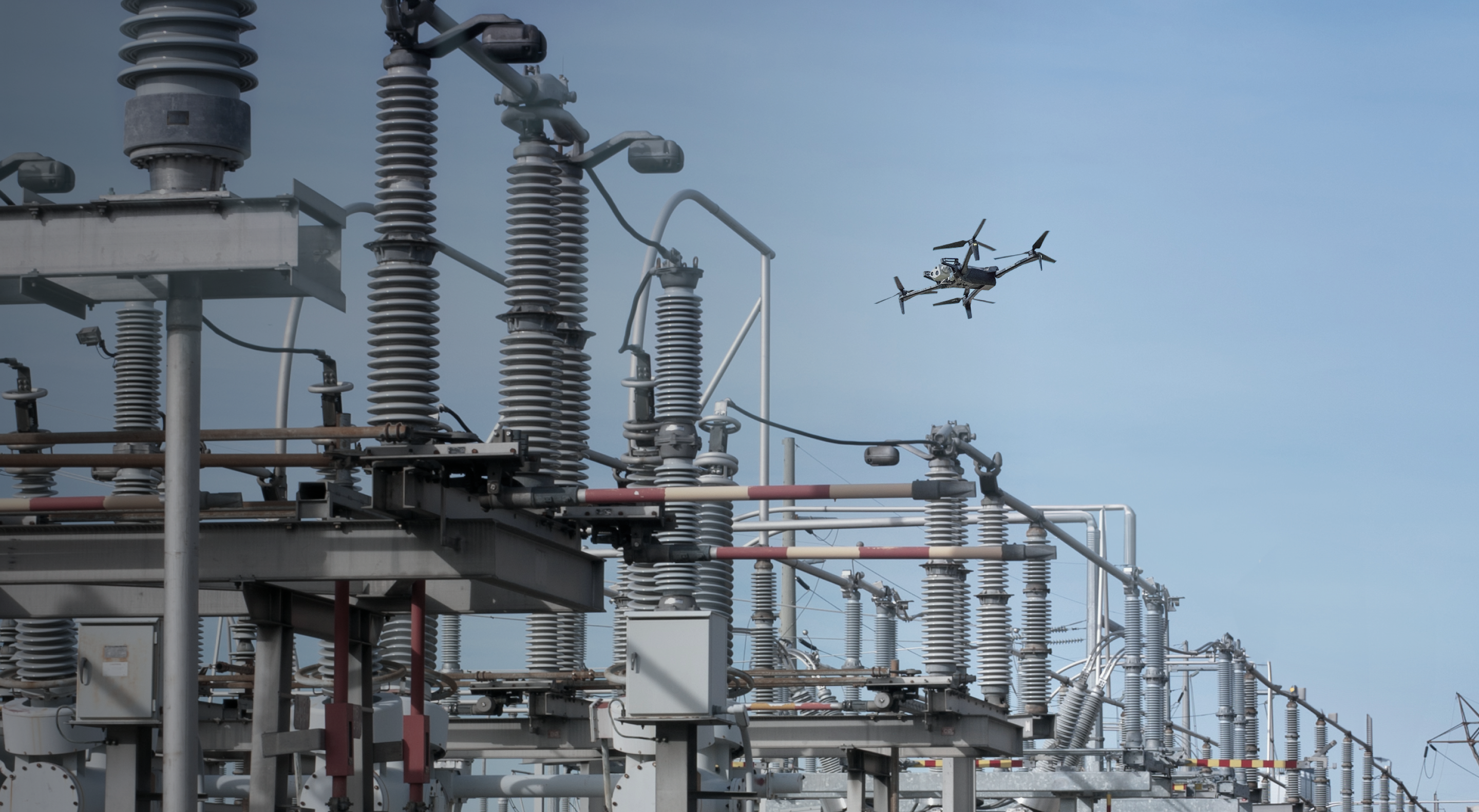
- drones and small UAS in energy utilities, in
- military and defense settings, uh, and in law enforcement.
- It's gonna be fantastic. And then we're gonna go straight into the
- aerial award
- winners, which I think is gonna be really, really exciting.
- We have some great content to share with you there.
- Uh, after this programming here, we're gonna go straight out towards the
- lawn. Uh, and we have something that we're-- that's a little new for us,
- but we're
- pretty excited about it. It's called sort of Ask the Skydio
- Experts.
- And we have a set of tables across a multiple different types of topics
- where you're gonna meet Skydio people.
- These are our-- are the people behind the scenes.
- These are the people who do the customer support.
- These are the people who, uh, w- build the technology.
- These are the people do all the testing.
- And go meet them, ask questions, provide feedback.
- Everything from, like, connectivity and technical topics,
- to regulatory topics,
- to how can we do more community engagement and community involvement to bring them
- along with our Skydio for All program. We have 12 different tables.
- I really encourage you to spend, uh, some quality time with Skydians.
- Uh, ask any hard questions. And again, more importantly, please, any
- feedback you have for us on how we can better serve you, share it.
- We wanna hear it. We're eager to hear it.
- After that, then we're gonna go lunch at The Bluff,
- where we were yesterday, and
- then we're gonna basically be in the building, uh,
- the main lobby building for the
- rest of the day. So, uh, we'll have more breakout sessions.
- And for those of you, uh, sticking around for the DFR program
- manager training,
- that's also gonna be in the main building as well.
- Uh, so thank you very much, uh, for a fantastic day
- yesterday. Super excited for today.
- So I'm gonna go ahead and kick it off and introduce Christina Park.
- She's Head of Energy Strategy here at Skydio.
- [upbeat music]
- [laughs] So awkward. [upbeat music] [clapping]
- Good morning, everyone. Really excited to be here today, and it
- is my privilege to
- introduce our special guest, Kathy Hidalgo,
- Director of Inspections at Southern
- California Edison. [upbeat music]
- [clapping]
- Good to see you.
- Kathy, thanks so much for joining us today.
- [laughs] Thanks for having me. Very excited to be here.
- Yeah, we would love to hear some of your
- background on your career experience and
- your current role at, uh, Edison.
- Sure. Um,
- I am not a utility, uh, lifer, as we like
- to say sometimes. A lot of the folks in our utility have
- been around for many
- years. Myself, I'm new to the utility.
- Um, I started out, I have a background in engineering,
- very similar to
- Christina. I started out in the aerospace
- and defense industry.
- So I did a lot of work for the Department of Defense, worked for some aerospace
- contractors, got involved in technology that way.
- Um, so I did that for about 15 years, and then I've been with Southern
- California
- Edison now for about 12 years. So if you're doing the math, I
- am 50, so.
- [laughs]
- I know some of you are out there doing the math.
- [laughs]
- We do have a lot of people good at math here at Skydio.
- [laughs]
- Um, well, Kathy, you have such a unique
- and valuable perspective as an
- executive leader at Edison. Um, and you have operational leadership over
- your drone inspection programs. So how have you seen this technology
- mature over
- the last five years?
- Yeah, thanks. So it all started, because we're in the state of California,
- it
- started with our wildfire mitigation strategy.
- Um, we had to figure out a way to, um, inspect two
- hundred thousand distribution structures and about twenty thousand transmission
- structures in a relatively short period of time.
- So we started out deploying helicopters.
- That was our, uh, that was our first and foremost thing to do.
- Um, helicopters were great, but then we said drones are better.
- [laughs]
- Um, and with the drones came, we needed to start training.
- We have a really good cadre of internal ground inspectors, so we have a
- robust inspection and maintenance program.
- So we started training our internal inspectors to now be drone
- pilots.
- Um, so that launched. We scaled that.
- But then we also said, "Hey, it's-- we can scale it beyond
- inspections." So we put drones in the hands of our fire
- investigators. We have a lot of, again,
- relating it back to our wildfire mitigation strategy, we had a lot of grid
- hardening-
- Mm
- ... resiliency efforts that we wanted to put in place,
- covered conductor, things
- like that. So we put drones in the hands of our
- planners and our
- engineers to fast-forward those technologies a little bit
- quicker.
- We also put them in the hands of our troublemen, the DFRs, as we talked about.
- We have, um, as you heard yesterday with Mark, our
- substations. So we have substations inside
- and outside the fence,
- physical security, and then with our hydro generation team
- to get to those hard-to-access areas where we've got a lot of our dams located here
- in California.
- Yeah, there's, there's a lot to consider, I think across generation transmission
- and distribution.
- Right.
- Um, can I ask, what are some of the biggest challenges
- that Southern California
- Edison is facing org-wide?
- Sure. As, as a utility here in California, um, we're
- challenging ourselves to be excellent operators of our grid.
- So with that, we're, we're focusing on our operational
- excellence with a s- a focus on safety and
- affordability. It's the safety of our teams that
- are out there working in the field
- every day, and it's the affordability of the cost
- that we pass on to our
- customers. So
- one of the things that we're trying to do
- is reduce the number of times that we
- have to visit a customer location.
- So when we first started our inspection program, we did a separate ground and
- aerial. So ground would do an inspection, then we'd do an aerial
- inspection. So that means visiting that same structure twice, and
- that's just on distribution. We did the same thing on transmission.
- So what we're trying to do is... Kind of reduce that customer impact,
- only have to visit that location once.
- And, um, I'll share a anecdotal story.
- We have, uh, ranchers here in California, and they
- like their land, and they like the privacy of their land.
- And we had one rancher, uh, tell us a story about
- within the last 10 years, they may have seen an Edison
- presence on their property doing some routine maintenance maybe
- once, maybe twice. But in the last two years,
- they've probably
- seen more Edison vehicles, at least 10-
- Hmm
- ... coming to request access to get onto their
- property to do things
- like the inspections. And we do different types of inspections.
- We have our intrusive pole, we have our aerial
- inspections, um,
- we have the grid hardening efforts, as I said.
- So the planners have to go to the field, then the engineers have to go to the
- field. We have routine maintenance, so you get visited, you know, by a, a
- routine e-crew that goes out there.
- So you get my point, where it's multiple visits.
- So we're trying to lessen, um, the negative customer experience,
- but all of that also, um, goes to our, you know, impacts our
- cost efficiency and that leads to, you know, impacts our
- affordability metric as well.
- Absolutely. And I think from my own utility
- background, I think one of the biggest
- struggles that I've seen across all utilities, whether you're an IOU, a muni,
- or
- a co-op-
- Mm-hmm
- ... is just that every year the scope seems to
- increase-
- Yes
- ... but you don't necessarily have a re- increase in your resources to go along
- with it.
- Correct. [laughs]
- Um, so to that end, the Skydio mission for utilities
- is to be the workforce
- multiplier. So, uh, given this concept, how do you think this will help
- address some of these challenges?
- So what, what I just spoke about, it just leads right into that.
- It's we wanna be able to go out there using our drones to
- capture images once-
- Right
- ... and then have that data be available for multiple use
- cases.
- So I don't have to send the planners to the field.
- I don't have to send the engineers to the field.
- We can capture that imagery of our entire infrastructure and make
- that available for multitude of use cases, you know, across
- our industry.
- Yeah. And as I recall, I feel like utilities are just so big
- and so critical that
- all the different departments are... They have a tendency to be siloed.
- Right.
- So the ability to share that data is just really, really critical.
- Yep.
- Um, so drones have been around for a decade
- or so in the utility space, and you've
- been a leader in the use of this technology in recent years.
- Can you speak about how you started the aerial program and why you're desiring to
- scale it now?
- Sure. Um, I'm gonna give a shout-out to my air ops
- team out there.
- I know they're out there. [laughs] I just can't see 'em right now.
- But, you know, air ops identified using drones as a
- technology probably
- ten years ago or so. So we identified it, and it
- was maybe some niche use cases that we were gonna use them.
- But then enter our wildfire program.
- So in the state of California, um, we had some severe
- wildfires back in 2018 and 2019. So,
- um, the example that started our program
- was we did a ground
- inspection
- of a distribution pole and... But what you couldn't
- see from the bottom was that the t- top of that crossarm was
- completely hollowed out. Environmental, woodpecker damage.
- That caused the insulator to fall. We had a wire down event.
- It spark- it sparked a small brush fire.
- So we decided, hey, we need to get eyes in the air so we can
- look at the top of our
- infrastructure as well. So that launched the program back in 2018,
- 2019. So we were able to scale that
- quickly. Well, quickly. It took us about three years to get to
- where we needed to
- be.
- That's pretty quick in the utility space.
- True. True. And then get to the point where now what
- we're
- doing today is we make one single visit to the pole.
- We do a ground and aerial inspection all at once, and then we provide that
- data, um, to make sure that our infrastructure's maintained
- appropriately.
- That's awesome. And there's been so much momentum at
- Edison amongst all the
- different departments, uh, with many different applications.
- So to that end, what are some of the primary use cases, uh,
- in which Edison
- is finding value of using drone solutions?
- Yeah. So I mentioned some a little bit earlier.
- Um, I hope all of you had a chance to hear,
- um, the
- substation, uh, talk yesterday. So Mark Christensen from our team
- is here, um, talked about the use for substation
- inspections,
- and we have the same physical security.
- We're doing substations inspections with drones inside and outside the fence.
- We've got our, um,
- I know they're out here, someone from our wildfire safety group.
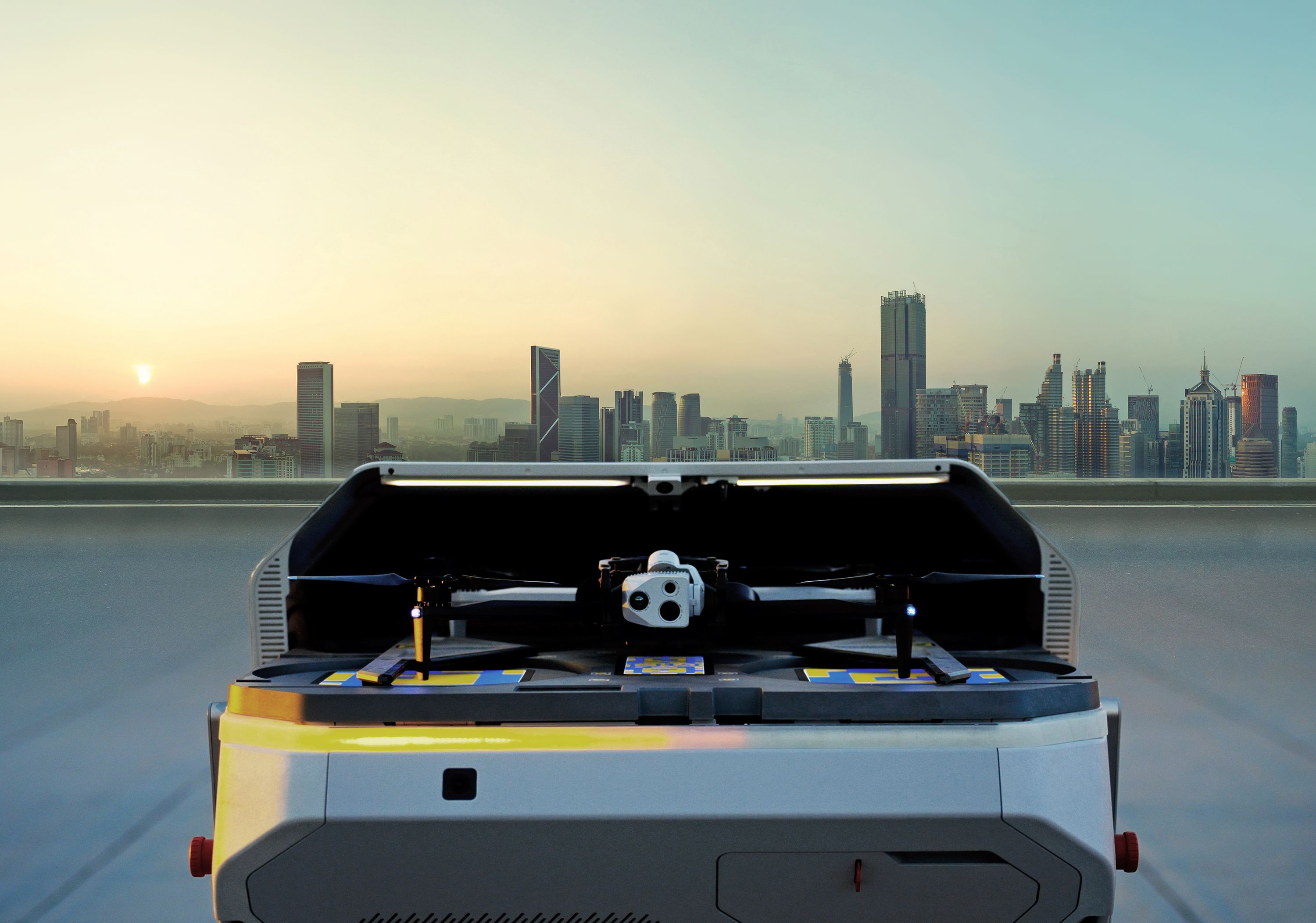
- So they're here trying to explore our drone-in-the-box solutions and what use
- cases would make sense for us. And then we've got our air ops team
- here, and they're always... If you guys haven't seen Rob Ford's shirt
- yet-
- [laughs]
- ... but he's always looking for 100-plus
- drones.
- [laughs] So and we're always exploring, like, new use
- cases and the new technologies too that we can deploy those drones
- for.
- That's great. And as you bring these drone solutions
- into your workflow across
- all of these use cases, it sounds like you're seeing stacked
- value.
- So can you tell us a little more about that?
- Yeah, sure. I, I think I coined the phrase some years ago
- when we were first
- doing this about single-use straws. Again, we are in California.
- [laughs]
- Um, and so, right, waste, re- reduce, reuse, recycle.
- Um, so no single-use straws. Again, that whole data
- governance that we're looking for, making that data that we capture,
- because it's plentiful. I mean, we have thousands and thousands, hundreds
- of thousands of images that we've captured, and make
- that available
- for our IT folks, make that available for our,
- um, what we call our PSPS, our public safety power shutoff teams,
- and make that available to our veg management team so they can look
- at, you know, uh, veg encroachments, tree encroachments, things like
- that. So we're also looking at scaling our lidar
- technology too as well. So and again, with
- that, we're also looking at how do we unlock the
- power of the autonomous
- flights, pairing that with BVLOS.
- All of that can be a workforce multiplier, as you said, taking advantage of the
- technology that is made available to us.
- Yeah. And what do you see as the value drivers
- and
- limitations of the technology as a tool?
- So I was, uh, when, when I was thinking about this question earlier,
- I said, "Well,
- the technology is a value, but it's also a limitation." So we just
- purchased, uh, quite a few, uh, Skydio drones, but we're only using
- about
- 60% of the technology that's available to us because it is a new
- technology for us, but it is a step function above what we
- were using
- before. So getting our pilots trained and being able to
- use the technology and the features that are available, it's a much
- safer drone than what we had, and, um, they're, they're, they're
- getting used to that. It's, um, the, the controller is definitely a little
- bit different than what we're used to.
- So we're really trying to, like, be very thoughtful and methodical about
- how we launch that technology. We're using it for certain
- use cases, primarily on our transmission
- infrastructure,
- um, where it's provided a lot of value, and we've given some of that feedback back
- and forth with the team here.
- And what we haven't been able to take advantage of is that autonomous
- flight features. But the sensor packages, uh, we're trying out the two
- different ones, the, the 300W and now we're trying out the 300L.
- So we're trying to just see which ones are gonna be able to give us,
- um, the best image quality with the
- affordability aspect and
- then the availability too. Because when you look at how
- many were... You know, Rob has a shirt, 100 plus drones.
- [laughs]
- So when you're looking at, [laughs] you know, being able to supply,
- you know, that amount of, um, technology out to the field
- and then deploy it in a
- reasonable way,
- uh, we're really, again, trying to be very methodical about how we
- do that.
- Yeah. And as we said before, I think Edison has had drones for a long
- time.
- [laughs]
- But has only had Skydio drones for-
- As recent
- ... a little less than a year.
- Yes.
- Um, so let's talk about that. So the relationship with Skydio
- and Southern
- California Edison is fairly new.
- Mm-hmm.
- Um, but there was an RFP several years ago
- that Skydio bid on, and
- actually we lost. So can you share with us your perspective
- on how we fell short at
- that time?
- Sure. The X2 is a great drone. I got nothing bad to say about it, just
- didn't meet our needs. So because of the imagery that we're
- capturing and the, um, the resolution of the photos,
- it just didn't meet our, our, our, uh, camera specs
- that we were looking for. Because again, we're trying to fly at distance,
- capture images where you can see a crack on an insulator.
- You can see if a cotter key has slightly edged its way out,
- right? So be able to expand your photos
- and not get the
- grainy pixelation and still get the resolution
- that you need to make
- those kind of identifications in our system.
- So X2 didn't do it for us. Now, what I like about
- what Skydio's done with the X10 is you've really partnered.
- You listened
- from us as a utility.
- You listened to what our requirements are.
- You really focused on our needs, helping to pr- helping us to problem solve
- in that area. So we were very excited when the X10 came out
- to allow us to, um, test out those capabilities.
- So limited use case right now, but we're excited with the results we've
- seen.
- Yeah. And I think that's, uh, part of the Skydio culture really to get
- that
- feedback from our customers. The X10 was really built with that in mind.
- Yes.
- I think even for me as a former customer coming in and seeing some of those
- feature changes, even just putting feet on so
- that in the substation gravel your
- drone isn't tilting.
- Right.
- Um, I, I always appreciated that feature.
- Whoever in product made that-
- [laughs]
- ... love that. But, um, but it's really the partnership
- that matters, and I think
- without the feedback from customers like yourself and many in this room, I think we
- wouldn't be able to get to the solution that fits the problems that are out there.
- Right. Right.
- So Cathy, what's your vision for the next steps in
- this area?
- Um, so I wanna give a shout-out to my other
- California utilities.
- I got PG&E here. We are working very
- collaboratively, the three major utilities in the state,
- PG&E and SDG&E. We wanna take advantage of all
- the, the best practices that we're all putting in place.
- So there's things we learn from PG&E, there are things we learn from
- SDG&E. We wanna do what's best for the customers
- within our state of California.
- Um, a lot of that is ta- again, taking advantage of that dig- digital
- imagery, putting together a data governance in
- place.
- We're also unlocking the power of using our computer vision models and our
- AI ML. So we've developed some models that
- can take all this imagery, do some condition,
- um, assessments.
- Mm-hmm.
- So it also gives us a backstop on our quality as well, right?
- So
- hey, our guys are human. [laughs] People make errors.
- But that, um, those models give us the ability to say,
- "Hey,
- you missed something over here."
- Mm-hmm.
- And what we're b- what we're doing now with our partner IOUs
- in
- California is we're finding out a way to share all of that.
- Share the models we've developed, share the models SDG, PG&E have
- developed, so that we can reduce the
- risk of anything catastrophic happening in California.
- And to the other end, what I talked about, keeping our, our
- crews safe, right? So there's a lot of things
- that we can do with
- technology that keeps our people out of harm's
- way.
- Yeah. And I think, what, what do you think
- are the major hurdles that
- need to be overcome in order to get to your vision?
- So one of the things I talked about, like I keep picking on Rob.
- I know he's out there somewhere.
- [laughs]
- But you know, when you're looking to scale 100 plus
- drones in, in a
- very short m- period of time, we need a robust supply chain effort,
- right?
- So that's supply chain, the manufacturing that's gonna keep the
- pace, and keep the cost that enables the momentum to keep going
- forward.
- And that's really gonna be, um, it, not just in this area, but, you know,
- in, in other areas, right? Having the people that are willing to do
- so, that are willing to take chances, um, on new
- technology and the hardware that's available to us.
- And then being able to explore, uh, the other, you know,
- capabilities. We are really excited.
- I, you know, I wish we could get there faster with all
- the capabilities of
- the X10.
- Uh, but we're, we're again, just trying to be methodical about how we
- launch,
- like, the, you know, what's the next drone-in-the-box
- technology that we
- need to use? How can we, how can we program that autonomous flight
- to do that inspection for us that can be launched from a dock, take
- the shot sheets that we need, and then provide that imagery to our
- inspectors? And then using, um, AI
- on the edge. So we're also trying to look at
- when you take that
- imagery, it's gonna give you an immediate flag
- that, hey, a
- condition exists right here.
- Mm.
- So you don't have to wait till those images are sent to the back-end office.
- You can do it right then and there. It automatically prompts you.
- So again,
- it's not, uh, it's, it's the efficiency, but it's really the safety aspect.
- How can I address, you call them tags, we call them notifications.
- How do you address those anomalies quicker-
- Mm
- ... because you have more advanced
- notification of it?
- Absolutely. And I think that one of the themes you may have seen
- here-
- [laughs]
- ... at Ascend is the concept of flight to
- insight, so-
- Yes
- ... uh, really trying to understand the
- operational workflow so that everyone
- thinks of drones, they, they are the capture vehicle,
- but at the same time, having
- partnerships, having seamless integrations-
- Mm
- ... to the AI partners where you can do
- post-processing and eventually be able to
- put it back into your, your work, uh, your work order management system-
- Exactly
- ... I think to hopefully help you streamline
- your processes.
- Right. And we-- and I'll, I'll just end or follow on with,
- like, we have not taken full advantage of our
- BVLOS capabilities.
- I see Eric shaking his head. There's so much more we can do in
- that space.
- We're really trying to be, again, just thoughtful about how we launch those
- things.
- What are the specific use cases? We have, we have an island here in
- California called Catalina. [laughs]
- [laughs]
- It's, it's, it's hard to get there and, um,
- it's, it's a lot of work to serve two thousand
- customers out there.
- It's all self-contained, sole generation out there.
- Um, and it's, it's some pretty treacherous terrain as
- well.
- So we're looking at solutions like that's a, that's a really good use
- case for us to launch the drone in the box, to be able to program
- it, so we don't have to barge over trucks
- and crews and things like that, so.
- Absolutely. Um, well, Cathy, really appreciate you joining us here
- today.
- Yeah.
- I know that you're very busy, and there's probably a hundred other
- things-
- [laughs]
- ... you could be doing right now. Um, but your partnership is so valuable to us,
- I
- think just having your feedback, uh, and really understanding your, uh,
- needs and the outcomes that you wanna achieve.
- So thank you so much.
- Oh, you're welcome. I just wanna say, like, the Skydio team's been really great.
- And like I said, the, the problem-solving, the partnership, really helping us
- figure out what's gonna meet our needs, and it's, it's been a tremendous
- partnership, so I appreciate it.
- One more time. Thank you, Cathy.
- [laughs] [audience clapping] [upbeat music]
- Ah.
- Thanks so much.
- Thank you.
- Please welcome to the stage President, Global Government at Skydio, Mark
- Valentine.
- [upbeat music]
- [audience cheering]
- Hello, hello. Good morning, everyone.
- Uh,
- we're a tech company here at Skydio, but we place tremendous
- value in subject matter expertise.
- So subject matter experts, they help us challenge our assumptions,
- and they really
- make sure that we're building the right tech to solve the right problems.
- So our next guest is the definition of a subject matter expert.
- If you open up the dictionary under subject matter expert,
- you're gonna see this
- gentleman's picture. So he is a prolific writer, leader,
- uh, from the Australian Army. Uh, he has spent his entire life
- exploring this nexus of technology and warfare and is
- a leading thinker, uh, in this subject.
- So we're, we're really pleased to have him here
- today.
- He's a member of the Order of Australia.
- He's a fellow at CSIS and the Lowy Institute, and we're just
- tremendously excited to have him today.
- So ladies and gentlemen, please welcome Major General Mick Ryan.
- [audience clapping]
- Thanks, Mark. It's great to be here.
- All right. Mick, I've written down hundreds of questions
- here, but I think we only
- have about, uh, twenty minutes. So I'd like to start out,
- can you share with the
- audience just your background and, and how you got interested in this
- convergence of technology and warfare?
- Um, I guess it started right from the
- beginning when I was a young kid.
- Yeah.
- I was always interested in technology and, uh, I know this sounds a bit sad, but
- warfare even as a kid.
- Yeah.
- But, uh, I joined the army at seventeen
- and, uh, did all the normal jobs that, you know, uh, army officers
- do.
- [laughs]
- And it was the late '80s.
- Yep.
- Uh, there wasn't a lot going on in the late
- '80s actually in most military
- institutions. Um, but from nineteen ninety-nine
- onwards, when we went into East Timor and then, you know, I did East Timor,
- Iraq,
- Afghanistan, you started to see this massive influx of
- new technologies, in particular Iraq and Afghanistan.
- You started to see-
- Yeah
- ... the wider use of drones or remotely operated robots
- on the ground. And my first real exposure to the use of
- drones was in Afghanistan. '06, '07, I commanded a task force in the
- South,
- and we were co-located with a US special operations team.
- Yep.
- Which was not the first time I had the privilege to work with US military, but it
- was a really interesting one.
- And they had a drone called a TigerShark, which was operated by
- contractors.
- Right.
- So I did a bit of a deal with them, and I said, "If I give you space on
- my weekly sustainment flight," we had a C-130 come in-
- Right
- ... "can I use your drone for everything I
- do?" And they said yes.
- So instead of a formal command relationship,
- it was what we call hand con.
- Yep.
- And we used the drone for everything, for reconnaissance, for surveillance.
- Uh, once the Taliban got used to it, we used it for deception.
- So they'd think we're going there, where the drone went, and we
- were going over
- there. And it really, uh, indicated to me with that
- and a new, you know, uh, different digitized
- surveillance and command and control systems that how we
- were doing business was
- fundamentally shifting.
- Right.
- So I was fortunate then to, you know, I went on and did a few other commands and
- forced development jobs. Uh, but I've always tried to
- look at, well, how will new technologies be absorbed into
- our
- organization-
- Yeah
- ... but not from a technological perspective,
- but from a human one because military
- organizations, first responder organizations
- are all human
- organizations.
- Right.
- And we have human outcomes in mind, so how do those two merge?
- Yeah, absolutely. And by the way, I saw your podcast on SofRep, and so
- I tried to change your walk-off music to AC/DC-
- [laughs]
- ... but I, I didn't have control over the playlist.
- I love AC/DC.
- [laughs] So Mick, you wrote a book called War Transformed,
- a- and you, you briefly mentioned it, but in that book you explore the,
- the changes
- in the strategic environment, uh, with the application of technology.
- And this is an area that, that I've focused on a lot as well.
- How do humans adopt technology? What changes?
- So give us a sense of what you think the addition of drones,
- especially small UAS, how, how that's gonna affect military
- operations in the future and then more importantly,
- the force structure
- of how those militaries organize.
- Yeah, one of the things I did about, oh, probably 20 years ago is I, I got a
- brief from a very smart scientist back home on adaptation
- theory.
- Yep.
- Um, and the first time she gave me the brief I
- had no clue what she was talking
- about. But the second and the third time, I kind of persisted
- with it, and that kind of underpins everything I do
- when I think about-
- You bet
- ... this, uh, absorption of new technologies.
- Uh, at the end of the day, I, I think this comes down to a trinity of
- undertakings. Uh, new technologies, new
- organizations and new ideas.
- Right.
- And you have to get that balance right as we move forward in,
- in
- this part of the 21st century. And it doesn't matter whether you're in
- the
- military, whether you're in government, whether you're in a corporate
- organization,
- you need to focus on all three, not just the, the technology.
- You bet.
- So when it comes to organizations, the way I see drones
- working is in some respect they'll help us do existing things better.
- Right.
- And in other respects, they'll help us to do new things
- that we weren't able to do
- before or we hadn't imagined we might need to do before.
- They're a bit like airplanes-
- You bet
- ... at the beginning of the 20th century.
- Uh, I think drones will have at least a
- profound effect, as much as
- airplanes, probably more.
- Yeah, indeed. Uh, it's, it's interesting you say that.
- So I, I was at Microsoft for a long time
- and got to, to work with a gentleman
- named Satya Nadella, and he talked about digital
- transformation, and he always
- talked about it in this context, that if people are just using the technology
- to do what they did before a little bit better, that's not transformational.
- Transformation is when people with a new technology unlock
- completely different
- ways of doing business. So to, to that end, uh, you write a
- Substack. By the way, I subscribe to it.
- Uh-
- Thank you.
- Futura Doctrina, a- and it's wonderful and all of you should subscribe to it as
- well. But you cover this convergence of
- technology a- and warfare,
- and again, it, it gets to this question of how do humans
- adopt it?
- And we're watching a, a, a
- tremendous conflict going right now between Ukraine and
- Russia, and we are often accused in the United
- States a- and
- Western countries as fighting the last war.
- Well, you've written extensively on Chinese
- aggression in Taiwan, so you can help
- us understand, like what can we take from the current
- conflict that might be
- transportable to a conflict in INDOPACOM, uh, and what, w-
- what negative lessons might we be learning that we should rethink before we, uh,
- potentially end up in a conflict there?
- Yeah, I mean, there's a lot of great lessons
- that come out of the Russo-Ukraine War
- as w- as well as in the Middle East. Um, I think one of
- the great lessons is the faster you can learn, innovate,
- adapt, and then implement that across your entire force, the better
- off you're going to be.
- Yeah.
- The Ukrainians, I think are better at that grassroots innovation and adoption.
- We saw that from day one of this war with the use of drones.
- Right.
- Uh, they now have a drone, uh, service that's, that's independent.
- The problem they have is scaling that.
- Right.
- So it's good to be innovative, but it's better to be able to scale it
- across an
- institution and do the cultural change to make sure it's absorbed
- and, and, and used wisely.
- Despite the huge array of lessons that come from that conflict, the
- Western Pacific is very different.
- Right.
- Um, you know, not just different geography.
- Uh, in some places it rains every day of the
- year.
- Right.
- In some places, the terrain has 90% vegetation cover.
- Uh, in some places, the density of civil infrastructure to
- support drone operations is, you know, far denser than
- Ukraine, and other places it's nonexistent.
- Right.
- And I guess the final thing we need to think about is in the Western
- Pacific you have a potential adversary who's bigger, richer, far more
- technologically advanced, and learns and innovates much quicker than Russia.
- The Chinese are,
- uh, an organization we've never come up
- against before.
- That's right.
- And, uh, we need to not just be at least as
- technologically
- advanced, but better at learning and changing quickly.
- You bet. So you mentioned the Ukrainian Unmanned
- Systems Force.
- I know the US Army has looked at potentially developing a drone
- corps, if you will. What do you think of that idea?
- Um, uh, the way I look at it is, um, a bit like Pete Quill at the end of
- Guardians of the Galaxy, need a bit of both.
- Yeah.
- Um, y- you know, everyone will probably have their own
- drone systems,
- whether it's aerial or ground-based.
- Yeah.
- Um, but you'll also need specialists who can
- do different special missions
- or some of the longer range, more exquisite, expensive
- capabilities. So they'll... You know, the way I look at a force design for the
- 21st century is a high-end, low-end mix.
- You're gonna need lots and lots of smaller, treatable systems-
- Yep
- ... that a soldier or a airman and woman or a marine can use and lose
- and be replaced quickly. But you're also gonna need the exquisite
- penetrators
- with big warheads or, uh, other sensitive capabilities
- that may not be
- lethal.
- Right.
- Um, so I think you're going to need a bit of
- both.
- Okay. Right, and then before we walked on stage,
- you and I were talking about
- this current control paradigm that we have where a single human controls
- a
- single robot. But then I, uh- I juxtapose that against
- rhetoric that I hear from the US Department of Defense around replicator,
- where
- they envision this future battlefield with hundreds, thousands, maybe tens
- of or hundreds of thousands of robots.
- And in that world, I just don't see there being enough human
- hands to hold all the
- controllers. So can you give us a sense of what,
- what we need to do in the human
- machine teaming world to, to accomplish that vision?
- Yeah, I mean even if we did get better at
- recruiting people, um, you know, having
- grandmas in tennis shoes operating drones-
- [laughs]
- ... uh, one-on-one is not the future.
- Yeah.
- Uh, it's gotta be multi-use orchestration of
- large numbers of drones
- by, uh, a single person. Um, we're starting to see that.
- The technology you've demonstrated here-
- Yeah
- ... I think is a really important development.
- But even with that, in most military organizations at the
- moment, it's they
- still have very low densities of drones.
- Right.
- Probably, uh, for every hundred people-- Sorry, for every drone, there's probably
- about a hundred people in most military institutions.
- Now, I think we're gonna see that ratio flip in the coming decade.
- And when you see that flip, it changes everything.
- It changes how we think about organizing, it changes our tactics,
- it changes, in particular, how we train and educate our people.
- And perhaps most profoundly, it will change how we recruit and develop
- leaders because they will have to lead and nurture a
- culture where humans aren't just using technology
- anymore, it's where humans are partnering with technologies.
- And that is not a paradigm that military training institutions are
- at at the moment.
- Yeah, indeed. So again, following up on some of
- this, y-you have a background in change
- management, and you've helped multiple
- military organizations work through change.
- So can you give us some advice?
- Let's say you're a small tech company based in the Bay Area, uh, what are some
- things we should be looking at? And then what, what are-- should military
- organizations be looking at to develop this partnership which I think is gonna be
- necessary to accomplish the vision you just described?
- Yeah, one of the problems military institutions
- have is they're procurement
- agencies.
- Yeah.
- Um, they're generally, uh, low risk-taking
- organizations for a range of reasons.
- Uh, some of them are political, some of them are financial,
- some of them are, are
- legal and, and ethical. Um, and there is a propensity for
- them to kind of lean back-
- Yeah
- ... when it comes to engaging with, with contractors and big corporate
- organizations. I think we need to change how we think
- about that-
- Yeah
- ... and we need to develop more trusted
- relationships.
- And probity for military organizations and procurement is important, don't get
- me wrong, but you can still do probity and partnership at the
- same time.
- Right.
- So we need to rethink how we work with industry, particularly when, when
- it comes to software in particular and drones-
- Right
- ... we're in a paradigm where the military
- isn't writing the pr-requirements
- documents for a lot of these technologies.
- You bet.
- Which has always been the case. We're now either partnering or just
- taking the requirements from civil industry.
- We've gotta trust each other, we've gotta work together, and there
- is a way forward
- with that, but we just haven't found it yet.
- Okay, wonderful. So
- this is the Kobayashi Maru question, but, but whenever we talk about advanced
- technology, especially things like artificial
- intelligence and
- the intersection of warfare, it raises a lot of ethical
- considerations. So can you share your thoughts?
- And I, I had an opportunity to work in this in
- helping DoD develop some
- AI ethics principles. So can you share just your thoughts on
- this,
- this intersection of these technologies, you know, what are the ethical and legal
- challenges that leaders are gonna face in the future?
- Yeah, I mean, uh, in the profession of arms, we're the only-
- Mm
- ... part of a society that is permitted to plan and
- execute the destruction and killing of hu- other human beings deliberately.
- Yeah.
- Um, and it is a profound responsibility for
- military personnel to
- exercise that responsibly, legally, but also
- ethically. Just because you can do something doesn't
- mean you should.
- That's right.
- Um, and we've seen lots of examples, I think,
- in the last twenty years where there
- have been failures in that. But I also think we should celebrate,
- uh, in places like Iraq and Afghanistan where ninety-nine percent
- of
- people were successes in that.
- Right.
- They were very responsible in their interaction with, uh, other nations
- and, and other civilian entities and exercised force
- responsibly. So the, the ethical basis of military operations
- is very important. Um, you know, drones at the moment,
- I see a lot of these videos on social media where you see a
- drone chasing a,
- a Russian soldier down the road before it extinguishes him.
- Um,
- you know, I do kind of worry about that a little bit.
- Right.
- Just because you can do something, should you do it?
- Right.
- And if you do do it, should you be showing everyone that?
- Should we be desensitizing people to killing in that way?
- 'Cause-
- Right
- ...
- I, I don't think we should desensitize people
- to killing because it should be, uh,
- something we take very seriously.
- Right.
- Uh, and just because a technology allows us to
- do it better, quicker, and
- at arm's length, I still think we need to have
- that discussion
- about should we do this, not can we do this, even
- if the enemy doesn't.
- Right.
- And as we've seen with the Ukrainians, they've had part of their strategy
- fighting
- a just war. As Zelenskyy said, "We need to fight by the rules." And
- that's important. That doesn't just proj-project legitimacy
- as all,
- uh, military institutions should be, but it's about protecting the
- souls of our people, so they know they're doing the right thing
- for the right
- reasons-
- Indeed
- ... under the most difficult of circumstances.
- Indeed. And somewhat related to that, I remember when we first--
- Uh, so my background in the US Air Force, uh, I flew airplanes.
- And when we first started integrating, uh, uncrewed v-vehicles,
- UAS, into the system, these were MQ-1s, RQ-1s.
- Uh, primarily first they started doing ISR,
- and then later they added a lethal
- capability with the Hellfire missiles.
- And I remember when this first happened, many F-16 pilots were some
- of the first, uh, RQ and MQ-1 pilots, and-
- They were starting to have, getting to your idea about the soul,
- uh, we would deploy and unfortunately have to use force,
- but we were together
- as a unit whereas many of these individuals were sitting in a box in
- Nevada
- flying a drone that was 7,000 miles away
- and then unfortunately having to take
- lethal action sometimes, and then five minutes later leave
- and go to the soccer
- game with their kid. And that context shift
- was creating wounds that you can't
- see from the outside. So any thoughts there about how small UAS
- will, will work in that area?
- Yeah. I mean, we're still gonna have the problems of
- that kind of vicarious trauma.
- Yeah.
- Um, we, you know, we've seen it with these drone pilots.
- It is a real thing. Um, it does... Just removing killing
- by, by distance doesn't reduce the trauma
- if you know you're responsible.
- We saw this in the US Air Force in the Second World War over Europe.
- Right.
- You know? Bomber crews had vicarious trauma because
- they mightn't have been
- directly doing something, but they knew 30,000 or
- 20,000 feet down there a bunch of people died because they dropped some bombs
- on them. So I don't think this is a new phenomena, it's just
- that we're starting to
- pay serious attention to it. And as we develop new tactics,
- new, um, organizations, different leadership models,
- we still have to worry about how are our people going in the
- use of this new technology in some of the toughest missions we have.
- Indeed. Thank you. I really appreciate that.
- So we only have a couple minutes left.
- Uh, I'd like to ask you what does the future
- look like?
- So, so far when we think about drones and defense, I think our mind share is
- captured by what we see on television in Ukraine, uh, and that's the, the
- tactical ISR lethal action area. But y- you know as well as I do
- that the military is really an enterprise of enterprises,
- and every base is a small city. It might have a school, a hospital,
- a grocery store, a department store, uh, needs to be
- secured. There's a vast array of inspection use
- cases.
- So can you help us understand a little bit about how you think small UAS will
- transform those parts of defense that kind of don't get the, the top
- billing?
- No, I think there's even a bigger application
- in the enterprise-
- Right
- ... um, beyond just the tactical employment of
- these things.
- You know, in, in training the use of drones on the,
- on the ground, at
- sea-
- Right
- ... and in the air I think will be very im-
- very important to replicate
- adversaries, uh, to be able to simulate in training
- scenarios rather than using real capabilities.
- There's a bunch of logistics functions-
- Yeah
- ... that I think would be better done by
- drones, once again, across, uh,
- all the domains. Base defense is a really important thing.
- Homeland defense-
- Indeed
- ... is fundamental now, and I think it's something we're well
- behind in.
- So there'll be a drone and counter drone component to that,
- uh, that I foresee. These things are gonna be everywhere.
- Right.
- Um, you know, we think we've seen an explosion over the
- last few years.
- Yeah.
- I think that's nothing compared to what we're going to see over the next decade.
- And I think largely this is gonna be a very positive thing for-
- Yeah
- ... not just military, but for societies more broadly.
- But we need to be smart.
- Uh, we need to be mindful that this will have an impact on certain
- parts of our
- society, and we need to make sure everyone kind of
- goes on that journey at the same
- time and there aren't people left behind.
- Indeed. All right. Well, thank you.
- So Mick, uh, thank you for flying as far as you did.
- I mean, Australia's kind of a long way away.
- Uh, so really appreciate you being here for
- that, and thanks for your advice, uh,
- and the time that you've spent with us here today.
- Are you gonna b- uh, stick around for the rest of the day?
- I'll be sticking around all day. Can't wait.
- Okay. Well, I hope, uh, folks in the audience, uh, Mick Ryan,
- if you get a chance,
- please come up and, and chat with him.
- Uh, again, he's been transformational in my
- understanding of this industry and how
- drones will be used in the future. But Mick, thank you so much.
- Thanks, Mike. [audience applauding] Thank you.
- Yeah.
- Bye.
- Please welcome to the stage
- Chief Revenue Officer Skydio, Calen Carpenter.
- [upbeat music]
- Good morning. For our last fireside chat we're gonna
- return to the
- topic of public safety and DFR, and I'm really pleased to
- welcome to the stage two representatives from, uh,
- NYPD,
- uh, Sergeant, uh, Rich Nayrog and Police Officer
- Christina Heyer. Please welcome to the stage.
- [upbeat music]
- [audience applauding]
- How you doing, man?
- Great.
- Hey. Great to see you. You too.
- So we're gonna have a opportunity for a fairly unique
- conversation today because what we have with us today are two
- people who are experiencing the DFR,
- uh, transformation in New York from two
- different ends of the
- spectrum. Rich has been there from the beginning,
- from the conception,
- designing the program, working with, uh, many
- stakeholders and with vendors like, uh, us and so on.
- And Christina is actually part of the first class
- of DFR pilots. And so we're gonna get to kind of
- understand this journey from both sides.
- Why don't we start with just, uh, introduce yourselves,
- tell us a little bit about
- your background. Uh, we'll start with you, Rich.
- Your background, what you were doing before you got into the-
- Sure
- ... the, into DFR, and, and what you do now for the program.
- Sure. Uh, I'm an 18-year member of the New York City
- Police
- Department. I, uh, started patrolling the New York City
- subways in uniform on the midnight shift in the Bronx.
- I, uh, ha- held some,
- uh, interesting roles there. I did plain clothes anti-crime,
- um, transitioned over to the Counterterrorism
- Bureau
- as part of a transition team standing up the first police command,
- uh, under the Counterterrorism Bureau on the
- 10th anniversary of the September 11.
- Uh, from there, I had the honor and privilege of
- joining the Technical Assistance Response Unit, uh,
- providing advanced technical support to various
- investigative units across the, the department and also
- externally.
- And, and for those that don't know, TARU is a pretty elite organization within
- the
- NYPD.
- The, the, the best. In the NYPD.
- All right.
- The best. The best. Um, from there I was promoted to sergeant.
- Um,
- spent some time on patrol, uh, learning how to be a boss.
- And, uh, one day, uh, I was, uh, selected for an assignment for the
- Information Technology Bureau, uh, where I led quality
- assurance, user acceptance testing, all forward-facing,
- officer-facing technology. Whether it's, uh, mobile technology,
- uh, desktop applications, all that had to pass through my desk for, uh,
- for
- sign off. And at a certain point I wanted to grow
- and
- learn some, some new things, so I got involved in different, uh, sensor
- technologies, uh, AI, machine learning, video analytics,
- uh, emerging technologies. And then there was the call.
- And one day, uh, I was called into the room and
- executive leadership had a vision.
- Uh, they wanted to formulate a concept of
- drones on top of precinct rooftops responding to
- 911 calls for service.
- All right. I'm,
- I'm gonna stop you there 'cause we're gonna get into that real deep in just a
- moment, and I want to give Christina an
- opportunity to tell her story.
- Hi. First of all, thank you guys for having us here.
- Um, yeah, so six years NYPD officer.
- Started similarly in transit. Um, then I went to a plain
- clothes unit within transit, did anti-crime for a little bit.
- And I was there midnights, um, for five
- years. There we go. So it was... You know, that's all I
- did. And then an opportunity came knocking
- February of this year.
- I put an application in to TARU, which is the Technical Assistance Unit,
- and that is the spot in the NYPD. So
- when you see that opportunity you don't, you don't miss it.
- So I put in for it, and after a six-month, um,
- interview process,
- June is when we switched over to this unit and started this amazing program
- that's only in the beginning of the future of drones.
- Now, you had, you had experience with drones prior to
- this.
- Yeah.
- Talk, talk about that.
- So, um, you know, like anything it's like, "Oh, this is cool.
- I want to fly." So I did some m- minor photography work, um,
- from the original phases of the beginning of the drones.
- So nothing too crazy, just minimal.
- Um, but I had some prior experience with drone
- flying and everything like that.
- In fact, you were working on your Part 107
- when the call came, right?
- Yes.
- Or-
- 'Cause the thing came down, it says, "We need this type of
- experience and this is what we need." And I know, I was like, "That's what
- I have to do, and that's what I'll do." That,
- that's what it... I did.
- [laughs]
- So before we get back to the program,
- let's give, for those folks who aren't familiar with
- NYPD and the scale of this-
- Sure
- ... organization. I mean, this is one of the largest police organizations
- in the
- world. S- talk about it. How many sworn, what kind of call...
- How many calls for service are y'all getting?
- Sure. Yeah. N- New York City is unlike any other, um, and
- the NYPD, we have well over
- 20,000 sworn uniform members of the service,
- um, who protect New York
- City 24/7. And, you know, let's, let's kind of
- jump into, um, the 911 calls for
- service. Just to put that in perspective, you know, for everyone that's, uh,
- that's joining us here,
- 30 to 35,000 calls for service a
- day.
- Yep.
- And that equates to about 12 million 911 calls
- a year.
- Uh, and our officers are out there day in and day out,
- um, out there protecting us and answering those calls for service.
- Yeah.
- That's, that's amazing. So drones are not new to
- the NYPD.
- No.
- T- talk about what's the historical use of
- drones.
- Um, you know, what, what was the old program like, and how is
- that different from
- what we're trying to do today?
- Sure. Um, all right. So let's rewind to
- 2018 where
- a small group of seasoned detectives and investigators,
- um, had a vision to bring drones to the New
- York City Police
- Department.
- And this small team provided a service across
- the department.
- Uh,
- they launched officially, uh, in
- 2018. And the types of, uh,
- requests for service, you know, they, they varied from
- responding to hostage negotiation jobs,
- barricaded perpetrators, uh, collision investigations,
- uh, demonstrations, large scale events, parades, that, that
- sort of thing. And,
- uh, back in 2022
- the executive leadership team both internally and externally
- met and had a vision, right?
- Uh, the vision was drones
- on precinct rooftops
- semi-autonomously responding to 911 calls for service.
- And we wanted to take that vision,
- build the concept and then prove it out, right?
- So we got together, um, and I- I'll say we
- started with a cocktail napkin, brought it to a whiteboard session,
- and kind of drew out what we thought would be the plan.
- Uh, we started with, uh,
- understanding how do we get all these calls in, what, what, what,
- what do we need
- to provide to officers, right? We need to bring the 911 calls in from our
- system, we need to stream video from that drone to
- our responding officers, uh, to give them a better picture of what's
- happening, the
- situational awareness of what's happening before they arrive.
- So Christina,
- y- several years ago you said you started
- with photography and drones-
- Mm-hmm
- ... and as a hobby and so on.
- Yeah.
- Do you ever imagine that was going to cross into your professional
- life, uh-
- Not at all
- ... police officer life?
- No. Never.
- I went into the police department- You know, to serve, help
- people, and make it better for somebody else.
- You know? Sorry.
- My one idea was never, "Oh, I'm gonna take my
- hobby and bring it with me e- every day and essentially get the same
- amount of money as someone who's working, you know, for a
- photography company, or using the same utility and appl-
- application."
- Never I would imagine that this would be something
- that the police would
- do. 'Cause you think, "Oh, I'm gonna put a uniform on every day.
- I'm gonna go,
- put, get in the patrol car, answer my 911 calls, and that's it. In
- and out.
- And maintain my safety and everyone else's safety, the public,
- you know, to the,
- with my fullest ability." And then when this arose, I've,
- I was a little taken back. I said, "No, like, there's no way.
- Like, this is gonna change
- the future of technology, the future of policing, the future of,
- like, the people's mentality of what we do
- is not just
- what sometimes people may think, you know, police are doing."
- Absolutely.
- So it was, it, it was amazing.
- So Rich, when y'all are scrawling on that napkin, that's just that small group.
- This isn't some idea that's out in the, in the water supply in the organization.
- Yeah.
- And, and
- so tell me about, okay, we got a napkin, we got a whiteboard diagram.
- Mm-hmm.
- That's two years ago.
- Yeah.
- Today you've got a program,
- and I think that program's grown 20x in the last 12 months.
- Yeah.
- In terms of number of people. What...
- Talk about what happened the last two years to get there.
- Right. We, uh,
- once we went from napkin to whiteboard, um,
- we, we, we spent the next few months, you know, building
- these integrations, right? We had to understand how do we get the 911
- calls in, how do we stream the video?
- And
- we brought this concept to our R&D facility
- out in Queens at the TARU base, where we connected
- the docks and we flew the drones. Um, and then at some point
- after the crawl, um,
- phase, right? We needed to walk. So we wanted to
- operationalize the concept and move it from the
- R&D facility out to a location. So we brought it to Coney Island Beach,
- where we conducted shark sightings and, uh, beach
- patrols and response to 911 calls.
- Um, and we conducted a leadership demo,
- uh, last year,
- uh, to prove out the concept.
- And there was so much executive buy-in,
- we went full steam ahead from that walk
- phase into a mach one, mach two, and a mach
- three. Um, so
- we took the operational deployment, we brought it to life,
- and transitioned over to a precinct site,
- where we built out the infrastructure, deployed the drones there.
- And skip ahead to where we are today,
- that concept now is replicated across several precinct sites,
- and it's growing and scaling exponentially.
- I don't think I ever expected to hear that the crawl phase for
- NYPD DFR started with sharks.
- [laughs]
- So that's, that's a, that's some...
- I learned something new today-
- [laughs]
- ... uh, on that, so pretty cool. Um,
- all right. You've, you've obviously glossed over a whole lot
- of pain,
- details.
- Sure.
- Probably two steps forward, one step back in this process.
- Talk about maybe what were some of the biggest challenges.
- What were some of the things that surprised you,
- that you didn't expect, but ended
- up having to, you know, deal with, wrestle with in setting up a
- program like this?
- Sure. I mean, with, with any project or program
- implementation, there are, there are challenges that you're going to
- experience. You know, you can try to think about,
- you know, what could happen, but you don't know what you don't know
- until you do
- something new, right? And this was all new to us.
- Um, you know, definitely one of the things
- that stood out that we uncovered during
- our pathfinder or fact-finding phase with the X2 Dock, uh,
- was the complex RF environment that we experience in New York
- City. And, and that was, uh, very clear, very
- quick for us. Um, you know, when you're
- operationalizing something that hasn't been done before, y-
- you really
- just, you take a very, uh, measured approach,
- a very strategic approach, and then
- we learn from our mistakes. And, and-
- Oh, thank God
- ... we take these challenges, and what we try to do is
- put it down on paper, learn from them, and then be able to share what these,
- uh, lessons learned are with other agencies.
- So Christina, you get the call. You're thinking, "Great, TARU.
- I'm gonna hit the big time. Gonna finally take my hobby,
- bring it in." Talk
- about then what happens. So there was a bunch of applications.
- You had to compete.
- What, how did you actually get in the program?
- Right. So
- for the NYPD, there's, like, an open newsletter.
- If there's, like, a posting for a new, um, job opportunity within the
- department itself, so other units are hiring.
- You see that. You apply for it. And then you just kind of sit and wait.
- So we put in for it about February. I think I got a
- response in April. And I did my
- first hi- my first interview process in April.
- Then there was a secondary interview with the head of the department.
- Um, and then about two days prior to being
- told when
- to arrive, you would,
- "Oh, here, show up Monday. You got the job."
- So you walk in the first day and you're nervous, right?
- And I'm looking around. I'm like,
- "Uh-oh,
- I'm the only female."
- [laughs] Five foot tall, only female, and I'm like, "Oh, man, this is
- gonna be great.
- [laughs]
- This is awesome."
- So I've become now a mother, a sister, and a work
- wife to 32 new men that have entered
- my life. And it's been amazing. [laughs]
- [laughs]
- It's been amazing.
- [clapping]
- So-
- That's amazing
- ... you know, the ner- the nerves go in when you're,
- when you're like, "Oh, God,
- what are they gonna think of me?" I'm a female, like
- some people might be like, "Oh, we gotta watch, watch what you say,
- you know?
- She's a..." I'm like,
- "Guys, I'm in this department. My other team was all men.
- You guys are all men. We're gonna do it together 'cause we
- are the same, and it
- doesn't matter. I can do just what you can do,
- and maybe I can do it better."
- [laughs]
- [laughs]
- So, yeah.
- Boy, you can't, you cannot top that. Fantastic.
- Yeah.
- So what, uh, so what was the formal training like?
- Formal training, day one, um, well, it was like a f- two to three-week
- period of training, rigorous training.
- We were, you know, sitting down with, um, Skydio
- members, love you guys, um, teaching us, you know, the
- DFR applications, the handheld. It was, you know, sit down, this is what you have
- to do. Show me what you can do. And it was, you know, you're
- learning trial and tribulation every single time. You're getting on the sticks.
- You're getting behind the screen.
- Oh, I didn't know I could do this. Now I can do this.
- You're doing something different. You're learning every single day.
- And everyone's like, "Oh," it's like, "you're playing a video game, right?"
- And I'm like, "I, I guess," but you're there.
- It's in real time. You're working with real crime,
- so you can't
- fake it. You have to do what you gotta do. There's liability.
- You're in the sky, but my drone may be in Brooklyn
- or the Bronx. I'm in Queens.
- I'm in Manhattan. Go- Like, you know, there's people on the ground that
- need your help, and you have to do everything you can,
- not get distracted,
- and really work for it.
- What was that very first flight like, the first time you went on a
- real call?
- Oh, very nerve-wracking.
- Very nerve-wracking. You're there, and you're like, "Okay, this, this work-
- This
- is, this is gonna work, right?" Like, like, "Is this okay? Am I good?
- Am I doing it right?" Like, there's so many questions in your own
- brain, but you
- don't wanna mess up.
- Yeah.
- You don't wanna press the wrong button.
- You don't wanna do something by accident, and because it's their
- life on the ground, not me. I'm sitting at a desk.
- What do I know?
- I have to make sure I can be the best
- visual for them, eye in the sky,
- that,
- you know,
- they're relying on me.
- They don't, they don't know I just started.
- They don't know I'm brand new.
- They don't know it's my first time.
- They're counting on me to provide them with the best information all the
- time.
- It's a hell of a responsibility.
- [sighs]
- Rich,
- what advice do you have for f- folks in the audience and watching
- online here who are thinking about setting up a program like this?
- Um, what would you say to them?
- Sure. Um, it can be done.
- Don't let anyone tell you it's impossible.
- When you get that assignment,
- you're going to fulfill it. It cannot fail.
- It will be done. So GSD, get stuff done. All right?
- That's my words of advice. Uh, this is a green field.
- It's such a new territory for public safety to embrace and
- adopt this sort of technology. This is just the beginning.
- I know we like to talk about DFR 1.0 and 2.0.
- We at the NYPD are already planning for 3, 4, and 5.
- So it can be done. Go out there and do it. Make the right decisions.
- Embrace this technology, and see the change that you can bring
- to your department.
- And, and same question to you as a pilot.
- Yeah.
- What's your recommendation to folks out there?
- You know, sitting down, you're working with this, everyone
- next to you,
- right? And they're like, "Oh, I don't know how to do this." Like,
- you can do it.
- You can do it, and you can do it better every single time
- you do it.
- So it's not the what if, I don't know,
- maybe. You can do it. Every single person in this
- room can go behind a screen right now and fly this program
- to the best of their ability for...
- This is the beginning. I'm part of the first team for the NYPD,
- first female, first
- team. Sorry.
- And we are not gonna be the last. This is just the beginning of this program.
- So you wanna do it? Go do it.
- Rich, just real quickly, when you think about
- that 4.0, 5.0, 6.0, where do you see this program
- going in the next three, four, five years?
- I definitely see the scale and expansion and the paradigm shift
- from a one-to-one flight ratio, a one
- to many. And I think, uh, the orchestration and coordination
- of autonomous drones in the sky with that one pilot,
- um, is just the beginning, and I think layering in
- additional sensor technologies, um, 911
- calls, responding to that, it's just the beginning.
- I think we're gonna see more and more applicable use cases.
- We just don't know them yet. But scale and expansion, uh,
- and, um,
- probably a shared service between city agencies
- over time. I think drone as a service is gonna be a thing.
- Awesome. It's, it's interesting that you both came to the drone
- world via the subway, uh, and being-
- [laughs]
- And so I don't know if there's something there, but I'm...
- Christina, I'm gonna give you the last word.
- I want you to go back to your plainclothes,
- undercover, subway, midnight patrol job.
- Yeah.
- Or you're in your patrol car on the streets of New York.
- What do you think this drone program means to the average cop on the beat out
- there?
- So,
- and full discl- I can't speak for, like, the patrol mentality
- because I was subway. So in New York, like, you're in the subway,
- you stick to the
- subway, you stick underground. You're, you become one with the living
- environment of the underground. [laughs]
- [laughs]
- We're gonna have a whole nother session on what that means.
- Yeah, no problem.
- [laughs]
- But, um, like my partner and everything like that, he came from
- topside patrol. So, you know, you get a phone call, you got a guy with a
- weapon or anything, something serious outside,
- emotionally disturbed person,
- you don't know what you're getting to.
- If I had somebody, or if I know if potentially if he had somebody up there
- prior to him arriving on scene telling him, "This is what you have.
- This is what the guy is wearing. This is what he looks like. This is what I saw.
- It's in his, you know, it's wherever he may have something
- hiding,"
- that officer is already mitigating the risk of potential use
- of force, um, for both himself and either a
- victim on the street or the perpetrator himself.
- You're lowering the risk of fatality, which is the main
- goal for the public, the city of New York, and for any type of law
- enforcement, you know, thing.
- So having that prior to the arrival on scene I
- think is a huge way to, you know, let the officers, let the city
- know, and the people that, okay, other things can be
- done than, you know,
- using some sort of force for, to protect the safety
- of others, and using it in other ways.
- Sometimes we just go up for, like, regular inspections.
- Go, we gotta go to the roof, we'll go to the roof for them instead of
- them climbing
- all the way up. Buildings in New York are pretty high, so for us to get up
- there and give them a visual of what they got prior to them getting there, I think
- it really helps them, and they trust us.
- They don't... We've never met.
- I never meet half the people that I work with until we're sitting next
- to each
- other. "Oh, where'd you work? Oh, yeah.
- Great." We don't know, but we trust each other.
- We are literally brothers and sisters all together.
- Over the radio, we make a good exchange, and that's what it's all about.
- You guys have been awesome. You're, you're working on a groundbreaking,
- history-making program. Thank you very much, both of you,
- for coming-
- Thanks for having us
- ... and sharing with us.
- Thank you for having us.
- [upbeat music]
- You are awesome. Thank you.
Watch Time
1 Hr 2 Min 46 Sec