Intelligent, Affordable Mass: Small, Smart, Survivable Drones in Modern Warfare
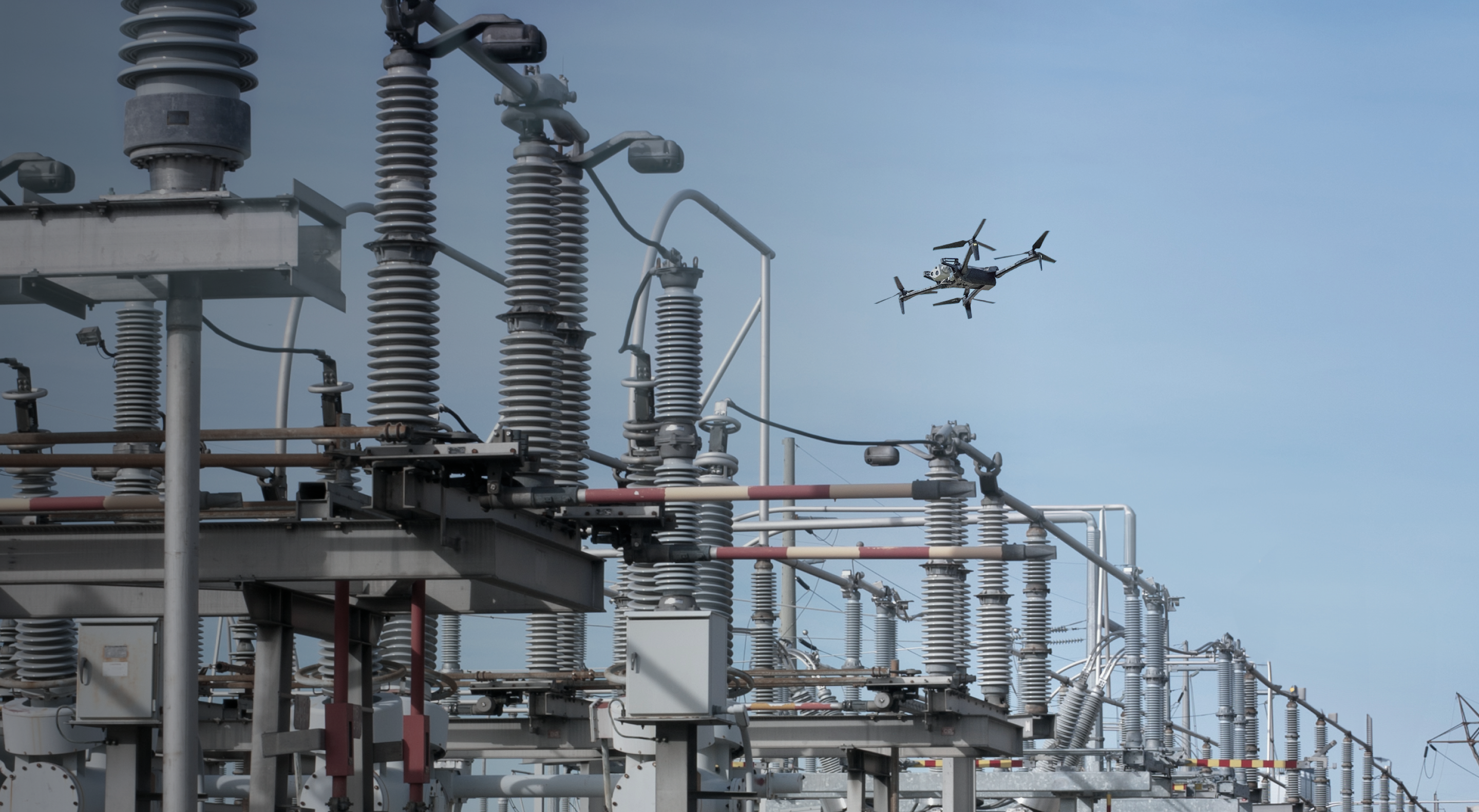
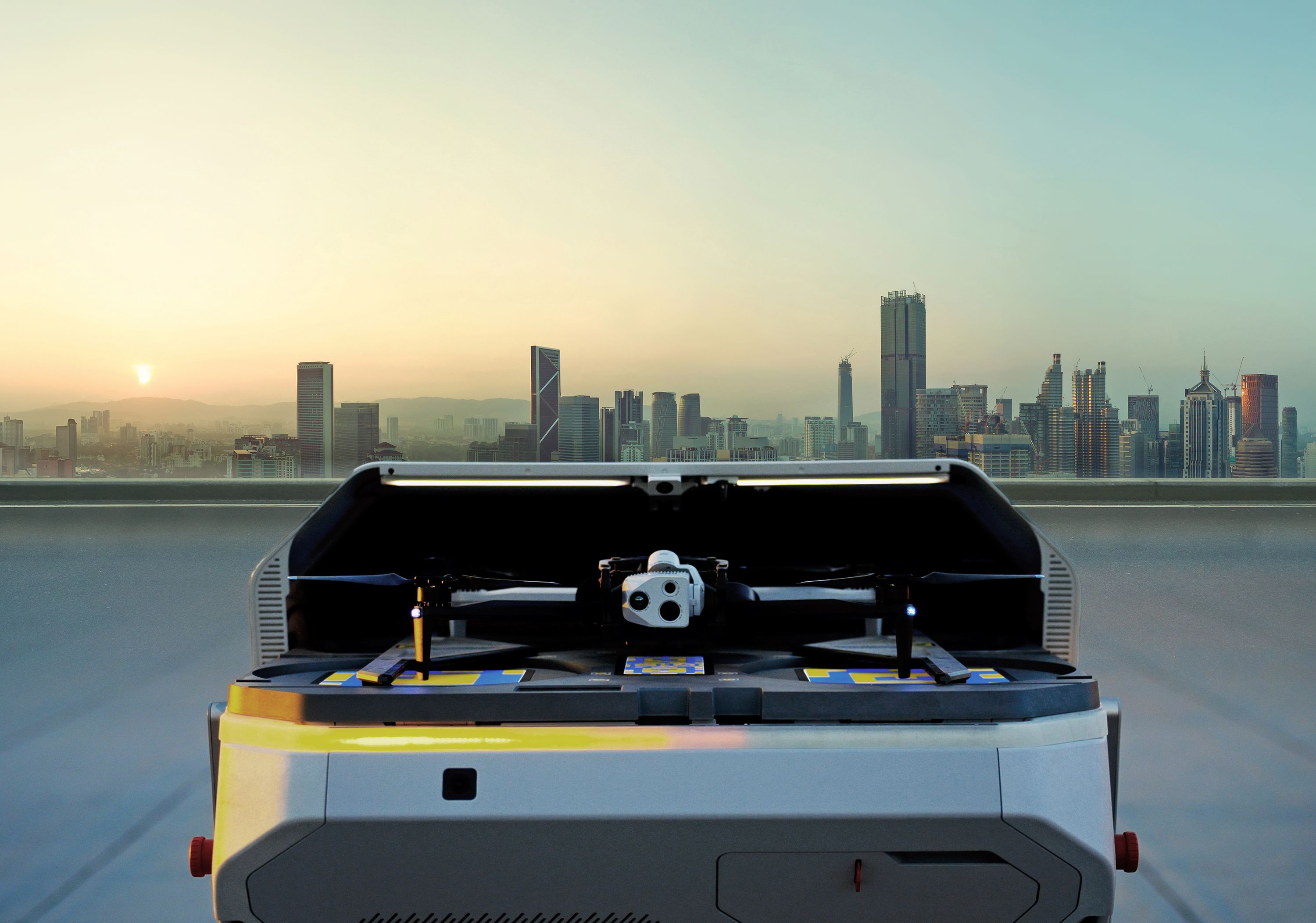
Unmanned aerial vehicles (UAVs) have been around since the '60s but what’s new is the wide variety of platforms - from heavy, turbine-powered warbirds - to lightweight, versatile drones capable of many ISR missions. Mark Valentine, president and general manager for global government at Skydio talks about the evolution of defense in this interview with Tom Temin, co-host of The Federal Drive on Federal News Radio.
- [gentle music]
- We are with Mark Valentine. He's President, Global Government for
- Skydio. Good to have you with us.
- Thanks, Tom. Pleasure to be here.
- Skydio is a manufacturer in engineering of unmanned
- aerial vehicles. And just drawing on your experience here,
- but
- also in 30 years of the Air Force experience that you had prior to industry,
- a lot has changed in the concept and the usage and the
- effects of unmanned aerial vehicles relative to 40, 50 years
- ago. Indeed. What are we seeing now?
- Well, I think what we're seeing is the, the continuation of a historical arc
- where roughly 20-ish years ago, the start of the, uh,
- Afghan conflict after
- 9/11, we saw the MQ-1, an uncrewed system,
- uh, being used to real battlefield effect.
- And then over the, the course of the next 20-ish years, uh,
- obviously those were still quite expensive.
- We've seen technology continue to increase to where now we can pack that
- same sensor technology into a much smaller or small
- UAS-type system and achieve those same effects.
- And for years, I think many people looked at the small
- quadcopter-type
- drones as if they were toys of some sort.
- Uh, but probably roughly five-ish years ago,
- we started to realize that there were
- real utility in using these vehicles, and we've seen an adoption of that even
- more since the war in Ukraine.
- Got it. And how are they best used, and how, what's the state of the art?
- So the state of the art right now that we are seeing in Ukraine,
- where we have
- approximately 500 systems in operation right now, are, are the Ukrainian
- forces using them for tactical ISR, or intelligence, surveillance,
- and reconnaissance. So it is the age-old military problem of looking
- over the
- hill to see what the enemy is doing.
- So detect enemy formations, understand their scheme of maneuver,
- and improve
- the accuracy of targeting, or even seeing them being used in
- documentation of war crimes.
- Right. So that implies there is a great deal of communication
- interrelationship, and not simply point-to-point imagery.
- Correct?
- Correct. So, uh, what we are seeing is there is a link back from the
- vehicle to the controller, which is great, but the real value in
- those data are when they can connect to command and control systems.
- Which is why one of the things we are focused on at Skydio right now,
- in addition
- to getting better sensors on vehicles, increasing endurance, and increasing
- the AI that we have on the vehicle, is also increasing our ability to connect
- to battlefield systems, whether those are, uh, tactical assault
- controllers in the US Army, uh, these battlefield surveillance, uh,
- networks, so that people can actually make real use
- of those data.
- And so your platforms aren't kinetic.
- They are observing and ISR based.
- Correct.
- So that means you have to have a couple of things aboard.
- One is a camera or a sensor set. Is it always a camera or could it be
- infrared sensing and so forth? And-
- It could be any sensor. So right now most of our vehicles
- are equipped with, uh,
- multi-sensors, uh, an electro-optical sensor
- or a traditional camera,
- as well as a forward-looking infrared or IR sensor, uh, which allows day,
- night operation. And increasingly, with our next generation of
- vehicles, which we call the X10, we have created a,
- uh, essentially changeable payload package,
- 'cause we envision
- that right now there are sensors we haven't even thought about
- that might be
- valuable in these surveillance use cases, whether those are electronic warfare,
- could be microphones, what have you.
- We wanted to create an open system that others could develop the sensors
- they need to accomplish their missions.
- Right. So there must be specifications such
- that not only is it plug
- compatible with what is on the platform, but someone can't send you a
- 50-pound sensor package.
- [chuckles] Probably would not work out too well. That's correct.
- So we have documentation, uh, where developers can understand
- what size, weight, power, uh, things like that the vehicle can actually
- carry, as
- well as an understanding or of a software development kit,
- so how they can
- integrate that sensor into the vehicle.
- All right. And the idea of drones interacting with
- one
- another.
- Yes.
- I hesitate to use the word drone. That's not real popular in the UAV field.
- Right.
- That's... UAVs, let's stick with that one.
- But, uh, under Replicator maybe is the most famous latest example.
- But the idea of them operating
- with,
- interoperating with one another in a coordinated way, the swarming idea.
- Indeed.
- How is that coming into all of this?
- Uh, I'm gonna answer your second question
- first, which was about
- Replicator. So I, I think Replicator is a tacit
- acknowledgement by the leadership of the US Department of Defense that
- drones actually do matter. They are having a real effect on the
- battlefield. And then that next step is how do we get
- more out of that vehicle? And right now, and this gets to your second question,
- which is around multiple drones working together.
- So I think today when most people think of operating a,
- a drone, uh, they think about it in the context of a
- single human being
- delivering their intent to a single aerial robot-
- Mm-hmm
- ... via stick and rudder inputs. And, and that's interesting, but in
- our view at Skydio, there are gonna be orders of
- magnitude more drones on the battlefields of the future, and that idea of
- one-to-one control will never scale.
- So the only way that we will achieve that value is to have a
- single human being be able to communicate their intent to
- multiple drones, and then have each of those drones
- independently
- reason how they can help that human achieve that intent.
- So amidst the drone of all of those rotating
- quadcopter choppers, I'm hearing artificial intelligence
- coming through.
- Absolutely. And, and that is, uh, what we consider our competitive
- advantage at Skydio, is we don't think of our vehicles as
- drones.
- We think of them as intelligent flying machines, uh, that right now, even
- operating as a single machine, can reason around their environment,
- navigate without GPS or without global navigation signals,
- using visual perception of their environment, and also find things
- of interest and track those things without a human having to make a stick or rudder
- input. So to take that forward, we are doing a lot of research
- now, and have demonstrated much success, on having multiple drones work
- together- To accomplish a role. Uh, just a small example
- is, uh, we have perfected what we call an on
- station handoff, where one
- drone could be surveilling a scene and has responsibility for that scene.
- It can now communicate to another drone, "Hey, I'm getting low on battery."
- Got it.
- Now, that other drone will autonomously, without the human being doing
- anything, fly to the same location, match its sensors, take over
- responsibility, communicate to the first drone, "I'm here.
- You are relieved." That drone can now go home
- and get another battery.
- So you can keep them kind of in constant rotation.
- Indeed. And that solves what I think is one of the major limitations of some of
- these small UAS, and that is the endurance problem.
- Sure.
- So now, with a few batteries on the ground
- and this capability of
- inter-drone communication, I can essentially take a short endurance
- platform and
- turn it into an almost infinite endurance platform.
- So a virtual infinite platform-
- Correct
- ... if you will. And that idea of the
- vehicle being able to avoid obstacles and reroute itself should something come
- up, a flock of birds or whatever-
- Correct
- ... that seems like a short step then to
- making sure that they can avoid one
- another in formation or a group.
- A- absolutely. And y- you bring up a great point
- when you talk about the
- automation, the, the obstacle avoidance, 'cause one of the key
- detractors of the small UAS right now is that they're
- often difficult to fly. And so if you have a large enterprise,
- say an army
- unit, uh, and you want to operate a large fleet of
- these drones, you have to invest
- a lot of your time and effort into pilot training.
- So if we can abstract those difficulties away from you and
- make this such that just about anyone can fly the drone safely without having to
- worry about hitting obstacles, it really lets soldiers focus on the fight
- and
- not the flight.
- Right. So these are not quite disposable things,
- but they're also not
- exactly
- gigantic, uh, platforms that-
- Correct
- ... that-
- Correct
- ... keep for 30 years.
- Yeah. And so what, what we've seen in, uh, in Ukraine right now with our systems
- is many of the small UAS are considered by the Ukrainian forces
- a one and done platform.
- Mm-hmm.
- They, they send it up, and they know they're never getting it
- back.
- Uh, with m- most of our drones, that is not the case.
- They are getting these drones back because of the automation that we have built
- into them. So you know, it's easy, I think, at the point of sale to look at
- maybe the cost and go, "Okay. Well, this might cost more
- than that, so I'm gonna buy these." But if you're only using these once, all of a
- sudden the calculus changes significantly.
- Interesting. All right. Well, I think we're good here.
- Mark Valentine is president of global government at Skydio. Thank you so much.
- Yeah. Thank you, Tom. Thank you, all.
Watch Time
8 Mins 43 Secs