Live demo of substation inspection with a drone
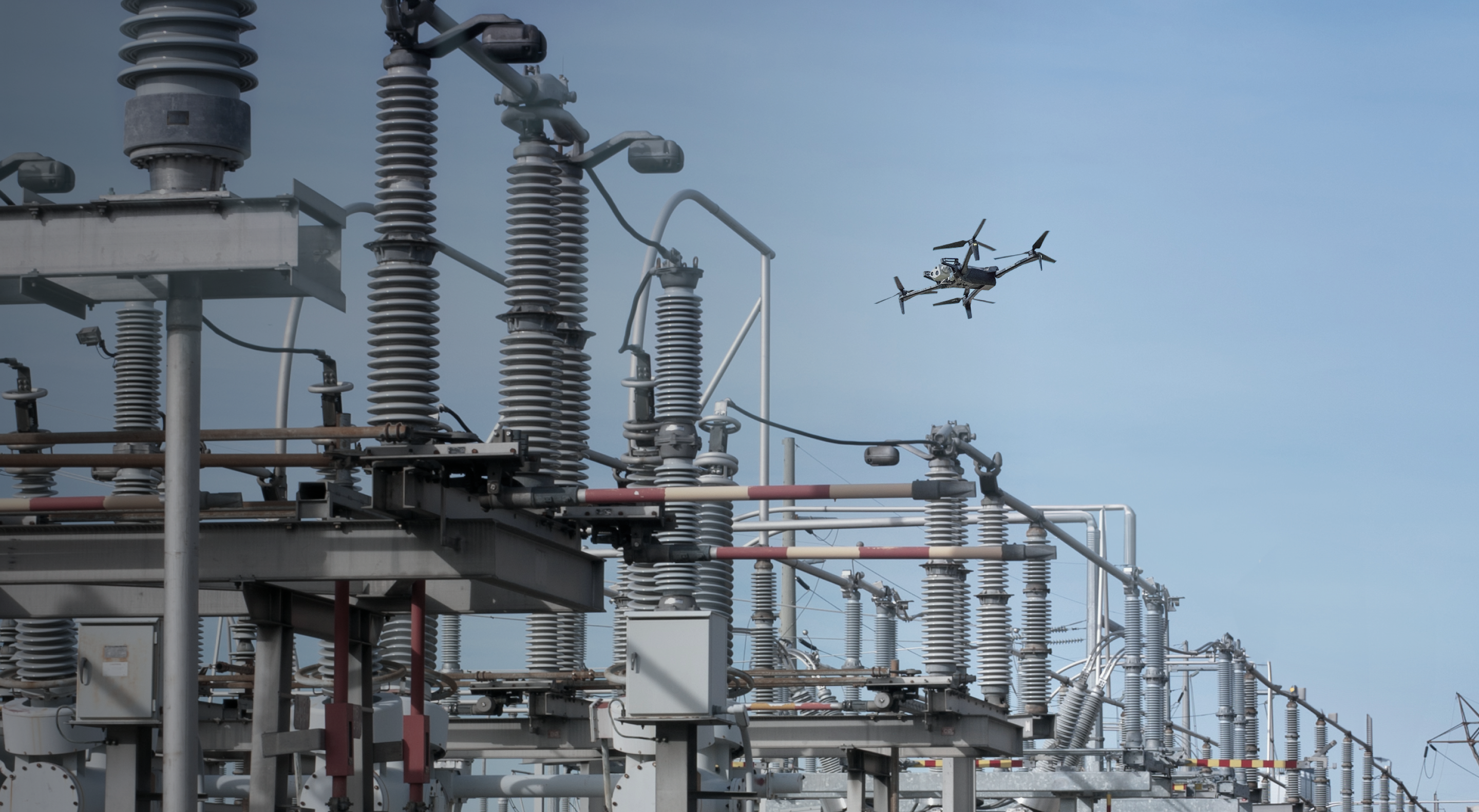
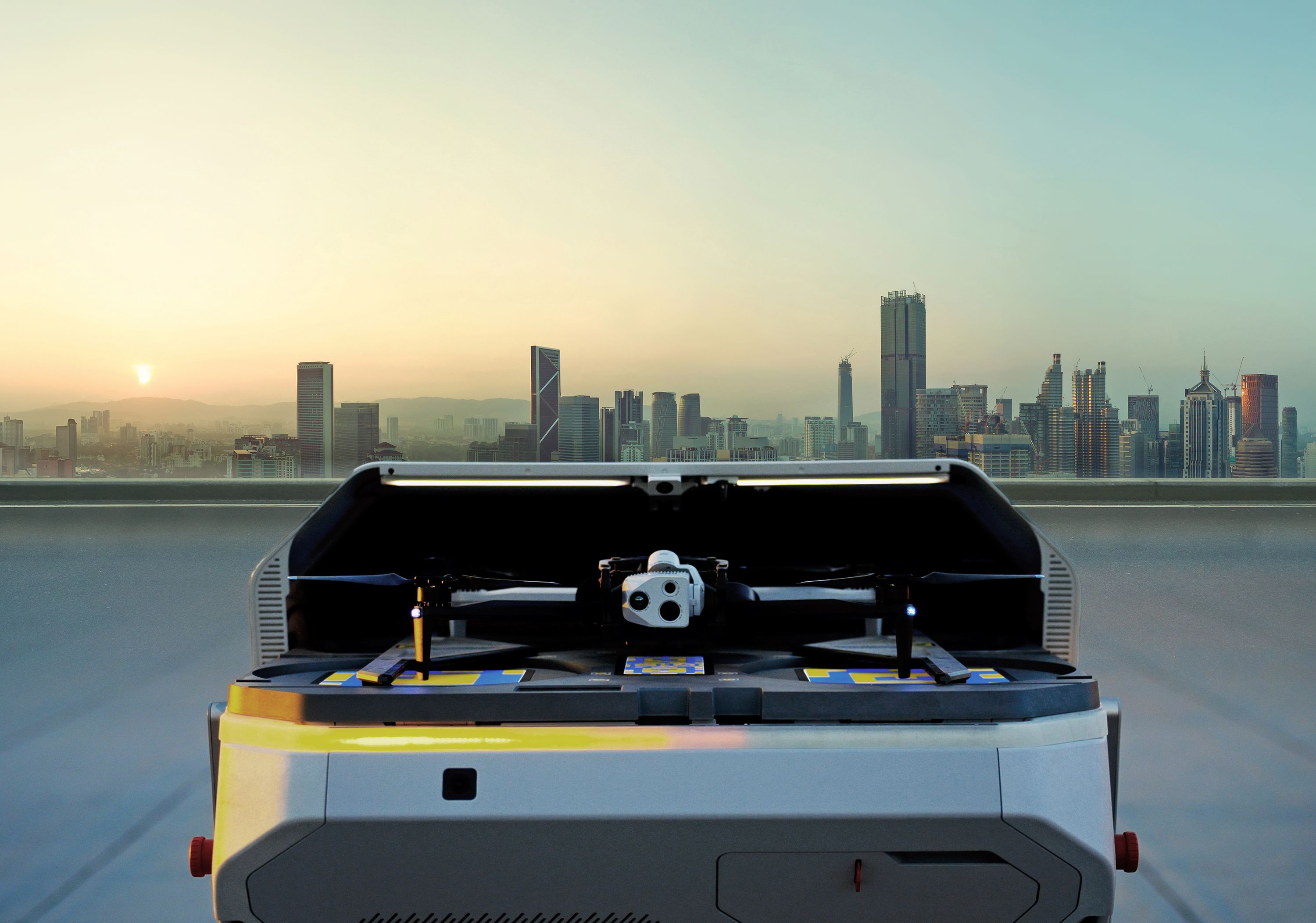
Watch this recording of a live demo and see Skydio X10, Remote Ops software, and Dock in action as:
- The drone autonomously flies a mission to capture a counter reading at a distant substation.
- The drone continues on the mission to check the gas pressure gauge on the SF6 breaker used as an arc sniffing medium.
- A remote operator steps in to manually fly the drone on a request to confirm a MOAB switch is closed and check the fence line to ensure post storm integrity.
- The drone completes the mission and returns to Dock to recharge for the next mission after managing both scheduled and ad hoc inspections without any truck roll to the site.
- So backstage, I was building this, uh, this 3D model
- or, or 3D mission, but, uh, I got a, a, a
- request to gather some data from one of these breakers.
- It's gonna be breaker Charlie Bravo 850.
- We're at a energized 345 kV substation
- in, uh, Corpus Christi, Texas. It's an AEP station.
- Uh, and we're gonna go grab a counter reading,
- uh, something pretty
- difficult to do off of this breaker.
- Uh, the distribution control center wanted to
- know, uh, what
- that counter reading was and make sure that it was good.
- Uh, so we're gonna start this mission.
- Uh, and we're gonna grab the counter reading
- from a
- prearranged mission or preplanned mission.
- And then, um, this is definitely
- live, so, uh, it may take just a second to get the, uh,
- the
- aircraft ready to go. Um,
- we are
- gonna grab the mission one more time.
- There we go. Okay, so mission's ready to go.
- We're gonna go ahead and launch.
- Uh, this mission is like a full breaker
- inspection. Uh, it's autonomous.
- The first, um, thing you're gonna see is the drone take off and
- then grab a, uh, overview shot of the breaker.
- It's kind of like the standard, uh, kind of security and safety
- inspection. Uh, and then once we do that, we're gonna move
- into, uh, in close proximity to the breaker control
- panel, and, uh, we're gonna grab the counter reading.
- Normally, this would require like a truck drive.
- We're literally looking at something that's mechanical, something that,
- uh, that you have to see with your eyes to
- verify.
- So, uh, so we're gonna,
- uh, move in, and now we're, now we're rocking this
- autonomously.
- Um, the little window to the bottom left
- is where
- the breaker, uh, counter reading is, and we're looking
- for Echo Charlie two. It's gonna be the middle phase.
- That's what operated over the weekend.
- Uh, so we're gonna, um,
- adjust. Let me adjust the camera down a little bit
- so I can
- see the breaker. There we go, Echo Charlie two, and I can
- confirm that breaker reading's 147.
- Uh, while we're here, we're gonna let the drone move to its, uh,
- second waypoint.
- That's gonna be the SF6, uh, gas pressure gauge.
- So this, this breaker is an SF6 breaker.
- Uh, uses the gas as its arc snuffing medium.
- Uh, and that's gonna be green. So it's, uh, this is a go,
- no-go gauge. [phone ringing] Oh, hold on a minute. Hello?
- Aerial Op Center, this is engineering. Are you there?
- Oh, hey. Yeah, what's up?
- The first Moab switch off the breaker was operated multiple times during the
- recent
- storm. I don't have anyone to roll a truck right
- now.
- Can you go check that it's closed and also check the fence line for
- post-storm
- integrity?
- Oh, yeah, yeah. So I'm gonna take over manually here, and,
- uh, so I
- stopped that autonomous mission. I'm taking over manually.
- We're gonna fly and check out that Moab.
- So the cool thing about this, this ability, is that this is a
- remotely operated switch. The switch, uh, was closed from an operation
- center hundreds of miles away. Uh, that operation center
- doesn't have any real-time intelligence other than an amp reading
- of the state of the switch. So we're gonna pop up here
- and check out these
- contactors with the, uh, the RGB camera.
- So we're gonna zoom in on those contacts.
- All right, we can see the contacts. I don't see any discoloration.
- They look closed good, and I can see some, uh, electrical joint compound
- there in the paddles, so that, that all looks good.
- We're gonna back out and check it with, uh, thermal and see if there's any delta
- across the, uh, the three phases. All right, I don't see
- any.
- All right, cool. So we're good there, and the last thing we're gonna do
- is go check
- the fence. Um, we've had some, uh, some security
- issues at this, uh, very remote substation,
- so we're gonna see...
- Oh, wait a minute. Wait a minute. I see somebody right there.
- Oh, they're running away. They must have seen the drone.
- I think, uh, I think we're good. Oh, they got wire cutters in their hands too.
- Look at that.
- Well, they're, uh... it looks like they're out of here.
- Uh, we'll take some photos and, and report them, and, uh,
- and then we'll also increase our frequency of security patrols of this station.
- Uh, but right now we're gonna go ahead and return to home.
- Uh, it's really cool because the drone's gonna
- navigate through this energized
- environment autonomously. Uh, so it's, uh, using the collision
- avoidance, and it's moving its safest path home, uh,
- which I, I still get excited about, and it doesn't get old.
- Like, uh, [laughs] it just doesn't get old.
- So we're moving back to the dock here.
- The dock's already open, and, uh, and we're gonna land.
- And then once we land, we're gonna upload the data, uh,
- autonomously or automatically, and then it's gonna go to the cloud where,
- uh,
- you can integrate, uh, with, with, uh, whoever it is you use to analyze
- the data. And I'm gonna let Adam talk a little bit
- more about that.
- [audience applauding] [upbeat music]
Watch Time
5 Mins 10 Secs