Revolutionizing drone technology: Mark Valentine of Skydio on Sofrep Radio
Tune in as Rad of Sofrep radio talks about drone technology with Mark Valentine, a retired U.S. Air Force officer and a combat veteran F-16 pilot who served for over 25 years and the President of Global Government at Skydio, a leading U.S. drone manufacturer. Despite his vast experience flying combat jets, Valentine concurs that in today’s battlefield, drones impact results in ways that new jets or missiles cannot.
Learn more about Skydio drone solutions for defense.
- [upbeat music] Hi, I'm Levi
- Young. As Arkansas Valley Electric, our goal is always reducing outage
- time, whether it be for asset fault or a storm, making
- safety our number one priority, and then reducing costs because
- everyone wants to reduce costs.
- [upbeat music]
- When we do have an outage, whether it be storm-related
- or asset health-related, a
- lot of times we're called on to go out in front of the lineman.
- It's find the damage, find where things are going wrong,
- report back, and that way
- they have exactly what they need and know exactly where to go before they
- ever get
- there. Substation measurement and substation inspections,
- mapping out the
- substation and being able to update spec sheets or get sizes on things,
- or even asset health again, because a healthy substation is gonna
- keep everything running better. If you're keeping up with asset health
- ahead of
- time, the proactiveness of it, it's going to make it better in the long
- term.
- You're gonna have less of those outages.
- [upbeat music] Whenever we were wanting to map a substation,
- typically we
- were looking for spec sheet updates or something like
- that because maybe the spec
- sheet was damaged, or it was illegible, or it hadn't been put into digital yet,
- things like that. We're wanting to get a size comparison of
- the whole substation.
- So as you can see on the pictures here, we would put a stick
- or a piece of PVC pipe
- with some markings on it for measurements, and we would know the size of that
- object and put it up on a long stick next to the power grid, whatever it may have
- been at the time, in this case, an insulator.
- We're able to take pictures of the entire substation.
- We took thousands of pictures, and it took about a day to take all of
- these
- pictures just flying. It took several people.
- I mean, there was a few of us pilots, and then there was a few linemen,
- a sub tech,
- maybe an engineer as well. We had to do all of this gathering of
- information, and
- then after that, we still had to have somebody come back to
- the office, take all of
- those photos, and take that measurement that we know of
- that stick or that piece of
- pipe, and we're able to tell our sizing of
- insulators or bolt patterns or
- whatever it may have been. But they had to do it for every single
- picture, and if
- they ever needed to go back, they had to go find
- that picture through thousands of
- pictures.
- [upbeat music] We went from having to have several
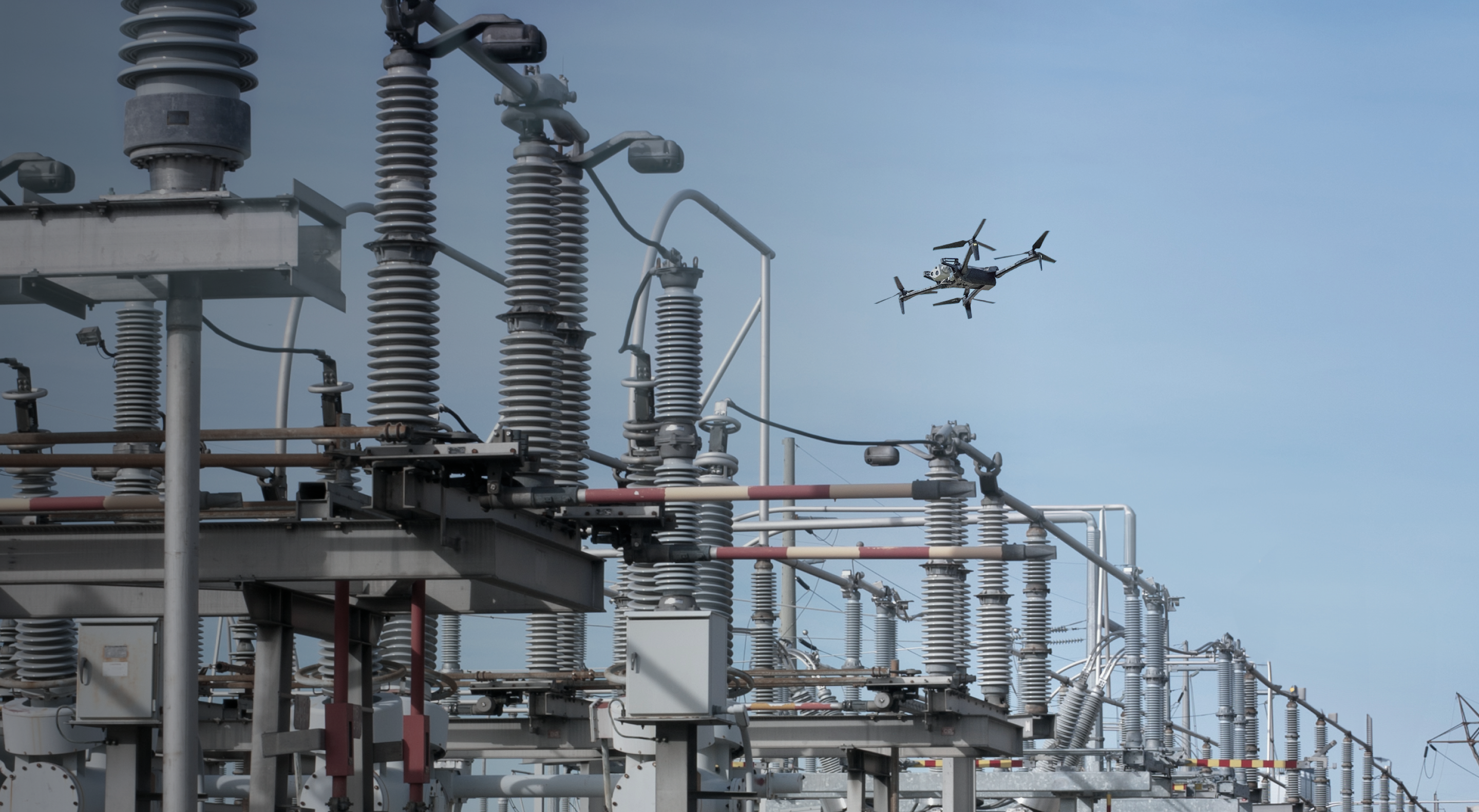
- people there. Now I can go by myself and fly an entire substation without
- anybody
- there. One or two pilots may be necessary for an
- inspection like
- this, but that's about it. I can go out there.
- I can put the drone down or send it up into the air and say, "Okay,
- here is
- this object, here's this object, and there's this object,"
- and then it goes and
- scans every single one of those on its own, and I don't have to touch the
- controller after I say go. It's a process that's so easy, almost
- anyone could do it in a substation immediately.
- [upbeat music] In the older drones, if you even went around a
- transmission line, you would start to lose signal.
- This is a live substation. I pushed the button, and the drone
- was able to fly on
- its own, and we never lost connection.
- We were able to view pictures of it, view the model it was making at the time.
- We knew it was gathering plenty of data on what it needed to see.
- It never even thought about hitting a line. I mean, it dipped and dived.
- It went between bus lines, highly energized, no problem at all.
- [upbeat music]
- Once we took the scan in about two and a half hours for the whole thing,
- we were
- able to push it over to GNX Labs, which is a software that we use.
- Just in flight time to take this from a day of flying to just to two and a half
- hours. One thing that was really amazing
- was we're able to get the geometry out of
- these insulators. Typically, in photogrammetry, you get a cylinder.
- We can double-click in here, just if we're looking at inspections,
- just to make
- sure of the health, no tracking on our insulators
- and things like that.
- That spot that you clicked on the 3D model is then referenced over
- to the 2D photo that was used to create that model.
- You're able to get the full resolution image and be able-
- Yes
- ... to inspect those insulator pins and really get in there
- and view your asset.
- We can annotate the image just as well as we can annotate our model here, so we
- can mark spots that are damaged or anything like that as well,
- and we can slide
- through to different pictures and different angles on this as well.
- It's really helping for inspection purposes and whatnot.
- [upbeat music]
- This is one of the main things that we were looking at because we wanted
- to be able
- to measure for spec sheets and things like that
- or for future builds to say, "Okay,
- this substation was built this way, and we wanna go from this point
- and build into
- a new one, but we know we need the same sizes,"
- or things like that.
- And we're able to do things like bolt spacing here.
- You can see I was able to take this polyline and measure, so we can
- assume out of this that all of these are the same bolt spacing of a .45,
- which is
- about five and a half inches, and there's three foot in between these
- two and about
- a foot in between those two. We know that's a six-inch across beam,
- and it's showing that it's exactly half a foot because you
- can see here that's
- all shadow over there. So we know from there to there
- is exactly six inches.
- Which gives you confidence in your other measurements that you made on your 3D
- model if you take a known measurement.
- And the incredible part is none of this was done with an RTK
- system, and we're
- still able to find this.
- A pretty cool model because-
- Mm-hmm
- ... with this model and the 3D scan, you can clearly see the status of the
- recloser, that it's online. You've got your line
- and source side disconnects
- closed, and that your bypasses are open.
- Then if you click in on the sheds of that insulator,
- you can get a pretty decent
- view of the polymer up there.
- There's several angles of every single piece.
- [upbeat music]
- The aircraft we used for this one was the X2 Collar.
- Substation I did in three different scans.
- We did this high side as one scan, and it's a 3D tower scan.
- It's not the regular 3D scan, a 3D tower.
- Wow.
- Because the tower scan really finds these lattice structures really well.
- Then we did the transformer as one and the low side as one.
- And the high side, I believe, took two batteries, one switch.
- Mm-hmm.
- So we started with full battery, switched once,
- and used most of the next one.
- The transformer and the breaker here in the middle took one battery.
- The only reason why I say it questioning like that, it may have been the one that
- was left over from the high side, and [laughs] I'm not 100% on that.
- And then two again for the low side.
- With the Skydio's capability of looking directly up with that gimbal,
- we can see the bottom side of insulator and the top side, but the ground
- inspections aren't finding things that you're gonna see from above.
- I would do even weekly inspections if I had a dock at a substation.
- So we have 36 substations, so at least every substation once a year.
- More frequently as a dock purpose, I would love to do it monthly, weekly,
- because
- the drone can sit there. Once you get that BVLOS,
- which I believe you guys have a
- system that works with people to acquire that specifically in a substation.
- Today, a human has to go out there and take out that drone and scan that.
- That's labor to get out there. That's an individual's time.
- You have a lot of other work to do, right?
- But what makes you more efficient if you know it's a repetitive task,
- is to have a
- docked drone at that substation. Now, you can do this type of work, but
- the drone flight and the image collection process will be done by
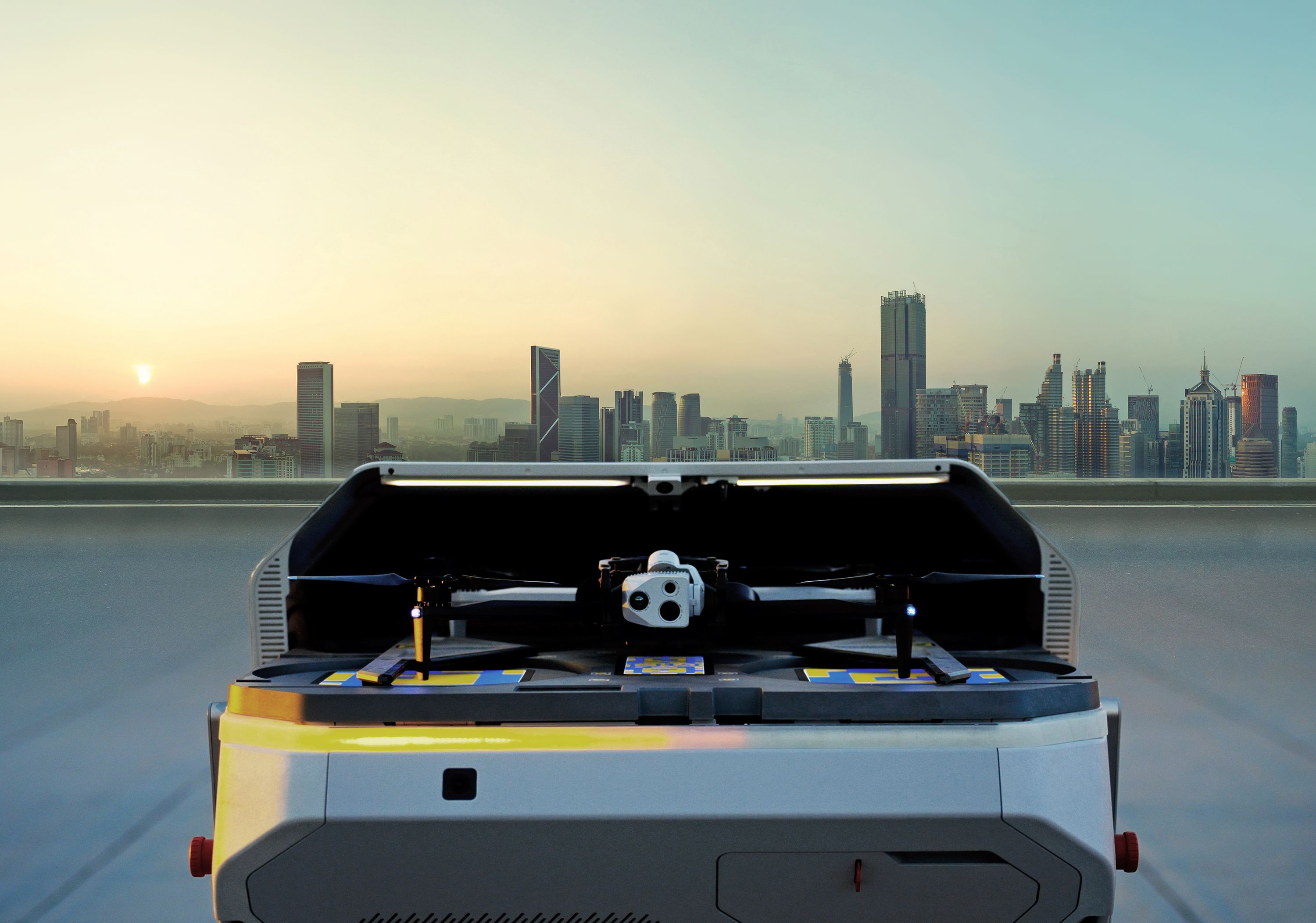
- itself. So you could put a Skydio Dock in
- that substation,
- and this drone could once a week or once a day or at whatever interval you
- wanted, take off, do the whole automated scan by itself,
- come
- back home into its dock, recharge its batteries.
- It's connected to the internet. All those photos will be uploaded via the
- cloud to
- you so that you can then process that in GenX Labs or whatever other
- solution
- you want. Skydio will get you the waivers, it'll give you the dock, it'll put the
- drone out there, and now you can do these repetitive tasks
- over and over and over
- without a human in the loop, and it's making your company more
- effective and more
- efficient, and that's the future of where we're
- going, right?
- That's not what you're doing today, but it's where you wanna go.
- One dock installed at one substation can have
- multiple use cases, right? You could have a security use case
- performing randomized perimeter patrols.
- You could do your routine inspection.
- You could do a event-based inspection.
- For instance, if there was a differential at the station,
- you could have the
- dock with a differential scheme pre-programmed as a mission.
- A differential happens, the dock launches, and then the drone inspects
- all the different components associated with that differential scheme.
- So it's important to note that one dock can have multiple use
- cases inside of a substation or transmission line or other facility.
- [upbeat music]
- After you do this type of inspection, you find problem, what's the workflow to
- repair look like?
- So if we're ever looking for problems, which we usually want to look for
- problems [chuckles] in these situations, we're going to bring it back, of course,
- process the data. We'll bring it into GenX,
- and then we can review photos, and we
- can actually mark each photo as reviewed or not reviewed or problem, and
- then we can PDF a list of all of the annotations, all the issues,
- and everything
- like that. Then that can be given to whoever's gonna
- be doing the repairs.
- [upbeat music] With GenX, I can switch between folders on
- my file explorer and drag them directly in.
- So I can say, "Here's this one. Here's this one.
- Here's this one," and it just knows to put them all together
- because it has the
- metadata from all of those photos and that they all fit together.
- How are you guys determining when you wanna do a 3D scan on a
- pole versus when you wanna do just a few photos of the pole?
- We most often just do regular photos, but here lately,
- our engineers have been going back redoing spec sheets.
- Even for a three-pot transformer bank, I've scanned four or five of those in the
- last month. I would say more often just plain
- pictures, but the Skydio still, you
- never have to worry about hitting a line.
- It's incredible in just the manual mode to do that.
- We're training a new pilot, and her first time ever flying a drone
- was with a
- Skydio, and she scanned a transmission pole.
- I'm happy to be using Skydio and happy to be able to do this.
Watch Time
9 Mins 14 Secs