
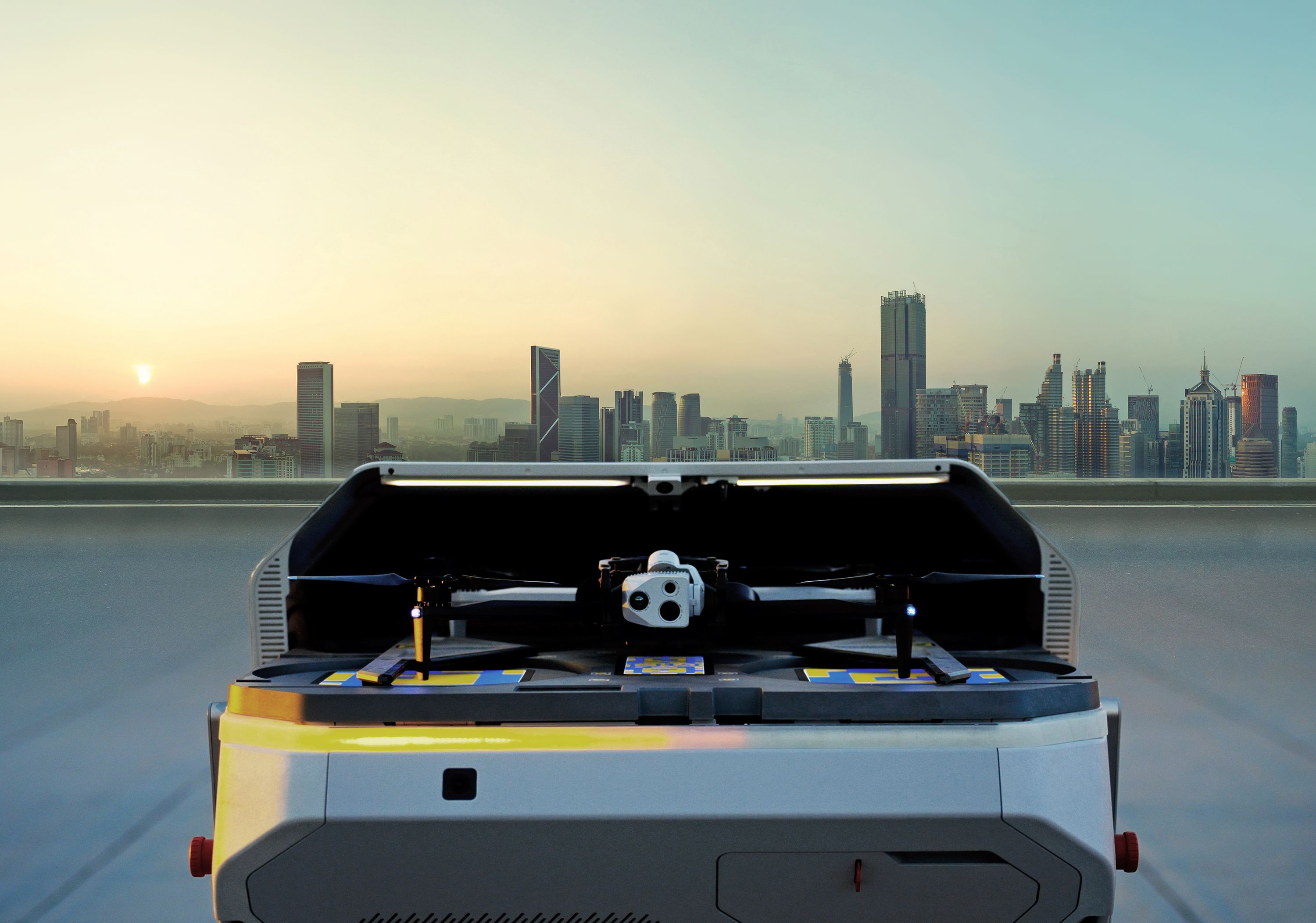
Skydio commits $3.5 billion to expand U.S. manufacturing and secure american drone leadership
2026年4月24日
Skydio, the largest U.S.-based drone manufacturer and the world leader in flying robots, today announced plans to invest $3.5 billion in the United States over the next five years to expand its domestic manufacturing, accelerate R&D, and strengthen American supply chains.
- But finally, we are very proud in the national capital region and, quite
- frankly, East Coast
- and the country to be at the tip of the spear when it comes to identifying
- technology to
- ensure safer outcomes for police officers and for community members, and that's
- just what
- this does.
- So, Adam, I'll turn it over to you.
- All right.
- Thank you, Chief Davis.
- You know, the stories that you shared there are incredible, and that is really
- the
- motivation for what we do at Skydio.
- These products have the potential to fundamentally transform the way a number
- of our critical
- industries work, including public safety.
- You guys have built a phenomenal program here.
- It's clear that it's having incredible impact for your community, and you're
- also doing
- it in some of the most complex airspace in the country here in D.C., which has
- an extra
- layer of complexity that you all have done a phenomenal job navigating.
- And I also want to commend you on the transparency with which you run the
- program.
- We really believe that that is fundamental to the success of Drone as first
- responder,
- for communities to see what police are doing with the drones, for them to have
- a voice
- in it so that they can buy into the ultimate positive impact that it has.
- Let's see, get the slides up here.
- I want to give a little bit of background on how we got to this moment.
- So the category of drone that we're talking about here today really started off
- as kid's
- toys 10 or 15 years ago.
- If you think back to 10 or 15 years that somebody said drone, you probably
- think of
- something that you give to your kid, you fly it around, maybe you have some fun
- .
- These things were cool, but there was really no society or civilizational
- impact.
- And I would say the last decade, let me go to the next slide, has been what we
- think
- of as the tools era for drones, where you have a skilled pilot there flying it.
- If they know what they're doing, they can do useful work, but it's
- fundamentally limited
- to having that person there on site flying the drone manually in order for it
- to do anything
- useful for anybody.
- And a lot of great work has happened, but it's still just scratching the
- surface, we
- believe, of what's possible.
- The other thing that's important to understand is both the toys era and the
- tools era have
- been dominated by foreign companies.
- Most of these drones are made by foreign adversaries.
- And what's happened over the last five years is we realize these things are
- really critical
- for national security, and it's just untenable to be dependent on our
- adversaries for technology
- this important.
- In the next slide, we should have a video.
- It helps us cut down on outages while part detection.
- They're not just going to outages, they're trying to prevent them.
- We now send a drone instead, capture the images that we need to see.
- Automation missions planned out, flying our infrastructure.
- When the emergency call comes in, every second counts.
- The drones spotted him in the woods.
- This life-saving technology, gearing up their drones with flotation devices, to
- help save
- swimmers at sea.
- Drones commonly used in the military, this one right here, called the Skydio
- is our
- most popular one.
- Unleashing American drone dominance.
- Nothing has provided a level of confidence in the X10 Dodge.
- When he saw the drone, he knew he was caught.
- Drone pilot got on scene, served the guy, holding a shotgun.
- The DFR drone actually beat me there.
- You could see his outline, and then you could see him move it.
- We're like, okay, we got him.
- Here they're using the drone to locate someone.
- Hey, the drone has somebody running through the woods, flowing it in rain, snow
- , through
- the day, through the night.
- We're currently flying right now, and it has been super successful.
- We're not waiting for the future of policing, we're building it.
- I'd say it is a game changer.
- Sheriff calls the drones a game changer.
- Game changer.
- One of the most significant paradigm shifts I've seen in my career.
- Did I help in your community and being better serviced to your community?
- So we're in the midst of a fundamental paradigm shift in what drones are.
- The old way is he sent a person out there to fly the drone manually.
- The new way, and what we're seeing here in Fairfax County across the country,
- is you put
- the drone in a docking station, it's network connected, it's powered by AI, it
- can be flown
- remotely and autonomously, and it's a huge technology shift in the way these
- things work.
- It's also a huge step up in the level of impact that they can have, and I think
- this presents
- both a challenge and an opportunity to us as a country.
- The technology is going to be more important than it's ever been before, but
- the technology
- shift also presents an opportunity for us to lead this next chapter, and this
- is really
- why we founded Skydio
- We started Skydio with a big bet on AI and Autonomy 12 years ago, envisioning
- and ultimately
- with the goal of powering this future, and we're at the moment where it's
- taking off.
- We're working with incredible customers like Fairfax County to deploy this
- stuff and have
- civilizational level impact.
- So the toys and the tools aren't going away, but the flying robot
- infrastructure era is
- going to be 10X as important.
- And US leadership is all the more important, and that's really why we're here
- today.
- We're at a very exciting moment for our business where we're growing rapidly,
- we're serving
- more and more customers around the world.
- We serve 3,800 organizations, 1,200 public safety agencies, nearly 1,000
- critical infrastructure
- organizations, every branch of the US military, 30 allies, and we're in a
- position now to
- reinvest substantially in the US drone ecosystem.
- So you go to the next slide.
- Today we're announcing a $3.5 billion investment over the next five years, and
- this is going
- to go squarely into the US drone ecosystem, so we're going to 5x the size of
- our own factory.
- We're going to take a billion dollars of this and put it towards critical
- components manufactured
- in the US, and in the process we're going to create thousands of jobs.
- So this is a pretty exciting moment.
- This level of investment has never been possible before in the US industry, and
- it's not coming
- because we're raising outside capital to do this.
- It's coming to meet the demand of the customers that we're serving and really
- meet the needs
- of the moment.
- One of the most exciting pieces of this to us is what we're calling Skyforge,
- which
- is a serious effort to onshore the development of all the critical components
- that go into
- a drone.
- So it's not a mystery that right now the world leading manufacturing ecosystem
- for consumer
- electronics is in China, but there's no law of physics that says it has to be
- that way.
- And a major part of our goal here with this investment is to spur the creation
- of a domestic
- supply chain, not just for drones, but all kinds of robotics and other
- electronics devices
- that are going to be important.
- So you go to the next slide.
- So I like to think in terms of infrastructure.
- So in the 20th century we built road infrastructure, we built power
- infrastructure, we built communication
- infrastructure, and I really believe, in the next slide, our infrastructure in
- the 21st
- century is going to be robotics, it's going to be systems that are always on
- intelligent,
- doing useful work for us in the background, and our goal is to build flying
- robot infrastructure
- that our civilization needs right here in the US in the next slide.
- And leadership for the 21st century of aviation is on the line.
- The US dominated the 20th century of aviation, and we wanted to do everything
- we can to make
- sure that we'd leave the next century as well.
- So with that, I'm excited to turn it over to Michael Kratzios, the president's
- advisor
- on science and technology from the White House, to share his thoughts.
- Good afternoon, everyone.
- Thank you so much for those remarks, and this is a really, really special
- initiative.
- And I also want to add my thanks to Chief Davis for hosting us here today in
- Fairfax,
- and it's really great to be with all the men and women of the Fairfax Police
- Department.
- All you truly are are public servants, and then fight on front lines every day,
- and it's
- great to be here.
- Today's announcement by Skydio represents billions of dollars in investment.
- It represents thousands of American jobs in the realization of more than 10
- years of
- really hard work by a great American company.
- This is a company that I have seen grow from a small startup to an absolute
- national powerhouse.
- There are manufacturing drones to support American law enforcement here at home
- , American
- war fighters across the globe, and American workers all across our country.
- And this announcement today reflects a real turning point in how the United
- States approaches
- the future of drones and autonomous systems.
- In my opinion, a real fulfillment of a decade of policy efforts to strengthen
- the domestic
- drone supply chain here in our country.
- I had the great fortune of working in the first Trump administration, and this
- journey
- began for me in 2017, and I had the honor to help launch what was known as the
- UAS Integration
- Pilot Program, or IPP, and by bringing together federal, state, local, and
- tribal governments
- with a lot of private sector folks to create opportunities for domestic drones
- and use.
- The IPP really opened up a new chapter in America that we're living through and
- experiencing
- here today.
- And thanks to those lessons and victories of that particular program, this new
- technology
- can now access a powerful assistant to so many great law enforcement folks
- around the
- country and play an increasingly vital part in everyday commercial activities.
- The progress since that program launched in 2017 has really been amazing, and I
- do believe
- we are only just getting started.
- The Unleash American Drone Dominance Executive Order of the President signed
- this past June
- laid out a very powerful vision for American leadership in unmanned aircraft
- systems.
- We are going to accelerate the development, testing, and scaling of U.S. drone
- technology.
- We're going to strengthen our industrial base.
- We're going to secure supply chains, and we are going to ensure that the most
- advanced,
- most reliable, and the most trusted systems in the world are built here in the
- United
- States.
- And we can only fully harness the potential of these drones to benefit the
- American people
- if we build that infrastructure to make every part of this technology here in
- America.
- And that is an absolute national security imperative.
- It's also responsibility for our fellow citizens to invest in our manufacturing
- base all the
- way down the value chain.
- I believe that the drone industry can be and will be the cornerstone of
- rebuilding America's
- industrial capacity, and that is what we are here today for.
- This combination of innovation, domestic capability, and real world
- applications that we see here
- in Fairfax is what American Drone Dominance really looks like.
- And we're here to celebrate what happens when American industry meets real
- world mission
- and delivers truly tangible results for the people that we serve every day, our
- neighbors
- and our families.
- The same technologies that support local police departments today are going to
- be driving
- advances across our economy tomorrow from infrastructure inspection, as you
- guys saw,
- to disaster response to national security.
- With all of our policies, the administration is building an ecosystem where
- innovation
- can thrive, where companies can scale here at home, and where our allies and
- partners can
- look to the United States as the gold standard for trusted technology.
- And we're ensuring that when the world looks to the future of drones and looks
- up into
- the skies at drones in the air, they see American leadership.
- So thank you so much, and with that, I want to turn it over to Chairman Park.
- Thank you so much, Director, thank you Chief Adam.
- So good to see you, you know, Fairfax County is home to me.
- This is actually where I grew up, this is where I went to school, and my family
- and I
- we now live not too far from here, depending on traffic, and to my youngest are
- with me
- today.
- They were out of school, so no better way to spend the day than with that,
- visiting a
- police department.
- I've had a chance to travel across the country and see the beginnings of this
- entire new
- drone public safety deployment, and so getting the chance to be back here, back
- home, and
- seeing Fairfax County lead the way is particularly gratifying.
- I just want to thank the Chief again and his team for making the investment
- necessary to
- protect this community.
- And thanks, obviously, to all of our police officers and all of our first
- responders and
- officials who work on this issue.
- President Trump has been very clear that he wants America to lead the world and
- next
- generation technologies, and you can see that, whether it's 5G or 6G, you can
- see it, whether
- it's this new generation of technology called direct-to-sell, where you can go
- straight
- from a satellite right to your smartphone, effectively anywhere in the world,
- and you
- see it in particular in the drone space.
- As Director Kratzio said, President Trump has signed a number of executive
- orders, one
- on unleashing U.S. drone dominance, one on securing U.S. airspace, and across
- the administration
- agencies are working together to make sure that the U.S. leads the way here.
- Drones are particularly important, as Adam was saying, there's a lot of foreign
- -produced
- drones.
- Drones being produced by foreign adversaries to the country, and we want to
- make sure
- that there is U.S. domestic-drones dominance.
- We're taking a number of steps to do that.
- At the FCC, for one, we have prohibited drones that are produced outside the U.S.
- from being
- approved for use inside this country, so there's no peace electronic that can
- be used in this
- country without an approval from the FCC, and so if you're a foreign-produced
- drone,
- you're not going to get that approval to come in here.
- Now, there's some exceptions, and there's some approvals, so if you pass
- security tests,
- then you are a foreign-produced drone, then you can get in.
- But that way, we have a nice, secure check before those drones can come in.
- That also helps to make sure there's opportunity for U.S. domestic-drones
- manufacturers, like
- Adam and his company, to thrive.
- I think that's part of why you're seeing today's announcement, which is a
- really big deal.
- Billions of dollars, thousands of jobs, expanding productivity, and it enables
- what the chief
- was talking about here to become much more common.
- They have a number of drones now that are expanding their drone operation.
- It makes the very difficult, dangerous job of our law enforcement professionals
- just
- a little bit easier.
- I want to pick up also one of the things that Director Kratzio said.
- When you're in government, a lot of times people focus very narrowly on what
- can they
- start and finish while they're in this job, while they're in this three to four
- -year run
- of their time in public service, and people tend to shove off to the side,
- planting the
- seeds that are going to be really important for the country going forward.
- As Director Kratzio said, it was way back in 2017 that he laid the groundwork
- for so
- much of what we're seeing today.
- I'm pretty confident that in 2017 he did not envision being back in government
- in 2026
- to see those seeds come to fruition at events like this, but I'm glad that he
- did that.
- I'm glad that President Trump did that, and we're going to play our part at the
- FCC.
- We're going to be freeing up spectrum to make sure that the drones and drones
- communications
- can succeed.
- We're creating innovation zones where it can be easier to get this up in
- running.
- We're cutting red tape.
- We're going faster at the FCC in terms of our own approvals and reviews of the
- communications
- necessary for drones, and we're going to play our part to implement President
- Trump's vision
- to make sure the U.S. leads the world.
- We have American drone dominance, and so again, it's very special for me to be
- here
- back in my home up every county, and thanks again to the Chief and all the law
- enforcement
- professionals that are out there every single day keeping us safe and really
- appreciating
- and look forward to some more discussions today.
- So happy to try it back over.
- Okay, we'll take a couple of few questions.
- Major Hudson Bull, who's the commander of our real-time crime center, and
- really an
- architect of what we're doing, we're going to go outside on top of our parking
- garage.
- You're going to see a drone docking station.
- I think we'll have some more remarks out there.
- Adam, you're going to lead the way there.
- You aren't.
- And Hudson Bull will be out there.
- But any questions before we transition outside from anyone?
- Yes, ma'am.
- So Skydio is based in California, and we anticipate that many of the jobs that
- we created in
- California, but we're looking nationally.
- So one of our major goals and mandates is to seek out companies that we think
- have the
- potential to be world leading suppliers of critical components across
- everything that
- we do.
- Motors, batteries, plastics, metals, chips, and we work with companies across
- the U.S.
- for that.
- And it follows to that.
- Whenever we cover these stories, the big question for the community is what
- happens with all
- of the data that those are collecting at?
- In terms of privacy and security, we'll talk a little more about that.
- Maybe I'll defer to the chief on that.
- But we were really happy in the Commonwealth of Virginia to serve as the model
- for what
- the entire state ended up doing, particularly with legislation, retention
- schedules, etcetera.
- So we self-imposed a 30-day retention schedule for the data.
- Now it's down to 22 days, which is perfectly fine with us.
- The examples that we use with folks who say, well, why not two days?
- Why 22 days?
- There are crimes that are committed in our communities that aren't detected
- right away.
- And the example that tends to resonate the most is a house being broken into
- when a family
- is on vacation or traveling.
- Sometimes that family won't notice that crime until they return.
- It might be a week.
- It might be two weeks.
- So if we have data out there, whether it's captured by a drone, whether it's
- captured
- by a FLAC safety license play reader, we want just enough time to be able to
- retrospectively
- go back and recover what could be evidence in a crime to put it to use to hold
- lawbreakers
- responsible.
- So we're happy for leading the way and what has resulted in legislation that in
- essence
- models what we're doing here in Fairfax County.
- Absolutely.
- So I'm going to ask Major Hudson Bull to come up because he and his team here
- and I'm
- not going to start naming names, but you know who you are.
- This is the most restricted airspace in the world.
- So it was a daunting conversation that we had a year or so ago that included we
- have
- to talk to the FAA, we have to talk to the Department of Transportation, and I
- was cautiously
- optimistic, but emphasized cautious, but Major Bull, come on up and talk about
- those
- relationships at the federal level that's gotten us to where we are today.
- So this is one of the most restrictive airspace in the nation and thanks to the
- leaders, many
- of them in the room today and thanks to our partners at the FAA, the NCRCC, we
- were the
- first in the national capital region to obtain the waivers needed to fly drone
- 's first responder
- in this area.
- That is a beyond visual line of sight waiver so that we can do a true DFR
- program within
- the national capital region.
- And so that took many years of outreach, it took many years of planning and
- partnerships,
- but I think today is a great culmination of all that hard work here today to
- show off
- this great success.
- Yes?
- [inaudible]
- Yes.
- [inaudible]
- Yes.
- [inaudible]
- Yes.
- [inaudible]
- Yes.
- And I'm happy to pause and turn it over to Major Bull again to talk about that
- specific
- training and certifications, and there are drone pilots in the room right now
- that we
- rely on very heavily, as you can imagine, when the drone flies to a particular
- longitude
- and latitude, a human, then has to take it over.
- So the drone, and there's AI technology built in the drone so it doesn't run
- into things
- on its way from point A to point B. One thing that I always like to share with
- community
- groups is when the drone is traveling in the air, the camera is not facing down
- .
- The camera is facing through its proverbial front windshield and doesn't focus
- on the
- activities on the ground until it arrives at a location where a crime's
- reported or disorder
- has taken place.
- But Major Bull wants to talk about the drone pilot.
- So all of our real-time prime center staff, all supervisors and detectives,
- many of them
- sitting behind me today, they are all part 107 FAA remote pilot certificate
- holders.
- But the training goes well beyond that.
- We have our own in-house drone pilot program.
- So once they receive their certification, we go through our own Fairfax County
- drone
- pilot program, which also encompasses privacy training to make sure that there
- 's awareness
- of privacy concerns and how we can help mitigate those.
- And then beyond that, there's continual training in this room occurring just
- about every day.
- So those detectives and supervisors that are sitting behind us today, probably
- some of
- the most highly trained drone pilots that you will find in the country.
- >> Yes, sir.
- >> Thank you.
- Question for you.
- You mentioned in your decades long career that this technology is changing the
- way that
- local law enforcement functions.
- Is there another technology in your career that you could compare this to in
- terms of
- how it's changed the day to day job and what you were able to do?
- >> Body cameras.
- I was a police chief 10 years ago when body cameras were introduced to big city
- , big
- county police departments.
- There was initial skepticism and hesitancy, particularly on behalf of police
- unions representing
- rank and file police officers.
- I lived through that moment in time where rank and file and police unions
- discovered that
- body camera footage protects the police more so than anything else and adds a
- level of
- transparency and visibility in real time so we get to see, touch, and feel what
- happens
- out in the community when we're interacting with folks.
- So I would say there's different decades and I emphasize my decades of
- experience.
- I don't know if that's a good thing or not.
- The 1990s was all about violent crime and the crack cocaine epidemic and the
- surge of gun
- violence, the, the aughts, the post.
- The post 9/11 decade was about joint terrorism task forces and homeland
- security and federal
- local relationships and improving interoperability.
- The teens seemed to be about one crisis after another one involved
- controversial police use
- of force, deadly use of force scenarios and the 19, the 2020s rather is all
- about technology.
- So I think, you know, we're halfway through the 2020s, we're right in the
- middle of it
- all.
- I think we, we're aware of where we are so, you know, we're not going to be 10
- years
- from now and think, oh, we were in the 2020s and it was the technology decade,
- but body
- cameras, absolutely.
- I think if you ask my dad who's a retired police officer, what changed during
- the 60s
- and 70s was the police car, right, and the mobile radios and then I think we
- were kind
- of stuck in a, for a couple decades before a significant improvement came along
- , technology
- improvement, and it was the body cameras.
- And as far as body cameras go, we now have a version of body cameras, acts on
- for body
- cameras that speak dozens of different languages that are deployed as a pilot
- in Fairfax County
- so we can in real time understand different languages that are spoken in this
- very diverse
- jurisdiction.
- Anybody else?
- Yes.
- Just a quick follow-up on what this extension from sky buildings in terms of
- the extension
- of the programs here in Fairfax County, how are you building out your money?
- Well, major bull's going to come up.
- We are incrementally improving or going about the deployment of these drone as
- first responder
- docking stations throughout Fairfax County so our intention is to cover enough
- of the
- geographies where data tells us crime and disorder happens most often and to
- have the
- fire department as part of our real time crime center, part of our drone as
- first responder
- program, they can share data with us that speaks to other aspects of public
- safety that
- inform our deployment.
- So major talk about the deployment decisions and the geographies.
- So when we deploy these drones as first responder as we do with any technology
- that we use in
- the crime fight, we use data to inform us on where we are going to place this
- technology
- so that it makes a difference for our community and makes a difference in the
- crime fight.
- Specifically to this announcement today, this gives us trust in the vendors
- that we have
- selected to deploy our technology that they are continuing to advance their
- systems so
- that we know that they are constantly improving and when we see things like
- flight time get
- reduced because the speeds have increased on just a software update, that gives
- us great
- confidence in knowing that we have selected a vendor and we have many
- technology vendors
- that we use here in the real time crime center.
- Seeing announcements like this just helps us put our trust into those vendors.
- Okay, if that's it, one more and then, yes, ma'am.
- Sure.
- Some of the other jurisdictions did apply drone programs a little bit earlier,
- can you learn
- how do you see you from our county?
- Yeah, I think they are learning from us respectfully.
- I think there were initial conversations about intentions to stand up, real
- time crime centers
- and tensions to stand up, drone is first responder programs, we entered that
- conversation more
- quietly but in a way that results now in being the model in the national
- capital region.
- So we have hosted meetings here, training events here for the jurisdictions
- that populate
- the national capital region and we're proud to be able to serve as an example
- for that.
- So Major Bull is going to come up finally and discuss how we're going to make
- this transition
- to the roof of the parking garage and it's not easy, so pay attention.
- Thank you Chief.
- So now we're going to go up to the parking garage and so I'm going to ask that
- you seek
- out one of our apprentices or one of our public affairs bureau personnel and
- they're going
- to help get you to the top floor of the parking garage.
- You're going to have to go down and elevate her and up another one so I'll just
- have your
- a director tension over here to director Gertz, who will get you to the right
- place.
- Thank you.
Watch Time
28 Mins 19 Secs