The Exchange x AI+Autonomy: Skydio CEO, Adam Bry
2025年9月25日
This Exchange will focus on AI+ Autonomy for national security, and continue our mission of bringing together pioneers and champions of innovation from the government, private sector, and scientific community to examine how to advance collaboration in pursuit of national security.
- All right.
- We got to bring some energy here and so there's no better guess to have and
- Adam breathe,
- the CEO of Skydio, Adam, welcome.
- Thank you.
- We've had a lot of conversations about autonomy in a couple of other domains,
- but we have yet
- to cover what has become really a popular one, the aerial domain.
- And when we started SESP, you know, like everybody was, which is a couple of
- years ago, everybody
- was pointing at you, like Skydio, we met, and then you have been to every event
- we have
- done together.
- But let's start from the beginning because now, you know, every conversation
- today, we talked
- about drones, whether it's for disaster relief to, you know, package delivery,
- to kinetic
- RASR purposes and whatnot, but let's start from the beginning.
- You started Skydio before drones were popular, before we are now in this, you
- know, like
- aerial domain popularity of drones, but how did you start Skydio?
- Why did you do it?
- And you know, we'll take it from there.
- So my background really ties to the, what I think of is the origins of the
- drones that
- we use today, like these small light electric systems really grew out of kids'
- toys.
- And I grew up flying radio controlled airplanes, which were kind of the
- predecessors of the
- drones of today.
- And I was very fortunate to be starting grad school at MIT, 2009, around the
- time when
- you could first take radio controlled airplanes, like electric toy components
- basically, and
- put them together with computers and sensors and write software to get them to
- do smart
- stuff.
- So that's where my co-founders and I met.
- We were lab mates working on research around autonomy and autonomous flying
- systems.
- And we started Skydio in 2014 around the time when people were starting to
- glimpse all these
- applications for drones like inspection and package delivery.
- And we just felt like the potential was enormous of these smaller systems and
- making them smart
- enough to fly themselves was going to be a critical enabling ingredient.
- So the dominant paradigm at the time, and still today in many cases, is that
- you need
- an expert pilot there flying it.
- And if you have that, you can do incredible things.
- We felt like if you could break that link and make these things either, you
- know, one
- person could operate many systems or eventually many systems could just operate
- themselves,
- you would make them just way more useful to way more people.
- And that applies broadly.
- I mean, we serve customers all over the civilian domain, but we're, of course,
- very proud to
- work with the USDOD and many of our allies around the world.
- And this was, when, in 2014?
- We started in 2014.
- 2014, yeah.
- So this is way, by the way.
- I also don't know any other company that has faced, or like, the China pressure
- so much
- in Skydio.
- And I want to get to this because, like, this is really important because, you
- know, what
- you have faced, especially in the drone production and scaling, is what the
- industry may be in
- the 5G space phase from Huawei, and you face from DJI.
- So can you talk about how that wave came, how it hit you, you know, the
- challenges you
- faced, and you still face challenges, but like, you know, being in this
- business from
- 2014, you actually saw this wave coming.
- Yeah.
- We have an interesting history here, and I haven't shared all of this publicly,
- but we,
- so when we started in 2014, we were basically three co-founders in a basement.
- We were approached by DJI, and they actually wanted to, like, license
- technology from us
- or acquire us.
- And we decided not to do it, and as part of deciding not to do it, they told us
- they would
- crush us, and they have been trying to do--
- How did they exactly say that question?
- They literally--
- Yeah.
- What were the words they used?
- They said, "The competition will be fierce," they said that many times.
- And you know, that was, you know, we were like three pretty young co-founders
- in a basement.
- They were, you know, they weren't what they are today, but they were still like
- , you know,
- they were a massively scaled company, even at the time.
- And this was also, I would say, a different moment, geopolitically.
- I mean, there was competition with China, but it was a completely different
- world from
- where we were now.
- Our decision in doing that was really believing that there was just a whole new
- chapter of
- drones that was possible, that was kind of different from what they were
- focused on.
- And I think that that is a big part of what's enabled us to survive and
- successfully compete.
- And now I think we're at a moment where it's really having its moment.
- And the way that I think about it, you know, drones started off as toys that
- people could
- play with, and then they kind of became tools where one person could fly them
- and do useful
- things with them.
- And I would say like the toys and tools era really played to DJI's strength, I
- think we
- are now entering a new paradigm, which we think of as kind of drones as
- infrastructure,
- where they're autonomous, they can be flown remotely, they're kind of persist
- ently network
- connected.
- And it's related, but it's a different set of technologies the way they're used
- is different.
- It's disruptive in many ways.
- And this is really the bet that we made when we started the company.
- And so we've, you know, we've always had sort of a different technology angle,
- a different
- product angle from them, and, you know, I think that a lot of this stuff is
- really now having
- its moment.
- Now it has certainly been tough.
- I mean, they like they are extremely capable, especially from a hardware
- perspective.
- They're extremely aggressive.
- They have really tried to crush us and every other Western company.
- But you know, I still believe that the industry is in its early days and that
- there's a lot
- of opportunity out there.
- I like some other industries and companies, I want to stay on this topic just
- for one
- more question.
- You have managed to survive.
- And you've done it despite all the challenges, formidable competitor that has
- access to
- our market.
- You know, you can buy DJI at Costco, Best Buy, I think.
- How do you manage to succeed?
- And prevail, I mean to prevail and survive in this environment.
- So I think a lot of it has to do with having a sort of different technology
- angle.
- Like we have not tried to like go and say, hey, we're going to build like a
- cheaper version
- of a manually flown drone.
- We have tried to build drones that have a different set of capabilities.
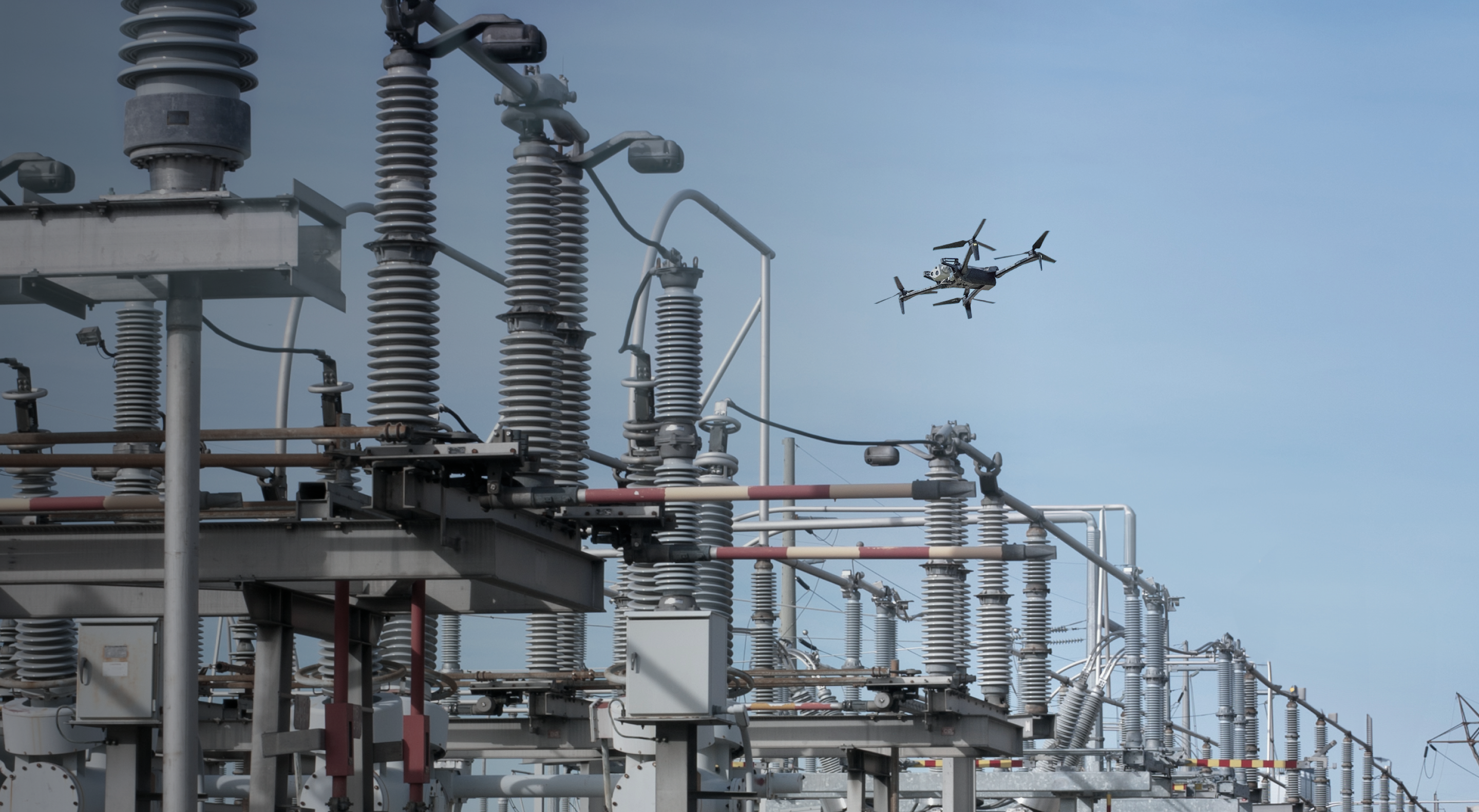
- So one example of this outside of the military space, which is really now
- massively accelerating
- is what's known as drone is first responder.
- So this is law enforcement, public safety.
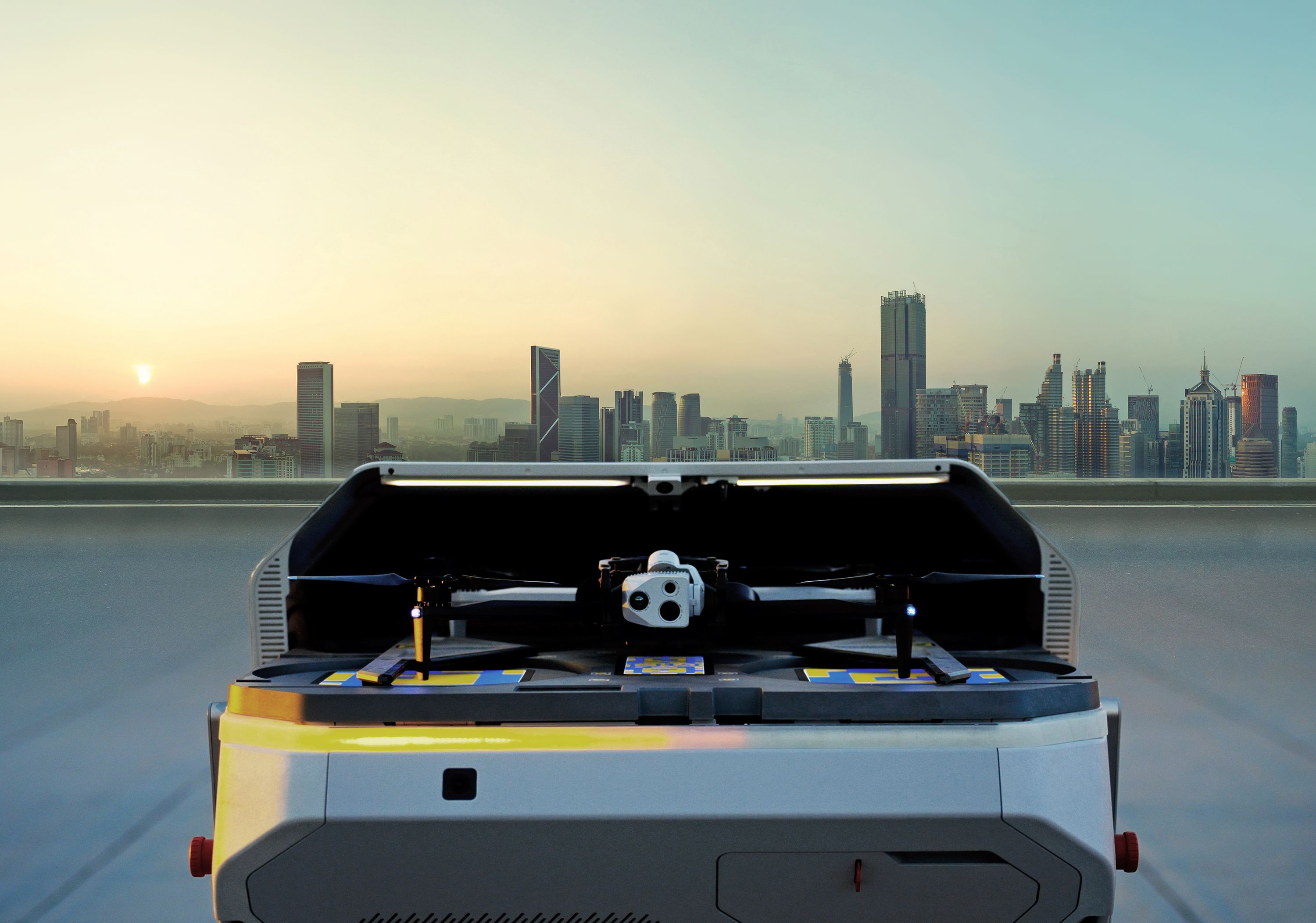
- And the concept is you have drones that live in network connected docking
- stations.
- And if there's an emergency, a 911 call, stolen vehicle, something, you can
- autonomously
- dispatch a drone to get there.
- And I think that this is happening now in most cities across America, and I
- think within
- a couple of years it's going to become the default expectation, and most of
- those are
- going to be skydio drones.
- And it's a different set of technologies that is required to do that.
- It relies more on autonomy, you use cellular connectivity.
- And the sort of legacy way of using drones in law enforcement was like, was
- more manually
- flown systems.
- And so, you know, our competitive vector against DJI is leaning into what we
- see as the future
- of the industry, which plays to our strengths and, you know, we're succeeding
- at that.
- And I'd say that it's not exactly the same in every market that we serve, but
- there's
- parallels to that in our approach.
- Now I still, you know, you talk about like they have access to our market, the
- one domain
- where they definitely don't have access is the USDOD, I mean, like the US
- military,
- the U.S. Army is not going to buy Chinese drones.
- I still think, and we've talked about this a lot internally, China is still the
- relevant
- competitive bar there.
- And there are some U.S. drone companies that have been unable to compete in the
- civilian
- markets and are now squarely focused on defense.
- If we actually want to be providing the systems that are relevant, we need to
- be providing
- systems to our soldiers that are as good or better than Chinese drones, because
- that's
- with 100% certainty, that's what our adversaries are going to be using on the
- battlefield.
- I think one of the first questions I asked a couple of years ago is, you know,
- why can
- I find, why I cannot find skydio drones for commercial purposes, you know, for
- family
- purposes, you know, take pictures and stuff like that.
- Why did you make that decision to pull from the commercial market?
- So we think about that as kind of consumer, I mean, there's different terms you
- can use
- here.
- Like we sell to a lot of commercial enterprise.
- We sell to construction companies and transportation companies, energy
- companies, but we no longer
- sell to, into the consumer space, you know, that was really a strategic thing
- for us.
- We initially started with a consumer product.
- We always felt like the potential for the technology was much broader than that
- .
- And in 2018, 2019, it really, the enterprise and government markets were taking
- off.
- And we were still a very small company and we were less than 100 people at the
- time.
- And I, you know, I think there's always this tension between like, you know,
- how much do
- you focus and how much you go abroad.
- And for us as a company, we just felt like the impact, the opportunity for
- impact, positive
- impact, and the business opportunity in these other markets was so big and so
- early and
- so substantial, it really deserved our full attention.
- And that's where our full attention has been for the last six years.
- Right.
- You know, today, if somebody mentions Jones, I think immediately the
- relationship and so
- like your mind goes to Ukraine.
- You've been there.
- So I just want it for you to share with the audience and with us here, you know
- , the first
- time you've been there, your experience, what you've seen, you know, the
- deployment, the
- capabilities, what you have learned, what, you know, what works, what doesn't
- work.
- Yeah.
- I mean, if I may, I can, I think there's a lot to talk about and a lot to learn
- there.
- I can tell this story a little bit just from like our path.
- So we, in 2018, 2019, we started competing for the Army Short Range Rec
- onnaissance Program,
- which I think was, in many ways, a very forward-leaning effort.
- It was a recognition that, you know, soldier-carried quadcopters were going to
- be really useful and
- that buying systems that had kind of civilian heritage made a lot of sense and
- might make
- more sense than sourcing from more traditional defense vendors.
- And the fact that the Army had that mindset is a big part of what enabled us to
- enter
- and compete there because we had no military business at the time.
- So we were a very small company.
- We went all in on that.
- And basically, like, built a product to the spec and the requirements that the
- Army had
- put out in the X-2.
- And we won the program and it was great for us.
- It was like, you know, our first big, significant contract of any sort outside
- of the consumer
- space and shortly after we won, the conflict in Ukraine started.
- And because, you know, we were making these, like, X-2 systems, that the U.S.
- military
- was buying, there was initially a lot of demand and, you know, we shipped a
- number of systems
- to Ukraine.
- And unfortunately, you know, the X-2 is a very cable product, but it had some
- real fatal
- flaws when it came to use on the front lines in Ukraine.
- And a lot of those fatal flaws were a result of things that we had done to meet
- the Army's
- requirements, which I think was a real bummer, you know, for everybody.
- Like, we'd done a lot of custom work to do what we thought was necessary that
- turned
- out to not only be orthogonal, but actually, like, backwards in many cases.
- Like, one example of this, we were using a radio that operated on a very narrow
- set
- of frequencies that was very easy to jam, which was essentially required as
- part of the SRR
- program.
- And that was a -- it was -- it was bad all around, it was a painful moment for
- us.
- And the outcome from that was, for us, was a real philosophical shift that we
- 're going
- to focus our engineering efforts towards doing the things that we think are
- going to make
- these systems useful for the end user, kind of no matter what the requirements
- say.
- And we're in the fortunate position of being able to do that, because we're not
- wholly
- dependent on the military business.
- We have a big and growing, spilling business is actually, at this point, much
- bigger than
- our military business.
- And so, you know, I -- and it's also just philosophically as a company.
- That's what we want to do.
- We want to make products that are as useful as they can be, and we're willing
- to take
- some financial and business risk to do that.
- And that's what we've done.
- And it's -- you know, I'd say because of it, with the X10, we have something
- that's way
- more capable, way more useful, and we have now positive feedback, not only from
- Ukrainians
- using them, but also from end users in the U.S. But it has been a bumpier road
- from a
- program standpoint for us.
- But ultimately, I think it's the right thing to do.
- And, you know, that's the path that we're following.
- I would say, overall, I mean, what the Ukrainians are doing with drones is just
- phenomenally
- impressive, like incredibly impressive.
- And I think it's an example of what's possible when there's just a really tight
- linkage between,
- you know, the practical realities of what the end users are doing and what's
- working
- and what's not, and the companies that are building them without a ton of
- bureaucracy
- or varying requirements or different stakeholders.
- I mean, it's like, if you can build something that works on the front lines,
- they'll keep
- using them, and if not, they won't.
- At this point, they have built up a very, very impressive domestic capability,
- and they're
- biasing very heavily towards using domestic systems, which I don't blame them
- for.
- I mean, I think it makes sense, and what they're doing is incredibly powerful.
- But I don't think that, you know, the blunt assessment is we do not have that
- motion yet
- in the U.S.
- I think, you know, CTO Miller mentioned the transformation and contact thing.
- I think that is a phenomenal effort, and in the six, seven years we've been
- working with
- the Army, it's far and away the most effective thing that we've seen of
- applying the right
- kind of pressure to technology vendors to deliver systems that work, and I
- think we really
- need to, like, massively double down on things like that and turn the dial
- heavily, especially
- in our class of systems, these smaller, lighter drones, to just, like, do the
- thing that's
- going to make it to the person flying it or using it and try to, like, try to
- dial down
- all the other, sort of, like, different requirements and stakeholder
- dependencies that can steer
- these things.
- Okay, again, I mean, when you went to Ukraine, obviously, you were building
- drones here,
- but you see now firsthand in the battle space how these drones are operating.
- What were your observations about how that was impacting the warfare, like,
- seeing that
- firsthand in the battleground?
- Well, I mean, at this point, I think there's, you know, you never know, like,
- what exactly
- what the ground truth is, but the statistics are, like, are pretty staggering.
- I mean, the majority of strikes now are carried out by drones of all different
- shapes and
- sizes, many of them, like, these small, kamikaze drones, and, you know, a lot
- has been said
- and written about this, but I think it's pretty undeniable at this point that
- these things
- are, like, critical, critical tools on the modern battlefield.
- Now, there's debates of, like, maybe some of that is because the Ukrainians don
- 't have
- access to some of the assets and resources that we have, and I think that there
- 's almost
- certainly some truth in that, but, you know, the idea that, for a few thousand
- bucks,
- you can build an intelligent system that's going to carry a munition or surveil
- the battlefield.
- I mean, there's just no denying, I think, at this point that that's
- transformative.
- And the way that that's coupled with their industry is also incredibly
- impressive.
- Like, I've been, I think we have the biggest drone factory in the U.S. I've
- visited factories
- all over Asia.
- I have never seen a drone factory with the level of intensity that I've seen in
- Ukraine.
- I mean, there's thousands of people there building these strike drones, and on
- a big
- screen overhead they're playing videos of those strike drones delivering
- strikes against
- Russians.
- So it's just, like, you know, the atmosphere that that cultivates is, I think,
- sort of singular
- and unique.
- That's incredible.
- My next question to you was that as war in Ukraine was happening and you were
- building
- Skydio, you know, chat GPT moment happens.
- So now you see a more and more these systems really adopting AI and utilizing
- it for, you
- know, the aerial domain.
- Now, how did that shift happen with Skydio?
- So in many ways this is the early bet that we made.
- Like we started the company in 2014 believing that you could build the skills
- of an expert
- pilot into the drone itself using AI.
- And I think we were among the first adopters, if not the first, to ship some
- real products
- that use deep learning based computer vision to do useful stuff.
- So, you know, our drones have a really advanced autonomy stack.
- Much of it is based on deep learning and machine learning to process the data
- that they get
- and turn it in to useful action.
- You know, I think that the new opportunity that is afforded now, which we're
- very excited
- about from the standpoint of turning these things into infrastructure and
- shifting the
- model towards, like, one-to-many or fully autonomous operation, is to have the
- drones
- be more like autonomous agents that we now work with in the sort of chat GPT
- software
- domain where you can task it with something high level and it will just go off
- and figure
- it out.
- And that's something that we're starting to play with that I'm super excited
- about.
- Like, you know, the mental model for me is that the drone should effectively
- act like
- an intelligent partner where, you know, you can task it with something you care
- about and
- it can go off and do it and report back based on how it's going or some new
- information
- that might be relevant to you.
- And I think that that's going to apply in all the domains that we serve,
- military, public
- safety, critical infrastructure inspection.
- Right.
- Did you had to alter just your products based on the large language models
- release or you
- were still relying on the AI models that you built?
- I mean, we, you know, there's different dimensions to this.
- Like, we are heavy users of AI technology internally for all kinds of things to
- make
- us, you know, just make us a more efficient, better company and a lot of that
- ties to how
- we develop the systems and how we curate data and how we, you know, we use
- bigger models
- as this kind of like teacher/student model.
- We're constrained in terms of what we can run on the drone itself by the
- computer and
- power available on the drone, but there's this sort of teacher/student paradigm
- where
- you can run like bigger, heavier models offline and use those to train lighter
- models that
- run on the vehicle.
- So we do all different kinds of stuff like that.
- So I would say that we're, you know, we're heavy consumers of kind of like
- state-of-the-art
- LLM large model technology for our own development and to shape the technology
- that we're using.
- And then I think over time, we will be heavy users of those things as part of
- our product
- that sort of lives in the cloud and orchestrates what the drones themselves are
- doing.
- Right.
- I mean, obviously the swarm also have entered now the discourse of how these
- drones can
- synchronize and obviously communicate with each other.
- How do you see that evolving in the next couple of years or months maybe?
- So the idea of having multiple drones doing stuff is like, it's very alluring
- and, you
- know, it's either terrifying or exciting depending on your perspective and what
- you're thinking
- about.
- I certainly think it's the future.
- The thing that I think really, you know, it's easy to just sort of say swarm of
- drones
- and then stop there.
- What really matters is like, what's the task to be accomplished?
- And so again, using the public safety example, what we're enabling now is that,
- you know,
- you can have a fleet of dock drones, like dozens of dock drones deployed across
- the city
- and one operator can task and manage them.
- And the analogy that I use is, you know, it's historically flying a drone is
- like playing
- a first-person view video game or something where you're in the character, you
- 're directing
- it at a pretty low level.
- We want it to be more like playing a strategy game where, you know, you're
- thinking about
- the task to be accomplished and then you can manage and dispatch a lot of
- assets to
- go and maintain situational awareness or map something.
- So we're, you know, we're very excited about multi-drowned stuff.
- We're coming at it from the angle of like, let's work back from the task to be
- accomplished
- and then make it as easy and efficient to do that.
- You mentioned earlier, you have moved like largely into the DFR space, the
- drone as a
- first responder.
- Can you tell us a little bit more about that, highlight maybe a couple of cases
- of like
- how that was used for a positive outcome in the cities or states across the
- nation?
- Yeah.
- So it's almost like an hourly basis now that transformative stuff is happening,
- and it's
- really a testament to our customers, the work they're doing.
- I can give you a few examples.
- Oklahoma City Police Department, they were one of our early adopters, and one
- of the
- first incidents that they had was one, there's a freight train that goes
- through town, and
- the train operator called 911 in a panic, afraid that he might have hit
- somebody on the
- tracks.
- And this is a multi-mile long freight train, like a huge thing.
- It was crossing over a bridge.
- It was like very difficult to access.
- They launched the drone.
- They got there in a few seconds.
- They could very quickly fly up and down the whole train, and they saw that
- unfortunately
- there was a homeless person asleep on the tracks that had been hit by the train
- .
- But because they found him so quickly, they were able to guide in first
- responders who
- got there in a few minutes and saved his life, and they attributed that to the
- drone.
- Like I think without that, it probably would have been like minutes or an hour
- rather than
- seconds to locate this person.
- There was an example in Albuquerque, New Mexico, where a neighbor reported
- shots fired from
- the backyard.
- The police showed up, and they had a drone in the air, which was able to show
- them that
- it was two nine-year-olds with their father's gun.
- It was a very sad situation.
- But because they could see that, they could de-escalate in a way where nobody
- was hurt.
- And the sheriff said that without the drone, they probably would have shot
- those kids because
- they didn't know what they were dealing with.
- And these are a couple of examples, but this stuff is now happening on an
- hourly, almost
- a minute-by-minute basis.
- I don't think people quite realize the scale that it's already at, but there's
- 300 million
- 911 calls roughly annually in the US.
- And I think within a couple of years, a significant percentage of them are
- going to have drones
- showing up there in a few seconds to just change the nature of their response.
- And I feel compelled to say this, like the technology and the capability that
- we're delivering
- to public safety is, unfortunately, I think far more advanced than what we're
- delivering
- to the military because we're not constrained in that world by these sort of
- like requirements
- and purchasing process.
- One of the things that I've come to appreciate about working with public safety
- is that there's
- very fast feedback cycles and very direct accountability.
- Like if you can present to the chief something that's going to help them do
- their job better,
- they will deploy it.
- And if it works, they'll buy more of it.
- And it doesn't.
- They'll fire you the next week.
- And we love that kind of environment where you can move quickly and if your
- stuff works,
- you scale it and if it doesn't, you don't.
- And the scale is also really high.
- I mean, major US cities are now similarly sized customers to us than the US
- Army, which
- on the one hand is great, but on the other hand doesn't seem quite rational in
- terms
- of like the need and the impact the drones can have.
- How fast do you have seen this scale really come to fruition?
- I mean, in how many states you started and how many you are right now if you
- can share
- that?
- So we're getting close to a thousand public safety agencies across the country.
- I would say the drone is first responder concept, the kind of autonomous
- operation has
- really, it's just exploded in like the last 18 months.
- And this is something that we always held as like one of the most compelling
- applications
- of the technology.
- We had customers that were kind of dabbling in it.
- And I think for a combination of reasons, like the maturation of the technology
- , the
- regulatory environment for beyond visual line of sight operation opening up.
- And then really the most surprising and most positive and one to me is
- community acceptance
- and actually community demand for this.
- Like, you know, the idea of AI enabled drones flying over US cities is like,
- you know, that's
- going to unsettle some people and there are real concerns there.
- But I think what's happened is that the impact is just so incredible.
- When people see videos of it, they, you know, they want it for their cities.
- Like, you know, council members want it, citizens want it.
- And so it's all three of those things together that I think are driving this
- explosion.
- You know, we're on the order of hundreds of autonomous docking stations out
- there now
- in the US and that's that'll be thousands in the next six months probably and
- it's, you
- know, it's on a pretty steep exponential, I always say.
- Let's go back to we just had the Army CTO speak, you know, we're listening.
- There's a lot of push right now, especially in the Army, from the White House,
- you know,
- broader Department of War, you know, to go faster after drones or the counter
- drone technologies.
- What do you think are some of the things that we're getting it right and what
- are some of
- the things that we might be getting it wrong now?
- So I think that the, like, the high level directives that are coming down now
- from Secretary of
- War and the senior leadership, I think, are pretty much exactly right.
- I think that they really get it and they're pushing in exactly the right
- direction.
- And then at the end user level, there's just, like, incredible enthusiasm now
- and I'm continually
- impressed.
- Like, I got the chance to visit 101st, one of the transformation and contact
- units that
- CTO Miller mentioned that was deployed with a bunch of our systems and, like,
- one, just
- the skill level there but then two, the enthusiasm for deploying and using
- drones is incredibly
- high.
- I think that we're still grappling with a lot of the, like, sort of disparate,
- more bureaucratic,
- like, stakeholders involved in setting requirements and deploying these systems
- .
- And it's all well-intentioned, you know, like, there's a security process, like
- the
- authority to operate that you have to get.
- There's, like, sort of this notion of having a drone agnostic software
- ecosystem that everything
- has to integrate with.
- And, like, those things are well-intentioned but it creates disconnects between
- what I
- think ultimately matters most, like, is the system useful to the end user?
- And there's not as much accountability from these other groups and other
- organizations
- towards just, like, meeting the need.
- And so the thing that I think we should just, you know, I mentioned this before
- , like, the
- transformation and contact initiative, like, let's get systems to end users,
- let's have
- them use them and let's just really, like, diligently follow wherever that
- leads us to
- deliver the capability that they need.
- Like, I think that's what we need to do and double down on.
- And one of the beauties of small drones of the sort that we make is you're not
- making,
- like, every purchase is not, like, at 10 or 100 or $1 billion or $10 million or
- $100
- billion decision.
- I mean, these are, like, these are relatively cheap things.
- I think you can afford to, like, to, you know, move faster and buy in smaller
- quantities
- at lower levels and give more discretion to the people that are actually using
- them.
- You know, as we show more appetite for these systems, you know, first-hand that
- the scaling
- is an issue.
- And then you hit the bottlenecks that either are controlled fully by China that
- you have
- also experienced.
- Yeah.
- But so how do you scale these systems?
- So it's, on the China point, this is, you know, I probably could have mentioned
- this before.
- So we had the great honor of being sanctioned by the Chinese government last
- year for the
- high crime of selling drones to the Taiwan Fire Department.
- And you know, they have made it their business over the last--
- Can you tell this story because I think it's a fascinating story.
- How did you find out, you know, what was the reaction when you--
- Well, we-- so, you know, we got some, like, slightly advanced early rumblings
- that this
- might be coming.
- And then it was officially announced.
- And within 24 hours of it being officially announced, the Chinese government
- was showing
- up at suppliers or dependencies that we had in China shutting them down and
- seizing their
- equipment.
- And we had known for years that we had risk, and we'd done a huge amount of
- work to get
- supply chain dependency out of China.
- We still had one real critical dependency, which was our battery, you know,
- China really
- had, like, a stranglehold on the type of drone battery that we were using.
- And, you know, they shut that down.
- And really have-- since then have been going through, like, second-level
- dependencies to
- try to, like, really to try to kill us as a company, my positive view on it is
- that they're
- just helping to make sure that our supply chain is secure.
- And I think that, you know, we now can pretty confidently say, for anybody
- operating at
- any more close to our scale, have by far the most secure supply chain in the
- world, partially
- out of a lot of proactive work and now out of necessity.
- So the question of scale comes up a lot.
- My, you know, I have been asked at this point probably, like, hundreds of times
- by folks
- within the Department of War, you know, like, what's your production capacity?
- How many can you build?
- How quickly?
- And I'm kind of like, we-- whatever you buy, we will build.
- Like, we, you know, we have proven that we can build thousands of these things.
- And I think it's really a question of, like, demand, not supply.
- You know, we were with the Army Short Range Reconnaissance Program.
- We were pulled back into SR Tronch 2, and were able to deliver hundreds of
- systems in
- a week because we have a civilian business and we have a lot of capacity
- established
- through that.
- So, you know, I think that if the demand is there, like, we have the capacity
- to scale
- to meet it.
- It's not going to happen overnight, but we're not talking about years here,
- either.
- Right.
- You know, semiconductors, for example, our government has imposed expert
- control rules
- in order for you to have a more of a equal playing field with Chinese
- competitors.
- What would you recommend our government should do to it?
- Just give you space, maybe, and then not maybe so much resources because I
- think you've established,
- you know, the infrastructure and everything, but, like, enabling you to play,
- you know,
- in the same field, not just in the United States, but also in Europe and the
- rest of Asia.
- My number one thing is pretty simple.
- And this is not just for SkyDew, I think this is for the whole domestic UAS
- industry.
- Just buy best of breed drones and buy a lot of them, you know, like our
- soldiers need
- them.
- They have all kind of other applications across government, and that's the
- single biggest
- thing.
- Like, the best companies, if you just, like, give the power to the end-user and
- buy a
- lot of the systems that are working for them, all good things are going to
- happen.
- You know, like, the companies that are making the best products are going to
- thrive and
- succeed.
- They will feel competitive pressure to keep improving their products.
- The higher the volumes go, the lower the prices get, and the more competitive
- that we become
- globally.
- So, you know, that's not the only thing, but I would like, far and away, if I
- was giving
- one piece of advice, that is it.
- And, you know, if you look at Ukraine, just the class of systems that we make,
- you know,
- these kind of small surveillance drones are being used on the order of hundreds
- of thousands
- per year and were, as a country, still in the single digit thousands, you know,
- maybe
- like a few days of supply in a similar conflict.
- And so, I think the, like, the need is there, and the U.S. government has the
- potential to
- be a, you know, a big enough purchaser to have real market power and to help
- drive efficiencies
- in supply chain, and rather than trying to, you know, figure out which
- companies that
- are going to support or give loans here or use strategic, you know, like, that
- stuff,
- I think, is all around the margins.
- The single biggest best force would just be to buy a lot of the best systems
- that are
- working for the end-user.
- Right.
- I will just quickly ask you about our allies.
- I mean, you talked about Taiwan as our partners, and you have provided the fire
- department
- there with your drones.
- Do you have any other relationship with any of our allies in terms of, you know
- , the engagement,
- in terms of, I mean, you and I met in Australia way back when I--
- Absolutely.
- I mean, I would say, you know, I trouble remembering which of these we have
- announced publicly
- and which we have not.
- It's significant, I mean, dozens of our allies around the world, they're, like,
- ministries
- of defense, are buying and using our drones in similar ways to the US
- government for real
- time awareness on the battlefield.
- And do you get a sense that, you know, the procurement process is going to move
- on faster
- because of what's happening in Ukraine?
- There's a lot of discussion in Europe, especially, but, you know, building and
- buying new capabilities,
- so.
- Yeah, I would say, like, proximity to, like, potential conflict is a pretty
- good indicator
- for, like, rationality when it comes to drones.
- So, the countries that are in Europe and closest to Ukraine, I think, feel that
- most viscerally
- and similar in Taiwan, so we certainly see that, you know, like, sort of,
- people leaning
- in and accelerating and wanting to buy and deploy more of these systems.
- Right.
- We have a couple of minutes left, Adam, but I wanted to ask you and project the
- future.
- You know, we're talking about drones.
- We talked-- I interviewed General Rainey earlier about the human machine team
- ing.
- I think I feel like we're in that space now in which, you know, every of our
- soldiers
- should have a drone that other-- does a reconnaissance before or helps in some
- kind of a kinetic fashion.
- If you project 27, 28, 29, and 30, like, what would you see the vision of this
- aerial domain
- evolving into what?
- So, one of the patterns that I've seen, you know, throughout my career, I'm not
- that old
- and not that wise, but I'm getting older, maybe wiser.
- You know, I think it's almost always the case that, like, the future's here, it
- 's just not
- evenly distributed, and so, you know, when I think about what's coming, I'm
- looking at
- what our most advanced customers are doing today, and I would say the, like,
- the obvious
- themes there are one to many remote operation where a single operator is
- commanding multiple
- drones remotely and autonomously.
- They're not on site launching them by hand.
- They're sitting in front of a computer managing a bunch of systems that have
- launched and
- taken off remotely autonomously from a dock, and I think that that, you know,
- in spite of
- the incredibly impressive things that the Ukrainians are doing, like, that wave
- has not really
- broken in the defense world yet, this sort of, like, fully autonomous operation
- of small
- drones at scale, but it 100% will, because I can see it now happening in the
- civilian
- world, and I know that it's technically possible, and I, you know, I think it's
- the things that
- you can do with that are both terrifying but important for us to, like, you
- know, we want
- to be on the front of that, not the back end of it as a country.
- Right.
- Adam, I want to thank you so much.
- I mean, for your resiliency, I mean, you've been there for a while, you know,
- enduring
- all these challenges with a lot of ups and downs, but you're still here, and,
- you know,
- Skyder is doing well, and you have a capability that is now, as we heard used
- both domestically
- and internationally, so I really want to thank you, thank you for perseverance,
- and for all
- the challenges you have overcome by, and thank you for coming here.
- Thank you.
- I really appreciate the opportunity to be here.
- Thanks.
- Thank you.
- Thanks.
Watch Time
33 Mins 50 Secs