

Enabling defense forces with intelligent and autonomous drones
Explore how intelligent and autonomous drones are used in defense. Small drones, also known as sUAS, have become essential in modern combat. They provide a mobile, organic tool for intelligence, surveillance and reconnaissance (ISR), supporting timely tactical decision-making and increasing flexibility and adaptability. See how the right kind of drone can enable a system of distributed small, secure, smart, and scalable platforms that will offer game-changing advantages to modern defense forces.
Learn more about Skydio for Defense.
- The future of this space is AI and autonomy.
- You need to be able to trust the drone to fly itself.
- The value that drones can provide has been proven for a lot of these use cases.
- So for first responders, for soldiers, drones can do incredible things.
- The soldier carry quadcopter that's easy to toss in the air, see what's on the
- other side of the building, see what's on the other side of the hill.
- They become important for national defense.
- The fundamental capability that the product offers
- is basically putting
- sensors in important places that are too dangerous, too difficult,
- or too expensive
- to put a person. The big investments that we're making, the customers
- that we're
- serving, and the impact that we're having is more important today
- than it's ever
- been.
- All right, welcome to our webinar.
- Uh, this afternoon, uh, we're gonna provide a lot of new
- information about, uh,
- today's advanced autonomous drones and, uh, how they work for, uh,
- military forces and defense forces.
- Um, and also answer any questions you may have
- about those drones.
- Uh, so before we kick off, I'd like to start off with kind of two
- points of context
- before we get started.
- Uh, the first is that small unmanned aerial systems,
- or sUAS, uh,
- have become, are coming to play increasingly essential
- roles for a whole variety
- of, uh, government missions.
- Um, the war in Ukraine, you know, has demonstrated what a lot of people,
- I think,
- already believed, which is that, uh, drones are gonna increasingly be central,
- you know, uh, cen- uh, essential on the modern battlefield.
- Um, and the US government and other governments around the world
- are kind of
- rethinking, uh, what it takes to be successful in
- long-term integrated
- deterrence, and really what it would take to win if,
- you know, a major war should
- occur. So there's a shift, kind, kind of an ongoing shift right now in,
- in a
- lot of defense forces away from, you know,
- moving a little bit away from platforms that are really expensive, complicated,
- take a long time to develop, to, uh, the type of platforms, and here I'm gonna
- quote, uh, Deputy Secretary of Defense, US Deputy Se-
- Secretary of Defense Kathleen
- Hicks, "Tools that are small, smart, cheap, and many."
- Uh, autonomous drones kind of fall directly
- into that category.
- The second point is that in the history of nations,
- you know, wars or even kind of the outcome of
- long-term great power
- competitions are often decided, you know, not in battle but by the
- ability of the nation, of a nation to field and, and,
- and sustain a
- military force within fiscal constraints.
- And really to kind of produce equipment and military capabilities that
- can leverage the supply chain and mobilization considerations
- of that defense era, kind of the vulnerabilities
- and opportunities within,
- uh, a supply chain or mobilization capability.
- And that ties to, back to the small, smart, cheap, and many, uh, uh,
- debate. Um, it also ties into the idea
- that deterrence, uh, is
- closely, closely related to defense readiness over
- a long period.
- And, uh, many believe that small UAS, which are essential on the battlefield,
- uh,
- can also be really, really valuable in, uh, you know, automating, for example, uh,
- uh, condition, uh, facility condition inspections.
- Uh, or inspections of assets like, uh, ships, aircraft,
- other kind of critical mil-
- military infrastructure, uh, to kind of more accurately determine the
- timing of conditions-based maintenance at, in a more cost-effective manner.
- Um, so with those kind of key points out there
- up front, let's get into the
- details. Um,
- for the viewers in the, uh, that are watching this live,
- feel free to drop your
- questions and we'll answer them as we go. So we're not gonna hold off to the end.
- You have got questions about a topic we're talking about, throw it right in there.
- Um, and I'll start with the, uh, kind of the, the evolution,
- the recent evolution
- of drone technology. I'll start with a question for Chase.
- Um, so Chase, uh, you know, given your background as an operator, and
- you've, you know, you've spent a lot of time, uh, deployed,
- you've spent a lot of
- time using different types of drones, different earlier generations of drones.
- Uh, can you tell us a little bit about the
- recent evolution of, uh, drone
- technology?
- Uh, thanks Marcus. So, uh, yeah, from my experience operating, uh,
- sUAS, uh, and the teams, uh, over the years and, uh,
- integrating new UAS tech- technologies for, uh, naval special
- warfare, what, uh, what I've seen is a shift in, uh, sUAS
- capabilities. Uh, until recently regarding these platforms,
- it was always a yes, but mentality.
- Uh, meaning that an operator could have, uh, you know, the best
- IR camera out there, but, uh, they would have to sacrifice, uh,
- a daytime
- camera's capabilities. Or, uh, they could have the best of both
- worlds, uh, in that, but there would be a massive reduction in
- flight
- times. Um, but however, due to the hardware evolution over
- the fa- or over the past few years, uh, we've seen incredible
- improvements, uh, to the size, weight, and power requirements with
- payloads, uh, in this size of UAS. Um,
- this has, uh, led us,
- uh, to improve payloads and camera optics.
- Uh, and with new materials and manufacturing processes, uh,
- for airframe constructions, we've seen increases in flight times, uh,
- ruggedness, um, portability, and better designs for
- rapid launching of platforms. Uh, which is key in these, uh, stereo
- locations where our war fighters are, are operating.
- Um, we've also seen a term from hardware, uh, and becoming
- a more software centric, uh, in the sUAS, uh,
- realm. Uh, AI powered UAVs, uh, are now
- massive advantages for our operators.
- Early UAS systems were primarily controlled, uh, by human
- operators requiring them to be expert pilots and face down into controllers
- during operations. Uh, and these older systems lacked advanced
- autonomous capabilities, which required, uh, long training time, or
- sorry, long training pipelines and higher mishap rates, uh,
- due to human factor errors, uh, for our war fighters such as, uh,
- task saturation, training and currency deficiency, um,
- to include, you know, the stress, the pressure,
- and the fatigue of being forward.
- Uh, with- For, uh, the ability for these autonomous
- operations is a massive reduction in cognitive load.
- Um, and capabilities like obstacle avoidance
- has created
- safeguards, uh, to prevent operators from losing
- situational
- awareness, potentially crashing, uh, objects or crashing into
- objects that could be overlooked.
- Um, from my experience, I know that it's, uh, extremely easy to
- get sucked into these operations and make mistakes that could cost you
- your UAV, uh, and your organic, uh, ISR while you're
- on target. Um, not only does the software, uh, expand
- capabilities, but it also can massively reduce the
- time and cost it takes to train these UAS operators.
- Um, most services currently, uh,
- treat these UAS pilots as a secondary job, uh, require members to
- attend multi-week courses of instruction, uh, to learn multiple
- platforms, and put extra burden on the units,
- uh, to maintain currency and proficiency.
- Um, I think one of the big, uh, other factors that we've seen over the,
- over the past seven years is, uh, the, uh, evolution
- and the ban on Chinese UAVs. Uh, I feel like as a whole
- we went, uh, to some of these companies, uh,
- because the price point scalability, uh, and due to Chinese
- or due to the, uh, Chinese manufacturing processes.
- But with these bans, American companies have stepped up
- and built higher quality
- and much more technologically advanced UAVs, uh, and we're
- seeing it increase, uh, rapidly.
- Um, I think the last evolution of sUAS
- that I wanted to
- touch on quickly was, uh, the cybersecurity aspects.
- Uh, in the years prior, we utilized these platforms in the war on
- terror
- against adversaries that we believe not to, uh, have the
- technological and aptitude, um, that we did
- and,
- uh, we didn't raise concern about it.
- Um, but we were mistaken, um, which led to the
- requirements and advancements, uh, develop, uh, the ability to
- encrypt the data coming off the aircraft during flight and that's stored
- on these platforms. Um, through this we've learned why it's so
- critical,
- uh, to have processes such as, uh, the NDA compliances
- and, uh, Blue UAS to keep this data and our war fighters
- safe.
- Awesome. Thanks, Chase. That was super informative.
- Um, you know, I can just chime in that, you know, having been a company
- commander and a battalion commander, uh, in my career, those kind of
- burdens on the operator and, and, and the maintenance and the, and, and the,
- the
- training of, of, of a some of the early systems really add
- up, uh, once you
- start, you kind of multiply them across a unit.
- And we talk about the cognitive load of the operator, but that's, that's a load on
- the unit commander that I think the, the, the, the autonomy of these
- modern drones is really gonna reduce that.
- Uh, in addition to some other things we'll
- talk about later in this, in this, in
- this, uh, in this webinar.
- Um,
- let's, uh, let's kind of move on, uh, to some real world observations.
- Um, and I'll, I'll pass this question over to Justin.
- Um, you mentioned Ukraine up front, but, you know, what are some of the most
- important lessons, uh, that we're learning from Ukraine
- and elsewhere around the
- world, uh, at, in, in recent operations? Justin?
- Justin, we can't hear you. Are you on, uh, on mute?
- Let's give him a second to see if he can, uh,
- fix that, uh...
- All right, Justin, you're back on. Um, wanna try talking again?
- Chase, do you wanna share any points from, uh, from Ukraine from, from what you've
- seen?
- Yeah, absolutely. Um, so what we've seen in Ukraine is, uh,
- that drones are
- everywhere, right? Uh, currently the Ukrainians are utilizing,
- uh,
- or are estimated to be losing about, uh, 10,000 of these, uh,
- platforms per month, um, because they're, they're utilizing them
- because they're so essential on, uh, the battlefield and to have this
- technology out there. Um, one of the big points is
- the having that ability for organic and, uh,
- ISR in both organic and tactical environments.
- Um, one of the other big things as you can see
- on the screen right now, um,
- that we're learning from there or some of the case uses are the
- documentation of war crimes, um, with the 3D modeling.
- And this is something me that, um, you know, I didn't utilize during my time
- in service, but I've seen, uh, and can think of a million use
- cases now that is a capability, uh, as far as we move
- forward.
- Um, and then the biggest thing is, is giving, uh, our, our battlefield
- commanders real time, uh, real world feedback so they can make the
- decisions, uh, on what and what to do with the, uh,
- the movement of troops and to ensure, uh, the best safety
- they can get.
- Uh-
- Justin, you, you back on yet?
- Still can't hear you.
- Yeah, I mean, I'll just... Chase, I, I'll just add to what, what, uh, what,
- what,
- uh, you mentioned there. You know, we've, we've had a lot of folks, folks in, you
- know, as Skydio as a company, we've, you know, we're dedicated to, uh, to
- supporting, um,
- our, our partners and allies around the world.
- And, uh, you know, we've, we've been keeping a very close eye on
- what's happening
- over there along with I think many other US companies.
- Uh, but you're seeing, you know, uh, the counter to, uh, the increased use of
- drones is increasing, uh, use of EMS, um Uh, operating in very,
- you know, contested environments.
- Uh, you know, more sophisticated ways to go after these.
- More ...
- Going after the, the, the supply chains.
- Uh, and really having a reliable, secure, uh, system that has the ability to kind
- of, kind of
- develop in that area can be critical.
- Um, and I'll, I'll, I'll t- I'll p- pass it over to Chris here, see if you got
- anything to, to, to, to throw in.
- Yeah. I mean, I, I think a few things we've seen as the
- war's progressed.
- I think there's a ... The ... There was this idea that we could, um, you know,
- that
- operators or, or military units could deploy these
- small, attritable assets.
- I think that worked early on in the war.
- But, um, as adversaries' capabilities became more
- advanced,
- uh, small, attritable assets didn't s- stay in the air very long.
- So I think we've s- seen a shift from using small,
- attritable assets
- to now valuing, um, cost per orbit.
- So how long can you keep a drone in service? How long can it operate?
- You know, that, that impacts things like operational
- readiness, resupply,
- just the ability to have access to systems, um, and be able to
- operate. So I, I think there's this balance between kind
- of smaller
- UIS that are cheaper but not, you know, to the very, like, low cost
- point to where, you know, they're, they're fully attritable and, and don't
- have any capability within the environment.
- So there's sort of a balance there.
- Um, as the battlefield has become more
- complex, I think the ability to,
- um, get feedback from that environment and integrate that into software
- updates or, or capability improvements rapidly,
- and deploy that out to the
- field. Um, obviously, I think everybody knows as, uh,
- as, um, you know, we advance capabilities, enemies advance capabilities.
- So I think, you know, companies and,
- um,
- the military's ability to understand what the threat landscape looks like,
- develop new features or capability to mitigate that
- and quickly deploy it to the
- field, uh, has become front and center over the last probably 12
- months and, and growing more rapidly within Ukraine.
- And I, I think that's something as we look at
- contested environments in the
- future where military ... US military forces will be operating is,
- is be- gonna
- become a, an imperative.
- Justin.
- Can you hear me now?
- I think ...
- Yep, we can hear you.
- Yeah. Sorry about that. Uh,
- living out here some- something's going on with my Wi-Fi,
- it's down.
- So, uh, [laughs] right when this starts, so I apologize.
- Um, but yeah, just double tapping on everything that,
- uh, Chris
- and Chase said, right? Like being able to have a smart drone
- that can
- evolve and grow with you. Uh, but while it can also
- i- in a multi-use drone, being able to support the tactical ISR
- uses,
- um, but also being able to ... and support,
- support the inspection use cases.
- And really that's what we've gotten out of Ukraine, right?
- We, we've, we've got these on the, on the front, uh, lines, but we're
- also being able to ... and, and while they're operating in GPS denied
- environments. But then we're also working, uh, with the
- Office of the Prosecutor General to be able to document war crimes similar to
- this,
- uh, image that you're seeing here, with how w- we've been able to go
- and, and help empower those people to be able
- to move through all the
- damage and, and things that have been done very quickly so
- that they can
- document it and, and be able to present it as, as they're
- going on in, in this process. Uh, it's, it's, it's been a game
- changer for a lot of the, uh, the people in Ukraine,
- both from an ISR and a
- tactical user, but also from the support and,
- and the people in the
- rear.
- Yeah. That, that idea of the ability to rapidly, uh,
- deploy
- software updates to, uh, you know, as a, a, an intelligent drone is, is
- pretty powerful. Um, I, I was listening to the comment on the Marine
- Corps right
- before he re, uh, um, he finished up his term this summer.
- Um, and he was talking about, you know, observation from the war in Ukraine, and a
- lot of people thought it was gonna be over very quickly, which i-
- in a lot, in a
- lot of wars, that's kind of the, the, the thought going in and then, then that's
- not what happens. It, it, it ends up being a long, protracted war.
- And in those long, protracted wars, I mean, history has shown that,
- that the side
- that can adapt quicker, that can innovate at, at, at speed
- is, is, is,
- is, uh, i- it can be game changing, right?
- Uh, and, and t- in today's environment, that happens at the speed of software.
- Uh, it doesn't happen at the speed of
- hardware. You can't iterate that fast.
- So I think that's, that's kind of a, a key observation here.
- Yeah. So I, I think this is a topic where we'd like to elicit some
- conversation
- with, um, you know, with
- users who are on the line. Um, when we look at the ability to deploy
- new features and new software to the field, I think what we're seeing, um,
- at least
- within the U- the US military or, or DoD is, is an inflexible
- process that i- that is not adaptable enough yet to be able to
- quickly, you know, approve, scan, make sure a software
- update is secure and get that out to the field.
- So we're seeing a slow cycle here, you know, whether that's just built
- into, you know, legacy approvals and, and not being able to move
- fast on deploying software to the field in a, in a lot of security provisions.
- Um, but, but we do feel like it's an area where,
- you know, there needs to probably
- be some change on the process structure and approval side, um, to be
- able to respond to emerging requirements and, and operational
- needs in the field. And that's heavily gonna rely on our
- ability to develop, test
- and, and deploy software quickly.
- So would, would really love to see any comments,
- questions,
- um, you know, from listeners calling in o- on this particular
- topic to, to have a little bit more robust
- discussion.
- Yeah, absolutely. As those questions come in, I'll,
- I'll start forwarding them to,
- to the team here, um, 'cause, 'cause I think this is also a really,
- really
- interesting topic, uh, really about the future, right?
- Um, a- another really interesting topic to me,
- and, and Jason just t- or Justin
- just touched on this, uh, briefly, is, is this idea of, uh, uh,
- the uses of drones for defense readiness, um,
- both in the theater of operations but also kind of off the battlefield
- throughout
- the, uh, the supporting establishment.
- Um, and kind of wanna start thinking about
- the, uh, the, the value
- proposition there. Uh, so Justin, I'm gonna turn this back over to you.
- But, you know, other than on the battlefield, you know,
- where, where are we seeing
- or, you know, where are our customers or, or, or, or, or
- a- government agencies really seeing the
- most, uh, the, the greatest value
- proposition from using drones, uh, to support defense readiness?
- Right. Well, I mean, it, it, it all kind of ties back together.
- So having a capability to be able to
- succinctly capture data and push that
- down to the lowest common de- ... level so that they can act on the data,
- right? So being able to give organic ISR at the,
- at the small
- unit level. So we do that. It- it's, it's adjacent, right?
- But as we're doing reconnaissance and doing some, um,
- pre-planning, we're able to fly the drones over
- and give them, uh,
- leverage a function we call map capture.
- So they're not waiting on a satellite or a theater level
- asset to be able to get the data, right?
- So
- quick information right now about what's happening right where I need to go
- really tightens that OODA loop, and it, it makes it where they can iterate and,
- and
- come up with a plan and adjust the plan, uh, at, at the
- speed that they need to in order to, uh, be safe and secure.
- Um, and then as we go into security, right?
- Um, being able to provide that site security, so think garrison
- or forward
- deployed. So whether you're at an operating base
- or you're at, uh,
- you know, a naval base, right? You're able to fly the perimeter and
- serve as a responder to an incident that might occur.
- Maybe it's a gate runner, uh, maybe it's an accident that happens.
- Um,
- you know, we had some situations recently, uh, at,
- at a couple of different bases around where, you know, there was a, a, a
- threat to self-harm and, and a fire that they were
- able to deploy the X2 and be able to support that so
- that they had better essay on
- the fire, and they were able to find the, the young woman that was, uh,
- potentially gonna do self-harm, uh, very quickly once they had
- identified who she was and her, and her license plate.
- And they were able to fly around, uh, uh, congested areas and, and,
- and knowing what the car looked like, find it very quickly.
- You know, and then, and then you go inspection, right?
- So when you think about being able to have an asset that can
- give you both preventative maintenance, so think large
- vessels or aircraft, as you're scanning them wh-
- whether they're
- at port or at sea or in the hangar or out on the flight
- line, right? And that, and that goes back to
- that GPS deny capability.
- We can, we can go and scan anywhere.
- As long as our drones can see, they, they can get a, a scan picture
- of, of what it is that they're looking at.
- So it makes it very easy to deploy. It takes about 90
- seconds for an untrained user. Some of our expert pilots like Chase can
- deploy
- it in right at a minute and, and be able to give you close range
- inspection, you
- know, of, of, of what you're looking at.
- And then, you know, as, as we transition back, when,
- when you look at assessment
- and being able to help identify, uh, things that
- you want to look at, whether that is a corrosion on a panel
- that you need to send back to the maintenance folks prior to the ship going
- into
- the yards, or it's a specific target that you're trying to l- look
- at and locate down range so that you can properly identify before
- you're, you're
- going to make action. And then, um, you know, I, I, I
- kinda touched on the front end, but, but building the maps, whether it be for
- situational awareness or y- you know, building the, uh, the,
- a digital twin of, of your facilities and infrastructure as you're
- looking around so that y- you know, every building in the military
- is supposed to
- be inspected at least once a year. So now rather than having
- a, a written report or maybe accompanying the written report,
- I've got images,
- so I can, no kidding, go in and look at that building
- and have a digital twin of it
- on the outside. And as you're seeing here, have a digital twin of it on the inside,
- so that as we're looking and being able to do predictive
- maintenance,
- everybody's on the same page and they're able to move out, uh,
- succinctly and
- smartly.
- Chase, you have anything you wanna add to that?
- Yeah. One of the things I think I- I'd like to add is the organic ISR down to
- the troop or small support unit level.
- Um, you know,
- working in these, uh, austere locations, uh, in my previous life,
- I seen it time and time again where without that organic ISR, you
- couldn't get outside the wire, you couldn't get on target,
- or you didn't have
- the essay required, um, to carry out a mission safely.
- A lot of the time we were depending on theater assets, um, and
- when you, when you're depending on other people, uh,
- that are, you know, half the country away, sometimes,
- um, you have maintenance issues, you have, uh,
- re-tasking from higher authorities.
- Uh, and we weren't able to carry out tasks
- that we needed to,
- um, in a safe manner. So it's extremely important to have
- these, uh, down to the tactical y- tactical level,
- um, where it creates all that operational flexibility,
- um, and creates that extra layer of, uh, of a
- safety net for the, uh, for the war fighter.
- Awesome. Thanks. Uh, we got some questions coming in. Uh,
- let's see.
- There's a couple questions on, uh, getting back to the discussion on the, uh,
- the,
- the software updates and iterating at a, at a more rapid speed, uh, in, in modern
- warfare. Um, so a question came in, uh, are we doing these soft- software
- updates over the air? Uh, Chris, let me turn that over to you on the
- technical
- side.
- Yeah, absolutely. So all of our D variants,
- so the X2 Delta and the X10
- Delta can, uh, operate com- completely air gapped other than the, the
- AES 256 encryption between the radio on the vehicle side and the controller
- side. Um, so what that means for software updates is that we
- have to s- push a secure flash pack that is physically,
- um,
- that is, is physically, uh, stored and pushed to the drone via UBC.
- Um, so these updates are not pushed over the air, um,
- to maintain,
- um, our security architecture and, and strong level of security.
- Um, it's, it's requires physical access to the
- drone, uh, with a specific
- flash pack that's specific to that vehicle to push, uh, software
- updates in the field. So maybe a little bit more cumbersome for
- users,
- um, but it's, it's at the value of security and,
- and making sure, you know, we
- don't have any over the air vulnerability or, or pathways,
- um, to keep the drone secure.
- Yeah. Thanks, Chris. And, and this is, this is really about Skydio's commitment
- to
- those defense customers. Uh, we see this, th- that, this need not just for s-
- defense customers, there's national critical infrastructure,
- uh, in governments
- around the world. There's, there's folks that don't wanna be
- connected to, uh, you
- know, a, a, um, a cloud- Platform that, that
- could p- impose vulnerabilities that they're not willing to take.
- So that idea of a, of an air gapped, uh, capability is, is part
- of what the XtendE offers and the X2D, all of our, all
- Yeah, sure. So the way our, you know, the Skydio systems work is we use
- visual inertial odometry, so vision is in the lead, um, for
- navigation. The sy- the system has the ability to do
- predictive path
- pl- planning and see and avoid objec- objects in time and space.
- And what that enables is vision ba- based navigation in environments
- where we have degraded, uh, or denied GPS, um, and, and
- aren't fully reliant on, on the need for GPS to be able to operate.
- Um, so that, you know, in terms of being able to operate in
- contested environments
- in the future, uh, we think vision-based navigation
- is going to be a,
- a nece- a necessity, um, not a nice-to-have.
- Um, so what you get in terms of just Skydio
- platforms out of the
- box, uh, and our, our core autonomy, um,
- is the ability to, to use vision-based navigation to operate
- in those
- GPS denied or GPS contested environments.
- So it, it's, it's core and built into the functionality of our
- platform, you know, via first-class integration and, a-
- and really, you know,
- what makes Skydio the leading autonomy provider in the world.
- Yeah. Thanks, Chris. And, and that's gonna lead into,
- we're gonna talk a little, a
- little bit about kind of what the future looks like and what this opens up.
- And we, we, you know, this, this, uh, this, uh, EOAR based, you know,
- autonomy platform, uh, offers a lot of advantages as we get into
- the world of
- multi-drone and some other use cases.
- Uh, and there's some questions coming in on
- that.
- I'm gonna get back to them shortly 'cause I, I think they're, they're pretty
- interesting. Uh, before we do that, let's just kind of talk about, you know,
- we-
- we've talked about how,
- h- how, the different uses of, of small UAS for, you know, defense
- readiness, for site protection, for, uh, asset
- inspections, condition inspections a- at a pretty refined level.
- Um, let's talk about, uh, the actual mon- management of a drone program.
- Um, and I think there's, there's, there's some things that have,
- we've talked about
- already that may, may come up here.
- I'm gonna, I'm gonna pass this crush- uh, question on to first Justin and then
- Chris. Um, Justin, your internet's a little choppy,
- so take a stab at it.
- But, but Chris, feel free to jump in here.
- But,
- um, you know, what is, what is a successful drone program, you know,
- at, for a
- defense element, uh, defense agency kind of look like?
- You know, what are some of the considerations of
- getting value out of the drone without kind of adding, and I talked about this
- earlier, adding additional str- uh, friction at the management level,
- at a program
- level, at a commander level? You know, how, how can you get the most out of the
- drone program, um, with the minimum time, uh, and, and, and, and
- drain on your own staff and your staff's ability? Um, Justin,
- you want to start?
- Yeah. How's this, Mark? Can you hear, hear me all right?
- This is be- that, that seems better, yeah.
- Yeah. Yeah. So, you know, with, with the Skydio system, right, we're
- gonna meet our customers where they are and, and a secure
- solution that is gonna give them repeatable and reproducible results
- in any, any other hand with being a blue
- sUAS and having a secure supply chain.
- So we're,
- uh, we're, our, uh,
- uh, all the software is built and developed here in the, in the U-
- US and it's, and it's in, in, uh, out in California, right?
- So 100% supply chain.
- We- we're NDAA, no parts from China
- and, and we're, we're,
- we're NDAA certified, right? Two is on the blue
- 1.0 and the 2.0 list, and, and X10 is being
- submitted to, to be included
- on the blue list so that
- e- every offering that Skydio will bring, we will put in front of our
- customers will be something that they can,
- uh, they, they can... So,
- but also being able to purchase it is we're, we're gonna meet them
- where they are with ... want to buy, right?
- So whether that is going off of GSA Advantage
- or using large procurement path, like maybe the,
- the DLA
- SOETLS contract,
- uh, execute off of that. We, we can do that.
- We can also go and work directly with our customers
- or with partners or, uh,
- different value added resellers that they, they want to work with
- if it needs to be, be through a service type of, uh, uh,
- model that we're using, right? So we want capability that they know is
- safe and secure a- and
- repeatable and reproducible and scale it through the acquisition
- process too, so that it's consistent and it's very
- easy for our co- to get to Sc- Skydio systems if, if that's
- what they would like to do. Chris,
- over to you.
- And just before Chris- Before Chris jumps in,
- I just wanna throw another, another
- observation out from back from my time as a commander.
- You know, having that ability to buy off GSA
- and DLA rapidly at the end of the year
- is kind of, you know, our, our supply officers always wanted to buy
- new desks
- or chairs or something 'cause that's the only thing they could obligate quickly,
- and I would much rather have bought a combat tool or a tool that could have
- aided my Marines, uh, like a drone and, and other military equipment.
- So I think that's, you know, that'll resonate I think with a lot of,
- lot of folks
- out there that, uh, are trying to, you know, increase the readiness and, and
- ability of their, of their forces.
- Um, uh, Chris, I'd like to see if you have anything e- else to add on,
- on, on
- running a drone program.
- Sure. Absolutely. So not only is, is making, you know,
- drones simple and seamless to purchase, you know, a priority,
- and I think we've all
- seen,
- um, the pain and, and misery of going through long
- acquisition cycles and
- contracting cycles to try to get, um, gear and equipment, uh, out
- to the field. Um, so, so we've tried to make
- that as seamless and easy as possible
- for customers. I think the other thing we've invested in
- heavily here within
- Skydio is, is when you buy a Skydio drone, you're not o- just buying a
- drone product, but you're bu- you're buying a team of, of service and
- people that come behind it, um, coupled into that, that product
- and software
- offering. So, um, you know, we have OEM-led training that a lot of
- military and, and federal customers have incorporated
- into their training course of
- instruction. Um, we provide a dedicated...
- We provide dedicated personnel that, uh, you will get a, a specific POC that
- you can reach out to, uh, at any time with any question.
- Uh, we have a team of FSRs that can deploy, uh, to,
- to onsite with customers
- to work through technical enablement, uh, troubleshooting or, or just everyday
- Q&A. Um, and that's just a service that we offer out of the box.
- Uh, we think it's important to partner with
- our customers, not just with selling
- you products, but making sure that you scale, um, and
- that your, your UAS program scales successfully.
- Um, that, that includes pushing out new software
- updates, um,
- doing feature enablement for, for new features that are coming out.
- Um, getting question, or, or getting, getting...
- Answering questions or getting product feedback on new
- features that you feel like
- would be impactful for us to include in, in future releases.
- That's something, um, that we try to have a closed loop process
- here on
- getting really tangible, solid customer feedback to inform
- our product roadmap and, and new features
- that we can put out to the field that'll
- provide value or solve cust- uh, problem, or solve problems for customers.
- So, um, Skydio's really invested heavily in,
- in providing
- really top-notch post-sale support, um, as part of our, our overall product
- offering and it's something that we wanna work with any customer on.
- Once we've sold you a product, we're fully committed to sustaining it,
- um, and supporting you along the way.
- Yeah. That's great, Chris. Uh, e- on that note,
- we got some questions coming in.
- Uh, here's one that's kind of related to the,
- you know, the product development
- side. You know, we have a customer asking, they're interested in pushing data off
- an SDK back to an RD- RWS and running repositories
- from a remote workstation over, uh, in this case, Silvis,
- Silvis infrastructure.
- Um, [smacks lips] Chris, you wanna comment on that at all?
- Example of a customer, you know, a, you know, customer-
- Yeah. So it's a bit of a detailed question.
- Um, I think,
- you know, a, a lot of people on the line
- are probably familiar with, um, some of
- the recent, uh, robotic aerial standards
- that have been pr- published,
- RAS-A. Uh, which is really the standard, um, for, for MAVLink
- protocols coming off of a lot of these blue UAS systems.
- Um, that, that's something that we've invested heavily into for
- having more seamless integration pathways with either third party systems,
- uh, or third party controllers. Um, specifically for this
- question, I, I think we would probably need to take it
- offline and, and dive
- a little bit deeper into what you're trying to do.
- But generally we're trying to build
- a more robust, um, ar- architecture around our
- drone that makes it easier for customers to integrate with third party
- solutions, uh, stream video, or push telemetry.
- Yeah. We, we, we've been closely following, you know,
- what, what our defense
- customer's asking. You know, the, the, the Navy and Marine Corps', uh, unmanned
- systems, uh, strategy. The, uh, Coast Guard recently came out with, uh, a,
- a small
- UAS strategy. All those documents are looking for, uh, you know,
- that modular, uh,
- open architecture. Uh, and that's what, uh,
- we're looking to provide with our RAS-A
- compliance, our MAVLa- MAVLink integration.
- Um, and, and, and, and, you know,
- really working towards that, that solution set that, uh,
- enables the, uh, it, it... We talked about adaptability earlier on.
- You know, the ability to adapt quickly to learn, uh,
- based on what the adversaries
- are doing and, and I think that's what that's all about.
- Um, we do, uh, have some more questions out here.
- Uh, someone is asking to, to, to be connected to our, uh, our, our
- CENTCOM, uh, AE. We will do that offline, uh, 'cause we do have a,
- uh, um, a, a pretty robust program out there.
- Um, there is a question, uh,
- uh, coming in. How can drones, uh, be designed and equipped to ensure
- the cybersecurity of s- sensitive data related to sovereign
- nations and military
- forces, uh, in this era of increasing cyber threats?
- Uh, we talked about it a little bit but, um, I think Chris, uh, you can maybe dig
- into that a little bit further. Uh, so I'll turn that question over to you.
- Yeah. I think we hit this a little bit earlier,
- but we can talk about it a little
- bit more. So, so we take a two layered approach, um,
- to s- to
- our security model, at least within our drone architecture.
- So, uh, we have two layers of encryption.
- Um, we utilize AES 256 encryption for
- the radio that's shared between the air vehicle and the
- controller. Um, and then we also utilize a security key,
- um, so basically like performance crypto to
- encrypt anything
- locally stored on the vehicle. Um, so, so we really tried to build this
- kind of moat or security boundary layer around the drone,
- um, knowing it's fully air gapped, um, that protects the data
- stored in the, or in or on the drone and any, any data that's in
- transit between, um, you know, the drone platform and the, the controller
- on the receive side.
- Awesome. Thanks, Chris. Um-
- We have about 20 minutes left. Uh, I think we've talked a lot about, uh,
- you know,
- how drones are being used today, some real world near term use cases.
- Um, and, uh, kind of wanna get into the fun part here,
- which is, you know, what
- does the future look like? Um, and so we've talked a little bit about,
- you know,
- the AI, you know, AI-based flight, uh, autonomy, uh, and some of the enhanced
- processing power that's coming out of the drones can able, able linkage to AI, uh,
- to learn, uh, large language models to other kind of,
- uh, tools that can automate
- some processes at, uh, machine speed while still helping the decision
- maker, the human decision maker, uh, in the loop.
- Um, so let's kind of open that up. You know, w- with, with all these kind of
- enhancements to the drones and, and some of the new capabilities that
- are coming
- out, some of the processing power that's now,
- uh, available to put on a small,
- small SUS with really kind of refined cameras.
- You know, what are some of the
- biggest use cases and opportunities we see in the next, uh,
- couple years that could
- provide kind of some real game changing advantages, uh, for defense forces?
- Um,
- I'll start with, uh, Justin, if you wanna jump on that.
- Yeah, sure. I mean, I ... the future's bright.
- Have a more capable
- system at the edge that can do more data processing
- and help the end user
- closer to
- the mission, whatever that may be, whether it's an ISR mission, it's,
- uh, it's, it's, it's doing inspections.
- That's going to increase their speed of jobs
- and do it well. So, you know, look- looking at what, what we're
- doing, um, our drones that are
- going to be able to avoid obstacles and
- pro third party classifiers
- or be able to help with different types of software
- payloads or to a- as the use and
- adoption of SUAS, uh, uh, grow
- and the federal government. So we're,
- we're very bullish and excited on what we're doing and well
- positioned within the space
- as, as, as the leader in autonomy in the SUAS
- space to, uh,
- all of our customers and, and, and help and grow with them for,
- for use cases and things that we don't ...
- But we're ready,
- uh, to help support them for tomorrow.
- Chris, you wanna jump on that a little bit?
- Actually, Mark, so I had a point. Um, I think-
- Yeah, jump in there, Chase
- ... one of, one of the big things we're gonna see, uh,
- and I think what, uh, end
- users are gonna be excited about is with these openings, we're gonna
- see a lot of rapid prototyping, uh, and integration to get the
- war fighters what they want when they need it.
- Um, historically, you know, by time we
- find a capability gap, get it through requirements,
- get it to the end user,
- that capability gap is no longer, um, something that the end
- user is targeting, right? Um, with these open architects,
- um, and this integration pass, what we're gonna do is we're gonna see
- the ability to get, uh, you know, what they really need
- when they need it, um, and really get a, a
- quick turn and change the game, uh, over the next two years
- with that. Um, especially when you're starting to look at opening up
- that
- architect, uh, to these third party developers, um,
- because what
- we really do is we bring a lot of these smaller
- smart organizations that are, you know, working on a
- small, small business, uh, you know, with the government through SBIR
- accounts, and we're gonna be able to bring them
- and employ their
- technology, uh, extremely rapidly with this, uh,
- which is, you know, truly exciting.
- Yeah.
- Yeah, thanks Chase.
- I think related to that, um, if, if we look at some of the automated
- workflows
- that we built in for products like 3D scan, um,
- and, and some of the skills, the, the first class skills
- that we've built in the
- Skydio platforms, I think what we're gonna start to see in
- the future are more
- auto- wi- ma- made workflows, presets for specific mission
- parameters, um, based upon what you wanna do
- and how you wanna operate.
- Um, more intuitive feedback, uh, for what the platform is
- sensing it's an environment to queue, um, UAS operators
- to, to changes within an environment.
- So I think what we're gonna see in the future is this more kind of
- aggressive transition to true human machine teaming and the
- systems queuing or, or, or having more
- intelligent automated workflows that, that take a lot of the just cognitive
- load and day-to-day task management skills off of the
- UAS operator and allows them to, to better evaluate,
- you know, changes, um, or, or new things that
- pop up within the operating environment.
- Yeah. I, I think we're getting some questions on,
- on kind of the multi drone
- swarming and, and, and attritability versus like, uh,
- you know, a, a drone
- like the X10 that's just come out that, uh, is much more survival in those
- environments. Um, we're also getting some questions about
- kind of the pivot, you
- know, the differences between Ukraine and, and, and, you know, considerations for
- allies and partners or, or, or, uh, military forces that are operating in the
- Pacific where you don't ... You know, in Ukraine you had those open ...
- We have open lines of communication. Uh, so they can ...
- They're expending 10,000 drones a month, uh, currently.
- Uh, but they have the, you know, the lines of communication to re-
- replenish and
- rebuy those parts, uh, which may not exist in,
- in, you know, another theater where, uh, folks are spread out, you know, possibly
- on islands or in, in, in, in, in more different, uh, different types of,
- uh,
- maritime terrain. Um, so Chris, I, I can throw this back to you.
- Uh, you've kind of talked about some of these,
- uh, enhancements.
- Um, but any thoughts on, you know,
- considerations in other theaters and, and, and, and, uh, you know, where we go,
- um,
- with some of those partners and allies?
- Yeah, sure. I mean, I think this goes back to some of the top
- or some of the points
- that Chase hit up front in terms of, you know, small unit tactics and organic
- ISR. So for some of these-
- Um, more challenging operating environments,
- you're bringing in everything that
- you're using to operate, you know, for a set period of time.
- So that's probably not gonna be, you know, larger UAS or
- fixed wing platforms that require, you know, a heavy logi- logistics
- chain or, or more personnel to be able to operate.
- So that looks like bringing what you need for, you know, months on end, which is
- probably gonna be, um, if you want eyes in the s-
- sky that's gonna be
- smaller UAS and the ability to or generate or- organic ISR on
- demand on your own without reliant on, on any sort of backside
- support. So I think when we're looking at [clears throat] more
- challenging
- environments, um, that are more austere, the ability
- to bring with you your organic ISR to be
- successful in those environments is gonna be more and more critical.
- Yeah. Awesome.
- Um, Chase, anything else you would add on, on, on that, uh, you know,
- you've deployed around the world, so any, any thoughts on different geographies?
- We, you know, we've had questions b- here in, in the chat about CENTCOM.
- We're getting questions about PACOM.
- Um, anything you would add?
- No, I think, I think each environment's gonna be
- dynamic.
- I think Chris hit it right on with, um, the scalability of
- bringing what you need for that mission set.
- Uh, you know, whether or not you're looking for sustained
- organic ISR and you're
- gonna bring a larger package, or if we're looking to go fast and light.
- Uh, I think what we're seeing in these, uh, sUAS packages now
- is, um, you can really get a sustained
- operation, uh, that you would expect out of a much larger
- tactical
- medium sized UAS. Um, and you're getting a lot of the range,
- uh, that you wouldn't see in these, uh, previously.
- And then on top of that, uh, just the development and, uh,
- you know, the payloads is just, you know, we never, we never seen that
- at the, uh, small UAS, uh, level, uh, during my time.
- So it's, it's definitely been fun to see how far
- we've
- come over the last, you know, seven years, but 10 years and beyond.
- So I, I think it's a good lead in, you know, Chase's comments to some of this
- discussion about multi drone and, and the advantages that provides.
- So, you know, whether,
- you know, individuals can manage, you know, 15 to 20 drones at a time
- is yet to be seen. You know, I think there is utility, um,
- with some of the
- multi drone tactics and some of the, the new advancements we're seeing in that
- space with the ability to
- provide persistent overwatch, um, with, with smaller platforms.
- And the ability to do automated on station transfers, um, give them
- specific operating in vari- areas where they can,
- um,
- they, they can, they can provide coverage.
- And then just more automated workflows to know, um, you know, when you're
- running low on battery, when you need to conduct an on station
- transfer, and that's
- all automated, uh, within the system architecture.
- But when we think about multi drone operations, I think swarm tactics are one.
- Um, but the ability to provide persistent
- overwatch and long stare with
- small U- small UAS platforms, I think is gonna be enabled by, by some of these
- cooperative tactics.
- Yeah, I would agree. And, you know, and when you think of the range of tasks
- and
- tactics that, that, that a unit would need to do, you know,
- we don't wanna get into
- the u- sensitive tac- tactics on, on an open forum like this.
- Uh, but we are very closely paying attention
- to some of those opportunities that
- could, could happen with multi drone, and it's pretty, pretty exciting, um,
- and pretty fascinating. Um, we have, uh, we just have a few minutes left
- here. Uh, few f- final questions, uh, or, uh, or, uh, I wanna open
- the, uh, open the ... keep the window open for a few final
- questions.
- But as we're doing that, um, I'll do one last round the whole room,
- room here with
- any kind of, uh, observations. And, you know, what, what, uh,
- for this team here,
- 'cause we have a... we all have a pretty, pretty, uh, r- diverse background.
- Um, but all, you know, all kind of in the defense sector, all,
- all working, working
- in, you know, a whole variety of things in the defense
- sect- sector.
- Uh, I'd like to kind of just go around the
- team here and, and, you know, kind of
- last questions like what are you most excited about, you know,
- and what, you know,
- what, what, uh, any, any, any last kind of things you wanna share
- with the folks
- that have, that have tuned into this, uh, webinar.
- So let me start with, uh, Justin.
- Yeah. Thanks, Marcus. I, I, I think what I ...
- is really kind of the unknown, right?
- We're,
- we're going out there and we have ... We, we...
- but we're gonna rely on our customers to get us there, right?
- 'Cause they're gonna tell us what they need and what to execute.
- And we at Skydio are here to support, you know,
- from the front end, helping us that procurement process,
- through being able to
- support you as you grow and develop your,
- your drone program, right? So we ...
- uh, every step of the way
- and, and add... And we wanna be a part of your kit that
- you're, your tool kit that you're using on a daily basis.
- 'Cause again, we wanna make your job easier.
- We wanna take care of the ""it's dull, dirty, and dangerous"" so that you can
- safely and securely, repeat- repeatably and reproducibly be able to
- execute your mission leveraging the asset.
- So I'm, I'm super excited about the future
- and, and where we're going and being able to support our customers
- in, in
- whatever they may need.
- Awesome. Uh, Chase, you, you've just recently left active duty even
- more recently
- than I did. Uh, so, um, you know, what's, what, what's got you excited,
- uh, about the future?
- Uh, definitely I feel like, uh, what's got me excited
- is how we're moving at the
- speed of relevance, right? Um, in the past everything was slow
- process, uh, from customer feedback to
- engineering support, to getting it out on the field.
- Um, what I've seen, you know, in my short time on the outside is
- that we move quick. Um, we integrate
- fast, we figure out solutions for problems
- quick.
- And one of the things that's got me extremely excited about just being a part
- of
- the Skydio team is we care about the customers.
- Um,
- and we don't push out anything that we wouldn't stand behind.
- Uh, especially for me, like I said, just leaving service, um-
- These systems are going out to my brothers and sisters that are down range, uh,
- supporting them. And it's something that, you know, the
- people that are on the line that, uh, know me, uh, especially know
- how I am about standing behind something I believe in.
- So this is a product and, you know, where we're
- heading is something that I believe in, and I'm extremely excited about that.
- Awesome. Thanks, Chase. That's, that's well said.
- Um, now Chris, you've, you've spent a whole lot of time working
- kind of,
- uh, defense modernization, the, the technology.
- Not just drones, but looking at really the, the, the,
- the emerging technology that
- are gonna change defense, uh, you know.
- And, and, and you're one of the most valuable assets
- we have here at Skydio with
- your expertise. Uh, any, any kind of things that get you excited,
- and any last
- words you want to share with this audience?
- Yeah. All of it gets me excited. You know, what, what were ideas and operating
- concepts six to seven years ago in terms of future operating en- environment
- and, and, and how we would action it are, are coming to fruition now.
- So like, 2025 is... 2025, 2030 FOE, uh,
- type plans are, are, are now at, you know, happening in 2023, which is super
- exciting. So I love to hear customers' feedback
- about the feat- features we have
- out. Um, stuff you like, stuff you don't like.
- Uh, new stuff you want us to work on.
- You know, that's the stuff that gets me excited.
- Uh, one question I did want to hit real quick,
- just so it's clear to everybody.
- You know, we d- you know, talked a bit about supporting our US
- customer base. Um, just wanted to make it clear that,
- that we do sell,
- um, our current D variant and plan to send our, our, our X10D
- variant, uh, internationally, um, non-constrained.
- So anywhere in the world, um, where we have, um, federal,
- uh, government or defense cu- customers operating, like, we wanna
- get, um, Skydio products in your hands. So I, I did want to hit that as well.
- But yeah, I mean, everything excites me. I, I love working in this space.
- Um, I think the sky's the limit and, you know, we're really kind of at the, at
- the forefront of, of pushing this technology and,
- and scaling it
- world- you know, to, to, to, to support a, a range of our use cases.
- So super exciting stuff to work on, and I'm excited to come to work e-
- every day at
- this place.
- Yeah, yeah. Uh, we, we, we've had a f- few, few more questions pop in.
- We'll try to, we'll try to, uh, if we didn't get to your question during
- the forum,
- uh, we'll try to reach out directly on, on a few of these.
- Some of these were kind of more things to, to,
- to, to, to deal with one-on-one with some of these
- customers.
- But, uh, just like Chris said, it's, it's exciting to be in a company
- that really
- is interested, uh, in the input of the, of the customer.
- Um, I just was at the, uh, round table at our,
- at our launch event for
- X10D a few weeks ago and, and the customers on the, on the fence,
- on the defense side that came to that event were just full of ideas.
- Um, and ideas that I'd been working on li- like Chris before I left the military.
- Um, but I think the most important thing, and, and I don't, I don't think I could
- say it any better than Chase, is that, uh, you know, I don't want to work for a
- company that's not, you know, providing a, a, tools that are actually the right
- tools for, uh, my brothers and sisters that are still in the, in,
- in the service.
- Um, and you know, this has become such an essential tool
- across the defense,
- uh, inter- ecosystem. W- on the front lines, in the,
- in the maintenance yards.
- You know, it's, it, it, it can improve, uh, a lot of processes but really kind
- of especially for those, uh, guys and gals that are
- gonna need information that's organic, uh, that they, you know, they're not, uh,
- you know, that that's there when they need it, um, and
- that they can trust.
- You know, that's, that's kind of what we're,
- we're trying to provide here.
- So, uh, we love, we love the questions
- that have come in today, um, from our,
- our viewers. Um, and, uh, and we always welcome feedback and
- insights from the customers. Um, so with that, I'll bring the, uh,
- the webinar to,
- uh, to a close here. Um,
- uh, we can stick around a little bit longer
- if anybody has anything else, but, um,
- I think, I think this has been a really, really, uh, interesting, uh, hour of
- discussion with, uh, my, my three colleagues here and, uh,
- look forward to doing
- more of these. So thanks everyone.
- [outro music]
Watch Time
52 Mins 18 Secs
Related Webinars
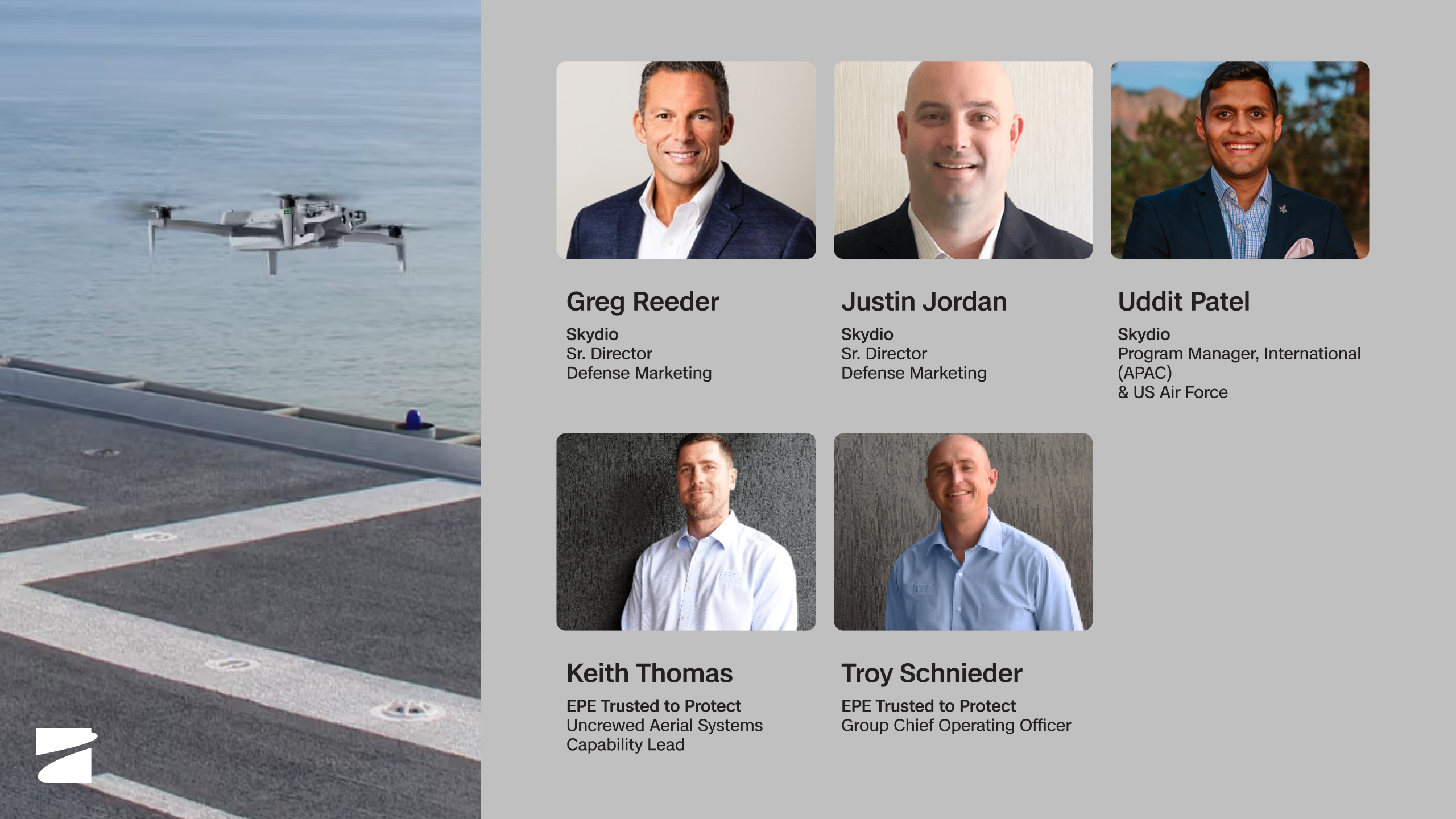
Partners in defense: Leveraging drone technology for allied security
Watch webinar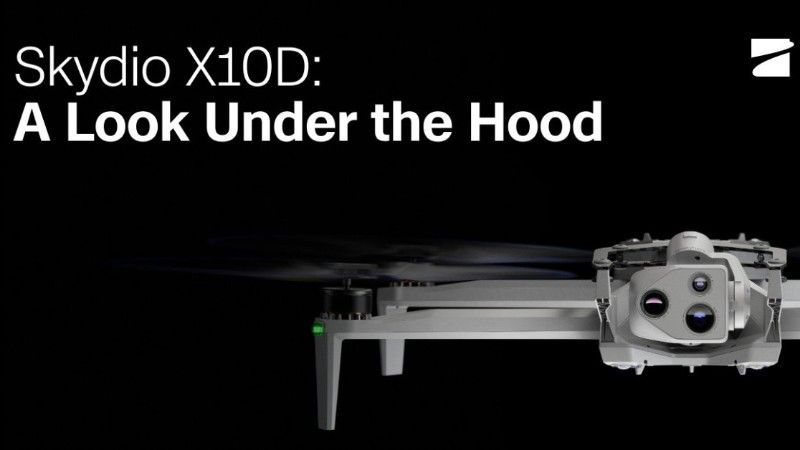
Small, smart and survivable sUAS: Engineering organic ISR for the modern battlefield
Watch webinar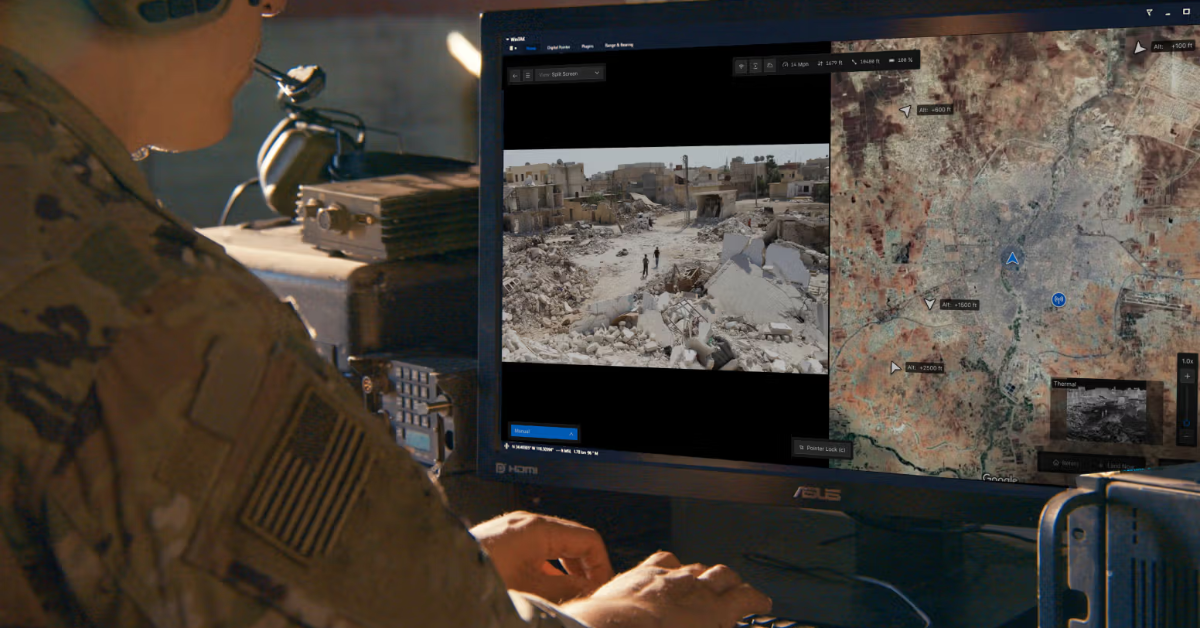
Secure your base perimeter from anywhere: Live demo
Watch webinar