

NYPD’s groundbreaking waiver: Leading the next era of DFR
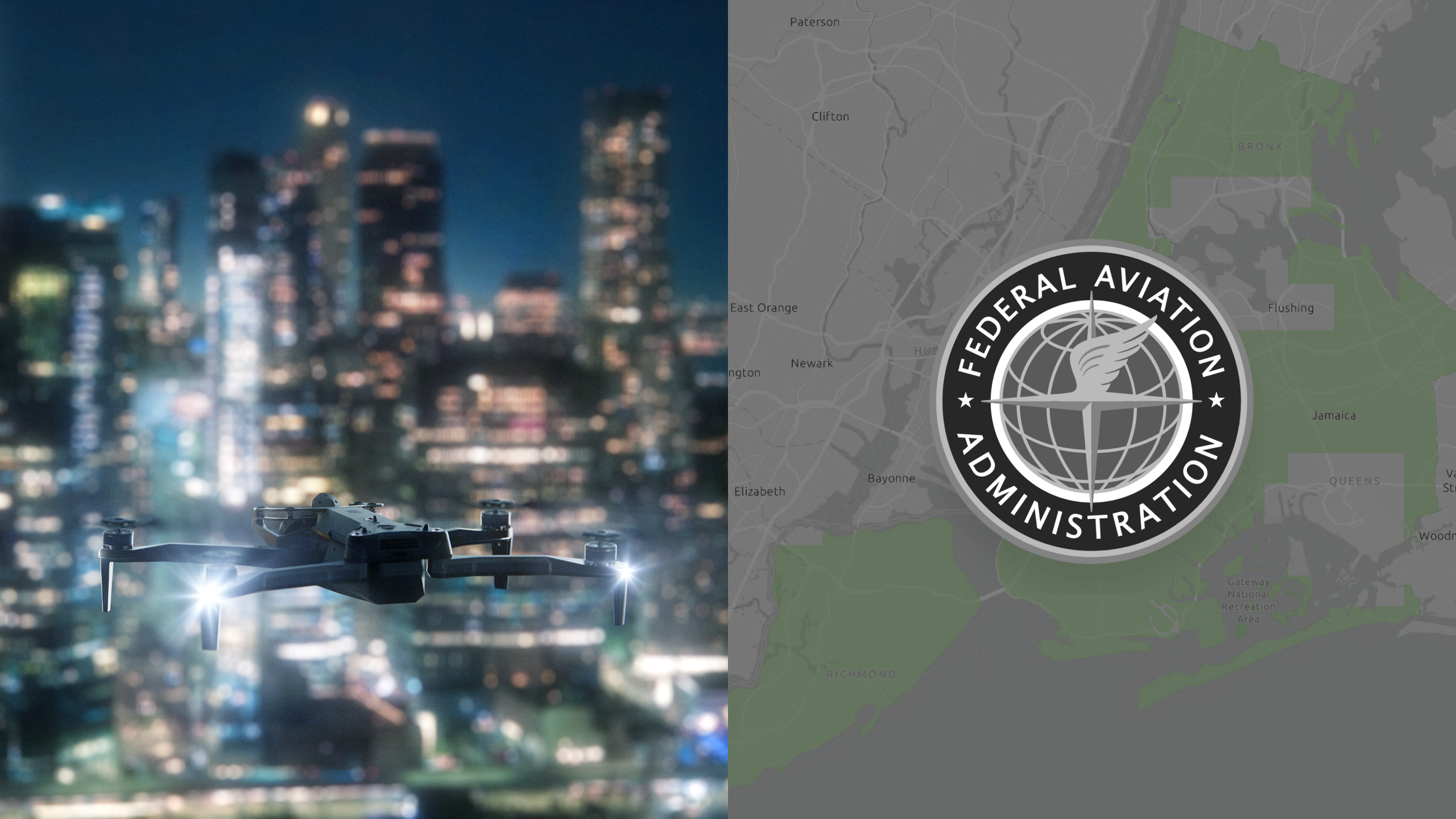
Delve into the groundbreaking FAA waiver granted to the NYPD, enabling Drone as First Responder (DFR) operations across 85% of New York City. Discover how this innovative solution improves response times, enhances officer safety, and delivers real-time situational awareness in complex urban settings.
Gain valuable insights into how agencies like the NYPD are leveraging drones for operations without visual observers. Hear from our industry expert, Jakee Stoltz, as he shares details about the approval process, safety protocols, and strategies for scaling drone operations.
Whether you're at the beginning stages or seeking to scale, this webinar offers the knowledge and tools needed to deploy drones safely and effectively.
Learn more about Skydio Regulatory Services and Skydio Drone as First Responder (DFR).
- All right. Good morning and afternoon, everybody.
- Uh, Jake Gestiltz here with Skyne Regulatory
- Team.
- And, uh, a couple weeks ago, we made a big announcement.
- So NYPD received a, a really a groundbreaking r- uh,
- waiver that will,
- uh, kind of lead the next era of DFR.
- And I, I was trying to put together a quick video
- on, like, a
- recap, the approval, kind of what it means.
- And
- when I started, uh, talking and recording it, it, like,
- quickly grew much
- longer than 90 seconds. Um, and so we decided to do a little live
- stream
- instead to kind of do that recap,
- and also just start to answer some of the really common questions that we've been
- getting in the, the weeks since the announcement.
- Um, and we'll also try and leave some time at the end for, uh,
- so- some live
- questions. So if y'all have 'em,
- you can throw 'em in the chat, um,
- and we'll see what we can cover in 30 minutes here.
- So
- with that, we'll just, uh, we'll get right into it here.
- So
- just first a quick recap of, of this approval.
- So
- NYPD received this approval in early September.
- It allows them now to do DFR operations across about
- 85% of the city,
- and this is all without visual observers.
- And really, if, uh, the, the map on the right side here, the,
- the green areas
- are, are where they can do operations.
- Really, the, the two main areas that, uh, for now at least are
- limited, are just around LaGuardia and JFK there.
- So the two busy airports.
- And the approval actually allows NYPD to
- operate in two different ways. So I'll call 'em two different concepts of
- operation. So
- concept number one on the left side here,
- this is what you've probably heard us talk the most about.
- So this is operating at 200 feet AGL
- or 50 feet from structures.
- And when they're operating at those altitudes, NYPD only has to
- use ADS-B technology, uh, for detecting and
- avoiding other aircraft.
- And we commonly refer to this concept as shielded operations.
- Um, but what we probably haven't talked as
- much about, but is included in
- NYPD's approval is concept number two on the right side.
- This one is differentiated by allowing them to fly up to 400 feet AGL
- or the US facility map, uh, altitude when they're in controlled airspace.
- Uh, but in that case, they do have to use ADS-B
- plus an FAA-approved non-cooperative, uh, detect-and-avoid
- sensor. So this would be something like a radar
- or the electro-optical
- systems out there and so on.
- Um, it's also worth noting that, uh, the approval covers day and night
- operations. Um, so really, uh,
- beyond visual eyesight approvals for public safety have, have included night
- operations for some time now. There was a, a bit of time there
- where you maybe had heard of some, like, day-only approvals, but that was
- because of the limitations of some of these, uh, detect-and-avoid
- sensors.
- Um, and NYPD can also operate in uncontrolled
- airspace
- or the controlled airspace up to the facility map grids routinely.
- Um, and if they need to operate in, say, near the airport, uh,
- they can always get a, a special government interest approval to
- do that.
- And so, uh, this is just kind of a profile view of the
- first
- concept or shielded operations, just to kind of further illustrate the,
- the
- difference in altitudes here. So,
- uh, for this concept number one or shielded operations, NYPD can
- fly up to 200 feet AGL just broadly across the city.
- But, uh, as we know, New York City has plenty of tall
- buildings, uh, some much taller than 400 feet too.
- Um, but when, when NYPD is responding to a call for
- service and they encounter one of these buildings that's, say, 250 foot
- tall, for example,
- uh, the approval allows them to kind of
- temporarily increase their altitude,
- and they could fly, like, over that building within 50 feet or, uh,
- laterally to the side of buildings, like in the case of really tall,
- uh, skyscrapers.
- Um, and again, when they're operating at these altitudes,
- it's just ADS-B
- technology they have to use.
- Um, and then compare that to the second concept here,
- concept number two.
- This is a non-shielded operation, so flights can go up to 400
- feet in this case, but it does require the use of a
- non-cooperative, uh, airspace awareness technology like a
- radar,
- like a Cassie system and so on.
- Um, and that, you know, that has some impacts in, like,
- your flight
- distance as well. So, uh, one thing I didn't call out in, in the
- shielded operations case is,
- um, the maximum flight altitude is really just dependent on,
- at this point, on
- things like the, the battery,
- uh, endurance or the connectivity and so on.
- So more other factors that go into play.
- It's not based on, like, um, a DA sensor's range, though.
- Whereas if you're deploying, uh, a network of sensors, radars, Cassie
- systems, that could potentially limit your,
- your flight distance.
- You have to basically stay within the detection range of these sensors, or
- you have to really deploy these systems everywhere to cover your,
- your whole city, your jurisdiction.
- Okay. So that's just a really quick overview of
- what the NYPD approval allows. And so now, uh,
- we'll kind of get into some questions.
- And I was at IACP last week, uh, which was really amazing.
- Just so much interest and excitement around, around drones first
- responder. And, uh, I had a chance to talk to a bunch of
- agencies
- then and had lots of questions coming in.
- So I, I kind of took all the different questions
- and, and grouped
- them and summarized them a little bit.
- So,
- uh, that's kind of what, what you'll see in this next section here,
- is just some of
- the really common questions that we've been getting, uh,
- since we made the
- announcement
- Next slide here. Okay, so the first question is, like, is it
- really safe? Uh, so
- there's maybe a perception, at least if you're, if you don't kind of live this
- regulatory world like I do, that, you know,
- flying beyond visual line sight without
- visual observers in, in this really crazy airspace like New
- York City could
- be unsafe. But, uh, I'm here to say that we, we do
- believe that this really is safe at this point,
- and let me explain a little
- bit more why I believe that. So,
- um, so for really over six years now, um, probably
- longer than that, but this is at least, like, as long as I've been working on
- Shielded Operations,
- uh, we've been just seeing this, like, growing body of evidence that these are
- really safe, really scalable operations.
- So
- back in the twenty seventeen, twenty eighteen timeframe, I
- was working at a
- UAS test site, and we were helping Xcel Energy achieve their
- goal
- of flying long-distance transmission line inspections.
- So they wanted to fly, you know, tens of miles, uh, down these lines to get
- high-resolution imagery,
- and
- w-we were trying to figure out a safety case for that.
- And we thought, "Well,
- if drones are really good at, you know, flying close to things,"
- um, and these areas are where other aircraft typically don't
- fly. So there's always exceptions, you know, kind of corner cases to
- these things. But by and large, the vast majority of aircraft just do not
- fly close to structures, close to buildings, close to power lines.
- Um, in some cases, this is frankly hazardous for,
- for aircraft to be
- flying this close to these things.
- And so we, we thought, "Well, if we fly really close where
- aircraft don't fly, that's, that should actually be quite safe." Um,
- and so, uh, we did-- We were able to convince the FAA of
- that back in twenty
- eighteen. Xcel Energy got their approval, and they've been doing this kind of
- operation since. Uh, fast-forward to twenty twenty-one,
- um, a colleague of mine, Jen Player, um, also just a pioneer in the
- space, she was working with BNSF to allow them to
- do,
- uh, rail yard inspections. It's much more efficient to just fly a
- drone
- down a line of rail cars and, uh, look for numbers,
- um, than it is to, like, drive around or walk around a big rail yard like this.
- Uh, she was able to help BNSF get approval
- also using Shielded
- Operations again. Fast-forward to twenty twenty-two, uh, we
- helped Dominion Energy & Utilities, uh, start to do remote
- operations, uh, also enabled by Shielded Operations.
- And so by the time we get to twenty twenty-four and, and the
- NYPD announcement and approval,
- um, it really was the culmination of five,
- six, seven years of safe Shielded Operations.
- We have customers across the country doing this now.
- There's many other drone operators, you know,
- outside of Skydio's world even that
- are doing this. Um, and so the, the body of evidence just kind of
- grew and grew and grew of like these are really safe operations that,
- um, you know, the FAA is basically getting comfortable now with,
- with allowing this in public safety as well.
- And then just kind of looking at New York City, you know, more, more specifically
- here. So of course, we, we spent many months kind of putting
- together a safety case
- for, for this, uh, request, and we did some
- airspace analysis and kind of some statistical things.
- And so we were basically just trying to look at, like,
- what kind of aircraft actually are flying
- at two hundred feet, uh, in New York City. You know, are there craft flying there?
- What types? Just trying to understand that.
- Um, and I, I think this is probably pretty true for a lot of
- cities, but when you
- really do look at this very low altitude over cities,
- um, it starts to become pretty predictable.
- You see aircraft around the airports, of course, taking off and landing.
- You see maybe some somewhere where, like, the heliports are.
- You know, whether it's a hospital or, uh, Manhattan here, you have lots of
- air tours out on the Hudson River, of course.
- But there's many areas of New York City that simply just don't see
- aircraft at all at two hundred feet, or it's NYPD
- themselves, you know, their, their helicopter unit where they can just
- de-conflict
- there.
- So kind of the bottom line is, like, after doing this work,
- we
- determined that really the, the chance of having an unmitigated
- mid-air
- collision in controlled airspace is about the same as being dealt a royal
- flush.
- So it's like a one in a million chance.
- And this is as-- this would be if you just flew an xTen through New York,
- New
- York City and, like, closed your eyes, basically did nothing, which is of course
- not what we do. So in addition to the low
- likelihood to begin with, we have layers of safety, right?
- So we fly at lower altitudes, we use ADS-B technology,
- we avoid the areas around the airports, and so on.
- So there's layers of safety, and this all just drives that risk to a
- very, very low level,
- uh, that the FAA is, is getting comfortable with now.
- Okay, so
- another pretty common question is, like, can I do DFR at two hundred?
- So,
- and, and I think some of the, the background or, or kind of
- context to this question is, um, you know, the-- if you
- look at like a, a Chula Vista Police Department, uh,
- they're really a pioneer in
- this space. They've been doing DFR for years.
- Um, and really we're, we're kind of where we
- are today likely because of the work
- that they've done. Um, and they, they've done DFR a
- little bit higher, so maybe two hundred fifty feet to three
- hundred feet
- AGL.
- Um, and there's probably good reasons for, for why they decided to do it at that
- altitude, but it's kind of become almost like a
- status quo thing.
- Um, so if they're doing it at two fifty, then, then I need to do it at two fifty.
- So kind of a question is like: Can I do it at two hundred? Is
- that enough?
- Maybe it's too low. Um, and so we, we believe again that the
- answer is yes. Like, you absolutely can do DFR at two hundred
- feet.
- Um, and we'll kind of explain a little bit
- more here.
- So,
- um, so we, we looked at some, uh, flights
- actually by public safety agencies, about twenty-seven thousand of them.
- And this is just like telemetry and analytics data.
- We, we can't see media or anything like that from these flights.
- Um, but looking across all these flights,
- we saw that the average flight altitude by public safety is 143
- feet, uh, AGL, or above takeoff location more
- specifically.
- And 99% of the time, uh, agencies are just staying below 200
- feet. So,
- uh, if you're asking like, "Can I do DFIR at 200 feet?" The,
- the answer
- probably is you're already doing it at [chuckles] 200 feet in some ways.
- So agencies just are, are kind of naturally operating at lower
- altitudes without, you know, any, uh, guidance or, or
- prompts to do so.
- Um, and interestingly, like an anecdotal, um, thing
- on this is, you know, we've talked to many agencies in Oklahoma,
- uh, City Police Department specifically.
- You know, and we were kind of talking to them about like
- what altitudes would work
- for you if, if we were to do this no VO DFIR thing, and,
- and their response was, "Well, we already fly below 200 feet today
- because it helps
- us de-conflict with our, our helicopter team,
- our aviation unit." So,
- uh, so there's good like safety reasons just
- to fly a little bit lower,
- um, and do your missions there.
- Um, and so then there's, there's questions of, of, you know,
- "Can I,
- can I see what I need to see, uh, below 200 feet, uh,
- with, with the sensor package?" So, um, here's just kind of two quick
- examples. So on the left side is what, uh, it looks like,
- uh, using an X10 at 200 feet, uh, basically fully zoomed out.
- So you get a nice kind of wide angle view of, of a
- scene. You can see all sides of a building.
- And so this can give you kind of that big picture situational awareness as
- you,
- uh, approach a scene. And then, of course, you know, at some point you
- do need to zoom in and, and start to see the fine details.
- You know,
- where, where, where is the suspect's hands? You know,
- do they have things?
- Are they a danger? And so if you look on the left side, there's a,
- a very
- small kind of black thing in the middle.
- That's, that's the truck parked on the top of the
- parking ramp there.
- Um, and then the right side is basically X10 at a much lower altitude
- now,
- so about 40 feet above the parking garage with zoom.
- So,
- uh, so X10 basically from 200 feet down can
- really get you the
- big picture and then allow you to get close and see details.
- You kind of get the best of both worlds, um, by flying below 200
- feet with an X10.
- And then we, we've heard, um, another kind of part here is,
- is the community
- engagement. So,
- you know, there are, um, some concerns out there that if,
- if drones start to proliferate and kind of scale across communities,
- uh, noise could become a factor. So,
- uh, we, we've done some work on characterizing the
- noise of X10.
- Uh, we're gonna be doing some more actually,
- but initial studies are that the
- X10 is about 50% quieter than an M300 at the same
- altitudes. And so just above ambient noise, uh, we
- see the X10 at like a four decibel increase, so kind of a negligible increase
- over ambient. That's about half as much as an M300 at
- the same
- altitude.
- And interestingly too, uh, we're seeing that the X10
- at 200 feet is actually still quieter than like an
- M300 at 400 feet. Um, so from a noise
- perspective, you know, the X10 is nice and quiet and, and that helps with
- your community engagement, um, as you're scaling your programs out.
- Okay. And then finally, um, you know, we've heard kind of some questions
- or maybe
- concerns, you know, if I'm flying lower, then,
- uh, I have a higher chance of, you know, impacting an obstacle or hitting
- a structure or something like that.
- Just kind of generally concerns about, uh, avoiding obstacles and
- buildings and not having crashes at lower altitudes.
- Um, and so Skydio Autonomy really solves for
- that.
- So we can fly and have 360-degree obstacle avoidance
- so you, so you avoid those objects that might be at lower altitudes.
- You can fly at night. You can fly through urban canyons.
- Uh, you can fly underground even where maybe
- the FAA doesn't have jurisdiction.
- But point is, Skydio Autonomy, you know, keeps you from impacting
- obstacles. It really reduces the workload for pilots
- so they don't have to kind
- of remember exactly where every obstacle at low altitude is,
- uh, and allows you to fly, fly safely.
- Okay. Another very common question and, and it kind of relates to the first one,
- but do I need radar? Do I need camera arrays?
- Do I need some o- kind of other technology to, uh,
- remove the visual
- observers? And the answer is no. Uh, but
- your agency has a choice now. Um, so...
- Oops, skip ahead. So, um, yeah, I think
- this one...
- Uh, excuse me. So yeah, what's becoming clear today, uh,
- is that if you're operating over a pop- populated area
- and you can accept flying below 200 feet AGL, you will not need this
- technology.
- Um, and that's even if you're outside of ADS-B
- airspace. So, uh, we've talked to date some
- about how this approval is kind of limited initially to, uh,
- areas that have like Mode C VAACs or this other kind of special airspace.
- Um, but I think we're seeing, uh, progress and, and some good signs that
- this will be available to agencies anywhere, uh,
- regardless of your airspace.
- Um, and so just simply by operating at lower
- altitudes, you can start and
- scale a DFIR program that doesn't require this technology
- and it's almost like
- essentially you get 200 feet for free, right?
- So you don't have to buy a bunch of other technology just to get that
- program off the ground.
- Um, but you do have a choice. And so, uh, there are some
- situations where maybe it is required to have a radar or
- camera array or some, some kind of other FAA-approved
- technology.
- So for example is if you want to fly higher than 200
- feet, like if that's just a requirement for your
- agency-
- Um, then you may need this kind of technology.
- Um, if you are gonna be operating in, in really sparsely populated
- areas, uh, so like outside of these kind of cities
- and
- populated areas, then it may be required.
- Um, we're, we're kind of still working on
- that with the FAA but, um, at least
- to date,
- um, it appears like that may be a path forward in the near
- term.
- Um, and then finally, you know, if you're looking at
- drone detection and like aerospace security, so kind of the other
- side of, of this technology, right?
- If, if you just wanna do counter-UAS type of
- work,
- um, then of course you would, you'd potentially buy this technology for
- that
- purpose. Um, but we've-- I've said before like it's, it's good to
- think about that separately from your DFR program.
- So you may want to buy this kind of technology to do,
- uh, drone detection around sensitive areas.
- Uh, you know, stadiums, uh, jails, airports, things
- of that nature.
- Uh, but that may not be where you wanna do DFR
- operations.
- So you can think about them kind of separately.
- Put the, the airspace awareness technology where
- you care about, uh,
- airspace security, and then do DFR where you wanna do DFR.
- And then maybe over time those two things can start to, uh, kind of
- overlap, and you could use that technology to operate higher.
- Um, but I think for a lot of agencies kind of
- thinking about those two things
- separately, at least initially,
- uh, will allow you to scale your DFR program
- much faster, um,
- and in a less kind of complex, extensive way.
- So, so bottom line is you're gonna have a choice, but
- for many agencies in a lot of scenarios, it's at least not gonna be a
- requirement for you.
- And then, uh, finally, so kinda last just pr- question at least
- is like, "Can I get this approval?" You know,
- "Can my agency get a similar
- approval?" So a lot of questions around this.
- Um, is this gonna be scalable? And so the answer is,
- uh, I'm forecasting a little bit, but I, I think yes.
- But I do ask for some patience. Um, so that's maybe not a
- totally satisfying answer, but let me explain a little bit.
- So,
- um, this is kind of generally what happens
- when the FAA
- takes a big step like this and, and kind of does something, uh,
- first of its
- kind or precedent-setting. So they, they get in this kind of
- flywheel on the left side here. So they issue an
- approvals to a, maybe a small test group, and then they look for
- feedback from that test group. So, you know, things like, "Is the safety
- case actually working? Is, is there anything hazardous that we didn't
- expect? Is the language of the COA," you know,
- the actual words on the
- COA, "is that confusing or does it kind of hit the mark?
- Does everybody understand it? Do they need to change it?
- Uh, is the, is the approval providing value?" Right?
- So we heard recently, um, an individual at the FAA talking
- about, you know, kind of a spectrum.
- You can go,
- uh, too prescriptive where like nobody wants
- to follow it anymore 'cause the
- approval is just so hard and complicated.
- Or you can go kind of too loose, where it's maybe not strict enough, and
- they're, they're trying to find the balance there.
- So anyways, they need that feedback.
- They can make changes, and they can kind of work through
- that process with that
- small group before they get to a par- a point where it's basically
- good enough. You know, they're not looking for, for perfection,
- but they wanna know
- it's kinda good enough, that people understand,
- it's providing value, it's
- safe, and then they scale up. So
- we're in real time. We're basically in the left side here.
- You know, the FAA is getting feedback from these
- initial approvals, and they're
- kind of maybe gonna work through that flywheel a couple times before they
- start
- scaling. So I, I feel confident that we will reach the right side.
- You know, the FAA will get there,
- um, but, but they're just working through that,
- that left side there before they're
- really kind of scaling it out to agencies across the US.
- Okay. So
- that's
- some of the kind of basic just, uh, questions that we've heard so far,
- common questions. So I'm just gonna kind of take a look here
- now at the,
- uh, live questions that are coming in.
- Um, okay. So
- kinda first one here, and I... Yeah, these-- there's a lot of questions here.
- This is really great. We'll probably not have enough time to hit
- them all.
- So I'll say, too, we might do another one of these a-
- and just like focus
- on more of these questions. So we'll, we'll try and get a few, though.
- Um, so a question here: "Would you able to--
- Would you be able to share more
- details on like specific equipment, like ADS-B, DAA, et cetera,
- um, that was used to get this approval?"
- Um, so from Skyryse perspective, again, we're, we're really focused
- on that two hundred foot plus ADS-B concept.
- So,
- um, we are, you know, constantly evaluating other technologies,
- and
- we'll do integrations, um, when we need to.
- Like we're looking at an integration with, with D-Drone as part of our Axon
- partnership now. But, uh, today at least, we're really focused on just
- enabling scale with two hundred feet and ADS-B.
- And the great thing is our system incorporates everything you
- need,
- uh, so you don't have to go buy additional
- technology.
- So our X10s have ADS-B receivers in them.
- Uh, the docks have ADS-B receivers connected
- to them, so you actually have like an
- A- an airborne and a ground-based option.
- Those all feed into our remote flight deck software, and we have some,
- uh, displays and alerting to, to make it really simple, basically.
- A- an operator will know when aircraft are, are flying nearby.
- They get alerts, and then they can make decisions to, uh,
- take a
- maneuver if they need to. So it's all just built in.
- Nothing extra is required, uh, from a Skydeal ecosystem
- perspective.
- Um,
- let's see. Next question here: "So why, why would I need radar or other technology
- in sparsely populated areas under two hundred feet?" Yeah.
- So, so this is a really good question, and this is something that's evolving a
- little bit in real time. But
- the, the crux of it is that-
- In sparsely populated areas, you have different, different
- types of low-flying aircraft than you have over cities.
- And the, the main categories are, uh, ultralights,
- hot air balloons, and, and kind of some of those like
- recreational operators
- that do operate at very low altitudes typically.
- Um, you also have crop dusters, you know, who are, are not
- always equipped with ADS-B, although we're seeing
- that the percentage of them
- being equipped going up and up and up over time as well.
- So those are some unique hazards for drone operations, low
- operations in rural areas that are just not present in cities.
- You just don't have ultralights over cities, hot air balloons,
- and in fact they're,
- they're prohibited by, you know, they're Part 103 and so on.
- Um, so, so that's why we're, we're kind of...
- We're still working through like the sparsely populated areas and
- at least for now, the FAA is looking for some way to mitigate that,
- that group of flyers. And so radar could be one solution for
- that but,
- you know, we're, again, we're kind of still looking at other ways
- that might be a
- little easier.
- Um,
- all right. Let me get here. "So do you think a
- shielded approval
- might work in areas that there aren't many tall buildings by
- keeping it at low
- altitude?" Yeah. So, you know, New York City i- is
- pretty unique, right? I mean, there's areas of the city where like every
- building is over 400 feet. Um, but on the flip side,
- there's probably many, many, many cities where there isn't a building
- above 200
- feet. Like I, I live in North Dakota, and I don't, I don't think we have a
- 200-foot building in, in the whole state.
- So that kind of makes it easy then. Um, for, for
- those cases, you basically can just fly 200 feet AGL,
- um, and you don't have to worry about, you know, flying up or
- up over structures or between urban canyons.
- So effectively, you just operate at 200 feet AGL, use
- ADS-B, and that would be covered under, uh, the
- approval that NYPD got, so.
- Um, let's see. "Can you discuss any special rules,
- restrictions regarding military airspace and if you've successfully
- enabler, enabled operations there?" So,
- um, I'm actually gonna,
- uh... I'm gonna slightly broaden the question a
- little bit, um, to just
- kind of special airspace more broadly.
- Um, so at least today, um,
- we're looking for kind of pathways to enable like the
- most operations, um, at scale before
- we really kind of focus in on some of these like s- unique airspaces
- that might be in your jurisdiction.
- Uh, so like New York, even for example, there's the, the Hudson and the
- East River, that's a special flight rules area because
- there's just so much
- helicopter traffic, um, in those areas.
- And so we kind of made a decision, you know, early that, you know
- what, like if we just kind of exclude flying in
- these areas,
- we can at least get 85% of the city unlocked.
- Um, and that's kind of more value than like
- trying to focus in getting that
- approval in that, in that special flight rule area.
- So that's, that's kind of generally our approach.
- Like if, if you work with us, we're going to just figure out the, a
- way to enable you,
- uh, in that kind of quote-unquote 85%.
- Um, and we may ask you to at least initially
- just exclude some of these kind of
- special areas, the areas around the airports, uh, like
- a, a military airspace, et cetera.
- Um, but there is work going on to figure out
- ways to operate.
- So we're not, we're not just like walking away from
- that, but we're trying to get
- you into the areas that are kind of easier to start with, get you
- started, um, and then we'll k- we'll kind of work on those special
- areas, um, on a case-by-case basis after.
- Because it, you know, it might take a special,
- uh, procedure that's like local to that, to that, uh,
- military base or, um, you've heard perhaps that some
- agencies have had success creating like kinda custom airspace maps
- where it's different than, uh, what the UAS facility map
- says. And so again, we're, we're just kind of working through that.
- It's a little bit case by case, and so we're kind of focused at least
- initially on
- just the areas that are all kind of consistent,
- and we can just
- enable scale and operations in those first.
- Um, okay. I think we're at time. I'm gonna pick one more, and then
- we'll table a few of these for round two at some
- point.
- Um,
- let's see.
- "How does uh..."
- We'll hit this one here. "How does DFIR get around line of sight?"
- Yeah, so I,
- I think-- I hope at this point maybe that was kind of
- answered, but again, just to like hammer kind of one more time
- at the end
- here before we drop down. So the safety case is really kind
- of two main things, flying lower where aircraft
- typically don't fly, and it's back to that like one in a million chance, right?
- If you just flew a drone and closed your eyes,
- maybe a one in a million chance that
- you would have a midair. And so we take that low risk already,
- and then we
- add layers of mitigation. So we fly lower.
- We add in our ADS-B sensors so that we can mitigate the aircraft that we
- do see. We avoid flying in areas where there
- is a high
- density of low-flying aircraft. And so it's that, that whole safety
- case together is what allows, uh, you know,
- NYPD to get this initial approval and then hopefully,
- uh, many other agencies to follow.
- Um, so yeah, I think we're, we're a minute late even.
- Um, I just wanna thank everybody for your
- time, um, and, and the
- questions. So if we didn't get to your question
- today, I'm gonna go through these,
- and we'll maybe try and group up a few more of 'em
- and potentially do another,
- um, another live stream like this very soon.
- So,
- um, again, thank you for your time, and we'll see you in the next one.
Watch Time
30 Mins 38 Secs
Related Webinars
FAA Part 91 BVLOS Waiver Overhaul - What It Means for Your Drone Program
Watch webinar
Navigating regulations for DFR | Skydio Ascend ’24
Watch webinar
Episode 9: Choosing Your Path: Part 107 vs Part 91 for DFR
Watch webinar