How Drones Assisted with a HazMat Emergency After Hurricane Milton
In the aftermath of a hurricane, first responders face wide-ranging responsibilities, from search and rescue and storm damage documentation to ongoing management of vital resources such as fuel. In this video, Southern Manatee Fire Rescue (SMFR) @SMFR911 faced a massive hazmat incident in the aftermath of Hurricane Milton.
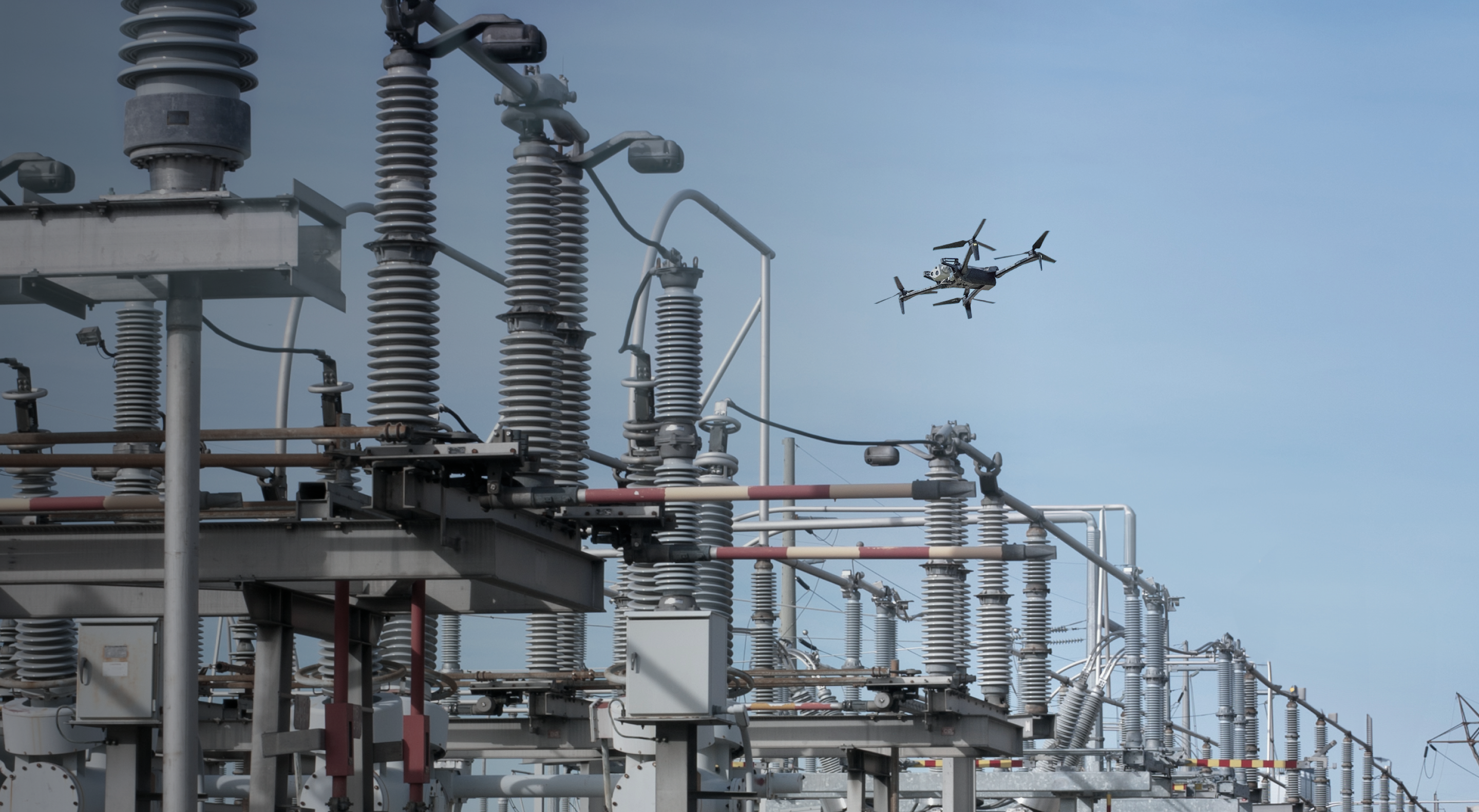
The roof of a 4-million gallon fuel storage container sunk, exposing the surrounding area with dangerously high Volatile Organic Compounds (VOCs) as the gasoline vaporized. SMFR responded to the scene with a Skydio X10 to live stream the incident to state officials, provide overwatch for first responders and document the fuel storage site to take vital measurements.
Watch the video to hear Rich Gatanis, SMFR Firefighter/HazMat Technician, UAS Coordinator & C, detail how drone technology was proven indispensable for his department in navigating the challenging emergency.
- Hurricane Milton had rolled through and we took almost
- a direct hit. These particular fuel
- silos, there's a floating roof on it.
- During the storm, this floating roof got damaged.
- Now, the roof started to slowly seep into the
- gasoline, exposing
- gasoline on top of it.
- The problem was vapor cloud that was being produced was
- creating VOCs, which are your volatile organic
- compounds. So the VOCs were high, the flammable limits were high.
- You had to be... We couldn't go in there. Our command post had to be way far away.
- Getting the fuel out wasn't happening.
- The first thing we did was surveillance.
- Get a good understanding of the size of the facility.
- Skydio team came in. They helped...
- We scanned the area, and that created some good imagery where we
- can do some,
- some, like, volumetrics. We were able to compute a lot of
- that stuff to be
- able to measure,
- uh, volumes, measure vapor space, measure, you know,
- all that good stuff.
- Day two was where we worked the crews in and out of the
- scene based on the wind changes. The vapor
- cloud's moving. When it moved away from the, the workers,
- we could get in there and
- work. We could turn wrenches, do all that, because the vapors are nowhere near them
- now. If the vapor cloud switched and they got overwhelmed, they had to
- back out. That was, that was basically the plan
- that we developed to, to make this
- thing work.
- My command post, our HAZMAT truck, is set up with TV monitors.
- We have it built right in the truck.
- So now everybody gets to kind of see what's going on in real time
- operationally. So that's one of the beautiful things
- about the Live View is we
- can all stand around a monitor, see what's going on in real time,
- and we can
- talk collectively and come up with a plan in real time.
- But the folks that wanted to see it outside of that, we had that Ready Link
- available we could send the, um, the link to.
- The governor's office, all the stakeholders at,
- in Tallahassee are watching it.
- It changes the, the dynamics of how you
- respond, what you're willing to do, because you have so
- much more information.
- Those were the, the main core pieces of what we
- were able to, um, to
- gain from the scene using our drones.
- [outro music]
Watch Time
2 Mins 21 Secs