You've never been inspected like this before | Skydio Ascend '24
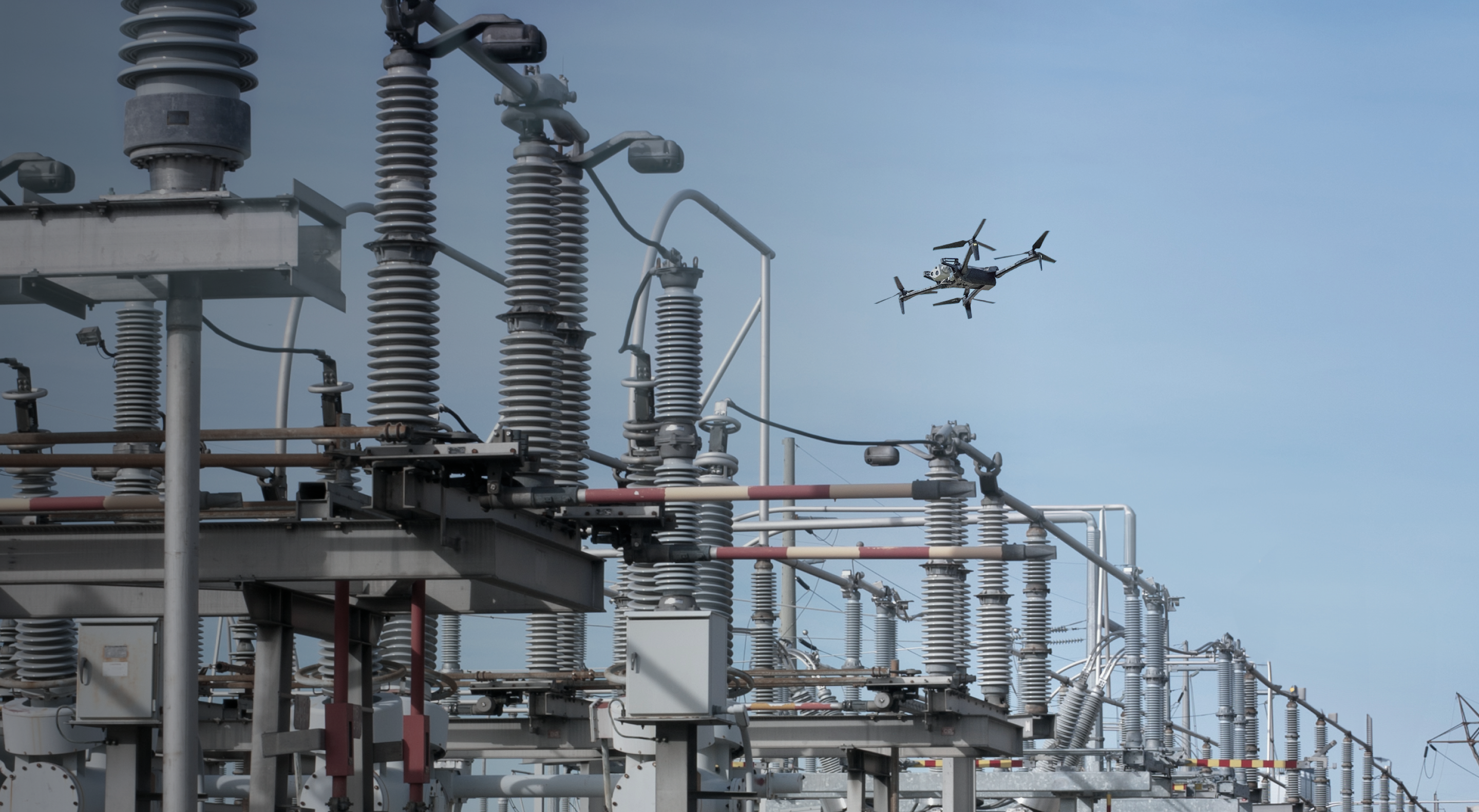
Join us for this insightful panel discussion on the transformative use of the Skydio X10 drone in asset inspections. This session brings together experts from various industries to share their experiences and highlight how Skydio drones have revolutionized the inspection of high-value assets. Learn about the diverse applications of the Skydio X10, its advantages over traditional inspection methods, and how it ensures accuracy, safety, and efficiency in challenging environments. Whether you're in public safety, construction, or infrastructure management, discover how the Skydio X10 can elevate your inspection processes.
Learn more about Skydio for Asset Inspection.
- All right. Well, we'll go ahead and get started here.
- So f- first off, thank you very much for attending today.
- This is our asset inspection session, so if you're here for that, you're in the
- right place. If not, it'd be a fascinating thing to learn
- about. So I am Jason Tillman, Director of Product Marketing over here at
- Skydio,
- so really excited to be here with you today as well as our panelists that you're
- gonna be meeting. So we have some experts here that
- are gonna share some of their
- real-life experiences with asset inspection, so really excited for
- that one.
- Um, but before we get started, I just kinda run,
- wanna run through just a few short
- slides because I know you guys wanna really kinda hear what the panelists have
- to
- say, but we wanna kinda set the stage here.
- And the first one is that when we take a look at, um,
- the challenges that are
- facing more kind of manual, um, inspection processes
- that many of you may already be facing out there already.
- But what it is is that we really wanna take a look at the
- real challenges facing
- some of these. And so the first one is that when you're tasked with inspecting
- large, complex structures, and it could be buildings,
- it could be bridges, or it
- could be pretty much anything that happens to be out there,
- you're not just dealing
- with a routine checkup on this one.
- You're actually sending people into potentially dangerous situations.
- It could be small crevices you need to send them in.
- It could be, like, climbing high. It could be, um,
- anything that's all the way down
- to putting them inside traffic or inside other kind of hazards.
- Additionally, the challenges really don't just slow down
- things, they also drive up
- costs because every additional hour spent on actually doing some of these
- inspections means that additional time and money is actually spent where it could
- be used elsewhere. Um, and then beyond that,
- just the immediate risk that we're
- actually just talking about, there's also a level of consistency
- that you're
- actually not getting there as well.
- And so while relying on human inspectors is great, it's been something that's been
- done for decades and, and such, is that, um, even they can actually
- have bad days. Maybe it could be a day
- that they're just a little bit off, and so
- you really wanna get that consistency there.
- Um, that can really leads to gap inside data,
- which could actually overall kind of
- really impact what the level of data you're actually getting.
- Um, and so that could lead to much more
- infrequent times you're
- actually going out and doing these inspections,
- which could overall, the long term,
- actually really impact the health of the asset that you're actually looking for.
- Um, so what we wanna do is we wanna kinda introduce you here today
- to a understanding of what this could look like if you start adopting
- drones. And I know that we're at a drone conference,
- surprise, surprise, we're
- talking about that today, but we see this as ...
- We call this a maturity model, and this is when you're moving up from the far
- left-hand side all the way to the far, um, right-hand side.
- The far, um, left-hand side is where many of us are here today,
- and this is manual
- inspections, and we just went through some of the
- challenges that are associated
- with those. But then we start adopting more
- and more of the drone
- technology out there, and that's when you start moving over to the
- left-hand side.
- So I'll move to the next one. [clears throat] That's the pilots with
- drones.
- That's where you have individuals who are out there. They may not be engineers.
- They may not be experts out there. But what they are,
- they're pilots with drones.
- It could be a DSP that you're using.
- Um, but they're going out there, flying up the drone,
- capturing the aerial data
- you're actually looking for, and then the experts actually receive it
- and actually
- synthesize it and actually draw conclusions.
- Um, the next one is you have skilled frontline
- staff with drones, and that's where
- you actually have folks who are perhaps engineers or folks who are,
- um, out there,
- linemen, for example, who understand what's actually they're
- looking at and
- actually can make determinations on the spot and can react much faster to
- that. Then you even move one more over, and that's the second to the
- far right-hand one, and that's the range of skilled staff
- assisted by
- doctor drones. And so you could have the skilled experts
- at a remote facility and using remote operations in order to
- fly these
- drones, so they don't have to go out inside a
- substation somewhere or a bridge way
- out in the middle of nowhere. They can actually do those, um,
- inspections from the
- comfort of a facility elsewhere. But then if you look on the very
- far right-hand side is that you look at automated data analysis,
- and this is
- where you can actually have the drones have preprogrammed flights that are out
- there. It captures the data. And then you harness the power of AI
- and some of the
- partner solutions that you saw out here a little bit earlier
- yesterday, and that's
- where they, you can actually leverage those to
- actually take a look at that wealth
- of information and data capture. It synthesizes it,
- and then it bubbles it up to
- you. 'Cause if you are having tens of thousands of photos
- or videos that you need
- to take a look at, doing it yourself is incredibly time-consuming.
- And a- after you start looking at them for a
- period of time, it, you can start
- glazing over and may miss something.
- But by using some of these more advanced solutions out there, you can actually go
- and have them bubble up those instances that might be something of concern, and
- then the skilled staff does take a look at that and make a determination from
- there, and allows that level of scale that's really
- unprecedented.
- But when we see it as the use of drones within this environment, we
- have really the stages that this goes along, um,
- from a Skydio perspective as
- you initiate. That means is you have an idea of a inspection you
- need to do.
- So of course, you get the, um, work orders actually come in,
- but then from there
- you have to plan it, and you can actually do this remotely
- or through a controller,
- actually get that scheduled. Moves into capture, and this is,
- of course, the
- critical phase out there and why you're using drones in the first
- place.
- The drones go out there and actually conduct this mission,
- gets the high-quality,
- um, imagery and video that happens to be out there.
- It gets synthesized, and again, that's where partners really play a major
- role.
- And then it moves into del- delivering those, um, reports and that,
- those
- findings over to whoever the stakeholder is that you're actually looking for.
- So again, what we wanna really talk about today
- is how it really aligns to
- all these and how drones can actually really make a difference out there.
- And so with that, I'll ask the panelists to come on up here.
- And, uh, again, there's only s- we can talk about this theoretically as
- much as we
- want, but I think that actually having some of this
- real-world examples of, um,
- what these folks are actually seeing will really make a lot of sense.
- So to go in and get started, um,
- uh, do we have an extra mic for Mi-
- Oh, there we go. Okay, perfect. So we'll go ahead and, uh, Mike,
- we'll start with
- you if you wanna introduce yourself and provide a little context.
- Hello, I'm, uh, Mike Spangler from Idaho Power Company.
- Um, [clears throat] I'm the UAS program
- manager, um, for
- Idaho Power. Um, I've worked there for 38, a little over 38
- years. And, uh, I've been in charge of the UAS program now
- for
- about, uh, six and a half years. And, um- We may
- have about, uh, 30 pilots, uh, 27 pilots to be exact,
- and we use primarily Skydio. Uh, very little DJI.
- Um, those are for non-critical assets.
- And, um,
- we have about 24,000, uh, square mile service territory
- in Eastern Oregon and all across central and southern Idaho.
- And, um, that's about it.
- Thank you.
- Thanks, Mike. My name's Josh Sexton. I'm with Stantec out of Virginia.
- I'm the global UAS manager and the reality capture manager.
- Um, we oversee about 170 pilots. Uh, we don't have any professional pilots,
- but we have subject matter experts that use drones as a tool in their
- toolkit,
- and we're operating across North America, Australia, New
- Zealand, and the UK currently.
- And, uh, I'm Michael Marshall. I've been with Stantec for 12 years.
- I'm based out of Denver, Colorado.
- Uh, we're responsible mo- mainly for bridge inspection, um,
- tunnel inspection,
- all sorts of different asset inspections on the infrastructure.
- Uh, and then we're using drones to help us,
- uh, with that inspection and then,
- uh, give us better data for our results.
- Should have a mic here. Um, I'm Joe Anke, director of
- systems engineering at Skydio. I've been here for six years working on
- pretty much all of our, all of our products, uh,
- including cameras and on
- X10, uh, getting into a lot of the technology
- architecture
- and the attachments as well.
- All right. Well, perfect. Well, thank you very much for, uh,
- our panelists for
- coming up here today. Um, so the first question we have to get these
- things opened
- is can you each share what kind of assets that you're actually inspecting, and then
- how do you go about actually conducting those?
- Yeah. So at Idaho Power, we're a, a heavy hydro, uh, based, uh,
- utility. And, uh, so we have a lot of hydro power plants
- that we
- inspect, a lot of flumes, raceways, uh, dam, uh, dam
- safety inspections that we do. A lot of lines, transmission
- distribution lines. Um,
- we, we do a lot of river engineering work, surveys, uh, stream,
- uh,
- river bank, uh, erosion, that type of thing. Uh,
- do a lot of mapping.
- Uh, and traditionally, a lot of this stuff that we did,
- the inspection was
- really just
- people in four-wheel drives, four-by-fours.
- They were, uh, four-wheelers on foot.
- Uh, and it's just a really labor-intensive
- process.
- And, um, and so same thing with all of our dam
- safety.
- You're putting people in, uh, very dangerous situations.
- Uh, uh, the terrain is hazardous, so, uh, anything
- we could do to get, uh, people out of those scenarios, uh,
- that's where drones
- really, uh, have, have played a big part.
- Excellent. Thank you.
- For Stantec, we're an A&E firm, so we run the gamut.
- Uh, we do survey and mapping, um, specifically throughout the globe,
- but we also do
- a lot of asset inspection. We do nature-based solutions, uh,
- environmental
- services. So you're looking at everything from
- overhead structures, um,
- maybe you're looking at mining load-out areas, uh, shipping, rail,
- transportation, bridges, dams. Um, we're
- creating 2D orthos, 3D orthomosaics, uh,
- 3D models every day, and that's how we're using drones
- specifically.
- Yeah, so I'm mainly on the bridge side.
- Uh, so we're doing a bridge inspection once
- every two years as mandated by the
- FHWA. Um, and we do everything from manual
- inspections.
- It's a team of two, uh, to something with a snooper truck
- or a bucket truck,
- uh, rope access, underwater. We- basically anything we need to get onto the
- bridge,
- and now we're introducing drones as well.
- So, um, again, using, uh, all these types of manual assets, uh, to
- inspect, uh, both tunnels and bridges.
- Excellent.
- Great. This is a good one for me to be at the end
- of the line on.
- I think the answer is a little bit of all the above.
- For Skydio engineering, we have to meet all of our customers' use
- cases.
- Um, I put up a couple pictures, could actually go to the next one,
- of a few things
- that I'm really excited about and things that X10
- is doing really well at.
- So for transmission, uh, distribution and poles,
- um, these can be really difficult to get the
- depth of field across long spans,
- getting focus correct, getting your whole image
- and all of the detail that you
- need, sometimes not being able to get the- exactly as close as you want to be able
- to get to. Um, and X10's doing a great job at this now.
- For thermal radiometric solar using
- map capture, our new thermal camera in X10 is
- doing a great job. Um, has really high thermal sensitivity.
- In this photo, you can actually see some cell level
- defects at almost 400 feet,
- which is well beyond most people's specs.
- Um, and it just gives you the ability to get
- more per capture when, when you're
- doing these, these types of inspections.
- Last year, uh, doubling down here on bridge inspection,
- especially using 3D scan.
- These can be really tough, um, when you are getting under a bridge,
- maybe don't have GPS. Lighting conditions can be difficult.
- You can have mixed lighting situations where there's bright background, maybe the
- sun up there. Um, and using the, all the power of the cameras and
- HDR features to, to pull out all the features you need
- when we're doing these
- inspections.
- Great. Um, and so, um, one of the big things that we see
- is change
- management. And so when you actually go through
- and change from more traditional
- methods of inspection over to the use of drones, like what sorts of pushback did
- you get within your organizations, um, when you wanted to start using drones for
- these kinds of inspections?
- Yeah. So initially, uh, with our group, you know, uh, if y- if I take
- the, uh, distribution transmission patrol group,
- uh, they've been doing the same
- thing the same way for so long. Um,
- and you know, some of these guys, you know, I kind of joke around
- that you could
- give them a vessel that would travel at the speed of light,
- but they're gonna still
- pedal a bicycle. Uh, they just are so used to doing
- things the same way. And then when we started out, we had a lot of, uh,
- pain points
- really with the first S2 and the iPad,
- all the stuff to set it up. They really didn't want to use it because
- it took
- longer to set it up, uh, th- than it did, and the range wasn't
- very good. So th- then I had a lot of pushback.
- Mm-hmm.
- And, um, and so big change when we went to S2 plus
- Enterprise and, and X2s. Um, so it's just kind of a lot
- of, uh, getting, getting the group Used to using it
- and, and kind of forcing it on them a little
- bit.
- And, um, and eventually, you know, they've come around
- and they see the benefits of
- it. Uh, so it's pretty easy now.
- Excellent.
- Um, I'm gonna talk about kind of the
- corporate, uh, pushback that we may had.
- Um, just the risk associated with it. It's a new technology.
- Uh, when you're flying drones, we have to have regionally certified
- pilots wherever
- we're operating. Um, in this room, we're probably all from North America,
- but here
- it's the FAA 107 or Transport Canada.
- You know, and getting folks trained and having your corporate, um,
- oversight, legal counsel, everyone, uh, on board that you're accepting the
- risk to use drones. And I'll let Michael talk about the client
- side.
- And yeah, from the bridge inspection side, we're still, uh, need to have those
- manual inspections. Our FHWA mandate is to have at least two people on site
- typically, um, and, and to have that person, have that engineer or
- have that team leader, uh, conducting that inspection.
- So when we introduced drones, uh, when we saw the, uh, the s- the slide,
- I guess,
- of, uh, the different phases of drone inspection,
- uh, we're not technically allowed
- to go to that remote inspection yet in the bridge world.
- Um, but we're finding ways to, to, to push ourselves that way and, um, and
- to keep advancing this technology and, and using it in, in creative ways.
- And on the engineering side of this, we take these, um, pushback and
- boundaries as a challenge to give you the, the technology that, that gives
- you the right, the right answers for those challenges.
- So that comes down to autonomy. No matter where you
- are on the spectrum of manual
- capture to fully dock-based autonomous capture, um, you need to be
- able to trust the platform to be able to do all the obstacle avoidance
- or complete the man- uh, autonomous capture on its own.
- Auto modes, getting the right exposure, focus on
- every capture, so you're not having to worry in the field
- about getting your
- settings right or adjusting them for the environment on that day.
- And also, just the overall image quality, getting our color right, sharpness,
- de-noise, all perfect, so every time you take a capture,
- you're getting the details
- that you need for that asset.
- And, and when you're going through and you do this transition,
- there's always,
- like, things that surprise you along the way.
- Is there anything that surprised you in the transition over
- to drones?
- 'Cause of course it's fairly big having someone actually maybe do walk the line
- and
- actually look to see everything there, going under the bridge manually.
- S- switching over to drones, like, what was the most surprising thing for
- you?
- I'd say probably the most impressive thing was, um, just the, the, the
- data that we're getting from them, the real-time intelligence
- that helps us make
- better decisions-
- Mm-hmm
- ... um, i- in the field. Um,
- people can see that. It's immediate.
- Uh, also just the rate that we are able to adopt
- them within our different organizations. So we have bridge engineering folks.
- We have corp comm folks. Lot of different, lot of different groups using them,
- uh, but it's just really that immediate feedback, real
- time, high definition photos that you can look at, review.
- Um, I think that's been r- probably the biggest.
- Excellent.
- Yeah, I'm gonna echo everything that Mike said.
- Um, you know, having that actionable visual intelligence,
- you know, was the first
- light bulb moment, but also empowering our staff.
- Um, giving them a tool that kept them out of buckets, off ropes,
- uh, that improved their quality of life. Um, we talk a lot about safety.
- Safety's important to all of us, and being able to allow people to
- work in the field longer. Um, with drones, we're able to take
- people in harsh environments and extend their work life,
- um, exponentially because their level of
- effort has decreased
- so much. They're no longer out in the hot sun,
- walking miles each day.
- A lot of times they can deploy a drone and collect even better data than they
- were
- before. So that's one of the, um, the biggest points to me, is just
- empowering our staff, um, and improving their ability to
- collect data and their quality of life.
- Yeah, and for me, and before we get to the video, um,
- for us, w- we're coming from
- an age of paper and, and pictures, essentially, when we do bridge inspection.
- Uh, so my deliverable to the client is, is a written report with, you know,
- anywhere between 10 to 30 pictures.
- Uh, but to take that to the, uh, to the next level... Oh.
- Sorry.
- One more. Maybe.
- It, it might have been back.
- Was it back?
- A few.
- Two more?
- No, it was the video.
- Oh, sorry. It was the video. I'm not sure where that was.
- Yeah, it might be further out.
- Might be n- near the end.
- I think it's kind of frozen up.
- Yeah, well, you better fix that up.
- So it's the power of going to, like, a 3D model approach and being able to take
- your client, uh, to the site and then, uh, put the, put the defects
- essentially, um, in, right in front of their eyes and,
- and not just, uh...
- There you go. Uh, not just on paper or one single picture, but, um...
- Oh.
- No, it's this.
- One more. [laughs]
- It's probably after that one as well.
- There.
- Not this one.
- There we go.
- There we go.
- Yeah, it's to take, it's to take the client into their bridge,
- essentially.
- So some of these sites are, are remote sites.
- Uh, they can be difficult to get to, um, and, and to bring them into that
- environment and show them where their maintenance needs are,
- show them where their
- hotspots are, um, is all more powerful than just reading it
- on a piece of paper or
- looking at 20 photos. So, um, I think this is, uh,
- the biggest surprise and, and
- biggest transformation of our work.
- Biggest surprise for me always is, no matter how many new features,
- how much new
- technology and autonomy we pack in, that, like, the amount of
- importance there is on just nailing the basics.
- Uh, and if you can't get the basics down
- right, then the product's really not
- usable. So often this, uh, leads us to focus
- a lot on our user interface, bringing out camera settings that you
- might need to get to if you get into an environment that's
- tricky, um,
- optimizing wireless and just making things easy to set up
- and use, um, all the
- time.
- And, uh, I, I guess the next question here
- is for Joe in particular, is, um, from
- that engineering perspective, like, what software advancements have been
- critical
- for these inspection use cases?
- Yeah, a few things. I can... I cued up, uh, three photos.
- That was the, the first one that-
- We've seen that
- ... that was next in line before we went back.
- [laughs] So it'll be back quite a bit.
- Um-
- But yeah, a bunch of new technology went into X10,
- um, one
- more back. That's the right one.
- Okay.
- So we completely revamped the autonomy architecture, autonomy
- cameras, the image signal processors, and all of the color cameras.
- Um, so this first photo showing our image
- signal processor's ability
- to process 64 megapixel photos and allow us to do
- multi-module transitional zooms.
- So this gives you ability to get far away from your assets, um,
- and still get the detail that you need, or get in really close, um,
- and get just sort of an unprecedented level of detail, down to like .3
- millimeters of, of GSD.
- Um, beyond that,
- um, we knew we were gonna go to autofocus
- modules.
- Um, so here what you're seeing is like the, the
- conventional way of doing autofocus based on contracts just- contrast isn't
- performant enough for, for a lot of capture
- if you're trying to do it
- efficiently. It, it fails, it fails in low light,
- and it can be slow and will have
- like these hunting effects. So we went to a phase pixel based
- multi-window approach, and what this allows us to do
- is in real time sort of score
- our image, uh, focus, and sharpness across the field.
- So then we can instantly snap to the best focus after we
- evaluate the actual ROI of our subject or where, where we think like
- the, the thing is that we wanna capture.
- This gives you the ability to be moving while keeping perfect focus
- and not hunting
- around, as well as in manual modes not have to
- deal with tapping and getting
- into manual modes, and even in low light this,
- this should work pretty, pretty
- well.
- Um, lastly, the thermal camera. We completely revamped the architecture
- and moved all of the processing off the module and onto our image signal
- processor.
- Um, this gives us the ability to do
- radiometric thermal processing and gets us
- access to the latest AGC algorithms.
- Um, you're gonna see a huge boost in
- performance on thermal imaging.
- Here you're sort of seeing delamination on a bridge early in the morning,
- um, something that you just can't see with
- color cameras.
- This also gives us the ability to do use case-based, um, tuning, and
- we'll build out profiles on X10. Today you'll see recon profile and
- inspect profile, um, so you can pick the right tuning profile
- for the job that
- you're doing, uh, doing. And then lastly, since everything's on our
- ISP, we can continue to upgrade the algorithms
- and build out more tuning profiles
- and release those quarter over quarter as software releases.
- And you know, I, I know you've just actually ran through
- some of the things that
- we've done for development of the X10 in particular for these
- inspection. But I'd love to hear from the other
- panelists, what about Skydio drones
- in particular have really kind of stood out in terms of things that have been very
- helpful for you with these inspections?
- Um, I guess really the, one of the biggest features for me is, um,
- I do a
- lot of thermal inspections, so, um, having a really good radiometric
- thermal camera now, thank you.
- You're welcome.
- Um, uh, 645-12, it, it's, it's a game
- changer for us because it just saves a lot of time.
- I can get pixels on the target, um, without having to
- walk all the way to, to the asset. Um, I can also maneuver
- it around, um, and get where I need to get into position
- to reduce
- my reflectivity. So, um,
- that's just a, a huge thing for me. And then also just the, uh, obstacle
- avoidance, which everybody knows about, uh, just makes it a lot easier, safer to
- fly in the wire environment. And, um, I think those are really the
- features that stand out for me and impact me the most.
- Okay.
- So corporately for me, uh, looking at it as a, a program manager,
- the Skydio
- platform is really safe to operate.
- Um, you know, and that's what we've always talked about,
- um, collision avoidance.
- Um, I'm gonna let Michael talk about Night
- Sense a little bit.
- Uh, we've got a video to queue up there.
- Uh, but one of the use cases that I use for Skydio a lot,
- and it's through all the
- Skydio lines, is the scout mode. Uh, we do hydrostatic pressure testing over
- water. Having the ability of the drone to track
- the controller and be in
- front of a boat, uh, while you're transiting 15,
- 20 miles an hour
- over a large body of water to do hydrostatic pressure testing, um, is
- phenomenal. And we do documentation of construction
- sites the same way.
- Um, and that's, you know, a fairly novel use case.
- It's low-hanging fruit. It's video. Uh, but it takes the pilot load off.
- Um, you can actually focus on the controller,
- um, see what you're doing, um,
- and collect the data you need. And then if you do have a area, you've got the
- triangulation, so you can report back and you can live stream that
- feed. Um, so it's very helpful, and I actually use scout mode
- quite a bit.
- [laughs]
- Might have you see if you can pull up the second video for
- me.
- That one's gonna be after the, the last one that you guys ... yeah.
- Yeah. Uh, but while he's pulling that up, um-
- Down a few more.
- Yeah, keep going. Uh, while he's pulling that up, yeah,
- for us it's again, the
- obstacle avoidance. You know, what most drone pilots try to avoid is,
- is sites that
- I'm trying to inspect. Uh, so the obstacle avoidance is, is,
- is something that,
- uh, is really important to us. And then also the Night Sense, uh,
- that we've
- introduced to some of our projects.
- Uh, we inevitably get into tunnels and, and, and culverts, uh, uh,
- similar to this.
- This is done completely at night. Uh, and then now being able to produce a
- model, uh, for that asset, uh, with zero, zero
- lighting only produced by the drone, um, is, is a huge game changer for
- us. Um, 'cause you can imagine now we can again
- take our clients into this at-
- atmosphere and,
- um, one that we would only do with maybe 10
- pictures or so.
- Um, I can add to that a little bit. I have a ...
- If you go back to, to my first video.
- Um, sort of summarizing all of that together, you'll see ...
- To set this up a little bit, in this video you'll see the screen go
- black,
- um, and it looks like the cameras are failing,
- but that's actually us turning the
- gimbal light off, um, and then it's gonna turn back
- on. Um, so you'll see with the light on, this
- is ... You're getting pretty good detail, completely dark environment.
- Autofocus converges as soon as the light comes back on.
- Um, we're flying with the non-visible Night
- Sense here
- in a GPS denied environment, so completely, uh, pitch black
- and still able
- to get really, really nice detail, um, in, in like a garage or
- indoor type environment with no light.
- Great. And, and one of the things I've been hearing,
- um, at least previously
- earlier on, was the impact of drones on safety
- and efficiency. Like, what have you seen from your perspective
- in terms of how
- the technology has helped on those fronts?
- Yeah, you know, it's just [clears throat] there's so many
- hazardous conditions that
- you put your personnel in to do these traditional inspections that,
- um, it is just really... The use of a drone has
- really, uh, enabled us to get away from some of those
- situations,
- uh, when you're inspecting pen stocks, um, even, you know, transmission
- towers. Um, there's just a lot of areas where you can
- now take that
- person out of that dangerous situation.
- Uh, but we have a lot of other th- other things that happen with them, too.
- You know, we, we avoid a lot of negative touchpoints
- with customers on large
- irrigated fields when we need to get to our assets.
- Um, so there, there, there's a lot of impacts
- that the drone have that are
- positive, uh, for our operations.
- Uh, but primarily, the, the safety aspect of not putting somebody
- in a dangerous situation. Uh, and, and really,
- uh, that's a game changer. So, um,
- you know, we're just increasing the use of our
- drones more, and I think we'll
- see, uh, uh, more adoption as time goes on.
- But, um,
- I'd say that's really probably the, the key points there is, uh,
- it gets our people
- out of a dangerous situation.
- Okay.
- Yeah, I would just echo that. You know, before we would put, um, folks on
- conveyors in a mining environment, maybe it's very caustic and a lot of that
- catwalk's really de- degradated.
- Um, now we can do a drone, if nothing else, with a first pass.
- Um, but with the Skydio drone specifically in
- GPS deny environments, you know, if
- we have a condition that may be immediately dangerous to life
- and health, we can
- actually drive... fly that drone into a building now
- and take a first pass,
- and maybe we can see, you know, what kind of materials we have in
- that building, we
- can read labels. Um, we can put the drone,
- at a minimum, in an environment before we put a human
- there, and
- that's critical to keep everyone safe.
- Yeah. And to echo that with safety, uh, you know, the most critical part of a deck
- and where asset management begins is the deck of the bridge,
- and that's typically
- the hardest to inspect. You're trying to do it from a shoulder
- area, typically
- during live traffic. We don't like to shut bridges down.
- We like to keep the p- public moving.
- Uh, but now to add a drone to that situation,
- we can pull somebody off of that
- bridge deck, pull them out of that, uh, that harm area, and, uh, also
- get a, a bird's eye view of that deck and, and actually get more information from
- the drone itself. So, uh, efficiency and safety both combined into one.
- Awesome.
- I, I think you guys all kind of nailed it.
- But yeah, we're, we're thinking about autonomy,
- making it work flawlessly all the
- time. And then beyond that, this optionality to get further away
- and get
- your detail or get close and get more detail kind of covers most
- customer use
- cases we're finding.
- Um, and so
- when you take a look at the future of asset inspections, you know, again,
- kind of
- putting the crystal ball to find out where it's gonna be, um, where do you see the
- future of that evolving, particularly when you look at, like drone technology?
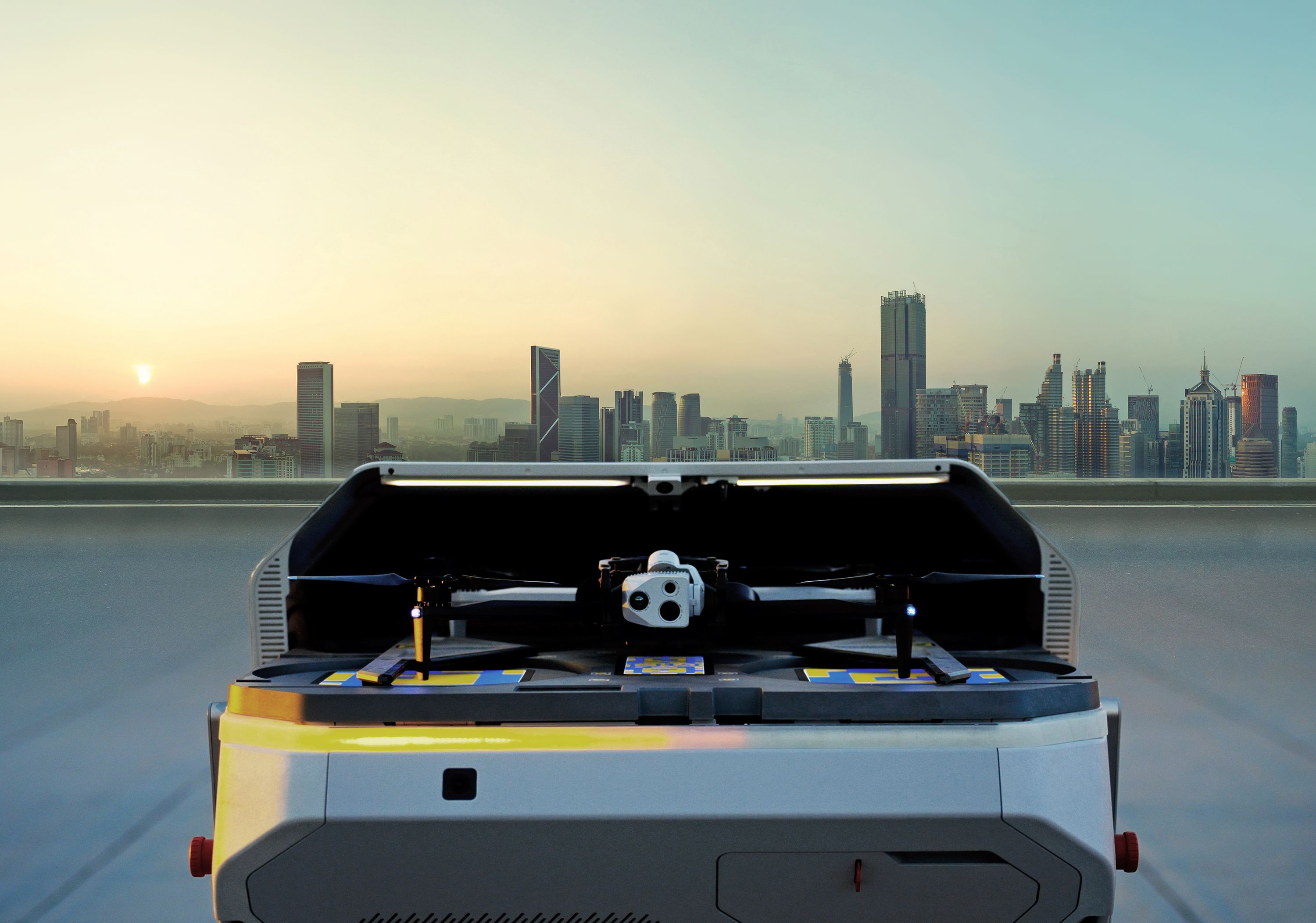
- [clears throat] Well, I think we're, we've seen it, you know, yesterday with
- the, with the new dock. Um, I think really that's the future, uh,
- for a lot of our work in, uh, in my industry-
- Mm-hmm
- ... is being able to just autonomously launch
- from a remote location
- anytime you want to, to inspect. Um, and I, I really
- think that that autonomous remote operations is,
- is the future and, and where everything's headed.
- So, um, for us, I know we're really looking at that.
- We don't have any docks at this point.
- Mm-hmm.
- Uh, but we're really looking at that hard and, and, and substations,
- power plants,
- and we'd like to try to incorporate that in our PSPS process, uh,
- for our wildfire mitigation. Uh, so I, I really think that's, that's the
- direction we're going.
- And, and very much just, like, going back to that maturity model as well,
- it's like
- some agencies, organizations may be at the manual,
- and that's where they're at
- right now. There's no, like, final place you need to go.
- It really depends on what your outcome is.
- So yeah, very much like what are your needs and how do you actually go
- through
- there, and where along that model are you?
- Uh, where, where are we in the model?
- No, no, I'm just saying, like, it, it just really depends on what your
- situation
- is, so.
- Yeah. And, you know, and too, the thing that I wanna, uh,
- bring up about the docks,
- there's companies out here that have really been, uh,
- forward with that-
- Mm-hmm
- ... and have invested a lot of time and resources to it.
- But it's really gonna help us guys that are kind of following along-
- Mm-hmm
- ... um, because they're really setting processes
- and standards, uh,
- that, that make it a lot easier for us to
- integrate.
- Mm-hmm.
- So.
- For us, we're looking at, um, you know, cadence capture, and we're
- moving from static deliverables to virtual twins and ultimately digital
- twins that are connected with IoT sensors.
- So setting up data acquisition standards, um, how we're gonna control this for the
- next decade so that it's repeatable.
- And then the level of detail that we need, um, if we're
- doing machine learning analytics, you know,
- we're striving for one millimeter
- GSD. So we have to decide this is how we're gonna
- capture everything, uh, moving forward so our analytics will
- actually
- work. Uh, but ultimately for us at Stantec,
- one of our strategic initiatives
- is to go from static deliverables, those paper deliverables that, uh,
- Michael was
- talking about, to a virtual twin, to a digital twin
- that has integrated sensors,
- um, so we can, you know, tell our story better, um,
- understand asset
- management better, start performing, uh, predictive analytics and change detection,
- and that's ultimately where we wanna go.
- Yeah, and that... I'm gonna go off of that.
- And the other part of it is we, we really can't get away from manual
- inspection in
- some sort of, uh, sense with bridge inspection,
- but we can start with a baseline
- model, and that's where I wanna see it go is,
- is to start your inspection with a
- model maybe driven with AI, and that inspector now
- is just a quality control
- agent out on the site, uh, finding the things that maybe the,
- the drone or the
- model couldn't find, uh, but getting all those, uh,
- check boxes ahead, ahead of
- time. And the other place I'd like to see it go
- with remote ops is, um, having...
- We have a lot of natural disasters, bridge impacts, and things like that,
- having
- some of those remote ops available to us to, to see if the bridge is, is in
- critical condition before we can get there.
- 'Cause many times it's a, it's a plane flight,
- it's a four-hour drive, it's, it's a
- long ways out. But if we have a remote op
- that can get there within minutes to see
- how the bridge is behaving, um, that would be all the more powerful for
- the
- clients.
- Awesome. Uh, I'll set up one more video, and I think just pretty much adding on to
- what everyone just said here, the culmination of all this technology,
- bringing together dock and remote ops, X10-
- High-quality cameras, RTK/PPK attachment, um,
- cloud integrations, photogrammetry tools basically gets you
- this, towards this
- ability to start getting real-time digital twins.
- Um, and w- we're just gonna keep chipping away at
- that, and that's, that's kinda
- how we see the future.
- Perfect. Um, so just wanna open it up for questions
- from those inside
- the audience here. Anything that you would like to ask any of our
- panelists?
- Absolutely.
- Sure. Uh, this question is for the,
- Michael with Stantec Bridge Inspection.
- Uh-
- Sir.
- Oh, cool.
- Thank you very much. Uh, so question for Michael,
- Stantec Bridge Inspection.
- Uh, I'm Sean, uh, California Department, uh, Transportation,
- Bridge Inspection. Uh, we saw some really cool 3D
- models of structures there, um, tunnels and
- bridges and all that stuff. Uh, are, is that part of your normal workflow
- for your clients, or is that a special occasion thing?
- Uh, I wouldn't say it's a special occasion.
- Um, it is starting to integrate into our
- normal workflow.
- As you know, uh, you know, inspecting maybe five to 10 bridges in a
- day, that's,
- that's not economical or, or efficient.
- Uh, but there are bridges that we find that are, uh,
- that can benefit from this
- type of, um, from this type of modeling or AI.
- So I wouldn't say it's, uh, completely taking over.
- Uh, just for everyone's information, uh, the state of Colorado I live in, over
- 8,000, 9,000 bridges that we have to inspect once every two
- years.
- And I know probably even more in California here.
- So, uh, uh, to, to do a model of every single bridge in
- your, in your entire
- inventory, it's just not realistic.
- Uh, so the first step is to, is to s- assess which bridges can benefit from
- this,
- and which bridges, uh, get the biggest bang for the buck for
- that.
- So, so I wouldn't say... It's, it's part of the workflow, but it's not,
- uh,
- completely engulfing every bridge.
- Yeah. For us it's, uh,
- definitely, I... W- we haven't even gotten into 3D modeling,
- uh,
- on the maintenance inside yet. Uh, construction people are playing with that.
- Uh, but right now for bridge inspection,
- we are really using it as, as a, an extension, uh,
- of, of a digital camera for pictures and videos of places of the bridges we
- can't
- find or we can't easily get to, or we would need a rope
- or a snooper truck.
- Um, and so I'm just curious to know what the
- qualifying factor are, uh, to go beyond
- in other departments and companies' judgment.
- Y- yeah. Well, step one is m- many of our inspectors now
- are trying to carry drones
- with us at all times. The two plus essentially in your backpack
- is the, is the best
- tool to have on a bridge inspection site.
- 'Cause again, getting to, to not have to put a snooper on to,
- to mitigating how
- much a snooper needs to be used, that, that's the ultimate tool.
- But then going back to the 3D modeling question, it's, it's more about, uh, one,
- you don't wanna model a bridge that just is in perfect condition,
- a brand-new
- bridge. Um, y- it looks beautiful, and everyone loves to see it,
- especially at one of these, uh, uh, conferences, but what, what benefit
- are you
- getting out as an asset manager? Not much.
- Uh, so one is to find out, you know, the age of,
- what types of defects the bridge
- has, um, the size, and, and what types of, uh, hurdles do we get by inspecting that
- bridge. So I'd say there's a lot of factors
- [laughs] , um, and then it's, it's
- trying to pick and choose between those.
- Thank you.
- Perfect.
- Any other questions? Oh, we have one in the back there.
- Hi, Eric Martin from Southern California
- Edison.
- The, uh, question is,
- how are you interacting with your leadership when you bring these new
- ways of looking at your assets? And have you made
- any
- determinations that weren't needing to be backed by human eyes
- with this information?
- For me or for-
- Anyone. Any, anyone in that question, I guess.
- Start at the beginning of the line.
- [laughs]
- Uh, can you repeat the last part of that question, please?
- Yeah. I'm just curious. As we get more, as the drones get more sophisticated with
- the fidelity and, and you can see so much with it, how is
- it, uh, being received by leadership as, as a
- viable source to check the box of, "We did our job,"
- without it sending a human out, I guess, is what I'm kinda getting at?
- Yeah. And, and that's a tough one, 'cause, um, we are not rolled
- out in a full-time aerial inspection, uh, program yet.
- Uh, we still do majority of our inspections by
- foot patrol and such.
- Um, and, and helicopter. Uh, but you know, I do know the fact of when
- we've done our little proof of concepts and we push that back up, you know,
- they're just amazed of what they can see.
- Um, but, uh, it also brings up its own set of
- challenges.
- Uh, because we can quickly, uh, overwhelm our resources from our
- regions, our operating regions. And, um, and also then, and then now
- we're really on a clock, uh, to get those repairs made.
- And then so that is, uh, a dollar amount, right?
- So I mean, it's just generally very positive because
- in the end,
- we're trying to prevent ignitions from happening.
- Uh, but it has its own set of challenges, and we're, we're kind of working our way
- through that right now. Uh, nothing's, you know, we're not nearly as far along
- as you folks in California.
- Excellent.
- Yeah. I was just curious about, and for you as well, the, like,
- the 3D mapping
- portion of it. Like, pretty impressive,
- like seeing the, seeing defects, basically,
- you know. Like, I'm just curious, like, how do you feel incorporating that
- into your check-the-list as inspected?
- Yeah. So it's, it's kinda twofold, uh, I would say.
- So on the 3D mapping side, uh, when you're,
- when you're able to produce a model
- like this, a lot of times in a, in a bridge inspection report,
- you're seeing the
- defect. You're seeing what, what's wrong with my bridge,
- what's wrong with my
- asset. And with a model like this, you can typically go in, back
- and find what was
- the cause of that defect. How, where, where is my maintenance?
- Yes, I can go patch this spall, but what caused that spa- uh,
- spall to happen?
- Um, so it's about tr- following your trail of breadcrumbs,
- and I think that's where
- that box gets checked. Uh, the other one on the non-3D modeling side,
- the two plus,
- we've had clients that, um, the, the logistics and the cost of just
- closing down the bridge to get a snooper on it to, to get ultimate, the
- resources on that site are just impossible.
- Uh, to put that two plus between steel girders
- and go look at welds, go look at
- details, and get within three feet of your asset,
- even closer,
- um, th- that was the biggest checkbox is, is to find things that not even manual
- inspection was able to find in some cases.
- Or, um, j- manual inspection just couldn't be done.
- Hi, Jamie from DTech Solutions. Just wanted to know,
- I didn't see the tunnel or
- maybe I missed it. What kind of challenges do you face, um,
- when you're doing a
- tunnel inspection with props? So often in like tunnels, mines, lots of
- dust, just not a place I've done a lot of, lot of inspections.
- Just maybe some takeaways from that kind of experience.
- I p- I suppose you don't have many alternatives
- in that GPS denied environment.
- Um, yeah, if you wanted to click the slide,
- I think it's the very next one.
- Um, yeah, I would... Exactly what you said.
- It's, it's dust, it's the light, I think is the biggest factor.
- And the amount of, uh, the amount of resources you need just to
- make
- those inspections is, is quite substantial.
- A lot of times this could be confined space, uh, with a longer tunnel.
- Um, but I would say Night Sense is what we're kind of working with to, to
- help bring those resources back to just a two-person team or just a drone pilot.
- Um, and then putting the drone in harm's way,
- not necessarily our inspection staff.
- Does that... Does that work for you?
- What were you doing before?
- Uh, again, just a regular inspection team, so manual inspection.
- Okay.
- Yep.
- Any other questions?
- Yep.
- This is a loaded question. Aaron Chamberlain, Caltrans.
- Uh, so on that subject of standards, I heard you mention, you know, the one
- millimeter GSD. Um, what are you seeing as far as the national
- framework
- for that as far as how does, how does that scale, right?
- So it works for you, for Stantec, you guys can develop your own standards,
- right?
- But how are you seeing that, uh, scale towards the entire industry?
- You know, it could be bridge, it could be, uh, energy, whatever.
- Um, you know, we don't have a, you know, we have ASPRS standards for, you know,
- nadir mapping. We don't really have anything for any of
- these other case uses yet
- 'cause the, the technology is relatively new.
- I'll answer that. [laughs]
- You know, I think that's something, uh, as the industry develops, we're gonna have
- to develop those standards. And coming from DOTs,
- transportation authorities, um, regulatory authorities, um,
- they're ultimately
- going to have to set the standard. Uh, but we do need to have that conversation
- because the technology is new. And everyone right now wants a digital
- twin or a
- virtual twin or a 3D model. Um, but we haven't defined
- that really well because
- everyone has a different definition for it.
- So coming together at conferences like this, um, discussing it,
- understanding that we do need to have data acquisition standards, that just because
- the drone will go out with uncontrolled photogrammetry and create a beautiful
- model, should you? You know, if you wanna do this over a decade,
- we need to
- programmatically decide how we're going to do that and set the standards
- up front, not just create one great model
- and then walk
- away from it. So e- exactly what you said, we have to have, um,
- uh, state standards,
- um, federal standards for this, uh, and we have to have that conversation.
- Any other questions?
- All right. With that, I'd like to thank our panelists for coming
- up here today and
- taking some time out of their busy days.
- And, uh, appreciate you, the audience, for coming out here as well.
- So thank you very much.
- [clapping]
Watch Time
39 Mins 56 Secs