Skydio X10 Updates Improve Camera Performance & Clarity
 Alden Jones
Our Draper software release brings better low-light imagery, more reliable autofocus, click-to-focus, and improved subject tracking to X10s in the field, all delivered over the air.
X10 cameras just got sharper
Draper, our latest software release, improves the cameras on X10s already flying today. These updates come directly from customer feedback: you told us where the camera needed to do more, especially at night and in low light. Some of the improvements are visible in new operator controls, such as click-to-focus and enhanced subject tracking. Others work quietly in the background: more reliable autofocus and updated image processing that preserve contrast and detail as a subject moves through challenging lighting. Now live, with no new hardware and at no additional cost, delivering on our commitment to continuous improvement for customers across industries and use cases.
Better imagery after dark
Draper includes new low-light tuning and autofocus improvements for the telephoto camera. The camera holds focus and preserves contrast where detail matters most, making edges, shapes, and markings easier to distinguish in limited light.

For darker scenes, pilots can switch on X10’s dedicated low-light camera mode in Remote Flight Deck. This mode adjusts exposure, contrast, and noise to display more usable detail from shadows without requiring manual user intervention.
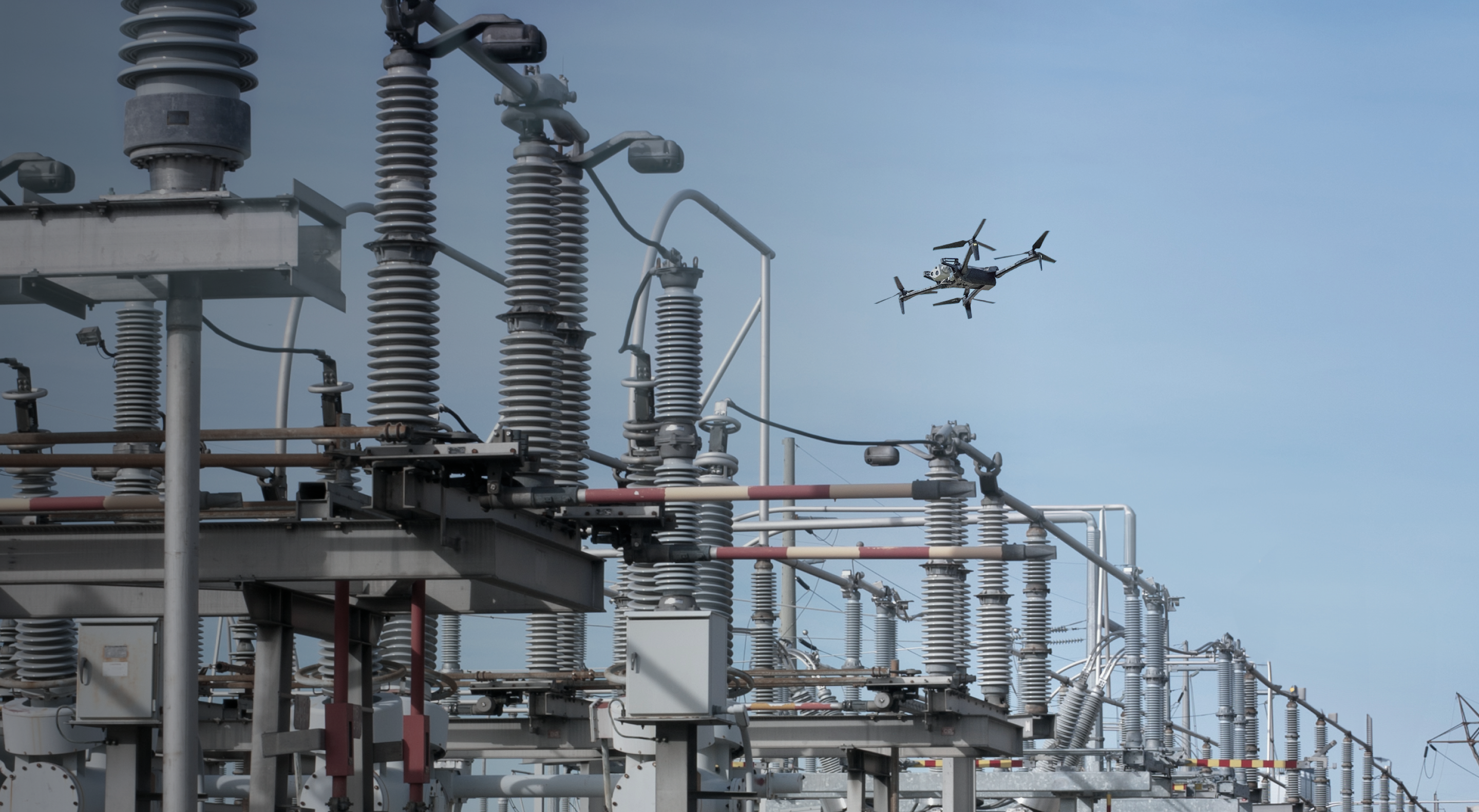
Inspection teams flying substations, pipelines, or plant equipment during early morning or after-hours windows get the same benefit: a component in shadow no longer means a return trip in better light.

Operators can zoom in on a detail, such as characters on a license plate, numbers on a door, or a corroded weld on a support beam, without repositioning the aircraft or adjusting camera settings.
Click-to-focus
Click-to-focus gives pilots direct control over what the camera prioritizes. Hold the F key and click a person, license plate, or doorway in the live feed, and Remote Flight Deck updates focus and exposure for that area instead of averaging across the entire scene.

More reliable autofocus
Draper improves autofocus reliability on the telephoto camera, holding focus on a subject or surface even as distance, angle, or lighting shifts mid-flight. For inspection and mapping work, that means fewer soft or out-of-focus frames on a pass that can't easily be repeated, whether that's a close approach to a transmission tower, a slow pass along a rooftop, or a detailed look at a structural joint.

Automatically adjusting exposure as subjects move
When a pilot uses Shadow to track a subject, Draper anchors the entire imaging pipeline to that subject, driving focus, exposure, and stabilization together. As it moves between streetlights, shadows, and headlights, the system continuously optimizes the image around the subject itself, not the surrounding scene.


The Draper release brings all of these improvements to existing X10s deployed in the field today.
The result is a camera that asks less of the operator and returns more usable information: clearer detail after dark, focus and exposure that stay with the subject, and direct control when it is needed.
Why this matters
For Drone as First Responder
Drone as First Responder (DFR) operators work with only seconds to understand what's unfolding, often in low or poor lighting and with no chance to reposition for a better view. A plate that can't be read, a subject lost in shadow, or a target that slips out of frame leaves responding officers in the dark, and without the information they need to know what they're approaching.
For Inspection & Mapping
Inspection and mapping teams fly missions that are expensive or difficult to repeat. A corroded weld missed on a transmission tower, a hairline crack overlooked on a facade pass, or a component lost to glare means either a defect goes undocumented or the site gets flown again.

An X10 with a high-resolution sensor and improved autofocus is only as effective as the live video feed reaching the operator. Connectivity plays a critical role in how reliably that information arrives in real time.

Fusion+ enables X10 to use two cellular modem connections simultaneously, combining Skydio’s point-to-point link with two mobile carrier networks to increase throughput and improve resilience in weak coverage areas. Where a single connection may degrade or fail, Fusion+ fuses multiple weak links into a stable, usable video feed—turning marginal connectivity into reliable situational awareness.