10,000+ Flights: How Skydio Supported Public Safety During the 2026 FIFA World Cup
 Mira Marquez
 Ryan Blinn
Across 39 days, thousands of flights, and some of the most complex public-safety environments in the world, Skydio stood alongside agencies before, during, and after the tournament.
The 2026 FIFA World Cup brought millions of people into stadiums and communities across North America. Behind the scenes, public safety agencies faced an equally massive challenge: protecting one of the world’s largest sporting events across 39 days, multiple jurisdictions, and vastly different operating environments.
Skydio solutions supported that mission across 12 regions, including every U.S. host city and Vancouver, Canada - giving agencies aerial awareness across the tournament’s North American footprint as they protected residents and visitors. The security footprint extended far beyond the stadiums. Agencies were responsible for protecting fan festivals, watch parties, transit corridors, team hotels, training facilities, parking areas, surrounding neighborhoods, in addition to their everyday calls for service all while operating in restricted airspace, dense crowds, extreme weather, and heavily congested communications networks.
There was no single playbook for an operation like this that could simply be copied from one city to another. Every host city had its own venues, airspace, cellular carriers, command structure, technology ecosystem, and operational priorities.
That complexity shaped Skydio’s approach from the beginning: supporting the World Cup could not be limited to delivering aircraft. It required standing side by side with our customers and helping them prepare, operate, adapt, and sustain their missions through the final match.
Readiness started months before kickoff

Long before fans entered the stadiums, Skydio teams were working with public safety agencies to understand what the tournament would require.
Through planning webinars, agency readiness reviews, regional coordination, training, and operational guidance, we helped customers think through the full mission, not only how and where drones would fly, but also the people, policies, communications, infrastructure, and partnerships needed to support them.
Agencies also received access to Skydio Academy and Skydio Paraverse to build pilot proficiency and rehearse team procedures. Site surveys, equipment assessments, software enablement, command center integrations, and connectivity planning helped agencies prepare the full operating environment. When the first match started, we wanted our customers to know that Skydio was ready to operate alongside them.
More than 10,000 flights across 12 host cities

During the tournament, Skydio supported 17 public-safety agencies across 12 host cities in the United States and Canada.
Sixteen out of seventeen of those agencies conducted:
- 10,000+ flights
- 2,500+ hours of flight time
- Nearly 50/50 split of both Dock-based and hand-flown operations
The near-even split between Dock-based and controller-based missions reinforced an important lesson: large-event operations are not served by a single deployment model.
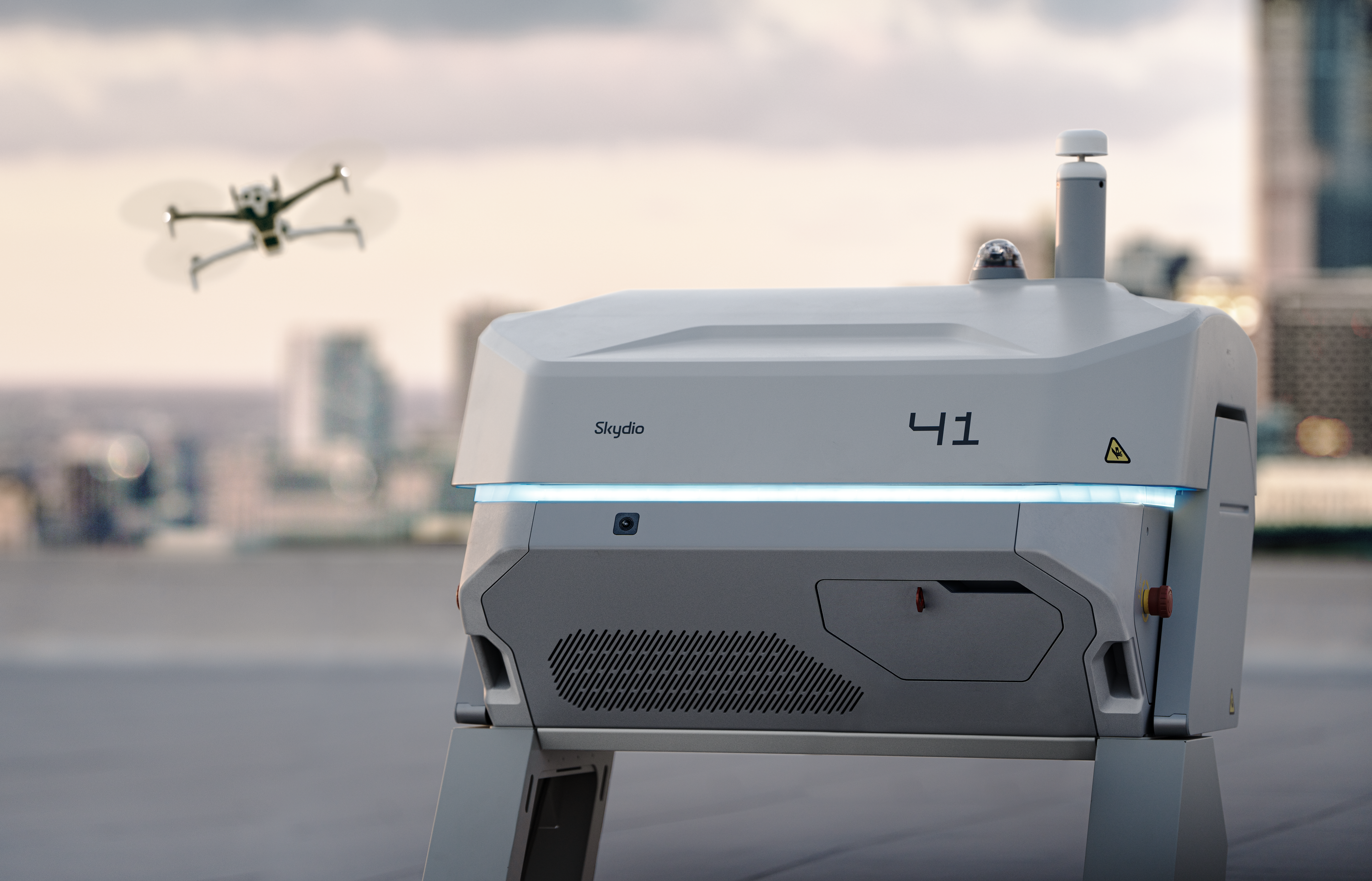
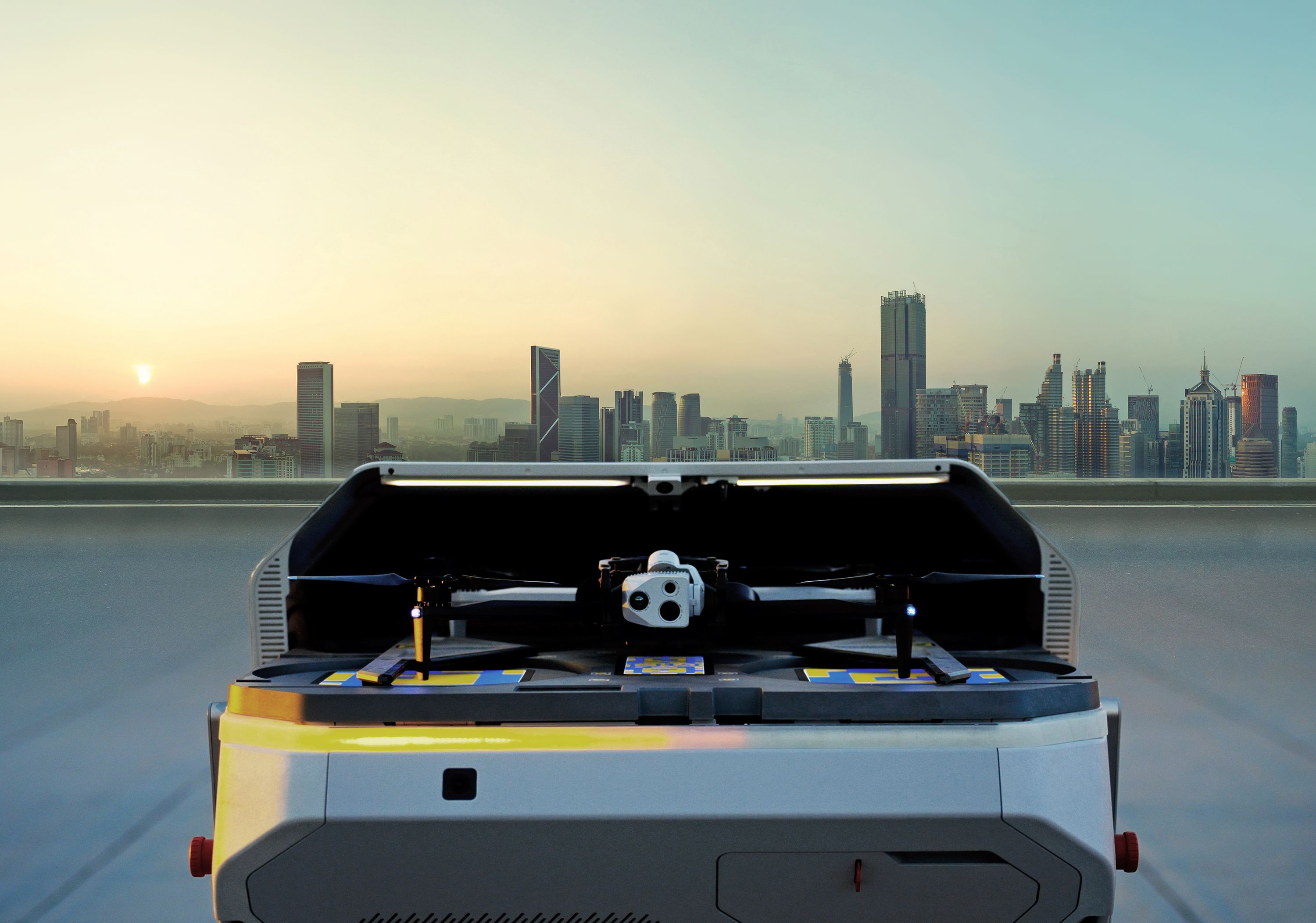
Skydio Docks provided persistent coverage, rapid launch capability, and a second source of aerial support when pilots or controller-based aircraft were committed elsewhere. Controller-based Skydio X10s gave agencies the flexibility to reposition rapidly, operate beyond Dock coverage, and respond to changing missions. Skydio Remote Flight Deck enabled pilots and command staff to operate and view aircraft from centralized locations.
Together, these capabilities helped agencies support crowd and perimeter monitoring, emergency response, counter-UAS operations, medical calls, traffic management, team-site security, and routine calls for service throughout the tournament.
Finding a patient in a crowd of 25,000

In Atlanta, the value of that preparation became clear during a crowded pre-match Fan Festival.
A 911 caller reported that someone had collapsed and was experiencing a medical emergency. With more than 25,000 people in attendance, the caller was unable to provide the patient’s precise location, making it difficult for emergency personnel to reach them quickly.
Atlanta Fire Rescue launched a Dock-based Skydio X10 within seconds. The aircraft searched the event footprint and helped locate the patient within the dense crowd. Live aerial imagery was shared with the unified command post, where incident commanders used the view from above to guide EMS personnel along the fastest available route.
The mission demonstrated how Drone as First Responder (DFR) can extend beyond security overwatch. In a time-sensitive medical emergency, it provided the shared situational awareness needed to help responders navigate an exceptionally complex environment.
Supporting Counter-UAS Response


Unauthorized drone activity was one of the World Cup’s most persistent security challenges. The FBI reported that more than 700 unauthorized drones operating in restricted airspace were seized across all U.S. host cities as part of an unprecedented counter-UAS effort involving federal, state, and local partners. Skydio X10s provided meaningful support in these efforts. Agencies utilized counter-UAS detection systems, such as Axon Dedrone, to identify unauthorized drones in the airspace. Skydio X10s were then launched to help locate operators, maintain aerial awareness, and guide ground teams in their mitigation and apprehension efforts. These outcomes reflected the work of the entire public-safety network, with X10 providing teams greater speed and visibility as they responded.
Sustaining operations at scale
Across host cities, agencies used Skydio drones to support a wide range of missions, including stadium and Fan Festival overwatch, counter-UAS operations, crowd and perimeter monitoring, traffic management, team-site security, medical emergencies, suspicious-person reports, security sweeps, and everyday calls for service. These responsibilities continued for weeks and often stretched well beyond event venues into transit corridors, hotels, training facilities, watch parties, and surrounding neighborhoods.
Agencies combined Dock-based, remotely operated, and controller-based aircraft to adapt as missions, weather, geography, and staffing needs changed. Skydio Remote Flight Deck enabled centralized operations and helped command personnel maintain a shared view across multiple locations. Together, these capabilities allowed agencies to sustain event security without stepping away from their broader responsibility to serve their communities.
Resilience requires more than an aircraft
The World Cup also reinforced that reliable drone operations depend on an entire ecosystem.
Crowds place enormous demand on cellular and radio-frequency networks, the same networks public-safety teams depend on to control aircraft, share live video, and coordinate their response. Skydio Fusion+ helped agencies maintain stronger aircraft and video connectivity in several of the tournament’s most congested environments. Prioritized cellular service, dedicated routers, Starlink backhaul, and carefully planned failover options also proved critical.
Integrations were equally important. Agencies connected Skydio operations with existing computer-aided dispatch, counter-UAS detection, evidence management, real-time information center, and video-management systems. The strongest deployments incorporated the drone into the agency’s established command-and-control workflow rather than treating it as a standalone tool.
And when conditions changed, Skydio employees were there. Solutions Engineers, Field Service Representatives, Customer Success teams, Support, Product, and Engineering personnel worked directly with agencies to troubleshoot live issues, deliver replacement equipment, adjust connectivity configurations, and help customers keep aircraft available. Some teams operated onsite through high-tempo periods, while others provided remote and after-hours support across multiple time zones. For major events, that expertise and responsiveness are part of the product experience.
What we will carry forward
The World Cup validated the ability of public safety drone programs to operate at meaningful scale through weeks of dense crowds, restricted airspace, severe weather, and changing mission requirements. It also gave Skydio and our customers practical lessons that will improve future operations.
Preparation must encompass the complete aircraft-to-command path. Agencies need a written concept of operations, clear launch authority, sufficient staffing, tested connectivity, reliable power and backhaul, pre-staged equipment, and established escalation paths. Network carrier priority and failover behavior must be validated before event day. Pilots and supervisors need opportunities to rehearse under realistic conditions, including sustained operations and shift handoffs.
These lessons will inform how Skydio supports future events, from national celebrations to championship games, natural disasters, and other long-duration public-safety missions.
When our customers’ missions get harder, we move closer

Supporting the World Cup was a commitment to our customers, the public safety professionals responsible for protecting millions of residents and visitors.
Our customers do difficult, consequential work in unpredictable environments. They deserve more than capable technology – they deserve a partner that prepares with them, responds when conditions change, and stays engaged until the mission is complete.
For 39 days, agencies across North America showed what is possible when autonomous drones, experienced operators, connected command systems, and hands-on support come together. We are proud of what our customers accomplished and even more committed to carrying these lessons into the next mission.