
Can an organic drone deliver ISR precise enough for sensor-to-decision actions?
 Dan Haddick
A squad spots something that demands immediate action: new movement on a ridge that was quiet yesterday, a vehicle arriving at a building that should be empty. They need to understand what they are seeing quickly enough to act on it.
Sensor-to-decision time can become the bottleneck. The time between seeing something, locating it precisely, and sharing it with someone else, becomes the challenge.
Many small ISR systems give teams video, but not the precision, machine-readable data needed to feed the broader ISR workflow. Turning that into action required a manual handoff: one person reading coordinates from one screen while another typed them into another system. The alternative was calling for a larger ISR platform, like an MQ-9 Reaper, and waiting for precision intelligence.
By the time that support arrived, the activity they had spotted was often gone – and the opportunity to act was gone with it.
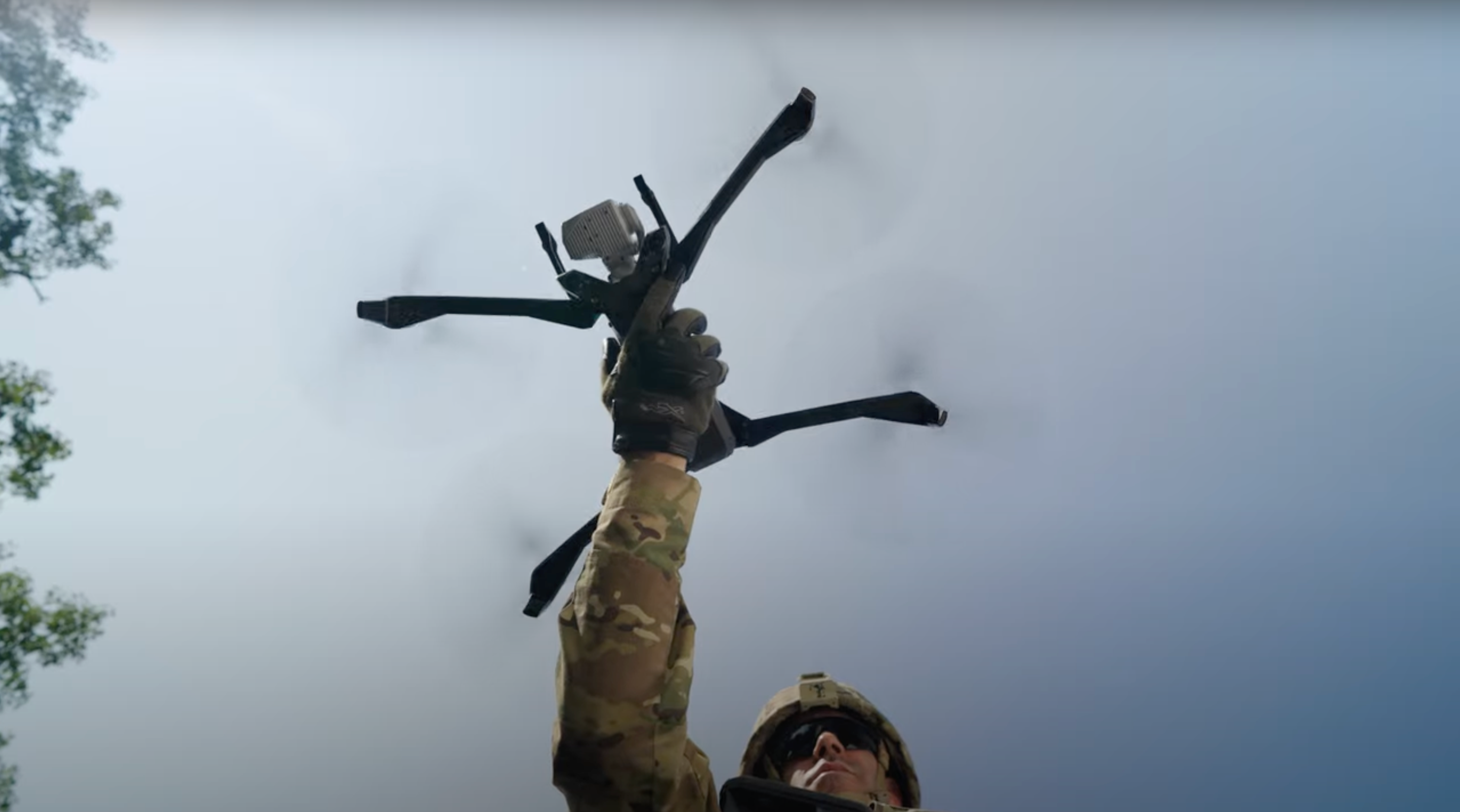
Today, Skydio X10D is hand-launched from the kit the squad already carries. It produces the same class of ISR outputs as the Reaper, Gray Eagle, and Shadow: imagery, aircraft track, sensor pointing, and ground footprint, all meeting the same standards the rest of the force already uses.
The squad no longer has to request precision ISR, it can produce it.

The reason precision ISR wasn't organic was never the camera
For years, Group 1 sUAS cameras delivered useful imagery. But that imagery stopped at the operator’s screen. The video was useful to the squad, but it was not immediately usable by the rest of the platoon.
Many Group 3 platforms display full-motion video: imagery wrapped in machine-readable metadata. It knows where the aircraft was, where the sensor was pointed, what ground the frame covered, when it was captured, which objects were detected, and dozens of other fields encoded to joint ISR standards. These platforms also carry more advanced payloads, including specialized ISR sensors, synthetic aperture radar, and communications relays.
That Key-Length-Value (KLV) metadata turns a video feed into usable intelligence. It allows imagery to flow directly into a mapping client, fires workflow, 3D reconstruction tool, or analyst exploitation suite, without the cognitive burden and transcription errors. This is the difference between video and ISR.

In the past, Group 1 sUAS did not reliably produce that wrapper. Metadata was missing, incorrectly formatted, or out of sync when GPS was contested. The video reached the operator’s screen, but it did not move through secure communications as actionable intelligence.
Skydio X10D closes that gap, delivering FMV to STANAG 4609, with KLV-encoded metadata drawn from MISB 0601 and MISB 0903, the same standards used across larger ISR platforms. Raising the bar for this class of sUAS, delivering standards-based ISR that the platoon can ingest, trust and act on.
Anything less is just a video feed.
Every X10D flight produces structured, precision ISR products
Precision ISR requires data that includes where it was captured, what ground it covered, and the context needed to turn observation into action. Four components deliver that precision:
- Imagery: What the sensor captured in EO or thermal, the frame the operator actually sees.
- Aircraft track: Where the aircraft was, frame by frame, the reference that turns a sequence of images into a temporal record another system can replay.
- Sensor pointing geometry: Where the camera was looking in three dimensions at the moment of capture, the data that lets downstream tools project the image back onto real terrain.
- Projected ground footprint: The ground area covered by each frame, the polygon another system can intersect with terrain, friendly tracks, named areas on a tactical map, or detected objects in the scene.
Together, these components turn a video feed into a precision ISR product. It can be streamed live, recorded on the aircraft, moved across the network, replayed later, and exploited in tools built for much larger ISR platforms.
The fidelity stays intact through the handoff.
When environments degrade, X10D maintains ISR precision
The harder problem sits beneath those four components.
Generating accurate sensor geometry in benign conditions is an engineering exercise. Keeping it accurate when GPS is denied or degraded or when the RF spectrum is contested - that determines whether a precision ISR claim survives contact with the adversary or not.
Most sUAS precision claims weaken as conditions degrade. X10D is built for that reality. Its visual-inertial navigation maintains position estimates when GPS is unavailable, and its metadata pipeline continues producing valid MISB output whether the aircraft is navigating with GPS or VIO.
When the link degrades, the aircraft retains the same geometry in its onboard recording that the live stream carried. That data is available as soon as the link recovers or the aircraft returns. Surviving modern battlefield conditions is half the work; surviving the handoff is the other half, and X10D does both.
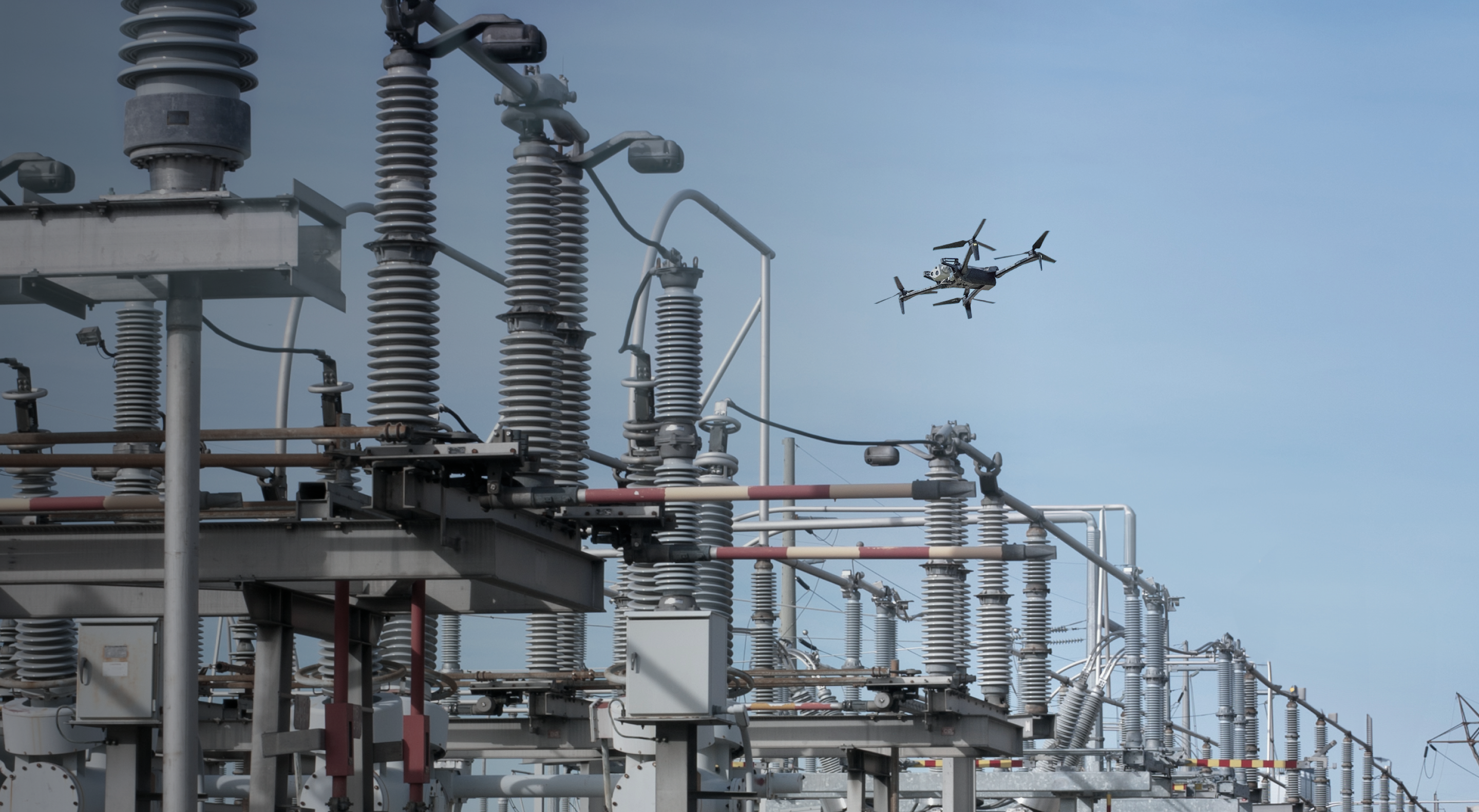
The same precision on the battlefield transfers to non-combat operations, too. Wildfire response, search and rescue, critical infrastructure inspection — any mission where structured data has to move fast and land clean.
Ready for the joint ISR mission. No manual handoffs
The X10D feed appears on the EUD already strapped to the operator’s chest. The aircraft, sensor footprint, and operator-marked points of interest render directly on the same tactical map the rest of the team is using.
A teammate two kilometers away sees the same frame and overlays it in real time. A controller managing the joint air picture receives the geometry in a format that picture already accepts. A planner reviewing the recording an hour later sees what the operator saw, with the same fidelity or better.

The data stays clean across formats without the need for a translation layer or transcription step.
The metadata that places the aircraft on the team's map also drives augmented-reality overlays on the live feed, builds three-dimensional site models from a single flight, and feeds joint tactical workflows that move structured ISR data between ground teams and other aircraft — including the data links that carry that data to fighter aircraft.
This output also meets the standards architecture used by the rest of the joint ISR mission: RAS-A IOP (the Army's interoperability profile for autonomous systems), MAVLink, MISB, STANAG, and ATAK.
This interoperability advantage led to the US Army issuing a Technical Directive to procure X10D under SRR Tranche 2, and the first systems went to 1st Brigade Combat Team, 101st Airborne Division.
For allied forces, the procurement documents tend to be even more explicit about STANAG conformance than U.S. ones, and the output from X10D meets both.

Sensor-to-decision just got faster
The precision ISR capabilities in the X10D accelerate the sensor-to-decision tempo. Handoffs move faster, site models are built from a single flight, and after-action review preserves the same geometry the operator viewed live. Actionable data flows cleanly into the systems the rest of the force already depends on.
Decision advantage at the squad level strengthens, and every echelon above gains crucial seconds back. The tempo holds.