

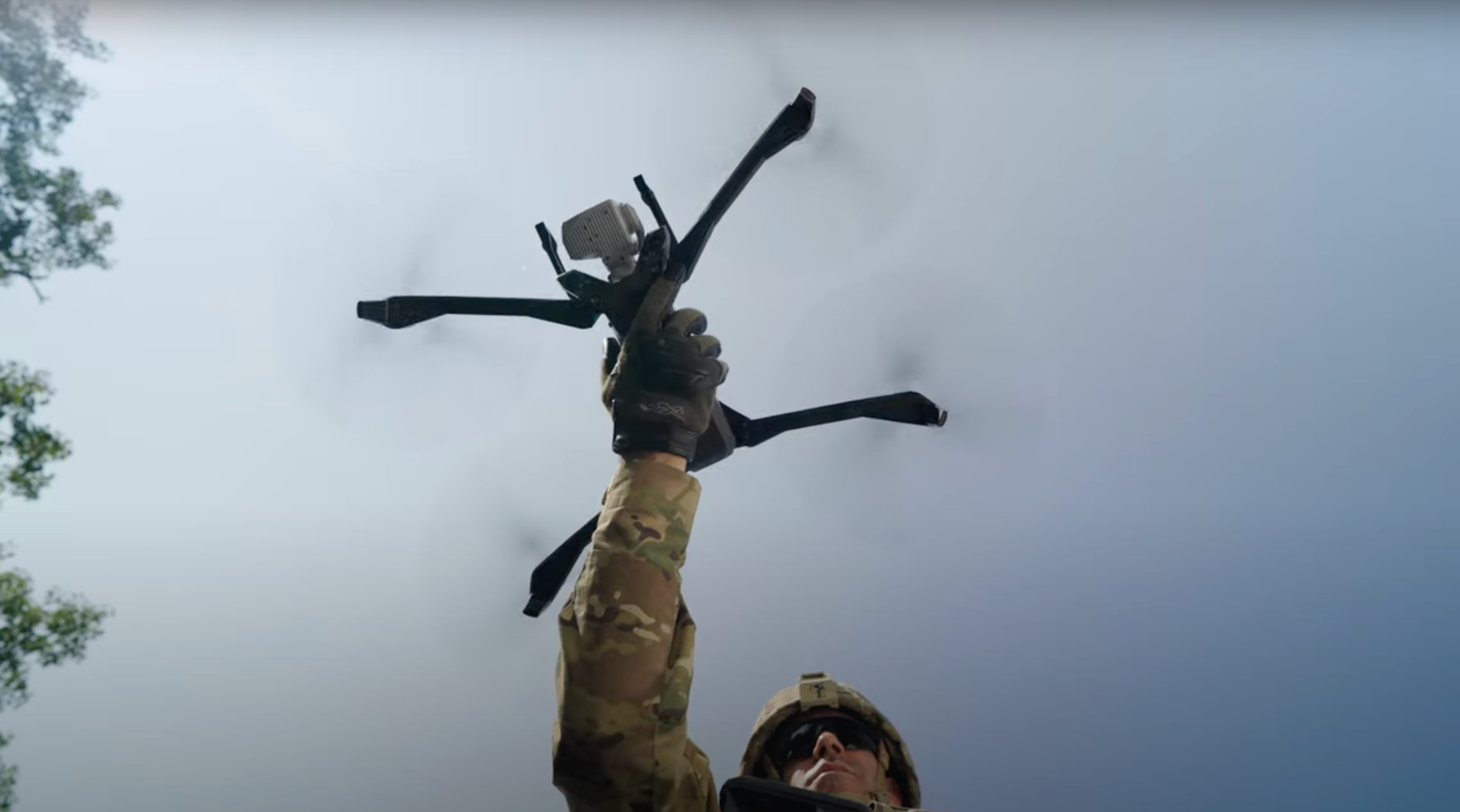
Austintown Fire cuts response times with its DFR program
Two months into its DFR program, Austintown Fire is cutting response times while also gaining a clearer picture of the scene before crews arrive. Nine trained pilots (and counting) now respond to structure fires, crashes, search and rescue calls, and requests to assist law enforcement. The program is funded through the Ohio DFR grant program. On one call for a possible structure fire with a report that someone could be trapped inside, the drone reached the scene ahead of ground crews and confirmed the fire involved a detached garage rather than a house, giving responding units a clearer picture before they arrived.
The dock coverage also extends mutual aid to neighboring communities, supporting other agencies on calls where multiple departments respond to the same scene. As Captain Tom Metzinger put it, "There's been so many wins not only from us but the other agencies that have been involved."
- [cymbals crashing] Back in February, Ohio launched the nation's
- first statewide drone first responder program, and a local fire
- station is among the departments participating.
- We spoke with Austintown's fire captain, Tom Metzinger, when this was first
- announced, and now that department has been using the drone
- for about two months or
- so. Captain Metzinger is back with us now to talk about how the
- program's going
- and what success his team is seeing from it. Great to see you again.
- Nice to see you.
- Yes. So Tom, can you remind us about the program?
- What's it designed to do?
- It's a newer way of using drones. So instead of deploying them
- from the back of a police car or a fire truck and flying them on the
- scene,
- they live in these docks at two of our fire stations that we remotely deploy,
- uh, via a computer, that allows us to respond with ground
- units to get to the scene
- a lot quicker and get us valuable information about what's going on.
- Yeah, in March, that training started for the drone.
- What was that experience like, especially since you have
- that different timing
- of getting important information?
- So, um, anybody who didn't have their FAA Part 107
- drone
- license had to get that. And then we've gone through numerous
- trainings as to
- how we can use this, not only in our operations,
- responding to structure
- fires and car crashes, as well as search and rescue,
- but also helping law
- enforcement if they were ever to need that with trying to find a suspect or
- anything like that. And then also just setting up
- and implementing
- our own guidelines and procedures for how we're going to use
- it, when we're gonna
- use it, what weather's allowable for it to fly,
- and things like that, that all the
- pilots have to learn and understand before, you know,
- they make the decision
- as to whether or not to launch or not.
- Yeah. 'Cause we have a variety of weather around
- here. You and I both know that.
- [laughs]
- Yes.
- Uh, how many total firefighters at the station
- are trained pilots that can use and
- operate this drone?
- We have nine now.
- Wow. Now, are you hoping to train more, or do you think that's enough?
- Right now, we'll see. We're hoping to really ramp things up.
- We've been using them intermittently, seeing how this all works.
- Uh, eventually, we're gonna move to around-the-clock, uh,
- on-call staffing for it
- so that it can be deployed on more incidents now that we see its
- capabilities.
- So I'm... I have a pretty good feeling
- that that's gonna gain some more interest
- among some of the firefighters that, uh, maybe wanna get some more training and be
- involved in it too.
- Yeah. And since you started using this drone,
- describe maybe an example or two of
- how you've noticed it's benefited your response for the department.
- Sure. A few weeks ago, right after sunrise, we
- were dispatched for a possible
- structure fire, and the callers said that it may have
- been a house and that people may have been inside.
- The drone launched right as the trucks were still being dispatched.
- As soon as it cleared the trees, we could see that we had a pretty tall
- column of
- smoke. It got there minutes before the first tri-
- fire truck, and we were
- able to see that it wasn't a house. It was a detached garage with a trailer
- involved. And that kinda helps the responding units
- give a little bit of a sigh of relief, knowing it's not a house necessarily.
- Obviously, we're still gonna go in and search for people,
- but it just gave them
- more clarity as to what was actually going on,
- and come up with their
- game plan so much quicker, so that they're ready to go the minute they
- step off the
- truck.
- And sometimes you have incidents, it's, it's, you know, something you don't wanna
- see, but you have to have multiple departments
- responding to one scene, whether
- it's your community or one that you help at.
- How much do you think this drone is gonna benefit some of those responses?
- I think it's absolutely going to help.
- We have two fire trucks staffed around the clock.
- If we're tied up on calls, the drone can be sent to certain other
- incidents that
- come in at that time. It also has the capability to respond to
- some of the
- adjacent communities. Uh, we have a drone at station 146, so
- that gives us a little bit of access to Weathersfield and North Jackson.
- And then we have another one at our station on South Raccoon Road,
- which gives us
- much deeper access to Youngstown, Canfield, and even parts of Boardman.
- So there is that abi- ability to have some mutual aid agencies
- call upon it and use it so that they can, uh, benefit i- from it as well.
- And real quick, you know, in about a year, there's gonna be a final report on the
- program. Do you think it'll expand?
- I sure hope so. Um, there's been so many wins,
- not only from us, but the
- other agencies that have been involved, that, um, the more I read about it too,
- that these type of programs are just expanding rapidly.
- Mm-hmm.
- So I think the report will be successful, and I hope that they do have additional
- funding, not only for the current agencies to keep
- doing these operations, but to
- bring some new ones on board as well.
- Yeah, it's pretty incredible. Like you said, this is really helping and,
- you know,
- it's great to hear some of the examples of the ways that it's definitely benefiting
- your response. Appreciate your time. Thank you for joining us again.
- Yep, absolutely. Thank you.
Watch Time
4 Mins 24 Secs