

Harford County Sheriff's Office launches Drone as First Responder program
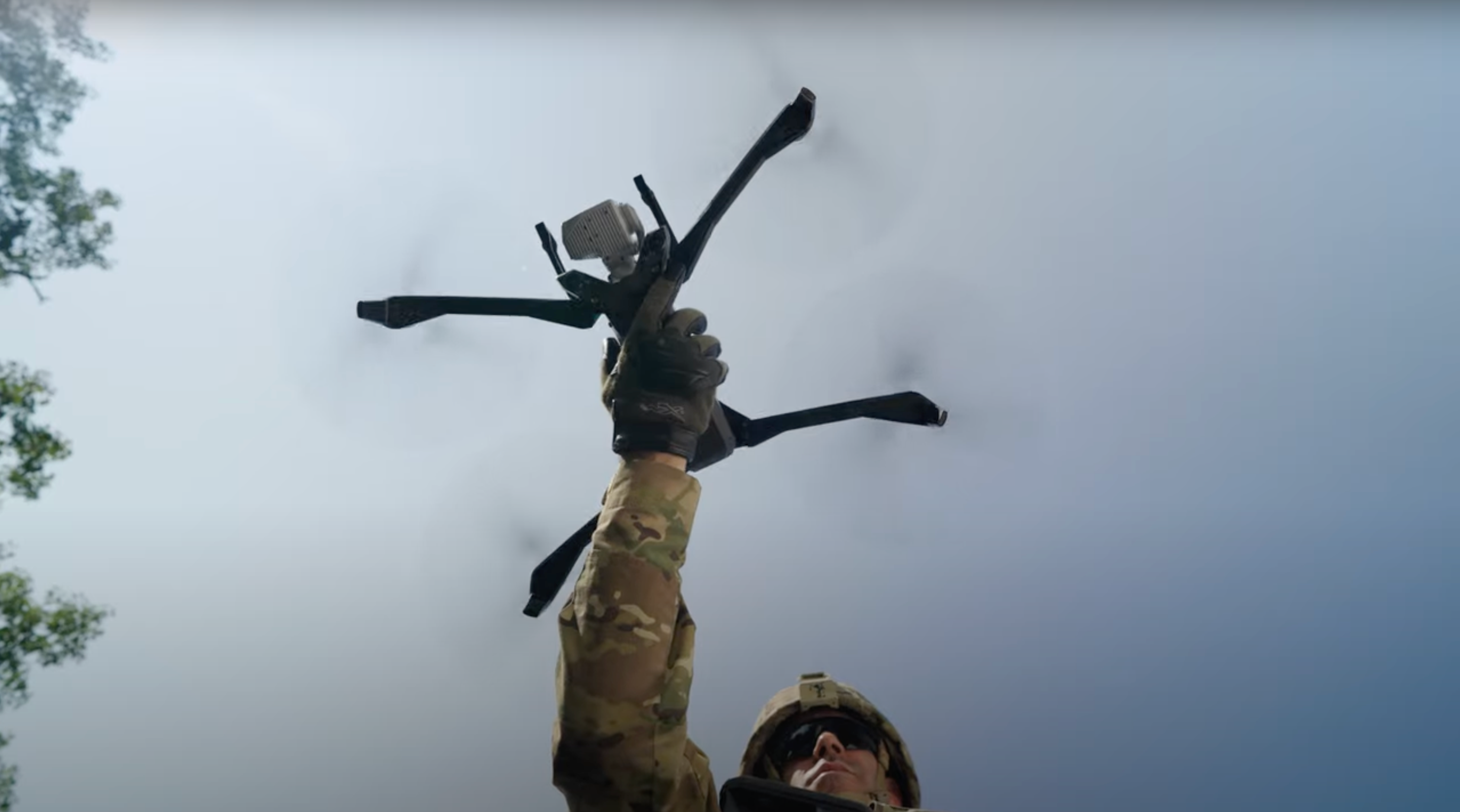
The Harford County Sheriff’s Office has launched their Drone as First Responder (DFR) program with Skydio X10, enabling drones to launch automatically to priority 911 calls and deliver live aerial intelligence before deputies arrive. With strategically placed drone docks throughout the county, the program provides faster situational awareness, enhances officer safety, and helps responders make more informed decisions in the critical first moments of an incident.
Built on the Skydio X10 platform, the program leverages advanced obstacle avoidance, low-light capabilities, and thermal imaging to operate in challenging environments and get eyes on scene quickly. Every drone operator completes rigorous training before flying, and every mission is documented and tied to a specific call for service—reflecting the Sheriff’s Office’s commitment to transparency, accountability, and responsible drone operations.
- Hi. I'm sergeant Walt Smith.
- I'm the team leader for the drone unit here for the
- Hartford County Sheriff's Office.
- Just a little background from our unit.
- In twenty twenty one, we launched our drone unit program.
- We started with a few pilots with a few drones,
- and now we're up to fourteen pilots with fourteen drones.
- Just to give you a background,
- for a call for service comes in,
- one of our drones gets dispatched to the scene.
- Our operators actually have to travel to the scene,
- put the drone on the ground, clear the airspace,
- and fly over that,
- and then we could give the live feed to the actual patrol
- officers and command bus on the on the scene.
- Moving forward, we're excited to launch our new program,
- the DFR program, which is the drones to first responder.
- How that's gonna change the game here in Hartford County is
- that instead of our officers receiving the call and arriving
- on scene and then launching the drones,
- We'll have drones strategically located on top of county
- buildings here in the county.
- We'll be listening to live nine eleven calls and once that call
- taker calls in and gives us a call for service,
- the drone operator can actually listen to live,
- launch the drone in real time,
- and actually get the drone up in the air and on scene within
- thirty to about ninety seconds.
- The change with the DFR program with those kind of response
- times will enhance officer safety,
- give officers on the ground ground a clear picture of
- visual what's going on before they even arrive if we can slow
- things down, make the scene safe,
- and sometimes deescalate situations.
- To ensure the public's trust,
- we don't just randomly fly these drones whenever we want.
- We're gonna respond in calls for service just like we would
- in a patrol car.
- Once the call for service comes in,
- if we decide that's a priority one or two call or something is
- in progress happening,
- we'll launch the drone to actually get eyes on that
- target and see what's happening on the ground.
- In no way, shape or form,
- we'll be looking in yards or businesses or anything like
- that and violating anybody's rights.
- To ensure transparency,
- every flight will be documented and auditable and every flight
- will be tied to a call for service.
- For our DFR program, we chose the Skydeo X10 platform.
- There are several reasons because of this.
- It has six cameras, three on the top,
- three on the bottom where it continues to build a model of
- what's around it for three d purposes for obstacle avoidance.
- With that being said,
- we also have the night sense that's on the top and the
- bottom of this and that also it flies in low light and no light conditions.
- So, can actually have obstacle avoidance during the nighttime
- hours as well.
- So, the X10 also has the front facing camera on this zoom
- camera and also has the IR camera which is a flare which
- gives off the pilot the opportunity to see heat
- signatures on the ground level so we can see subjects fleeing
- in the woods, animals,
- and things like that when we're searching.
- Becoming a drone operator for the Hartford County Sheriff's
- Office isn't just picking up a drone and flying it because you
- have your license to do so.
- We put you through a vigorous one week course and we push you
- to your limits and things that you've never done with a drone
- before to ensure that when you pick up this controller you
- know all the limitations of the drone and you know how to get
- the job done when it matters.
- The Hartford County Sheriff's Office is at the forefront of
- shaping the future of public safety where technology like
- this is not only just emerging tool,
- but it's a critical component of how we protect and serve our community.
- At the same time,
- we do recognize that innovation must be balanced with responsibility.
- In the near future,
- sometimes the first responding unit may not be a patrol car,
- might be a drone.
Watch Time
3 Mins 12 Secs