Skydio Ascend ’26 keynote
Revisit all of the action from the live keynote at Skydio Ascend ‘26.
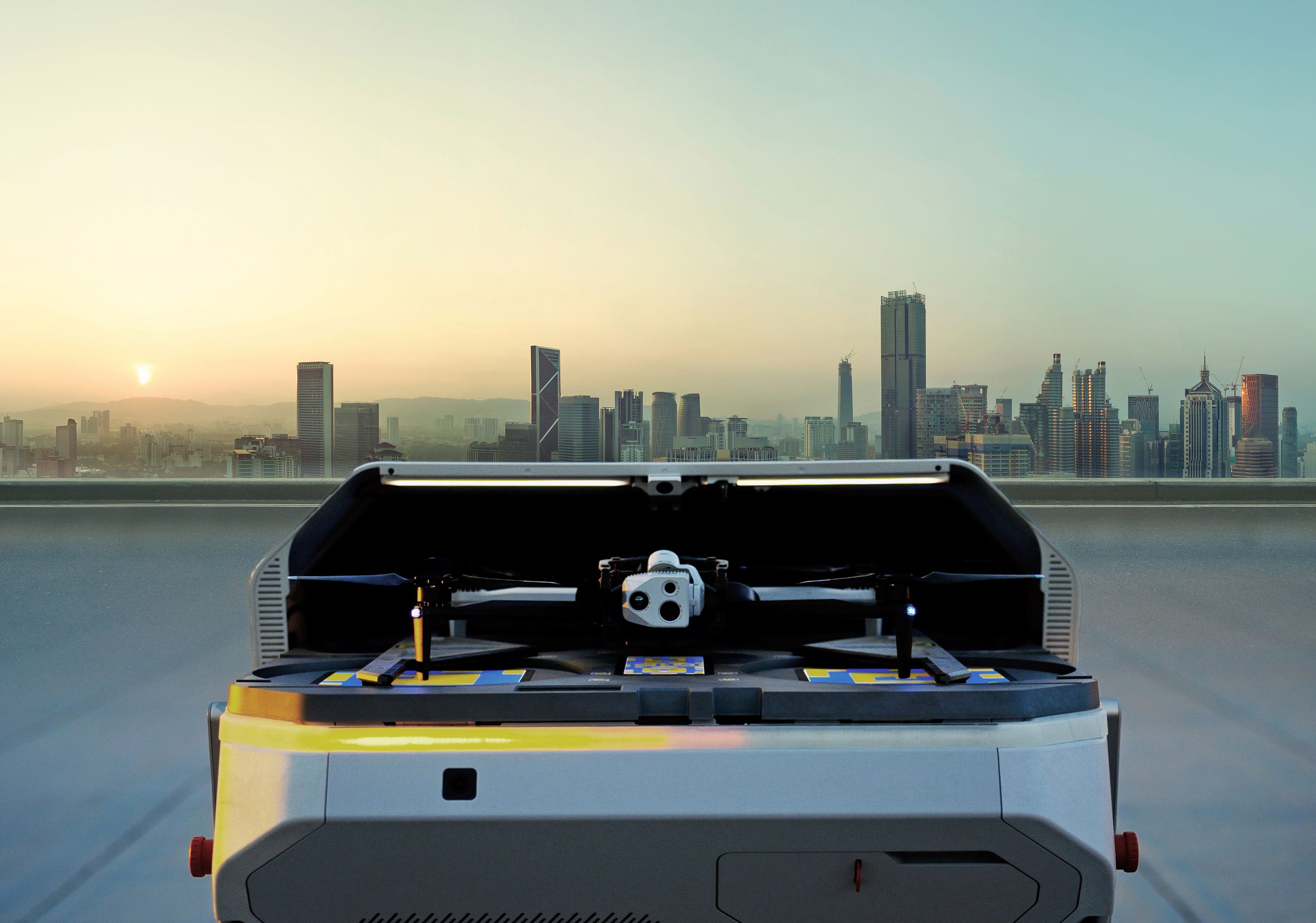
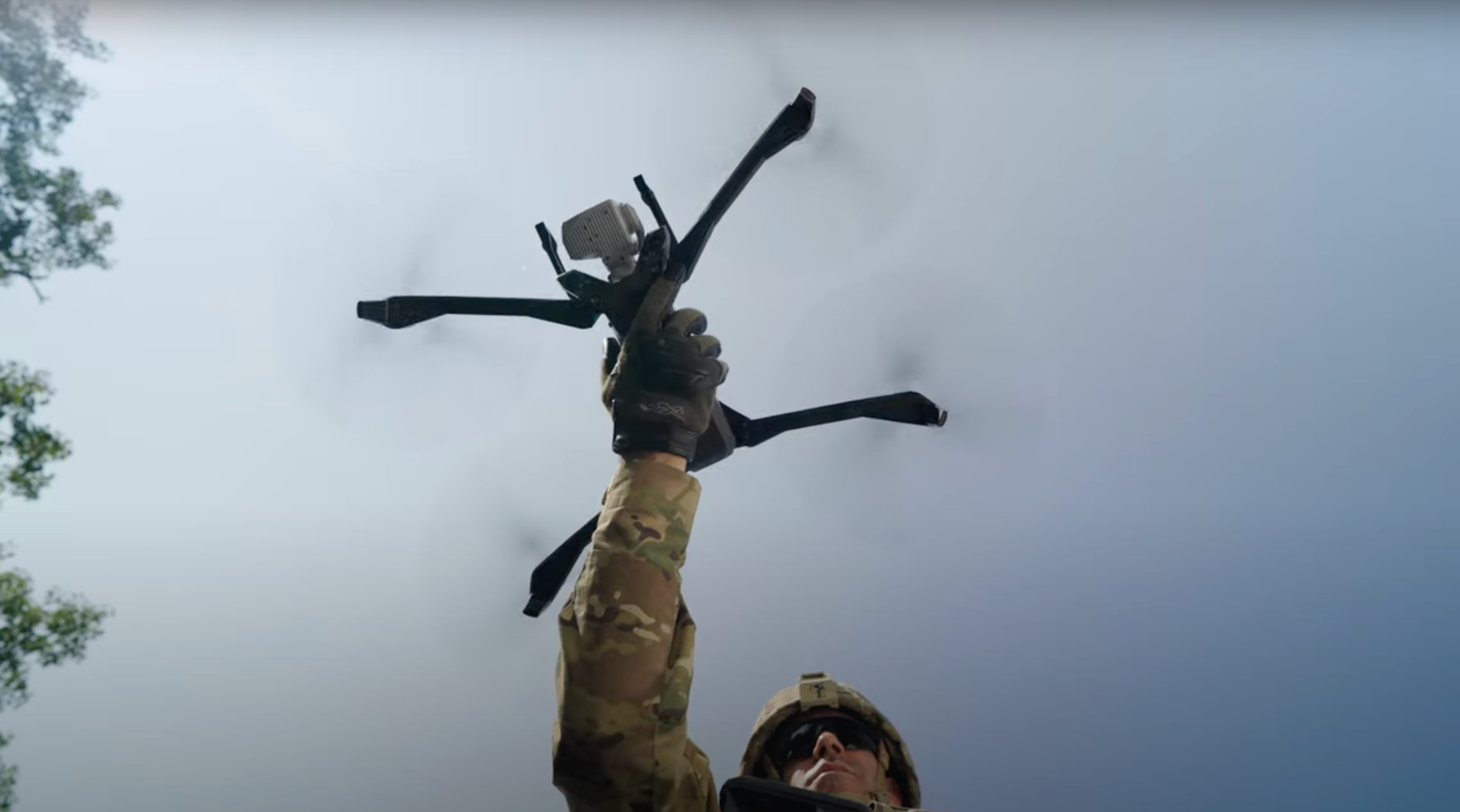
CEO and co-founder, Adam Bry unveiled our latest flying robot, F10 Lightrunner. The only aircraft its size that flies this fast, this far, all on its own, and the first to do it straight from a dock. You’ll see it race the quarter mile at 100 mph.
Plus, catch all of the live demos showing new capabilities with our Skydio Command software:
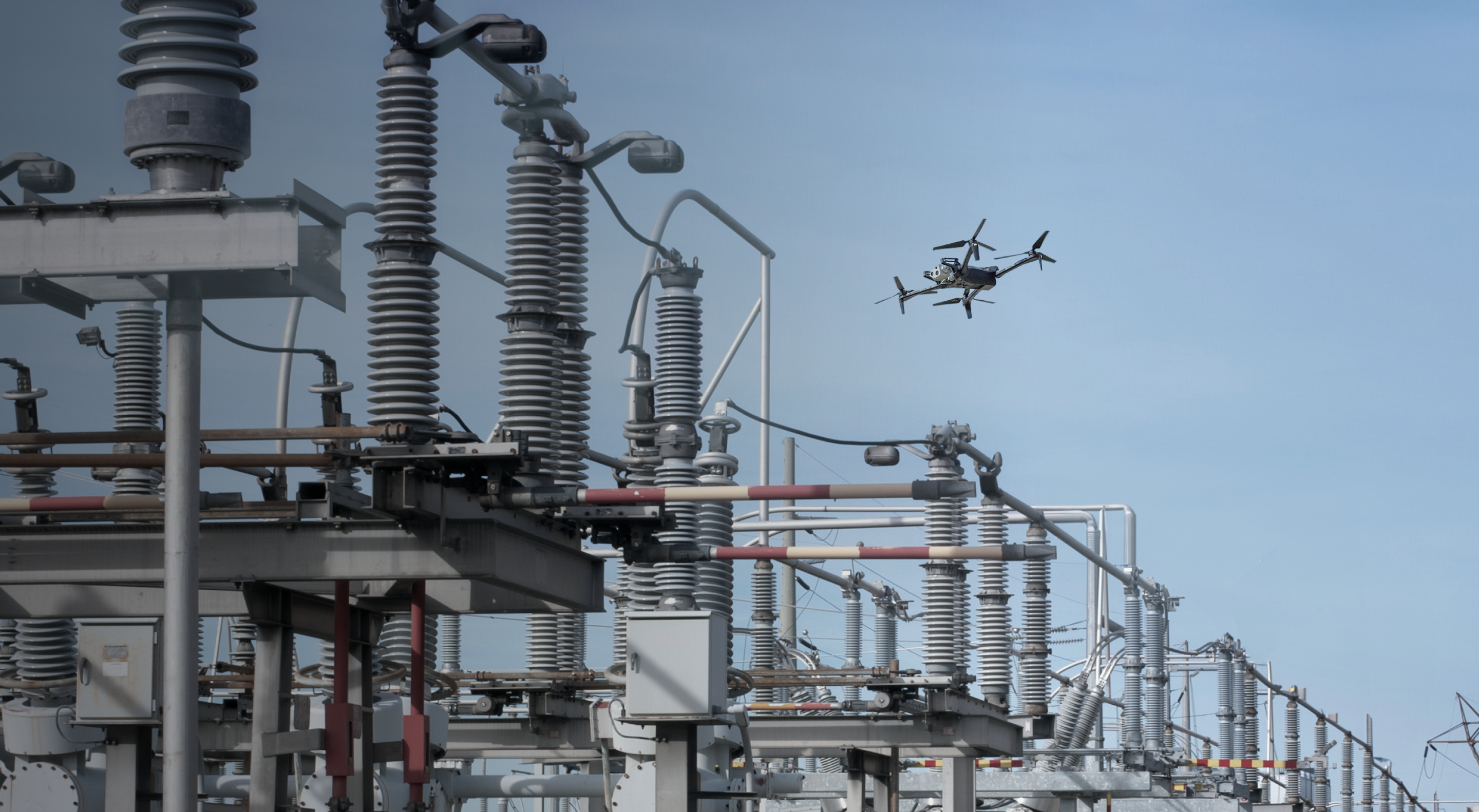
- Asset Command connects your physical infrastructure to autonomous drone operations, organizing inspection and response around each asset record.
- Security Command turns fleets of Skydio flying robots into a scalable physical security force.
- DFR Command turns a 911 call for service into live intelligence for a safer, more effective response.
Whether you work in public safety, security, or critical infrastructure, you'll leave with a clearer understanding of where autonomous operations are headed and how your organization can prepare for what's next.
- [upbeat music] The next generation of unmanned aerial systems
- are being rolled out.
- The future of first responder is taking off.
- First in the nation to have a citywide drone program.
- To respond to emergencies across the city.
- The electric company says drones help restore power faster.
- The drone first responder program is finally off the ground.
- The drones were recently used to find a suspect in a road rage stabbing.
- If the drone hadn't been there, we'd have never known who did it.
- 911, what's your emergency?
- We see the shooter up there.
- Put your hands up.
- It's critically important that we are there when people need us.
- Our drone program allows us to find the issues before they become real
- problems.
- When there is an outage, the drone is deployed.
- Clear to launch.
- When you see on the news about violence, drugs coming into the country, the threat
- is very real.
- Police say it's providing an invaluable and much safer approach.
- It is probably the best de-escalation tool that we have in our toolkit right now.
- I'm not that dumb. I saw a drone over me.
- Man, [laughs] how can you run away from a
- drone?
- [gentle music]
- The future is gonna get better and better and better.
- We're flying Skydios to modernize the battlefields.
- We dispatched the drone, and officers were able to find that young
- child.
- We're gonna have one drone platform that works for the entire city.
- This is probably one of the biggest advancements we've had.
- The department expects 1,700 drone missions per month.
- Sergeant Edmunds says if they had not used the drones...
- The suspects would have never been found.
- Please welcome the CEO and co-founder of Skydio, Adam
- Bry.
- [upbeat music]
- Welcome, everyone.
- I am super excited and super grateful to be here with you
- today.
- You all represent the critical industries that our civilization runs on.
- We have leaders from public safety, from critical infrastructure,
- from physical site security, from our military, [smacks lips] and the
- common thread that ties you all together is that you do
- hardcore, real world, physical, high-stakes work,
- where putting a sensor in the right place at the right time
- can fundamentally change an outcome, and that's what we're all about at Skydio.
- We build flying robots
- to give you superpowers.
- Now, we have an incredibly exciting array of
- announcements that we're gonna make
- today. We're gonna end this keynote by sharing
- with you a
- fundamental breakthrough in flying robotics that we think is gonna have
- transformative impact for many of your organizations.
- But we're gonna start today by talking about the progress that we've all made
- together over the last year.
- So we are having this conversation
- at the beginning of what we think of as the flying robot
- infrastructure era.
- Drones that are persistently connected, available 24/7,
- and doing useful work on our behalf continuously.
- So a lot of ways we can think about this, but you can see it very clearly in the
- metrics.
- So this is annualized flight rate across the entire Skydio customer
- fleet
- over the last few years,
- and you can see there's a couple of key inflection points here.
- So the first, going back a couple of years,
- was the launch of X10.
- But the curve really changed shape about a year ago with the launch of
- Dock.
- Dock-based flying now represents over half of the flying
- across our customer fleet, and it continues to accelerate.
- Last year at Ascend, we announced the Skydio Paraverse.
- So we, we like the real world flying, uh, but we've created Skydio
- Paraverse to enable digital simulated flying.
- Uh, and it's been awesome to see what you guys
- have done with it.
- So over the last year,
- over 50,000 flights. And when we got into it, one of the stats
- that really stood
- out to us was this one: operators who fly in the Paraverse
- are four
- times less likely to have a real world incident.
- So we developed the Paraverse to train our own autonomy and AI software,
- uh, but it's become an incredibly powerful
- training tool for you guys.
- We announced Pathfinder
- for fully autonomous, safe, airspace compliant flight from point A to
- point B,
- and very quickly, we've gotten over 600,000 miles of fully
- autonomous Pathfinder
- flying.
- So we could go on and on with the statistics,
- uh, but I think the stories are more important.
- And we are hosting this event, no coincidence, [smacks lips]
- in the location of the largest scale drone as first responder program
- in the en- entire country, probably in the entire world.
- Uh, it's a testament to incredible work by a
- great team and incredible
- leadership. I'm very thankful to be joined on stage
- now
- by Sheriff Kevin McMahill, leader of Las Vegas Metro
- Police Department, to share a little bit more about their
- program.
- Please welcome the sheriff to the stage.
- [upbeat music]
- [audience cheering] Yes. Thank you for joining us here, Sheriff.
- Yeah, thanks for having me. Good morning there, buddy.
- Good morning.
- Uh, so there's a lot we could talk about, but I thought it could be great to start,
- uh, with a story. Uh, there's thousands that we could pick from.
- You guys are doing incredible flying.
- Uh, but could we, could we play, uh, the video for the sheriff
- and you maybe can
- talk us through what we're seeing?
- Sure.
- This is, uh, as Adam said, this is just one of those many successes
- that we're
- seeing here, and this particular call involved an
- 89-year-old man
- who had walked away from his caretaker.
- And he was on the way to an Apple store, and we couldn't find him.
- We'd been out for, um, m- many hours.
- Uh, we'd done a phone ping that didn't give us enough information as
- to where he
- was. We'd had multiple drone flights, um, that
- were exceeding the generally two-mile area that we could
- go to find him. Uh, you can see we're looking in manholes
- that are uncovered.
- And, and this, finally, um, one of the drone operators was
- operating at about three miles out at the very edge of what he could possibly
- do and saw this man in the middle of the summer heat- Uh, had
- laid down and was just minutes away from dying.
- And that drone, um, and was able to get those officers over there
- along
- with, uh, medical and, and saved his life.
- And so just, uh, this is what we're...
- This is why we use this technology, to save lives.
- Yeah, it's incredible stuff.
- That's the greatest example of it.
- I mean, I think one of the things that I've come to appreciate is, is DFR
- is really
- as diverse as policing itself. I mean, people think about chasing bad guys, but
- oftentimes it's a missing person, uh, or just creating efficiency for your
- officers. Can you share with us, what was the initial motivation...
- I mean, you guys have been forward-leaning on
- technology across the board.
- What was the motivation, uh, for, for leaning into DFR in such a big
- way?
- Well, I'm gonna answer that, but I also want you to pay attention to
- this
- photograph here, folks, because as you all begin to build these
- things,
- what happens when you have a lot of those people that are in elected
- office that are starting to talk about technologies and a number of things and
- wanting to limit police's ability to utilize them,
- think about what you're gonna
- do from a marketing perspective because this is what I do, is I take those folks,
- many of you had the opportunity to see this, I walk them upstairs,
- I stand them in
- front of that Skyport and the question is, "Well, why do you need drones?" I turn
- around, I say, "There you go. There's why I need drones.
- I'm trying to protect this city." And so it really sort of stops a lot of
- the
- conversation. But at the end of the day, you know, um, I set out
- d- almost four years ago when I got elected to make Metro, uh,
- the most
- technologically advanced police department in the country.
- I didn't do that just simply because I wanted the crown, although
- I like having the crown. I did it because the reality of it is,
- is that this technology and other technologies
- save lives, period. And they reduce the amount of, uh,
- officer injuries that are happening.
- Probably the most exciting piece of this is, is I've got 36 years on the job now.
- Today, we get to tell our police officers v-
- by these drones that are
- arriving 75% of the time ahead of a cop in a police
- car, giving them real time intelligence on the
- ground of what it is that
- they're getting ready to confront.
- I don't know how exciting that is for most of you, but I gotta tell you,
- if you, if
- we would've had real time information, I think our officer-involved
- shootings go down significantly, suspects' injuries go down, use of force
- goes down. All the good things that we all strive to do in, in
- American policing today is made exceptional by the use of these
- drones.
- Yeah, I mean, you're, you're talking about engaging the
- community there, and this
- is an area where I think you guys have done a phenomenal job and really set an
- example for everybody of just being maximally proactive and transparent of
- like, "Here's the drones. Here's why we're flying them.
- Here's what we're doing with them." Uh, and, and bringing the community along for
- the journey. And I agree, I think the more
- that people understand the technology,
- uh, the more comfortable with it they get, because you can see the impact.
- I mean, like that story that, uh, that you shared there.
- Um, I'm interested in like anything like
- surprise you as you've been through
- this journey over the last year standing up and running this program at scale.
- I mean, you got 38 docks across Metro. It's the largest one in the country.
- Um, any learnings along the way that you'd like to share?
- 13 locations across the city. Uh, 38 of these
- docked. Um, it's really fascinating to me
- that as we take people through the center...
- And I've, I've been very, um,
- intentional about bringing people that are sort of both on the
- extreme left and the extreme right that are all talking about all of these
- technologies to come see exactly what it is that we do.
- They don't understand what drone technology is and how we use it.
- Flock is obviously another company that we're having lots of, uh, debate
- across America. But, you know, the re- reality is they don't even know what it
- is.
- They have no i- they think they have the ability to go
- and tr- trace people all
- over the place. But what I'll tell you is, Adam,
- what I have found to be most exciting about all of this is I have a
- combination of civilian and commissioned pilots, and these
- folks have come up with new ways to do things already within the
- operational, uh, aspect of it. I'll give you an example.
- So, uh, we had a vehicle pursuit the other day,
- and there were six or
- seven drone pilots that launched up, and they were, um, bubbling the
- pursuit from the sky with the drones.
- And, uh, we hadn't really talked about that f-
- from that perspective yet.
- And these guys were so excited about what they were able to do to contribute to the
- successful conclusion of that pursuit.
- And so watching the excitement that grows within the people
- that are doing this kind of work has been something that's been really magical
- for me.
- That's awesome, awesome stuff. Uh, while we're here, Sheriff, I
- wanted to recognize, uh, six weeks ago, uh, you guys had a real
- tragedy, an officer-involved shooting.
- We lost
- Officer Aldumhavi. Um, and I should say for me personally and for
- many of us at Skydio, this is the closest we've ever been to a
- tragedy like this.
- Uh, it certainly gave me and everybody even deeper appreciation for
- the work that
- you all do every day. Uh, and while we were here, we wanted to, to
- recognize a moment of silence in his memory.
- Thank you.
- All right. All right. Well, thank you, Sheriff.
- Thank you for your incredible leadership on this.
- Thank you.
- We couldn't be more excited to be working with Las Vegas Metro.
- Thanks. And I'll just leave you with this, that all of you that are not from here
- that's saying that what happens at stays in Vegas, that's all bullshit.
- You take it right home with you.
- [laughs]
- All right? So don't go to the bar, and get your watch out, and all that
- stuff. Take care of yourself as well, all right?
- All right. Thank you, Sheriff.
- See you later.
- [audience applauds]
- All right.
- Speaking of public safety, as I'm guessing everybody's aware,
- earlier this year,
- the US had the great honor of, uh, of hosting the World Cup, and we
- finally did it right by bringing Madonna to the halftime show.
- The rest of the world didn't realize they needed a halftime show, but they did, and
- it definitely needed to have Madonna.
- Uh, this was a really big deal for public
- safety because we had millions of
- people all gathered together, having all kinds of fun.
- Uh, but these are the highest stakes, sometimes the most challenging scenarios
- in
- public safety. Uh, and you all did a phenomenal job.
- And there were drones in the air constantly.
- This was one of the-
- Largest scale events we've seen in public safety, uh, in the history of
- Skydio. Uh, we, we tracked the numbers. So there were 12 host cities.
- Across those 12 host cities, 10,000 flights of Skydio
- drones. This spanned state and local, as well as federal law enforcement.
- One of the really interesting stats to us is that the, the flying was split
- roughly 50/50 between Dock and hand-flown operations.
- With this much law enforcement manpower, I frankly would have expected more
- hand-flown, 'cause you got a lot of people on the
- ground.
- Uh, but even in this scenario, the Docks proved to be invaluable.
- And one of the real rising trends, which was certainly on display in the
- World Cup,
- uh, was the threat of bad drones. This has been building over the last few
- years,
- and what we saw is that good drones turned out to be the best
- way to deal
- with bad drones. It can be very difficult to find
- that operator walking around on
- the ground, uh, but from the air, the aerial perspective, it's
- relatively easy to spot that operator.
- And we saw this constantly, day in and day out, during the World Cup.
- People were using Dedrone and other sensors to locate the drone,
- locate the
- operator, and then s- sending in Skydio DFR, uh, to help
- mitigate the threat.
- Really, really exciting operations.
- So we've got great stuff happening in public safety.
- We also have a lot of great stuff happening in critical infrastructure,
- especially in the energy utility sector.
- We work with a number of amazing customers on this front, uh, but one of
- the real leaders, the real pioneers, has been Dominion Energy.
- Uh, and now I'd like to welcome Matt Rogers,
- who oversees electric
- transmission for Dominion, to the stage to share a little bit more
- about their
- program. Please welcome Matt.
- [upbeat music]
- Matt, thanks for, uh, thanks for joining us here.
- Yep.
- So you guys have been early and enthusiastic adopters of
- Dock technology. Can you share with us a little bit about
- Dominion and what
- motivated you to look at Dock drones?
- So when you think about Dominion, where it's
- placed in the nation, in, in our critical infrastructure, we have,
- you
- know, the highest density of, of data centers in our, in our territory.
- We have government agencies, we have military bases.
- Very diverse when it comes to critical infrastructure.
- [clears throat] So transmission reliability is
- necessary in order
- to, to maintain the reliability that we're looking for.
- So it's not just a regional or a local issue, it's a national issue.
- Yeah.
- Um, so you guys, you've been using Docks over the last year
- or two,
- uh, but my understanding is you're taking a huge step forward with
- your program.
- What can you announce here today?
- Yeah. So we have 18 Docks deployed across our,
- our territory
- right now. Uh, we just, uh, agreed to sign a deal with
- Skydio to deploy 100 more Docks to our infrastructure
- over the next few years. So we're excited about that.
- Awesome. [audience applauding] Might have been our
- sales team applauding in the
- back.
- Uh, yeah, exactly.
- We are, we are super, super, uh, excited about this.
- I think you guys have done an awesome job proving out the technology.
- Uh, and, and we're excited to see the expansion,
- 'cause we know you're doing that
- on the backs of having seen success with the, uh, the Docks that,
- uh, you've already got. We'll do everything in our power to make
- this an awesome
- scale deployment and an example for other utilities to, uh, to
- follow.
- Yeah.
- Anything else about the program you wanna share?
- No. We're, we're excited about, uh, you know, m-
- here's what I'm most excited about. Automated inspections.
- Feeding that through an AI and be able to predict failures.
- Yeah.
- That's what we're excited about, and that's gonna be the next step in,
- in our, in
- our program. So can't wait to deploy that.
- Awesome. Thank you, Matt.
- All right. Thank you.
- [upbeat music]
- [audience applauding]
- Another category of critical infrastructure is our nation's
- transportation
- infrastructure. Uh, and we're very proud to work with
- 46 state departments of transportation all across the country.
- Side note, anyone from these four states here,
- we'd love to talk to you.
- [audience laughs] [clears throat] And there is no higher calling than our
- nation's transportation infrastructure than enabling van life.
- If you go on Instagram, #vanlife, all kinds of great stuff happening out
- there.
- So we were excited to see the collision of van life,
- uh, with infrastructure operation.
- So this may or may not be an AI-doctored photo, but this is Aaron
- Chamberlain, who leads California, Caltrans, California's Department of
- Transportation, uh, drone program.
- True innovator, he's done incredible stuff, uh,
- and he built
- himself a van to manage their Docks, to manage their infrastructure.
- Uh, and I am very excited and thankful to, uh, to have
- Aaron, I think, dialing in from his van. Can you hear us, Aaron?
- I can hear you just fine.
- How's van life?
- Uh, it's going well. We've got, uh, we've got some live missions going on
- right
- now. I've got, uh, a couple of student assistants here
- that are flying some stuff
- live. Um, and we've got some other remote operators
- that are flying missions all
- over the state of California right now.
- Awesome. So we, we are in the van. Uh, so you guys have done incredible work with
- drones, uh, across the board. You've got them, uh, deployed in
- Docks all over the state. Uh, you've shared a bunch of different stories
- with us,
- but there was one video in particular that really stood out,
- if we could play that
- now. Can you tell us what we're, uh, what we're looking at in this video?
- Somewhere here.
- Sure. So I think the one you're most likely
- showing is our, uh, is the Devil's
- Elbow landslide. So this is up in, uh, I, I refer to it as Endor.
- Uh, it's our north coast, uh, portion of, uh, California where they actually did
- film a lot of the Star Wars stuff from Return of the Jedi.
- Uh, but we've had, uh, we've had our slew of landslides here.
- Uh, and as you can see there, this is just an example of just how fast these
- events
- can happen here, where you have close to a 300-foot tall
- redwood tree,
- top to bottom of that slide comes down in about 20 seconds.
- Um, so what we've been able to do is leverage the Dock-based
- technology, uh, on top of what we're able to do with some
- of our
- traditional sensors, fuse this stuff together,
- and it's allowing us to do a me-
- much better job and much more comprehensive job at monitoring these
- landslides, uh, as they're occurring throughout the state.
- So there, there's a big safety benefit. Is there an economic benefit as well?
- Oh, absolutely. So, you know, the traditional way we
- were monitoring these things
- in the past, uh,
- have been costing around $200,000 a month.
- Uh, we've now been able to bring that in-house, and we're...
- so we're realizing that saving. So in theory, our ROI is about a
- month time, uh, from the deployment to,
- you know, now you've got... y- we've returned our ROI
- and now everything that we've
- got now is just a savings to the taxpayers of California.
- Great. Uh, and I think we're... So you guys are flying drones live.
- Can we, uh, can we pull up the live drone feed?
- So this is all live, real flying. What are we looking at here?
- Uh, we've got a combination of stuff.
- So I'm seeing some mapping missions going on right now.
- Uh, we have some traffic monitoring going on
- in Southern California.
- Uh, we have, uh,
- multiple staff, uh, looking at, uh, con- active construction sites that are
- going on. That big one there, uh, bottom left-hand side, is the Ferguson
- landslide. Uh, so that's a close to a $300 million
- rockshed
- project where we're finally restoring that pers- uh, that, uh, spot
- along Highway 140, along the Merced River.
- Um, that one is, uh, close to 2,000 feet from bottom to top of
- that landslide right there.
- Uh, the other one that's going on, top left-hand side, is
- that Devil's Elbow site
- that, uh, we had mentioned earlier.
- Um,
- that one, uh, again, as you can see, we're doing terrain follow mapping
- missions.
- Uh, so it, it's pretty, it's pretty insane
- when you're doing a 300-foot
- tall, uh, terrain follow mission and the drone is just barely
- making it over the tops of the trees right there.
- Yeah.
- Uh, so on that top left feed there that you can see, uh,
- that's coming live over
- the landslide right now.
- Uh-
- Right
- ... so we're typically flying this daily.
- Uh, sometimes it might be more than, more than daily, uh, as the staff
- are actually
- up there working and clearing these, these, uh, these sites.
- Uh, we might get a trigger event from one of
- our other sensors, uh, and we'll
- know exactly where to take the drone and get eyes on that feed.
- Uh, we can then stream that feed to one of our geotechnical
- engineers that might be
- in another part of the state looking at something else, uh, and they can
- immediately get eyes on it to be able to make those engineering decisions in near
- real time. Whereas it might have taken us eight
- or 10 hours to be able to get that
- type of analysis, uh, i- in years past.
- So this really is a game changer for how reactive we can be, uh,
- and in fact, going less from reactive to being more
- proactive.
- Awesome. Well, this is incredible stuff, Aaron.
- We're, uh, we're super excited and thankful to be in business with you.
- Thanks for, uh, joining us remotely and look forward to, uh,
- seeing you in person
- here this evening.
- Thanks, Adam.
- [audience applauding]
- All right. All right, so now as I'm guessing everybody has
- noticed, there's just a
- touch of a, uh, of a geopolitical backdrop to the drone
- industry over the last few
- years. A couple of years ago, we had the great honor of being sanctioned
- by the
- Chinese government. Uh, and the US government has also decided to
- restrict the flow of Chinese drones into the US.
- Now, our goal as a company is to build the best products
- and technology
- in the world, bar none, and win on the basis of, uh,
- of having the best solutions for you all.
- But we are also super proud to be the largest US drone manufacturer.
- Uh, all of a sudden building drones in the US
- is cool.
- When we started 14 years ago, everybody thought we
- were crazy for doing this.
- Uh, but we are all in now on becoming a large
- scale,
- world-class,
- uh, US manufacturing company. Uh, and we're in a position, thanks to
- you, to put real money behind it. So earlier this year, we announced a
- $3.5 billion investment in the US drone ecosystem.
- This is going into expanding our own factory, creating thousands of US
- jobs, and $1 billion of it is going into US suppliers outside of
- Skydio. So when you buy Skydio drones, this is where the money is going.
- Last year at Ascend, we launched Skydio R10.
- Our goal was to create a first of its kind, uh,
- breakthrough indoor enterprise product.
- Uh, and what you've done with it over the last
- year has really been incredible.
- It surpassed even our, our highest hopes for this product.
- It's been put to use across public safety.
- It's been put to use in confined space, indoor infrastructure,
- inspection. Uh, and one of our earliest and most
- enthusiastic and really best adopters of this product has been Bernal-
- Bernalillo County Sheriff's Office. Uh, I'd like to now welcome...
- Round of applause for them. Yeah, I'd like to now welcome, uh,
- Sheriff John Allen,
- who really had an incredible vision here, to the stage to, to share what they're up
- to.
- [upbeat music]
- What's going on?
- Thanks for joining us. Uh, so we thought it could be s- good to
- start with just an example of what R10 actually means and does.
- So we can play the video and you can talk us through what we're
- seeing here.
- Absolutely. As our, uh, deputies are going to a restraining order
- violation, which
- we know can escalate and it become very dangerous, uh,
- the gentleman started to
- barricade and, uh, the call started to escalate.
- So we're in a paradigm shift now as we're going through here.
- Why put a deputy in a danger area? Why not launch the R10, the interior
- drone, as you can see it going through?
- We're looking at evidence, we're looking at narcotics,
- we're looking at drug
- paraphernalia. But what's more interesting,
- as you'll see here as we go through the
- video, is because of the drone, it's so intimidating, and the
- noise of it, you'll see the gentleman come out of the
- barricaded room.
- So we identify and we... he is compromised.
- So at this point, we're giving him commands.
- But when I saw you announce it last year and throw the R10 on the, on the stage,
- told Mender, "Sheriff, we need that." As you can see,
- he throws it out of the
- window
- and it launches, and it goes down into the dirt.
- But what's great is it, it's already recording
- and collecting his arrest.
- Yeah. It landed in just the perfect spot to
- capture that arrest.
- Yeah.
- Um, so one of the things that I think has been most impressive is,
- is how
- you're, you're viewing and deploying this technology.
- Traditionally, indoor drones have been all about SWAT,
- and SWAT operations are
- obviously critical, but, but I think you've seen something beyond
- that.
- Beyond that, I think, o- other than spec ops,
- is a deputy should have that tool at
- their hand every time to make sure, as I said,
- we're in a paradigm shift for their
- safety. No longer... The days are long gone of going into a danger area,
- going down
- a hall, peeking your head through an attic.
- Why not launch that R10, that interior drone,
- and resolve the situation?
- Yeah. What kind of impact have you seen with
- this stuff?
- Uh, the impact, we launched in June.
- We already have 384 flights, and it results in 114 arrests.
- It's already significant. Spec ops does use them,
- but our vision now is for every
- deputy to start having an R10 drone as we start moving through.
- Yeah. One of the... We heard this from Sheriff from Rahill as
- well.
- I think one of the major themes right now in public safety is community
- attitudes towards technology What's been your experience with this stuff?
- How does your community feel about it, and what have you done?
- You know, just what we see in technology as leaders
- and just as law enforcement as
- a whole, people are against technology, one, because it works.
- Uh, but when we started launching our DFR
- program and even R10, people were against
- our drones. They said it was over-surveillance, and it
- was the Big Brother.
- But as we started pushing it out over social media, making sure we're aggressive
- with the media and showing the wins for us and also the wins for the community, uh,
- people now want us to patrol [laughs] , uh, their neighborhoods with drones, which
- I'm c- uncomfortable with. That's actual surveillance.
- Uh, but, but it's working, and the number of arrests
- and the de-escalation that
- we're seeing with this program is exponential.
- That's great. So earning the trust really with
- transparency on the program.
- Absolutely. Transparency from the beginning,
- and keep pushing those wins through.
- And then make sure that you're going to every meeting you
- can, making sure that
- you're showing what you're actually doing on an everyday value for the community
- you serve.
- Great stuff. Thank you, Sheriff Allen.
- Absolutely. Appreciate it.
- [upbeat music]
- So as with all of our products, we're not done when we ship it.
- Uh, we're continuing to invest and improve it.
- So you heard Sheriff Allen mention intimidating suspects with, uh,
- with the, the drone to, to create distraction
- and ultimately de-escalate in a safer
- way. So we have lights on R10, which we use for navigation.
- We now have a strobe mode to try to get people's attention in, in very high-stake
- situation. Uh,
- R10 ships with an amazing camera. It's got great fidelity, great resolution,
- great
- low-light performance. Uh, but it's a little bit narrower field of
- view than you
- might want for some situations, about 93 degree field of view.
- Uh, so it doesn't show you the whole scene.
- We're now shipping a feature called Ultra Wide Mode, where we can zoom out to
- actually use one of the navigation cameras on R10, see a full 140 degree field of
- view. So especially when you're navigating in confined spaces
- or you want to see
- something out of your corner of the eye, you've got that coming soon.
- So [clears throat] two million flights per year.
- That's our averaged annualized rate across the fleet right now.
- Uh, and it is growing very, very quickly.
- That number seems big, and it is big.
- Uh, but we know that we're still just
- scratching the surface.
- If you pick our biggest market today, a million flights, about half the fleet
- is flying DFR.
- It's great. It's amazing. Uh, it's up from almost zero three
- or four years
- ago. Uh, but it's still tiny compared to the total
- need and
- opportunity. There are about 240 million 911 calls every year
- in the
- US. If you look at what we're doing in
- critical infrastructure, there's about
- 600,000 distribution poles now within reach of a Skydio
- dock. This is amazing. Uh, but there's 180 million
- distribution poles nationwide.
- Earlier this year, we were honored to get the single largest
- vendor,
- single-- uh, the largest single vendor order the US
- Army had ever placed
- for small UAS, about 3,000 X10D
- systems, which is incredible. We're proud to be delivering these things
- to the US
- Army. Uh, but if you look at what's happening in
- Ukraine, 3,000 systems is
- roughly one week's worth of supply.
- So there's clearly a lot of work left to do here.
- So amazing stuff is happening, but this is still very, very
- early. And our role at Skydio is to keep building the products and
- technology that move the industry forward. Uh, that's what we're all about.
- We're a hardcore engineering company.
- Uh, and now we're going to get into the
- technical stuff.
- So
- when we're thinking about our product, I say this constantly internally,
- and I want
- to say it externally as well, reliability is the single most important
- feature.
- You can have all sorts of bells and whistles,
- but if the system isn't available
- when you need it most, it doesn't matter. This is how we think about it.
- This is how we focus our time and energy and attention.
- And we also believe that transparency can be foundational to
- improving
- reliability. Aviation has a long history of
- transparency, and we want to bring
- that kind of manned aviation transparency to drones, which is why last year
- at Ascend, we announced and launched publicly a reliability
- dashboard. So this is a live website that anybody can go to,
- and they can see the
- reliability statistics across our fleet.
- So we're publishing our reliability rate, flights between incidents.
- Incidents is marketing speak for crash.
- Uh,
- we want this data available for all of our customers to see, so you know what to
- expect from our systems. It's part of how we hold ourselves
- accountable as well.
- We break things down between a bunch of different categories.
- So technical malfunctions is anything going wrong with the hardware
- or software.
- We have environmental factors, things like bird strikes,
- icing on propellers,
- and then we also look at human factors.
- Last year, we also announced a parachute for X10.
- I'm proud to say over the last year, we've had 55 parachute
- saves, uh, and zero failures. Uh, this parachute has
- worked every single time it's been called upon.
- The most important metric that we look at is the overall reliability
- rate, and you
- can see the trend here is pretty incredible.
- X10 is now five times more reliable than when we shipped it, uh,
- two and a half years ago, and it continues to improve.
- We're now up to one in 2,500. Uh, those of you who are paying close
- attention,
- remember last year, might notice that this whole curve has shifted down a
- little
- bit. Uh, that's because we continue to hold
- ourselves to a higher and higher
- standard in terms of what we count, uh, as an incident,
- and we've also learned that
- it takes some time for the data to settle.
- Sometimes it's weeks or months, uh, before we have all the data pumped through
- our
- systems to, to root cause these incidents.
- So two million flights per year, a lot can go wrong and
- things do go wrong. We're going to continue the tradition
- that we've had for the
- last couple of years of sharing some of the reliability challenges
- that we face and
- what we're doing about it. So I want to talk about obstacle
- avoidance.
- Skydio drones have incredible obstacle avoidance capability.
- This is a real customer video. Uh, there's 50 different examples of this I
- could
- show, where collision avoidance keeps the drone
- safe and either allows you
- to accomplish a mission where there's no other way you could fly it, uh, or
- prevents a crash that otherwise would have happened.
- Uh, so it's an incredible capability.
- We know there are some companies out there that are talking about doing DFR and
- other drone operations with, uh, without obstacle avoidance.
- I can tell you from looking at the data, that's crazy talk.
- That is not a good idea. Uh, but to each their own.
- So we've got great capability here, but it's not perfect.
- Uh, it's vision-based, um, and
- Just like our eyes sometimes struggle to see thin objects or reflective surfaces or
- low light, uh, the vision system can struggle as well.
- Um, so if you drill into the data, about a hundred and sixty-six thousand
- flights
- per month on X10, about one in five thousand technical
- malfunction rate, uh, so very, very narrow slice of the
- pie. Uh, and twenty-four percent of those technical
- malfunctions
- are some kind of collision avoidance failure.
- Within those, seventy-six percent of those
- are crashes into thin objects.
- So this is... We use the data to focus our attention.
- Clearly, we wanna get better at thin objects.
- Uh, so we start every weekly executive meeting
- by looking at
- customer incidents 'cause we want our executive team to be feeling the pain of
- what's happening out there, uh, if something's going wrong with our
- product.
- So we see a lot of videos like this, and you can see the collision avoidance
- system
- does an incredible job. It's weaving its way over and around, uh,
- the tree
- branches, but it does not see
- the cable there at the end.
- So this is how the drone sees the world.
- It's got a navigation camera, uh, that looks out, fisheye view.
- Uh, and if you look very closely at that image, y-you can see a couple of thin
- wires. Our depth perception model on our Baton
- software could
- see it at close range, but when you backed up, it couldn't see it.
- Our Kaylee software model, so team did incredible work on the data,
- the
- training, the architecture, everything.
- The Kaylee model can see this, this wire much more clearly, uh,
- and we now see
- that showing up in the data. So at Baton, we're like rough, roughly one in nine
- thousand. With Kaylee, we're, we've doubled that to one in twenty
- thousand.
- This is a testament to a bunch of great engineering across the team.
- So vision is great, but it's not perfect, and especially in low light situations,
- it can struggle. We're now also releasing what we call
- map-based
- OA. So this combines traditional vision-based
- obstacle avoidance with
- pre-existing maps of trees, buildings, terrains, everything else,
- as an extra layer of redundancy. Um, so this is in early access
- now with promising results, and it'll be rolling out across the fleet
- soon.
- So reliability is the most important feature, and we will keep working away
- to improve reliability. Uh, but we use that foundation to keep
- building better and better capability as well.
- And there is no more important category of capability than the cameras.
- This is the business end of the drone.
- These are the sensors that capture the data
- that you all need and care about
- for the jobs that you do. It starts with the camera hardware, uh,
- and I'm very excited to announce that we are now on our second revision of
- the
- BT300Z gimbal, which has some small but very significant improvements.
- So it's got a W yoke gimbal, which has better vibration resilience,
- leads to
- better image stability, and it's also got a new telephoto camera.
- And the end result of this is just better, sharper, clearer, higher contrast
- images in more of the scenarios that you care about.
- So this is shipping now on all of our X10s.
- Because the gimbal is modular, it's also upgradable
- if you want to get a B-BT300Z Rev 2 and, and upgrade what you've currently got.
- Uh, but the story does not stop at the
- hardware.
- In fact, cameras are really software desi-defined
- systems, just like the rest of
- the drone. Uh, and we have also been cranking away on the
- software. So with Draper, we've taken a huge step
- forward in low light performance. This is actually a customer image.
- So we have this new software out in early access.
- Uh, Jefferson Parish Sheriff, amazing DFR program, uh, they
- were testing it
- out, and they sent this back to us. So they did the image comparison for us.
- On the bottom, you can see the Draper software.
- On the top, you can see Kaylee.
- It's a combination of better autofocus, better image tuning, uh, and
- overall just a much sharper, crisper image.
- So
- BT three-- BT300Z Rev 2 gimbal has three sensors.
- It's got visible cameras, it's got a thermal camera, uh,
- and each have
- their strengths. So if I show you this pair of images of the
- same scene, if I ask
- you a question, what color is the truck in the parking lot,
- which really could
- matter for the mission, the way that you're gonna get that
- is by looking at the
- visible light camera.
- Drones are gonna be launching all day long.
- I'll, uh, I'll direct your attention to the drone
- when you need to see it.
- Uh, if I ask you, where is the door on the roof in the foreground,
- the only way you're gonna see that is in the thermal image.
- And right now, you have to choose between the two.
- You have to choose which of these images
- is full screen in focus.
- No longer. So we're very excited to be introducing
- Thermal
- Boost. What Thermal Boost b-- does is it draws out the best
- information from both of those images and synthesizes
- them into one.
- It works like magic. It's really incredible stuff.
- So we look at a scene like this, some of it well lit, some of it not.
- You turn on Thermal Boost, transformative capability.
- You can maybe barely make out the person in the parking garage there.
- With Thermal Boost, they just instantly pop.
- And this next one is honestly the coolest. So this is real customer data.
- This is a real fire. Uh, obviously, you can't see through that smoke in the
- visible camera. You turn on Thermal Boost, and it's like having X-ray vision.
- This is the power of the software-defined camera.
- Image stability also matters a great deal.
- Uh, so a couple years ago, we introduced FrameLock.
- Uh, and FrameLock is quite good, but it's not perfect yet.
- So without FrameLock, this image would be all over the place,
- but you can see at
- deep zoom, it's still bouncing around a little bit.
- Uh, in our Faraday software, we have a truly incredible
- breakthrough in FrameLock. Uh, so that image on the right almost
- looks fake. When I first saw it, I thought it was a still image, but
- if you look at
- the background, you can see the background
- is still moving around.
- But FrameLock has just perfectly locked onto the foreground.
- Of course, it's one thing to see this in a slide, uh,
- but as you will
- learn over the course of the day, we love to prove
- that this stuff works in real
- life. Uh, so we thought we'd show it to you live now
- here.
- So we've got this X10 in the air
- engaged in FrameLock. So we're gonna punch in there
- and see how stable
- the image is.
- Of course, it's not very windy, so this is kinda easy mode for FrameLock.
- We thought we'd dial it up. Should I use the leaf blower?
- [leaf blower whirring] All right.
- [leaf blower whirring]
- Frame lock. It's great.
- [laughs]
- We've also noticed, and I'm guessing you have as well,
- there's this kind of special
- image science that seems to show up a lot in, uh, in Hollywood movies.
- Enhance.
- Let's enhance it. Right here.
- Can you enhance it? Can you enhance it?
- Can we enhance this?
- Can you enhance? Enhance.
- Enhance.
- Enhance. Enhance.
- Enhance.
- Enhance. [keyboard clicking]
- Just print the damn thing.
- Wouldn't it be great if we could actually enhance?
- Uh, well, I'm excited to say in low-light situations
- now, we've
- dialed in enhance.
- There's literally an Enhance button in the software,
- and it enhances.
- Lots of progress in cameras.
- More and more of our energy now, though, is going into developing
- specific software for specific indust- industries to really
- solve problems end to end. Uh, and our first major focus
- there has been public safety and drone as first responder.
- So I'm gonna give you a little bit of a brief history of this market.
- If you roll the clock back just two years, this was kind of the state of
- DFR. By our estimate, there were about 25, uh, agencies in the whole
- country that were doing DFR, and they all looked something like this.
- You had people up on rooftops flying these things manually.
- There was a bunch of hardware and software kind of kluged
- and hacked together,
- really pioneering work by the agencies that were doing it, but it was clearly
- not scalable. Uh,
- about two years ago, this kind of kicked off what I think of as
- the competitive
- race for DFR. This is when we launched Dock for X10, uh,
- and some of our
- competitors either made acquisitions or announcements, uh, to try to
- enter the space as well. Now, I will say, I'm a competitive guy.
- I love competition. I think it's great. I think it makes us all better.
- Uh, ultimately, it gives you more options and more choice.
- Uh, and we have truly enjoyed the last couple
- of years of competition against
- these companies, and our strategy is pretty simple.
- We want to be the company that makes this stuff real,
- that can show up and trial it
- in your environment and prove to you that it's gonna work the way
- that we says it,
- uh, s- says it will. Uh, and over the last couple years,
- we've seen that play out. So Skydio has now deployed over 1,000
- docks
- to US Public Safety. Our public safety customers
- are doing close to
- 100,000 flights every month,
- uh, getting on scene first 70% of the time.
- Over those two years, the FAA has issued 400 waivers for beyond
- visual line of sight flying for our public safety customers.
- This was the BVLOS barrier that many people thought would stop DFR
- from ever
- happening. Our regulatory team, in partnership with you all,
- has broken down
- that barrier. And more recently, we now have 100 waivers
- for one-to-many operations, true multi-drone operation, where a single
- operator can command and fly multiple drones at once.
- This is another milestone that many thought,
- many people thought would, uh, would
- never happen. That represents 80% of the multi-drone
- waivers out there for US Public Safety.
- 80% of those waivers are for Skydio customers.
- All of this adds up to incredible first response
- capability. So 28 million Americans now live within
- first
- response range from one of our Dock drones.
- What that means is in the worst moment of somebody's life, when they're
- calling 911, something terrible is happening,
- there's some emergency unfolding,
- and they need help, the chances are pretty good that a drone can get there
- first,
- provide critical information to first responders, and change outcomes.
- This is something that we are incredibly proud of at Skydio
- and thankful to be
- working [clears throat] with all of you on.
- Uh,
- and we take this leadership responsibility seriously.
- We're not here to declare victory.
- In fact, I think being the leader, if anything, needs to heighten our
- focus and heighten our sense of responsibility.
- Uh, and there's two things that we spend our time thinking about.
- One, we want to make the product as awesome as
- it can possibly d- be
- to deliver maximum positive impact for you all.
- Uh, and two, we want to continually earn the trust of
- the
- agencies and the communities that we work with.
- So I'm gonna start by talking about one, making the product as
- awesome as it can possibly be. So we are constantly, as you've seen,
- cranking away
- on the hardware and software and shipping new features,
- but there's only so much we can do by ourselves.
- DFR doesn't exist in a vacuum. In fact, it's only really maximally useful
- when it's integrated with the other systems that you guys are using.
- Uh, so this is designed as a fundamentally
- open platform with open APIs to
- get calls for service in, get evidence and other data out, uh, and
- we integrate with everybody out there that we need to to get the job done for
- you.
- In fact, I'm probably most proud of the
- integrations with companies where we have
- some competitive overlap. So Motorola has a competing DFR
- solution that they're selling, uh, but we are still very happy to integrate
- with,
- uh, with Motorola systems. Sometimes it takes you picking up the
- phone and yelling
- at them a little bit, uh, but from our standpoint,
- we're happy to do that, and
- we've, uh, we've seen quite a bit of progress on
- that front.
- And we now have 25 million 911 calls that have come into
- Skydio DPR command via third-party integrations.
- So it's an open platform, but we're also fortunate to have a special
- partnership with Axon. We see Axon as the leader in overall
- public
- safety technology. They've been a great product partner, uh,
- and they've been a
- great go-to-market partner for us to, to help make this stuff easy
- and accessible
- for you guys to use. The A- the whole Axon ecosystem works great with
- Skydio
- DPR Command, uh, but the product that we are most excited about,
- where we see the most positive benefit integrating it alongside of DFR,
- is Axon, uh, Prepared. And I'm very excited now to be
- joined on stage by Michael Chime, the founder of Prepared and now
- CEO of Axon 911, to talk a little bit about what they're up
- to.
- Please welcome Michael.
- [upbeat music]
- Thank you, Adam. Amazing. Take that from you, give you a break.
- All right.
- Hello, everyone. Um, as Adam said, I'm Michael Chime.
- Uh, I used to be, which is a weird way to introduce myself 'cause
- it's new, but I used to be one of the co-founders
- and CEO of Prepared.
- Uh, and now via the acquisition lead, uh, Axon nine one
- one. And so I'm sure you all are aware and have seen the recent
- acquisitions, uh, and probably ask yourself the question:
- what does that mean?
- What does that mean for DFR? What does that mean for nine one one?
- So I wanted to start with just a bit of context on what is Axon nine one
- one, what is our goal, uh, and how does that impact DFR.
- And so Axon nine one one is the combination of Prepared,
- Carbine, and the broader Axon ecosystem.
- You can think of Prepared as a suite of AI tools that help
- nine one one process information better and faster.
- So an example of that is, let's say someone calls in on your
- non-emergency line. And today, I'm sure you all know this, but in
- some places the majority of calls that are going to nine one
- one are non-emergent. Things like noise complaints, parking
- tickets, et cetera. And that bogs down resources and has
- downstream impacts on response. With a tool like Prepared,
- we can handle those calls completely autonomously.
- So what does that mean? Someone calls that ten-digit line, an AI
- picks up. That AI can transfer the call
- to another agency. It can send that caller a message.
- It can even take actions in CAD. And we've seen with some
- agencies, their call volume, as a result of tools like this, drop
- over thirty, forty percent. And that's not just the non-emergency
- volume.
- That is their overall load that is going to nine one one.
- And so you have those critical resources, those dispatchers, call takers,
- focused on what's most important.
- Another example is language translation.
- So you guys probably know this as well too.
- Call comes in and say it's in Vietnamese.
- Today, the process to handle that call is we wait.
- We understand that we don't speak that language.
- We hit a button and a human interpreter comes in, and hopefully, uh,
- that's only a few seconds, but in some situations
- that can be minutes.
- And aside from the impacts on response time, that is a caller, right,
- who's calling in in their worst moment, and they're waiting on the line as they
- wait to get help. With Prepared, you come in and translate that
- instantly so you know the contents of the call the second that it
- comes in, and we're able to share that information.
- And so there's a lot more that we do, but think of it as the suite of AI
- solutions
- that sit around your core systems. They don't replace them.
- You can, uh, install them quickly.
- They're lightweight, um, but they help you get to better,
- faster outcomes.
- Now, Carbine is your core infrastructure.
- So this is your call handling systems.
- Increasingly so, this is your logging recorder,
- and they bring that
- information to the cloud. So think of it as the modern
- infrastructure
- underneath of your nine one one systems that allows you to take advantage of a
- lot of these new, uh, inventive tools.
- We do think cloud is the future, and so increasingly we will use the
- Carbine knowhow and team to expand the cloud to your critical
- solutions. It'll start with call handling, but it ultimately will go to tools
- like your radio consoles, again, your log and recorder, and even
- we think CAD in the cloud. And so you guys have been into a nine one
- one
- center, you've probably seen in front of a call
- taker today sits eight
- screens, right? We think with these two solutions, that
- future is one. One modern connected solution
- that improves nine one one response.
- And so again, that's going to really help, uh, nine one one call takers,
- uh, but I'll get to this Axon point.
- It's increasingly having an impact on response.
- And so not only can we modernize nine one one, when we plug
- in this information to response tools, um, we see you get
- information better and faster. The one we're probably most proud of
- is, uh, our integration with Skydio.
- And so we take that information, that intelligence, so a
- transcript of a nine one one call, and instantly send it to third-party
- tools. And so how that would look in Skydio is the second
- that the call is, uh, connected to nine one one,
- you would get the
- information. You're not waiting on a call for service.
- You're not waiting on CAD. So you get that information faster.
- And then also it's higher quality. You know?
- You play the game of telephone to get a call for service to get an, uh, hit in
- CAD, where here you get the entire information.
- And so we're really, really excited about these three coming
- together, not only in
- that it modernizes the nine one one systems, but also it gets you better
- and faster
- information out to DFR and to response.
- And so I'll quickly show how that looks.
- Um, you can have our full platform as you see
- it here.
- We see often real-time crime centers, uh, drone operators have it next to
- their core solutions. Uh, and this would be a basic nine one one
- call.
- The call comes in, we're transcribing that entire call.
- If it were in another language, we would instantly translate it.
- We give you a full summary of that call and the entire transcript,
- and you can monitor every single call.
- Um, so simple solution that has really, really broad impacts.
- Um, and so I was gonna tell you about all the
- ways that we've improved, uh,
- response times in DFR, but after talking to Adam, I was like,
- "We should probably
- just have a customer do it." And so I have a video here with
- Winston-Salem where
- they talked about the impacts of plugging in-
- It streamlined our operations. We can arrive to the scene faster, whereas
- before we were having to wait through that whole process.
- So two minutes plus the additional hundred and twenty seconds, you're talking about
- now four minutes for your average call response,
- where now we're responding within
- the time it used to take to ingest that call.
- Okay. And they had a graph that they showed too,
- where they showed that flight
- times after deploying had cut in half.
- And so really, really excited to partner with Adam
- and continue the
- relationship and talk to a few of you after.
- Awesome. Thank you, Michael.
- Thanks, Doug. Here you go.
- Thank you.
- So Michael mentioned this. I mean, the traditional flow here
- is the call comes in,
- somebody, a human has to take that call.
- They then have to make some notes based on that call.
- That gets sent over to dispatch. That whole process can take three minutes
- or more. Only then can officers on the ground be
- responding.
- With Prepared and DFR Command, that math is just fundamentally different.
- The instant the call comes in, it shows up in DFR Command.
- The operator can see it. They can start taking action based on it.
- And we hear over and over that oftentimes the drone arrives on
- scene before dispatch has even made the call out.
- We call this negative response time, uh, and it's the power of
- integration and technology working together.
- So I really cannot recommend Prepared strongly enough for any
- agency
- that is thinking about, uh, doing DFR.
- Now, we're gonna keep grinding away to try to
- shave every second we possibly can
- off of response time. Uh, and as I mentioned, we love to show
- you how this stuff works live. Uh, so we're excited to show you the latest
- evolution of DFR Command, which is our software to orchestrate fleets of
- flying
- robots to improve outcomes in public safety.
- So we're now gonna, uh, teleport into our, uh, Skydio
- real-time information center here.
- I'm joined by Sergeant Ryan Barrish, who spent, uh, 15 years at Fort
- Collins Police Department before joining us here at Skydio Police.
- Uh, and, uh, he's gonna be our DFR operator today.
- He's just starting his shift.
- Let's see what he's got.
- Yeah. Thanks, Adam. So before starting my shift,
- I'm able to log on to the new
- DFR homepage, which gives me a single place to know
- if I'm ready to fly.
- It'll... It makes it really easy to check for
- weather conditions, see if my drones
- and docks are online, and confirm that the airspace is clear of any
- restrictions or
- TFRs in place.
- So yes, based on your feedback, we will try to get all the information
- that matters
- most to operators when you sit down to start flying,
- all of it centralized
- in, uh, in one place. So Ryan's ready to go here.
- Hopefully nothing happens, but just in case we have an emergency here
- at Ascend, we
- are fully ready to go. Tribview 911, what's your
- emergency?
- H- hurry. Send help. I just witnessed a casino heist.
- I only saw two of them, but I heard there may be 11 robbers in
- total.
- Rampart Casino in Summerlin. It looks like they
- are getting away in a car in the
- parking garage. Please send one of those incredible flying
- robots I see
- at the Ascend conference.
- Help is already being dispatched. All right. Just our luck.
- What is your exact location? We've got a casino heist in progress,
- 11 robbers.
- This sounds a little bit suspicious.
- So what happened there, Prepared is transcribing that call in real time.
- That data is flowing into DFR Command, and
- we now have an auto-launch capability where our
- system, you can just describe the kind of
- incidents that you want to respond to and
- how you want to respond to them, and if a call comes in and matches
- that criteria,
- it will automatically start booting up the drones, opening up the docks, getting
- everything ready to go. There's no substitute for human judgment,
- so
- Ryan still has to click accept, but that's all he has to do.
- Now, the second aspect of this is we use the context of the call and our
- knowledge of local geography to figure out where to send the drones.
- So the caller mentioned that they're getting away from the parking
- garage, so the
- system has automatically sent one of the drones to look over the exit of the
- parking garage. We also now have the Skydio mobile
- app. Uh, so you can think of this as the next
- evolution of Ready
- Link. Used to be that you could just send a URL.
- Mobile app is more secure, it's auditable, and it's got way more features in it
- to give responding officers on the ground way more information, as well as command
- staff. Uh, and you'll see more and more capability, uh, show up in the,
- the mobile app over time.
- So we've got, uh, we've got our drones on scene.
- They're guarding the exits, uh, just in case we happen to see our
- robber...
- Oh, looks like we've got somebody carrying...
- He's holding something in his hands. Unclear exactly what they are.
- Uh, so all Ryan has to do now is click on that vehicle, and we've
- engaged Shadow. Uh, and this is the next evolution of Shadow. It
- is incredible.
- I used to say that Shadow was kind of novice level piloting
- capability.
- It is now getting to superhuman level.
- So it's predicting where that car is gonna go.
- It knows where all the buildings are, and you will see that it swings wide to
- maintain line of sight and visibility as he's driving.
- Uh, so this force multiplier allows Ryan to do
- more at once, fly
- multiple drones at the same time. So it looks like we're following our
- suspect,
- uh, who somewhat suspiciously is still following the rules of the road.
- But, uh,
- oh, it looks like we've got somebody who's
- exited the vehicle, so now Ryan's
- following him with the, the second drone.
- You're also seeing a brand-new cockpit experience here.
- Those of you that have flown in DFR Command will notice that the video
- is bigger.
- Uh, we have more clarity on everything there.
- You still have all the telemetry, but it's more isolated.
- All right, this just got very real.
- [laughs] Got
- our thief with the money bags. Uh, and it looks like he's headed for a
- barricaded situation here. So he's headed into a container.
- Luckily, we've got Officer Larry Wood on scene with
- an R10.
- We don't want to send a person in, unnecessarily into harm's way,
- so we're gonna
- get an R10, uh, on the case here while we maintain
- overwatch with the X10. Uh, so we've got our suspect located.
- We can then perch that R10 and, uh, call out our suspect.
- We recognize you, Danny Ocean. You've been caught by the R10.
- So now, uh, Officer Larry Wood can go in
- and take this poor guy into
- custody.
- All right. [audience cheering]
- Thank you.
- Thanks, Ryan.
- So we've got a continually str- improving
- stream of technology, uh, in DFR Command.
- We're not gonna stop, uh, but I wanna talk about the second point
- here.
- We heard it from, from both sheriffs.
- Uh, we're at a moment of intense scrutiny on
- public
- safety technology companies. Uh, and
- while it can be painful, I think honestly, it's a good thing.
- I think when we sell to, to public safety,
- our products are being bought by taxpayer dollars.
- They're there to provide a community good, and I view it as up to
- us to continually earn the trust of everybody who's buying and using
- our products. So I'm not gonna talk about other
- technologies Other vendors.
- I do know a lot about DFR, and DFR at its essence, at its
- core, is a first response capability.
- We're not trying to build a mass surveillance network.
- We're trying to make it possible to get real-time focus, targeted
- situational awareness in the situations where it can make a fundamental
- difference in an outcome. And what I found over the last few years
- is
- that the better people understand
- what DFR is all about, even the skeptics and the critics,
- they tend to
- get more comfortable with it. And even if, you know, not everybody's gonna
- agree about this stuff, but I feel like there's always something
- we can learn, uh,
- from people who have concerns. Privacy, transparency, these things really matter
- to everybody. We really believe at Skydio
- that transparency
- is the winning move here. Um, this is something we take seriously as a
- company.
- It's why we're transparent about technical issues, the things that we've talked
- about here today. Uh, it's part of how we hold ourselves
- accountable.
- And we also wanna make it as easy as possible for the agencies
- that adopt Skydio DFR to be transparent with our communities.
- So we've always, we've always had a, uh, a DFR
- transparency dashboard, but we're investing a huge amount into it
- now to
- make it the ultimate kind of public-facing view of your
- program. So this comes as part of DFR Command.
- Uh, it's up to you how you manage it and share it.
- Uh, but I'll walk through some of the, the capabilities that we have.
- So
- one of our strongest recommendations for everybody thinking about doing DFR
- is take the time to come up with a set of policies for how you're gonna use the
- technology. It's a healthy exercise to write down
- when are we gonna fly
- drones? What are we gonna do with them? What are we allowed to do?
- What are we not allowed to do with it?
- Uh, we've worked with agencies across the
- country, uh, and we've learned
- a huge amount from you. We've tried to codify
- that into an example model
- policy that you can start with, and we are happy to work with you to customize it
- and tailor it for your community. One of the things that we've learned
- is no two
- communities are alike, uh, and it's important that this
- is really your own, your
- own set of principles, your own policy that you believe in.
- If you want, you can host that right on the transparency portal.
- Uh, you can also publish overall metrics for
- your program, how much you're flying,
- how quickly you're getting to scene, the kinds of calls
- that you're responding to.
- Uh, and then the details really matter as
- well.
- I think publishing individual flight records where concerned citizens can go
- on,
- see the trajectory of the drone, see why the drone was flown,
- can make a huge
- difference. I think it's healthy for all of us to
- treat every second of DFR
- flying as if it's gonna be scrutinized, uh, by the public because we are
- providing a public good. Uh, and the more the public sees what we're
- doing, the
- more accountable we are, and in general, the more people are gonna buy into it.
- So
- that is DFR Command. It's designed to address problems in
- public safety, operating drones end-to-end, pre-flight,
- in-flight,
- post-flight, uh, and it's been phenomenally successful over
- the
- last couple of years. It's caused us to take a step back
- and think about this idea.
- What-- When we say DFR Command, what do we mean by that word command?
- Command to us has come to symbolize this idea of purpose-built
- software to solve important problems for particular groups of
- customers that we have.
- So let's talk about what's happening in energy utilities.
- Energy utilities operate some of the most complex, expensive, high-stakes
- distributed infrastructure in the world.
- Uh, so it's no surprise that they have been continual early
- adopters of
- aviation to inspect and maintain the integrity of these
- assets.
- This goes back almost a hundred years to, to fixed-wing aircraft.
- They were early adopters of helicopters, uh, and they were also early
- adopters of manually flown drones over the last ten to fifteen years.
- Uh, but as we know, we are at a paradigm shift moment in drone
- technology, where we're putting these things in docks,
- we're making them
- persistently available. Uh, and the real power here is you go from
- an old school world where you kind of have to adapt yourself to the aircraft,
- to a new world where these systems are software-defined, and they can
- adapt themselves to you. Uh, and we see that as the real
- power of dock-based drone technology.
- Today, I'm excited to announce that we are creating Asset Command,
- which is purpose-built software to orchestrate fleets of flying robots to
- put your infrastructure at your fingertips.
- As with DFR Command, we thought we'd show this to you live.
- So I'm joined now by Michael Dore, spent eleven years at Florida Power
- and Light
- before joining us here at Skydio Power to show you what Asset
- Command is all about.
- So, uh, we just happened at Skydio Power to have a
- couple of
- distribution poles here. Uh, so we're gonna start by doing a
- shot sheet automated inspection of these distribution poles.
- So you can see live, these drones are in the air.
- They're catching-- capturing precise aerial imagery of these
- poles. So Skydio Power has two poles in Las
- Vegas.
- Who knows why? Uh, but we've got two million in Ohio, uh, so
- we're now gonna cut over
- Michael operating here, uh, to our operations in Ohio.
- Uh, two million poles across the state.
- We've got dozens of docks, dozens of drones in operation.
- Uh, so we're now gonna punch in on the same
- automated inspection that you see
- happening here, happening live in Ohio.
- Uh, so this is a real drone in the air
- capturing an automated shot
- sheet of the asset. So we're using asset locations to plan
- these perfect automated, uh, inspection missions.
- Uh, but because we have the asset data, the real power of this is we can now
- automatically associate the media with this asset.
- So all Michael has to do is click on the asset in the map there,
- and he gets an
- instant historical record of all the photos that have ever been taken of that
- asset. Uh, this is also super useful for integrating
- with third-party
- systems. So now you can take that data on a per asset baset- basis,
- put it into a third-party system that might be doing automated AI
- detection.
- So it's great for proactive inspection and having a continual digital picture
- of all of your assets. Uh, it's also great for emergency response.
- Uh, so it looks like we've had a potential
- outage here in Ohio.
- All the assets that have experienced that outage are now colored Uh,
- in red on the map. So this is data coming in from the outage
- management
- system. Uh, so all Michael has to do is click
- Respond, and we're now gonna automatically fly a
- high-level
- patrol mission. So we're no longer doing detailed
- inspection, we're just gonna
- cruise over the line because in this case, for an outage, we're probably looking
- for gross damage, maybe a tree or something that's fallen over.
- Uh, and all of this is, uh, is right at Michael's fingertips.
- So
- those of you, uh, who've spent your careers with utilities
- are probably
- thinking about a problem here. Everything I've described so far
- is predicated on
- having super precise asset locations available.
- Now, if you talk to people who work in
- utilities, you know that that is farcical,
- especially for distribution. Uh, it's very, very, very rare to
- actually precisely know where all these assets are.
- It'd be great if you had that data, but very few utilities actually do.
- So now we're looking at a new setup.
- So this is a new dock. Uh, we haven't mapped these assets yet.
- Uh, and we're gonna show you how we get
- that data automatically.
- So this drone is flying an overhead patrol in the general area where we
- know there's a circuit. Uh, and we've built the capability
- to automatically geo-correct these things.
- Uh, so the way this works is we take that data from the high overhead flight,
- uh, and we run a bunch of really sophisticated
- algorithms.
- So we use AI to detect the distribution poles.
- Uh, we then use the full camera image to do
- detailed full 3D
- reconstruction. Uh, so we know the full 3D structure of the
- scene.
- We know where those poles are. We get their precise GPS coordinates.
- We can then compare that to preexisting asset records and,
- in most cases,
- do automatic association. So we can, out of this system, give
- you exact precise location of where all your distribution
- assets are.
- Super, super powerful stuff.
- Once that goes into the software, it can really go to work.
- So we know all the asset locations, we know what circuits they're on,
- and now we
- can do automated mission planning.
- Um, so typical dock location could cover 10 to
- 15,000 distribution
- poles. There's no way you're gonna want a person
- to click through manually and
- create all these missions. All you have to describe
- is what shot sheet you want to
- execute, and the software takes care of the rest.
- So it's automatically, this is all happening live in real time,
- Michael driving
- here. It's generating, uh, automated inspection missions.
- Uh, you can see we've got some geo-fences, some keep out zones.
- All of that is taken into account. Uh, so we can just scroll through the
- missions here. Uh, they'll get highlighted as we go,
- and you can see the different
- missions, uh, to capture thousands of assets in a highly
- automated
- way. The last thing you have to do is just figure out how often you want to
- do the
- inspections. Could be once a month, twice a year, once a year,
- whatever you need. Uh, all of this right at your fingertips with
- just a few
- clicks.
- So we're not doing it, uh, because flying is fun,
- even though flying is super fun.
- All of this is, is in service of, uh, of outcomes,
- and so we've also built in the
- capability to aggregate all of the data and give you overall
- statistics on the flying that you're doing, progress on inspection,
- uh, how many truck rolls you've avoided, uh, and other, other business
- metrics that you might care about.
- All right. Round of applause for Michael
- and the drones.
- Thank you, sir. [clears throat]
- So we've been building the technology, uh, that enables this for years.
- Uh, over the last six months, we've gotten it out into the wild,
- and we're, we're
- fortunate to be working with an incredible array of customers who've been early
- adopters and great development partners for us on this across AEP Ohio,
- Chevron, Dominion, and more. Uh,
- but, uh, one in particular, uh, has been
- phenomenal. Southern Company has an incredible
- aviation program.
- Uh, they've been great partners for us in
- working on Asset Command, and I'm excited
- now to have Cody Michaud, uh, who oversees their aviation program, to
- share what they're doing with Asset Command. Please welcome Cody.
- [upbeat music]
- Thanks, Cody. Um, maybe we could start by just a little bit
- of background.
- Can you tell us about, uh, Southern Company's drone program,
- how it came to be,
- what you're doing with it?
- Yeah, of course. So first off, thank you for inviting us out to talk
- about
- this awesome stuff. I think you guys were able to see a really cool
- demonstration
- of what we're able to really take and start to expand.
- Uh, so when people think of Southern Company,
- they traditionally think of Georgia
- Power, Alabama Power, and, uh, Mississippi Power.
- Uh, but those are only three of our operation
- companies.
- Uh, so we are primarily in the Southeast, but we have influence in
- all 50 states. You can see with this map up here,
- it really shows the
- scale of our operations. Uh, and really with the aviation
- department, uh, we have to be responsible for all the
- internal capabilities, whether we offer it with docks
- or external capabilities like, uh, contractors operating on the system.
- So we really have to make sure that whenever we look at new workflows
- or look at
- new technologies, like Asset Command, uh, it's fully scalable
- not only for one operating company, not for one, uh,
- business unit, but for the entire system.
- Uh, so it's, uh, it's a lot of great stuff.
- I'm happy to talk about it.
- Yeah. So I'd love to hear about your experience
- with Asset Command so far.
- Mm-hmm. So
- with our experience, um, there's a lot of great things to talk
- about, and I think
- you showed a lot of the, the highlights.
- Uh, so I'll focus on three. Uh, the first two are more on the proactive
- side that you were talking about, and the last one, uh,
- is more the reactive with
- our outage management system. So you talked about going
- through and looking at all the pole data and,
- uh,
- using the information off the aircraft to update that data.
- And the thing is, when storms come through, uh,
- when you have so many
- different teams working on these assets, sometimes it's not correct.
- Uh, we've [chuckles] seen it as far as 80 feet
- off before.
- So when we're doing asset-based inspection,
- it's out in the middle of the field,
- right? Uh, we've also just seen it not being there
- and just
- missing in our system. So using this technology to update our
- systems
- won't only help with the drone inspections,
- but a bunch of other initiatives
- that are going across the entire company.
- The other thing that I wanted to discuss is the management of the
- data. Uh, so we talked about AI, training AI, and a lot of other
- utilities are doing that as well. Uh, but an issue
- sometimes is the AI could go to the wrong asset,
- and it's great, you can see there's an issue, but
- if it's tied to the wrong asset,
- then it does no good. Uh, so using this to really manage it,
- get ahead of it with the paradigm shift that we keep talking about,
- uh, really allows us to expedite the workflows
- and create a,
- uh, much more, you know, reliable system as we continue.
- And then we can start going to temporal data so we can see the change over
- time.
- The third thing that I wanna really highlight is our integration with our
- outage
- management system called Scout. Um, whenever we do get
- a, a response or an outage, we can just send
- that drone straight to that
- location. Uh, and we can stream that data right back to the distribution
- control
- center or the storm center or anyone else that needs to see it so we
- can make
- the right decisions at the right time.
- Great stuff. Where do you see it going?
- [laughs] So we talked a lot about paradigm shift, game changers,
- and, and everything like that. Um,
- we're almost there. I think to, to fully shift the paradigm, it has to be
- scaled across all industries and all use cases.
- Uh, so what we really wanna do is, you know, focus on asset.
- This isn't distribution command, this is asset command.
- So going through, uh, whether it's your generating power or
- your, uh, power delivery, using this to really expand it across
- everything to help out all different business units and types, and then
- integrating that with, uh, different systems that we use,
- and even creating work
- orders or anything else, and using it with AI.
- So,
- uh, definitely excited. I think we've been talking about since the
- very beginning,
- like working with the X2 Dock about getting to this point.
- Uh, and it, and it sounds simple, right?
- But this is really what's going to truly enable moving forward and,
- and really utilizing this technology.
- All right. Well, I think I heard a feature request in there
- to do more than
- distribution, which we appreciate. Thank you.
- Yes, sir.
- Appreciate it.
- [upbeat music]
- All right, so Cody kind of hit it there. So who, who is Asset Command for?
- Obviously, we spend a lot of time with, uh, with energy utilities, and we
- think distribution is a very, very high value starting point.
- Um, so you can kind of think of a hierarchy of
- capabilities
- in Asset Command. If you've got electric distribution poles,
- uh, it's tailor-made
- for this. We can do the asset geo correction.
- Uh, but anybody with vertical kind of
- cylindrical flavored assets,
- uh, this cuts across energy, construction, other industries can take
- advantage of the autonomous, uh, inspection with shot sheets.
- And then anybody with any kind of static distributed assets, uh, can take advantage
- of the features for like native asset location, asset associated media,
- and so on.
- Ultimately, our goal is for this software to support everything
- that
- infrastructure asset operators need.
- So you'll-- Uh, you can expect to see us add more
- and more features of
- functionality for different, excuse me, different classes of assets,
- uh, over time. Uh, but we're very, very excited about the capability that's
- there
- today for, uh, for distribution. Now I wanna talk about physical site
- security.
- So when we say physical site security, we're talking about military
- bases, data centers, large corporate campuses, corrections.
- These are sites where the perimeter might be measured in miles.
- We're talking about hundreds of acres.
- Uh, and where the consequences for something
- going wrong can be millions of
- dollars or human lives. So unsurprisingly,
- a lot of people and technology has been thrown at this problem.
- Uh, but the status quo is still super challenged.
- We hear all kinds of issues and challenges with what's out there
- today.
- Uh, and we know that autonomous flying robots
- can fundamentally change the
- math on this. Uh, in many ways, it's just painfully obvious.
- If you think about a ground-based patrol, uh, versus what you can do from the
- air, you can just cover way more area, way more efficiently.
- The same thing with response time.
- A drone going out as the crow flies at drone speeds is always gonna get there
- way,
- way faster than a person on the ground.
- Um, and if you actually break this down, if you do kind of like a head-to-head
- comparison of a twenty-four seven human guard post
- versus a three Dock, three Dock X10 hive, uh,
- you're talking about an order of magnitude improvement in coverage, an order of
- magnitude improvement in response time.
- But really the most important piece of this, uh, is this can be really dangerous
- work. One of our core beliefs at Skydio is anytime you possibly can, you
- should send the flying robot into harm's way rather than a person.
- Uh, people are irreplaceable. Our factory is literally building
- thousands of these
- things every month. If a bad guy does something bad to it,
- we are happy to send you
- a new one. So the problems in physical sec- physical
- security and the way that drones can address them
- are so powerful, uh, that
- this has very quickly become fifteen percent of the flying across our
- entire fleet, uh, on the back of our Dock launch.
- This has happened extremely quickly.
- Almost caught us by surprise how much demand was out there for this stuff.
- Uh, one of the exciting things is that it's highly automated already, so
- sixty-six percent of this flying is fully autonomous.
- We've already done a hundred thousand miles, uh, of autonomous patrol.
- Um, and we have some amazing customers already
- using the
- tech.
- [upbeat music] A Sky Dock is a twenty-four seven part of an
- infrastructure where we can remotely launch a drone to provide real-time
- situation
- awareness. They can be launched remotely within
- seconds.
- [drone buzzing] Utilizing this platform
- allows the Secret Service to provide aerial overwatch of a critical
- situation. Where we typically only have eyes on the
- ground, now we have eyes in the
- sky.
- It allows you to see the threat before it becomes an issue, and to
- task assets accordingly.
- This platform allows us to utilize our pilots as a force multiplier.
- They're no longer required to be at, physically at every location supporting
- our
- protective mission. They can support a variety of protective
- missions
- simultaneously, where they can cohesively work a problem
- and resolve that
- tactical situation. Having an aerial perspective enhances
- overall
- situational awareness. We no longer wait for the threat to reveal
- itself.
- We find it first. In our mission, every second matters.
- Utilizing this technology, the Secret Service can now expand our
- perimeter to
- enhance the safety of our protectees.
- [dramatic music]
- So we are truly humbled to be working with the US Secret Service.
- We actually didn't even know they were gonna make that video.
- They just made that video, posted to YouTube, that's
- when we found out about it, to
- explain their program. So we've got incredible customers already
- doing incredible
- things with amazing results, and all of that has happened before we've
- really made a purpose-built security product.
- That is changing today. So today we are launching Security Command
- to turn fleets of flying robots into a super effective physical
- security force, and we're gonna show it to you live here
- now.
- Uh, so we like using our products the same way
- our customers do, and
- Skydio has a lot of physical security concerns.
- We've got sites across the country.
- We're hosting a major event here that we want to make sure is safe
- and secure.
- Uh, so we have actually been using,
- uh, our own drones to help secure this event.
- Um, so this is a live look.
- We've got drones flying locally here at Ascend.
- We've also got a drone in the air at Colorado State University,
- so we have a partnership with CSU. Uh, we do a lot of flight testing there.
- We want to make sure that CSU, our site there, is safe and secure.
- Uh, and we've also got a drone at our
- headquarters in, uh,
- in San Mateo, California on patrol twenty four/seven,
- helping to protect
- our corporate campus. Uh, so very easy to have a bunch of drones in
- the air
- simultaneously across multiple sites doing automated
- patrols. Uh, how did we get these patrols going?
- So I want to show you what that workflow looks like.
- Um, so the essence of physical security often
- comes down
- to making sure that you don't have the wrong person or thing
- in the wrong place at the wrong time.
- Uh, so the essence of it is setting up these detection zones,
- where you just drag
- out on a map, uh, and say, "In this location at this
- time, I want to make sure there are no people, no vehicles,"
- or something that
- matches, uh, another description that you might have.
- Once you've got the detection zones, uh, it's very easy to plan missions,
- uh, and then schedule missions to run against
- them, uh, and fly whenever
- you need to fly. Um, so you can click through, uh,
- say when you want to do the patrols, what days of the week.
- You can randomize it if you want, so that people can't learn the patterns of
- flying. Uh, and all of this then kicks off, uh,
- and the drones will
- just automatically fly in the background.
- So we've got a drone on patrol. One particular concern we have here
- is we're gonna
- do some awesome hands-on experiences after the keynote, and we wanted to make sure
- nobody got overeager and snuck up there early.
- So we've got a drone patrolling the staircase here, uh,
- looking out for people, and
- it has now automatically detected a person.
- So when it detects a person in the, uh, detection zone, it will zoom in.
- If I'm not mistaken, that is Graham Campbell on our DFR, uh,
- our DFR team. He's busted. One of the great effects of drones is
- that it provides immediate deterrence.
- When bad guys see a drone staring at them, they tend to stop whatever they're
- doing. Uh, so it looks like Graham is now embarrassed, as he
- should be, and heading back down the staircase.
- You'll see that the system automatically generated a text description of what it
- saw. It generated a video clip for a security
- professional to review.
- Um, so we've, uh, we've taken care of Graham.
- I mentioned that at CSU we wanted to make sure that that site was secure, and we
- were patrolling the perimeter. Uh, we've put out a description for climbing
- devices, uh, and it looks like, unfortunately, we might have found a
- climbing device, uh, leaned up against the fence there.
- Uh, so we get the notification, we click in, we see the climbing
- device. Uh, and, you know, we can now take action on that.
- We could dispatch that drone to patrol the rest of the
- field.
- We could send in a guard if we think we need to.
- Um,
- I talked about earlier one of the rising threats in public safety, and
- security as well, is drones. Uh, so we're hosting an event here.
- We only want to be flying our drones.
- We've been using Axon Dedrone to monitor the airspace this entire time,
- so we've got their sensors deployed to make sure nobody's flying a drone
- that they
- shouldn't. Uh, and unfortunately, it looks like we have a detection here.
- So, uh, Security Command will show you the
- location of the pilot, it'll show you
- the launch location of the drone, and it'll even show you, uh,
- where the drone
- currently is in 3D. Uh, and then we can automatically respond, so
- we just click on the location of the pilot in this case, uh,
- initiate an auto response. You can see the augmented reality view
- showing us the
- location of the pilot. On the ground it can be pretty difficult
- to spot these
- people. From the air, uh... Oh, he's right here in the audience.
- Busted. [laughs] Uh, can we get a guard to take care of this
- guy?
- [laughs]
- Any, any cops here want to take him down?
- [laughs]
- All right.
- Crisis averted. [clears throat] All right,
- uh, so [clears throat] that's the in-flight
- experience,
- uh, for Security Command.
- But, uh,
- part of the real power of the software is that it's all digital, it's all
- traceable. So you've got a complete digital record of
- everything that happened, all
- the detections, when they were, where they were. You can audit it.
- You can learn patterns based on this.
- You can make sure that everything is happening, uh, as you expect it to do,
- uh, which turns out to be one of the most
- valuable things for the early customers
- that we're, uh, we're working with.
- Now, this stuff- Does not exist in a vacuum.
- Just like all the other commands that we're building, integrations
- are critical.
- Uh, and we've got great integrations going
- across the board.
- Verkada, Ambient, and Genetec in particular.
- We've built bidirectional integrations where our video shows up in their
- video management systems. Uh, but also alerts and alarms,
- uh, from their systems can flow into Security
- Command to
- automatically trigger the launch of drones.
- Axon's ecosystem is super powerful for physical site security.
- So all the Axon integrations that we have for public safety also apply
- for
- physical site security. Uh, and we've got a host of others as well.
- It's designed as an open, secure platform, uh, and we'll integrate with every-
- anybody we need to to get the job done for you.
- So, uh, we're now gonna leave the Skydio GSoC.
- We've been through our, uh, real-time information center,
- our distribution
- command center, our global security operations center.
- Uh,
- so those are the commands. We've started with DFR Command,
- got Asset Command now, Security Command.
- Uh, this is incredibly powerful software.
- And I know what some of you are thinking, or at least what our sales team were
- thinking. They were thinking, "We're gonna sell all these commands to
- everybody.
- It's gonna be great." Uh, that is not the way this is intended to work.
- Uh, what we're really doing here is solving particular
- problems for, for, uh, customers that we have end to
- end. Um, so these, each command is designed e-
- designed to have everything you
- need, uh, and nothing you don't. But the presence of all these commands
- makes each of them better. It's very common
- that we'll build a feature, for
- example, better mission planning for, uh, Security Command, and
- find out that it's useful for Asset Command.
- Our person detection that we originally built for public safety
- has turned out to
- be super useful s- for Security Command.
- Uh, so this is very much a rising tide lifts
- all boats story.
- Uh, and it's all built on a common technology
- platform.
- So
- we are very excited about docks. We've got docks all around us here today.
- We see it as really the key to the future of the industry.
- Uh, but we also have a lot of you that are flying hand-flown systems,
- and we don't
- see this changing. Uh, hand-flown is gonna con-
- gonna continue to have a place.
- In fact, we see the metrics going up, people flying more and more.
- Uh, and we wanna continue to invest in making
- this an awesome
- experience. Uh, so today I am also excited to
- introduce Controller 2. I, uh, I think I might have one up
- here with me. Yeah. Controller 2.
- [audience applauding] Uh, so this thing is,
- is really great. Uh, it's got a bigger screen.
- It's got a brighter screen.
- In fact, as far as we can tell, it's the brightest screen
- that anybody's ever
- put on a drone controller. So even in very low light situations,
- out there in
- the sun, you can still see it. Uh, it's got five and a half hour runtime.
- Uh, and, uh, important to us, and, uh, we hope you enjoy this as
- well, when you turn it on, it says Skydio
- in landscape, which is great. Uh,
- one of the most popular features has turned out to be the kickstand, uh, which
- helps with cable management. You can just set this little guy up and,
- uh, and have
- it propped up at exactly the right angle.
- Um, and we're investing quite a bit in the
- software for this.
- So one of our goals is to have a unified command experience
- from the
- cloud to the controller, wherever you need to fly.
- So the features that are relevant for flying with a controller
- from each of the
- commands will start to show up over time.
- Here you are seeing, uh, augmented reality street overlays, which
- previously we've only had on the web.
- Uh, but AR overlays are now coming to, uh, to Controller 2.
- This was one of our most requested features.
- All right.
- Lot of great products.
- Uh, we have now arrived at the main event
- for today.
- This is a moment I've been looking forward to for many years.
- So the most fun that we have at Skydio is bringing
- fundamental innovations in flying robotics to life.
- Over the history of the company, the last 12 years,
- we've built a bunch of products
- that seem like crazy sci-fi stuff, and our engineering teams have been able
- to
- buckle down, do the hard work, uh, and bring them to
- life. But we're not doing it for fun.
- We're doing it because it's motivated by real problems, uh, that we
- see out there that we think we can help solve.
- Many times some of our deputies, if they're responding emergent, they'll be
- responding lights and siren for 40, 45 minutes just to get to a call
- location. It's a very large county.
- So the experience for Hurricane Helene with Southern Company was unlike
- nothing we've ever seen before.
- We've had more than
- 8,300 poles down. We sent over 2,000 linemen,
- but during this event, it really showed that we needed eyes
- everywhere and more information to make better, quicker
- decisions.
- High-speed pursuits. I always like to say you're darned
- if you do, you're darned if
- you don't. Uh, we all know that the unfortunate situation
- is, comes with risk, and we have seen unfortunate,
- um, negative impacts of someone being injured,
- uh,
- God forbid, uh, death.
- You can't be everywhere at once. We need more information.
- You know, is the call dynamics changing? Uh, I need to get there faster.
- I can't get there fast enough. Is there another agency that's closer than
- I am?
- Uh, and many times the answer is no.
- The ability to be responsive, uh,
- quicker, um, and have the little detail that you would
- need.
- If we have the ability to send a straight line to ascertain exactly what's going
- on, that literally can mean the difference
- between life and death, either for my
- deputy sheriffs or whoever we're going to try to assist.
- As soon as we can get eyes on that situation, the safer everyone is.
- Having a fixed wing solution that is capable and ready
- 24/7 to provide that data and value will be
- a game changer moving forward.
- Having this ability is essentially a game changer for our
- entire community.
- Our community will be safer as a result.
- Having the ability to track something that is
- volatile, uh, dangerous as a high-speed chase
- In a safer manner, in a way that you can still get the
- respective details, the record of actions that will be
- helpful for prosecution. Who, as a leader, wouldn't want that?
- For particular customers, for particular problem sets,
- there's just an acute
- need for something that can fly faster and cover more area.
- Uh, and in many ways, the answer to this is obvious.
- It's intuitive to all of us.
- If you wanna go really fast, go really far,
- you need a wing. So we teased this a little bit last
- year at Ascend. We gave an early demonstration of what
- might be
- possible. Uh, and the interest and demand was overwhelming to
- us. You know, we thought this stuff was gonna be interesting,
- we thought it could
- be powerful, but we heard from so many of you about the
- power and
- the problems that this could solve, uh, that you care about.
- And it caused us to little-- take a little bit of a step back.
- If the problems are this severe, and in some ways at least, the answer
- is that obvious, what's going on? I mean, quadcopter drones are everywhere.
- They're consumer toys, they're used by the military.
- We've talked about a bunch of quadcopters here today.
- Uh, there's millions of them around the world
- doing all kinds of stuff.
- Where are all the fixed-wing drones?
- Well,
- in order today to get cutting-edge fixed-wing capability, it
- takes a lot of people on the ground to operate these systems,
- to get them ready to
- fly, to recover them at the end of flight.
- Uh, and that manpower story does not end
- when it's in the air.
- Uh, this is a photo of two people flying one
- drone.
- Typically, you have one operator who's responsible
- for s- steering the aircraft
- itself, uh, and another one who's responsible for
- aiming the gimbal. Um,
- this is what it takes to do state-of-the-art fixed-wing operations
- today.
- There are very, very few examples of successful fixed-wing
- drones breaking through in civilian markets.
- Uh, when we looked at, out at this, uh, one of the only ones that we could find
- that was in any kind of usage today, especially for challenging dynamic
- situations,
- was this Autel Dragonfish. Uh, so I'm gonna show you what the experience
- of this
- thing looks like. Uh, and I'm honestly not trying to poke fun at
- these guys, 'cause
- I think they've done a better job, as far as we can tell, than, uh,
- than everybody
- else out there at building a system.
- But if you take even the simplest task, let's fly somewhere and look at
- something. So we went out and found the best Dragonfish pilot
- that we could, uh,
- asked him to fly somewhere and look at something, uh,
- and then recorded what it
- took, and this is what we saw. Uh, so I want you to look at the number of
- taps
- involved here. Remember, we're just trying to go somewhere
- and look at something.
- He's tapping away at the screen, we're looking at the map,
- we're looking at the
- video a little bit. Notifications are popping up left and right, uh,
- he's having to
- confirm. Uh, and by the time he gets there,
- he's gonna have over
- seventy taps on the screen. And this is just reflective of the complexity of
- fixed-wing dynamics. Quadcopters are simple 'cause they can hover in place.
- Fixed-wing can't do that if it's gonna fly ef- efficiently.
- Now, to add insult to injury, once he gets there and he's looking at his
- subject, uh, this is what you get. Um, so sort of
- okay so far. We're looking at this truck.
- Uh, now something has blocked our view. We've lost track of the truck.
- Uh, and now everything is just completely gone. This
- is not a joke.
- This is what it actually looks like. So what's going on here?
- Well, uh, every fixed-wing drone, so far at least,
- has put the gimbal in the center, which means when you're orbiting
- and you're looking at something on the ground, once per revolution,
- you're blocked
- by your own wing. It basically creates a shadow on the
- ground.
- And then on top of that, most of these gimbals have to unwind
- themselves.
- So once per res- revolution, it's gonna stop, do a full three-sixty
- itself, and that's what you saw there at the end.
- So we've looked at this space a lot over the last five years.
- I grew up flying fixed-wing radio-controlled aircraft.
- I've been looking for an excuse to build a fixed-wing drone at Skydio, uh, for a
- long, long time. Uh, and we see the potential for a
- true revolution in what's possible with fixed-wing aircraft.
- But there's three key problems that need to be solved to bring this to
- reality.
- One, you've got to figure out launch and land.
- You can't have teams of people on the ground to launch and recover these
- systems.
- We gotta do some-- find some way to do fully autonomous
- launch
- and land operation. Uh, two, you need
- a highly automated in-flight experience.
- You gotta find some way to manage all the complexity of fixed-wing dynamics, have
- that handled by software, uh, so the drone can take care of itself
- and the
- operator can focus on the task. And then three, we've
- got to find some way to maintain visibility of what we're looking at,
- no matter what. So we've been thinking about these
- problems.
- We showed a preview of what was possible last year.
- Our engineering teams have been cranking away, making crazy
- progress over the last year, and we are excited
- to share that with you here today. So we're taking a live look
- somewhere. There's a dock with some crazy sci-fi
- looking
- fixed-wing drone in it, with a robot arm picking it up
- and getting it ready to fly.
- [drone buzzing]
- You are the first in the world to see the F10 Light Runner.
- [audience cheering] [audience applauding] So this thing's gonna transition into
- forward flight.
- It's gonna just orbit around here.
- You'll see the camera focus on us here on stage.
- [clears throat] Now, obviously, one of the critical capabilities
- here is speed, and a fixed-wing aircraft should be able
- to go
- pretty fast. Uh, to-- so to show you what that looks like,
- we're gonna set up a
- little speed trap on the map.
- So you will see a start line and a finish line that are a quarter mile
- apart. We're gonna do a quarter-mile run here,
- uh, and see what
- F10 can do. You can see its telemetries. It's accelerating.
- Eighty miles an hour, ninety miles an hour,
- a hundred miles an hour. [audience cheering] [audience applauding]
- So it's gonna
- run a quarter mile.
- Quarter mile at sixty miles an hour. Should take fifteen seconds.
- Gonna watch the stopwatch here.
- Quarter mile in seven and a half seconds.
- [audience applauding] There's nothing else faster than F10.
- The FA won't allow it. Uh, so now we're gonna show you what the rest
- of this
- product can do.
- [upbeat music] Flying robots are changing outcomes in cities
- across the nation. They're saving lives and helping our core
- industries keep civilization running,
- but the need for aerial intelligence is everywhere.
- To go far and get there fast, you need something with wings,
- a flying robot that can be remotely operated and launched from an autonomous
- dock.
- [drone buzzing]
- Skydio F10 Light Runner is a revolution in aerial robotics.
- F10 covers a 30-mile radius, nearly 3,000 square miles,
- and it gets there fast with speeds up to 100 miles per hour,
- all while flying for a really, really long time.
- But flight performance is only half the story because why operate
- one drone
- with five people when robotic takeoff and landing means one
- person can remotely operate five F10s from a single MegaDock?
- F10 is like nothing you've seen before.
- Traditional fixed wings block their own camera's view.
- F10's side-eye design means you never lose sight of what matters.
- Most importantly, F10 needs to work for you and
- you and you.
- That's why we developed Foresight, autonomy that dynamically
- plans and maneuvers F10 as conditions change.
- Just click what you want to look at, and Foresight takes care of the rest so
- you
- can focus on the mission. Does this sound familiar?
- That's because F10 is part of Skydio's family of flying
- robots,
- a drone for every type of mission, all in one ecosystem.
- [upbeat music]
- F10 doesn't just improve on aerial intelligence, it completely
- revolutionizes it, and the world of flying robots will
- never be the same.
- [audience applauding]
- All right, so th- this product is, is still in development, uh, but it's too
- exciting not to give you an early look at what's possible.
- Uh, so previously, I have had assistants up on stage to help
- fly, but this one's so
- much fun I wanted to do it myself. Uh, so we've got F10 out there
- orbiting the golf course. Uh, when we actually ship this product,
- it'll have Fusion+ in it, multiple cellular modems.
- Right now I'm flying on one, so you'll see maybe a little bit of
- choppiness, uh,
- in the video. So, uh, it was about 75 clicks to go somewhere
- and look at something previously. Let's see what it looks like on F10.
- All I have to do, I can click on the map, and I can just drag the center
- of my orbit here, and it will dynamically respond in real
- time. So it's, Foresight is adapting to what I'm doing.
- It's keeping its lookout point fixed.
- Uh, but even more powerful than this,
- I can actually manipulate the video directly.
- So I can go into cursor lock here, and wherever I place my
- cursor, F10 is just gonna look at that.
- You can see it matching on the map and in the live video.
- So I just place the cursor. You see the red dot on the map, the red
- augmented reality icon,
- uh, in the video.
- So I can drag this thing around.
- Uh, and then if I want to set a new orbit
- point, all I have to do is click in the
- video using a new capability we call 3D Cockpit.
- So when I now move my orbit point, you'll notice that the orbit I
- set was overlapping with a geofence.
- Uh, so we've got geofences to keep this thing
- confined to the golf course,
- uh, but it's intelligently adapting its orbit
- to respect the
- geofence.
- I'm now telling the drone to fly south, and I'm going to intentionally
- steer it into a geofence here.
- So it's just gonna cruise along the edge of the geofence.
- I can drag the lookout point around as it goes as well.
- This is a new 3D Cockpit capability, so you see we have a virtual world.
- As the gimbal catches up, it fills it in with real video.
- I'm gonna set another orbit on the far end of the golf course.
- So again, the, the orbit is overlapping with the geofence, but F10
- Foresight doesn't care. It'll just intelligently adapt,
- do whatever it needs to do.
- Now, if I go back to the video,
- it looks like
- we might have a person out there.
- So,
- yep, we got a person out there on the golf
- course.
- So I can just drop that cursor next to him,
- and F10 will automatically keep him in sight
- as it's orbiting.
- [audience applauding]
- Incredible stuff. And when I'm done,
- I just click the Return button,
- and F10 will automatically, safely plan its way
- home, again, respecting geofences, uh, flying in
- a safe, predictable manner.
- So it should be
- c- coming around the bend here. So it's now gonna transition back to
- hover.
- [drone humming] Now, this is the trickiest part.
- Can we safely recover F10 without needing to have a person in the loop?
- [cheers] [claps]
- Incredible work by F-10, and truly incredible work by the
- team that built it. I think the level of innovation in this
- product is
- unparalleled. This is truly the most advanced fixed-wing
- drone that has ever existed. It's the kind of thing
- that only Skydio could do.
- It's tight integration of hardware and software.
- Nobody else would have the courage to put the gimbal out there on the wing tip.
- You can only do that if you've got the controls engineers
- sitting next to the
- hardware
- engineers. I think the, the level of innovation here
- and the speed of
- development on this program is really one of the great accomplishments
- in the
- history of aerospace engineering.
- Uh, but again, we didn't do it for fun.
- We did it to solve problems that matter for you guys.
- So if you think about the capability this is now delivering, we're talking about
- five-minute response within an eight-mile radius.
- That's 200 square miles that can be covered from a single launch
- location in less than five minutes.
- 15-minute response out to a 25-mile radius, 2,000
- square miles. Max response range of somewhere around 30
- miles.
- Uh, and if you start to map this out, this gives us the ability to bring
- DFR first response capability to the entire country.
- We heard from the Sheriff of Douglas County,
- his deputy's going lights and sirens for 45 minutes
- in response to an emergency. That entire county can be covered from a
- single
- launch location
- in less than 15 minutes with F-10.
- Clark County, where we are, are now around Las Vegas, 8,000 square
- miles. You could cover the vast majority of the
- county less than 15 minutes
- with just three launch locations from F-10.
- We heard about the struggles around Hurricane Helene with, uh,
- with electric, uh, energy utility assets.
- Um, so the state of Georgia, 57,000 square miles,
- just 18 megadocs. That's a tractable number of megadocs to
- cover that entire
- state. So you could do proactive inspection of
- long linear assets like
- transmission, and you can also have drones everywhere
- you need them to respond to
- an emergency.
- So
- F-10, we believe, is going to revolutionize the nature
- of coverage with drones, something that's never before existed.
- We are extremely excited to get it into your hands.
- This thing is going to be deploying to customers in 2027.
- Uh, the demand has already been staggering.
- Uh, it's going to take us a little while to get this thing ramped
- and out in your
- hands. If you want one, if you're excited about it,
- I would recommend, uh,
- ordering soon to get in line, uh, because we've already got, uh, a few
- folks lined up to take delivery of these things.
- So
- if you've paid close attention to space, uh, especially the drones first responder
- space, you've heard this talk about speed
- and range and endurance being everything
- for the future of drones. There are a couple of companies out there
- that like to
- talk about this stuff constantly. "It's all about speed.
- It's all about speed.
- It's all about speed." Well, if you care about speed,
- F-10 is unparalleled. It's almost twice as fast as
- everything else out there. Uh, and we did it in a platform
- that's less than half the weight of competing platforms.
- We did that because we're really good at engineering these systems.
- We've been doing it for a decade plus.
- Uh, remember, weight ultimately comes back to safety.
- The smaller and lighter these systems are, the safer they're going to be.
- Uh, but there's a second problem here.
- Are speed, range, and endurance actually everything for the
- future of drones, as
- some of our competitors have been claiming? No. They're confused.
- They're wrong about this. Uh, the vast majority of the time
- for high volume, complex workflows, uh, X10 is the
- perfect tool for the job. It's versatile.
- It can fly from zero feet on up to 400 feet.
- Uh, it's capable of an incredibly wide range
- of missions, uh, and it's not
- going anywhere. For urban and suburban areas in particular, uh,
- quadcopters like F-10 that are small and autonomous are going to be-- are
- going to continue to be the right answer.
- Uh, for indoor work, R-10 is the perfect drone.
- So if you take a step back, what is the ultimate drone?
- There is no ultimate single drone.
- At Skydio, we're building a family of flying robots.
- We're building a form factor for every problem that we see out there, tailoring
- them all to the specific needs that you have, and then bringing them
- together with the commands to get the maximum power out of them.
- So for DFR, for indoor tactical response, R10 is the
- tool for the job. For high volume coverage in urban
- and suburban
- areas, X10 is the tool for the job. And for
- long range, large area response, F10 is completely
- unparalleled. It's in a class all on its own.
- For energy utilities, R10 is great for indoor confined
- space inspection. X10 is a mainline workhorse for distribution
- assets. And our goal with F10 is to unlock
- autonomous long linear inspection of transmission assets.
- For security, X10 is the workhorse.
- It's a great cover-- it's a great match for,
- for vast majority of security sites
- out there. Uh, and we're also excited to see more R10
- usage for security
- indoors.
- What is Skydio?
- So people think about us in different ways,
- and I think the answer to this question
- has changed over time.
- Are we a drone company? Are we an autonomy company?
- Hardware company?
- software company.
- If you look at what we've talked about here today,
- major improvements in X10.
- We designed the dock, brand new dock, mega dock.
- We manufacture all these things ourselves.
- We get out in the field and deploy them with you.
- Lots of robots. We're taking our core technology,
- we're putting it
- into new form factors. We write all the software
- that runs on these
- systems. We write the interface software in the
- cloud, at the edge.
- We write the integration, the boring stuff
- that stitches it all together and makes
- it useful. We help get you regulatory permission to
- fly these
- things. We have direct customer support, so if you have a problem, you can pick up
- the phone and call us. Ultimately, we'll do whatever it
- takes. We'll go wherever it takes, build whatever competency we need to, to
- solve important problems for the critical industries that our civilization runs
- on. We build flying robots that give you superpowers.
- We've got the best team in the world that-- to do it,
- and we do our best work when we work hand-in-hand with you.
- I can't imagine a more exciting set of products to get to work on and a more
- important customer base to get to do it with.
- Uh, this is super important work, but as you can tell, we also do like
- to have some fun with it. So I hope you enjoy Ascend.
- I hope you've enjoyed the show, and I can't wait to see you out there in
- the field.
- [upbeat instrumental music]
Watch Time
1 Hr 45 Min 43 Sec