

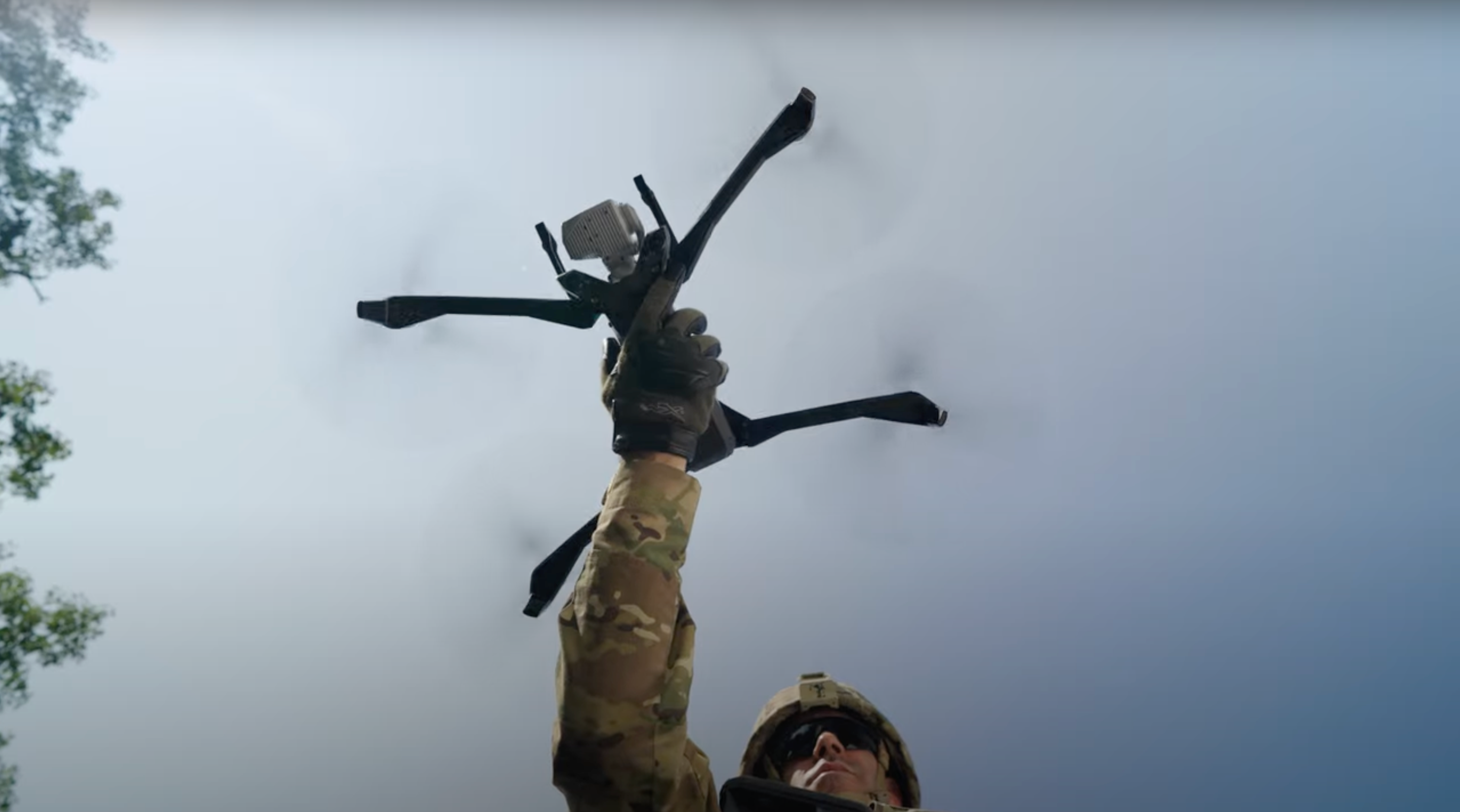
FAA Part 91 BVLOS Waiver Overhaul - What It Means for Your Drone Program
FAA policy for public safety is shifting fast—and it just got a lot easier to start or scale your Drone as First Responder (DFR) program. The FAA has created a new waiver process for public safety operations - offering a streamlined path to obtaining a Part 91 BVLOS Certificate of Waiver (COW). The process cuts approval times in half, offers a path to fly above UAS Facility Map altitudes, and doesn’t even require a CAPS application! Join regulatory expert Jakee Stoltz as he breaks down exactly how the new process works and what it means for your agency.
Whether you’re launching a new program or expanding advanced operations, this session will give you the clarity and confidence to navigate the latest FAA process updates. Don’t miss it.
- >> All right. Welcome, everybody.
- Welcome to another regulatory updates for public safety webinar,
- Jakey Stoltz from the SkyDio regulatory team.
- For the next 45 minutes or so,
- we are going to talk about a new process for
- part 91 beyond the giant site waivers.
- So it's going to be jam-packed 40 minutes or so of content,
- and then we'll try at least some time at the end for your questions.
- So before we get into the process and the steps and everything,
- I wanted to provide a little bit of context for how we got to this point.
- So what is a little bit of the history and some of the old process?
- It's a new process, but there used to be a process that preceded this.
- So I could probably look back well over five,
- six, seven years to some early work that was being done to enable this
- operation.
- But from a public safety perspective,
- there's a clear start point back in September of 2024,
- and that was New York City Police Department's revolutionary FAA approval to do
- DFR
- operations across their entire city.
- For the first time,
- this approval was based on just operating at lower altitudes and using ADSB
- technology,
- so it didn't require other types of detecting avoid technology.
- But with a single approval, the NYPD was able to do in scale their DFR program
- across 85% of their city in one shot.
- So it's a really big moment for them and for the industry as well.
- And then a couple months later, in December 2024,
- Las Vegas Metropolitan Police Department and Oklahoma City Police Department
- also received similar approvals.
- And this started to show that the concept that NYPD and
- an Austin FAA developed was scalable.
- So it wasn't just a one-off in New York City.
- This type of approval was possible in other parts of the country,
- in different types of airspace, different environments, and so on.
- So in Oklahoma City Police Department's approval was particularly noteworthy
- because it marked the transition from requiring a certain type of airspace.
- These moatsy veils, as you may have heard us previously talk about,
- to the term congested area.
- But essentially, this Oklahoma's approval kind of set the stage for
- this approval to be possible over any city or town or settlement to any congest
- ed area essentially.
- And so Oklahoma City's approval really became kind of a blueprint for
- the FAA moving forward.
- And so that blueprint became kind of three things from a safety case
- perspective.
- So you just had to operate at lower altitudes.
- We call this kind of shielded operations for DFR.
- But really what that means is just operating at a low of 200 feet AGL.
- And by operating at that altitude, the only additional airspace awareness
- technology required is ADSB-IN, which for
- Skydio and our DFR command platform, that's just built in technology.
- There's no extra hardware or software or anything like that required.
- And then the third piece is operating over congested areas.
- And so from that blueprint, in the last six or seven months or so,
- agencies across the country really have gotten these approvals.
- So I want to just give a shout out to all the agencies that have already
- gotten this type of approval.
- We're proud to have supported over 25 of those agencies kind of working
- through this process and getting this approval.
- And really what that means for
- agencies across the country now is you're either able to start a DFR program.
- So if you were maybe hesitant to start before because of this visual
- observer requirement, you either couldn't staff it, you couldn't pay for
- a contractor or so on, you can now kind of start a program without that
- requirement anymore, or there was agencies that had DFR programs, but
- were maybe limited in kind of the number of the scale of deployment.
- So they maybe had enough to staff one rooftop or a higher contractor to do that
- .
- But now they can scale these programs across the city.
- So these approvals are having a huge impact.
- We're really proud for those agencies that have obtained it so far and
- looking forward to the future as well.
- And so from this work now kind of helping
- where 25 agencies get these approvals, we've seen some trends that I just kind
- of want to share with everybody to showcase really like the amazing work
- being done by the FAA here.
- And at a macro level, like how fast the FAA has actually moved in enabling this
- .
- So going back to NYPD's approval in September,
- that approval actually took 14 months to get accomplished.
- So there's a lot of work that went into that from the FAA, from NYPD,
- with our support, and just took a lot of patience.
- But after 14 months of working and collaborating on that,
- we were able to get it done with them.
- The next two approvals, so Las Vegas and Oklahoma City,
- those took about nine months.
- So again, it started to show some scale, but still quite a long process
- and a period of time there from kind of the initial work to getting approval.
- But that happened in about three months.
- We started cutting that process time down.
- And then earlier this year, a number of agencies,
- you know, probably about half of those that we showed on the previous slide
- there,
- they were working through the FAA's, I'll call it the old process,
- but really just like the process that existed before this new one.
- The process actually kind of stabilized and it was becoming consistent,
- and actually just kind of in line with standard FAA review times.
- So about a dozen agencies got approvals in average, 78 days,
- which again is kind of just right in that kind of typical FAA review times
- for a beyond visualizing waiver.
- So things were actually working pretty well earlier this year.
- Agencies were getting approvals and things were moving along.
- But this new process really just kind of takes it to a whole new level
- and really it's like a speed that's unheard of from the FAA.
- So in the last couple of weeks, more agencies have been getting this approval
- and we're seeing that kind of processing time drop down to an average of 30
- days or so.
- And so it's just again, an amazing trend from 14 months down to 30 days
- in just a span of like 77 to eight months.
- So with that, I do want to recognize the FAA's work here.
- I think sometimes they're blamed for being slow and taking forever and blocking
- the industry.
- But at kind of a big picture here, like this progress is incredible.
- We went from the only way to do DFR was with a visual observer prior to
- September of 24
- to 30 day review times now for this type of operation
- that can be scaled across the country now.
- So in particularly, I'd want to kind of give recognition kudos
- to the FAA's U.S. policy team, NATO, so AGV, the Eastern Service Center,
- and the AFS Center, 30 Group and Flight Standards.
- There is a small team from kind of those branches
- that really helped get that first approval across the finish line
- and helped stand up that initial process.
- And then of course, big kudos to the new team and flight standards
- as kind of taken over and really streamlined this process
- and just made it much easier and much more streamlined and quick to get
- approval.
- So yeah, big kudos to the FAA on their work on this.
- All right, and so now we'll get into kind of more of the process itself.
- And before I do that, I'm going to just say a few more
- and how steeping things, some important context things for this.
- So firstly, it's just worth kind of stating
- that there are two types of kind of two regulations
- that public safety agencies can operate under.
- And that's assuming you qualify for the Part 91 operations here,
- but you're eligible to fly under Part 107 as a commercial operator.
- And that's kind of just like the default set of small UAS rules
- for essentially any operator in the US.
- But then public safety agencies have the ability as well to fly under Part 91
- as a public aircraft operator.
- And so this process and really the rest of the webinar is about Part 91
- and not about Part 107.
- So just kind of forget Part 107 for the next 30 minutes or so.
- This is all about Part 91.
- And then one more housekeeping item.
- So this process is evolving and it's changing.
- And even in the last three weeks since the FA kind of created this new process,
- there's just been small little incremental changes happening.
- So if you're watching the webinar today,
- you're receiving the most up-to-date information.
- But if you're watching this webinar after April 16th,
- so the day that presented it live, I'm going to refer you to a web page
- that we've put up and I'm going to share a link to that at the end.
- But we're going to maintain the web page as kind of the most up-to-date
- information
- as this process evolves.
- But if you're watching the webinar as a replay,
- I just know there may be some content in this webinar that becomes out of date.
- So just please go to the web page to get the most update information.
- All right. And so for this new process, the term I'd really use is that it's a
- new process,
- but it has the same impact.
- And so as a tech company, we do release notes for our software updates and so
- on.
- And so I just kind of wanted to use that same framing here.
- If you were familiar with the old process, you're sort of the release notes for
- this new process,
- just to kind of orient you.
- If you weren't familiar with the old process, then this may not mean a whole
- lot.
- But and this is not an exhaustive list, but I would say there's kind of like
- four
- big things worthy of note here.
- So number one, there's three new forms that are going to help applicants
- navigate the process.
- And we'll talk about those forms here in a minute.
- These approvals are now issued as certificates of waiver or cows instead of a
- coa.
- So it's just kind of a terminology change.
- I would say that the waiver kind of by and large is the same thing.
- It kind of allows the same stuff, but it's a different term.
- Caps is not required anymore.
- So caps was the online system that you'd actually have to go into to request
- these coas.
- So that was removed from this process, which is great.
- We all love caps.
- There's some sarcasm there.
- And then finally, there actually are some minor updates to the waiver itself.
- So to the approval that you get.
- So for example, a noting is not required anymore.
- The reporting requirements have been simplified.
- And there is an option now to obtain a coa to do routine operations above the
- facility and
- map altitudes.
- And it's worth noting that like coas haven't gone away.
- So coas still exist.
- They're still being issued.
- If you fly under part one of seven, you actually get a coa when you get an
- airspace
- authorization.
- So these things still exist.
- Def is just kind of transition this type of waiver into a cow instead of a coa.
- So a little bit different terminology, but kind of the same thing at the end of
- the day.
- And so that's the new stuff kind of release notes, but what has stayed the same
- here is that
- these approvals still ultimately enable DFR operations and other types of
- public safety apps.
- So they still enable agencies to do beyond design a site with output observers
- at scale, really over any city town or settlement now across the US.
- And the kind of default approval at 200 feet just requires ADSB and still.
- And you optionally have the ability to deploy it on cooperative detect and
- avoid technology,
- like a D drone beyond to get approval to fly at higher altitudes.
- So kind of by and large, the outcome of this process, the approval itself still
- really
- enables the same things that it did before.
- Okay, so this is the process.
- So now we're kind of getting into more of the details of what this new process
- is.
- I've chosen to kind of break it down into three steps.
- And so we're going to dive into these steps a little bit more, but the steps
- are kind of
- firstly, the reason I broke it down in these three ways is because the step
- number two here,
- which we'll talk about is actually you have to go get sort of an outside
- council to do that for
- you. So it's kind of broken down by like who can do which step or who's
- responsible.
- The drone program manager of your agency can do two out of these three steps,
- but then
- step two in the middle does require external support. So let's get into it here
- .
- Okay, so first you need to determine if you're eligible for this kind of waiver
- .
- So not everybody may qualify, but for public safety agencies, the eligibility
- requirements
- do cover a pretty large swath of operators. So kind of the two things you
- should think about is
- number one, are you eligible to do public aircraft operations? And this hasn't
- changed.
- So if you got a co-in the past, you had to be eligible for this and similarly
- moving forward
- to get this certificate of waiver yourself to be a public aircraft operator.
- And so we'll
- talk more about that in a second, but like essentially you have to be a part of
- a state
- government or federal government. So you have to be kind of a government
- operator
- to be eligible for this. Secondly, and this is the new thing. So I've tried to
- kind
- of note some of the new parts of this process specifically with that little new
- tag there,
- but the FA also wants to limit this waiver to public safety organizations for
- now.
- And so they've pulled a definition of a public safety organization, some US
- code.
- And I can just kind of read that definition here really quick, but PSO means a
- public safety
- organization that primarily engages in activities related to the safety and
- well-being of the general
- public. This can include law enforcement, fire departments, EMS, and other
- organizations. So
- it's a pretty broad definition, but you do need to meet that to be eligible for
- this type of waiver.
- Okay, so you determine your eligible, your public aircraft operator,
- you meet that definition of public safety organization. Now you need to go get
- called a public declaration letter, and hopefully this is getting a little
- spinning sign, but
- so you need to go get a public declaration letter. So for state government or
- political
- subdivisions of that government, you cannot self declare this. So that's a key
- thing. So you
- cannot self declare that your public aircraft operator. To do this, to get this
- letter, you need to go
- to an entity that is in a position to determine if you're eligible or not. So
- for like city,
- that's going to be a city attorney, county, a county attorney. If you're a
- state agency that
- probably means your state AG's office, but you're going to need to go to those
- offices and get them
- to create and sign one of these letters for you. And the FA has guidance on
- this,
- so I'm not going to get too deep into this, and I can't make a determination of
- whether
- your agency qualifies or not, but the FA does have some guidance on this. So
- there's an
- advisory circular 00-1.1b. The FA also has a one-pager now on what this public
- declaration
- letter needs to contain, some guidance on that. There's some examples out there
- that we can share
- as well. So yeah, use those FA resources to help you and your attorney make
- this termination.
- And for federal government, if there's anyone listening that is part of federal
- government,
- the public declaration letter is not required for you, but the FA may ask for
- some other
- evidence to kind of make a determination that you are the federal government.
- So just a note
- for that group. Okay, and so now you've determined eligibility. You've gotten
- your public declaration
- letter. Now you can actually start to put together the set of documents to
- actually make the request
- to the FA. So what I would recommend before you go filling out all these
- documents is I would
- recommend selecting your con app or selecting kind of which type of requests
- you're going to make.
- And so as mentioned before, there's still the two options that there were
- before. You can choose
- to request a sealed-out operations type of approval, which means you're going
- to fly at a
- below 200 feet. You're going to use ADSB in technology for occlusion avoidance.
- And in that
- case, you have to fly over congested area, but it could cover like your tire
- jurisdiction
- otherwise. And really that's kind of the FA's like default approval at this
- point. So if you're
- not sure which con app or if you haven't maybe investigator or done work with
- like a technology
- vendor on the detect and avoid technology side, like this is probably the path
- you're going to go
- down on the left side. But you have the option to deploy non-cooperative detect
- and avoid technology
- and request up to 400 feet agile. And so if you're working with a technology
- provider like D join
- honest or ready, then you can look at this 400 foot type of request. The con
- app you pick does kind
- of determine how you fill the documents out. And there's actually an additional
- document that you
- need to fill out for the 400 foot request. So I just recommend kind of going
- into the process
- knowing which type of request you're going to make before you start filling
- everything out.
- All right. And then you have to put together a set of documents to kind of
- actually make the
- request. So the first document we've already talked about, you need that public
- declaration
- letter, you'll ultimately send that to the FAA as part of your request. But
- there's four or
- potentially five other documents that you should think about. So the FAA forms
- 77-11-2.
- There's a public safety organization letter, which is separate than the public
- declaration
- letter. This is a new part. We'll talk about that in a second. There's a part-
- 91-dv-last waiver
- checklist now. This is new from the FAA. A concept of operation document, which
- really should have
- been done before, and we've always done for the agencies we work with. And then
- finally, if you
- are going to make a request over 200 feet, then you need to put together a what
- 's called a CMDEDA
- document or a criteria for making decisions. Use that acronym.
- So let's kind of talk through these forms just a little bit more here. So the
- first one,
- the 77-11, this is just an FAA form for applicants requesting a certificate of
- waiver authorization.
- So this is a required part of the process. You can go download this form
- directly from the FAA.
- And you'll fill it out. Not all of the form is applicable to drone operations.
- This form also
- is used for applicants of air shows and other types of aviation activities. It
- 's not necessarily
- like a drone-specific waiver form. But you'll fill out some contact information
- that you're asking for a part and you want to be on the site waiver. But there
- 's kind of three,
- I would say, critical parts of this form to fill out. So there's a box where
- you're going to
- reference the concept of operation. You could try to type all the concepts into
- that box,
- but we recommend just doing a separate document. We'll talk about that in a
- minute.
- Then you'll also know where you're going to fly, essentially, so kind of the
- area of operation
- that you're asking for. And then finally, the drones that you're asking for. So
- whichever kind
- of fleet, one drone or fleet of drones, the drones that you intend to fly on
- this later, you'll list those.
- Okay. So now to the PSO letter or the public safety organization letter, that's
- kind of that
- second eligibility item. So kind of similarly to the public declaration letter,
- you're going to
- create a letter that states that you do meet that definition. But unlike the
- public declaration
- letter, this is a letter that you, the, you know, the drone program manager or
- the agency can sign
- itself. You don't need to go get outside council or an attorney to do this for
- you. So this letter,
- kind of in a nutshell, will just like state your agency's name. It will state
- that you meet this
- definition, a public safety organization. You're going to say that you're
- asking for this
- down by site waiver. Some examples of the types of ops you're going to do. And
- then there's
- ultimately a signature block at the end of that. I see I'll put that together
- and sign it and
- submit it with the package. Next, there is a waiver checklist. So this is also
- a new document.
- The FAA developed this to help applicants kind of submit all the necessary
- information and get some
- getting an understanding of kind of what they're signing up to do or what they
- 're going to be
- required to do under the waiver. So the checklist goes through about 18
- different provisions
- that the responsible person or the applicant should kind of go through and read
- and then
- initial. And by initially, you're basically saying, yes, I will do this as part
- of the waiver. And the
- waiver ultimately restates a lot of these provisions as well. But yeah, it's
- just kind of a checklist
- that helps applicants sort of understand like what they're signing up to do. So
- you'll go through,
- you'll initial the columns that apply, and then you'll sign at the bottom and
- submit that to the
- FAA as well. Okay, and then one of the provisions from that checklist actually,
- the third one in
- the list, it basically states that you're going to provide a complete
- description of the operation.
- This kind of verbatim what it says. So there's no kind of specific FAA required
- way to do this,
- but what we recommend is creating what's called a concept of operation document
- .
- And you can see on the table of contents on the right here, kind of what this
- concept of operation
- covers. And so when you go to the website that I'll show later, we're actually
- going to provide
- kind of a template/example of a concept of operation document that you can
- download and start to fill
- out. But I think this is a really kind of key part of the process. And so don't
- overlook this.
- I think this concept of operation document is kind of your chance as like the
- responsible person
- for the strong program to kind of like go through the list of things and like
- structure your program
- and kind of get up to speed and everything. So it's almost like a good just
- internal exercise to do
- to kind of get familiar with all the different parts and things that your
- program should have.
- So for example, you want to think about the flight area, the airspace that you
- 're going to be
- operating in. Are there control air spaces? Are there small airports, heliports
- ? You know,
- it's just kind of like an exercise of getting familiar with all that. Get
- familiar with the
- type of drones that you're going to operate. You know, do they have parachute
- recovery systems or
- not? Are you using a docking station or not? Does it have remote ID? You know,
- actually check the
- FAA's webpage for that. Get the tracking numbers and so on. How are you going
- to train your crew?
- So, you know, what are the qualifications? Are you going to require everybody
- to get a remote pass
- certificate? Are you going to choose some kind of self-certification strategy?
- What is your training
- in either of those scenarios? And so on. So this document is really useful to
- just kind of like
- help you work through all those things, like think about them, think through
- them,
- write some things down, document it, and then ultimately this gets submitted to
- the FAA so that
- they kind of understand what you're doing. But yeah, I would say don't overlook
- this document.
- I think it's a really good exercise, both because you want to submit something
- to the FAA, but just
- also internally to kind of help you structure this program that you're about to
- implement.
- And again, we're going to provide a kind of outline of what this kind of can
- look like
- after when we get to the webpage. So you don't necessarily have to start from
- scratch and kind
- of use our example to help guide you on this. Okay. And then the final document
- is this CMD/DDA
- document. So if you're going to do, if you're going to request operations up to
- 400 feet AGL,
- then you must deploy some kind of non-cooperative detect and avoid technology.
- It could be radars,
- there's camera systems, and so on. You know, Didrome Beyond would be an example
- , but there's others.
- And so when you're deploying that technology, the FAA is going to evaluate it
- to make sure
- that it's an effective mitigation for aircraft collision avoidance. And so this
- document,
- the CMD/DDA document is a form that the FAA put together to help you kind of
- provide all the
- necessary information and then to help them review it in an effective way and
- hopefully
- kind of streamline their review process of them as well. So what I would
- recommend is that,
- you know, don't try to fill this document out yourself as the public safety
- agency. I would
- actually put this document on the technology vendors, kind of shoulders, to at
- least fill out the bulk
- of it, because this document is about like the DA system itself, like how does
- that function,
- what are the FCC IDs, and so on. So this really should be a document that's
- probably filled out
- by your technology vendor primarily, and then maybe with your support on kind
- of specific
- things about your agency and your locations and where you're going to deploy
- this and so on.
- So yeah, definitely make this kind of a team effort with your technology
- provider and don't try to
- do it all yourself. And again, just worth noting that this document is not
- required
- if you're just going to do the shielded operations below 200 feet.
- All right, so that's the set of documents that you should put together for this
- new process.
- So again, just to like quickly recap, you got your public declaration letter,
- your form 7711 dash to the TSO letter, the checklist, and a concept of
- operation.
- And then if you're if you're going to fly over 200 feet, you got that that DA
- document as well.
- So you take these five or six documents and you send them to the FAA at this
- email address on
- the screen here. So you can write this down, but this is also going to be in
- our web page guide
- as well. And you just indicate that you're asking for one of these public
- aircraft operation
- public safety organization, part 91 of the Amazon estate waivers. You attach
- all these documents
- and then you send that. And by sending the email that actually starts the FAA's
- review process,
- they may email you back saying, you know, received and we're working on it, but
- that,
- yeah, by just by emailing, then that starts the process.
- And then kind of one of two things happens that the FAA may ask for more
- information or
- corrections if you made any kind of error in some of the documents or. But if
- everything is good
- and when they've done the review and they approve it, the approval actually
- just comes back to you
- via email. So it's just like a direct email process now submit application and
- the FAA emails
- a waiver back. So no more caps, no more other steps. It's just really simple
- and straightforward.
- Okay, so let's get to the next page here. So we put together a web page that
- covers the process
- that I just outlined. So those three steps, all the documents, and there's
- additional details
- well that I didn't really get into today. So what I'm showing here is just like
- a PDF version of
- the web page. But if you head to the web page, you'll you'll basically see a
- detailed guide on this.
- In that web page, there's a spot as well to send an email to the regulatory
- team to get a set of
- forms and templates and like examples. And you can also get this PDF version if
- you'd rather have that.
- But yeah, this guide really, the goal was to make it detailed enough that if
- you're interested in
- getting this waiver, you could start this process today. And there should be
- enough detail for you
- to just work through it. Hopefully by yourself is actually the goal. So yeah,
- if you if you're
- interested in getting this waiver, if you're interested in doing DFR, I would
- recommend, you know, get
- off this webinar. And if you're motivated to get started right away, go
- determine your eligibility,
- go get that public declaration letter, and then get your documents put together
- to make the request
- to the FAA. All right. Okay. And then, you know, what does the call allow? So I
- can certainly answer
- questions about like the actual approval itself, like what are the provisions
- and so on. But I
- actually wanted to kind of save that for a follow up webinar where, you know,
- we can do kind of a
- talk down of the provisions themselves and what they mean and so on. So I'm not
- necessarily going
- to cover the approval document itself today, but again, can certainly answer
- some questions
- on it if there are any. And so with that, I've got about 10 minutes roughly to
- answer some questions.
- So just give me a sec to kind of look at the list of questions here.
- So yeah, we'll just kind of start to go down the list here. I see lots of
- questions, which is
- awesome. So beyond Virginia site for public sector and private sector. So like
- the question kind of
- at the core is, have you had any success enabling beyond the line site in the
- private sector? So
- like that part 107 category, really, if you're not a public aircraft operator.
- And the answer is yes,
- we've had a lot of success helping customers and entities get part 107 waivers.
- It's like a waiver
- to 107.31. There's some others, but examples include like for utilities, we've
- had a lot of
- success getting approvals to do remote operations, either up to 100 feet or
- over critical infrastructure
- up to 200 feet. So actually pretty similar to the part, any one approvals that
- we discovered,
- where we're seeing success with like construction or security use cases getting
- these approvals as
- well. I would say like at this point, if you want to do remote operations,
- there's going to be a
- path for you regardless of it's part 107 or part 91 or kind of what vertical
- you're in. So yeah,
- I would leave leave kind of general answer like that. And if you're interested
- in learning more
- like about your specific use case, feel free to reach out and we can talk about
- your specific
- options. So next question was the approval time looking for law enforcement
- organizations.
- So for this part 91, down to the last site waiver, I would just estimate about
- 30 days. This kind of
- goes back to that trend page that I showed kind of early in the presentation,
- where we basically
- went from like a 14 month approval down to about 30 days. So what we're seeing
- at least is this
- latest round of approvals in the last couple of weeks is taking on average 30
- days. So
- be a good one. Good one just to kind of bookmark 30 days as a reference.
- Does the waiver only cover DFR with a docking station or can you also get a
- waiver with a
- controller? So I'll answer kind of from from a skydial perspective with with
- our technology,
- you can get a like this single waiver, this part 91 waiver would cover all of
- it. So
- really the requirements, you know, you have to meet the requirements for each
- site, but as long as you're flying below 200 feet and you're using ADSD, which
- is built in
- kind of across our platform, we have ADSB in our DFR command, our web browser
- based GCS,
- we're bringing ADSB to our controller in our next update this week. So as long
- as you're using
- those things and kind of meeting the provisions of the waiver, you can fly with
- the controller,
- you can fly from the dock, you can fly an X10 that's not in a dock, but
- remotely as well.
- And so kind of all the things are possible.
- Let's see small lease department that doesn't necessarily have a need for full
- DFR program,
- but it's looking at getting a waiver for Beyond Visual Site during emergency
- operations.
- Yeah, I would say like this is possible, like there's a note here too that we
- operate under
- part 107 today. So if you're an agency that's doing kind of exclusively part
- 107 operations today,
- you could be eligible for this waiver and it goes back to some of those
- eligibility requirements,
- I could pull, see if I can find that slide here quick.
- You do need to meet the requirements for being a public aircraft operator and
- you would need to
- meet the definition of a public safety organization, but if you're a small
- police department, you may
- meet those eligibility requirements. So yeah, I would say if you're doing ops
- exclusive in
- part 107, just consider if you're eligible for these two things. And if you are
- , you can get this
- approval. And this approval is not limited to DFR. So I do want to make that
- clear, like this would
- cover any kind of public safety operation. So it could be just your kind of
- tactical use for
- slot or handheld, like controller based operations at a fire, whatever, it kind
- of covers all those
- things. So it doesn't matter necessarily if you're like a big DFR program or
- just a small department.
- So another question here, I'm working on a co-application for my agency. I
- assume the waiver
- needs to be requested after the COA has approved. So kind of the straight
- answer is no. If you're
- working on a COA today, what I would recommend is kind of putting pause on any
- of the COA work
- you're doing. So, and that could include like, you know, your blanket COA,
- jurisdictional COA.
- If you're doing tactical BVOS, if you're doing first responder BVOS, there's
- been a couple
- different types of public safety codes over the years. But if you're working on
- one of those,
- I would pause that work and take a look at this guide and see if you kind of
- meet all the requirements.
- Because if you do, you can just ask for this waiver and that will more or less
- cover like all
- the types of operations, the public safety operations that you want to do. So
- it will cover
- visualized site operations under part 91 as a public aircraft operator. It even
- includes
- Beyond the Genia site with a VEO. So kind of the old first responder, Beyond
- the Genia site,
- it includes that. And then it also includes BVOS without a VEO. So the FAA has
- kind of done a
- really great thing and sort of merged all the different types of COAs that used
- to be for
- public safety into one new approval. So yeah, I would recommend pausing and
- just looking at this
- new process and doing that if you meet the requirements. With, let's see, yes,
- we'll just
- keep going the question. We have five more minutes. So with the 200 foot DFR
- operation,
- does there are a limit to distance? And so I would say no, like not in a
- regulatory sense.
- So there's not a, there's not a provision in these waivers that says, you know,
- max light distance of two miles. So there's no kind of regulatory limit per se
- and you just
- need to consider things like battery endurance, you know, your connectivity. Do
- you have a link
- to go out the distance you want to? Does your ADSB solution cover, you know,
- enough space around
- the drone so that you get alerts of aircraft and so on? For Skydio, it does. So
- like our ADSB
- receiver is built in to the X10 itself. So wherever the X10 is, you get a good
- ADSB reception around it.
- So yeah, it's, there's not kind of a waiver limit per se. It's just based more
- on like the
- capabilities of the vehicle and whether you can still meet all the provisions
- at the
- distance you want to operate. Let's see. So kind of a question again about like
- part 107.
- So I'll take this chance to, to note that there are some part 107, public
- safety waiver options.
- So the DFA has kind of a new public safety obstructed shielding waiver, which
- kind of
- mimicked the tactical Beyond Visualizing Site approval that you could get under
- a cover. So
- that that part 107 waiver is meant more for pilots actually being on scene, but
- then being able to
- fly Beyond Visualizing Site in kind of a smaller area tactically speaking. So
- so there are options
- for operators that want to just operate under part 107 entirely. There's there
- 's even some kind of
- part 107 waivers that are allowing DFR now with parachute recovery systems and
- so on. So yeah,
- there are options if you want to just continue flying under part 107. But the
- process we covered
- today, I'll just say again is, is a part 91 operation and a part 91 waiver.
- Advisory Circular, so for the public aircraft operations, that's advisory
- circular 00-1.1b as
- in boy. And that's noted on our webpage. There's a section at the bottom of the
- webpage that has
- a bunch of references. So I would look down there. There's a link to it. There
- 's also links to like
- the FA's advisory circular 107-2, which has good information. It links out to
- the FA's public safety
- toolkit, which is a good source of information for public safety specifically.
- There's some links
- to like how to register drones, remote IDs, and so on. So yeah, look at the
- bottom of that webpage,
- and there's a whole bunch of references mostly out to FA material that's really
- useful for learning
- more. All right. Another kind of question here about, so do all these changes
- like impact your
- existing approvals essentially? And I would reframe it to a really good
- question is like,
- if I have a COA, should I get this new certificate of waiver, or should I just
- kind of like keep
- using my coas as they are? So big picture, like the coas that you have, if you
- have them today,
- they're still active. Nothing changed. So you'd still operate under them and
- comply with all the
- provisions and requirements of those coas. But if you would like to kind of
- transition to this
- certificate of waiver, you can. And so you could request this certificate of
- waiver, and it kind of
- doesn't matter if you have coas, you know, or not, like this is sort of a
- standalone process that
- you can just start and work through. And you may find that once you get, if you
- do do this process
- and get this new waiver, you may see that this new waiver kind of, it covers
- all the potential
- operations that you were probably doing under your own coas. You know, I can't
- say that with
- certainty, because I don't know your coas in and out like you all do. But this
- new waiver
- probably covers all the operations that you were doing under those old coas. So
- I would recommend,
- you know, get this new waiver. And then once you do just kind of evaluate the
- approvals you have,
- and you may be able to like let some of the old coas expire or cancel them even
- and just kind of
- standardize all your operations under one approval, which is really good from
- just kind of standardization
- standpoint, consistency, you know, that the pilots only need to really think
- about one approval instead
- of like a suite of coas. So yeah, I would go through the new process if I were
- an agency,
- even if you have existing coas, you know, consider going through this.
- Yeah, there's a question about ADSB on Honor X10. Like, do you need like
- updated hardware or
- anything like that? So the ADSB update coming is just software only. The X10s
- all have the
- hardware in them already. And if you've been flying an X10 over the DFR command
- , the web browser,
- you would have already seen like ADSB traffic. We just didn't have that feature
- on our controller.
- So the new update will bring ADSB both to the web browser and to the controller
- ,
- essentially kind of no matter how you're flying an X10, you'll have their space
- awareness around
- the drum. So yeah, just software only, you know, no need for any hardware
- updates.
- Okay, maybe let's just do like one or two more. I mean, there's so many
- questions here. We're
- not going to get through them all unfortunately, but we will try and do some
- follow up to can you
- answer these and they'll be another webinar. So maybe just kind of two more
- here I'll take.
- So like, is there a weight limit for public UAV, so to speak? So yeah, 55
- pounds, like really is
- still kind of the limit. So for part one of seven, it's definitely the limit.
- That's like a statutory
- weight limit. For part 91, you know, there are some pathways to get operations
- to fly
- fire weight aircraft. But generally speaking, like being below 55 pounds is
- going to be a lot
- easier for the FAA to approve and they're kind of they're generally trying to
- keep some similarities
- between part one seven and these this part 91 waiver. Yeah, 55 pounds, I'd say
- is a general answer,
- but there are pathways to get approvals to fly heavier drones.
- And then I'll take the last question here. I want to pick there's one about
- training and
- self-certification, which is kind of a subject near and dear to my heart. So
- part 91, it does allow
- you to self-certify your flight crews. And so it's actually a bit of a kind of
- a common misunderstanding
- I see, but the remote pass certificate that's required in a part one of seven
- is not actually
- an FAA requirement under part 91 and these waivers. Now most agencies are
- choosing to use that remote
- pass certificate as kind of a basis for qualifying their operators. And I think
- that's that's really
- good strategy by having all, you know, if your pilots all have the remote pass
- certificate that
- gives you the flexibility to fly under part one of seven and part 91. But it's
- not an actual FAA
- requirement for part 91. And so you could as an agency choose to develop like a
- basically a
- training kind of curriculum and strategy for self-certifying your operators.
- But what I would
- caution is that self-certification is not a, you should not view it as like a
- shortcut, right? So
- if you're self-certifying your flight crews, they should all still have the
- appropriate knowledge
- and skills to operate a drone in the national airspace. So you're still
- operating an aircraft
- for the FAA's definition. So don't look at self-certification as like a
- shortcut or,
- you know, like these drones are so easy to fly. Like I just need to tell these
- guys how to
- click a button in their operators. I think you should still, you know, train
- these operators to
- be kind of professional pilots. But you could choose to kind of do your own,
- you know, you
- create your own strategy around that. Or you can do kind of what most agencies
- are doing and just
- require that remote pass certificate as kind of that minimum requirement.
- Okay. So yeah, we're a few minutes over. So I thank everybody for joining. And
- if you're
- sticking around a few extra minutes for sticking around. But yeah, we're going
- to try and do some
- follow-up. I know there's just a bunch of questions we didn't get to. So either
- we'll just reach out
- or there will be, you know, some more webinars coming up. Like I said, I want
- to do
- follow-up on just like the waiver itself and kind of what those provisions mean
- for your
- operation. But we'll try and get these questions answered as well. So with that
- again, you know,
- huge thanks for joining. And then hopefully you find the webpage and the guide
- useful.
- Send us feedback if you do see like errors or just things we could do better in
- that guide.
- Please let us know and we'll update that. So with that, fly safe. We'll see you
- in the next one.
Watch Time
48 Mins 26 Secs