
Expanding horizons: sUAS in government missions
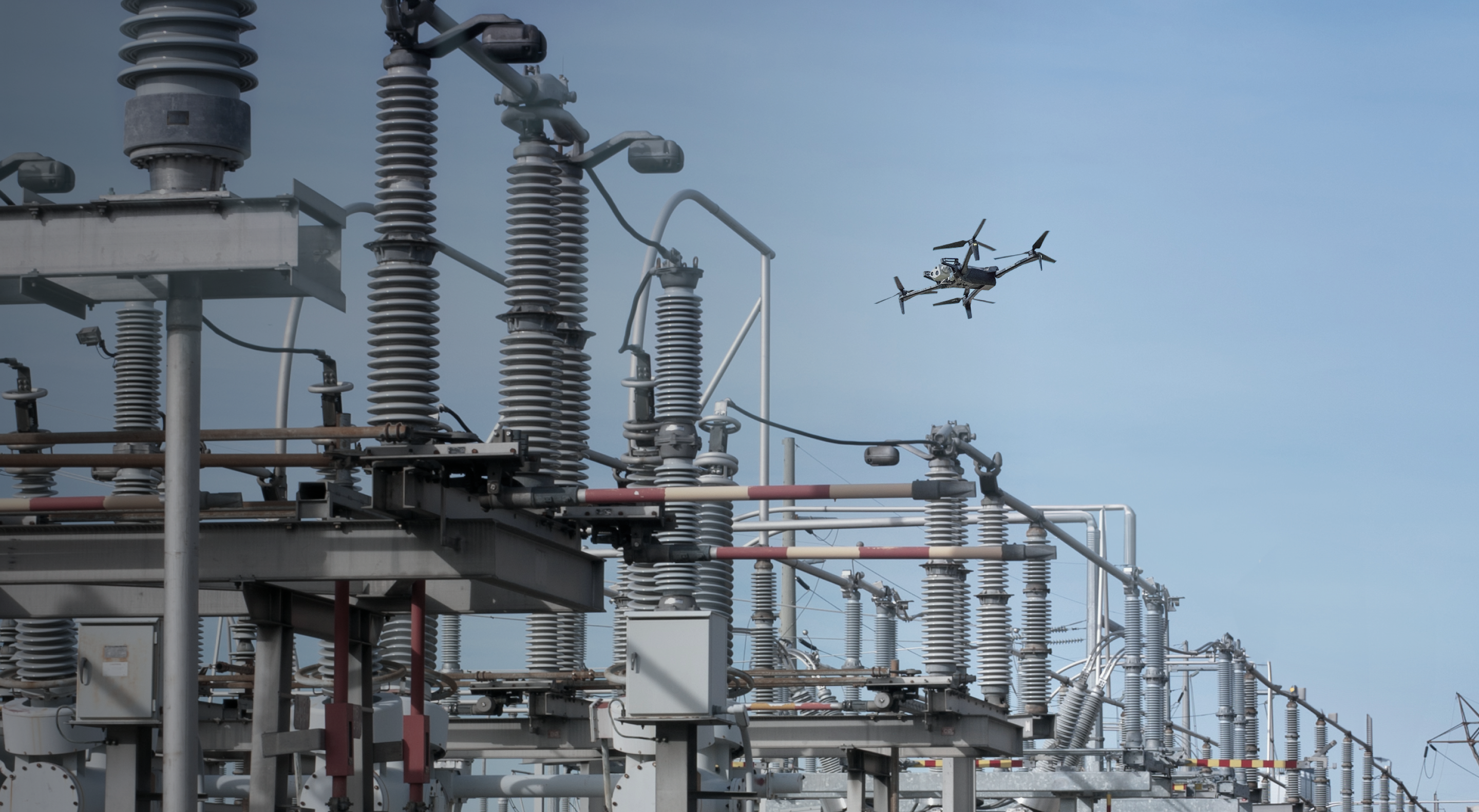
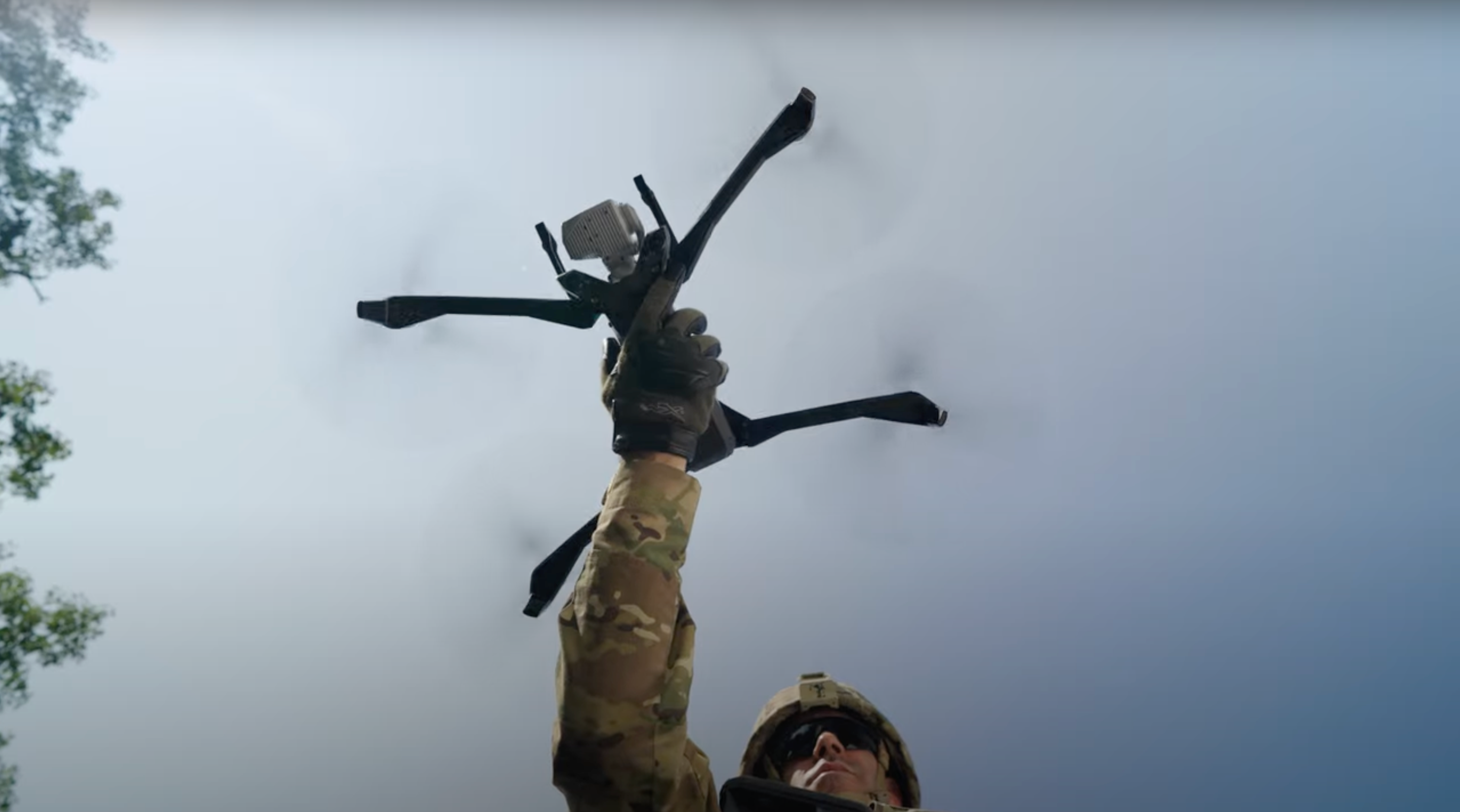
Quinn Palmer, US Customs and Border Protection (CBP) and Major Michael O'Connor, US Space Force, discuss the diverse uses of small UAS in government missions, including their deployment in the military and the protection of critical infrastructure. Troy Schneider, president of GovExec 360, moderates this session at Small UAS Innovation Day.
Learn more about Skydio for Defense
- We just talked at, at sort of the, the bigger picture level and a
- little bit forward-looking. The, the point of this panel
- is to really drill down
- into the, uh, you know, into some of the specific
- mission use cases, and I'm, I'm delighted to have our,
- our two panelists here
- today. We have, um, Ralph Quinn Palmer, uh, with,
- um, with Customs and Border Protection.
- He's Assistant Chief and leads CBP's small UAS program.
- Sir, thank you for being here today. Um, and then...
- I realize I can't see you, so-
- Oh
- ... sight lines be damned. No, that was, that was me. You're good.
- Um,
- uh, and then, uh, uh, Major Michael O'Connor with US Space
- Force.
- And, um, and Michael's here wearing sort of two
- hats,
- both the work that he's doing with Space Force and, and right now serving as
- a, as an Air, Air Force Fellow at Georgetown's Center
- for Security and Emerging
- Technologies, um, thinking about some of these issues
- and about the, you know,
- the network, the data, the, the comm side of things.
- But also, um, you know, in your Air Force days were, um, you
- know, were, were testing some of these devices,
- and so there's, there's a couple
- different perspectives we can bring.
- So first of all, thank you for, um, uh, for being here and sharing your time and
- your, and your expertise. But I gave, um,
- basically just names and titles. I'd like to give each of you the
- opportunity
- to just talk a little bit about the work you do and, and how it fits in today's
- conversation. And, um, and Michael, let's, uh, let's start with you on
- that.
- Yeah, certainly. So to give a little bit of background on
- me, uh,
- so thanks for the introduction and thanks for, for having me here.
- Uh,
- so I started my career education-wise in, uh,
- aeronautics and astronautics. There was a lot more space in
- that than in the air
- domain. Uh,
- went... did space acquisition, got the opportunity to go to the Air Force
- Test
- Pilot School, followed that up with a remotely piloted aircraft,
- uh, flight
- test assignment. Uh, so really got to dive into the
- unmanned, uh, unpiloted space. Well, remotely piloted
- space.
- Mm-hmm.
- Uh, have since gone back into the space
- community, transitioned over to the
- Space Force, uh, where I've continued to do test
- and evaluation.
- Uh, some of the themes that you see from, uh, the air domain,
- some of the themes you see, uh, us talking about today, uh,
- you see a lot of those same things in the space domain, right?
- Yeah.
- There's proliferation, uh, there's a whole lot more data,
- a whole lot more
- communication. Uh, and so that's, uh, what I'll be talking about today.
- And then at s- at Georgetown's, uh, CSET,
- I also get the chance to see, you know, how does AI work into things?
- How is, how are these emerging technologies
- influencing security?
- Right. Yeah, thank you for mentioning that.
- I've neglected the, the data and the AR pa- AI part of the puzzle and,
- and which I think has been a big part of your, your work and thinking, so very
- good. And, um, thank you. Quinn, same question to you.
- Talk a little bit about, um, you know,
- C- CBT is sort of the, you know, the, the secret superpower in the,
- in the use of
- unmanned systems in the US.
- Sure. Uh, thank you for the, you know, invitation today. Good morning, everybody.
- Uh, my name is Quinn Palmer. I'm about 24 years in the US Border
- Patrol.
- Um, but Border Patrol is executive agent for all of CBP,
- so a component within
- CBP, a little bit about CBP,
- Customs and Border Protection. Um, one of the components,
- we're the executive agent
- for all of CBP. We're the most prolific user within the
- agency of small unmanned aircraft systems.
- Uh, we have about 500, uh, assets operationalized throughout
- the United States. We have about 2,000 operators trained,
- certified.
- Um, and CBP responsible for border security,
- but also,
- uh, the, the regulating and facilitating, uh, legitimate trade and
- travel into the United States, so all air, sea, and airports
- of entry.
- So we, our operational domain, if you...
- our, our environments cover the gamut of the
- continental United States,
- uh, 13,000 miles of
- linear land border, uh, double that in coastal maritime
- environments. Um,
- we piloted,
- uh, small UAS as an agency
- tin- and tacitly in '15, but really, um, first couple of, of, uh,
- assets were, were procured and, and testing began in earnest in '17.
- Uh, obviously, uh, GOTS systems, um, in partnership with some of
- our DoD, uh, partners.
- Um, and we've since grown, so there was...
- it went from five, you know, five years ago to 500.
- Uh, and we're, we're nearing our full operational
- capability in terms of
- inventory size.
- Um, finding every day, you know, different use cases, mission sets.
- And, uh, you know, when you say full operational c-
- capability,
- I mean, uh, based on the, the current plans, based on the
- capacity you have of personnel or budget, sort of what, what's setting that, that
- cap? 'Cause I would imagine the, the actual mission needs could probably
- expand to fill all available capability.
- Absolutely. That's a very good question.
- So we base our full operational capability based on...
- it's an acquisition plan. It's acquisition plan language,
- but it's based on the
- operational requirement as defined by the different field locations.
- Okay.
- And that fluctuates.
- Mm-hmm.
- And, uh, as the capability fluctuates, it'll,
- it'll, it'll, you know, translate into a different assortment
- of what and where needs to be deployed when.
- Right. Mm-hmm.
- So...
- Very good. And, uh, talk a little bit about the, the
- mission use cases that, that went into, you know, um, determining
- that o- you know, that operational capability and capacity.
- Um, you know, clearly
- ISR and surveillance is, is part of it, but I, I suspect there's probably, um,
- some ways they're being used that we might not think of top of mind.
- Absolutely. ISR, uh, is, is the bread and butter.
- Um, obviously the Border Patrol being the mop-
- more prolific user, uh, within CBP,
- um,
- we have about
- three drones flying at any minute of any day.
- Mm-hmm.
- So and that's, it's, it doesn't sound like much, but
- when you think about most of
- our drones only fly for 30 minutes, it's pretty...
- we're, we're putting some mileage on them.
- Um, and that is the ISR mission, the, the, the detection, um,
- classification, identification of-
- Folks coming illegally into the United States or,
- or smuggling contraband into the
- United States. But,
- uh, we also have a significant trade mission,
- and we see, uh, utility in the
- future, uh, you know, with, uh, different type of, uh, sensor arrays
- that maybe become isotope or radiation sniffers.
- Uh, we're utilizing it for natural disasters,
- obviously providing situational
- awareness as a response agency, mapping.
- Um, you know, we make better training products for
- the... So we're, we're, we're...
- We've, we've got them, uh, at every niche and corner-
- Mm-hmm
- ... within the agency, and again, they're, they're being developed every day.
- So, and, you know, one of the broader use cases, uh,
- um, uh, for, for these small UAS
- is, um, you know, is sort of inspection, particularly of infrastructure.
- And there's a, there's a whole lot of infrastructure
- that, uh, uh, that y- your
- organization is, um, is focused on.
- Is that, is that part of the current, uh, use case, or is it on the drawing board?
- It's actually part... I didn't, I did not mention that,
- but it's actually one of
- our, uh,
- growing-
- Mm-hmm
- ... uh, uh, facets to how we deploy, um,
- the, the, the time savings and the safety associated with our tower
- climbers.
- [laughs]
- Right. Right.
- Uh, it's just, it's, it's become a very significant piece of,
- um,
- fu- potential future investments.
- Yeah. Okay. And with, with both that and the, um, and the, the
- core ISR mission, are, um, uh,
- are you still working in the, you know, the one-to-one
- operator to, um, uh, to device, or are you starting to move
- into more of the, um, you know, the, the one to many and the,
- the different command and control that that involves?
- That's, that's a complicated question-
- Yeah
- ... but, um,
- I'm trying,
- um, to put this as simply as I can. So it's dependent, right?
- I, I see the, the one to many, um,
- really is requiring more of a system of systems-
- Mm-hmm
- ... uh, infrastructure, which, which we currently do not, um,
- field, uh, for various reasons. Um, but, uh, the one to one
- works for us.
- And I was listening to the conversation, uh, hard act to follow by the way, uh, the
- gentleman you had up here just a minute ago.
- Um, I was listening and, and he made a very salient point in
- that I would, I would
- foot stomp, um...
- So if I buy a billion, a billion dollar system
- that requires a billion dollar piece
- of infrastructure to be able to fly BVLOS,
- first of all,
- we're domestic, so we have a completely different set of
- issues and constraints and
- guardrails than in, in military theater of operations.
- And a completely different-
- [laughs]
- ... uh, number of zeros on the budgets.
- Yeah.
- Yeah.
- So versus, I might get the same coverage, you know, at one
- fiftieth the cost with the smalls.
- Mm-hmm.
- It, it is more manpower, uh, intensive, so then I need more operators to fly more
- smalls, obviously. However,
- I've got people out there anyway-
- Mm-hmm
- ... uh, in those locations. Um, they're coordinating with
- the guy or the girl be- to the right or to their left.
- There's, there's magic that happens,
- um, when the team is, is, is,
- is, um, integrated to that extent, you know, and,
- and you're offering up this new
- capability. We use sUAS not necessarily as a detection
- capability, I know I
- mentioned that earlier, but it's more of a response capability.
- Mm-hmm. Mm-hmm.
- So we've got a detection,
- uh, we've got a, a sensor alert from, from some- somewhere,
- uh, in, in our, our laydown, and we're responding.
- We're using that as, uh, overwatch.
- We're using our ISR basically as overwatch and for officer safety reasons.
- Okay. And, uh, Michael, let's kind of go back to your,
- um, uh, your flight testing, uh, days.
- When you were helping, uh, test some of these remotely piloted
- systems-
- Let me back up a little bit.
- Oh. [laughs] It's all good.
- I feel like-
- Just don't back off the back of the stage.
- Yeah.
- That would be bad. Uh, that, uh, you know, what
- were the, what were the key use cases you were, um,
- you were testing for?
- Or what were the missions you were trying to work against?
- Certainly. So, uh, right, I can only talk from my personal
- experience and,
- right, I'm not officially speaking for-
- Yeah, yeah. Absolutely
- ... Universal or that. Um,
- but what I saw was, you know, just like Quinn said, it's
- primarily intelligence, surveillance, reconnaissance, it's ISR.
- It's
- understanding the laydown of what's out there.
- Now,
- you've got kind of... You can run the gamut of different systems
- all the way from
- the tactical, uh, which gets a lot of news in, in Ukraine,
- all
- the way to the, the operational and potentially into strategic with things
- like,
- uh, the Global Hawk, uh, and, and the partner versions of that.
- Uh, so ISR is a very,
- a, a very big part of that mission. Um,
- now, moving into the future, right, that's still going to be,
- I think, the bread and butter,
- right? All the, all the videos you see coming out of
- Ukraine,
- the real exciting ones that get all the hits, get all the vi-
- all the views
- are, are much more kinetic.
- Mm-hmm.
- Um,
- but the ISR is really the fundamental part there.
- And then, right, we'd kind of be remiss if we didn't say, "Okay, if EW is such
- a major player in Ukraine,
- I mean, someone smart is gonna put that on, uh,
- a remotely piloted aircraft or
- some sort of, uh, a, a vehicle
- and make it a whole lot more mobile."
- Mm-hmm.
- So those, those are kind of the s- themes I see going forward.
- Okay. And, and this question for, for both of you.
- In, in Peter's talk earlier, you know, he mentioned the different
- paths as we explore his mission. You know, there's, there's the extend your reach,
- there's the, you know, the kind of like, you know, co-pilot or w- w- you know,
- wingman model, there's the agent model, and there's one that I admit I'm
- forgetting, uh, at, at this point.
- But the, um, uh, it seems like, um,
- certainly with CBP, most of it is, is the extend the reach of,
- of the operator
- right now. Is that a, is that a fair characterization, or
- are you all seeing, um,
- those, those different, um, you know, those different paths of how
- to develop, uh, um, you know, mission applications for these
- systems coming together?
- Yeah. I- if you're talking about endurance, yes,
- I want a lighter, smaller, longer
- lasting battery.
- [laughs]
- If that's what you... If we're talking about...
- But if we're talking about extend the reach in terms of what the capability
- provides-
- I mean, extend the reach of-
- ... the mission set
- ... of, of the, yeah, the, like that, that border patrol agent, um, can now
- be seeing- In places that, that sheer he couldn't easily
- get to as quickly.
- Oh, absolutely.
- Yeah.
- The efficiency of the mission-
- Yeah, yeah. Yes
- ... of, of, of exercising, executing the mission. Absolutely.
- Yeah.
- I mean, uh, that was the ver- that's the, the, the one thing that we
- learned, um, very quickly,
- um, obviously the impetus behind, uh, uh, our, our,
- our engagement with the small UAS, uh, pilot program was to, to kind of
- cover that delta that manned aviation was not able to cover, that it can't
- be everywhere. There just aren't enough manned aviation
- assets or pilots.
- And
- so in, in doing that, we also very quickly discovered, wow,
- they're
- in, in, in, in very specific situations, they're so much more
- effective because of the covertness, the nature of the drone themselves.
- I mean, you hear a helicopter coming from five
- miles away.
- If you're trying to get away from
- the authorities, you're gonna begin your,
- you know, your, your plan to escape a lot sooner.
- Uh, but when you're being surveilled and we get to, uh, initiate, if you will,
- that
- first contact, we, we, you know, sustain that initiative.
- Not only is it safer for our, our folks-
- Mm-hmm
- ... that are potentially walking into a
- violent, uh, confrontation, but,
- um,
- if it's 20 folks, now you, you pick the time and the
- place of that first, uh, contact, and now you've, you've got that group
- wrapped up versus
- now I've, I've got to chase down six that went east and five that went west and
- six, and they, uh, what would take five hours to, to
- locate 20 people trying to abscond from you really only takes that first
- 10 minutes of initial contact. That's an efficiency that
- translates into real dollars.
- Mm-hmm.
- Labor costs.
- So yeah, no, that's, that was something we learned very quickly,
- if that answers
- your question.
- Yeah, absolutely. Uh, Michael, your take on it?
- Absolutely. So
- i- it is an efficiency issue, right?
- There's certain performance that you're gonna get out of a, uh,
- a piloted
- and
- a pilot in the seat, in the air vehicle.
- Um,
- those vehicles are gonna be larger. They're gonna have more power.
- They can carry bigger payloads. They can get better performance,
- but that pilot is only going to be able to sustain being up there for so
- many hours. You know,
- they can, it, they can gas up. They can, it, refuel.
- But again, that's just going to extend until you
- just, your pilot's just done.
- Yeah.
- It's a whole lot easier to do crew swaps on the ground at one G-zero air speed.
- Uh, and so you do get those efficiencies, right?
- If a Global Hawk can be up for more than a day, and you don't have to take it off
- of station, it can constantly be looking. You can cover a whole lot more ground.
- Um, right? It, you're not gonna get the performance, uh,
- out of the
- vehicle, right?
- Mm-hmm.
- It's not gonna have as much power. It's not gonna,
- uh, it's certainly not armed,
- but you're going to get that efficiency trade-off, right?
- Right.
- All of this is about, you know, how do you wanna dial the knob?
- Right. Right. And we will absolutely come back to the,
- um, like, the, the hardware
- efficiency questions and, and some of the, the constraints there in a, in a
- minute. But, but Michael, sort of going back to the,
- the work you're doing
- for Space Force now, I, it's safe to say that a, th-
- a fair amount of the focus
- is on the AI enablement and the, and the, the communications networks
- that are, that are needed to allow for, for more effective command and
- control. And I'm, I'm just kind of curious, what,
- what do you see as,
- like, the most striking development in, in, as the, both the
- technologies and the ways of thinking about using them have evolved over the
- last
- couple years?
- I think it's, so it's a recognition of the sheer
- quantity
- of platforms, of systems that you have to interface with
- and integrate all
- together is, is really the game changer, right?
- Starlink has, I think, uh,
- as of today, more than four thousand satellites on
- orbit, right?
- You,
- it would be incredibly expensive, and I can't imagine the
- coordination of having four thousand people trying to talk to each other to
- just do
- some simple things as collision avoidance, orbit maintenance.
- So that gets automated. On the, on the
- DOD side, right, we,
- we are still buying, in general, larger, more
- exquisite platforms, but the Space Development Agency, SDA,
- is certainly moving away from that.
- And so I can see, uh, as an outsider looking in,
- you're probably going to get a
- lot more of that same integration effort, and then just
- anything the Space Force is doing to become a more resilient force,
- to
- become, uh, more operational, right?
- A lot of that is going to be what planning can you automate?
- Where's the smart, uh,
- the smart applications of people? Right?
- Our force, as of a year ago, was capped at eighty-three hundred.
- I think we're still under ten thousand. We're smaller than the Coast Guard.
- Mm-hmm.
- Probably small, smaller than Border Patrol even.
- Mm-hmm.
- Um, although I don't know your exact numbers.
- It's a very small force, and so at some point, we're
- gonna have more satellites than people.
- Right.
- And so you need to have the computation.
- You need to have the, the automation and integration to be
- able to handle that workload.
- Mm-hmm.
- And the, the jobs are certainly not getting any simpler.
- Right. Okay. And, and Quint, how does that square with what you're seeing at
- CBP? And I'm sorry, that being, you know, this, um, use
- of, of AI and automation to, um, you know, to,
- to kind of help deal with what might otherwise be a, a logjam and, and
- not enough, not enough humans.
- It's about twenty, twenty thousand,
- to answer your question. Um-
- Little bigger.
- Little bigger maybe. I don't know.
- Um,
- uh, I'm split on this. I, I think there's a balance to be struck,
- but it depends
- on... To me, it depends on what we're actually s-
- specifically talking
- about. I mean, are we talking about fleet monitoring,
- fleet management system,
- those less flashy aspects of it? Absolutely.
- I mentioned a little bit ago, you know, integrating into a systems of systems,
- there's a cost burden associated to that right now,
- given the environments that
- we operate in. I mean, a lot of, uh, the capacity type infrastructure
- that we would
- need to facilitate that type of, it's just, there is no commercial
- entry.
- Right.
- Um, but also in the law enforcement, uh, uh, and so
- we don't want to, we don't want to bite I- bite the, the, the AI,
- ML elephant in one, one swallow, right?
- We need to, we need to measure, uh, and walk that in responsibly
- and conscientiously be... From, from my perspective, and,
- and that's what I mean by
- specificity, from a law enforcement, um, mission set,
- we, we need to do our due diligence to ensure
- that we're not incorporating bias
- into the information that we're collecting,
- which ultimately could be evidentiary.
- And, you know, we don't want to create complicated case
- law.
- Mm-hmm.
- So where AI can be used in our operations, I think it's gonna be,
- it's gonna be measured-
- Yeah
- ... uh, as in terms of application. But absolutely.
- I mean, it is a shiny object in the room and,
- and man, we, we, we salivate
- over the potentials and possibilities, right? Um, but it...
- Just because we can do something doesn't mean we always need to jump in there and
- do it immediately.
- That's a very good point. And, and I think, uh, you've both kind of, uh,
- given a nod to this, which is there's a, there's a
- lot of, um, uh, a lot of room on the spectrum,
- uh, between,
- you know, nothing but single user line of sight, um, single
- device and fully automated AI
- driven, you know,
- flocks of drones, you know, uh, doing, uh, you know,
- doing all the surveillance along the border.
- Like there's, there's places to, to begin to, to look for automation or
- look for ways to filter the data that are those, those iterative steps, that one
- bite at a time.
- No, absolutely. I mean, tracking, right?
- Yeah.
- Um, automated tracking. I don't, I don't know if that's truly AI, but,
- uh, [laughs] I've heard arguments for both.
- But,
- um, and I mentioned fleet monitoring.
- But counter, you know, to, to kind of stump again what your
- previous speaker said, that- that's, that's the thing that, um,
- we...
- That's the thing that keeps us up at night, right?
- Mm-hmm.
- So the, the threat, uh, that we're seeing and the capability,
- our adversaries
- across the border or the, the transnational narcotics
- or smuggling organizations,
- they're very well-funded, you know, and have access to all, everything that is
- conceivably sold on, on, on the internet.
- So
- very conscious of that, and we see that, um, potentially whatever, you know,
- cognition engines that are running to, to provide better OpSec or-
- Right
- ...
- um, to, to give our folks, um,
- the i- you know, the, the... So that our network of systems, right,
- has a sensor array or a capability to establish, "Oh, wait,
- we're starting to be
- jammed, and it's starting to intens- intensify."
- Mm-hmm.
- Or this, uh, or, um, "By the way, you've just, you know, been spoofed" kind
- of...
- Having that type of information, which we can't get right now post mishap
- or post
- accident, post mis- post incident,
- that's very important because we want to build pattern of life of our adversaries.
- It's in... That's the intelligence part-
- Yeah
- ... that provides us the intelligence of how
- to operate more effectively and
- efficiently.
- Mm-hmm. Okay. Um, and so I ask this question knowing that
- [clears throat] unlike Peter, both of you can get in trouble for going
- too far down
- the useful fiction, uh, path. But, uh, but
- I'm, I am sort of curious about sort of what
- you see
- in the, you know, in the near future.
- There's the way these are being deployed right now, um, uh,
- and what,
- what you think are
- like good incremental, uh, advancements for, um,
- for your mission areas. And, and Michael, I'll start with you because you can talk
- about a lot of... You know, recognize you're not the mission owner,
- but you see a
- lot of the, of the discussions about w- where, um, uh,
- where these systems are being, um,
- either put into deployment or put on the drawing board for the Air
- Force and Space
- Force.
- Yeah, certainly. So
- I'll start at kind of the tactical level, right?
- What we see today in Ukraine,
- what we're... what it sounds like Quinn is talking about at the border, um,
- you...
- These are relatively small, relatively short range, right?
- We're still talking kilometers of range.
- Yeah.
- But, um,
- what we in the DoD are focused on is certainly in the Pacific, there's
- a whole lot of ocean between the spots of land that we're interested in.
- Right.
- Well,
- that we are interested in, uh, avoiding conflict
- over, um, but still trying to manage interests
- around there.
- Um, so,
- right, I want to be able to get from point to
- point, and so if we can extend
- range, right, that is a step in the right direction.
- Um, it's not the be-all, end-all.
- There's, uh, some good, uh, papers out from CSET, right, where I'm,
- I'm doing my fellowship, about, you know, the limitations of onboard AI,
- uh, or e- even just onboard autonomy, right?
- Vehicles that are relatively small, are relatively low powered,
- just don't have the compute power to do certain levels of algorithms,
- right?
- Right.
- If I have to run it in a data center, it's probably not gonna run very
- well on a, a remotely piloted aircraft
- that weighs like five pounds.
- Um, so being able to,
- you know, push technology a little bit to push
- that technology
- boundary
- for some reason.
- Mm-hmm.
- Right? If I just need a little extra compute to,
- uh,
- you know, to improve an image recognition algorithm,
- you know,
- it...
- Pushing forward in that direction might be useful for people.
- The other thing is just talk to the operators and see what they want.
- Now, you have to be careful, right? They're going to have their very tactical
- view.
- Mm-hmm.
- Um,
- but rightly so. They're the ones who are going to, to suffer the
- consequences-
- Right
- ... or the benefits of it.
- Then if you can step back and look at the, the strategists and see, okay,
- exactly, what's the big picture?
- Mm-hmm.
- And then, right, we've talked about the, the policy, the responsible use.
- Yeah.
- Whether it's, uh, for constitutional
- reasons, whether it's for, uh, the things that, well-
- End event
- ... we're all worried about constitutional
- reasons, right?
- But CBP has a very different, uh,
- set of reasons for why they're doing things, right?
- They're focused on the homeland. The DoD is focused on the homeland,
- but from an outside looking in perspective.
- Right.
- Right? So we end up in the same place.
- For different reasons, right? We still want responsible AI.
- Um,
- but if you can't have a system running AI or even at some level of
- advanced autonomy because there's just not enough computer, there's not enough
- power, or you just can't get it to where you
- want, you can't get it to the
- fight, you can't get it to what you're trying to
- look at,
- then it's, it's not relevant, right?
- So some range-
- Mm-hmm
- ... more power. That's the very tactical view, though.
- Okay, okay. And Quinn, what about, uh, what about you?
- And I, I recognize that you've, um, uh, been in your current role
- for a relatively short time, but this is not a new space to you.
- Where, where do you wanna see, um, uh, push for
- those incremental improvements, particularly with the point you made
- about, you
- know, the magic s- that's happening when you can get personnel to
- communicate more effectively with the people, you know, a quarter mile to their
- left or two miles to their right?
- Well, I think that's two different...
- Well, this, th- that part I would say, uh-
- Give the Washington answer. You answered Washington-
- Yeah. No. Yeah, no. Uh, no, I would say that, that, that second
- part of, of your question, um, was bit of that overload. I was...
- That's my ha- ham-handed kind of response to what
- overload looks
- like at a tactical level.
- Best laid plans of mice and men, you know, as soon as the first round goes down
- range, it's, it's-
- Mm-hmm
- ... it's not really relevant. Um,
- and, and that's what, what do you wanna train to?
- What do you, what do you wanna
- culturalize, um, your folks to? And it should be,
- if you're gonna put them in violent situations,
- you obviously you wanna be somewhat
- simplistic.
- Mm-hmm. Mm-hmm.
- And then it,
- it, you don't wanna overload. It should be, it's, it's not,
- I know it's not
- the, the, the purpose is, is, is, is to take some of that off of
- it. But where to go in the future, we definitely look towards
- greater integration and so that we can use, uh, some of the, the
- benefits of autonomy-
- Mm-hmm
- ... to provide better health and welfare for our fleet, um,
- which is, you know, a significant increase to,
- or enhancement to aerospace
- safety, uh, just off- officer safety.
- Um,
- obviously
- we like better ca- you know, sensor capabilities, better payloads,
- you know,
- better, the far- farther reaching camera.
- Um, we, we see, um... But, but battery, but endurance
- is, is the key.
- Right. Yeah.
- I had a guy tell me yesterday, as a matter of fact, we, we,
- we filled nine
- different platforms as part of our deployment strategy, and we're rolling,
- uh, one out here this week, first class.
- And I was asking one of our seasoned, uh, pilots what he thought about it, and he's
- like, "I like it 'cause I can turn the camera
- backwards.
- 'Cause if my battery's getting ready to die and I need to fly home, I could still
- work the group." So he's squeezing out every half second he can.
- So I mean, that's
- 10 more minutes, man.
- I mean, that's a great example-
- More minutes
- ... of, 'cause the, you know, the, the more range, more endurance,
- uh, um, you know, seems like a, a pretty obvious
- place to keep pushing on the hardware boundaries.
- But that kind of very functional thing-
- Yeah
- ... be able to, you know, be able to film, uh, from your rear view mirror
- while, while doing this is, it's important.
- So let's, let's stay with this, um, uh, you know, the, the
- kind of technical limitations and, and what, you know, to,
- to use your ph- phrase, Michael, like what, what dials you wanna be kind of
- adjusting on this. Where, um, you know, if you were gonna,
- you know, give advice to the industry people in the
- room here, like where, where
- should the focus be on, on,
- you know, improving next year's model?
- Small question, I know. Um,
- so really it's gonna depend on the, the mission application, right?
- Sure. Sure.
- The DoD's not going to have the same requirements that
- CBP has, right? So they are going to be the experts in their
- area. Um, as throughout my careers at,
- uh, at Tester,
- I, I hate to kind of pull up the office space
- reference, but I'm used to
- talking to the engineers and talking to the operators
- and trying to translate
- between the two.
- Mm-hmm.
- And so getting in that loop so that you
- understand, you know, what can the engineers offer?
- What are the, the d- different dials they can turn?
- And I, I, I know I, I keep being a little generic on,
- you know,
- what are the dials to turn, but having that conversation with the
- operators as well as the kinda the operational planners who
- are going to use these systems,
- have those conversations. If there's anyone here who can try to set
- up those
- dialogues, I mean, this is a, a decent one,
- that's a good place to have them.
- And, and that may be a better way to ask a
- question.
- Like, how do you,
- how do you translate the mission needs
- to that kind of,
- you know, the,
- the hardware and software functionality limits?
- How, you know, I mean, the, the, uh, you know, 180 degree
- camera wouldn't have necessarily been the, the top feature till you talked to
- someone about that, that use case.
- How, um, you know, how can you do that translation and make sure the,
- the right
- conversations are happening?
- Yeah. A, a lot of it's about get it into an
- environment where you can test it, you
- know. That's one of the reasons that Ukraine and, and
- Russia honestly have that really fast integration, uh, that,
- uh,
- fast refresh cycle, right? They're motivated to do it,
- and they have a
- chance to test it in the field.
- Within the, within the US, right, we set up these developmental
- test and operational test, uh, environments so that we can go
- try something out.
- Yeah.
- You can get the feedback that says,
- you know, "Hey, what if there wasn't just a hard stop on the
- camera?
- What if it could look backwards?" Right?
- That's where a lot of the conversations come out.
- And so within the government, right, it's a slow, uh, it's a
- DR or suggestion process.
- Within industry, right,
- some of those are just conversations to have with, with the people in
- uniform, uh, people who aren't always u- wearing uniforms.
- Um,
- right? Have those conversations and then try them out.
- And
- trust me, the operators will give you feedback,
- and they'll say, "Hey, what if it
- could do this?" Or, "That's dumb. Don't do that."
- Usually listen to them.
- Yeah. And Quinn, do you have... I mean, obviously you're talking to your, um,
- uh, to your personnel about this. Do you have kind of processes
- in place to, to make sure that feedback's coming back and informing,
- you know,
- the strategic decisions CBP is gonna make about where they invest
- and how, and,
- and even up to, you know, d- delivering that feedback back to the
- operators?
- We do. Like I mentioned earlier, I mean, it's all derived.
- The impetus for that is based on the field requirement,
- which we solicit
- directly from the various locations, and then try and consolidate
- and distill that
- as it comes up, right? And, and it,
- it, it includes several different, um, mission categories, uh,
- different, you know, different operating environments.
- Um,
- but yes, it's, it starts, uh, for us, it starts at the ground level.
- I mean, there's constraints, um, about poli- technology
- is gonna move faster
- than pol- uh, policy-
- Right
- ... it's in the United States CONUS.
- So that's one major difference between, um, uh, perhaps DoD, a- and
- DHS.
- Um,
- so they're gonna take advantage of the, the time,
- the expedite, expedited time window in, in that regard.
- But, um,
- so we have constraints we already know, we, uh, from a po- from a policy
- standpoint, from FAA standpoint.
- So
- we give that to the field, those constraints, and then
- let them tell us what they need, and then we go and, and dialogue.
- We dialogue with industry, and we, we've got a, we've got an entire,
- um, section of our team, uh, dedicated
- to,
- um, making contact and keeping the pulse on industry.
- Where are they going?
- Uh, military partners, DOJ partners,
- foreign partners.
- And, uh, and, and I will, I'll make the comments, you don't have to.
- Michael, we do know that DoD will, will listen to what Congress says,
- but I think
- there's, yeah, there, it's fair to say there's a different
- balance of power in the
- conversation than there might be for, uh, for certain domestic
- agencies. Um, you mentioned, you know, starting with the field requirements.
- What are the f- like, what are the field requirements that you need
- most right now beyond, beyond the obvious of, of, of battery
- that's half as, half the weight and twice the power?
- Um, uh, you know, you mentioned the, you know, the policy side of it.
- Let's stay, let's stay with the, the technology for a second.
- Of is, you know, is it about the device itself?
- Is it about the, the, you know, the communications bandwidth?
- Where, you know, what, what are the other things that are
- kind of bubbling to the top of the wish list for CBP?
- Uh, not to speak with specificity, but the very first thing
- that comes to my mind
- is reliability. I mean, if you're, if you're, if we're,
- we're trying to inculcate
- this capability right as, as something that's, that's reliable,
- that's something
- that we plan to, we train to, that we deploy with a high degree
- or level of confidence-
- Mm-hmm
- ... it's gotta be reliable. You know, we've gotta,
- we've gotta be able to be able
- to pair when it's needed to be paired and, and, and
- so on and so forth. The safeguard, you know, the fail-safes have to work,
- those
- kinds of things.
- Yeah.
- That's, that's, not seeing that, uh, from a, a
- lot-
- Mm-hmm
- ... of the,
- the assets that are available in the marketplace.
- Um,
- some folks are doing it a lot better than others.
- Um, but that's,
- that's what we're looking at right now.
- The capability,
- uh, to our, to the policy is kind of where it can be.
- We're always looking, you know, to gain an edge there, obviously.
- But, um, right now we're looking for, you know, a good faith
- partnership with industry that provides customer service,
- reliability, you
- know, a standardized product-
- Mm-hmm
- ...
- across maybe they have multiple platforms, but the, but the, the, the, uh, the
- GUI and those, those kinds of things, you know.
- Mm-hmm. Mm-hmm. Very good.
- Um,
- Michael, anything, uh, anything you wanna add there about the,
- you know, yeah, the, the field requirements?
- Yeah, absolutely. So, um,
- absolutely hear you on reliability.
- And
- I wanna turn it a little bit. So there's a certain level
- of
- reliability that you want for, uh, certain types of
- systems, and there's some you're willing to accept
- a lot lower
- reliability. Um, if I think about this from a large
- acquisition approach, uh,
- right? The war in Ukraine would be very different
- if Javelins and
- Stinger missiles were just demos and not something that the
- United States had invested a lot of time and effort into
- making sure that they worked, right?
- That's one end of the spectrum of making sure that you have
- very specific military capabilities that work.
- Um,
- and then at the other end, I'm not gonna say it's something
- that works like ten
- percent of the time, but something you're willing to accept a
- little bit of losses
- on, something you're willing to accept it
- might not always work.
- Mm-hmm.
- It might be a little more commercial derived, right?
- Trying to fill out that spectrum is, is likely useful,
- right?
- Mm-hmm. Mm-hmm.
- It takes a lot of investment for those things that will work, you
- know, with however many nines.
- If you can leverage the power that industry has, the investment
- that they have,
- right? Because the, the DoD is no longer...
- Well, the US government is no longer the biggest spender on R&D in
- the United
- States.
- Right.
- Right? If you can, uh, kinda tweak and leverage all the
- investment that's coming from industry,
- well, you don't wanna reinvent that, and you don't wanna layer on top of
- requirements, right? And that's, that's kind of what we hear
- from the deputy secretary, right?
- You want,
- you want quantity. You wanna take what industry has
- and multiply it,
- replicate it. Um, there's going to be a spectrum of, of the
- capabilities you need.
- Okay. Very good. And I, I'm glad you mentioned the, um,
- the acquisition, uh, side of things.
- So there was a question that, that, an audience question
- that popped up earlier
- that we didn't get to about, you know, what are the, you know,
- what are the acquisition challenges?
- And I mean that in the broadest sense, not just like where, you know,
- where can you
- buy it or what the price is, but about how to d- you know,
- whether it's doing the
- scoping, whether it's supply chain concerns.
- Like what, um, you-
- I guess maybe my question is: what's your take on the, you know, on the
- current,
- um, acquisition landscape when it comes to these type of
- technologies?
- And are, are there, you know, are there constraints there
- that we need to be
- thinking about?
- I think the, the
- DoD writ large, right? And again, speaking for myself, not officially here,
- uh, is learning how to, to leverage
- that commercial power, to leverage that commercial innovation.
- I, I mean, it...
- we are certainly throwing a lot of organizations at it.
- Mm-hmm.
- Uh, in the spaces domain, the SDA is,
- is taking that approach, right? Can we field a lot of satellites very
- quickly?
- Yep.
- DIU is certainly, right, is part of the front door to Silicon
- Valley. Uh,
- you have a lot of other organizations which are trying to do the same thing,
- right?
- We are, we try to be a learning organization.
- Uh, and I, I think we are learning on, you know, what are the right contract
- types, how can we do this without, um, going
- through the big A acquisition process, right?
- You're still gonna be
- going... y- you're still going to be under the same
- federal acquisition
- regulation. Well,
- maybe you will be a non-FAR acquisition. Okay, too in the weeds there.
- [laughs]
- Uh,
- there may be faster ways to get the capabilities you want, right?
- Middle tier acquisition.
- And so we're, right, we're learning to use the tools we have.
- Mm-hmm.
- Uh,
- I'm gonna stay out of any discussion on do we need more tools from Congress.
- Sure.
- I'm gonna let my leadership handle that.
- Um,
- but the tools we have, I think we're, we're still learning how to use them,
- and I,
- I think we are making progress.
- Okay. And, um, and Quentin, you know, anything from, uh,
- from your experience in sort of
- building the, the current array of, of platforms that, that you have,
- are there, you know, are there friction points you run into in
- the,
- um, uh, in the acquisition strategy for this,
- aside from the obvious of,
- um, you know, more money would always be good?
- [sniffs]
- Well, yeah, well, the competing priorities right now-
- Yeah
- ... um, obviously, uh, Border Patrol's stretched pretty thin.
- Um, uh, just money, but personnel.
- So that I would say that on a localized, that would be my
- first take on it. But, you know, the, the other part of it to go along with the
- acquisition process, because we have, we have, uh, assuming, uh, similar
- roles, uh, with the DoD in terms of like
- cybersecurity standards and vetting and,
- and what does that look like, you know. Um, I...
- we've made use of, of the DoD, uh, thanks for any of the folks that
- are here from
- DIU, the, the SRR, and the blue, uh,
- wands and, and, and then, you know, the, the tranche twos, and then as we go on,
- and potentially the greens. And I would like to see some kind of s-
- you know, some
- kind of standard, [laughs] some kind of capability
- that the federal government, uh,
- provides for all of the stakeholders-
- Mm-hmm
- ...
- um, so that we can get, we can get through that process,
- and then which would open
- al- also potentially the door for, um,
- you know, different types of systems.
- Right. Right.
- You know, that, that kind of like expands the marketplace.
- So, uh, I, I think that's probably gonna happen in
- the future because the demand
- will just start to
- bubble.
- Mm-hmm. Mm-hmm. Well, and that
- kind of takes us back to a point you've made a couple times, which is, um, you
- know, system of systems brings all sorts of
- potential, but there's a,
- there's a cost to getting there, and there are, there are trade-offs.
- And, you know, is there a danger of getting too
- complicated and too integrated right now? Is there...
- You know, do you find, and we'll start with just, you know,
- CBP in particular, d-
- is,
- you know, is there an argument to be made for kind
- of keeping it somewhat siloed
- for the, the mission needs of today?
- I know siloed is a loaded word, I should find a, a synonym, but-
- No, no, no. I, um, I, I... it's difficult to answer because,
- um, manpower is the issue of the day.
- Mm-hmm. Mm-hmm.
- Manpower is the issue of the day for most all law enforcement organizations
- throughout the country.
- Um, if we take a man out of the loop, um, then we are making progress
- theoretically, right? It's, it's,
- it's the common, common thought,
- and I would agree with that to some extent.
- Um,
- so the, the integration, uh, onto a COP or a system of systems and
- remote, uh, remote deployed, um,
- aircraft, those are all gonna be benefits
- and advantages, uh, in the
- future.
- Mm-hmm.
- Like I say, I still think we need to walk
- that egg 'cause we don't know, um,
- uh, what that means fr- from a law enforcement perspective on all
- those
- downstream, uh, second or third order effects that'll come into
- play.
- So, I mean, again, I, I hate to, I hate to create bad case law.
- I mean, that's just, that's not, that's not good for the entirety of the
- community.
- Um, or it, or, or it complicates further integration of
- AI. You know, we don't wanna like,
- um, misstep-
- Sure
- ... in our process either, so.
- Okay. Um,
- Michael, what's your take on how do you, how do you strike that balance between
- the potential that comes with, um, you know, with more,
- more automation, more integration, and, and, you know, kind of leveraging
- the humans more effectively in this with the, the complexity
- that, that comes with all those systems?
- Sure. So it comes down to the mission, right?
- There's certain system of systems that just have
- to be that way.
- Yep.
- Right? You're not gonna get, uh,
- the missile warning enterprise without, you know, your radars,
- your space-based infrared, without the C2 to handle all of
- that, um, with all the algorithms behind it.
- Trying to silo each of those, um,
- you're not gonna get the surety, the, the confidence in the system
- that you want.
- Mm-hmm.
- Are there other activities that, you know, you could
- silo just to get it out to the field quickly?
- Certainly.
- Mm-hmm.
- There's,
- there's a happy medium somewhere. It's going to depend on the mission.
- Uh, there's a... within the kind of space
- acquisition, space engineering community, there's a kind of a tongue in cheek, but
- a- Actually kind of true set of, of laws called Aiken's Laws
- of Spacecraft Design, and it says that anyone who claims that the
- optimum is somewhere at the extremes
- is probably wrong. You know, in nature, the optimum's usually in the middle
- a- and that's true here, right? If you try to integrate every
- single, um,
- um, every single autonomous system under,
- under one command and control node, if you tried to do the same thing
- for, for space, I know we're trying, um,
- that's a, that's a big bite of the elephant you're
- trying to take all at once.
- Mm.
- Um,
- at the same time, right, if you do have that integrated system,
- man, it just looks easy once it's all done.
- Right.
- A- and that's... Right? All the integrated systems of the past,
- they look great. It, it was so easy, 'cause everyone who struggled through it
- has probably retired by now.
- [laughs]
- Um, and so,
- right, trying to glom everything together is, is
- probably not the right answer.
- Right.
- Uh, there are going to be certain
- mission-specific capabilities that,
- yeah, go silo it.
- Okay. Very good. So, um, again, I wanna make sure
- that we leave time for the, um,
- uh, for the audience questions. And, um, and let's start in the room,
- uh, again, uh, before we go to the, the virtual.
- Any questions that we have here for our panelists?
- Do we...
- Uh, yes, sir. Always, always send Walker running to the other
- side of the room.
- [laughs]
- Hello, Julian Atencio from Los Alamos National
- Lab.
- In this morning's news on the national headlines, there was a little girl who was
- found in the swamps of Florida, an autistic girl, uh, that was located,
- uh, because of a helicopter and thermal imaging.
- So this bridging of technology, in this case a helicopter,
- but it could've been, uh, been easily a, a, a, a drone
- as well, this, this bridging of technology between
- behavior
- and, and technology is, is always something
- that we're looking for.
- In other words, how do we, how do we get our,
- our people to be able to do their job
- there? 'Cause they're, they're already motivated.
- That's why they're there.
- Um, but, but what are those pieces of emotion?
- 'Cause there's, there's nothing more emotional than for a
- first responder, and
- I'm sure there's a lot of first responders in this room, to get that call of, you
- know, "Subject located. Run this way to go find her." I mean,
- this,
- this, this, uh, news clip today showed,
- uh, these police officers in white uniforms in
- the swamp, you know, trying to look
- for this little girl. So it's very rewarding
- when you can find something like that,
- because most of the time the story ends a different way.
- But getting back to our world, how do we bridge the behavior piece?
- How do we release that dopamine, uh, to get our workers to be
- able to, to do stuff, um, in, in a, in a better way,
- um, with the use of drones? That's what we're trying to figure out
- now,
- because the, the, the technology's already there, but
- that doesn't mean they'll use
- it. Uh, finding that emotional piece to get people
- to wanna work,
- uh, to be able to do their job better is what we're always looking to, uh,
- to identify.
- Yeah, what I've found in, in my acquisition career, let's talk on
- the acquisition, the development side, people like to work on the new
- thing. The, you know, it's...
- If you're
- doing some bleeding edge technology,
- you're a whole lot more likely to get the A team than if you're, you know,
- just trying to reinvent the wheel.
- Um,
- so from, from the development side, yeah, any time you're, you're pushing the
- envelope or you have something that really matters, um, I,
- I've had, had the fortune of having a lot of good
- acquisition leaders, and
- the skill they had was always identifying this is the
- reason we're building this system. This is the national security reason.
- This is why, you know, to protect the homeland, we need to
- develop this system for the war fighter.
- From the operator side, right, I, I think Quinn's
- gonna have a, a better answer than me, but one of the things is just
- getting the people in the room,
- uh, who are smart on different capabilities,
- right?
- If you have someone who's good at infrared, if
- you have them talk with the helicopter guys or the, the, uh,
- remotely pilot aircraft guys, or heck, if you have an
- EOIR, uh, expert and you have a synthetic aperture
- radar
- expert, they are more than the sum of their parts.
- Um, you're still going to have the struggle
- of,
- okay, if I have this EOIR image and I have this SAR image,
- who's asking for it? What are they gonna get?
- So there's always gonna be that translation challenge, um,
- as far as the
- more-
- Well-
- Yeah
- ... I think we go back, we think we've kind of already answered
- that question-
- Yeah
- ... uh, in a different way. I think it's reliability.
- If you wanna, you wanna, um, you wanna,
- you know, kind of in-
- instill, um, specific behavior, it's, it's training, it's muscle
- memory. It's, it's a confidence that
- I have r- I have a high degree of reliability in my
- kit, that it's gonna
- perform the way I was trained to use it, and it's, it's gonna be there when I need
- it. That's why, go back to something from a pr-
- your previous talk, I think
- miniaturization actually from,
- um, not just the tactical standpoint, but just I think that's really what we're
- most interested in.
- Mm.
- 'Cause, like we,
- we could see this, um, being not trained as a specific
- niche capability within our agency.
- Maybe it's trained in basic training in the future, you know, at the General
- Academy, and
- we're talking about
- the behavior becomes one and a part of, uh,
- conducting the mission a- as, as it's taught, so.
- Right.
- And I'm curious. Uh, you know, part of that question could be interpreted
- as
- the, you know, the, the cultural side of it.
- And, and this came up in the earlier session,
- but at, at CBP, are you seeing,
- um- Are there places where you need to, like, work to get the,
- um, the field personnel to, to kind of rethink their mission and
- em- um, and embrace this? Is, is there the equivalent of the, you know,
- the Air Force being in love with the, you know, the heavily staffed flight
- squadron, uh, model or wanting to make robotic tanks 'cause
- that's what looks
- familiar? Or, I mean, my sense is that CBP, they tend to be leaning in
- and wanting more of these tools to-
- Oh, man. No, yeah, we're definitely holding reins right now.
- Yeah.
- As, as tight and as hard as we can in terms of
- what the, from the, our user
- community perspective.
- The, the difficulty, [clears throat] I'm gonna get in trouble
- now, but the
- difficulty has been executive buy-in to some extent, you know, and talk about, you
- know, integrating this new cap- capability and that old regimental sense.
- Yep.
- Going back to the previous conversation.
- That's the inve- not just the fiscal investment
- that associates, but you know, the
- changes to potentially doctrine, but also, um,
- management. You know, management of our forces
- and the deployment and the lay down
- and what that means. So not from the field level.
- Yep.
- Nope.
- Okay.
- And I, I know from the DoD side, right?
- We, the,
- let's talk about the,
- uh, say collaborative combat aircraft.
- Yep.
- Um,
- without going into too much detail, right?
- We don't know exactly what that's going to, to look like when all
- is said and done, and so I think there's a lot of
- experimentation and thought being
- put into how you're going to organize the squadron, right?
- Whether, you know, you call it, you're probably gonna call it a squadron
- no matter
- how much it changes-
- Right.
- -just because,
- well, you're probably going to have to have
- someone or some
- group, some grouping, uh, to manage those aircraft.
- And if they are teamed with, with, uh, piloted aircraft,
- so be it, right? That's how it's gonna be organized.
- So as we learn more about the systems, you're also going to have to learn more
- about how the organizations are going to fall out of that.
- Good. So I, we have time for maybe one more quick
- question before I invite,
- uh, Mark Valentine back up to the, the stage.
- But any, um, any others, uh... Yes, sir, here at the front table.
- Uh, how you doing? Uh, Jason Machado. I'm with DTRA.
- Um, specifically for CBP, uh, CBP,
- if you could elaborate a little further on how you're thinking kind of at the
- big picture level about countering UAS threats
- and, you know, limiting your vulnerabilities and,
- and guarding against threats.
- I am gonna deflect to some extent. We, uh, I'm, and I'm,
- uh, uh,
- I'm the offense,
- not offensive like carry munitions offensive.
- I'm, I'm the offensive side of the squad.
- The defensive side of the squad will probably give you, uh,
- and I can get you in
- contact with those folks. Um, I'll definitely do that.
- Uh, but I think that's a better, it's a question better answered by them in
- terms
- of vision, strategy,
- status, next steps. I know they'd probably like to talk to
- you, so...
- Good. Um, and I'm, I'm gonna squeeze in one more from our,
- our virtual audience,
- and it's a question about interoperability, which, um, you know,
- mentioned, but
- this is being framed in like, you know, between the, the device, the,
- the actual, um, you know, flying components, the, the
- controllers, the payloads. Um, is there, you know,
- is interoper- interoperability and, and kind of component swapability
- something that is a, a knob we need to be dialing in?
- All things being equal, absolutely.
- Yeah.
- Right? There's a lot of scar tissue from, say, the, the space
- domain about trying to have universal payload interfaces.
- Um,
- we're making progress in that direction, but it's always hard-
- Yeah.
- -because
- that means you're not optimizing for one situation.
- [clears throat] And if you say
- if range is the be all, end all, well, maybe you just can't accept the
- extra half a pound or pound of-
- Right.
- -of payload you lose.
- In the aggregate, absolutely.
- Yeah.
- It is much more helpful to have plug and play payloads or, or at
- least
- quickly hot swappable ones. Um,
- so yes, if you can simplify it.
- And, you know, you've got nine, nine platforms, I think you said.
- Is that trying to bring more, uh-
- Oh, we've got, we've got nine operationalized.
- We've got probably about a dozen, uh, several test articles in play currently,
- but
- modularity, absolutely. Um,
- and, and even if there are trade-offs, the utility of, uh, of that
- modular concept would, would pay dividends.
- We don't really-- I, we, we give a lot of, uh,
- uh briefs and, and, uh, to foreign partners that come and, and,
- and that,
- you know, sit down and say, "Hey, how do you organize your,
- your drone operations
- and your drone program?" And the very first thing we tell them is,
- "Do not
- buy a drone and try and make it do what you want it to do.
- Buy a drone that's made to do
- what it does and use it that way."
- But...
- And that's just because there's been a kind of a lack of modular, but we, we
- definitely would love to be able to see that.
- I don't know that it'll ever be a one size fits all for all of the mission sets and
- categories. But, but wherever we can find that efficiency,
- absolutely.
- That's, you know, it's just good business.
- I think we are gonna need to leave it there. But gentlemen, thank you both.
- I really appreciate the time, uh, and the, and the, the, you know,
- from the ground perspective that you all bring to this.
- Thank you very much.
- Good.
- Thank you.
- Really appreciate
- it. [audience clapping]
Watch Time
54 Mins 25 Secs