

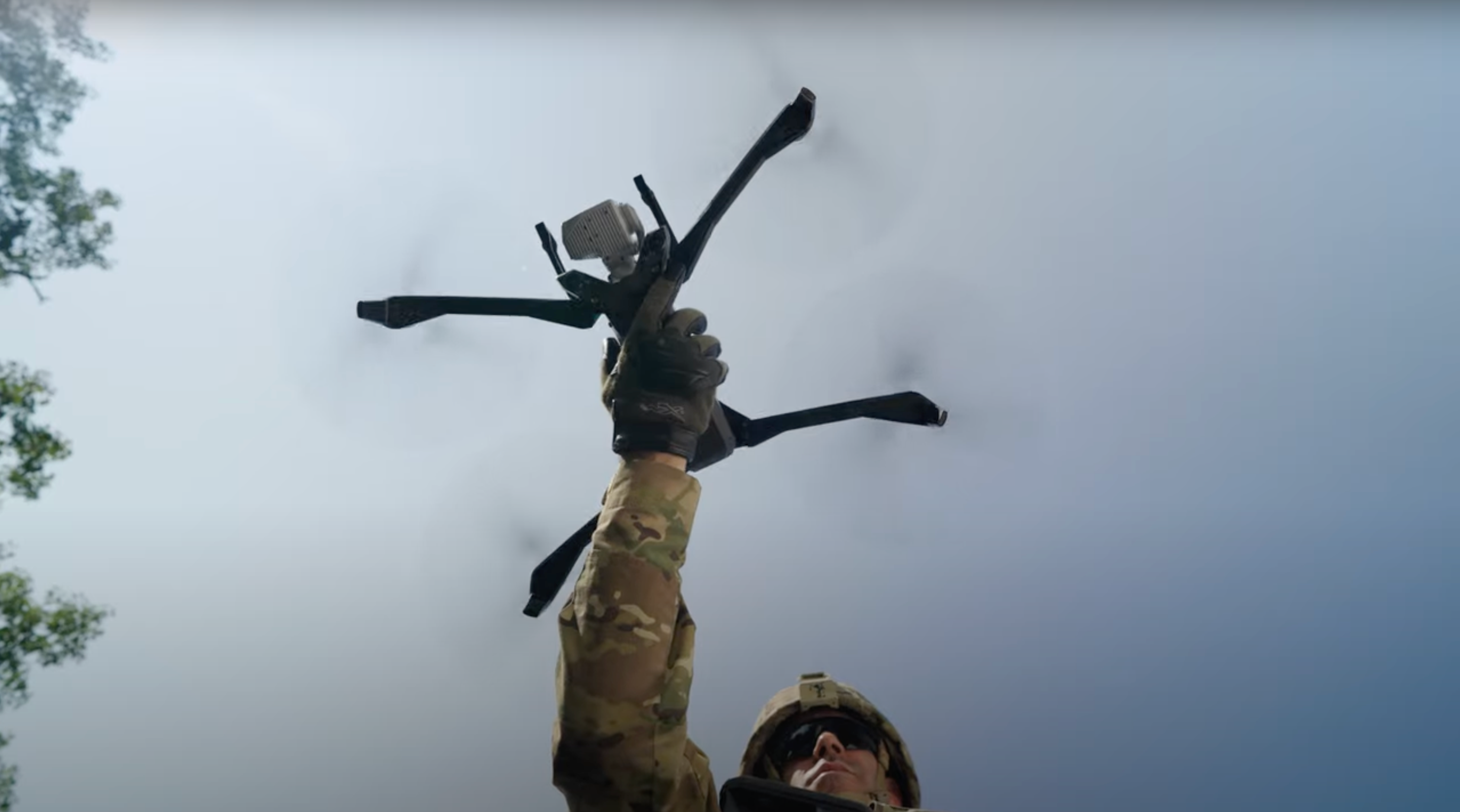
Saving Lives with Skydio: Real-World Drone as First Responder Stories
Skydio CEO Adam Bry takes viewers on a deep dive into Drone as First Responder (DFR), revealing how Skydio’s autonomous drone systems are saving lives, cutting response times, and transforming public safety operations. Featuring powerful real-world stories from Wichita Police Department, Bernalillo, Pasco County Sheriff’s Office, San Francisco Police Department, and OKCPD, this session walks through how agencies deploy the Skydio X10 and Dock, how DFR Command works, and what it takes to scale drone response across a city. From mental health incidents to missing persons and felony arrests—this is the real impact of smarter, faster response from the air.
- I think we're on time here so we can, we can go ahead and get started.
- Uh, I really appreciate everybody being here
- this morning.
- Uh, the plan for this session is really just to go a
- level deeper on DFR than we were able to in the keynote
- yesterday. Um, so I'm excited to talk in a little bit
- more detail what the
- solution looks like, how it works, how we think about deployments, uh,
- and then I'm
- hoping that we'll have, have time at the end for just open forum
- Q&A. Um, I'm very interested to hear and answer all the questions that,
- that might
- be on everybody's mind. Uh, but I wanted to start with
- really what matters most, which is what is the solution doing in the
- field? What kind of impact is it having?
- Uh, and I'm excited to look out and see a lot of familiar faces, uh,
- folks who are
- already customers of ours. Uh, and we've got three customers here who
- have, who have volunteered to, to share just examples of what
- drones and D- DFR are doing, uh, in their communities and, and that's
- where we're gonna start. So we'll start off with, uh,
- with Sheriff Allen
- from Bernalillo County and, uh,
- play your video here.
- Play it?
- Yeah.
- So what we're seeing here is a seven and a nine-year-old that
- is armed with a live
- firearm, and our DFR drone, what we've been doing is using intel, uh,
- for
- our deputies so they don't have a deadly force situation.
- But as we're going through the video, you'll see a 40 millimeter launcher go
- right
- in between the seven and nine-year-old, uh, to distract them.
- The kid was trying to fire. The firearm was not going off,
- so imagine if you
- had to shoot or kill a seven or nine-year-old or in a, in a nine...
- in the line of duty. So
- deputies are waiting here as they're narrating.
- We had 53 calls for service at this residence.
- When these two kids are together, uh, they're pretty much, uh,
- all hell on earth,
- as you can see. Uh, their father, um, is a longtime
- criminal, has taught them to use firearms, told them to shoot at our law
- enforcement officers. So we did not know what we were going in
- to that incident until our X10 went over that
- residence and started leaving...
- feeding live intel to a cell phone that you can download.
- You can see thermal. You can see any type of view
- and angle that you want before
- you make a tactical decision. Our deputies are really utilizing it.
- We talk about response times, uh, but it's about slowing the call down,
- and it's all about saving a life, and that's what the DFR program is already
- showing, it's already doing. You worry about deputy's buy-in,
- we already have it.
- Uh, we went from 15 to 20 activations a month.
- Now we're going on 30 plus. So now everybody is asking for a drone.
- Of course, you have to be careful with that.
- Adam will, uh, will talk about it later.
- But as you can see, just with that video, this is just one of many videos
- we've had in Bernalillo County with the juvenile issues that we're seeing,
- just not
- in our county, but all over the nation.
- Uh, what we can do to slow down a call and save a life, and it's behavior health
- calls. Everyone talks about tactical and SWAT. We use that all the time.
- Uh, but behavioral health calls, regular calls for service, get in a drone.
- If you... A lot of you are short on the manpower that you have,
- uh, this is a
- supplementation. This is a force multiplier.
- So we're never gonna replace people, but it can also always do more with less,
- and that's where we're going with the program.
- That's great. Just, just to put a finer point on there, so,
- like, you...
- What did the officers know without the drone there?
- Like, they, they knew that somebody was in the backyard firing a gun.
- Like, and what, you know, what was...
- What do you think the response would've been with and without the, the drone?
- Uh, just a little history. There was 53 calls for service in relation to
- this
- residence, whether it was an armed subject,
- behavior health calls.
- The mom has a lot of issues, domestic violence calls.
- Uh, the call that was coming in was there was two children that
- are very young of
- age. One might have an, uh, possibly a firearm,
- so you just don't know.
- And it's in the backyard, as you can see.
- So our deputies deployed the drone, and sure enough, you see, uh, the
- nine-year-old that, that you saw pointing a firearm directly
- at our deputies pulled
- the trigger. The firearm malfunctioned, so deputies backed off, made
- more of a perimeter, and we were really able to slow things down,
- give commands to
- the kids. Remember, they're seven and nine-year-olds.
- You can see in the video how they're reacting.
- So we wanted to distract them, and the, the deputies really did a good job in
- thinking outside of the box, using a 40 millimeter launcher just to
- distract them. The drone was able to get closer.
- At the end of the video, which wasn't shown,
- the kid finally went around the
- other side, and deputies flew in, and one just grabbed him and,
- and threw the kid
- and got the gun away from him. Um, earlier, as you can see, as is planned,
- he actually... The kid in the red shirt actually tries to
- hand the firearm off,
- uh, to the, uh, the other child who's seven years old.
- So these kids,
- you know, they're being raised in a, a life of crime already,
- so you can see what
- they're doing are not afraid of, afraid to use a firearm against law
- enforcement.
- Wow. That's really powerful. Thank you for share- sharing.
- No, absolutely.
- Yeah.
- All right. We can, uh,
- roll on here.
- See if I can...
- So we've got Deputy Chief Paul from, from Wichita.
- Hi.
- Roll the video.
- So we've been using drones for a couple of years now, and one of the things that we
- just started to do was actually putting it on our website
- and showing the public
- exactly what we're doing and how we're doing it. So this
- was a suicidal person.
- Uh, we originally, officers got out with a check welfare.
- He is on the top floor, so when he was threatening with his gun, getting
- outside, uh, going inside and outside of the apartment, uh, he,
- he was
- at the elevated position. So our officers could not get a tactical
- advantage.
- Uh, they were putting themselves in danger
- if they were getting close to him, and
- they couldn't get anywhere close to him safely to be able to communicate with him.
- They tried the loud hail, uh, talking to him, and it didn't work.
- So what our, one of our drone officers did, got up,
- got the speaker on, be
- able to talk to him, tell him, talk him down, basically say,
- "You're not going to
- jail. We just want to get you the help
- that you need," and started to talk to him
- and basically saying, "Please get to the phone."
- And so the drone was able to tell
- him to get to the phone so our crisis negotiators could then talk to him,
- tell him to put the phone... uh, to put his phone up, basically, and
- put the gun down. And then we were able to take him outside
- and take him to
- hospital. So it was just an excellent way
- that our supervisors and our officers are
- thinking of different ways to utilize the drone and not just kind of chase people,
- which we've been notoriously doing very well.
- But it's, it's an evolution of how the drone
- is working for us in the field, and
- it's been a fantastic tool in saving lives.
- So ju- just to double click on that, you were actually using the speaker on the
- drone to communicate with the suspect.
- So like-
- That is correct.
- Yeah.
- That was the only way we could safely get him-
- Mm-hmm
- ... to tell him to get to the phone in order
- to try and talk him out and, uh...
- 'Cause officers were there. The other...
- Without that, we would've had to go inside
- and obviously get closer to him, and he
- had the firearm, and he was threatening to kill himself. So...
- Right.
- Dangerous situation.
- Yeah. That's great.
- Yeah.
- Thank you for sharing.
- Thank you
- Captain Andy Denbo from, uh, Pasco County.
- Play the video here.
- So real briefly, this one's kind of interesting. This
- is a missing kid.
- So a lot of times we think about crimes in progress and stuff like this.
- In this particular instance, we had a kid who basically wrote, like,
- a suicide
- note. He was, uh, off in the woods. He was going to go off and do his thing.
- Uh, we had probably 40 or so deputies looking for this kid over a
- period of, I don't know, two or three hours.
- Uh, we had searched the woods. It ended up he had staged his own suicide
- to try to
- run away with somebody. But we get a ping result basically saying
- where he's at.
- And...
- Best part of the video missed there.
- Uh, basically what we're able to do is we send our DFR drone.
- It's one of our first applications of it, uh, actually.
- Should we back up?
- Yeah, if you can. It's nothing too crazy.
- But basically, uh, you can see from that flight, uh, the
- best response a deputy could have given in that, lights and sirens, like 10, 15
- minutes. I think we were on scene in, like, two minutes with this.
- So we were able to get to that ping location,
- drop down to a lower altitude, and we
- were actually able to see the kid hanging out there with this woman, which without
- getting into the investigation side of it, we weren't really sure why he sh- why
- she was there. But, uh, we were able to get enough altitude down low,
- you know,
- kind of like we talked about yesterday at that presentation.
- We had some neighboring apartment buildings, but no problem at all with the
- obstacle avoidance. We dropped down, we got a visual on the kid,
- and we kind of,
- uh, you transitions here to the body camera.
- You can see the deputy.
- We were able to talk him over the radio, basically get him right to where he needed
- to be, and, uh, successful resolution, no problem at all.
- Uh, prior to this, it would've been 10, 15 minutes of us trying to respond through
- traffic to get to this ping location.
- And, you know, sometimes people move, as anybody who's tracked phones before
- knows.
- So it's just very helpful to be able to get on scene, bypass all that traffic,
- and,
- and get down and see what was going on.
- And you have, I'm assuming, real-time communication between the DFR
- operator and
- the responding officers? Like they're-
- Yes
- ... they're talking the whole time?
- Yeah, yeah. The, this doesn't have audio.
- A lot of it, uh, Florida's redaction laws
- are kind of tough on this stuff.
- But, but yeah, the whole time if you were to hear it, what you would hear is
- basically us saying, "Hey, third floor, go up, turn left, go right," stuff like
- that, so.
- Right. Yeah. That's one of the... I mean, we kind of hear this pattern over and
- over again, is that
- once officers respond with DFR, when they don't have it,
- they feel like they're
- kind of going in blind, right? Because they don't, you know,
- it's sort of like the
- superpower of seeing around the corner, seeing in the backyard, whatever it is.
- Right. Right.
- Yeah.
- Yeah. No, the, the big point for us is just we,
- we're stretched on deputies like,
- you know, the, uh, as most agencies are.
- Uh, and, you know, if we're able to get there
- and kind of hold something down
- before the deputy gets there... 'Cause it's, it's a weird,
- it's a paradigm shift.
- Normally you think, "Oh, the cop's got to be there to do
- something." But in this
- case, we had pretty good visuals. We could have kept an eye on him wherever
- he went
- until they got there. And, uh, with the amount of resources this
- particular call
- was draining, it's not uncommon for us to have 20, 30,
- 40 cops sitting on these
- missing kids. They happen all day long and every day. And it's just nice now.
- We, we didn't really anticipate going after
- cell phone pings or things like that.
- We were thinking, you know, flock cameras and stuff like that.
- But this is, this is just another-
- Yeah
- ... use case.
- That's great.
- Yep. Thank you.
- All right. Thanks for sharing. [clears throat]
- All right. Our projector's a little bit flaky here,
- so it's selectively omitting
- things. But I'm gonna, I'm gonna show a, a couple of, uh, additional stories.
- Unfortunately, we don't have the, the,
- uh, customers here to speak to these
- themselves, but, um, these are other examples
- of things that we've, we've seen in the DFR
- realm.
- Um,
- so
- this first one was from San Francisco PD.
- Uh, and this was a, a ALPR hit. So there was a stolen vehicle.
- Uh, they launched the drone to, to go out to the, uh...
- Projector, and now we've got internet issues.
- Um,
- so they got an ALPR hit. They launched the drone.
- Uh, the operators in, in San Francisco are phenomenal, so they do a lot of
- predictions themselves. Like, based on where the hit is, they,
- they know where the
- car is likely going. Um, so they, they went out
- and found the vehicle. Um, I'm gonna skip around here a little bit,
- but basically,
- now they're tracking this stolen vehicle around the city.
- So this guy has no idea that he's being surveilled.
- The drone's flying at 200 feet.
- 200 feet in a city, you'll never hear this thing.
- So he's putting some gas in his stolen car. Oops.
- So
- he's got a stolen car. Any, any guesses as to what's gonna happen now?
- Yeah. So they, they obviously knew that this happened all the time.
- People stole plates and, and put them on the stolen vehicle,
- but they said they'd
- never actually
- got evidence of somebody stealing a plate like this.
- But with the drone perspective, they get it.
- Uh,
- so the, the next logical step.
- So he, he very conveniently holds it up so you
- can read the plate from the drone,
- which is [laughing] bummer. Uh, I mentioned this yesterday in the
- keynote. When I see these videos, it's like it's,
- it's a terrible time to be a
- criminal. Like, this guy just has no idea, right? He's...
- But he's screwed.
- Um,
- so
- the next one was a surprise to me. Any, any guesses as to what's gonna happen now?
- Get a vibe. [laughing] Yeah.
- Uh,
- yeah. What's he holding?
- Somebody's gonna guess it.
- Window tint. Window tint, yeah. [clears throat] So,
- uh, and it's worth it. So this, this transpired over about 90 minutes, so
- this was multiple drone flights. These were all DFR based, but they
- were launching
- and cycling through multiple drones.
- Um, so he's just finishing up his beautiful
- tint job on his stolen
- vehicle. And this is bad news, right?
- Like, the only reason why you do this, why you steal a car, put on new plates,
- tint
- the windows, is because you're going to go off
- and do some bad stuff.
- Um, but the officers here just have total
- advantage because they know exactly
- where he is. They know exactly what he's doing.
- He went down a dead-end street.
- Uh, and so they, they pick this moment to intervene.
- So they, they have a plainclothes off-officer.
- You'll see the narrow here in a second.
- Uh, so the plainclothes officer rolls the
- spike strips.
- Yeah.
- Um,
- the... This is actually not a police vehicle.
- This was just a moving van.
- [audience laughing] Uh,
- ba-ba-bad luck. Yeah. Um, and the other...
- So the other piece of this, um, Captain Denbo mentioned this, but, uh,
- the... It's easy to live stream this data to
- anybody that needs it.
- So we have a feature called Ready Link.
- Um, so the officers who are on the ground
- are watching a live stream from the drone
- footage. So he gets out of there, but they're still following him.
- Uh, they still know exactly where he is.
- He obviously can't go far with the, uh, with the spiked tires.
- Uh, and as soon as he pulls over, they're right there, uh, and they
- take him into custody, and they've got a bunch of evidence now,
- irrefutable vis-
- video evidence of, uh, of all the crimes
- that have been committed.
- Yeah. Uh, and th-this was a super recent one, so,
- uh, OKC, uh, is one of our, our early beta
- customers. Um, so this is one where
- a train operator reported that they were afraid they might have hit
- somebody. They weren't sure. Um, this is a freight train.
- It takes a long time for trains to stop, obviously.
- Uh, so they, they launched the drone, [lip smack] um, and
- very quickly... And this is up on a bridge.
- This would be very difficult, dangerous for somebody to access.
- Uh, they can fly the drone up and down the train, uh,
- and unfortunately, they, the, the train had in fact hit somebody.
- There was a homeless person they think who was sleeping on the tracks.
- Uh, and they located him with the, the drone.
- Um, it's heavily blurred out here. He was severely injured.
- He was bleeding out, but they were likely able to save his life with the
- drone
- because they located him very quickly.
- The responding, uh, fire department got there, uh, took him to
- the hospital, um, and, you know, the, the drone likely shaved
- minutes,
- uh, if not more, off of the time it took to,
- to find him here.
- So,
- uh,
- you know, stories like this are becoming really a, a daily
- occurrence. Um, and the fundamental...
- I think the fundamental underlying principle is, is really just
- that having better
- information changes outcomes, and DFR drones are an incredibly
- powerful tool to get really good information really quickly
- when you need it
- most. [lip smack] So that's kind of where we are
- now. I want to take a s-little bit of a step
- back and talk about how we, we got
- here. Um, DFR, uh, has been around for years now,
- and, you know, some folks here are probably familiar with this, uh,
- but there's
- this really impressive, interesting legacy where really one
- pioneering
- organization in, uh, in Chula Vista and then a handful of others,
- uh, figured out the impact that you could have by getting drones on
- scene quickly,
- uh, and stood up these programs. Now, they were based on patching together a
- bunch of different pieces of technology.
- So there were people up on rooftops flying drones manually.
- Uh, you know, there were a bunch of different pieces of
- software that needed to be
- stitched together, so it was not fundamentally a scalable
- operation.
- I had the opportunity to see this personally in 2019, and
- once you see it, you kind of just can't unsee it.
- I mean, the power and the impact is just so obvious.
- Uh, and ever since then, it's really been our product North Star as
- a
- company is like, how can we turn this into a scalable,
- reliable thing that
- everybody across the country, eventually everybody around the world can
- take
- advantage of? And we're at the point now where it
- is very real.
- It's been a long journey to get here, uh, but we've got the dock, the drone,
- DFR Command, uh, and then also super important, I think
- easy to underappreciate, are the services and the integrations it
- takes to make this stuff, uh, actually useful.
- So
- we talked about, uh, this yesterday, but I think, I think it's worth
- reiterating that, like, the bedrock thing necessary to make DFR
- work is reliability. Like, the more available it is, the more
- impactful it's going to be. And making a system that can work and be
- trusted in all the different kinds of real world conditions you're going to
- encounter, uh, is extremely challenging.
- This is-- has been and continues to be
- our number one focus, uh, as a company.
- We've invested millions of dollars of R&D in building all of this stuff up.
- Uh, and frankly, we're still not perfect.
- I think we're quite good, and we continue to get better, uh,
- but it's just a really
- hard set of challenges. Uh, and I like using these
- analogies. It's, it's not necessarily intuitive,
- but building these really
- good, reliable, autonomous flying systems
- is much closer to building a self-driving
- car or rocket ship, uh, than most folks realize.
- Um, and,
- uh, you know, you can look back through the history of
- the drone industry and see
- examples of others trying. So, uh, we actually are building in San
- Mateo, California, where we're based, uh, is GoPro's old building.
- So, uh, you know, GoPro's a great company.
- They make these really amazing action cameras.
- In 2013, 2014, they decided they were going to try to make a drone
- because I'm guessing all their customers were telling them like, "Hey, we love your
- cameras. We'd love to have a, a GoPro drone." Uh, it did not go well.
- You know, three years later, they shut the whole thing down.
- They spent a couple hundred million bucks on it, and in many ways, it, it kind of
- tanked the company. Sony, another great company, they make cameras,
- a natural
- thing for them to try to make a drone.
- Uh, they also, uh, struggled and, and ultimately shut the whole thing down.
- It's not in the camera space, but how many people remember, uh,
- Amazon announcing drone delivery in 2013 on 60 Minutes?
- Raise your hand, like we saw that. How many people have had a package
- delivered by
- an Amazon drone?
- No one, right? [chuckles] This
- is-- And, you know, Amazon's a great, great company.
- They have basically unlimited resources.
- They've probably spent billions of dollars on this.
- Uh, you know, I think drone delivery will happen
- someday, [lip smack] um,
- but, uh, this stuff is, is challenging.
- And I, I, you know, bring all this as maybe, like,
- hypothetically, if there's a
- company that makes ALPR that's talking about building their own drone system,
- uh, you know, we've We respect the competition.
- I think it's healthy to have other companies investing, uh, in
- particular in building these things in the US, uh, but it's just a very different
- kind of product. Um, and it's a much longer journey than most
- folks realize, uh, to make this stuff reality.
- So,
- with that said, I, I wanna talk about...
- You know, there's a lot of different dimensions to
- this.
- I want to talk about, in a little bit more detail,
- two key aspects, uh, that we
- think make X10 uniquely suited to deliver the kind of outcomes
- that you can get in DFR. Uh, so, uh, one is the
- connectivity, and the second is the autonomy system.
- So on the connectivity front,
- historically, all drones have been based on
- point-to-point radios
- where you hold the controller, it's got a radio in it, it talks to the
- drone.
- These things typically advertise like 10, 15 ...
- Excuse me, 10, 15-kilometer range.
- And if you're flying in a wide-open, uh,
- you know, rural area, you will, you will probably get that.
- In practice, in most real world environments,
- especially in cities, the range is
- much shorter than that because you've got other sources of
- interference and things
- get in the way. Uh, and then additionally, you run into all these line of
- sight limitations where the radio can't penetrate a building or a
- hill or anything that gets in the way.
- Now, in the manually flown world, that doesn't matter so much, uh,
- because you're probably not gonna fly beyond where the pilot can see it anyways.
- And so there's kind of this natural pairing.
- Like, the point-to-point radio makes a lot of
- sense in the
- manually flown drone world. Uh, but in the beyond
- visual line of sight DFR autonomous world, it makes much less sense.
- And one of the, the architectural bets that we made
- that I think is really paying
- off is building two radios into the X10.
- So it's got a point-to-point radio. We call that Connect SL.
- Uh, and in the dock context, we mount these radios typically next to
- the dock. So it's in a separate thing. It's called an external radio.
- You can mount it at an elevated location such that it has the best possible
- line of sight, but it's still not going to be perfect.
- Uh, and it's still not going to have unlimited
- range.
- The second radio that we've built in is a 5G modem that can connect to the
- local
- cell towers. And the combination of the two, uh,
- is really quite
- powerful. So we're now at the point where we've got
- real data to show this.
- The maps on the left are connectivity maps.
- So basically green is good, red is bad.
- Uh, the one on the far left is the point-to-point radio, Connect SL.
- And so you can see it's quite good close to the radio. It's not perfect.
- There's probably a couple of, of blind spots that are blocked.
- Uh, and then the one right next to it is Connect 5G. So this
- is the strength of 5G.
- So 5G isn't really dependent on range, but still cities have good spots and bad
- spots for 5G coverage. With Connect Fusion, you get the best
- of both worlds. So Connect Fusion is pushing data over both
- links. It's using whichever one is healthiest to strongest.
- It can use both at the same time.
- Uh, and you can see this in the percentage of
- time
- that you get high-quality video. So now we're looking at what percentage of
- the
- time when you're flying are you getting really good 1080p quality
- video, two megabits per second or better.
- Uh, and you can see with each of them
- individually, Connect SL and Connect 5G, you
- know, you're somewhere 75, 70, 75%.
- With both of them together, it's, uh, it's 95% plus, and this
- continues to improve. So we're really investing deeply in this
- multiple redundant radio systems, uh, to, to
- just get you the best chance of having the best connection in any sort of,
- of environment.
- The second, uh, really critical enabling ingredient,
- which again is
- technically challenging, uh, but, but I think
- key to providing the kind of versatility that you need is the visual navigation
- system. So historically, most drones fly based on GPS, which
- is great.
- If you're flying super high, wide open sky, it works well.
- Skydio drones have GPS, but they navigate natively based on
- vision.
- So what you're seeing on the right is how the drone sees the world.
- It looks out, it's got these navigation cameras,
- and each of those little green,
- uh, squiggles is it locking on to a feature in
- the environment and tracking it
- over time. And then on the left, you can see the three-dimensional map
- that it's
- creating. So each of those little points
- that it's tracking essentially becomes
- like a navigation beacon. And this is actually quite intuitive.
- Humans do this.
- Like, when you're walking around, you, you see how the environment's moving
- around
- you, and that tells you how you're moving. So that's what the, the drone is doing.
- And what that means is that it can fly safely, it can fly stably,
- uh, really
- anywhere. You know, when we flew into the parking garage
- yesterday in the demo,
- that was all flying based on the visual navigation system.
- Uh, so, you know, if you fly under the tree canopy,
- if you fly under something,
- that's going to rely on the visual navigation system.
- But even if you fly next to a tall building, uh, you know, the, the
- buildings will, will mess with GPS. It becomes unreliable.
- We've seen a lot of customers have crashes with, with other drone systems
- flying in the urban canyon, uh, that, that just don't happen when you're, when
- you're navigating visually. And of course, the vision system also gives you the,
- the real-time 3D understanding of the world around you, which gives you the
- confidence to fly wherever you need to fly.
- Even in-- when you're operating remotely, you can do it, uh, at
- night with, with Night Sense, which has been another major technology
- investment.
- Um, so these two things together, uh, Connect Fusion and the
- intelligent visual navigation, uh, are, are really, at least for right
- now, only available on, on Skydio systems.
- And I think they're one of the reasons, uh,
- why we're seeing such great success out
- there with customers. This is another example from SFPD, but this
- was a car
- chase where they're basically playing slalom with skyscrapers, right?
- And this is the kind of thing you'd be crazy to do, uh, with any other system.
- But here it's, it's quite seamless and easy.
- You can just go wherever the, the mission demands.
- Um, Pathfinder is kind of the next step on top
- of this, which
- brings automation to flying through challenging environments.
- So the way this works is we ingest all the building
- and terrain data
- for your city, um, and we use that to pre-plan
- intelligent routes. Um, so showed this yesterday,
- but I think it's worth-
- Watching again, this is real world flights where we just said,
- you know, we want to
- go to this location, um, and we're respect-
- respecting all the airspace regulations.
- So here I th- I think we're probably flying at two
- hundred feet, uh, which, which
- makes it much easier to get FAA permission for beyond visual line of sight flying,
- and the drone is autonomously pre-planning its route.
- And this, you know, I think over time, is going to become a really important
- force
- multiplier, where one, one operator can manage
- and dispatch multiple
- drones with a very high level of automation because you can just tell them
- where
- you want them to go, and they'll get there safely and,
- and quickly.
- So [clears throat] what this sets up is what I really think of as,
- as two competing architectures, uh,
- to, to do DFR. One is you take sort of
- a bigger, frankly dumber, uh, drone that's designed to be flown
- manually, and if you're going to have something
- that's less intelligent, your only
- option is to fly it at very high altitude, and then you also must
- have a radar to clear the airspace, uh, and,
- and, and ensure that you're not going to
- conflict with, with manned air
- traffic. The alternative, which is much harder, uh,
- but, but I think is a fundamentally better
- solution, is to have a smaller,
- lighter, smarter drone flying at lower altitude,
- uh, that can get you
- more vantage points, uh, and, and is fundamentally sort of more flexible
- and, and capable,
- uh,
- but, uh, you know, requires sort of a, a more solid
- technology foundation to deliver.
- So
- it is worth really focusing on because, you know, this is one of the, the dynamics
- in the market. Um,
- the-- With the Skydio system in partnership with
- Axon, you have the
- ability to fly at any altitude you need.
- Um, so the regulatory pathways to flying below
- two hundred feet
- tend to be lower friction, uh, because you don't need a radar to clear
- the
- airspace, and that waiver path is, is, uh, more
- trod. But with DedroneBeyond, which is a great radar system
- to monitor the airspace, you can fly all the way up to four hundred
- feet.
- Uh, and we have a number of customers that we know for various reasons want to
- fly
- at higher altitude. Uh, and with X10, you can basically
- do it all.
- So,
- uh, one of the historical friction points, there's a bunch of enabling
- technologies to make DFR a reality.
- One of the real historical friction points has been, uh,
- the regulatory barrier. You know, when I start...
- I have kind of a long-term view on this.
- Like, when I started working in drones, uh, fourteen years
- ago, people were afraid the FAA was just going to shut the whole thing
- down.
- There wa- wasn't going to be any, any professional use of drones.
- I've always had kind of an optimistic outlook on this.
- I think that, uh, you know, my view is that a lot of, a lot of
- not great drone companies have blamed the regulations for why they couldn't do X,
- Y, Z thing. The reality is, as the technology has matured,
- the FAA has been
- pretty reasonable, and really over the last year in
- particular, we're seeing this
- beyond visual line of sight barrier just completely fall over, and you can see it
- in the numbers. I mean, we've gotten more and more approvals.
- I think we now have a thousand plus customer sites, uh, where we can do beyond
- visual line of sight operations. Uh, and, and in
- particular in public safety, we're seeing this just rapidly accelerate.
- So NYPD, uh, which is some of the most complex airspace in
- the
- world, was the first one that we worked with
- that really got out of the gate with
- this no visual observer, meaning you don't need to have a person on
- the rooftop to
- monitor the airspace, uh, beyond visual line of sight flying.
- They, they love their acronyms, but the key is like no VO BVLOS is the
- big unlock for, um, for DFR. Um,
- and I had our team put this together because I think the,
- the data's quite telling.
- So this is looking... On the Y-axis, we're looking at the number of days it
- took to
- get an approval for no visual observer beyond visual line of sight flying.
- Uh, and then the X-axis is when those approvals were issued.
- And so you can see the first few waivers took a long time, uh, over a year
- of close collaboration with the FAA, but the floodgates are just opening now.
- And, you know, we're getting these things sometimes in a,
- in a matter of days.
- Um, so, you know, historically, this was one of the reasons, uh, to not do
- DFR, but I think that that is, is essentially just gone.
- So the other thing that's out there in terms of different kind of competing
- solutions, uh, you, you know, you might have heard this
- concept of battery swapping, which I think is extremely challenged from
- a
- reliability perspective because you go from having two moving parts to having a
- couple hundred. Uh, but even taking that aside, the, the
- mindset for battery swapping, I would say, is more driven by a land area
- model of DFR. And this is, you know, it's not a crazy way of thinking about
- it when you're first starting out of like, all right, a given drone has a given
- flight range, and so if I want to provide DFR for my city
- or for
- my county, I'm going to draw circles and figure out how many drones I
- need to cover, uh, cover and, and do DFR.
- But the reality is, as you just go one layer deeper, is
- that these things are
- really driven by incident volume.
- You know, like when you think about staffing for a
- city or a county, like how much
- of the staffing is driven by area versus population and incident
- volume? I mean, it's like, it's almost all, uh, population
- and incident
- volume. And the, the architecture that we've,
- we've really decided on is rather than having like a single
- drone to cover area, in almost all cases, you need multiple.
- And if you're going to have multiple anyways,
- it makes more sense for them to be
- charging, have simpler, less expensive systems
- that give you this surge
- capacity. So if you have three drones on a rooftop
- rather than one,
- that means if three calls come in at one moment in time, which can definitely
- happen, you've got the capacity to respond in
- multiple places.
- And it also means if you need to do on-station relief, like if you've--
- you know,
- the SFPD example that we looked at lasted ninety minutes,
- you've got the capacity to do that. You can cycle multiple drones through.
- You don't have to fly back, have downtime to swap a battery, and then,
- and then
- fly back out. Uh, and so we, you know, over the last year, we've been asked this
- question a ton of times of like, "How many do I need?
- Where am I going to put them?" We, we tend to be quite data-centric in how we
- think
- about this stuff. So this question actually led us to
- develop, uh, a
- DFR deployment modeling engine. And so the way this works, uh, it's
- very data-driven. We ingest historical call for service data
- and call for service
- data quite broadly. I mean, really, we're looking at, like, everything that's
- flowing into CAD. So it could be calls for service,
- could be ShotSpotter, could be
- LPR hits. Uh, we look at the local airspace.
- We know the parameters for our own vehicle.
- Uh, and all of this gets fed into a simulation
- where-- which really looks
- over the course of the data. Let's say we get a year's worth of data.
- We're basically simulating minute by minute over the course of that year.
- If a call comes in at a particular location, where's the optimal place to
- have a drone to respond to it? Uh, how many drones are we gonna need to
- handle the volume over the course of minutes, hours and days?
- And the outputs it generates look like this.
- So this is an example from, from Amarillo.
- So, uh, Amarillo I think gets about a hundred
- thousand calls for
- service
- per year.
- Most of our customers, we say initially we're going to focus on
- the P0s, P1s, maybe
- P2s. So we cut down to the highest priority
- calls, uh, and then we
- simulate over the course of the year
- and get outputs that look like this.
- So each of those red dots is, uh, is a
- hive location. The number is the recommended number of docks
- that you
- put in that hive location to serve the call volume that you get in
- the, those areas. And so what you'll see is
- that you get more density, more docks
- in the higher call volume areas, less density in the more sparse areas.
- Uh, and then this really also helps quantify
- the impact.
- So the right plot here is looking at response times.
- The X-axis is the number of seconds it takes to get to the call, and then the,
- the Y-axis is what percentage of calls we get to how quickly.
- Uh, and so this is showing that we're getting to ninety percent of
- calls in two
- minutes or less. Uh, we're getting to, to fifty percent of them
- in, in less than a minute. Um, and this is-- these are sliding
- scales. You know, the, the more of these you have in more
- locations, the more this
- curve is going to shift to the left.
- But already being able to get to ninety percent of your calls in, in two
- minutes is, is really, uh, pretty transformational compared to, like,
- sending officers on the ground. So this is something where if you're, if you're
- interested in DFR, um, this is, this is part of our kind of
- scoping process where if you're willing to share your call for
- service data,
- uh, we can run the simulation and, and start to make trade-offs and
- statements. And, you know, I always say this is, this
- is preliminary stuff, like
- the actual fine details of exactly where we're going to place docks.
- There's a lot of local insight that you're going to have
- that we're not going to
- have that, that shapes the, the kind of detailed decisions.
- Uh, but this is sort of a way to, to start to get a handle on things and,
- and what
- the trade-offs might look like.
- So a-another, uh, I think,
- quite powerful aspect of, of the DFR solution
- is this interoperability between patrol and, and,
- uh, and dock launch. I talked about this a little bit
- yesterday, but I think
- it's worth double-clicking on because we've seen so many people do this and take
- advantage of it. So the, the roof-based dock
- DFR is great. It's fully automated.
- You click a button, you send a drone.
- Uh, but we still have officers on the ground
- that are doing all kinds of important,
- useful work. Patrol-based drones are not going away.
- Uh, and with X10, you can do both. So you can launch a drone
- from a patrol car. So an officer just, you know, conventional manual operation.
- You take the drone out, you turn it on, you fly it manually from the control
- sticks. But at any moment, somebody in the real-time crime center,
- DFR command center, can take over that drone. It's called commandeering.
- So they can see the live stream, take control of it, take control of it,
- and that
- frees the officer on the scene to do anything else they need to do.
- If they get involved in a pursuit, if they need to go hands-on, uh,
- if they just
- need to go and serve another incident, um, they can do that.
- And you can also just use them as DFR launch points.
- So even if the officer in a particular location isn't responding to
- the call that you want to respond to, if they're close to it,
- all they have to do
- is pull over, turn on the drone, put it on the ground,
- and then somebody can
- take it off and fly remotely. And this means that basically every patrol
- car with a
- drone in it becomes a DFR launch point.
- It's basically like you've got built-in mobile DFR.
- And so if you're-- especially if you're early in deploying DFR,
- you're not exactly
- sure where to put docks, this is a really powerful way to,
- to augment it.
- And for counties that have large service areas where you're
- probably not going to
- be able to cover the, the entire county with, uh, with docks,
- this is another
- way to, to basically get built-in coverage.
- So
- DFR command is the software. It's really designed to be kind of the
- ultimate end-to-end, uh, everything you need to, to fly and operate
- drones.
- Uh, one of the, the key elements of this
- is augmented reality
- overlays. So you can see streets, you can see street addresses.
- You have all the context you need to figure out exactly what you're looking at
- to,
- to give officers on the ground appropriate guidance.
- And this is something you'll see us continually invest in.
- So right now it shows streets, street addresses,
- can also show call for service
- locations as these pillars. Um, every Axon device that
- has telemetry associated with it can be rendered here.
- Um, and one of the ways that I think about conceptually at the,
- at the kind of high
- level is DFR is a little bit like playing a video game, and they're kind of like
- merging this, the physical and the, and the digital worlds
- to, to give the people flying all the context
- they need.
- We, we tend to think about DFR command as
- these three phases, so
- ready, respond, resolve. Respond is the most exciting.
- This is what we tend to demo. So this is when you're actually flying the drone.
- You get the augmented reality overlays, all the kind of flight features.
- That piece is critical, but, but ready and resolve, easy to overlook,
- equally as important. So in the ready phase, this is where we
- focus on, you know, making sure that we have airspace awareness,
- we have all the
- right data flowing in. Uh, and then in the resolve phase,
- you get the data
- flowing out to, to The Axon systems that you're, you're likely
- already using. But we're also building features like the
- community transparency
- dashboard, where you can... It's up, up to you, it's under your control.
- But if you want to publish your flight so that people in your community can see
- that, you know, you're not spying on them in your
- backyard, you're actually, uh,
- saving people and, and, and finding criminals, you can do that.
- Uh, and I think that community engagement
- piece is, is a really critical
- element of, of community acceptance.
- So that's kind of a look at how we think about it.
- You know, end-to-end DFR solution integrated with
- Axon, no holes left
- for you to fill, uh, and there's a bunch of technology,
- there's a bunch of features
- under the hood. The goal is really to build something that,
- that just works, that
- you can count on.
- So I'll, I'll end with, uh, before we get to questions,
- a little bit of a, a
- broader perspective on just drones in general.
- So
- I kind of think that we've been through these three phases in the history of
- drones. So the drones that we use today really have their
- heritage in
- toys. Like, I grew up flying radio-controlled
- airplanes.
- Anybody else fly RC airplanes, RC?
- I saw a couple shy hands there. There's like two thousand people in the
- world that
- care, so it was like a very, very niche hobby.
- [laughing]
- Uh, but it was super fun. Um, so you know, these th- it was basically
- like pure recreation. Like, you fly these things around, it was fun,
- it was cool,
- uh, but the impact was, was almost nothing.
- I mean, you weren't, you weren't doing any, like,
- any useful work in the world.
- It turned out that if you put a camera on these things,
- you took them to work,
- there was a lot of useful work to be done.
- And I would say that that was kind of like the twenty tens era,
- maybe like the
- last ten years. Um, people realized that if you took these things that had toy
- heritage, you could do inspection and mapping with them,
- you could use them to get
- real-time situational awareness.
- They're still manually flown, but they were very, very useful tools.
- Um, when we think about where we are now, I think we're really entering this
- new era where drones are becoming more like infrastructure,
- where they're
- persistently connected, they're physically installed,
- they're continuously running
- in the background, they're doing useful work on our behalf.
- Uh, and this is really our goal as a company,
- is to enable this.
- I think, you know, it should be more like electricity
- or internet or having cloud
- servers running in the background doing useful work on our behalf.
- And it's obviously related to the technology that's come before,
- but there's a lot of new ingredients, uh, to make it work.
- It's more complex to deploy, uh, but when it's up and running, the
- impact and the scalability, I think, is going to be 10X what we've
- seen in the, in the, the tools era.
- Um, and one of the, the things that gets, gets me really excited is I think
- that DFR is really an entry point to drones becoming kind
- of more like city infrastructure, where you have this shared service that
- responds to nine one one calls, but can also be used by fire, building
- management. We're talking to more and more cities that have their own
- municipal
- energy grid that they run. Um, so we serve a number of energy utilities,
- and
- these same drones could be used when they're not responding to calls to
- inspect energy infrastructure, to respond and inspect around
- outages. Uh, and we've also found, I mean, it depends on the local dynamics
- sometimes, the, the local politics, but this vision of drones as city
- infrastructure is sometimes easier to get through city council,
- um, because it's not purely a law enforcement
- thing.
- It expands the budget opportunity to fund it, um, and it also
- can, can shift kind of the community
- perception, where it's not, it's not purely
- law enforcement, even though law enforcement might be the
- primary user, but there's
- a bunch of other benefits, uh, from, from deploying and using the technology.
- All right, so I said last thing. I'll just g-
- share some final thoughts 'cause, you
- know, we're, we're at this sort of takeoff moment for
- DFR becoming a reality.
- One of the things that, that we're finding is that, you know,
- there, there is a lot
- of work to be done to prepare and make this happen.
- So if you're interested in DFR, I just want to sort of plant the flags of
- things to
- be aware of. So one is the regulatory piece of it.
- This stuff is coming faster and faster.
- Uh, we have a great regulatory team.
- Um, they've really, I think, shaped the pathways to getting these BVLOS
- waivers.
- And if you're interested in DFR, this is something to start the conversation on
- sooner rather than later. If you want us to do it, we're happy to.
- Uh, we've got a great team, and we're, we're typically now just,
- just throwing this
- in, uh, for, for free as part of a initial DFR
- purchase.
- Um, the second is figuring out where you're
- going to put them.
- So we've got the simulator to help with this.
- Um, and, you know, large-scale citywide deployments,
- typically we're talking
- about dozens if not hundreds of, of docked drones.
- But I also want to emphasize that you don't need to start there.
- Like, you put one of these things in a hotspot,
- and you're going to have some real
- impo- impact. You put a hive, three of them, you're going to do great
- work. So it's, it's very scalable, and you don't need to start with a full
- citywide
- deployment. We have a lot of folks leaning in
- that direction, um, but you don't
- need to, to, to come out of the gate there.
- Uh, you know, then we get down to actual site selection.
- So we've got a team that will go around, help survey r- your rooftops with you,
- do, uh, wireless surveys to make sure that we're going to be able to get good
- connectivity, and then actually do the physical
- installation.
- And the last piece is staffing, and there's different models you can use
- here too.
- We see a lot of agencies using, uh, full-time officers.
- Some folks use light duty officers.
- You can also hire civilians to do the flying, or you can go with a hybrid model.
- Uh, we, we can use our simulator to predict
- staffing needs, so we can
- estimate, yeah, we think you're going to need one
- or two people, um, on
- duty at any given time to manage a given size fleet.
- So that's all part of the, the kind of deployment process.
- Uh, and it's, it's here. It's very real.
- So, um, this is, you know,
- all these dots by the end of the summer is where we expect to have
- active deployments, and we've got a big backlog behind that.
- So, uh, you know, I think we're, we're at the moment where this stuff is,
- is
- really taking off and, and scaling across the country.
- And with that, I would like to, uh, to pause and,
- and answer questions. I'm really happy to talk about anything
- that's on anybody's
- mind, anything about, you know, the tech or the challenges or potential
- friction points, um, whatever's useful for you all.
- Is, is there a way to turn off the
- point-to-point radio and just
- use, let's say, like a dual SIM instead?
- Gr- great question. So, um,
- you, you can certainly fly ... Like, you don't have to use the point-to-point
- radio
- if you don't want, and we have some customers that
- are flying cellular only.
- Uh,
- we are, um, we are working on the capability to have
- two
- active SIMs at the same time, so you could be active on like Verizon
- and AT&T
- and trade off between the two of them.
- That would still use the Connect Fusion framework.
- This is not something we've announced publicly.
- We expect to have that by the end of the year timeframe,
- where you can basically
- add an additional cellular modem on.
- Okay. Cool. Thank you.
- Yeah.
- Do you have any, uh, Canadian customers at this point
- or Canadian experience
- from Peel Police Service?
- Yeah, great que- ... So we, I think we have conversations going with,
- with, with
- Peel. Um, we don't have any active deployments in
- Canada.
- We're still working through the, uh,
- the compliance ... So drones, drones are like the most complex things in the
- world to take international because they basically touch every regulatory regime.
- They've got like wireless and safety and airspace.
- Uh, so Canada is, is at the top of our list of the places
- that we're
- gonna go next. We expect to be there, like, by the end of this year,
- uh, with the Dock system. We have Canadian customers with non-Dock
- drones, but
- with, with the Dock you need, uh, cellular and everything else.
- So it, it's on our shortlist. It's coming. It's not live yet today.
- Okay. And I have a second part to that.
- Just the 200 feet that you keep talking about flying at 200
- feet, that is not
- our experience. In Peel, we do not fly ...
- Like, we try to be as high as possible-
- Yeah
- ... for site, uh, line of sight, right?
- Right.
- If you're flying at 200 feet, your sight's gonna be limited for what you
- can see.
- And I'm, I'm sure the videos are great and everything, but at 400 feet it's,
- it's a
- much better view that you're gonna have.
- So can you just explain the difference between the two limitations there?
- Yeah, I guess what I would say is I think there's, like, there's no
- single viewpoint that I think solves everything.
- I mean, you, you saw in some of the examples we
- were looking at before, we were
- like looking under an awning. Like, that's just gonna be much easier to do at
- a low
- altitude. So the way that I think about it,
- I don't think there's, like, any single
- vantage point for that's the magic solution for any of this stuff.
- Our drones are more than capable of flying at high altitude.
- I mean, we have drones in Ukraine where they're
- flying at 2,000 feet because
- they're getting shot at by AK-47s on the ground, and even at 2,000 feet
- the cameras on the X10 are great and you can still see quite a bit of
- detail.
- I think 200 feet is, is appealing in, in many scenarios,
- uh, because it's faster. Like, you don't have to spend a bunch of time
- getting up
- to high altitude. You can just, like, get where you're going much,
- much more quickly. Um, and it's easier from a regulatory
- perspective,
- so the adoption cycle is faster. Uh, but there's nothing physically about our
- system that stops you from flying at 400 feet, uh, especially if you're ...
- you know, if you use the, the DedroneBeyond system.
- You can unlock the airspace at a higher altitude,
- and then you can just choose on a
- mission-by-mission basis. You know, if like, if you get there
- and you feel like you
- want a higher vantage point, you can go up to 400 feet.
- Um, if you need to drop down to two feet, you can do that as well.
- So our, our goal is really just to provide the
- flexibility to fly at any altitude.
- And the ... You know, our data suggests ...
- So we did a study of, I think, 30,000 public safety flights.
- The average altitude ... There was a very wide range from, like,
- 500 feet down to
- zero feet. The average altitude I think was ...
- Somebody in the audience will correct me.
- I think it was like 130 feet or something.
- 143.
- 1- 143. There you go. Um, so that, you know, that was, like, data from
- actual people flying the system in, in real world scenarios.
- So, so in the US if you say that you're flying at 200 it's easier for
- you to get
- the regulatory-
- That's right. Yeah. So the-
- Okay
- ... in the US you can, um ... So the-
- It doesn't make a difference in Canada, that's the thing.
- Okay. Okay. Got it. Yeah.
- We have to be at 400 and we can't go above 400, so.
- Yeah. In the US you still have to stay below
- 400, but there's a technology called
- ADS-B, which is basically manned aircraft
- transponders that transmit their
- location. Uh, and under 200 feet the FAA has basically
- said that ADS-B is sufficient airspace mitigation.
- So the drone and the Dock have an ADS-B In capability, so they're
- listening to all the manned aircraft out, out there.
- And if you stay under 200 feet, the FAA has said, like, that,
- that's good enough
- to, to mitigate, uh, manned air traffic.
- But above 200 feet you need a radar.
- Thank you.
- Yeah.
- Yeah.
- What's the range in a rural county where you don't have all the
- buildings and the ... I think what happens in real estate
- So
- y- you can ... If you're flying over cellular,
- you can fly anywhere that you have
- cellular coverage. Um, so we've done, like, 10-plus mile
- flights. Like, we flew across Manhattan, uh, using
- cellular. If you don't have cellular, the point-to-point radio link with no
- interference sources is around six miles.
- Uh,
- but, um, in practice ... I mean, the other factor is how long does it take
- to
- get there? So the top speed of the drone
- is 45 miles an hour.
- Uh, so if you're flying out five miles, that's like
- seven-ish minutes of traverse time, um, and then seven
- minutes to get back, which eats up like roughly half of your,
- your flight
- time. So the longer you fly out, the longer the range you try to fly,
- the like, the
- longer it's gonna take to get there and then the less time
- that you're gonna have
- on station.
- Yeah.
- Um, one of your sales reps yesterday said a
- tactical drone is around the corner
- for you guys.
- That's interesting. Who said that?
- I don't know. Um-
- Ple- please, name and shame [laughs]
- Is it gonna have a lot of capabilities or do you want to talk about it at all?
- Uh,
- well now I have to talk about it.
- [laughs]
- So I'd say k- a few things here. So, uh, the ...
- Rick mentioned this in his, his keynote yesterday, but the,
- the SkyHero
- Loki is a phenomenal indoor tactical drone, and I think it's actually kind of
- like a little bit underused and underappreciated in US public safety.
- But at the US federal level, and certainly internationally, that
- thing is, like, I think the market leader.
- I mean, it's the most heavily used by SWAT teams,
- uh, and special forces
- all over the world, and they ... You know, they l- I don't know if you mentioned
- ... Like, they, they had to do extra radio work to get it
- compliant in the US,
- which- I'm gonna put Dave on the spot, but I think that we're good to go.
- So, um, I ... If, you know, if you're interested in indoor drone,
- I would strongly recommend looking at the, the Sky Hero Loki.
- Now, we, we also are looking at the indoor space.
- Our ... You know, I, I think we're likely to build something
- that's a little bit
- different, like the ... You know, we
- ... The ... When I look out and see what's like the heaviest volume
- usage, like the
- DJI Avata, which is basically a consumer product
- designed as an FPV drone.
- Some- it's like small, light, affordable, like easy to use, that's a little
- bit more consumery, probably not as much SWAT focused,
- but a little bit more sort
- of just like general patrol operation.
- Certainly something that we're interested in.
- Um, you know, we, we care more about just having some great
- solution in that space,
- whether it comes from us or, or maybe it's done in partnership with
- Axon.
- We're definitely interested in getting an indoor
- drone into the DFR ecosystem such that it can live stream and be
- flown remotely. Like, I think there's a lot of potential for
- something that, that
- sort of can interoperate and, and, and fit within the,
- like the rest of the d- DFR
- system. And, and, you know, we are working towards that,
- but we don't have a
- committed timeframe.
- Yeah.
- Any thoughts about, uh, empty dr- docks that drones, your like dock
- jumping? I guess I don't know what the term would
- be.
- Yeah. So it's a cool concept. Um,
- the ...
- You know, there's different reasons you might want
- to do that, and
- one of them might be like to save cost, right?
- Like, you don't, you don't, don't necessarily need a drone in every
- dock.
- But the reality is that the dock is more expensive than the drone, and so
- you're not saving a lot of money. Like anywhere that you have a dock,
- you probably
- want to put a drone in it. The one use case that I think makes
- sense is, uh, the, at, at least so far that I've been
- convinced of, is for like long linear inspections.
- Like imagine like transmission lines where you need to inspect
- miles of transmission line. You can imagine an operating paradigm
- where each
- drone just like hops one over, and in doing so,
- it saves itself from having to
- fly out and back and double up. Um, so that, that kind of thing is, is
- on our radar. It's really all soft...
- I mean, these are all software controlled devices.
- Like the, the hardware is capable of doing it.
- Um, and it's, it's basically software bits
- that assign a particular drone
- to a particular dock. So it's not something that, that
- is a software
- capability today. It's certainly possible we'll enable it in
- the future.
- The biggest thing that we're focused on from a software
- standpoint is making it so
- that you can take off from a dock, land outside of the dock,
- swap the battery, take
- off, and then go back and land in the dock.
- Because that we see happening all the time. Like the d- the ...
- If you have a critical incident, the drone's going to get there first,
- which is
- great, but if it's a barricaded suspect or something,
- you're going to have officers
- on the ground as well. And so oftentimes we see folks
- sending officers with extra batteries such that that drone can land, they can swap
- the battery on the scene, take off.
- They don't have to fly all the way back to the dock.
- So I, I think that as sort of a flexibility
- option makes more sense for now than,
- than dock hopping.
- What's the reset time, uh, or the charge time of a depleted
- drone once you drop it to the dock?
- Yeah. So the question is like how ... what's the charge time?
- So right now it's about 20% longer than the flight time.
- So if you fly for 30 minutes, you're going to charge for like 35,
- 40 minutes.
- Um, and so what that means is you need, you need three docks in order to
- have a drone in the air continuously 24/7.
- Now, we are also working on fast charging, and this is one of the reasons why I
- think charging is better than battery swapping, by the way, because charging
- technology is just going to keep getting faster and faster.
- Like you can charge a tw- Tesla in like 20 minutes.
- Um, so we're, we're headed in that direction as well.
- By the end of the year, our goal is to get such that it's 20% less than
- flight
- time. So if you fly for 30 minutes, you charge in 25 minutes,
- and then you'd be in
- a two dock world where two you'd be able to, to keep up and, and running 24/7.
- Reques- yeah.
- Do you have any plans for a ... So right now you
- throw, uh, a drone in a patrol car. But do you have any plans for
- like a mobile dock?
- Yeah. Um,
- so we looked at this quite closely when we were designing the dock for X10,
- and in general, like anywhere you have a car,
- you're probably going to have a
- person in that car. If you've got the person in the car,
- the additional like size and complexity and everything it takes to
- make a fully
- autonomous docking station, I think is a pretty poor trade-off against just,
- in
- most scenarios, not all, but in most scenarios,
- against just having a person,
- uh, like literally all they have to do is turn the drone on and put it on the
- ground. It's like half a second of manual
- attention, and then it can be
- flown remotely. Um, so it's not to say
- that there aren't applications out there for
- it. The thing that's most interesting to me
- is if you're going
- to have a mobile dock, I think having a smaller,
- lighter drone that's kind of like
- a flying body camera or something, where like every time the officer gets out
- of
- the car, the drone takes off and it can just follow them around
- and it's highly
- automated, um, and can fly in sort of more confined
- scenarios.
- I think that's a more interesting, valuable concept than like a full-fledged
- DFR drone taking off from a, a pretty hefty dock in the back of a
- car.
- Let's check how we're doing on
- time.
- We got time for maybe
- one or two more questions, if there are any.
- Are your customers reporting Fourth Amendment issues, um, search and
- seizure? If so, like, uh, what's their, what's the solution?
- S- so yeah, question is, are customers reporting any Fourth
- Amendment issues?
- To my knowledge, no. I'd be interested ...
- I mean, we have customers in the room and also other folks on the Skydio team.
- I don't know if anybody else has like a opinion or perspective on that.
- No?
- Yeah.
- So, so far, no.
- Yeah.
- Are there any states that have blocked the non-visual line of
- sight
- application?
- Uh, to my knowledge, no. It's not really ... Fortunately,
- it's not a state issue.
- It's like the FAA has jurisdiction over the airspace.
- Uh, so it's, it's really like a national policy
- question.
- Great. All right. Thank you, guys.
- [audience applauds]
Watch Time
55 Mins 16 Secs