

HOW TO
Obtain a Public Safety Part 91 BVLOS Waiver
Last updated: 9/14/26
Overview
The Skydio Regulatory Team has developed this guide to help public safety agencies navigate the FAA process to obtain a Part 91 Beyond Visual Line of Sight (BVLOS) Certificates of Waiver (waiver) for conducting public safety operations including Drone as First Responder (DFR).
Note: This document only covers the minimum steps necessary to acquire a Part 91 BVLOS waiver and be compliant with FAA regulations. It does not cover best practices for unmanned aircraft operations such as drone program policy, flight crew training, public aircraft self-certification, recordkeeping, and data management.
Determine Eligibility
To be eligible for this Part 91 BVLOS waiver, public safety agencies must be eligible to conduct operations as a Public Aircraft Operator (PAO) and the public safety agency must meet the definition of a Public Safety Organization (PSO).
Public Aircraft Operator
The public safety agency should evaluate if it meets any of the following per 49 USC § 40102(a)(41):
- An aircraft used only for the United States Government
- An aircraft owned by the Government and operated by any person for purposes related to crew training, equipment development, or demonstration
- An aircraft owned and operated by the government of a State, the District of Columbia, or a territory or possession of the United States or a political subdivision of one of these governments
- An aircraft exclusively leased for at least 90 continuous days by the government of a State, the District of Columbia, or a territory or possession of the United States or a political subdivision of one of these governments
- An unmanned aircraft that is owned and operated by, or exclusively leased for at least 90 continuous days by, an Indian Tribal government, as defined in section 102 of the Robert T. Stafford Disaster Relief and Emergency Assistance Act (42 U.S.C. 5122), except as provided in section 40125(b).
Additionally, the agency may not conduct operations as a PAO for commercial purposes as defined in 49 USC § 40125(a)(1).
The following FAA resources provide additional information on PAO and commercial purpose.
Public Safety Organization
Public safety agencies pursuing this type of Part 91 BVLOS waiver must also meet the definition of a PSO per Public Law per 49 USC 44806(e). In this section, PSO means a public safety organization that primarily engages in activities related to the safety and well-being of the general public, including law enforcement, fire departments, emergency medical services, and other organizations that protect and serve the public in matters of safety and security.
If you’re eligible as PAO, but not a PSO, you are still eligible for a Part 91 BVLOS waiver. The FAA has created a similar streamlined waiver for PAOs that are not PSOs. Use the “PAO (not PSO)” FAA documentation tool below.
Request the Part 91 BVLOS Waiver
The FAA offers two types of Part 91 BVLOS waivers. The following table outlines the two concepts and 3 key differences between them:
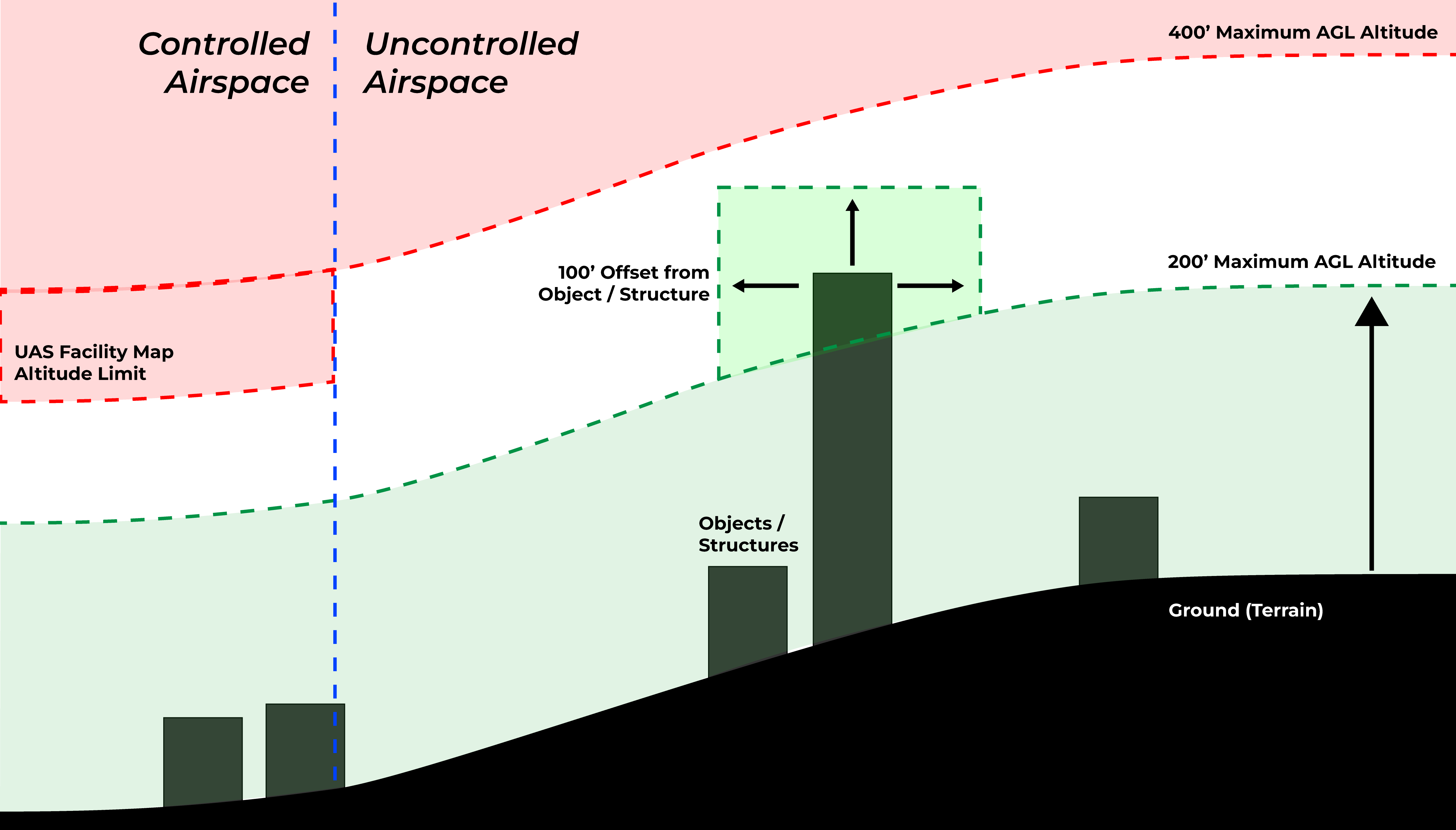
200' Shielded Operations for DFR
- Operations up to 200' AGL
- ADS-B In only
- Blanket approval
400' Non-Shielded Operations
- Operations up to 400'
- ADS-B In and non-cooperative DAA technology
- 400' within DAA detection volume, 200' elsewhere
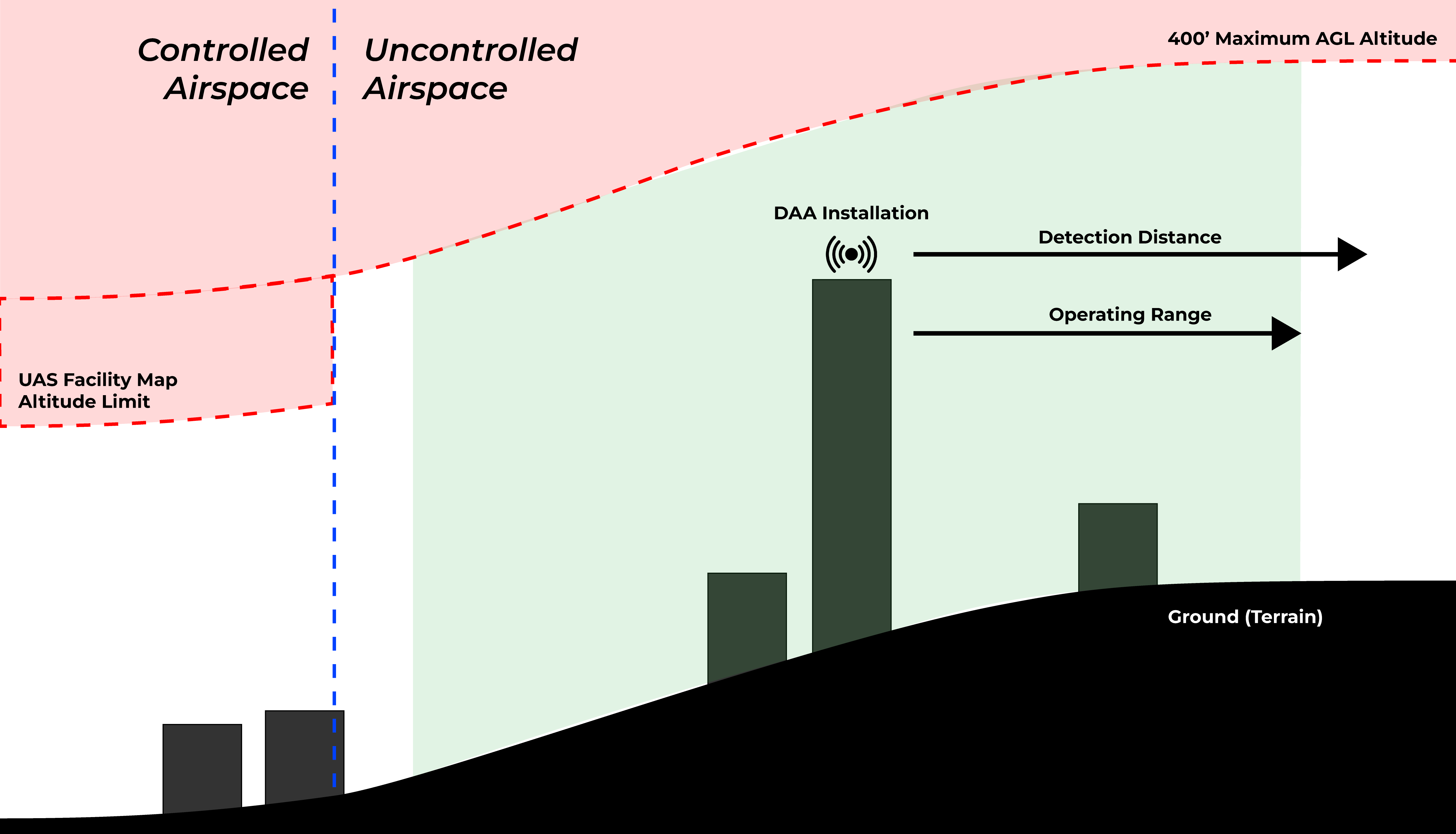
There are different requirements and forms to complete depending on the selected waiver option. Skydio recommends that all agencies pursue the Shielded Operations for DFR (200’) waiver initially as it is a quick and straightforward way to get jurisdiction-wide BVLOS approval. If your agency plans to deploy non-cooperative DAA technology, the Non-Shielded Operations (400’) waiver can be requested as well.
Identify the Responsible Person
The FAA requires one person from the organization to accept direct responsibility for safety of operations conducted under the Part 91 BVLOS waiver. Skydio recommends that this be a senior level person in your organization who will be accountable to the FAA for things like training and qualifying flight crews, recordkeeping, and responding to FAA inquiries.
This person should have a working knowledge of the drone program, have authority and good standing in the organization to be accountable for the drone program, and does not need to hold a Remote Pilot Certificate.
Develop FAA request documentation
The agency must submit a set of documents to the FAA as follows:
- Letter as a Concept of Operation
- FAA Form 7711-2
- PAO-PSO 91 BVLOS Waiver Checklist
- Make sure to select the appropriate checklist, there are 3 versions:
- 200’ PAO - PSO checklist
- 200’ PAO (but not a PSO) checklist
- 400’ checklist for agencies deploying non-cooperative detect-and-avoid technology
- Make sure to select the appropriate checklist, there are 3 versions:
- [Only required for 400' request] CMD-DAA document
FAA Submission
When all the documentation is signed and ready, the request is submitted to the FAA by emailing 9-AVS-AFS-750-91.113Waivers@faa.gov and requesting the Part 91 BVLOS waiver.
Monitor your email for correspondence back from the FAA on the request. Once the 91.113 Waiver Team approves the request, they will email the applicant back with an approved Part 91 BVLOS waiver.
Approval
Once the FAA emails you back a signed, approved waiver, read the waiver carefully to understand and comply with the provisions and requirements. Skydio did a webinar on the 200' waiver provisions to help your agency understand the requirements in simpler terms.
Frequently Asked Questions on the Part 91 BVLOS
How long does the FAA take to review a Part 91 BVLOS request?
The current time between submission and approval is approximately 1 week.
How long are these Part 91 BVLOS approvals valid for?
4 years
Can I get assistance obtaining this Part 91 BVLOS request?
Skydio’s Part 91 BVLOS Guide offers enough detail for an agency to navigate the process on their own. If the process looks daunting or your agency would prefer expert guidance through the process, Skydio offers a Regulatory Service that provides pre-filled documentation, one-on-one guidance during submission and FAA review, and support after approval to ensure your agency understands the types of operations allowed under the waiver. Contact your sales representative to learn more about pricing.
Does this Part 91 BVLOS waiver cover the X10 operations from a Dock and/or from a Controller?
BVLOS operations with Skydio X10 can be conducted with or without Dock and from X10 controller or DFR Command.
Does this Part 91 BVLOS waiver specify a maximum flight distance from the takeoff location?
200’ + ADS-B approvals: No. Flight distances are dependent on other factors such as airspace characteristics, battery endurance, and connectivity.
400’ approvals: It depends on the detect and avoid system. Operations up to 400’ will typically be limited to a range less than the maximum detection distance of the detect and avoid system.
Does the Skydio X10 comply with the ADS-B requirement to fly without Visual Observers?
Yes. Skydio X10 has a built-in ADS-B receiver that is capable of detecting aircraft transmitting ADS-B Out on 879 MHz and 1090 MHz. ADS-B data from the receiver is displayed on the X10 Controller and DFR Command for airspace awareness.
Do I need to purchase any additional hardware or software to use the ADS-B capability on the X10?
No, you don’t need to purchase additional hardware or software to use the ADS-B capability onboard the Skydio X10 drone.
What are the pilot training requirements to operate under a Part 91 BVLOS waiver? Do all my pilots need a Remote Pilot Certificate or can I self-certify them?
It’s important to understand that operations under this type of Certificate of Waiver are conducted under Part 91, not Part 107. Under Part 91, the agency self-certifies their flight crewmembers.
One common approach for public safety agencies is to use the FAA’s Remote Pilot Certificate as a method for self-certifying flight crewmembers. Then the agency conducts additional in-house training, which often includes training from the vendor. However, an agency could choose to develop an alternative approach.
No matter which option your agency chooses, flight crewmembers must have the appropriate aeronautical knowledge and skills to safely conduct drone operations in accordance with all local, state, and federal regulations.
Skydio Regulatory Team offers a service to assist your agency in developing a self-certification training program. Contact your Skydio Sales Representative for more information.
Can I get approval to operate above the UAS Facility Map altitudes in my jurisdiction?
Your agency must request a separate Part 91 Airspace Authorization to operate above the UAS Facility Map altitudes. See Part 2 of our guide on How To Obtain a Part 91 Airspace Authorization.
How does this approval compare to prior COA approvals like the Jurisdictional, Tactical BVLOS, or First Responder BVLOS COAs?
The new Part 91 BVLOS Certificate of Waiver (COW) allows two types of operations:
- Visual Line of Sight operations
- Equivalent to previous Jurisdictional COAs
- Beyond Visual Line of Sight without a Visual Observer
The FAA is no longer issuing Tactical BVLOS and First Responder BVLOS (BVLOS with a Visual Observer scanning airspace around the drone) approvals.
The Part 91 BVLOS Certificate of Waiver can likely replace any existing COAs your agency has, but it is up to your agency to compare the approvals and make a determination.
What are my options if I want to fly under Part 107 instead of Part 91?
The FAA has created a Part 107 waiver for public safety organizations. Head to the FAA’s Public Safety Toolkit website for information and applicable forms.
Skydio now has a parachute recovery system available for the X10 to enable operations over human beings. Read more about the X10 parachute here.
Can I get approval to fly in zero grids?
Your agency must request a separate Part 91 Airspace Authorization to operate above the UAS Facility Map altitudes. See Part 2 of our guide on How To Obtain a Part 91 Airspace Authorization.
Waiver Additional Resources
Skydio Templates & Information
References
The following FAA sources were used to develop this guidance and can provide additional details:
Feedback and Questions
If you find an error in this guide, have recommendations for improving it, or have questions, let us know by contacting the Skydio Regulatory Team at aviation_regulatory@skydio.com.