We’re on the cusp of greatness with how we make this work for our city. It’s not just about police response—it’s about integrating fire, public works, and community resources. That’s the future.”


Vol 1.2
Smarter Response, Safer Cities: Real Results from DFR Programs


Just last year, Drone as First Responder (DFR) programs were seen as bold experiments; an early glimpse of what modern policing could become. Today, they’ve proven indispensable.
Departments that once tested new technology by having people launch drones on rooftops are now flying hundreds—if not thousands—of missions each month, using real-time aerial intelligence to make faster, safer, and more informed decisions. What began as an idea to help agencies “do more with less” has evolved into a nationwide movement toward rapid, accountable, city-wide response.
The impact isn’t theoretical. DFR reshapes how public safety agencies assign officers, allocate resources, and rebuild public trust through transparency and accountability. From major metropolitan departments to smaller suburban agencies, leaders recognize that innovation in the air creates confidence on the ground.
As more cities and counties expand their DFR operations, one truth has become clear: the future of public safety isn’t just about adding personnel, but about empowering every stakeholder with the right information, at the right time, from above.
Expanding reach: real results across the country
The results from early adopters sparked a nationwide wave of growth. More departments prove that DFR programs don’t just improve operations, they redefine what an effective, measured public safety response looks like.

“
Las Vegas Metropolitan Police Department
Las Vegas shows how a major agency scales DFR thoughtfully and strategically. Building on the success of its mobile DFR deployment, the Las Vegas Metropolitan Police Department (LVMPD) entered Phase 3 of Project Blue Sky, transforming its drone program into a 24/7, county-wide aerial response system supporting police, fire, and emergency medical services.
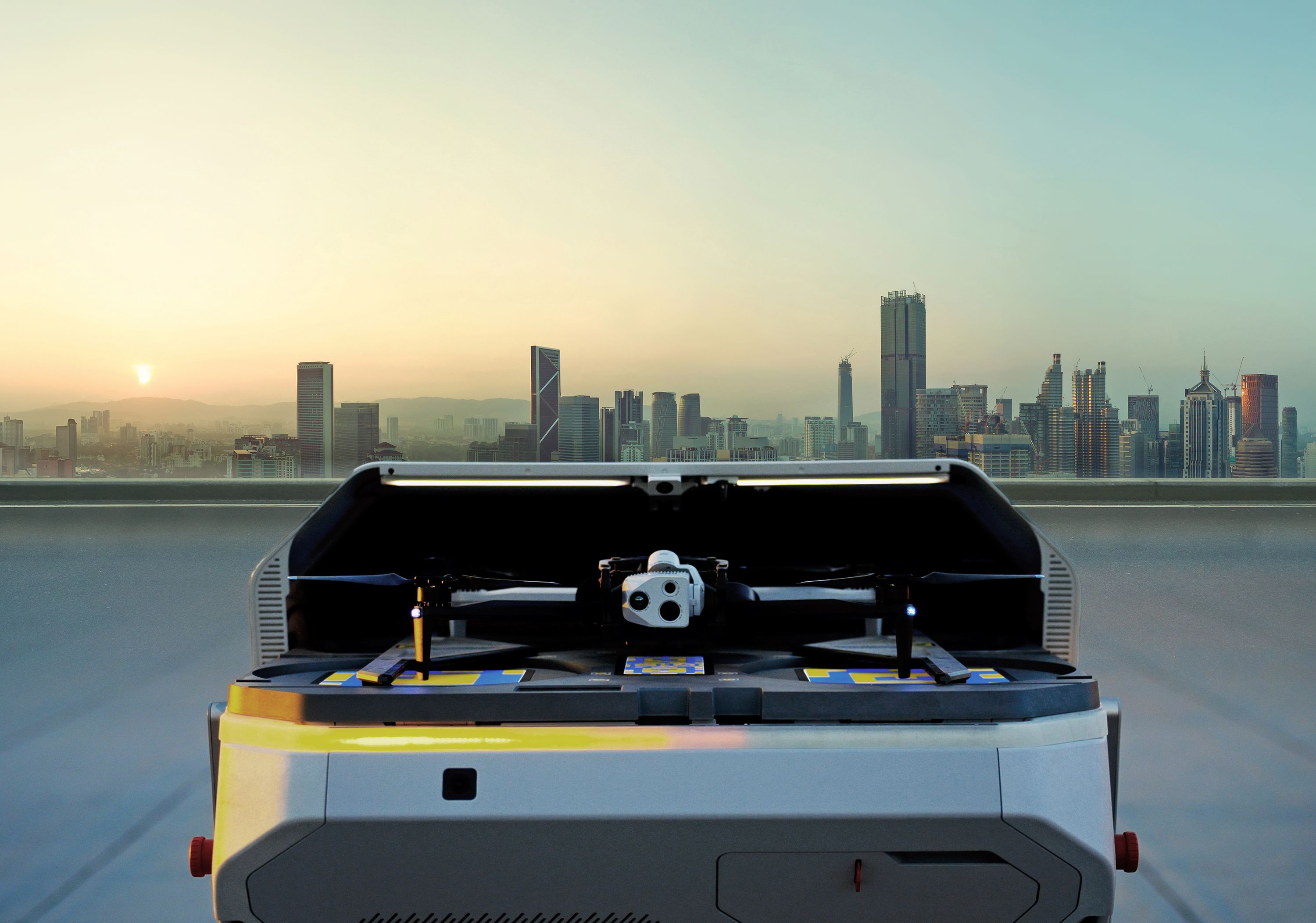
At the center of this expansion is a fully operational Drone Operations Center embedded within LVMPD’s Fusion Watch. From this centralized hub, trained pilots remotely operate docked drones launched from secure Skyports located at police and fire facilities across the valley. With more than a dozen Skyport locations, drones respond within seconds to active 911 calls, maintaining continuous coverage.
The scale is unmatched. Even before the full Skyport network, LVMPD flew more than 10,000 drone missions in 2025—the highest annual mission volume of any public safety agency in the country. Today, the department averages approximately 1,700 flights per month and projects up to 20,000 missions in 2026, all tied to calls for service.
Starting mobile was intentional: it accelerated real operations, refined policy, and built community awareness while laying the groundwork for future dock installations

Just as important as speed is trust. LVMPD is explicit about what Phase 3 is and what it is not. Every flight is logged, audited, and governed by strict, policy-driven controls, with flight histories publicly accessible.

Ontario Police Department
In California, the Ontario Police Department continues to demonstrate how DFR improves community policing and frontline efficiency.
In August 2025 alone, Ontario drones flew:
336
missions
80 %
of the time, drones arrived before ground units
That early presence is critical—it allows pilots to assess situations before officers arrive, clear calls that don’t require patrol response, and guide units to where they’re needed most. Ontario demonstrates how smaller cities leverage DFR to achieve big-agency outcomes.
Lakewood Police Department
Colorado’s Lakewood Police Department continues building on early success. What started as a single rooftop deployment in early 2025 has evolved into a high-impact operational program integrated across divisions.
In the first 26 weeks, Lakewood drones responded to more than 1,500 calls for service.
41 %
of those flights had calls cleared without any officers
80 %
of those flights had drones arriving first on scene
Lakewood’s results continue to validate DFR as a force multiplier, improving efficiency and response across the department.
Snohomish County RTIC
In Washington, the Snohomish County Real-Time Information Center (SNO911) recently completed a DFR pilot that demonstrated how regional coordination multiplies impact.
Over the course of one week, RTIC drones flew:
194
calls for service
230
flights
47
flight hours
40 %
of the time, drones arrived before ground units
The early visibility proved invaluable. Drones corrected misreported call locations, provided live intel for vehicle collisions, and arrived six minutes ahead of patrol units to clear a suspicious vehicle. In several incidents, thermal imaging supported fire response by identifying heat signatures and streaming live aerial video to crews while they were still en route.
RTIC operators also used drone feeds to update subject and vehicle descriptions in real time, confirm whether vehicles were occupied, and identify unsecured entry points, reducing uncertainty and improving responder safety. The SNO911 pilot validated the regional model for DFR, demonstrating that even a short-term trial yields measurable results and lays the groundwork for long-term expansion.

“The drone is flying as firefighters are getting dressed for the incident and responding to the scene. So they can already be coming up with an attack strategy and tactics they’ll be using on the incident. It gives great situational awareness."
Smarter response, safer communities.
Every call for service begins with uncertainty. A dispatcher hears fragments of information—a distressed voice, a partial address, a brief description of what might be happening. For responding officers, those first moments are often the most dangerous, shaped by limited information and split-second decisions.
DFR programs rewrite this playbook. By arriving on scene in less than two minutes (often before an officer is even dispatched), drones give command staff and field units a live view of what’s unfolding, turning uncertainty into informed action.
The impact is clear and measurable:

Officers are arriving safer.
Drones provide the time and distance needed to make sound tactical decisions.
Incidents are resolved faster.
Visual confirmation enables pilots to manage calls, cancel unnecessary ground responses, or direct resources where they’re truly needed.
More subjects are apprehended.
Drones provide real-time visibility to catch suspects in the act or track them safely until officers arrive.
DFR doesn’t just shorten response times. It strengthens outcomes. As these programs continue to mature, one thing is clear: faster response means more than speed. It means safety, efficiency, and trust—cornerstones of modern policing that benefit both the people behind the badge and the communities they serve.

Privacy, trust, and transparency
The success of DFR programs isn’t measured by flight hours alone. Just as important is public trust. Every launch, every image, and every decision must reflect the community’s commitment to transparency, accountability, and protection of an individual’s privacy.
But protecting privacy isn’t just a policy. It’s a practice. DFR programs are most effective when they’re built on a foundation of openness. Leading departments set the example through proactive, frequent communication, combined with clear procedures that define when drones can be launched, how footage is stored, and who has access to it. They host public demonstrations, welcome oversight, and use cyber-secure systems that safeguard sensitive information.
These steps matter. They turn innovation into accountability and visibility into trust. When communities understand how drones are used—and more importantly, how they’re not used—the result is confidence, not concern.
DFR succeeds not only because it helps officers respond faster, but because it’s designed around a community’s standard of transparency and respect for privacy. That’s what makes the difference between deploying technology for a community and deploying it with one.

Measuring real-world impact
Every flight tells a story, and together, those stories define the national picture of what DFR achieves. Through the DFR Outcomes Dashboard, agencies now have a clear, data-driven way to track, analyze, and share the real-world results of their program.
The dashboard aggregates mission data, turning thousands of flights into insights about performance, efficiency, and safety.
Over a 30 day period, from September to October 2025, 61 agencies used the Skydio DFR Outcomes Reports and show consistent results:
69 %
of incidents had a drone first on scene
23 %
of calls were cleared without any patrol response
92 %
of deployments involved drones providing critical intelligence
These aren’t isolated wins—they mark a nationwide shift toward safer operations, better decisions, and stronger community outcomes. Each percentage point represents real impact: faster resolutions, reduced risk for officers, and better outcomes for the public.
DFR Outcomes measures that impact at scale. By transforming mission data into accessible insights, agencies demonstrate accountability to leadership, justify investment to city councils, and build public trust through transparent, evidence-based reporting. When the data tells the story, the results speak for themselves, showing a growing movement toward a new standard in modern response.

“The Redmond community has responded very favorably to our DFR program, largely because of the transparency it was built on. We have a forward-facing dashboard where the public can see every flight.”


See how deployment works in your jurisdiction.
Run a customized DFR Simulation using your agency’s real call data.