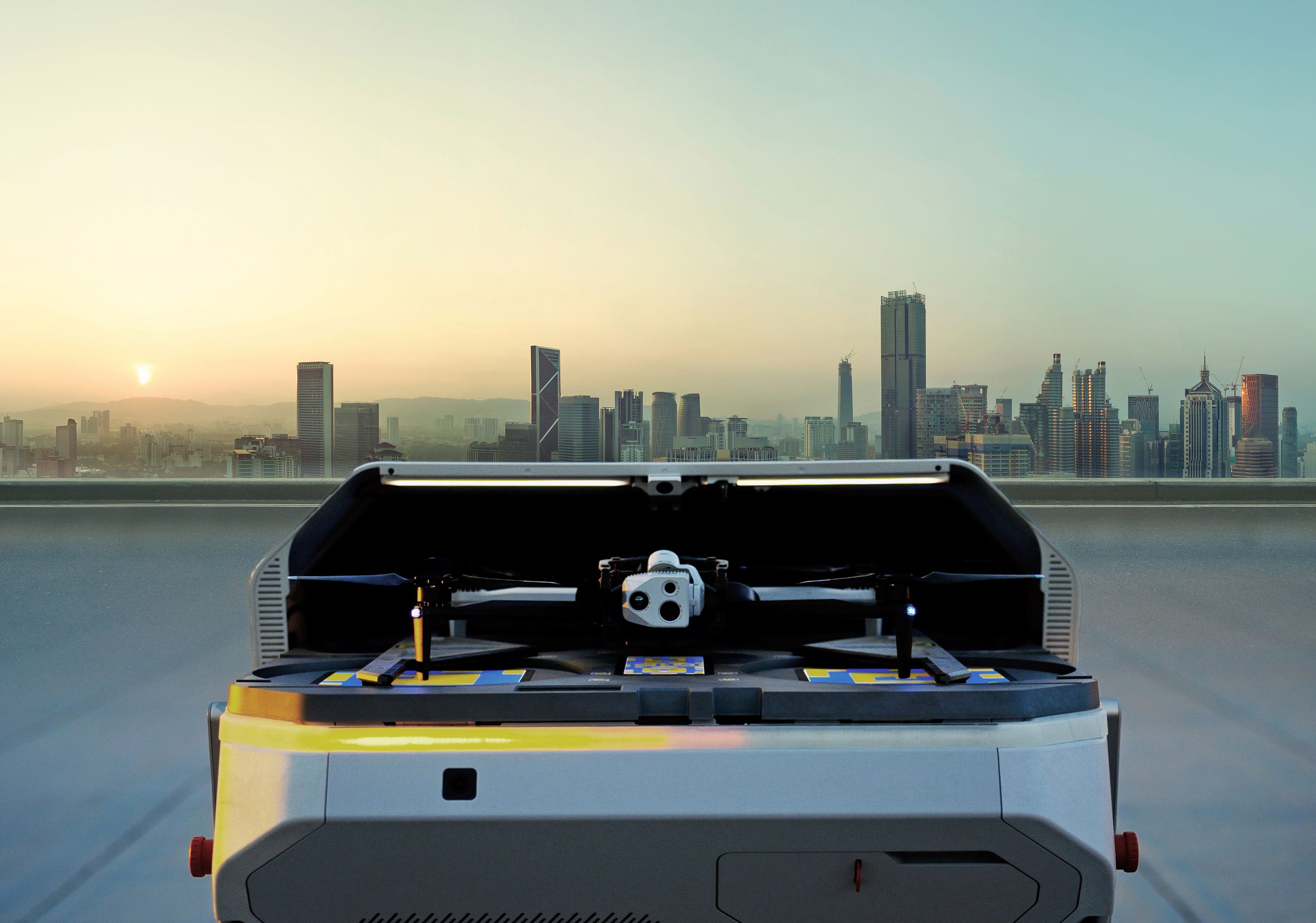
Inside LVMPD’s Multi-Drone DFR Operations
May 28, 2026
Transcript
- Hey,
- everyone. Welcome. Thanks for hanging out with us today for a
- bit.
- Today, we are talking about what multi-drone DFR
- actually looks like in
- the field. There's been a lot of interest in this
- topic because agencies
- are starting to move beyond single drone DFR and think about
- seriously doing DFR at scale. There's still a lot of questions
- about what that actually means operationally, and when people hear
- multi-drone, they imagine one pilot manually
- flying multiple aircraft on multiple calls at the same time.
- But that's not really the model that we're talking about today.
- Today's reality is much more practical.
- Using multiple drones to maintain coverage, to reduce your gaps,
- and then to support all of your operations without adding unnecessary
- workload.
- My name is Noreen Charlton, and I lead public safety strategy here at
- Skydio. I actually spent more than a decade with
- the Las Vegas Metropolitan Police
- Department, so I'm really excited about being joined
- today by Officer
- Russi. Um, a little bit of housekeeping before we
- jump in.
- Please go ahead and drop any comments or questions that you have right in this
- chat. Um, obviously, this is on a webinar platform, but we
- are trying to
- be as interactive as possible. So we'd love to hear from you throughout
- the
- session, and we will answer any and all questions throughout the way
- or at the
- end.
- So Joseph, um, can you start by giving everyone a quick
- intro, talk about your
- role, how long you've been with LVMPD, and what your day-to-day looks like as
- a lead DFR pilot?
- Yeah, of course. First off, Noreen, thank you for having me here today.
- Uh, so my experience, I've been on with Metro for about 10 years
- now.
- Uh, about six, seven years in patrol as, uh, boots on the
- ground handling calls for service.
- For the last three years, I've been in the, uh, tech ops bureau.
- Uh, I started with drone enforcement, then we created our drone, uh, as
- first responder team. So we started that from a mobile approach.
- Um, we did that for a year successfully, and then we transitioned over to our
- remote operations. So that's what I do day to day.
- So currently, we're operating 38 remote docks across the
- Las Vegas
- Valley, handling calls for service.
- Uh, I'm a lead pilot for my team. I have three other, uh, civilian pilots
- with me. So we're hammering calls nonstop, supporting
- patrol. Uh, anything that comes up where a drone can be needed,
- we'll send a
- drone out there. We don't do any random surveillance
- or anything like that.
- It's only for assisting calls for service.
- Uh, with how busy Las Vegas is, it's mostly just dynamic calls all day
- nonstop.
- Yeah, I think that's actually the perfect segue
- into the next slide.
- Um, so to really understand LVMPD's DFR
- program, I want everyone just to
- understand the environment that they operate in.
- I think when most people hear Las Vegas, they kind of just think of the Strip.
- Uh, maybe, you know, some of the surrounding residential areas,
- but most people
- don't realize the vast land of coverage, um, that, that you
- have at LVMPD. So can you talk a little bit about Vegas
- and specifically
- Metro's jurisdiction?
- Yeah. So Metro's kind of unique. So back in the '70s, we merged our
- city jurisdiction with our county jurisdiction, so we do both.
- So we kind of run the, the whole valley in a sense.
- Um, it's a very, very large valley. It's growing tremendously.
- We can't even really keep up with how much it's growing, um, from a police
- department level. But over two million people are
- here. There is, I believe, maybe two to three million calls for
- service, uh, every year. Uh, we try to cover as much as the
- valley as we can with drones. I believe it's over 100 square miles now.
- Might be a little more. Um, for our police
- department, I believe we're like the sixth largest
- agency in the country.
- Um, I think our number's getting close to
- 4,000 commissioned officers
- with even more civilians now. So it's a, a very big
- city and it's a busy city.
- Um, there's a, a very tight-knit community, but it is,
- uh, calls all
- over the valley.
- Yeah, and I think what's even more unique about
- it is obviously the number of
- visitors. I think we estimated over 40 million
- annual visitors here.
- Um, I was with the agency in 2017 and working the night of the 1 October
- Route
- 91 Harvest Festival mass shooting.
- Um, we started using drones the day after for
- scene documentation.
- Um, while it has obviously taken LVMT...
- LVMPD, uh, some years to get to the program
- that they are today, I kind
- of like to remind people that's just because the technology didn't exist the
- way
- that you needed it to operate at this type of scale.
- Can you help everyone understand kind of what makes the metro
- jurisdiction uniquely challenging, specifically from a drone
- standpoint?
- So for it to be, yeah, uniquely challenging for us
- from, for drones, it's just getting to those
- areas quick enough with the drone to assist on calls for service.
- My experience with flying drones for the last two years, you
- want to be first on scene. With the remote docks, that's helped us
- tremendously. Um, my drones are first on scene,
- I would say almost 100% of the time.
- Um, we are there giving, uh, critical information to patrol
- officers, setting the scene for them so they know
- what they're arriving into.
- Um, it's just being there for our patrol to
- support everyone. Vegas is so unique, and like you talked about for October 1,
- um, I was a trainee at that time. I was hired on back then.
- I was still in field training, and it was one of the most chaotic nights, uh,
- of my
- career. And seeing that we did a drone mapping mission,
- and that was like
- the spark of LVMPD starting to use drones, and then just doing building
- blocks from there. Um, we had a lot of trial and error in the
- beginning with, with drones and figuring out, you know,
- who can use them,
- how we can effectively, uh, map out things and help
- calls for service. And we kind of decentralized our drone
- unit and everyone got
- one, and that led to a lot of crashes and a lot of
- airspace violations. And then kind of brought the drones back
- in-house and
- slowly refined it from there. And now, as you can see what it is today, uh,
- with the 16 mobile drones and the 38 docks-
- Um, it's been highly successful getting there,
- like I said, first on scene,
- providing that information, getting people in custody,
- helping officers
- on foot pursuit so they're not, you know, injuring themselves jumping walls.
- We can do more containment instead of going after and, and, you know,
- chasing someone to capture versus chasing someone to contain now.
- So it's definitely has been a huge game changer.
- Um, it's a massive force multiplier on what we
- do as
- operationally.
- Yeah. That's super helpful. I think I also want to call out some more,
- um, like,
- information about call volume. Um, these, these numbers are from the 2024 annual
- report, but they give us a good baseline for the
- operating environment that you
- work in. Um, you receive roughly two and a half million calls a year.
- More than 425,000 of those calls are dispatched, um, in
- 2024, about a 7.7-minute average response time.
- I think that seven-plus minutes matters because DFR, obviously, as
- you mentioned, uh, fundamentally is about time and information.
- So you're also operating across 12, almost 13 area
- commands, which matters because DFR coverage has to
- map to
- real operational geography and not just kind of this citywide average
- drop
- a drone and draw a circle. Can you just talk about the
- current DFR response in Vegas? Like, how are you getting dispatched to these
- calls? What does that information and communication look like for you in
- your
- day-to-day operations?
- So for my setup, we have, uh, four monitors that I have
- multiple ways of looking at calls for service.
- So I have three different entities I have that the calls for service will pop up
- on, and I only do that because sometimes one system's a
- little faster than the
- other, but we're proactively monitoring calls.
- So when we see a call pop up, even before the dispatcher would broadcast
- it, I'm
- already launching my drone to the scene.
- Um, within our radius of coverage for the
- drones, the
- longest response time a drone's gonna take to reach the edge of our, uh,
- operational limit is about three minutes.
- Um, for the most part, if calls are within that bubble, we're within 30
- seconds we're on scene. I think my record for being on scene is
- within, like, 15 seconds of a shooting call because they
- did it right by the dock.
- It, it's just so important, and we'll probably talk about that later,
- um, with
- that successful call. But it's just being proactive,
- being on top of
- it. There's different ways of being first on
- scene.
- That's kind of the biggest thing is how do you jump the gun?
- How do you get to the call first? What do I have to do?
- Do I need to monitor, you know, prepared 911 and listen to
- dispatchers on the phone? Do we have the capabilities?
- Um, we looked at that, and because we have so many calls for
- service, it's kind of
- a, a sensory overload listening to every 911
- call.
- But as the call taker puts that initial details of the call in our
- queue, we can see it even before there's a major
- update on
- what's going on. If we see the type of call that's coming
- out, we'll just send a
- drone immediately there, and it's been highly, highly successful.
- Being on scene within 15 seconds to three minutes to give officers
- real-time updates on what's going on, seeing people fleeing from houses,
- you know, throwing casings, throwing guns, um, we've been getting more people in
- custody and making this city a whole lot safer with our whole drone program.
- Yeah. That's awesome. I think I want to touch a little bit on,
- um, how the radio
- system is set up there. So we spoke about having all of these
- different area
- commands. I think this is going to be important
- when we talk about multi-drone and
- launching from different areas. Um, but can you just talk a little bit about
- how each area command has its own specific radio channel
- plus other various channels and how you monitor
- and keep control of all of that?
- So with being such a large agency, yeah, we have, uh, the 12 area
- command channels, and then within those area command
- channels,
- there's a secondary channel and a third channel, um, if
- needed, if, if it gets overloaded with dynamic calls.
- Plus, we have our specialized unit channels
- that utilize us for certain
- things. So for the most part, um, we monitor
- valley-wide, um, calls for service queues,
- and then we usually sit on one channel, and our dispatchers know what channel
- we're
- on. So if a dynamic call comes out that we're not tracking or
- if if something is more static or an update happened that we didn't see,
- dispatch
- will reach out to us directly and ask us to switch over to that channel.
- Um, for the most part though, my team, we're on top of it.
- Um, the only time they'll notify us really
- is if we're all four of us are working a
- call and we don't have time to monitor other calls, and that's kind of where
- multi-drone comes in, where as I'm wrapping up one call, I hear
- another one coming out. I can send one back
- and send one immediately to the next
- call. So then by the time I finish one, I can just seamlessly transition
- to a new channel and start working that call. Saves time.
- DFR is all about saving time and getting there first.
- Yeah. That's awesome. I just think it's super important for
- people to understand,
- especially if you're joining us from a smaller agency where you kind of have, you
- know, a dispatch center and one main radio channel for all of your
- traffic. Uh, Vegas is obviously very complex with the size of
- it and how many,
- you know, the area that they serve.
- Um, so just something to keep in mind as we
- get through more of this, and we're
- gonna talk through a specific case study here soon.
- Um, in September of 2025, LVMPD secured a
- major regulatory milestone, which was BVLOS in Zero Grid
- and the multi-drone approval. Um, from the operator side, what
- did this approval make possible that was difficult or even
- impossible before that you had it?
- Well, if we don't have our BVLOS in Zero Grid,
- it completely
- restricts us on what we can do operationally.
- And then
- if we didn't get that waiver, we would need a officer on
- scene first to observe our drone flying to the scene.
- So getting that BVLOS waiver in the Zero Grid,
- huge, huge, huge success for us to go and not gum down our
- operations. Um,
- if we-
- Can you just speak a little bit about the, um, all the airspace there?
- You have multiple airports. You have Nellis. You have all...
- Can you just talk a little bit about your airspace that you, you face there?
- Yeah. So we have, uh, an Air Force base called Nellis Air Force
- Base, which is a, a large presence.
- We have Harry Reid, which is one of the most popular airports,
- and then we even
- have, um, private airports in, uh, North Las Vegas
- that where it's where a lot of people do training and get their pilot's license.
- So there's flights nonstop and all over.
- So with our certificate of authorization, we worked it out.
- We have Our areas where I, I actually brag our CO is the
- best in the country because it's how tight we can get to the airport.
- I can almost fly up to the fence line of the airport.
- It's just the arrival and departure where we can't touch.
- Um, and even if we needed to, we can call, you know, SGIs in and get
- in those airspaces. But having that BVLOS and having the CO the way
- we have it allows us for more coverage, faster response, less
- phone calls to the FAA, less phone calls to the tower to get us
- there
- on scene first. And that's honestly the thing I'm gonna
- hammer in today
- is you wanna be on scene first to give all the updates.
- That's the whole purpose of having a drone in a dock ready to go,
- is to get there immediately to give updates.
- 'Cause things change dynamically on all these calls for service.
- Anybody who's been in law enforcement, you know you get details,
- two minutes later
- it can be completely different.
- Yeah. And I think now we've kind of established
- what the jurisdiction looks like,
- so let's talk a little bit about coverage.
- You've mentioned some of these numbers already.
- Um, but here we've highlighted kind of the
- actual footprint of the DFR program
- today in Las Vegas. You have 12 different lo- dock locations.
- You have 38 docked drones. You have/had
- 16 mobile DFR drones. And in total you have about 130
- square miles of your jurisdiction covered.
- So this is the point where kind of the operational questions start to change.
- Uh, when an agency obviously has one drone,
- the question is, can we get this drone
- to a call? But when you have multiple, uh, docks in different
- areas, the question is, well, how do we use the right drone from the
- right place at
- the right time without overwhelming the operator?
- And this is where multi-drone becomes extremely relevant.
- So before the docks were installed, LVMPD built a
- mobile DFR, um, capability. So can you talk a little bit about why
- that mattered, and what did mobile DFR prove for the
- agency, um, and how did patrol respond once they
- started seeing
- drones arrive on their calls?
- So when I started mobile DFR, uh, we did that
- K-9 model. So it was us paired with another pilot,
- a civilian
- pilot, and we were valley wide, um, responding to
- every call for service. So it was kind of difficult because you're
- essentially the dock on wheels, right?
- And you need to understand your valley and kind of put yourself in a position
- where you're kind of guessing where the next dynamic call's gonna come out at.
- So you would look at your crime maps and stay in those hotspot areas, which we
- were very successful. Um, in my experience, if we
- weren't within, you know, five to 10 minutes of
- driving distance to a call, we weren't gonna be successful.
- So you really had to position yourself in the right areas.
- And then you take in account for rush hour traffic and trying to maneuver around
- the valley. Um, the way Las Vegas is split, it's kind of split,
- um, east and west, uh, with the highway.
- So if you're picking a side, you're kind of stuck on
- that side for the night in
- mobile DFR. The difference having, you know, the docks now is
- you don't worry about traffic.
- But patrol, when we first, uh, started mobile DFR, they weren't really
- too sure on how it was gonna work. They still requested the helicopter over
- us. Um, it wasn't until we just proactively
- started jumping these calls, getting first on scene,
- providing those information,
- and really relieving the officers during those foot pursuits, um, they started
- loving us a lot more. And now we're requested on every single
- call all the time. Um, they, they almost demand us to be there
- because we're such a,
- a good eye in the sky, and we relieve them of so much
- responsibility.
- We become the radio traffic. We become their perimeter.
- We become everything for them so they can focus just on their officer
- safety and their tactics. And when I was in patrol, that's one thing that I
- loved about, you know, the helicopter coming to my calls
- is they relieved me of all
- that. And now having a drone, you know, you have multiple little mini helicopters
- doing that same stuff for patrol on multiple different calls.
- So it is still a huge, huge game changer, and, uh, it's nothing but love
- from patrol now. They, they, they can't live without us.
- Yeah. That's awesome. I think we didn't even set
- that up in the beginning, uh,
- that, that you guys have an air unit, a very robust air unit that's out almost,
- you
- know, 24/7 responding to calls for service.
- It's kind of a muscle memory thing that you just request air
- and you don't think
- about drones. But this slide in particular, um,
- is speaking to the
- metrics thus far in 2026. You've completed more than 9,700
- DFR flights, and you're averaging more than 2,000 a
- month at this point.
- Um, supported more than 6,000 calls for
- service and assisted in
- 442 arrests. I think these stats were pulled from a week or two ago.
- The important thing here is to note that DFR is just, like,
- not an occasional use
- tool, right? It's becoming a part of the operations for
- all of your patrol,
- and that level of flight volume creates a very different set of questions around
- staffing and your prioritization and your workload and how you keep drones
- available for the next call that comes in.
- So when you look at these numbers, what do they say to you about how
- DFR has changed day-to-day operations, not only for your team in DFR,
- but also for patrol? And you kind of touched o-
- on this a little bit in the last
- slide, but talk a little bit more about just how
- you're seeing these changes and
- the growth as you continue to move into the DFR space.
- Yeah. With, with the way Las Vegas is and how inundated with calls we are, this
- number would easily be doubled if we had double the staffing.
- Um, there's so many calls that we just can't get to,
- so we're prioritizing the most
- dynamic ones first. Um, but yeah, it's like I said
- before, it's a complete game changer on us getting
- the calls and being
- first on scene and assisting patrol.
- Um, there's times where patrol would have to
- go, you know, far out
- into the desert or on top of rooftops to check for people.
- Now you get the drone to do it. Um, for article searches, for lo-
- locating subjects, it's just so much easier and
- faster for the drone unit to do it. Um, missing kids
- is almost a thing of the past now. When parent calls in,
- we're getting the drone
- over there. We're finding the kid almost immediately.
- Um, it, it's just such a... I'm gonna keep saying this, it's a
- game changer, a force multiplier.
- It's so important now for our city to have drones and to expand our drone unit.
- As big as we are, you know, we wanna triple it.
- We want, you know-
- I want to have a hundred and fifty pilots and I want, you know,
- a hundred docs
- because we're just so successful and it's so helpful.
- And the public perception has been very positive because we're very
- transparent as an agency. So we post all of our flights
- publicly to our LVMPD page. We have very strict policies
- that we follow. We make sure that everyone is not randomly
- surveilling. We're not checking backyards, uh, unless it's for a purpose,
- for a crime, for a call for service.
- Yeah, that's great. And I think you've mentioned some of these
- numbers.
- Um, first on scene, you've only mentioned a thousand times
- already, so let's talk
- about it. Um, I think this is... this slide's just showing more of the
- operational
- impact, right? You, uh... we're reporting 70% first on scene.
- I put a little asterisk here because I want to start there.
- There's a little bit n- of nuance behind that number.
- Can you explain how LVMPD defines first on scene and what
- that metric does or does not capture here in 70%?
- Yeah. So when we do our, like, post-flight reporting, um, we check a
- box if we were first on scene. That means beating patrol to the scene.
- The issue is we're also requested on, you know, missing person
- calls. We're requested on all different types of
- calls where we're not first on
- scene. We're doing article searches. We're helping out in various ways.
- So it's kind of inaccurate on how we're first on scene.
- We need to change our reporting system to be, you know,
- if the call was generated and you got assigned to it at the same
- time as patrol,
- who's first on scene? It would be us 100% of the time.
- Um-
- Yeah. I th- I think that's just important for everyone
- to know here because you
- mentioned, like, your, you know, first on scene's obviously of utmost
- importance.
- This is how it's reported out, but that's the perfect explanation, right?
- There are other calls for service that you go to that aren't, like,
- the priority
- zero call that you're getting there before everyone else, but they're in assistance
- of the officers that need some additional, uh, coverage.
- Um, so we've also called out kind of here
- that you have more than
- 490 calls cleared without patrol response, 1,900 persons
- located and more than f- 535 vehicles.
- Obviously, first on scene is one of the most important DFR metrics.
- Um, but this really speaks to the value of
- getting that aerial awareness for
- officers just in general. Um, the cleared without patrol
- number is also important be- because it shows that your DFR is not
- just accelerating response. Um, it can also help
- agencies avoid unnecessary response, uh, when the drone can fly over and the
- pilot can verify that the call doesn't actually require
- patrol to continue.
- So when DFR clears a call without patrol, what kind of calls are you guys
- typically seeing that those are for?
- So it's mostly, like, those, um, lower priority trespassing
- calls, people causing disturbances.
- Um, it's a lot of, uh, unhoused people that are
- in areas where people call in, like businesses.
- We call in at shopping centers.
- So we'll also look at calls that have been holding for a while
- if we have downtime,
- which is very rare. Um, but we'll send the drone over there,
- and we'll check
- to see like a 7-Eleven if that person is still outside, you know,
- causing a disturbance, yelling at people.
- We'll let the patrol supervisor know, "Hey, that person's gone.
- Looked around the area. We don't see anyone." Uh,
- we'll have dispatch
- recall the person reporting and be like, "Hey, our drone just checked. It's not...
- They're not there. Do you want to cancel the call?"
- And they'll cancel it, or the
- patrol supervisor will just cancel it.
- Um, just two weeks ago, we had a very dynamic
- call. It was a shooting that turned into a barricade in our
- downtown area, which
- our downtown area command, um, encompasses, like all of Fremont
- Street Experience, uh, part of the Strat and, uh, a
- large area. And they had, I believe it was over, like, 40
- calls for service pending, where they just didn't have the resources.
- And they're pulling officers from other area commands to help out.
- And, um, our watch commander sits with us at our,
- uh,
- stations, and I hear him asking for more resources.
- So
- I had my team, you know, "Hey, still handle the valley on calls for
- service.
- I'm gonna jump over and start clearing out these calls for
- downtown."
- So I checked on all those longer holding calls.
- Um, some of them were property pickups, some of them were trespassing ones.
- Everyone was gone. Um, and we just cleared them out to help clear
- out calls,
- call back the person reporting, and let them know, like, "Hey,
- we're a little
- busy. I see you're not in the area anymore.
- Do you still want our assistance?" They usually say, "No, we'll call back later."
- And that's just how we free up more patrol units.
- So as such a large agency, we're able to do that.
- If there's smaller agencies out there, you know, you'll be first on scene for
- everything, and even those disturbance calls,
- when you're first on scene, they may
- turn into nothing. They may just walk away,
- and you clear it out, or they pick up a
- rock or a stick, and they start changing a misdemeanor to a
- felony. You know?
- And we've seen that many times.
- So, I mean, if you're-
- Yeah, I think this is kind of one, one of the most unexpected parts of DFR
- was
- being able to do this, and I think all of the examples you
- provided are, are super
- helpful to anyone who has joined us, um, to understand how they could be clearing
- calls for service with the pilot and the drone.
- Um, so pulled this from a presentation
- that you guys had recently.
- Um, this daily flight volume chart explains
- why LVMPD's
- model cannot be built around occasional use.
- Uh, you can very clearly see days with very
- high flight volume,
- often in the kind of 70 to 100 flight range and sometimes even higher.
- Um, but this also explains why multi-drone
- matters.
- When flight volume is this high, you know, your drone availability, the
- battery cycles, the prioritization of your calls for
- service, your operator's
- workload, these all become really, um, operational issues.
- So what does a high volume day feel like from your seat as a DFR
- pilot?
- It's, uh, it is the same as when I was in patrol.
- [laughs]
- It's just call to call to call nonstop.
- Um, the only difference is, you know, I'm not in 120 degrees in a full
- uniform. Um, but it, it is taxing on the pilots, and I see some
- of our guys that are civilian pilots, um, getting a little stressed out
- and worn down, um, because we're short-staffed.
- You know, I say we're short-staffed, but we have a large staff.
- It's just we have so much calls, and we can do so many flights.
- We need to have more bodies. But those busy days, it's
- nonstop back-to-back calls, and sometimes you got to catch up on your
- post-flight reports at the end of the day.
- Yeah. And then this, this graph is for hourly flight distribution.
- Um, and it's showing when demand is occurring throughout the day.
- And so you can see that flight activity kind of ramps up
- significantly in the
- morning and then pretty much remains high through your swing shift hours.
- Um, I think this pattern matters because it
- really helps, uh, inform
- staffing for a program like this, and this is also why the staffing
- conversation
- should not be separate from DFR or from a multi-drone
- conversation. Um, from your perspective, how does the hourly demand
- affect how you guys staff the DFR unit and then prioritize that coverage?
- Well, so these stats actually show when we're logged on.
- So we log on at 7:00 in the morning, and then our swing shift logs
- off around, you know, 11:00. So you could see the second
- we logged on, we're hit with calls, and it's carries throughout the entire
- day. Um, it, it's a lot to go off of.
- For the, uh, midnight to 6:00 in the morning,
- there is calls holding, you know, and we can't get to them 'cause nobody's
- there.
- We're on call, um, but it's not for patrol calls for service.
- It's for, like, mapping missions or assisting on barricades.
- So if we did have our 24/7 coverage, those bars would just
- be as high as the other ones. We're a 24-hour city. We're nonstop.
- Everything's open late, you know.
- You, you've, you've been with us, uh, back in 2017. You know how Las Vegas is.
- It's a 24-hour city. Everyone comes here to have a good time,
- and it is
- nonstop. So we are-
- Yeah
- ... we are transitioning to a 24-hour coverage
- model here in the next couple
- months. Um, we're hiring eight more people,
- and that'll kind of help us stagger our
- hours. So the next time you see this graph
- though, it's gonna be just straight
- across the board, uh, nonstop flights.
- Yeah. That's helpful for people to understand.
- Um, also interesting, and I think there
- are some questions in the chat about this.
- Um, you guys use a mixed staffing model, which is super unique to your agency.
- A few others are doing the same, but I wanted to highlight this because
- it's one of
- the topics that I hear most about from agencies across this country.
- You have commissioned supervisors and sergeants.
- You have commissioned police officers, and then you have civilian remote pilots.
- Um, one thing that obviously stands out is the civilian remote pilot role.
- Uh, can you just talk briefly about who those
- pilots are and how they are
- hired or selected for the unit?
- So we started off opening civilian applications to
- everyone, and we were looking at the best candidates
- which we found were retired military Air Force guys that were
- flying the, the MQ-9s and the Predator drones.
- Um, those hires were phenomenal. They were great.
- We have other hires that came in that didn't really have the police
- experience,
- didn't really know, but they were great drone operators.
- Um, that's a h- bigger hurdle for us training-wise because
- we're
- training them on police operations, patrol tactics, helping
- coordinate, um, perimeters and calling pursuits.
- So operating in that more dynamic area, it was a little bit of a struggle, but we
- have a 19-week training program we put our pilots through.
- So we, we don't just send them, you know, out to the wolves. They're with us.
- We do our daily observation reports.
- They're with me as my little trainee for 19 weeks until, you know, we
- get them up to speed. But it's definitely, uh, an interesting
- model on how we're doing it. Um, we do at least one commissioned
- officer on shift, um, for every civilian.
- So it's usually one police officer and then three civilians.
- And the lead officer is going to be the ones that
- are filtering the calls, looking what's dynamic, kind of
- teaching and educating the civilian pilots.
- Like, "Hey, this is a priority call because it says
- this, this and this." You know?
- Just based off... 'Cause we go off 400 codes.
- Like, just based off the 400 code doesn't
- necessarily means
- that call is more important than this other one.
- So teaching them that was a big hurdle.
- Um, it would have been, you know, 1,000 times easier to do all commissioned
- officers. And if you have the ability to do
- that, it, it's just a seamless transition, but it's difficult to
- pull, you know, patrol officers from the streets to do it.
- And also, some of our civilian pilots, like the retired Air Force guys, I
- learned more about the airspace and drone flying from them than I've
- learned
- anywhere else. So having the right hires and the right
- civilians that you pick just expand your unit, and it, it's all positive.
- So tho- those two-
- Yeah
- ... points. You just got to be, you know, kind of choosy on who you're hiring.
- Yeah, absolutely. And I think that rolls clearly into what we're seeing
- is the
- core challenge for agencies across the country.
- Um, the number one barrier to starting or even just scaling your DFR program
- is finding the right people to staff it.
- Um, and once agencies understand the value of
- DFR, the next question
- immediately becomes, okay, how do we support more coverage without
- needing one dedicated operator for every single drone and every single
- dock? Um, so that's the problem that multi-drone operations
- is trying to solve, uh, but it has to be solved in a way that's
- safe and
- realistic for operators. The technology obviously can help with
- this, but
- only if your operating model is realistic for the people that are
- actually doing the work. And so when we work with an agency to
- understand the deployment, we take a data-driven approach, uh, with
- historical call for service data for basically all of the reasons,
- um, Joseph just covered. So the locations of your drones
- and docks should be
- directly related to your call volume.
- At the end of the day, one drone can only respond to one call
- for service at a time, no matter how fast it flies
- or for how long it can stay
- in the air. So in this particular simulation,
- we looked at about
- 500,000 calls for service across Clark County, and we just asked a
- simple question: If DFR coverage expands,
- how much of that call volume could drones theoretically reach and how
- quickly? And so the key point is that coverage will improve as you
- add more docks, but then that creates a second issue.
- How do you staff all of those docks and that coverage?
- So just to kind of briefly show what that looks like, with 15 docks,
- the simulation shows a very limited reach.
- It's like 1.29% of calls reached under 120
- seconds, and that's 18% of the total of the
- 500,000 calls for service. This is obviously valuable, but it shows a huge
- constraint, right? A small number of docks can support
- Important areas, but it does not create this broad coverage
- across a large jurisdiction like Las Vegas.
- But as the number of docks grow, the coverage changes quickly.
- So here's that at 44 docks, 11.2% under
- 120 and almost 40% in total.
- 168 docks, we're getting to, you know, 64% in under
- 120 seconds. Um,
- but now let's talk about the staffing commitment.
- Uh, at 15 docks, one-to-one staffing is a huge
- commitment, right? That's 15 docks with 15 operators.
- At 44 docks, a one-to-one staffing model is basically
- impossible, and at 168 docks, it just totally breaks.
- No agency is going to staff DFR by simply adding one
- operator for every single dock forever until they've fully grown their
- program.
- So that becomes the question of why multi-drone.
- Um, the goal here is to create a model where a
- smaller number of
- trained operators can manage distributed drones when
- those assets are solving a real operational problem.
- So that's what you're seeing here.
- So when we say multi-drone, we don't mean one pilot
- manually flying several aircraft on multiple
- different unrelated calls for service.
- We mean a trained operator using more than one aircraft when it solves a
- specific problem. So that could be continuity of a call, right?
- On station relief. That could be coverage, that could be containment, or just
- transitioning from one call to the next.
- Um, and a lot of this is about automation, right?
- It's about remote operations and having really disciplined procedures
- to
- keep your drones available, maintain visibility, and really reduce
- the gaps that you have in your coverage.
- So Joseph, when agencies hear multi-drone, I think we've talked about this quite a
- bit, what do you think they misunderstand about
- what it actually looks like in the
- field?
- Well, I think the big misunderstanding is, yeah, like you said, you can't
- fly multiple drones to multiple calls.
- You can't have your eyes on four different screens of drone
- flying and give four different updates.
- Uh, especially like for us, when I have somebody running on this call
- or
- I'm setting up containment, I have to watch this house.
- So if someone runs out the back, you can't break that focus.
- The best use for multi-drone is like continuing a
- call, is on-scene relief. So I'll have one drone on a call, it's
- getting low on battery, I'll send a second one, get it on scene,
- get it set up, and
- then send the other one back. That's kind of the majority of what we're
- doing.
- There's another aspect to it when you're controlling multiple drones
- over
- multiple different areas where we have different radio channels, is
- when I'm going
- to a call and let's say it's, you know, a, a higher priority
- call, but it's not the most dynamic call, and then something pops off that's
- extremely dynamic. I don't have to wait to send
- that drone back and
- to land it, then send a second one. I'm immediately sending that new drone
- to that more priority call, and I'm letting my dispatcher know, "Hey,
- I have to
- send this one back. I have a better call I have to go to." So
- that's where
- multi-drone saves us to get us first on scene even quicker.
- Um, with the autonomy flight too is I monitor the drone coming back
- and it lands in the dock on its own. It flies back on its own.
- It uses, you know, Pathfinder to avoid buildings
- and everything that we, you know,
- don't want to crash into. So it is a huge, like, stress reliever for
- us, and it lets us get to those priority calls
- faster.
- Yeah. And I think that's a perfect segue into
- our next section here.
- Um, we've obviously talked about your
- jurisdiction.
- We've talked about why multi-drone matters from a staffing perspective,
- um, and from scale. So now we'll talk about how you
- are actually operationalizing
- it. Um, and I really want to kind of move from
- this concept of
- multi-drone into what your team is actually doing in response to call for
- service. So first we'll talk about dock hives.
- Um, this is one way to create operational
- depth in your high
- volume areas. This is something we believe very strongly in.
- The idea is that incident volume is not evenly
- distributed, right? You obviously have hotspots,
- but your incident volume could be
- over a large area like the jurisdiction that Metro serves.
- Um, some areas just generate more calls, there are higher priority incidents, and
- they just need more continuous aerial availability.
- A hive gives you more than one drone in the
- places where that demand exists, and that means one drone can be
- on a call for service and another one can be ready and charged,
- available to
- relieve, and another could potentially be
- dispatched to another nearby
- priority call. And this is where multi-drone becomes extremely
- practical.
- It's not just having more drones, but it's having more available
- opera- or m- more available options for the DFR
- pilot, the operator.
- Vegas obviously has several hives.
- We mentioned at the beginning 12 dock locations, but 38
- docks. How do the hives change what you can do
- compared to having
- only one available kind of drone in one location?
- For me, the hives are, are mandatory.
- You can't really have a DFR operation without them.
- Um, for all of our sites, we're paired in three at all of our sites
- except for our
- headquarter location, we have five.
- Um, I would honestly recommend if you're a high volume city to have five
- drones per hive, 'cause it's just so amazing to go
- to a call, do that on scene relief. But also when that call's finished
- and those
- drones are charging, like if you used one or two
- and another call pops off in that
- area, you have that third drone ready to go.
- You're not limited on waiting for drones to charge.
- So that's where it's a huge game changer.
- We've had calls for service, like for our headquarters at,
- it's very busy in this
- area and we've used all five drones
- on one call before, or we'll use one drone for a full call,
- land it,
- and immediately another one. Or we have three pilots flying
- three drones out of that hive at once for three different
- calls.
- It's, it's nonstop. You can never have enough drones,
- but for the hives,
- the minimum of having three is good.
- I would recommend five per just on my experience Um, or as many as you
- can fit on a rooftop. It's-
- Yeah, you h- you heard it here first. You can never have enough drones.
- I, I-
- You can... No, you... We need more drones. We need more.
- Yeah. [laughs] So let's talk a little bit about
- on-station relief.
- This is absolutely the most common and most straightforward multi-drone use
- case. Um, so what you're seeing kind of in this
- image is, like, we'll say
- DFR-1, that's our first drone. Um, it's on a call, the battery's getting
- low, but rather than lose eyes on the scene,
- you are going to
- send DFR-2 to that exact same call. So now you...
- one pilot has two drones in the air.
- Like Joe mentioned, because of the autonomy, it
- is going to go to that point that
- you need it to go to on its own. Once DFR-2 has eyes on
- scene, then your low battery DFR-1 can return
- home.
- So one pilot has two up in the air at one time.
- This might sound simple, but, like, operationally, this is a huge deal.
- Uh, if the scene is still active, a battery swap is going to
- create a huge visibility gap. Um, the suspect can move, the vehicle
- can leave, you know, officers are gonna lose the information
- that they need.
- Uh, so on-station relief is about continuity of the call.
- You mentioned that this is the majority of your multi-drone usage.
- Can you just walk us through how this looks from your seat, and how do you
- decide whether a call is important enough to send relief from
- another drone?
- Yeah. So when we're going to a call, and let's say that it's turning
- into a barricade or somebody just
- ran and we know that they're under this certain area but
- we can't get to it for whatever reason, 'cause there's heavy tree coverage or
- there's a patio cover, and we're not gonna drop the drone,
- you know, right on top
- of them. Um, we're gonna cover that area and keep eyes on it.
- So anybody that moves from that bubble, we're gonna see it, and it's highly
- important we can't lose the eye on it.
- Um, especially if it's going to be, like, a barricaded subject, if they're gonna
- run out the back. Um, to... For officer safety,
- we're gonna push our officers
- a little bit away from rear containment and have the drone with eyes on, so they
- can count on the drone. Um, so when our battery is getting low,
- operationally, you need to do your own battery
- management.
- Um, Skydio does a great job of giving you a,
- a wheel of your
- battery with green, yellow and red, so you kinda know, like, "Hey,
- the drone's this far out. Uh, once it hits yellow,
- it's gonna send it home,
- so I need to send my new one out, you know, now." You know,
- don't wait for the
- drone to come back. So once we do send that second one,
- we'll pick a spot so
- they don't, you know, overlap each other or go near each other.
- Once we move into a position and we get that second drone eyes on the
- same way we
- did for the first drone, then we'll send the first drone back.
- Now, the nice thing is, with that autonomous return, is now I can
- focus on that second drone on my containment and don't have to worry
- about navigating around buildings or making sure the drone's gonna land
- home. You keep a loose eye on it, um, and it's on the same, uh,
- screen. So you keep a loose eye on it, make sure it gets home, and boom, you're
- keep going. And sometimes for our coverage,
- we have overlapping docks where
- sometimes we have access to nine drones at once.
- And just from, like, an operational standpoint,
- I'll send one drone
- from one hive, and to save the other two drones from
- that hive,
- um, I'll send a second drone from a completely
- different hive just in case other
- calls for service come out, so I don't burn all three at one location.
- So it's very, very useful. It's very important.
- It's something we hammer home a lot in our training, 'cause it's what you're gonna
- be doing. It's what patrol and supervisors rely on for you to
- maintain that eye. It's very important for us.
- Yeah. And before we play this video, I kind of just want to set this up really
- quick. So this is a real screen recording from
- your DFR command
- map, and it's showing on-station relief in
- action.
- Um, everyone's gonna see kind of one drone
- already on a call, and then the second
- one moving in. Quick note, I absolutely sped this up in the interest
- of
- time so that you can see kind of the full relief process in a short amount of
- time. Um, but in real operations, you know, you're managing this with
- actual flight time, and battery status, and radio traffic, and all of the other
- things in mind. Um, what I personally love about this example
- is how
- ordinary it is for the LVMPD team. Um, when we had kind of
- a dry run of this session last week, I just asked, you know, "Do you have an
- example of this?" And you were able to send this over to me from a
- call for service
- that happened within, like, I don't know, 30, 45 minutes of us having that chat.
- So this is something that you do all the time.
- It's a very much routine part of your DFR operations, um, and a
- huge piece of why multi-drone. Um, so we're gonna go ahead and play that
- now. And then Joe, can you kind of just walk us through what
- we're seeing here in
- this video?
- Yeah. So you can see the drone that's flying
- towards our, uh, target
- location. The static drone is gonna position themselves just a
- little bit out of the way, but still keep the eye,
- and then our new drone will take
- over their spot, get the new eye.
- And then once everything is set up, the pilot will send a return to home
- protocol
- on that drone and send it back. And this one is actually two different
- hives,
- like I mentioned earlier. So we're not gonna burn all the drones at,
- at one hive.
- And then boom, back on scene, continuing operation, no problem.
- Yeah. That's, that's super helpful, um, for everybody to see that in action on
- how that works. Um, deploying to a second call for service
- is also
- another practical multi-drone use case, but you've already touched on it.
- Like, the operator really needs to have
- visibility on one scene in
- case things change dynamically. They need to get
- that information back to the
- ground. There's no point in having a drone
- overhead if you can't let your officers
- on the ground know what you're seeing and prepare them with the information that
- you have. Um, but this is more about, like,
- kind of transitioning to a second call
- for service. So, um, this is... this one we see,
- DFR-1, is currently on a call, but it could be wrapping up and ready to
- return home. But a second call comes in
- and requires DFR.
- So DFR-2 can begin moving toward the new incident, um, so that
- you're not losing time waiting for the first drone to kind of fully
- reset. Uh, and in some cases, both drones may absolutely
- be airborne during that transition, with the operator managing a handoff
- rather than actively working two unrelated calls.
- Uh, in a high volume environment like LVMPD,
- obviously this very much
- matters. Multi-drone helps the unit maintain this
- kind of- ...
- tempo across calls. Um, so what has to be true for you from your
- perspective before you are comfortable sending, let's say, DFR
- 2 to a new call while DFR 1 is, you know, still returning or
- wrapping up on its original call?
- Well, just trusting your technology and your equipment and your software.
- That pathfinder, you can see the, that pink line for DFR 1.
- It's automatically changing its path around the building.
- That's something we rely on a ton. Um, with all the buildings we have around
- here,
- especially downtown, um, I've trusted the drone to go around, like
- the Circa, and it does it flawlessly.
- Um, for this kind of situation for departments
- so they know, if I'm wrapping up a
- call with DFR 1 and a second one comes out and that call's completely
- done, what I'll do sometimes is I will send that, uh, DFR 1
- drone to that second call with its little bit of battery life left as I'm sending
- the second one there, so I can maybe get an eye a little faster,
- call it out, and then swap them out there.
- So the multi-drone, it just helps us, you know, get
- resources there quicker, keep eyes on longer,
- and you have to use it
- tactfully and correct or else it's not gonna be successful.
- So when you're picking and choosing your operators for your drone
- program, I
- recommend strong patrol backgrounds, cops that have been boots on the ground
- that know what they wanna see 'cause they've done patrol long enough to know
- exactly where they need to go and how to filter out the calls.
- And then you just apply the drone knowledge to them, and you'll have a very
- successful program.
- Yeah, that's a great call-out. Um, the other thing that we spoke about
- was setting
- perimeters, uh, and this is where multi-drone can be especially
- useful
- around really complex scenes that cover a large area.
- So a single drone obviously gives you one perspective, but for these larger outdoor
- spaces or perimeter containment or moving incidents, let's
- say maybe a vehicle pursuit, uh, multiple drones can hold different
- angles or kind of likely exit points while patrol units move into
- position. Um, and so w- what we're thinking about
- now when we look at this image, um, we've kind of set up the concept of,
- like a
- vehicle pursuit, right? We have one drone following the vehicle,
- and we've set
- two others up on intersections of a potential route this vehicle may go.
- You talked about kind of using drones in this sense as kind of like an aerial
- PTZ camera. Can you talk a little bit more about this
- use case?
- Yeah. So if we get a vehicle pursuit, let's just say they're going westbound up
- a
- street, um, we'll send the first drone to the
- direction where they're going
- and try to cut them off so we can get a whole long eye down that street.
- The next two drones that I want to send are gonna be if
- that car
- takes a left or a right-hand turn, we can still stay with it.
- A lot of the times, um, officers are losing eyes on the vehicle for
- pursuits. Um, sometimes the danger outweighs the
- pursuit, and they're
- gonna discontinue, but we still wanna stay with that car.
- Um, the biggest win for us is when that car does take those
- quick turns, and they go off these side streets,
- and the drone is right there.
- You know, they might lose patrol because they took
- six or seven turns immediately,
- and they're tucked away in this neighborhood, and then they bail,
- but the drone's
- on top of it. We didn't lose them. We have a good eye in the sky, and
- when they
- start running through alleys or hopping walls and backyards,
- now we're setting up
- containment. And then we can transition those three
- drones and push them over and
- have that containment set up. For the most part, when we're doing this,
- if we do get a vehicle that does zigzag through neighborhoods
- and, and bail,
- uh, I'll start pulling other pilots and be like, "Hey,
- I'm gonna control this one.
- You control this one for me." Um, there is the capabilities for me to control all
- three at once, but it does gum down your operations a
- little bit 'cause you're
- taking your eyes away from your target.
- Um, but setting it up, you can do, if you're quick enough, a few clicks,
- send your drones autonomously to your points, position them where you want to
- position them, and you're operating all of them on your
- own.
- Yeah, and I think, um, the biggest piece about multi-drone,
- and this is obviously
- gonna change operations here as we keep building out our AI and our
- autonomy, is that this is only gonna get easier, right?
- The more that the drone can do on its own, the easier it's gonna be for your
- operators. But I think this is an excellent use case for getting
- multiple drones up
- but on one individual call for service.
- But this is obviously, like, a dynamic one where, you know,
- it's a vehicle pursuit.
- Um, we're actually gonna jump into, uh, moving kind of, again, from
- concept into a real incident, so a recovered stolen vehicle.
- Um, I think this is important because it lets
- us see multi-drone not just as, like,
- this planning diagram but more as this operational
- decision-making process. Um, and this particular example is
- helpful because it shows kind of the same operational principles
- even though, in this case, it did involve more than one available
- pilot. Um, can you talk about briefly...
- Uh, we're gonna play this, and I'm gonna have you walk through it
- and kind of
- narrate it. But can you just set up real quickly how
- this started and how the
- coverage evolved?
- Yeah. So, um, as, you know, LVMPD, we try to be the most technologically
- advanced agency in the country, so we have a lot of different things out
- there.
- Um, one of the things is license plate readers.
- So this stolen car passed through one of our license plate readers.
- Our fusion center, our real-time crime center, called it out,
- but also our drone
- pilots, we get notifications for, uh, stolen vehicle hits.
- So our pilots immediately launch, and they get on top of it and start
- giving, uh, radio traffic on when they locate the vehicle
- and then its direction of
- travel.
- Great. We'll go ahead and play it, and I'll just kind of have you narrate
- what's
- happening here, um, as it plays through.
- Yep. So one of our pilots is assigned to it.
- They're gonna go and do their best guess on where the vehicle is.
- So they locate it. We're given updates on how many times it's
- occupied, which
- direction they're going. You could see that we already cut it to
- where patrol was
- already, uh, on top of them.
- So a lot of the times, they'll either give up, run,
- or they're gonna
- punch it and go. So then it's game on.
- So for our officers, um, I don't believe they
- pursued this vehicle because it was too dangerous of a pursuit,
- so we used drones. So that first pilot ended up launching a
- second drone,
- but there was another pilot available, so they took over for them.
- So we had two pilots flying two drones.
- Um, they locate one of the subjects bailing
- out of the car in our downtown
- area.
- So they're just giving radio traffic, they're setting up containment, they're
- giving officers real time updates.
- You could see the two drones were next to each other at one point.
- So now we have one guy running and one car that's driving through the
- parking lot.
- So having those two drones up was helpful, 'cause one's sticking with the passenger
- and then one's sticking with the driver.
- They eventually, uh, link up, and they think they're scot-free.
- They think they're just, you know, pedestrians walking down the street.
- Little do they know that we're setting up an entire team of
- officers to go out and
- get them.
- And then we have our plain-clothes guys come up and, and snatch them up.
- And, uh, keeping the city safe, and one more stolen car recovered,
- back to the
- owner thanks to a multi-drone.
- It... And I lo- I always love a view of the drone on
- drone.
- I always think that looks cool.
- Yeah. [laughs]
- [laughs] Um-
- It's a good shot. Definitely a good shot
- ... yeah, absolutely. So this may not be obvious to every-
- anyone who doesn't know
- the LVMPD jurisdiction, uh, but these drones came from two different
- area
- commands. One was from Bolden, uh, and one was from
- downtown. And so I took those flight paths
- and we overlaid it onto a map,
- so you can see what that looks like. So you see the two dock locations.
- Um, you can see some overlap in the flight
- paths as well, so obviously some
- deconfliction happening there momentarily.
- Um, but I just thought it was interesting to see, you know,
- when you have drones
- set up in different locations and you have hives of different drones,
- how you can
- send them from different locations. They don't have to be right next to each
- other.
- Um, and this, the pilot obviously is, is in some different area and not in
- either of these locations. So super beneficial for your DFR
- operations. Before we jump into the Q&A, we have about nine
- minutes left to get into some of that, um, I just kind of wanted to call out that
- DFR is obviously no longer experimental.
- Uh, the broader industry context is really important.
- Um, we currently have more than 1,300 public
- safety agencies
- flying Skydio drones. Um, and our latest assessment was 21
- million Americans now live within two miles of a Skydio DFR
- dock, and another DFR drone is taking off, uh, every 30 seconds.
- So what LVMPD is really showing is that multi-drone
- is not just a waiver or, you know, a hardware or software
- capability, it's, it's an operating model.
- Uh, it, it takes staffing, it takes specific procedures, the
- autonomy, understanding your radio discipline,
- deconfliction
- between drones, and kind of a clear understanding of
- when that
- second drone actually solves a mission problem and when you should be
- sending it. Um, before we jump into the Q&A, any advice
- that you have for anyone attending today that already has a DFR
- program and is starting to think about getting into multi-drone operations?
- Just look at your operational picture and see how it can be
- successful. Uh, the way we use multi-drone
- is we shave time
- down to get first on scene and to get eyes up and to keep
- that continual
- eye. If that's your operational picture
- and that's what you wanna do,
- start looking at how you're gonna put those procedures in place
- and get your guys
- trained up. Training is huge. Never stop training.
- So that, that's really the, the best piece of advice, is just keep-
- Yeah
- ... improving and improve.
- Absolutely. And I think, like, the other key here is that there
- are people like you
- and agencies like LVMPD that, um, you know, are figuring this out and
- are doing
- this operationally, and they more than welcome you to visit
- their operations and
- check out what they're doing and work together.
- You know, this is a tight-knit community where
- networking is so important.
- Um, and learning from one another is really important as well.
- So, um, you know, Vegas is there. We have other agencies who are doing
- multi-drone. Uh, please just let me know
- if you ever wanna be
- connected with anyone as well. Um, we do have a few minutes,
- if you don't mind.
- We'll jump into some of the questions here.
- Of course.
- Um, I'll handle this first one. Uh, "What did the FAA require for the BVLOS
- waiver?" We have tons of resources on our website.
- My team can drop you some links there in the chat that will help you, um,
- understand how to apply for these waivers.
- If you need any assistance, we have a phenomenal regulatory team
- that can help you
- out as well. So, um, more to come there, but we can absolutely get, get you what
- you need there.
- Um, okay. So, "Have you used your mobile drones within
- the DFR
- operations? Like, have you launched mobile
- and then have your HQ
- pilots operate? If so, how is your experience functioning with the
- transition?"
- So it's a seamless transition. So right now we don't
- put cars in the streets anymore. We're solely remote operations.
- The only time I go mobile is for when there's gonna be
- a longer dynamic call where I can just take over that and keep the
- docks free, or if it's out of our coverage zone.
- Um, for what you're talking about, I actually did have a call where...
- You might have seen it on the, the news if you're tracking Las Vegas.
- Um,
- it was at Atomic Golf, somebody shot somebody inside.
- It was a security guard. And I had two
- remote drones on top of it. I actually landed...
- Uh, well, I didn't land, I floated the drone probably 60 feet off
- the ground into
- the driving range to get a view on the second floor. And I went mobily.
- So we used remote drones with the mobile drone and our helicopter,
- uh, all of us working together to get a better
- picture and a clearer picture
- because, you know, it's weird how those, uh, those Atomic Golfs and
- Topgolf places are, are open and there's many doors and rooms
- and it's hard
- for officers to get through. So just giving that site picture with
- remote and
- mobile, it was easy, and it's just deconfliction.
- It's just working with each other long enough to know, "Hey, you know, I'm gonna
- separate myself, you know, 30 feet from you.
- I'll be 30 feet here," and we all know the spots.
- So, and having Skydio, you know, all Skydio drones talk to each other.
- So if you get close to a Skydio drone, it's gonna tell you, "Hey,
- you're too close
- to this one." So all the... You trust in your technology, and then
- deconfliction and communication is key. That's how we're successful.
- Yeah, that's perfect. Um, "Do you have fire and/or EMS integrated
- into your DFR?"
- So, uh, we do have, uh, county
- fire has tethered drones that they use.
- But for the most part, we're doing, um, the drone
- calls for fires right now. So if there's a fire,
- we'll launch one of our drones, and we'll throw on one of the thermal
- pallets.
- And we actually have a distribution list, we didn't really touch on it too much,
- um, to send a link to our live feed to all of
- the firefighter
- chain of command So that's kind of what we do, and they look at the different
- thermal palettes, and they know what they're looking at
- because they're
- firefighters, um, about structural integrity and whatnot
- and all the different
- colors. Um, I just fly the drone and let them see it.
- So they handle business.
- So yes, the fire department has tethered drones
- that do get in
- the way sometimes, and we'll tell them, "Hey,
- we don't need your help because we're
- kind of a bigger operation." And then we'll just launch our drones
- and help them
- out.
- Yeah, I think, like, in general for the agencies who the PD is
- flying for fire, like, that's the general consensus.
- Like, "I know how to get you the images, but, like, I don't know what I'm looking
- at in thermal, so that's on you." But the easy link sharing through, uh,
- Ready Link
- is, is kind of what everyone's doing so
- that they can get a quick view on it, um,
- if the PD does not... or the... I'm sorry, if the FD does not have pilots of their
- own. Um, are all of the LVMPD docks
- on government property, or are there...
- is there a mix with any kind of private partners?
- They are all on our area commands, plus we have them on two
- fire stations,
- so-
- Well, yeah, fire is huge. A lot of people put them on their fire
- stations.
- Yep, it's just secured areas. Um, so no.
- There could be talks about, you know, maybe our, uh, resort
- casinos might want to get some docks on some of their lower buildings, but we
- haven't done it yet. There's probably talks about it,
- but nothing yet.
- Yeah, there are definitely agencies who have
- some private partnerships.
- I know Kwik Trip has installed hives on some of their buildings in
- some cities. Um, we have malls who have paid for
- docks and put them on top of the mall because they have a lot of theft or retail
- crime. Um, so there's definitely a lot of agencies
- out there that are doing the
- private side as well. I'm happy to help you along the way
- if that's something
- you're looking to do.
- Um,
- couple minutes left. Uh, what is your maintenance schedule like since
- your drones
- are being so heavily used?
- That is a great question. Um, we do maintenance,
- uh, minimum once a week. We'll go and physically touch every
- dock and every drone. Um, the good thing about Skydio
- is everything's
- connected. So I can see my system health.
- It tells me when there's errors on the drones or if props are being worn down or
- batteries need to be swapped. So trust in your technology again.
- But yeah, we physically go and touch the drones, um,
- at least once a week.
- And then if we do so many flight hours, we'll go and do certain
- level of maintenance on them. But no, it's a good question.
- You definitely need to maintenance your drones, especially on the wear and tear
- with props and then the battery cycles.
- Yeah, that's helpful. Um, so this, uh, we have a trooper out of Florida Highway
- saying that their agency requires a report for each DFR deployment.
- Do you have the same requirement? And if so, how do you manage the officer's
- downtime while completing the report?
- Is it primarily for evidentiary purposes?
- So for every single flight we do, we have to do a post-flight report.
- We also have to do a flight management log, which we use a different
- system for. And then for evidence, um, we
- are, uh, an Axon agency, so we use evidence.com, which we
- have to manually download our flights.
- So there is a little bit of, of downtime.
- And sometimes when you have those days where it's just nonstop back-to-back
- flights, you know, that might be a tomorrow Joey problem,
- or I
- might be staying late and, and getting all my stuff caught up on
- admin.
- Um-
- Okay
- ... but yeah, every flight is logged and then post-flight report on what we
- did.
- You know, that's why you saw the stats earlier.
- We were first on scene if we cleared without patrol,
- what type of call we went on,
- what we were successful on. And then on top of all that,
- we do an internal
- success stories because our public information office likes to post our
- videos on Facebook. So we do logs for that too.
- So as Metro, we're, we're heavy on reporting.
- So everything is logged, everything is tracked, every number is there.
- Um, we like to have it all.
- Yeah, heavy on reporting, but also, like, super heavy on transparency.
- And so it's worth it to make sure, you know, if there's any questions that
- everybody kind of knows what happened and why the drone was out and, you know,
- for
- all the, all the reasons that everybody wants to track.
- So-
- Yeah
- ... um, yeah, that's great. We are at time.
- For those of you who had questions that I did not get to, I apologize.
- Um, our team will absolutely follow up with
- you via email to make sure you get the
- answers to anything that you had questions for.
- Um, Joseph, I appreciate you so much today for doing
- this webinar with
- us. I think it's super helpful for everyone to
- understand how an
- agency like LVMPD, who is very busy, is actually managing
- multi-drone operations and what that means for you in your day-to-day
- DFR program. So forever grateful.
- Thank you so much for hanging out with us.
- If you need some more contact information, you can go ahead and scan that QR code.
- Um, as I said, the team will be, uh, following up with you
- soon. Joseph, any last words for the group here?
- No, thank you for having me. And if, uh, anybody wants to reach out to me, just get
- in contact with, uh, Noreen. She'll send you my info, and we can talk,
- and I can
- help you with whatever you need.
- Amazing. Love it. Thank you so much, everyone. Take care and stay safe.
- Have a good one. Bye.
Watch Time
1 Hr 15 Sec
Related Webinars

Go Beyond the Door: Live Indoor DFR with Skydio R10
Read article
Go Beyond the Door: Live Indoor DFR with Skydio R10
Read article Go Beyond the Door: Live Indoor DFR with Skydio R10
Read article