More Awareness, Less Exposure: What Happens When K9s and Drones Train Together
 Laura Brown
Agencies are adding drones to tactical operations faster than they're adding drone training to their K9 programs. That gap shows up at the worst possible moment: mid-entry on a search warrant, when a K9 encounters an unfamiliar aircraft for the first time, and the team finds out in real time whether the dog can handle it.
As Senior Manager of Training Content at Skydio, I lead technical documentation and curriculum development for our sUAS operations, including Drone as First Responder programming for advanced operators. Most of my work comes back to one question: what does it take to go from owning a drone to operating it well under pressure? Recently, that question took us somewhere new.
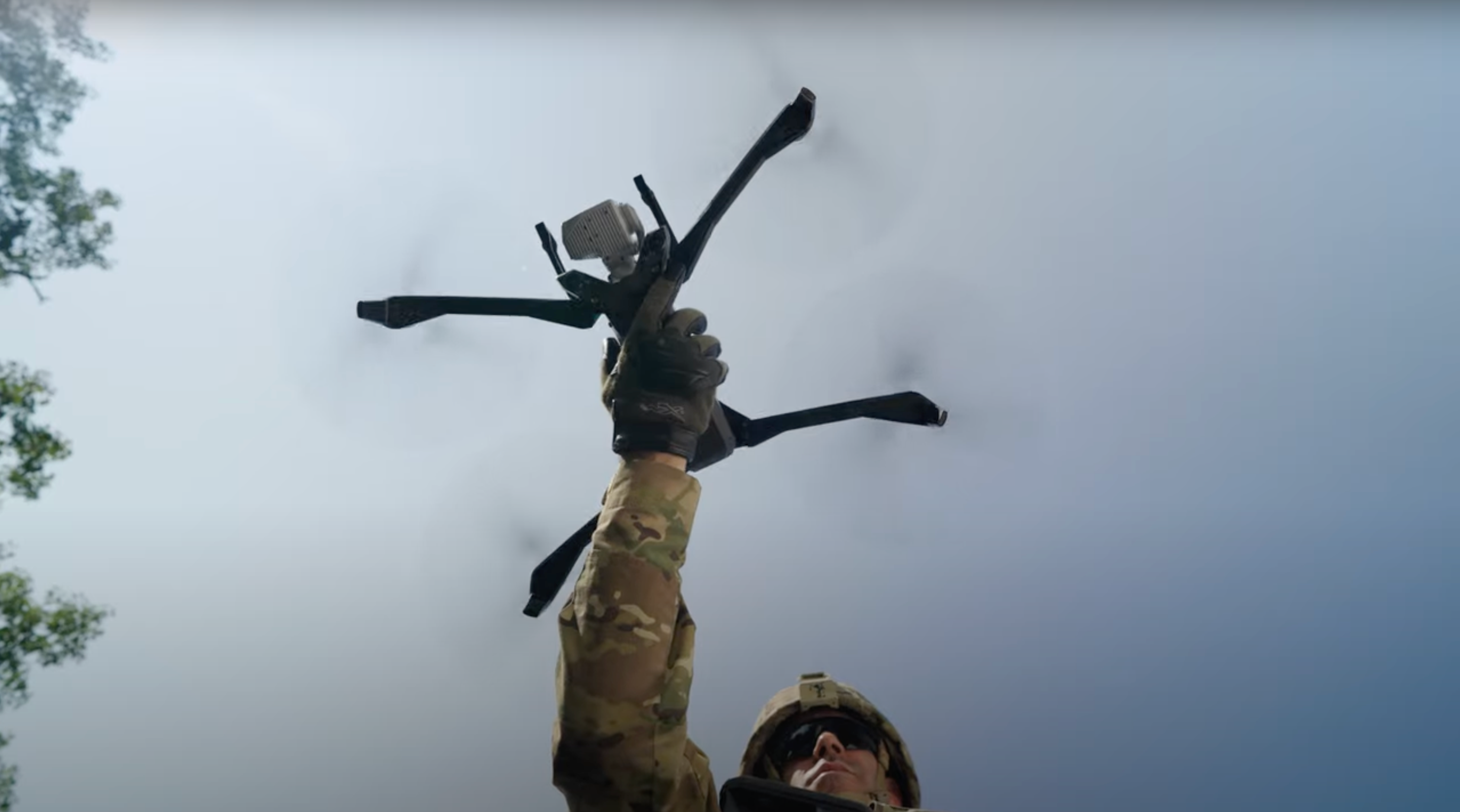
We brought K9 teams that train under Trident K9 Consulting to Skydio headquarters for an exploratory training session. The dogs work with local agencies across the Bay Area, and we ran them through two environments: our shoot house, which we use for indoor tactical training, and our parking garage, where we ran vehicle clearances. The goal was to simulate search warrant entries with a K9 and our R10 tactical drone working the same space, and to see what happens when a working dog meets the R10 for the first time.
Why pair them at all? Because each one perceives what officers can't. A dog's nose carries up to 300 million olfactory receptors, compared with roughly six million in a human, and the part of its brain devoted to analyzing scent is proportionally about 40 times larger than ours. That's why a K9 can pick up a person hidden behind a closed door or tucked into a vehicle compartment long before an officer would have any reason to look there.
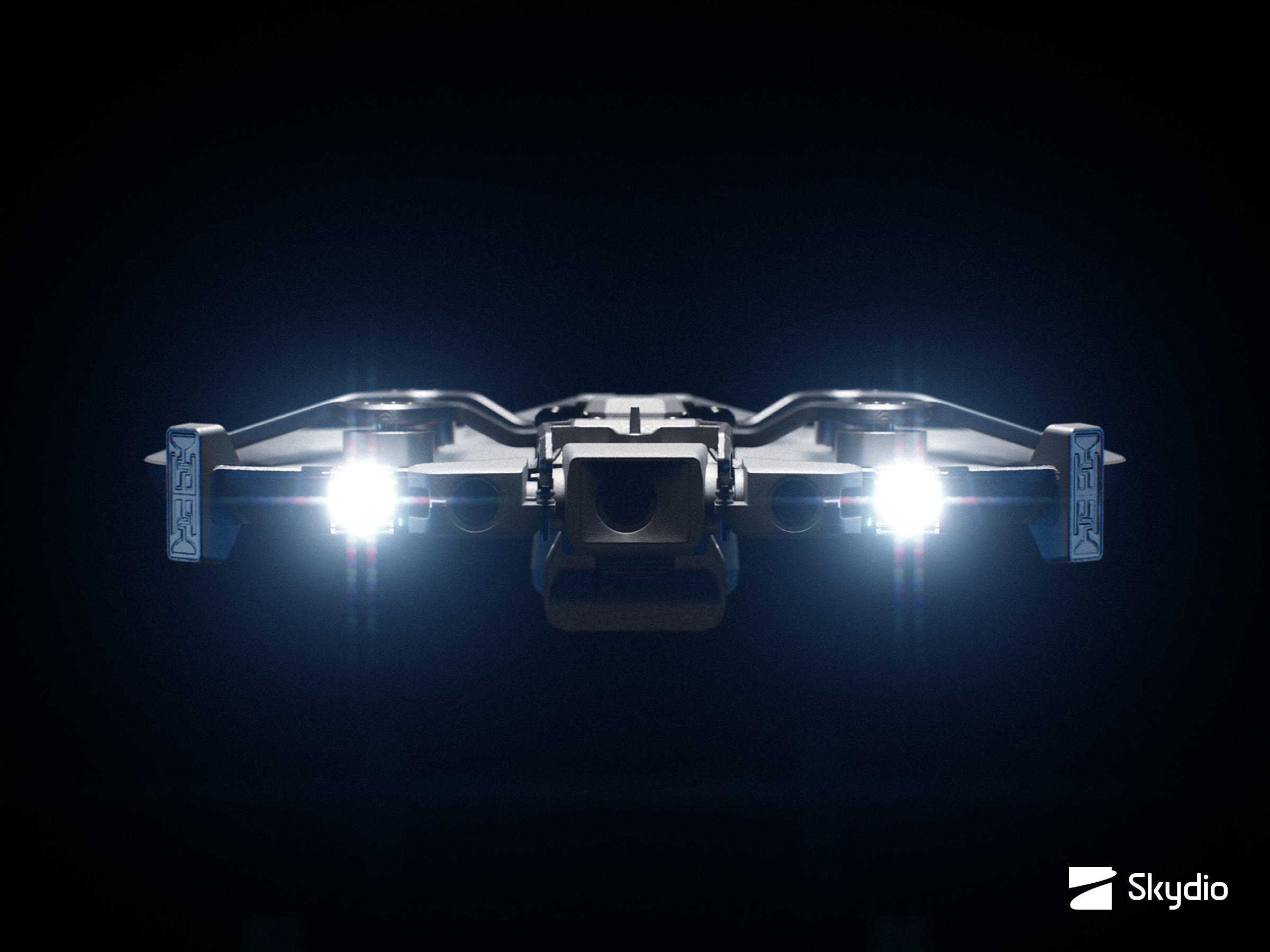
The R10 extends perception in a different way. Its vision-based navigation lets it fly autonomously through tight, GPS-denied interiors, avoiding obstacles and remembering its path so it can backtrack on its own. NightSense keeps that navigation working in dark and zero-light rooms, and high-intensity onboard lighting puts eyes into spaces officers can't see from cover. Built-in two-way audio lets the team listen and speak into a room before anyone enters it. For missions that call for heat signatures, our X10 adds thermal imaging from above the structure or vehicle.
When you send the K9 and the drone in together, you get a much fuller picture of who is in a building and what is in it as a warrant is executed. That's the outcome I care most about: better situational awareness, so teams can stage ground units further back until they know they have the all clear.
Safer outcomes aren't only about officers. When a team knows who is inside a building and where they are before anyone goes through the door, everyone on scene benefits, including the people inside. Surprise encounters in tight spaces are where situations escalate fastest. Time and distance give a team room to slow down. With the R10's two-way audio, officers can speak into a room from a position of cover, identify themselves, give clear instructions, and give someone the chance to come out on their own terms. Early visibility can also reveal who else is in the home, like children, elderly residents, or someone in medical distress, so the response can account for them. It can even inform whether a K9 needs to be sent in at all. Better information on the front end gives every person in that building a better chance of walking away unhurt.
But putting two sensing systems into the same space without preparing them for each other creates a new risk instead of removing one. K9 handlers already know this instinct. You don't introduce a working dog to gunfire, a new handler, or an unfamiliar building layout for the first time on a call. You train for it. Somehow, drones have been treated differently.
Departments stand up DFR programs, departments run K9 programs, and the two rarely meet before they're expected to work the same scene together.


At HQ, we flew the R10 at different heights relative to the dogs, above and below, to watch how each dog reacted to its sound and movement. “We're going to see dogs sensing, experiencing, reacting, and responding to the drone and coupling that with their typical operations,” said Marty Mahon, founder of Trident K9 Consulting and a retired sergeant with 27 years of law enforcement experience. From a curriculum standpoint, that was exactly what I wanted to find: where the friction actually is. That way, what we build is grounded in what we observed instead of guesswork.
That friction matters because the cost of skipping this step isn't hypothetical. A dog that startles at an unfamiliar aircraft mid-search can lose focus, break off a track, or alert incorrectly. During a warrant entry or a vehicle clearance, that can be the difference between a clean operation and one that goes sideways because two tools that should complement each other end up working against each other.
The upside, when the integration is done deliberately, is real. A drone operating ahead of or alongside a K9 team gives the pilot and handler a continuous view of where the dog is, what it's doing, and whether it's in distress. Handlers have historically had to infer that from limited sightlines and radio traffic. As Marty put it during the session, “Having eyes on the dog throughout a search means a team can respond immediately if the dog is hurt, rather than searching blind and hoping for the best. K9s and drones both function as de-escalation tools in public safety work today. Training them to operate in the same space, rather than assuming they'll figure it out on scene, is what makes that combination dependable instead of a liability.”
My advice to agencies evaluating or expanding a DFR program is to budget for K9 acclimation the same way you'd budget for any other new-equipment integration. That means:
- structured exposure sessions, not a single ride-along
- testing altitude, proximity, and noise tolerance across your specific K9 roster, since dogs vary in how they respond
- building this into initial SWAT or patrol drone curriculum from the start, rather than adding it once problems show up in the field
My team is now building a formal curriculum for R10 and X10 integration with K9 operations, based on what we learned in this session. We'll share more as it develops. If your agency has already run joint drone-K9 training, or is planning to, I'd like to hear from you. You're in the best position to tell us what's still missing.