Transparency is Fundamental to the Success of Drone As First Responder
 Adam Bry
Powerful technologies require radical accountability. By examining how other public safety technologies like body-worn cameras (BWC) and automatic license plate readers (ALPR) have been implemented, we can learn important lessons to maximize the positive impact of Drone as First Responder programs over the long term.
This is a special time for drones in public safety. Every day - almost every minute now - we’re seeing incredible stories where Drone as First Responder (DFR) changes an outcome: finds a missing person, catches a suspect, or saves precious seconds for an injured person. We routinely hear things like “game changer” and “the most impactful technology I’ve seen” from the agencies and leaders we’re fortunate to work with.
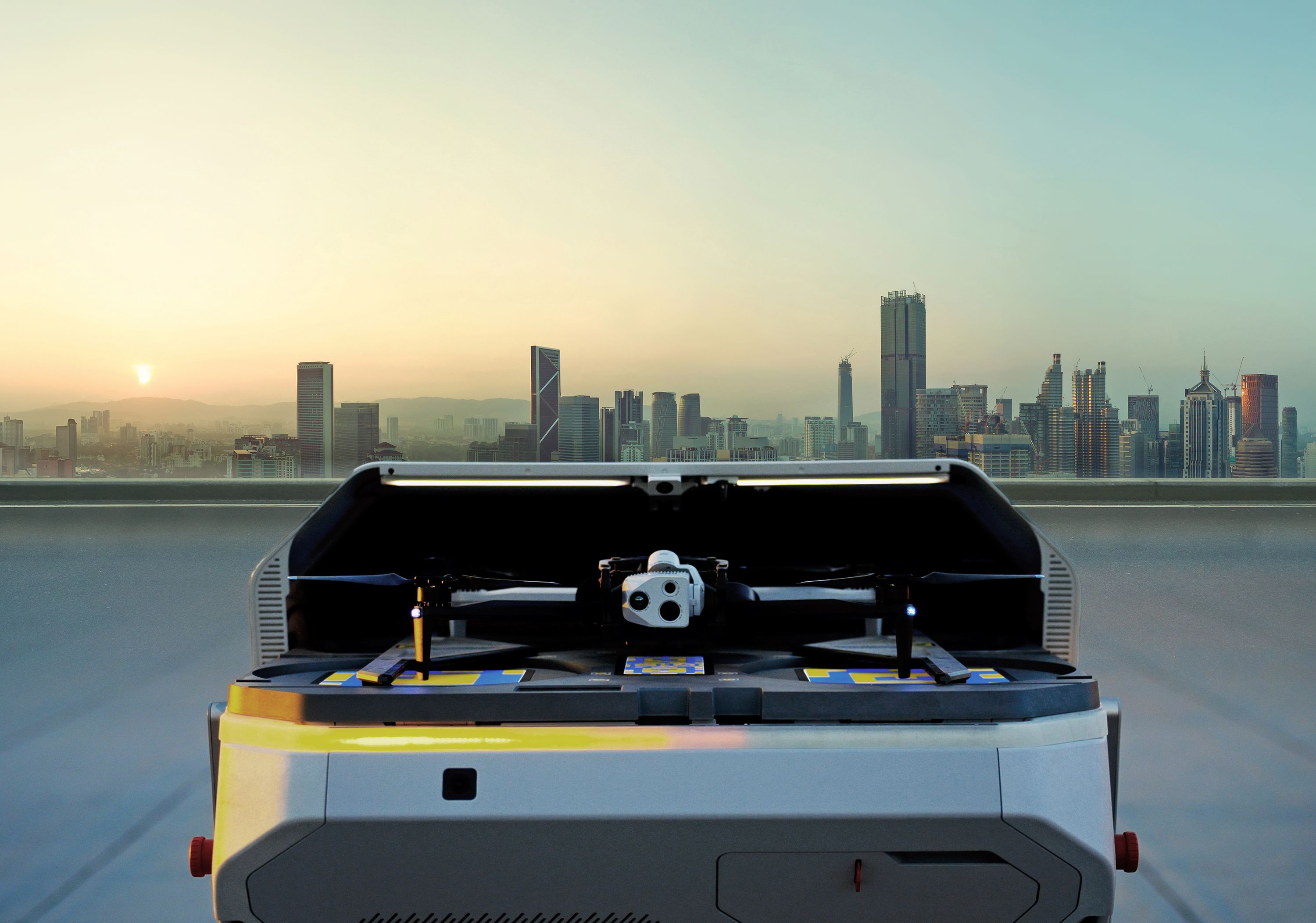
And we are just getting started. There are roughly 250M calls for service (911 calls) annually in the United States. Data from agencies deploying DFR today shows that some are already choosing to send DFR drones to more than one-third of the calls within range of their Docks. Officers on-scene are increasingly relying on - and expecting - DFR support to show them exactly what they’re heading into while they’re en route. As the technology matures and adoption deepens, it’s easy to imagine a world where the default expectation for every 911 call - every emergency - is a drone showing up within seconds to provide real-time awareness and often changing outcomes for the better.
It is an honor and a huge responsibility for us at Skydio to play a role in making DFR happen. I think this is likely the most important and impactful work that I’ll get to do in my career.
We started working with law enforcement in 2020, amongst intense skepticism nationally - and especially in Silicon Valley - about doing anything to work with or support police. We always had deep conviction in the positive impact of DFR, but perhaps shaped by the early criticism we took for working with police, I thought that public and political will to adopt AI-driven autonomous drones flying over cities would be the biggest barrier to adoption. When you just explain the idea to someone, it honestly does sound a little nuts.
Concerns have certainly been raised - and there are reasonable concerns to raise - but by and large, agencies, elected leaders, and citizens are leaning in.
I attribute that to one fundamental concept: transparency.
The pioneering agencies adopting DFR are doing an incredible job of proactively explaining what they’re doing and why they’re doing it (to name just a few: see DFR communications from Minnetonka PD, Colorado Springs PD, Los Angeles PD, Las Vegas Metro PD, and Wichita PD’s transparency dashboard, and epic Well Done Wednesdays).

And the nature of DFR - a flying camera - has the benefit of perfectly documenting everything the drone does. These videos have turned out to be one of the most powerful tools for getting community buy-in. When people see videos from DFR, they get it. In fact, it becomes almost impossible to deny the positive impact. DFR is not about the state spying on people in their backyard; it’s about seeing the most critical details at the most crucial moments, like determining whether someone is brandishing a firearm or a cell phone, to keep everyone safer.
To ensure the long-term positive impact of DFR, it’s worth studying the path taken by other technologies that have had a significant impact on law enforcement: Automatic License Plate Readers (ALPR) and Body Worn Cameras (BWC).
ALPR
Over the past few years, we’ve seen ALPR gain adoption in law enforcement. At its essence, ALPR is always-on, always passively capturing and analyzing footage to identify and track the location of every car it sees. The ALPR vendor maintains a database summarizing everything the entire network of cameras has seen, which is then searchable after the fact.
There is no question that this can be super valuable for solving crime, and I am generally a big believer in ALPR. But it is also the kind of always-on passive surveillance that can violate expectations of privacy, and having a private company maintain a database of vehicle locations, with a business incentive to maximize data sharing between its different government and commercial customers, rightfully places a lot of scrutiny on the vendor’s posture on security, privacy, and transparency.
We’re now seeing a swell of pushback against ALPR. Some of this is inevitable - there are people and organizations that will stand opposed to any police funding or police technology. But I think a lot of the ALPR pushback comes from questions about the vendor. The current market leader in pole-based ALPR has a history of saying one thing publicly but doing another thing privately. Citizens and communities have an expectation of the data being treated one way, when it’s actually treated another. Their posture on privacy and transparency leaves a lot to be desired: “If you're not involved in a crime, you shouldn't be concerned about privacy.”
The root of trust for technology in public safety starts with the company that makes it, and a lack of transparency and accountability creates problems for everyone involved. Most significantly, it detracts from the positive public safety impact ALPR can create. Partially as a result of the security, transparency, and accountability shortcomings of the current market leader, I expect that we’ll see increased competition in ALPR over the next few years. Competition is always good because it forces companies to elevate their game. In this case, I hope it not only elevates the products and technology, but also the posture on privacy and transparency.
BWC
Body-worn cameras (BWC) provide insight into the importance of transparency. When BWCs were first deployed, some agencies and officers were concerned that footage would be used to unfairly judge their split-second actions during life-threatening engagements, while some citizens were afraid they would be spied on with BWC footage. But as BWC programs proliferated across the country, the overwhelming outcome has been a major victory for transparency and accountability. It has become standard operating procedure for agencies to release BWC footage after major incidents. More often than not, it shows officers doing the right thing and is helpful for countering allegations of misconduct. In instances of police abuse, the footage gives the public the transparency they deserve, allowing appropriate action to be taken. For the good of law enforcement officers and the communities they serve, BWC has become a near default expectation for officers in the US.
Comparison with DFR
In contrast to ALPR, DFR is maximally precise and narrow in how it works. Rather than covering a city in cameras and collecting everything to be searched later, DFR flights come from deliberate decisions by accountable individuals to send a drone to precisely the time and place where information can change an outcome. By getting to the scene first and providing real-time information without officers’ having to expose themselves to risk, DFR keeps everyone safer. But in addition to changing outcomes, DFR has direct parallels to BWC in accountability and transparency because it documents actions and outcomes on the ground. One lens to view DFR is a “BWC in the sky” - though it often provides a more complete picture than would ever be possible from a ground view coming from a BWC.
But even though DFR is less invasive than ALPR, it still creates sensitive data, and success will still depend on community trust and buy-in. We need to internalize some of the painful lessons from the pushback against ALPR.
The Future of DFR
My fundamental proposal to all of us involved in DFR - companies, agencies, politicians, officers, deputies, and analysts - is to operate with maximum transparency.
Treat every second of every flight, every keyboard press, everything that happens with the data, as if it will be seen by the public at large. Whether or not it actually ends up being viewed or not, this is a public good we’re providing, and we should all expect to be held accountable publicly for our technology, our products, our flying, and our actions.
We build, sell, and deploy our products with this responsibility at the forefront.
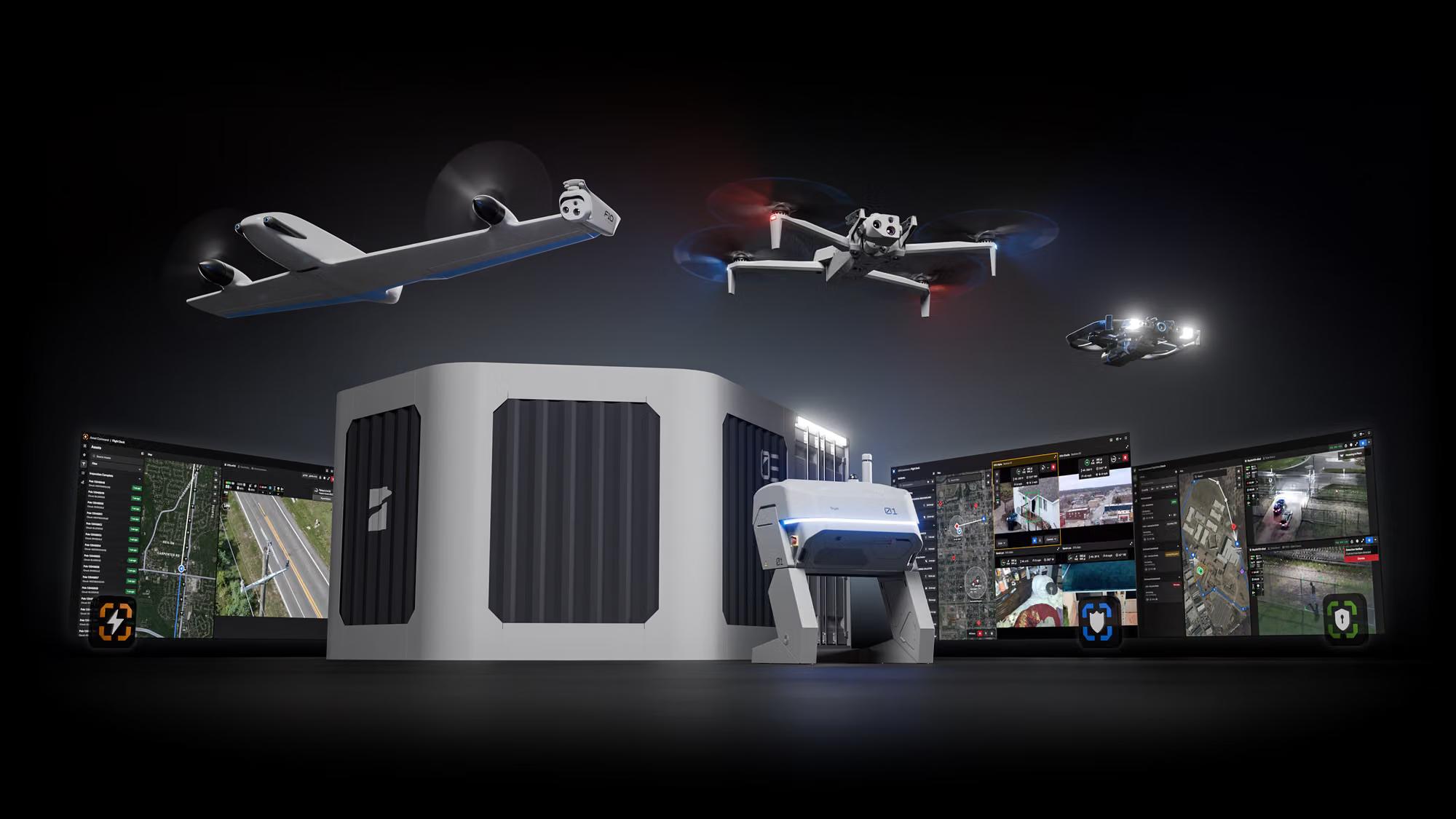
Our DFR software includes the ability for agencies to publish their own transparency portals for their communities to see the flying that they are doing. Every mission flown, including the time, date, flight path, and purpose, can be automatically published to a public-facing webpage. It is ultimately up to agencies if they want to use this feature, but we are committed to making it as easy as possible for them to take advantage of it if they want.
Our reliability dashboard shows real-world flight incident rates over time. Some companies try to hide or downplay incidents, but we believe that transparency on reliability is a critical step for our customers to make informed decisions for their programs, and it’s also part of how we hold ourselves accountable for continual improvement.
Transparency builds trust in how drones are used. Ensuring the data they collect is secure and admissible builds trust in the outcomes. I anticipate drone videos becoming just as common as BWC footage in courtrooms – for prosecutions, crash and crime scene reconstructions, and other public safety incident reviews – so we built our system to meet CJIS 6.0 and other federal security requirements.
In this example from SFPD, without the drone’s POV, the public would only see the slats of the deck on which the officer is positioned.
Companies shouldn’t have the final word on where and how public safety technology is used - ultimately, it’s up to communities and democratic processes. We are fortunate to work with incredible agencies and public safety leaders across the country who do incredible things with our products on behalf of their communities and are establishing a model of transparency and accountability for everyone to follow.
DFR is used on less than 1% of the 911 calls in the US today. How much safer will we all be when that number is 10, 20, or 30%? Transparency is the bedrock principle that will enable us to get there.