Dominion Energy: Asset inspection, from an office chair
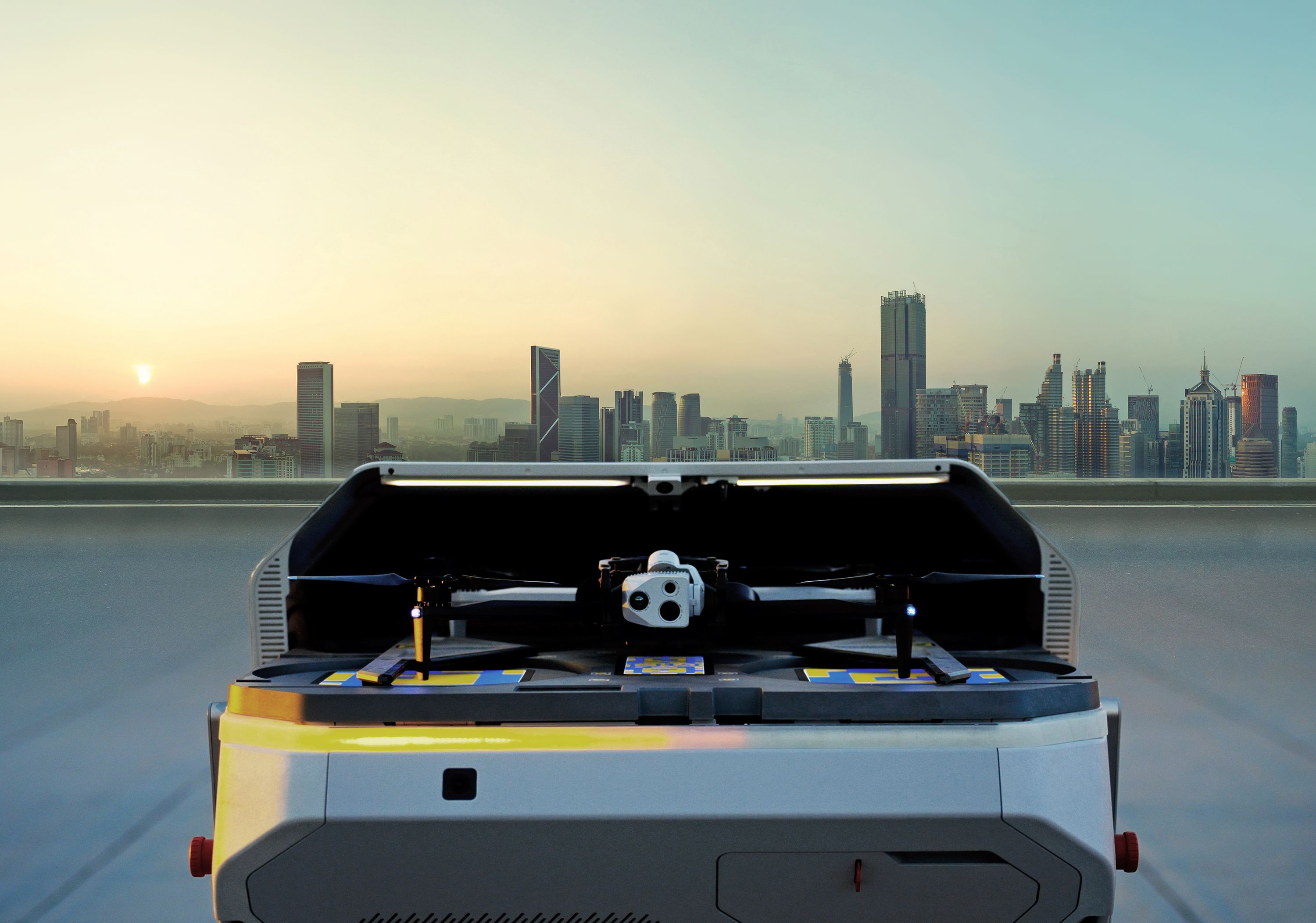
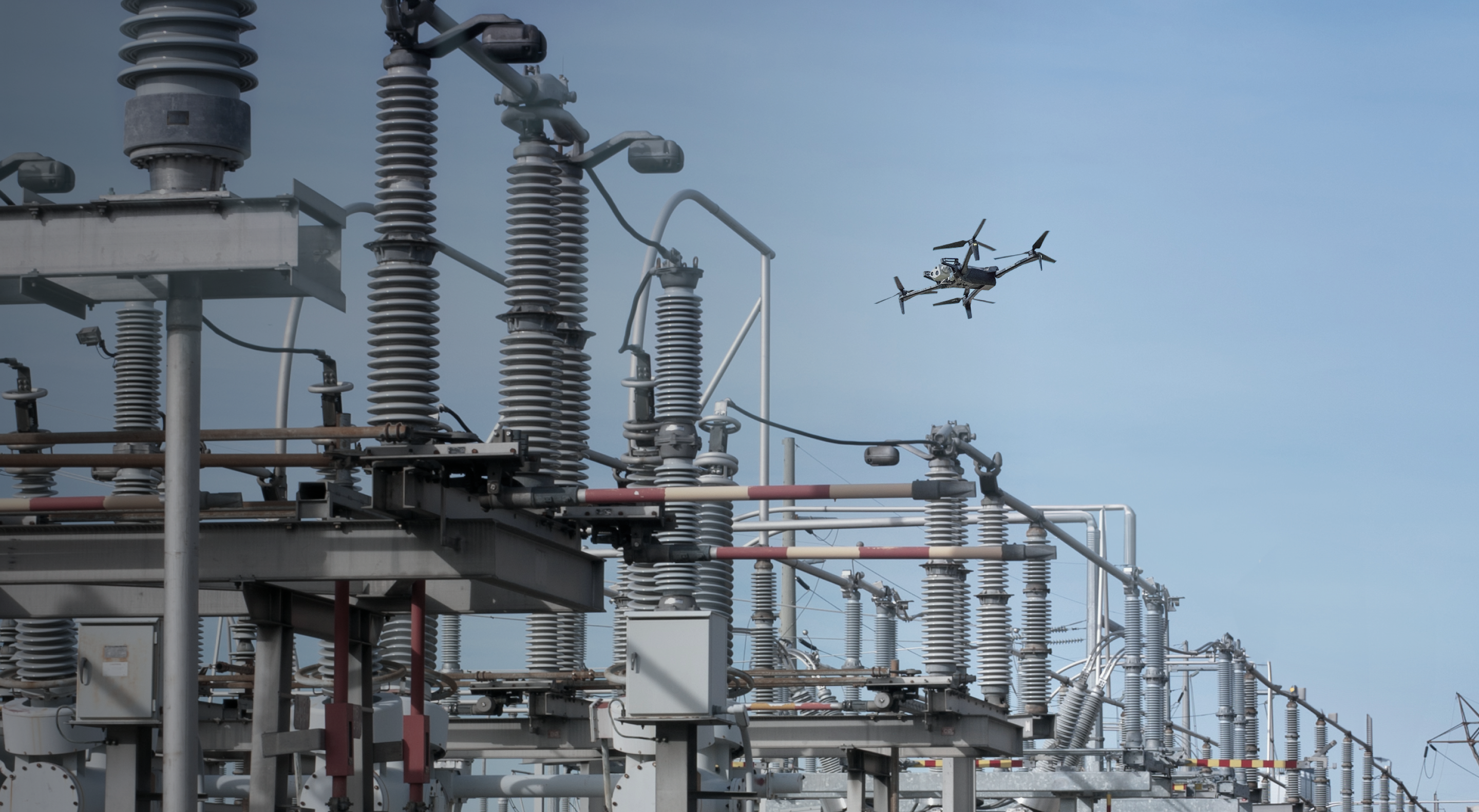
With Skydio Dock and Remote Ops, Dominion Energy is able to inspect any asset at any time, from a computer anywhere in the world — and it’s changing their operations.
Aging infrastructure, limited resources, natural disasters, and budget constraints complicate asset inspection. With Skydio's dock-based drone technology, Dominion Energy has found an easier way to understand the condition of assets. They remotely launch a self-flying drone from a computer, get near-instant visibility, and make informed decisions in minutes — without leaving their desks.
Watch our live demo to see a real-time remote substation inspection, and hear T.F. Butler, Dominion Energy’s Unmanned Systems Group Manager, explain how and why his program relies on remote asset inspection:
- Near real-time data. Anytime. Anywhere.
- Reduce O&M expense: Conduct routine or event-based inspections from a computer, make informed decisions in minutes.
- Better resource allocation: No more unnecessary truck rolls — allocate crews more effectively.
- Increase worker safety: Keep your workers out of harm's way — send intelligent, self-flying drones.
Learn more about Skydio Dock for X10 and Remote Ops.
- Hi, everyone, and welcome to the webinar on asset
- inspection from an office chair. Today we're going to look at remote
- operations and really dive into some live demos, um,
- both in a substation environment and outside with
- our Skydio X10. I'm very excited to welcome Dominion
- Energy
- to our webinar. My name is Christina Park.
- I'm the Senior Director of Energy Strategy,
- and I'd like to hand it over to TF.
- Hey, good afternoon. I'm TF Butler.
- I am the manager of the Unmanned Systems Group here at Dominion Energy, um,
- providing service to about 4.5 million customers in 13 different
- states.
- Awesome. Welcome, TF. We also have Corey.
- Hey, I'm Corey Hitchcock. I'm the Utility Solutions Specialist at
- Skydio.
- Um, I was a lineman in transmission and distribution, helped develop, uh,
- drone use at Southern Company, uh, for line inspection and, uh,
- and other, um, patrols and,
- uh, nuclear work as well.
- Yeah, Corey and I are really excited. Uh, we're here at Skydio.
- Both of us have experience from the utility industry, um, and also working
- with TF. So we're really excited to share, uh, some of these remote, uh, app-
- remote operation applications today. [lips smack] So let's move forward here.
- All right. Hey, TF, this is, uh, it's gonna be pretty conversational.
- I got...
- Gonna talk a little bit about, uh, when you started working
- with Skydio back in 2017 and why you started working with Skydio.
- Why did you pick us?
- Yeah. So I mean, for us, just building practical use cases,
- both old and new,
- um, you know, comparing the two together, you know, is it an
- application where, you know, utilizing a drone was gonna fit
- something the way we previously did something, right?
- So it's that comparison timeframe that you kind of go through that period of
- learning and doing the comparison part of it.
- So one of the things we really look, you know, obviously safety is a very core
- value of most utilities, uh, including ours.
- You know, how can we keep our employees safer, uh,
- while we're doing a
- job that, that does have some risk, right?
- Um, and then trying to find the tool that did these things at a,
- you know, a reasonable cost, um, you know, to the business and also,
- you know, that gets obviously extended out to our
- customers.
- Um, and then the other big factor for us
- was moving away from,
- um, you know,
- products that were non-friendly to the US.
- Um, so we made a decision early on in our
- progression, uh,
- approximately five years ago, where we only fly
- US-manufactured or friendly foreign country aircraft on
- our infrastructure. Um, you know, we, we kind of did that, uh, from
- a couple different prong approach there.
- Uh, obviously cyber concerns, um, were important, um, as well
- as, you know, making, making our, um, our service
- to our customers, uh, you know, reliable, um, and, and know that,
- that the data was gonna be secure. So that, there were a couple of,
- some of the
- earlier things that we really kind of targeted when we were looking, uh,
- to, to partner with Skydio.
- Cool. So the, the hardware progression, how, how do
- you think the hardware pro- has progressed over the years, and,
- and how
- are you involved with Skydio in that progression?
- Um, and then, like, what new capabilities has
- your work, like your close work with Skydio,
- like unlocked?
- Yeah, I mean, you know, obviously the earlier sensor, um,
- you know, on
- aircraft, especially US, you know, manufactured aircraft, you know, they were
- most likely built for another purpose.
- And, you know, we found that, uh, you know, operating the S2, you know,
- that, that actually came, the S2+, and then obviously the X2, uh,
- was our earlier fleet of Skydios. Um, and really those
- aircraft weren't really built initially for the utility inspection
- business. Um, you know, they were built more in, in a military
- application. Um, so some of those sensors since that
- time, working with Skydio, we've really developed
- that relationship on
- what our needs are in the utility sector versus other, other businesses
- that may use a drone for, for their work, right?
- So I think really going down that, it's really provided us and provided
- Skydio with some insight on what the need is for our business, and that
- relationship has really
- developed some really great products, especially with the X10 coming out,
- um, you know, with the dual sensor payloads, you know,
- with the X series and L
- series payloads on those aircraft.
- And then really having the true radiometric capability
- that we really didn't
- have with, with the X2, obviously S2, you know, didn't,
- didn't necessarily have that for us.
- But the X2, um,
- you know, you compare those side, side by side today, um, you know, that
- anyone who's flown either one of those platforms, it's a night
- and day difference,
- right? Um, and it, it's really hadn't taken us lo-
- that long to get to
- this point.
- Um, so I think really for us is just that,
- you know, the business, Skydio understanding what our needs are,
- and then really
- trying to come up with a solution to help us solve our problems.
- Has, has the, uh, radiometric sensor, that Boson+ been
- a hit with your thermographers?
- It, it, it has, and I, and I, and I tell you one thing that I'll,
- you know,
- hopefully get to touch on here today is really, you know, our solar side of our
- house, right, our renewables. And, and really what that is,
- it's really become a
- game changer and, and, and being able to, you know, inspect
- our, our solar assets that we have here at Dominion.
- Cool. Um, so let's talk a little bit about
- regulatory.
- Um, tell us about your work with the Skydio
- regulatory team.
- Um, how did that begin, and, like, what's the experience been?
- Um, would you recommend working with our
- regulatory team to others,
- and, and why?
- Yeah. So I think really for us is, uh, you know,
- I think a lot of utilities really
- struggled with this in the beginning, you know, early 2017, where we're really
- looking for, for an aircraft that, you know- BVLOS, beyond visual line of
- sight, was everybody's goal to fly on utilities,
- right? Long linear infrastructure.
- If I could start here and end there.
- You know, obviously with the FAA, there was, there's,
- there's definitely hurdles
- that, that need to be overcome in order to have
- those type of operations.
- Um, working with the Skydio team, we were able to, early on, uh,
- really the first of its kind, really secure the 42 sites that we have,
- uh, a waiver with the FAA. Working with your legal team,
- um, you know, and really coming up with a solution,
- we are also part of the BEYOND
- program, um, which was initially the IPP
- and then became the BEYOND
- program, with MAP, uh, and Virginia Tech.
- And really working with your regulatory team and working with that part of it,
- with the FAA, showing that we could do these flights
- and do them safely,
- you know, really checked a lot of boxes for us to
- show what
- that future could be for beyond visual line of sight.
- Um, you know, early on we, we put a lot of time
- and a lot of effort into it,
- and really the regulatory atmosphere just wasn't supportive of that type of an
- operation. Um, but again, by working with your team, working
- with MAP, working, you know, with the BEYOND program,
- we've really have overcome.
- You know, we've got four pending waivers right now,
- uh, with the FAA,
- um, you know, for other beyond visual line of sight
- operations and remote, you
- know, dock operations as well. So, you know, it only continues, um, in
- just showing how the aircraft drones can be used in the airspace
- and used safely.
- Awesome. Uh, so
- now I, I kinda wanna talk about... So everybody wants to use drones to
- capture
- data, and people, a lot of times people don't think about
- the downstream
- implications of, of what to do with that data when you capture it.
- So, uh, I guess kinda talk a little bit if you, if you can, about the
- importance of downstream data workflows and, and how that
- works with, uh, with Dominion's, like, data management.
- Yeah, I mean, it's really important to rapidly go from
- flight to insight, right?
- You wanna, you wanna be able to use the information
- you're collecting from, you
- know, the aircraft and be able to do something meaningfully
- with that, that data
- that you've collected. You know, we really looked and, and kinda built our,
- our basic platform of our program realizing
- that data was gonna be a big part of what we did,
- you know, starting with the S2 and then going with the X- X2, right?
- Now we're with the X10. You know,
- better sensors create more data, right?
- And it's really too, it's not only about that,
- it's also about the metadata that's
- embedded in those images, right? That's really im-
- super important to us too.
- So being able to have a location where those all can come together and be shared
- across multiple business units is really important as well.
- So one of the things that we've looked at, um, in the partnerships with
- Skydio and with their other partners, is being able to work with companies like,
- you know, Esri, for example, right?
- Being able to put all that information in one bucket, but
- it being able to be used across, you know, a, a,
- a bunch of our different business units, like transmission, distribution, right?
- Power generation. If you're collecting the data, the,
- you know, the big
- buzzword for the century, right, is, or for this year at least, is AI. AI.
- Everybody wants AI, right? But if you don't have the images to put into
- the
- model, it can't learn. So you really need to have a place
- already thought out prior to collecting a bunch of data, so it's
- meaningful data to really get that insight on your infrastructure
- or the problem
- you're trying to solve. So really without having that data
- in a place that makes sense, um, it is really
- critical in training these models and these other programs, um, that can use
- Skydio data in order to, you know, to make these models
- and then be able to give us
- some actionable results, um, is super important.
- Um, I think that's probably the number one key
- when people are building drone
- programs and, and, you know, getting kicked off the ground.
- It's not about buying your first drone.
- It's about getting your policies, procedures, you know, the background and,
- and the ability to operate in those spaces,
- and then being able to put the data
- somewhere, and then you really can really move on
- past that,
- um, to really do something with the, with the data.
- Have, have you guys found that one drone flight can
- affect several different lines of business inside the utility, like veg
- management? You do a line patrol for an inspection,
- but veg management can also
- have access to that and, and other people, so you're getting,
- uh, extra value out of one capture of the
- data?
- Yeah, absolutely. And I think another one
- is really to mention too, Corey, is, is
- environmental. You know, we're, we're big environmental stewards, right?
- So having a, a flight, you know, that, that may have been for
- one purpose, but then the design team can use
- that same data again,
- and then you really can do alignment with that data on your,
- your infrastructure, where it is actually, you know, on that piece of land.
- And then being able to use that to do environmental studies,
- and then, you know,
- it, it, it could be a security, you know, function as well too, right?
- So you're really covering a lot of ground with one simple flight.
- Every AI program potentially can use that data in
- different ways. So, you know, really the set here, you
- know, what Skydio brings to the table for us
- is being able to collect that
- information. And again, I really stress this, is the metadata,
- you know,
- the API out that's able to be utilized by these other programs
- is super important, because if you don't have the right metadata
- embedded in the
- imagery, then it's really hard for those other
- exterior programs to do something
- with it meaningfully to you.
- Cool. I, I fully-
- Hey, TF-
- I fully-
- Can I ask you...
- Oh, sorry, Corey.
- Yeah, Christine.
- Go ahead, Christine.
- Yeah, TF, this is, this is really awesome, and I think when I think back
- of my experience in utility, I think the nature of the business
- is that,
- uh, these departments, right, if you're in generation,
- you don't spend a whole lot
- of time with people in [laughs] transmission.
- Like, everybody's kinda got their function.
- A lot of these, uh, business units are very siloed.
- But I think it's really interesting what you're saying about the data and being
- able to, uh, share that across business units and,
- and across different
- use cases. So can you share a little bit about how
- your department
- really kind of touches all these different business units and, and how you support
- them with this data?
- Yeah. So really, really for us in our, in our build-out of our program
- here at Dominion is we're under the services umbrella.
- So we, we actually supply and provide service to all of
- our business units. Um, some utilities aren't, aren't, you know,
- structured that way, but the unique part of our group is,
- is we're actually able
- to do work for every one of our businesses.
- So it really gives us the ability to collect the data and then basically
- share that data, you know, across our businesses.
- Um, you know, in some situations where, say for, for example, at
- some company, maybe your electric transmission couldn't
- share with distribution,
- right? But if our group as services is collecting that information,
- we can share that amongst other groups in our business, right?
- So you're not crossing lines of, of budgetary and
- other things, right? So it really streamlines this, this
- process of getting the data where it needs to get funneled to.
- Um, you know, I mentioned Esri, you know, as a platform that we use here at
- Dominion, but if we were able to put all that data
- and all those flights in one
- location, depending on who had the ability to look
- at that
- data, you know, had authorization to look at that data,
- then it, it could already have been collected for
- you without having to do repeated
- flights in order to get the same information.
- So that, that's a really, you know, a cost saving across the whole entire
- enterprise for us, is being able to do that.
- That's awesome. And if we think about the utility workflow
- with all the
- inspections that need to happen and the information
- that you're trying to collect,
- um, could you talk a little bit, you, you said that Esri, a lot of utilities use
- Esri. Um, I think it's pretty safe to say.
- Um, and I think there are platforms that are just common in the utility space
- as well as post-processing AI that tends to happen.
- Um, could you talk a little bit about the
- business value of, um,
- being able to integrate easily to get your data from one platform
- to another, uh, so that at the end of the day,
- you can get from flight to insight?
- Yeah. I mean, for, for us it's working with, with vendors,
- right? Um, you know, we, we talk to vendors and then, you know,
- that
- connection c- could be made with Skydio, right?
- And then you all have the ability to reach out to some of these same,
- same vendors, these same companies, right?
- And the relationship there is so important because of the
- data that's needed. Again, I, I talk about metadata and,
- and I don't want to
- minimize that, but it's so important that all of those pieces and parts
- work together correctly, right? Um, and the interpretation there is
- so important for us having that relationship with
- our vendors that are currently could be a vendor, you know, for the company.
- Um, but then being able to bring in what
- Skydio is able to
- provide on the API out, that, that's a key
- factor in bringing all of this data together.
- Um, you know, there's not one platform
- that does everything.
- There's not one program that does everything,
- and we all realize that in the
- utility industry. Um, you know, there's not a one-stop, you know, shop,
- you know, item that we can pull out of our pocket,
- launch it, and get everything
- back, right? So there's a lot of pieces and parts
- that need to come together,
- um,
- that, that are so critical and important to our business.
- Awesome. Thanks.
- So TF, um,
- Dominion's mission, uh, is to provide the reliable,
- affordable, and increasingly clean energy
- that powers your
- customers every day. Um, how does, uh, the
- use of, of drones for inspection, um,
- help you, um,
- deliver that safe, reliable, and affordable electricity to the
- community?
- I mean, if you, if you look at some of the traditional
- ways and, and not only,
- um...
- Actually, I'm gonna, I'm gonna stand up real quick to, uh-
- [laughs]
- [laughs] In our room. Sorry about that.
- Um, you know, one of the things for us is, is reliability, right?
- You know, reliability of our grid.
- Um, being able to go out and provide that reliability means that
- certain things have to be inspected continuously, right?
- And to be able to do that affordably, you know, not only in,
- in electric transmission or distribution, for example, but in power generation, for
- example. In order to do certain inspections,
- it could mean
- erecting a lot of scaffolding to, to reach a certain location, right?
- If we're able to do that with a drone and we have, you know, our pilot
- standing on the ground, we're, we're able to do that very
- affordably. We're able to do that reliably and repeatedly using
- the aircraft that we're using, right? And then it's increasingly clean.
- I don't have to potentially have a bunch of man-hours where people are bringing
- trucks in and equipment in order to erect the scaffolding.
- Um, maybe it's a helicopter operation.
- You know,
- drones we're not gonna, you know, go one for one for, for a helicopter,
- but a lot
- of inspections are done by helicopter 'cause there's no other means of doing it.
- Um, if we could do that with a drone and save that, that cost of,
- of that inspection from that, it's also, you know, there's another
- inherent risk there, right? You have, you know, two, two pilots in an, uh, you
- know, an aircraft that's flying, you know, over assets.
- You know, flying in a lot of environment is,
- is dangerous work.
- Um, but if we don't have to do that, then, then we're, we're really increasing
- our efficiency. We're increasing the li- reliability of our grid.
- Um, it's, it's definitely affordable and, you know, the increasingly
- clean, I think that goes without saying, you know, when you're using a drone to do
- that work, um, you know,
- that's, that's, that's saving and, and working towards our, you know,
- zero emission
- to 2050, um, for the company. So I think, you know, that's what we
- wanna do with our customers every day.
- Um, you know, I think drones are, are really a good, uh, price point when
- you look at what they're able to provide.
- Um, and I, I think, you know, there's a, there's definitely a cost saving there.
- I mean, obviously for us doing it internally, um,
- there's a cost saving because,
- you know, we're not having to bring a third party
- example, you know, into our
- system too. Um, there's no change orders, things like that.
- So there is definitely, you know, with the, with the 10-man group
- that I have, you
- know, here at, here at Dominion, um, you know, we're able to, to save a lot
- of cost in that aspect as well.
- Cool. Um, let's talk a little bit about starting a
- drone program. It seems to be a popular topic, uh,
- in the industry.
- Um, in the beginning, what was the, the goal of the
- drone program?
- So for us was really, in the beginning of our program was,
- was trying to put the guardrails in place.
- You know, we had, we had, you know, drones were becoming a thing.
- Um, you know, we were having, you know, individuals bring their personal drone
- from
- home and flying it on our infrastructure and, you know, our executive
- leadership said, "Yeah, we really need to put some, some guide,
- you know,
- guidelines around how we're utilizing unmanned systems and realizing that this
- is probably the future of a lot of inspection, you know, here at Dominion."
- And it's really trying to get that basic, basic foundation down, right?
- Building the program, making policy, making, you know, procedure manuals,
- and following what, you know, the FAA, you know, ultimately has control
- of when it comes to operating, you know, in that environment as a
- commercial operator. So that was really the, the things
- that really came,
- came about, you know, is the work, is the risk worth, um, you know, having an
- employee bring their own personal drone to work?
- And, you know, there was really not an appetite for the risk.
- So really standing up the program really started there.
- Uh, the realization early on, um, you know, it even went, you know,
- before the, the
- 2017 timeframe for us at Dominion is really how do
- we do this the right way, get off on the right foot, and then really
- progress our program past that? Um,
- so, you know, I think that was, that, that was really how we started, you know,
- leadership buy-in. You know, we just, we started the program, uh,
- in the process,
- like I said, in the beginning, where we were comparing apples to apples.
- We're like, "Okay, we're gonna do a, a volumetric study at one of our, our
- coal, you know, fire power plants."
- You know, it's a three-day process, roughly.
- You know, we have a lot of downtime there where
- we're not able to push the pile,
- where we would able to be bringing a drone in and collecting thousands more points
- and really getting that more accurate, right?
- So we were able to show, you know, the traditional way, we're not taking
- that off
- the table yet, but we're actually gonna show how we can
- do this with the unmanned
- systems and a drone, right? So we brought the Skydio in,
- we did a 15-minute
- flight, and we were more accurate than a three-day
- study because of the
- amount of data we were collecting.
- So I think that really, leadership was looking at, you know, cost, you know,
- dollar
- to dollar, and it really made sense to, like, maybe we should get into this a
- little bit more than what we are. Um, which then led to, like, the budget.
- You know, how do you get the money to stand up a
- program?
- And, and from our, from our standpoint, we didn't go out and buy
- 20 drones, right? We bought a couple of drones to be able to
- prove the value of what they would bring to the table.
- Um, again, you know, the safety part of it,
- how do you put a number on safety?
- Um, you know, that's, that's a real important key factor here,
- too, where,
- you know, I, I think when you compare a life to a drone,
- there's really no
- comparison, right? W- we'll all agree there.
- But if I can show that I can do this for half the price
- that I could do it before,
- or maybe I don't have to erect scaffolding in an area, I may have to
- 'cause I may need to do a repair that identified with a drone.
- So you really, you know, can't take that off the table, but really you started
- showing this really big cost efficiency of using unmanned systems.
- You know, our, our program also does, you know, we're air, land, and
- sea. We, we do have submersibles as well.
- Um, then we do, you know, a lot of confined space as well, too,
- with our, with our
- drones, too. Um, but you know, that's just how the, the programs
- evolve from, you know, early workflows,
- how we were using the technology, doing things that had never been done
- before.
- You know, we, we, we had a, uh, a gravel pile and a dam, and
- we really never knew what the volumetric calculation was of what was actually
- sitting there. You know, these are things that we
- were able to do really quickly,
- um, and provided value. And, and really for us,
- it's the value to the business that
- we're supporting here at Dominion.
- Um, you know,
- for us, we really have to show what that value is and then, you know, maybe it
- is, you know, 12 drone in a boxes. Maybe it's one initially and maybe
- then we, we branch out from there, right? So I think all of this is scalable.
- Um, you know, co-ops, other utilities that are, that are trying to get into
- this, really the, the biggest thing, you know, reach out to me.
- But the, the, the basic foundation is so important, um,
- as you really go on this journey. Um, again, I, I would say
- second is data storage, um, [laughs] is another one.
- Um, but you know, that's really kind of how our program
- really kind of evolved, uh,
- to where we are today. You know, remote operations, uh, drone in the
- box, you know, which was kind of a, a dream back in
- 2017. Really wasn't a lot of, you know, lot of, lot of
- talk and, um, you know, look, look where we are today.
- Cool. Um, thanks for that. Let's talk about, um,
- let's talk about the program strategy, uh, and your rollout
- strategy. Like how, um, or I guess have you
- realized new problems that you can solve that
- didn't occur initially, or things that weren't, uh,
- that you didn't think about?
- And then how has the use of drones evolved over time?
- Like, has it become... Initially, it was, like, a good thing to have in, in
- my world, or, like, when I was at the Southern, it was, like,
- a good thing to have, but then it became part of the workflow.
- Is that kind of the same experience you've had at Dominion?
- Yeah. I think, [laughs] you know, once you get the drone in your hand
- and then you
- realize what other things you can do with that platform that you
- didn't really,
- you really didn't realize the use case initially.
- Um, I think we found that on, uh, you know, I, I talked about environmental
- a little while ago. You know, we're trying to do our environmental
- audits, you
- know, really didn't realize that there really is a big application
- there.
- Um, you know, we're flying over, you know, uh, you know, projects that were
- under construction, for example, and then, wow, well, we could really use that
- data to really base our environmental audit inspections on, right?
- And so we're really, again, using that same data over for
- another group that really has an interest in looking at that from a different
- vantage point. You know, I think-
- Traditionally, we started off, you know, using cell phones to take pictures of, of
- issues, you know, potentially on an electric transmission
- or a, a distribution
- line. Well, you really weren't at the level of the
- problem.
- You were on the ground taking a picture up, right?
- And now to be able to be there by that asset
- that has the issue and being able to document that, you know,
- it, it, it really changes your perspective on what
- you're really looking at.
- I say there's a lot of poles probably in the utility space that were really good
- inspected about probably 10 or 11 feet off the ground,
- 'cause somebody was just
- standing there looking at it, right?
- But really, what was really going on above
- that part of it, right?
- So I think we really, really changed a lot of, of
- mindsets when you really are able to look at
- that from the top down or
- at the actual level of the, you know, the conductors or the components on that
- pole. Um, you know, we're looking at that woodpecker hole, you know,
- how deep is
- it? You know, when you're able to get that close and actually look at those
- stuff,
- you know, really it helps with your O&M process.
- You know, does that pole need to be replaced today?
- Can it wait till tomorrow?
- Um, you know, same thing in, in our power gen facilities as well.
- Um, you know, we're able to do inspections without
- taking it out of service or
- reducing the amount of current that's flowing through things.
- By utilizing this technology really, you know,
- allows that to continue to operate as it, it needs to, um,
- unless we see something that, that, that, that says else, you know, that we need
- to, to do something to that asset. So I think really keeping everything up
- and running, um, versus having to shut things down,
- um, you know, that really makes sense, um, you know, when you're looking at, you
- know, the customers that we serve.
- Awesome. So what, uh, what problems and
- applications are you solving today with drones?
- So I think really, you know,
- being a regula- to, you know, regulated, uh, industry, you know, here at Dominion,
- being able to meet the, the inspection requirements, right,
- that are set
- out by the regulators, I think that, that's a really, a, a big one,
- and it's a key
- important one, too. Being able to get that done and potentially get more done
- than what has been asked of us as well, right?
- So you're able to cover more, you know, for, for a
- utility, a large utility to go out and inspect every, every line
- that you have or
- every pole that you have on your infrastructure, you know, in a year or a
- month is, that, that's just not gonna happen.
- Um, but to be able to do that in a more, you know, uh, side-by-side
- comparison, right? We talk about AI and we're able to put those same images,
- um,
- you know, the orientation's the same, right?
- So if we're looking at the same stretch of line today, and then we look
- back at it in a year, you know, that's where change detection
- and AI really
- comes to really starting to bear a lot of fruits for us, right?
- Um, so I think that's a really, a really big key thing for us,
- uh, not only in the distribution/transmission
- side, but also, um, you know,
- in, in our, our power generation facilities as well.
- So I think, um, you know, w-
- places that we weren't able to see normally,
- um, and, you know, very complex environments, uh, you
- know, with the obstacle avoidance that we're able to use with Skydio
- and actually
- get into those areas, um, you know, the, the
- inspection process itself is more thorough.
- Um, you know, you can only see so much from the ground.
- Um, you know, as I indicated before, and being able to actually get really
- close to
- that asset and really inspect it very closely is, is super important and
- super helpful.
- Cool. Um, so you guys have been flying Skydio drones
- for
- seven-plus years, and, uh, with the sensors that the,
- the X10 offers and remote inspection via Dock, um,
- what are you guys able to do now with these c- new capabilities?
- Well, I think, you know, one of the exciting parts of,
- of what we're looking at,
- you know, is, is the potential use, you know, when, when the X10, you know,
- is actually out and in a dock, right?
- Um, we're able to see some of those
- applications now, you know, with, with the two,
- um, you know, lens packages that are on the, the aircraft currently.
- I think that's really the exciting part for us, um, to be able to see
- where this is going to be able to give us, um, you know,
- being able to look at things from further distance or be able to look at
- things, you know, from a, a dual sensor payload
- package, right? So we're looking at with a true
- radiometric and being able to look
- at it, um, you know, getting kind of the same field of view,
- um, you know, with the L-series, uh, lens.
- Um, I think that's really gonna be a benefit
- for us, um, not only in
- the inspection, but in the security aspect as well.
- So,
- you know, having a, a drone in a box live at a secure facility
- where we need to do
- routine, you know, flights to, to make sure that that security
- perimeter is intact, um, being able to have that type of
- technology live there at a site, uh, whether it's a substation, you know, or
- a facility and be able to do repeated flights, you know,
- looking at key components every single time is that apples to apples comparison.
- Um,
- really, really comes down to change.
- You know, is that gate open or is that gate closed?
- Um, you know, the same thing goes for, you know, our, our solar, you
- know, renewable fleet too. Um, you know, do we have a string outage?
- Do we have, you know, combiner box issues?
- Whatever it may be, we're able to look at that, um, with
- that data,
- you know, with, with a platform that's living there on
- site and
- repeatedly be able to do, you know, launch that drone
- and be able to look at that,
- um, real time or being able to look at it
- processed through
- AI data and then being able to look at that from that aspect as well from,
- from the change aspect.
- Cool. Well, uh, I, I think we're gonna go
- ahead and switch over to a demo here. We've got, um...
- We're gonna do a couple demos and, uh, what we're gonna
- do is involve a little bit of audience participation here.
- So, uh, if you take your mobile device and you scan
- that QR code that's there on the, uh, on the screen,
- that's gonna be our Ready Link, and what that Ready Link is gonna do is
- allow you to see a high-quality stream
- from the inspection that I'm gonna do on the, um,
- like on the- The web app that we're kind of presenting through.
- So I'm gonna go ahead and switch over to, um,
- to our cloud interface.
- All right. So, uh, what you see here is, uh,
- an example of what you would see if you had a fleet of, uh, of
- drones. So you'd see, like, your Dock drones in the, on the left
- side of the screen. Um, this facility is actually in Hayward,
- California, um, at our Dock testing facility.
- Uh, and it's indoors, so it's a GPS-denied environment.
- And we're gonna operate this Midway 119.
- [keyboard clicking]
- Actually, we're gonna go ahead and switch over to, uh, our outdoor
- drone. I didn't realize we had that going first.
- So we're gonna go ahead and switch to that.
- So we've got, um,
- a different link.
- So what you see here is, uh, we've got Rodney, uh, out flying a
- transmission structure in Hayward, or a correction in
- San Mateo. And, uh, and Rodney, go ahead and stop flying
- right there. I just wanna show everybody that this is,
- uh, uh, in real
- time. Oh, wait. Hold on.
- I'm sharing the wrong tab.
- There we go. All right. Rodney, um, go ahead and, and let's look at the,
- uh, top of that pole and see what the top of
- that pole condition looks like.
- There you go. If you could move in,
- uh, zoom in a little bit on it
- if you can.
- [keyboard clicking]
- All right. Cool. So we can see we've got a
- little bit of growth there at the top, like fungus growth at the top of the pole.
- Might need a pole cap installed there.
- Um,
- the payload that we're flying with here is our, um, our L
- Gimbal, the VT300-L Gimbal. Uh, it has
- a one-inch, uh, fifty megapixel, uh, wide sensor.
- That's what we're looking through here.
- Um,
- Rodney, if you could back out and see if we can see any insulator ratings on
- any of the, uh,
- those insulators that are there at the top.
- All right. Um, TF, what do you see there? What do you think we should look at?
- How about the, uh, identification there on the pole,
- I think right there to the
- left there, Corey?
- Yeah, can we look at that, uh, ID on the left on the pole there?
- Do you have, like, an ID tag that you can see, Rodney?
- All right.
- Rodney, can you descend and see if we can see, like, the, uh,
- the switch number
- there?
- Got some fault indicators there that we can see,
- and we've got our switch number
- there on the, uh, on the handle.
- TF, how would you use this, this capability here,
- where you have a person in the
- field and you're streaming the data back? Like, how would you use that?
- Yes. I think, you know, really the thing that comes to mind,
- you know, is like the
- storm that we're, [laughs] that we're in right now, um, you know,
- W that came up
- the coast. Is being able to actually get that in, um,
- to our command center, right? Our central command center to be able to
- see real
- live what's going on out in the field, right?
- Um, you know, a situation like this, there was a, you know...
- You know, for example, if we had, um, you know,
- some insulators there that potentially have been cracked
- or the line had operated
- at some point during the night, right?
- Being able to go up there and look at those insulators,
- being able to tell actually
- how that, that line operated or why it potentially operated, you know,
- could have been a bird, whatever, lightning strike, right?
- Um, being able to, to show that, I think, you know, really comes into the SCADA
- system, too, when you're actually really trying to
- show, um, some switching and
- some issues that potentially could be there.
- Having an engineer that's on the ground at somewhere else other than the location
- you're at, um, you can actually give them some real
- flavor of
- what is happening real time. Um, you know, the old,
- the old saying that a picture is worth a thousand words really applies
- here, too.
- Um, for them to actually be able to see
- that in real time and, and make a
- actionable decision, um, potentially on a replacement.
- Um, it really comes into play, too, when you're looking at transformers, too,
- you know, that are pole, pole mounted.
- Um, you know, if there's an issue with them
- or just looking at the health of those
- as well. You know, with the SCADA being able to look up from
- the bottom, you know,
- uh, not only, you know, straight ahead, we're looking up, but being able to get
- underneath of that and actually look up- Um, it's super critical there to,
- um, you know, looking at Carter keys to see
- if they've backed out or not.
- You know, we're looking at, uh, see some, several of them there on that bell.
- Um, you know, being able to actually really look close,
- um,
- you know, versus, you know, if this environment
- was marshy underneath there,
- bringing mats in to, to bring actually a vehicle in there
- or have somebody climb
- the structure, it really wouldn't make sense.
- Um, but being able to use the drone to be able
- to get in this, this position to be
- able to see these, uh, Carter keys in this example, um,
- you know, super, super important to that inspection process.
- Cool. All right. Well, um, I'm gonna go ahead and
- stop this stream. Um, I appreciate that, Rodney.
- Um, so now I've got the, our cloud
- or the, uh, dock warehouse back up. I'm gonna go back and share that.
- And this is gonna work with that QR code that, uh, that we shared
- earlier, so you'll be able to see this, uh, this feed.
- All right, so we're loading our re- remote flight deck.
- We've already shown the fleet that you would see.
- Um, we are opening our dock,
- and, uh, and you can see from the, uh,
- bottom right we've got, um, our dock camera.
- So this is the view that the, uh, the, that you would use
- to inspect or see what's going on out in front of your dock.
- Um, we've got the aircraft set up,
- and it's running through its, uh, built-in self-checks,
- and, um,
- we're ready for flight. So I'm gonna tap the launch button
- and then switch back to
- the, um, the, the dock view, and we'll be able to see the
- drone launch. So I'm tapping launch,
- and you'll see the drone take off here.
- And once the drone takes off, it's gonna do a 360 rotation,
- and, uh, and what that's doing is syncing up the, uh, vision collision
- avoidance with the, um, uh,
- IMU on board. So the flight computer on board.
- Um, and what we have here, we've, we've gotten a call to this substation
- that there's a high temp alarm, and we need to check and see,
- like, is the high temp alarm real? Is it, uh, sense- like, a
- sensing issue, or, a- and do we need a,
- like, a regular, uh, test engineer, or do we need a full
- substation crew to deal with this problem?
- So what we're gonna do is we're gonna start,
- and we're gonna see that there's a big
- gaping hole in the fence. So [laughs] we probably should, uh,
- should look at that.
- But we're gonna fly, uh, over to the backside of the station
- using our point-to-click feature. So this point-to-click feature's pretty
- neat.
- Um, you can click in space, and you'll see the, uh,
- AR or augmented reality kind of a ring
- show up, and the drone will fly to that ring.
- And it's sim-- I'm not using really any controls, um,
- other
- than, uh, looking with my mouse and then pointing to click.
- Um,
- so I'm gonna click towards the, uh,
- the backside of this power transformer here, and I see the fans aren't running.
- Um, maybe they should be. With a high temp alarm,
- you would expect them to be.
- Um, we can move around to the front side of
- the
- tank.
- All right, so I popped around to the front side,
- and I know I've got some gauges
- here on the left. We've got an oil level gauge and
- a, uh, windings temperature gauge that we're gonna try to look at.
- All right, so we've got our windings temperature
- gauge there on the
- bottom right,
- and we can see at that windings temperature gauge that, um,
- it's at the upper limit of the contacts.
- So the fans should be running, and we can see the fans aren't
- running. Um, so then we're gonna go over here
- and check our,
- uh,
- uh, con, uh, the expansion tank, and we see that our expansion
- tank's low. Uh, we've got a per- we've got a low oil level here.
- So, um, we know that it's not a relaying or sensor
- issue, so we're gonna need a, a whole substation crew.
- So rather than waste the time of a test engineer
- going out there, we can go ahead and say, "Yeah, we're gonna need a crew to make
- some, uh, some repairs to this transformer,"
- and potentially start
- coming up with, uh, with alternate, um,
- uh, switch- switching options, uh, in case this transformer was to fail or
- that we might need to get some load off of it.
- And
- as we continue to do our inspection here, we see that there's a--
- we've got kind of a damaged, our middle, uh, low side bushing's a little
- damaged there.
- And we found our friendly, um, wildlife that,
- uh, that likes to cause damage to power
- systems.
- Now, something else that's pretty cool about,
- uh, dock operation when we're
- doing these inspections is the ability for the drone to kind
- of analyze and determine its best way home.
- Um, I'm gonna take the drone back here into,
- uh, our
- warehouse, and I'm gonna kinda get the drone in,
- in what I like
- to call, uh, an impossible kind of return to home
- situation. So we're gonna move through this door,
- and we're gonna fly back here to the back of this warehouse.
- Now, I, I really think there's some, uh,
- um,
- you know, these, these interior use cases exist inside the
- utilities, like, whether it's generation or whether it's,
- uh,
- um- [beeping] Link loss. Link loss.
- All right, so we had a little- [beeping]
- Link loss -Wi-Fi issue. Link loss. I'm gonna go ahead and hit return to home.
- But we were back in that warehouse and, uh-
- And the drone now is determining its best way home.
- So it knew the safe way that it needed to fly or,
- or the, the safe way that it flew to do the inspection,
- and it's kind of
- backtracking, but it's not an exact backtrack.
- The drone's, um, kind of extrapolating its best route.
- Uh, once it locates the Dock, uh, it's going to use that large
- logo on the top of the Dock to, uh, do gross positioning.
- It's going to identify the Dock address.
- So that 01 there is the, the Dock address.
- You could have multiple Docks in one location.
- Um, so it's identified 01 as its home.
- Uh, and now it's, uh, it's going to descend and then use the
- April Tag that's on the arm, which the drone has identified for,
- um, fine positioning. And you can see the drone,
- uh, is now over the, uh, the landing cup, and it's gonna land in
- there.
- Now, once the drone lands, it's going to, uh, be returned
- to the inside of the, um,
- Dock. It's going to begin to charge and, uh,
- upload that data, uh, to the Skydio Cloud,
- where the integrations with our partners, um, can
- be used to push that data wherever you need it.
- Um,
- and so we'll see the drone return.
- And once it returns...
- There it goes. So that, uh, that,
- that behavior you saw was the, uh, the drone kind of making sure that the
- battery was aligned with the charging pins and the, uh, for the data upload and
- the charging to happen.
- All right. So that mission's happened.
- Um, with that, um,
- that ready link that we shared, you, you could share that across your
- organization
- and, uh, and, and be able-- You can also, um, expire that
- link. So if the link is, you know, the wrong--
- the link's been compromised or, or shared with someone maybe it shouldn't
- have
- been, uh, you can disable that link and re-share it with, uh,
- you know, the exact people that you wanna share it with.
- You can also set an expiration on there so that, um, once the link,
- uh, is shared, it, it's only good for a certain amount of
- time, and then it
- expires and is no good anymore.
- So once you, uh, once you complete the flight, uh,
- that data
- goes into the Skydio Cloud. So you can see here, uh, historic
- flights that we've done. Um, you can replay that data and
- analyze it. Um, another cool thing with Dock
- that you can do
- is, uh, plan missions. Uh, so, um,
- those missions can be autonomous, uh, for different protection
- areas inside the station or different protection schemes,
- whether it's a,
- a bus differential scheme, you could plan an inspection mission for
- that.
- Um, high side protection, you can plan a mission for that or, or the
- actual bank differential, you can plan a whole mission for that.
- So, um, as you would get the alerts that something has happened,
- you can identify that, uh, flight plan that you have
- and then operate it
- or execute it, and then it would go and capture the data for all the, uh,
- previously defined, uh, inspection points and then return that
- data to you for analysis. Um, something else the
- Skydio Cloud allows program managers to do is to,
- um, kind of, um, manage their fleet, see how many
- flights they've had. So this is from July the seventh to August the
- seventh.
- In one month, we've had, uh, twenty-four flights,
- about two point three hours of
- flight time on this aircraft. Um, and then you can see that
- activity by aircraft. Uh, you could see that activity by pilot.
- Um,
- so you can see how many people have flown, um, you know,
- uh, which aircraft on your system.
- Uh, you can also get, uh, alerts. If you had something happen to the
- vehicle or the vehicle, uh, health was starting to degrade,
- you would get an alert
- there. Um, and then you can see the number of
- flights, and
- then you can view the flights. Um, so we'll see.
- We got
- the flight that just happened. This is a three-D,
- uh, kind of example of where the drone moved
- around in space, and this is all done,
- um, GPS denied with, uh, the vision collision or the vision
- collision avoidance system, uh, kind of tracking its three-D environment.
- All right. I'm gonna go ahead and stop sharing there,
- and we've got a couple more
- questions if we could get back to the, uh, to the presentation.
- Yeah. Corey, TF really appreciate, uh, you showing this live demo.
- So, um, if anyone else has any questions, if you could please put them in the
- chat, and we'll go through as many as we can.
- Um, so I'm gonna look through these.
- So, um, we have a question here. What functions or inspections were your
- lowest hanging fruit, and how did you determine that?
- TF, I think this one's for you.
- Yeah. A lo- a lot of those too, you know, it's not only inspections.
- It's like a lot of, a lot of facilities, for example, really didn't have,
- um...
- They just wanted updated photos of their facilities, uh, for planning
- purposes, you know, for outage, you know, where they were gonna park equipment, uh,
- during an outage, or, "Hey, we just wanted an updated map because we
- haven't had
- one in fifteen years." Um, so I think, you know, it's not only inspection, it's
- just there's other things too that you could do with a drone that
- are just so, you
- know, eye-opening to, you know, the personnel at that station too and, and
- administration too, right? We're, we're trying to, we're trying to plan, um,
- to
- do modifications to a facility and being able to do that, right?
- Um, so really, it, it doesn't necessarily have to be an
- inspection,
- but for inspections for us, it really, for, for the biggest part for us is,
- is actually doing, you know, the inspection on, on,
- on lines. Um, you know, I mentioned, you know, a line operating before too,
- right?
- Being able to go out there firsthand and being able to determine what happened,
- why
- it did, right, why it operated, um- You know, we, we
- have teams that, that climb routinely to climb on
- structures, uh, to
- inspect those. Um, you know, when you can do some of that inspection,
- um, with a drone versus having someone
- actually climb on that structure,
- I talked about this before, is the safety part of it.
- Um, but I really think, you know, a lot of it too is,
- is even we do a lot of 2D
- mapping. Um, you know, our, our group route right now currently,
- if you know any,
- any surveyors out there in the world that are also drone pilots, um, we will be
- hiring here shortly. Um, because there was a need in our business unit to do
- that on our construction, um, especially on solar.
- Um, as many utilities, you know, you know, keep building out their,
- their footprint on renewables, you know, obviously solar, you know, you know, a
- couple thousand acres of land. Um, you need to do
- orthomosaics of that property to build those maps, right?
- Um, the 2D maps and being able to actually
- drill
- in and be able to give some good, you know, feedback to those
- construction groups too. Um,
- helping our designers when it comes to realigning, um, you
- know, a stretch of, of line, uh, being able to determine what's currently
- out there hanging and then what needs to be
- or what can be reclaimed.
- Um, I think that's another one. Um, and let's just talk about storm response.
- I mean, we're, [laughs] we're in the middle of, of,
- of that type of weather right
- now. Uh, you know, South Carolina is part of our service territory.
- Um, you know, when you really start looking at that,
- being able just to go out
- there and get eyes on, you know, areas, um, you know, that have been damaged by
- storms and being able to get those things, uh, in the hands of the people that
- need to make the plans. Uh, it could be the overnight crew that's
- getting ready to
- make, you know, packing assignments for the next morning
- to get them out there, uh,
- to get work done or tree trimming crews.
- Um, you know, there, there's another real valuable.
- So I, I think once you really, you know, get a platform and you start
- doing the inspections, you really start realizing what the
- value is of, of that, and then how it really can fit and
- benefit the business need.
- That's awesome. And along those lines, we have another question.
- You've, you've identified some really amazing use
- cases.
- So when justifying your program cost to your management, how do you
- justify that cost? So were significant O&M savings
- identified or was it mostly justified as a reliability or
- operation improvement, uh, initiative?
- I think it's, I think, uh, yeah, I think that's two-pronged, Christina.
- I think, you know, when we really look at, you know, they do, they go hand-in-hand,
- right? So if we're able to go do something
- that we would have to bring in an
- external party to, you know, into our, into our company to do work for us,
- if we're able to do that at a reasonable cost, you know, we,
- we have full-time
- pilots that are getting a full-time salary, right?
- Um, there's no upcharge, there's no change order, there's no,
- um, you know, we can be there same-day service, right?
- When you're getting that return, um, you know, you know,
- every, every plant manager, you know, e- every line operator, you know,
- they're important, right? And they, they need to get the information they need
- in a
- timely fashion. So being able to do that, super important.
- Um, and I think really from the cost savings
- aspect, when you look at some of the
- equipment that we purchase, if you use it four times, basically
- if you were
- having a contract company come and do that work, you've basically paid for it.
- Um, so why not own it and use it, you know, a hundred, 200, 300
- times or more, uh, you know, over a period of, of three or four years,
- you're really, your return on investment r-
- is really there.
- Um, and, and again, you know, being able to respond to these
- businesses in a timely fashion is really important.
- I just had one of my pilots just come in the room, um, was out, was out doing a,
- you know, um, you know, something that just came up at one of our
- facilities.
- Um, being able to go out and do that, you know, real time, um,
- really shows a value and really shows that impact, um, you know,
- where we're really
- supporting our business.
- Yeah. Thanks for that. That gives a lot of color to that.
- And I know that getting funding is always, uh, difficult-
- It's tricky
- ... and, and we are in budgets, budget season.
- Um, there are a couple questions, I'm gonna consolidate them a little bit,
- about
- the responsibilities between Dominion employees and Skydio in, in order to
- actually implement. So did Dominion come up with your own
- autonomous
- routes or was Skydio assisting with that along with partnerships like Esri?
- Yeah, I think it's a combination of all three,
- honestly.
- I think, you know, when we're looking at, you know, the best angle to get a
- shot, I know we, you know, we're, we're doing the, uh, live demo there of,
- of some
- infrastructure, right? Like how many pictures
- or how many images do you need of a
- pole in order to make good decisions?
- You know, is it, is it four, you know, all four sides and maybe a top down?
- Um, so I think that really kinda de- that depends on
- what you're trying to do with the information.
- But if you don't build the foundation to get that information,
- again, the AI program, once you teach it and model it, um,
- you know, if you keep doing those same repeated
- things, then the value
- and the accuracy of that model just becomes that more,
- you know,
- accurate, right? Um, so I think really it's a combination of
- everything. I mean, we do a lot of things because of our cyber
- requirements on-prem
- versus having it housed in the cloud.
- Um, that's a little bit different than some
- utilities, but again, it can be done.
- You know, um, you know, Skydio is not, you know, holding the API
- where we can't get it to use it on programs internally to our
- business. Um, so we can bring that, that data in
- and integrate it within our own in-house programs or external
- partners, um, you know, that Skydio has worked with as well.
- Um, so it really kind of builds that, that really, you know, I
- talked about before, there's really no total solution,
- but you know, the more and
- more we work towards these, these accomplishments with Esri
- and some of the other
- companies that we've worked with, um, and Skydio has worked with as well,
- I think
- we really get closer to that more, um,
- well-rounded, uh, platform, uh, or potential.
- Awesome. Um, we are kind of a little bit over time,
- but there's one
- more question I'd like to, to ask. So, uh, somebody asked, "Do
- your drone captured transmission inspections integrate into a common system
- with your traditional methods of inspection such as helicopter
- or ground patrol?"
- Yes, that's where that Esri, that Esri piece comes in.
- Um, can't, can't talk a lot, lot about that, but, um, that
- is definitely something that we are currently working, you know,
- Wisc IDE and, and
- Esri on, um, trying to align those models and that
- information and data. Um, you know, more to come on that.
- Um, but, um, you know, I, I know even previously
- this week we, or actually last week we had, uh,
- some conversation, you know,
- that we continue to work towards that.
- So, um, I, I think, you know, every utility has a
- lot of the same, um, issues or problems they're trying to solve.
- You know, the unique part about the utilities
- is we're really not in competition
- with each other. Um, [laughs] so it really, you know, that,
- that broader
- think tank, um, you know, UTC conference that we, we hosted
- here, um, a couple weeks ago as well, you know, everybody coming together
- at the table, um, you'll find that a lot of the issues and a lot of the
- things that we're trying to solve problem-wise are, you know, not, not a
- Dominion, um, issue alone. Um, I think the other utilities
- are, are facing those same things.
- So, um, it's really, really the time now in my opinion to
- really come together and, and really socialize these ideas and,
- you know, at the end of, end of this, this process,
- there's really some great ideas
- and they all really come together and align, um, that it really benefits,
- that
- really benefits everyone.
- Great. Well, I think we're out of time.
- I think before we sign off, I just wanted to, uh, make
- notice of a link that should be in the chat.
- So if you're interested, Skydio is having a user conference at the end of
- September, and you can register via the link.
- So there will be a virtual live stream of our keynote, uh, a customer
- showcase, including, uh, Kathy Hidalgo from Southern California
- Edison will be
- on stage with me, and we'll talk about some of the common
- problems utilities face
- and how she's expanding her drone program over at Southern California Edison.
- Um, as well as, uh, breakout sessions of some, uh, really key
- topics, some of which TF touched on today.
- So we would love if you could join us.
- We're gonna talk about our latest products and developments and innovation, um,
- and there will definitely be an emphasis on the utility space.
- So please sign up and join us, and thanks for joining us today.
- Thank you.
- See ya.
- Yeah. Thanks everyone.
Watch Time
57 Mins 10 Secs
Related Webinars
Why Every Utility Will Have a Drone Fleet Sooner Than You Think
Watch webinar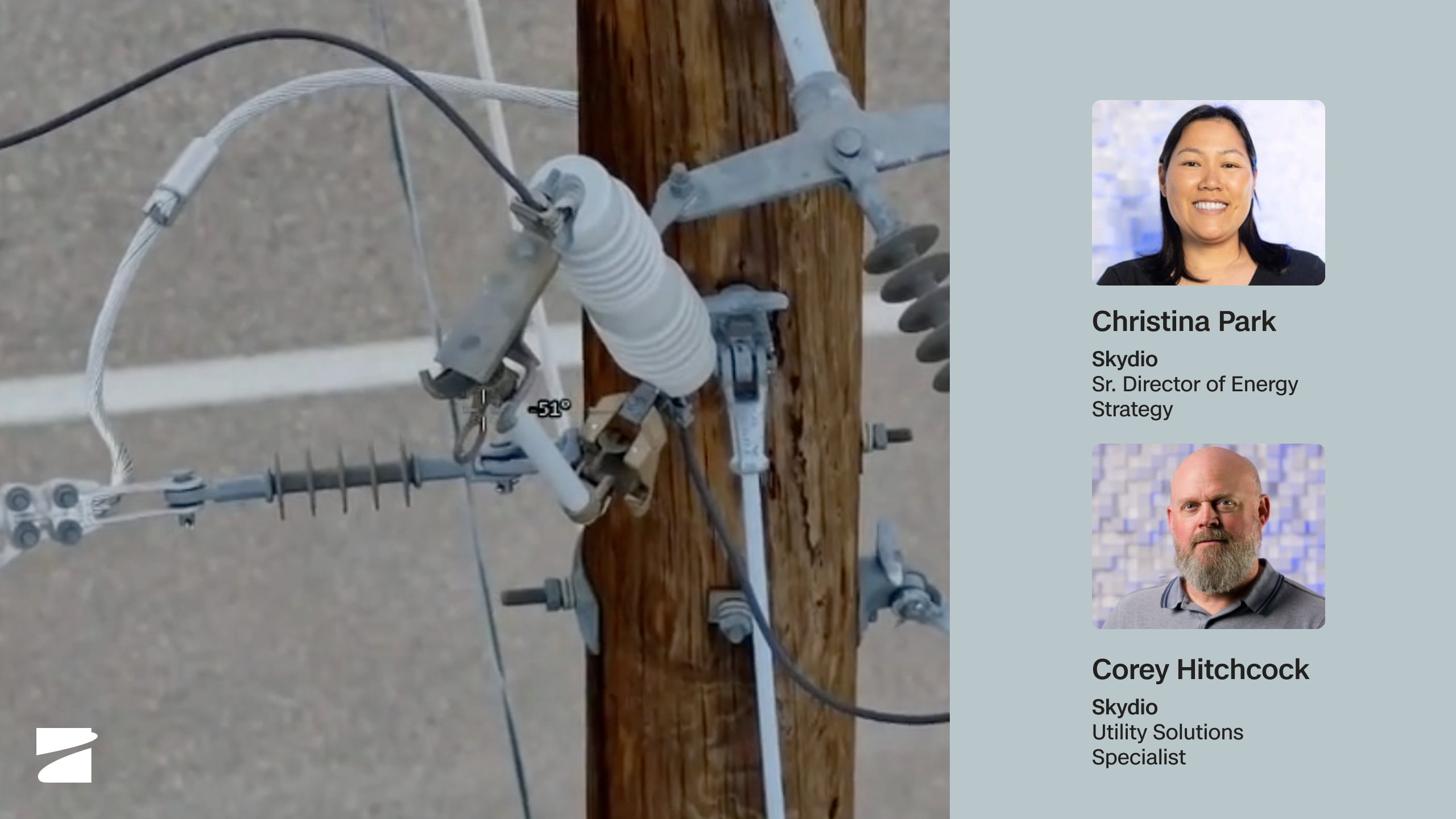
Dock for X10: Remote Inspection & Patrol, From an Office Chair
Watch webinar
Demo: 1 Remote Operator. 2 Inspections. 1 Response. No Field Dispatch
Watch webinar