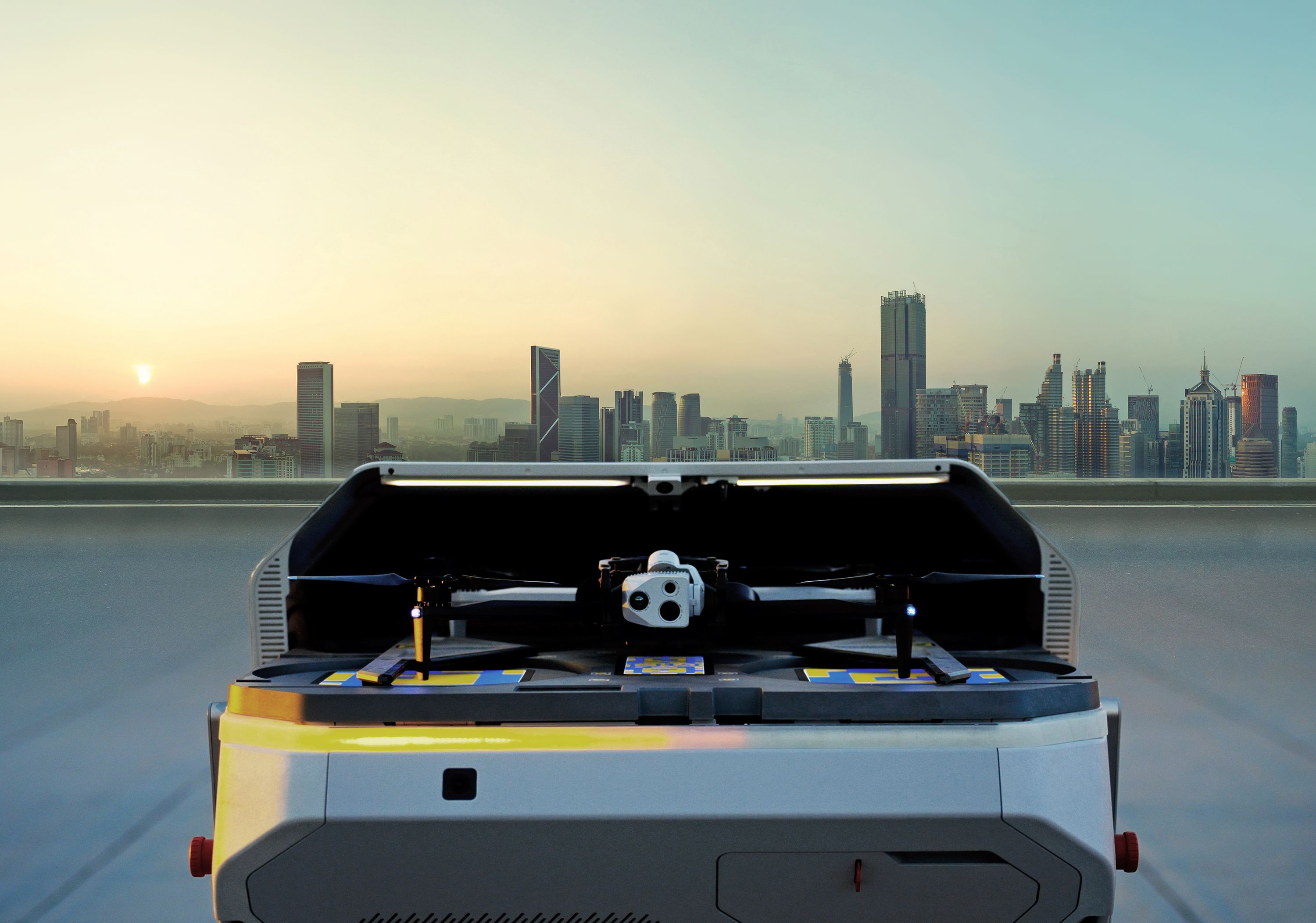
Drone operations for FIFA host cities: Planning for zero-failure security
This webinar outlines how public safety agencies can prepare drone operations for FIFA World Cup security. Skydio and Las Vegas Metro PD share practical lessons from large-scale events: stress-test and build redundancy into connectivity, formalize pre-event plans (ConOps, staffing, communications, safety, and regulatory coordination), and use drone-based 2D/3D site mapping to plan perimeters, resources, and response strategies before venues become “temporary cities.” The session also covers staffing models for sustained operations, simulator-based pilot training with Skydio Paraverse, proactive community education to reduce rogue drone incursions, and how to secure the right FAA approvals and TFR access in advance to ensure uninterrupted operations during match days.
- Hello everyone.
- All right. Good morning everyone.
- Thank you so much for joining us today.
- Uh, my name is Mira Marquez and, uh, we're
- here with Skydio today and Las Vegas Metro PD to talk a
- little bit about drone operations for the upcoming FIFA World Cup.
- Um, and what you can do to better prepare not
- only your communities, your cities,
- but your agencies, uh, to help have a successful event.
- So again, I'm Mira. Um, I'm one of our senior program managers at
- Skydio, and I lead our social impact program,
- Skydio For All.
- [echo sound] I'm gonna ask for my co-hosts to go ahead and
- introduce themselves. Jason?
- Good afternoon. My name is Jason LaFond, uh, here on the East Coast, uh, customer
- success manager for public safety.
- I cover accounts in Mid-Atlantic and New England.
- Uh, come to Skydio with 30 years of public
- safety experience, retired
- detective, uh, and current active fire captain, uh,
- with a volunteer
- fire agency in, in New York. Happy to be here.
- I'll go next. Uh, Jakey Stolz, uh, Skydio regulatory team.
- So I primarily work with public safety agencies these days in helping them
- get beyond visual line of sight approvals, uh, from the FAA.
- Uh, so great to be here.
- And over to Steve.
- Hello, my name's Steven Oscar. I'm the, uh, commission supervisor program
- manager for our UAS program. Been on our department for, um, for
- Las Vegas Metropolitan Police Department for 15 years,
- and in my time, uh, field training officer, um,
- traffic, and then also in our technical
- and surveillance
- section, and then ultimately taking over for the
- drone program.
- Awesome. Thank you everyone.
- Uh, let's see.
- Moving on. For those of you not familiar with Skydio,
- we're the largest... We are the largest US drone manufacturer
- based
- out in San Mateo, California with all of our manufacturing
- over in
- Hayward, just about 10, 15 minutes away from our
- office. Um, we started... The company was founded in 2014.
- We have over 3,800 customers. We've shipped over 60,000 drones
- the past handful of years and serve over 20 industries.
- And joining us today, of course, Steve Oscar from Las Vegas Metro PD.
- Steve, can you tell us a little bit about the
- department and your drone program?
- Yeah. Here at Las Vegas Metropolitan Police
- Department, we, uh, our jurisdiction
- is Clark County, which is a very large county.
- And as you can see here on the, uh, on the, some of the stats,
- but for our drone
- program specifically, um, we started off small building our drone
- program,
- um, leading into going into DFR, showing that its,
- uh, its use case and how it could be
- functional, and eventually
- leading into where we have 38 docks deployed.
- Um, we have 12 locations across our city, and we have a full-time drone
- operation center, um, that we have built out for
- calls for service and using the drones, um, for the public.
- Fantastic.
- And so today, like I mentioned earlier, we're gonna be talking a little bit
- about... Well, not a little bit, a lot about, uh, what you
- and your agency can
- do to help prepare for the upcoming World Cup games.
- Um, there's a lot of planning involved, obviously, and a lot of
- cross-coordination with different agencies, local government officials,
- FIFA security, and everything in between.
- So today we're gonna kind of lightly touch on a variety of topics from congested
- environments, pre-event planning, staffing, operational support,
- training and readiness, community education and outreach,
- regulatory. And then at the end of the session today,
- we're gonna have a Q&A
- session. So, um, feel free to post your questions in
- the chat. We'll be monitoring and make sure to get through all of them
- as best as
- possible.
- Additionally, at the end of the webinar, we're gonna have a couple resources,
- couple links for you, um, to take a look at and let us know if
- you need things and how we can help.
- So
- at Skydio, you know, we're here to help you.
- We want you to have a successful World Cup games.
- Um, so we're here to answer all of your
- questions, help you
- as best as possible. Uh, but we can of course only do
- that as much as you let
- us know. So as we go through today, take notes.
- Um, if there's things you wanna hear about
- more on, just let us know and we're
- happy to share everything that we can today with you.
- So getting into the... Getting into everything,
- the first topic we're gonna talk about today is congested environments.
- So as everyone knows, large scale events bring
- significantly more congested environments.
- Um, we kind of look at this primarily in two
- buckets.
- There's the connectivity of your systems, your drone operations, and
- then there's also the connectivity for your team, a team
- that might be sitting in a
- van uploading media, um, or talking with other teammates.
- For your systems, on the drone operation side, especially at
- Skydio, uh, if you're a dock user, we do have a connect external
- radio, which is this middle picture here of the
- antenna, uh, that can really
- amplify the connection along with a additional cellular
- modem, this connect fusion plus attachment here
- in the center on the
- top. Um-
- This adds a second cellular modem to your drone,
- um, enabling a simultaneous connection of the
- 5G
- system that is... Ooh, and my lights went out.
- Um, 5G system that is also actually in the drone,
- um, to have a more combined robust network,
- creating kind of a triple link
- configuration. For your team that might be in a van, for example,
- if they need to upload data, media sync, um, you know, sharing
- QR codes, ready link feeds. How can you ensure that they have a
- reliable connection? And that can come in the form of having
- additional
- Starlinks, Live U kits to really help kind of fortify
- that
- connection. And so Steve, you know, we'd love to hear from you a little
- bit about your connectivity over the years.
- You know, you and the LVMPD have been doing these
- types of events and
- operations for quite a while. So how has it changed over the years?
- Have you used Fusion Plus? And, uh, what, you know,
- considerations would you recommend for agencies listening in today?
- Thanks, Mira. Yes. Um, over at LVMPD, it's kind of funny when you talk about
- connectivity. You know, in the beginning years of our drone
- program, you know,
- you'd show up to an event and, you know, you're sharing your
- feed with, uh, your real-time crime center or however
- you're sharing those feeds, and then it goes out and you're like, "Oh,
- what
- happened? What, what did I do wrong?" And that's where connectivity's been an
- issue. And, you know, we've learned early on having
- redundancies. So like a large scale event like F1, um,
- or the FIFA or for us, you know, for our New Year's
- events, um, or EDC, like we have a lot of people,
- and people don't
- realize when those people come together,
- that definitely overloads the cell towers.
- So
- for us, you know, network stress testing is pretty big,
- and we will actually go out to the, um, to the area.
- 'Cause you can't really simulate bringing that many people out.
- But you can definitely tell what your connection's like at that event and seeing
- how it is, and then building that redundancy of Starlink.
- Or for us, we had... Um, we built out a Silvis mesh
- network in our city. Um, or that you have a point to
- point radio system. Um, but just having these established out
- where you could basically have a redundancy for when you're flying, that
- you can always have that video stream going back because it
- doesn't serve anybody
- any justice if the drone feed is only you viewing it.
- It's how you share that feed.
- Um, with that, you have the carrier coordination.
- Um, you know, for us, when we have events, we're
- T-Mobile and we get with them 'cause
- maybe they're gonna put a, a COW out there, which
- is cellular on wheels.
- So that would obviously help out the connection for cellular.
- In a lot of the events, you can talk to the carrier,
- and they usually
- can support by having those resources go out there.
- Um, but like I said, we, we stress test it
- with connectivity. Um, we've used the Fusion Plus on this last
- F1. We used it, we were doing some live,
- um, connectivity, you know, seeing what it was like,
- and it actually helped us
- out significantly with the cellular.
- Um, but we, we stress test this for the events.
- We go out there and actually walk these events, um, before, 'cause we do
- the pre-planning for this, um, with the connectivity.
- That's fantastic to hear. Um,
- Jason, do you have anything to add on this?
- Nope. I think, you know, it's probably a good segue into the next
- section.
- Obviously, Steve, you guys thought about, uh, your connectivity systems, both of
- the aircraft themselves and of your pilots too as well.
- And when you think about pre-event planning, you know, it's thinking about,
- you know, the c- connectivity. Plus there's a lot of different plans here
- that are
- on the screen. So these are things that you've likely thought through for
- your
- day-to-day operations, things that your team does day in, day out.
- But, you know, want to think about, you know, how the scope of these
- plans change now that you're planning for, you know, week-long,
- month-long sustained events for the FIFA related stuff.
- So think about this stuff from a UAS perspective.
- Likely others in your organization are thinking about some of these things
- from a, just a general broad security at FIFA in
- general.
- But as a UAS manager, uh, within your agency, think about these
- things from a UAS perspective. So, you know, first and foremost is the
- CONOP. So think of the CONOPs document as the
- vision and operational
- blueprint for the event. This is a strategic document that outlines
- basically how this works in the real world,
- and will serve as a guide for the UAS
- team, leadership, the legal team, risk management, event
- planners, and private security stakeholders.
- So basically, this is the guiding document.
- Next is the communication plan. So how will, not only will your
- pilots speak to one another, but how will you speak to other
- agencies that are at your events from a interoperability
- standpoint? So this could be phone communication,
- conference
- communication, and two-way radio.
- Maybe a TAC channel that your pilots will have dedicated so
- they're able to
- manually communicate and de-conflict too, as they run those operations,
- uh, during these events. What is your staffing plan?
- So you have a staffing plan today, uh, but you know, think about
- how you're gonna operationalize this for a multi-week, multi-month day
- event. You know, everybody loves overtime.
- Uh, maybe some folks on the call are trying to figure out, you know,
- what color
- marble they want in their kitchen renovation because of all the awesome
- overtime
- that you're gonna get out of the FIFA.
- But it's important to think about, you know, giving your staff some downtime,
- uh, so we can ensure that they are safe, uh, and reliable
- operators, uh, within this environment. So what is those staffing plan?
- Do you have, uh, an, uh, a cohort of pilots?
- And then, uh, we're gonna talk in a little bit about
- training.
- So do you need to train up and spin up additional pilots, uh, to
- support, uh, these events? Stakeholder register.
- Identifying all the key stakeholders- Within the agency, so
- things like risk and legal and leadership and some more
- operational like SWAT or emergency services or plainclothes
- units. And then what are your external stakeholders?
- So the FAA, FIFA UAS coordinators who are doing an
- amazing job coordinating all the UAS operations across the FIFA
- sites. But clearly identify who those
- stakeholders are and have
- a key contact for each one of those. We just spoke about connectivity.
- What is your connectivity plan?
- What is your equipment and integrations plan?
- So are there any integrations that you need to set up ahead of the FIFA
- games?
- What equipment will you need? We just spoke about Fusion Plus, right?
- You need that robust connectivity for those aircraft in these
- network congested environments.
- Based on your CONOPS and your defined use cases, what
- are the hours of
- operation that you will need to sustain at these events?
- Do you have enough batteries? How many batteries do you need to sustain
- those
- operations? And how are we going to charge those batteries in
- the field?
- Just some very tactical, logical things to think about.
- Under safety and compliance, identify your safety and risk
- mitigation plan,
- regulatory and deconfliction plan.
- We're going to hear a little bit more from Jakey around regulatory, but how are we
- going to communicate
- interagency between federal, state, and local stakeholders as
- we co-locate in these areas? How do we communicate and
- deconflict not only with UAS, but also crewed aviation as
- well? Public relations plan, really important.
- Partnering with your PIO to put out
- a press release and build a
- social media campaign, you know, talking about the good work of drones
- within your
- agency. You know, this is a great opportunity for you to
- highlight the program
- within the agency and all the great things that it will do.
- Now, a big component of your public relations
- plan should be communicating,
- educating the public around temporary flight restrictions.
- You know, we've heard
- in the past of other agencies that have worked in large events,
- you know, where
- there's been maybe an inclusion or something of a recreational flyer.
- Most of the time, it's an uneducated flyer, right?
- So
- you as agencies through PIO should really, you know, try to educate the
- public around the importance of UAS drone operations for public
- safety and how you all will be operating.
- But more importantly, that these are no drone zones, right?
- These are no fly zones. There are going to be different levels of
- temporary flight
- restrictions in place and educate the public on what those truly
- mean.
- That way, you don't have a rogue drone just out
- there or someone trying to take a
- cool shot.
- And then define success criteria.
- So this is a great opportunity to understand, well, what are the goals and
- objectives for your UAS program specific to the scope of the FIFA
- related events? Now, within Skydio Cloud, we have a great way to track
- those. So using the DFR outcomes report
- and the post-flight report,
- you can create custom questions. And that way, when your pilots are operating
- either controller phone or through DFR command,
- there's a form that
- pops up and you can have the pilot answer specific questions to track the
- metrics and outcomes of each one of those flights.
- And then you roll those up in an after action report to talk about the wins,
- successes that you had in your program.
- Now, back on their technical infrastructure,
- one last
- pre-event plan is site mapping and modeling with photogrammetry.
- So we'll do a little bit more of a deep dive on that too as well.
- So site mapping and modeling is a tool that you have today as
- a Skydio customer. And, you know, right now these are likely empty
- parking lots, but over time, these will become small cities.
- There's going to be infrastructure that is built.
- You know, roads are going to change.
- There's likely construction going on right now.
- And, you know, this is a great way to create kind of as built
- as
- these structures are set up. So model these now and
- often before gates open, right? It helps reduce uncertainty,
- helps you uncover early risk and make sure just all of the
- stakeholders, right? Identifying those stakeholders in the
- stakeholder plan.
- Now bring all those stakeholders together and use
- these as a deliverable to help plan out for your event.
- So basically photogrammetry is a three-step process.
- The first part is capturing the environment.
- So using a Skydio system in map capture or surface capture,
- essentially the difference is that with a map capture,
- you plan a mission on
- a map. So you have to make sure that the controller has
- connectivity. And then surface capture just means
- that you
- drop the waypoints by manually flying it.
- But essentially it's a orthomosaic of an environment.
- Our systems will create an autonomous mission flight path,
- capturing basically photos of an environment with sidelap and
- overlap. So you'll fly a single or
- multi-battery mission. You'll capture imagery of an environment.
- And then step two of that process is post-processing.
- So taking all of those photos with sidelap and overlap, putting them into a
- photogrammetry tool like GNEX Labs, and then post-processing
- those into a model that can be very actionable.
- So part three of this is then how do you action on these models?
- So using this model or this data
- to use in pre-event planning in live operations.
- So model out all your environments.
- And we're going to show you a sample here in a moment.
- But model out all your environments, create a hyperlink to those in
- GNEX Lab, put them in a shared folder, put them in your pre-event packet.
- Better yet, make a QR code so personnel in the field
- could scan a QR code
- and get right into that model
- in real time. And we're going to work you through
- that process here in a moment
- with an upcoming model.
- So some key considerations is just the scale of these sites are huge.
- So instead of pulling a satellite imagery that's likely outdated from Google
- Earth, capture these using the drone system in
- real time.
- It helps you plan out crowd flow and access routes.
- So what are your ingress and egress points? What
- are your emergency lanes?
- Where are the barricades going to be placed? What are your choke points?
- What are your hazards? What are your constraints
- and how to plan for those?
- Um, the infrastructure that's gonna be set up,
- so the stages, the
- fencing, the barricades, utilities, signage, where are those
- all going to be placed within these environments?
- In regards to a safety and compliance standpoint,
- like line of sight
- planning, right? Airspace awareness, which we'll talk more about in the
- regulatory section, and some operational constraints.
- Then again, you'll see a common thread here,
- cross-team coordination is using
- these deliverables, taking these plans, and making sure all the stakeholders are
- informed in how UAS operations fit into the broader
- operations at these events. So here's just one of two examples
- that we'll share. Uh, this was an awesome map capture that was
- captured by Captain Tyler Grosser from Kansas City, Missouri Fire
- Department, along with Alex Joyce from Live View.
- This was post-processed in GenX Labs.
- This was a one battery flight, about 550
- photos. Now, this links to a real model within GenX
- Lab, but
- here are just some different screenshots with different perspectives.
- But you can start to conceptualize what it would look like
- to do these type of deliverables, right?
- To create a model or map of these environments.
- Just think of all the things that you could do with this from a
- pre-event
- standpoint. Um, you know, what do these en- environments look like?
- Where will personnel be staged? But in real life, during the events,
- use these for real-time operations.
- So have your emergency services or your SWAT team have access to these
- models in
- real time, along with your fire department
- and emergency management stakeholders.
- That way, if there is an incident, they can pull up these links in real time
- and
- understand what that environment looks like, and build a tactic plan, a
- very strategic plan around addressing that situation with a better
- understanding of what that environment looks like.
- So here's gonna be kind of a sample of that workflow.
- So if you'd like, pull out your phone and scan this QR code.
- This will link to a live model that was captured also in Kansas City
- of a teams hotel and a practice stadium.
- Now, we can see in this model, right, we did this last week.
- There's a ton of construction going on here.
- We see the, the orientation of, uh, the
- hotel, the practice stadium. This upper left-hand corner
- is a 2D orthomosaic map, so the map overlaid on
- a base layer. This happens to be just a map layer,
- but you could use a satellite
- layer. And then you'll see the bottom and right are different perspectives of
- that
- 3D model. And in L- in GenX, if you scan on that code, you
- can then use your fingers to manipulate that model, right? You can spin it around.
- You can zoom in. You can zoom out. You can get different perspectives,
- and you can
- start to think about how valuable, you know,
- modeling like this of an environment
- should be. And you should go out and model all of your environments.
- You know, your hotels if you have them in your jurisdiction,
- the practice stadiums,
- the real stadiums like we just saw with Arrowhead, in addition to
- any, uh, any other infrastructure.
- So, uh, your command post set up, uh, hotels that teams would be
- staying at. And then you can also, also model, um, the, the
- motorcade routes too, as well, so you have an understanding of kind of
- what those
- environments look like, trying to mitigate, uh,
- any potential issues
- of those.
- So one of the use cases of this is very simple.
- So this is one of the hotels that was in that model I just
- shared in Kansas City, Missouri. One of the teams will be staying at this
- hotel,
- and part of your pre-event planning is say, "All right,
- I need to create a security
- perimeter around this hotel. I'm gonna put up barricades." Like,
- how many
- barricades do I need for this, right?
- So instead of going out in the field and using a roller or tape measure, um,
- and
- rolling out this distance, using this model, right, one of many use
- cases for that model is basically I drop these four waypoints.
- I created a poly, and I got the distance of each side,
- which is 1,366 feet, and then if each
- barrier is eight and a half feet, we divide that.
- Uh, we get we will need about 161 barricades,
- right,
- to line that hotel to create a perimeter point around
- that hotel. And you know, it could be used for hotels.
- It could be used to line, uh, motorcade routes.
- It could be used for additional barricades to create, um, hot zones and cold
- zones, uh, around Fan Fest areas. But you know, from a planning
- perspective, using this just to plan our resources.
- I don't even know how many barriers I need.
- This is a great tool to do that and one of the many deliverables we can
- use coming
- out of it.
- Uh, s- so for next steps, um, if you're not modeling these environments,
- you
- should be out modeling these environments now.
- Um, what you can do in GenX is very cool, is you can model it
- today, and then you can add additional data sets
- on top of that original
- scan. And then you can see how these
- environments change over time as well.
- So if there's like construction or other deliverables
- that you're tracking, you can
- see that environment change. Um, but before you go out and, and
- fly these missions, um, there's a few resources
- that you should review
- beforehand, so, uh, you just kinda educate yourself on how to
- fly these missions
- effectively. First is the 3D scan manual.
- This is a great manual to, to give to your personnel,
- which walks them through
- step-by-step how to create a map capture or a 2D orthomosaic.
- Also how to do a surface scan and also 3D scan too as well.
- And we're gonna talk in a later section about training, but within Skydio Academy,
- there's a great training module that's just on 3D scan for X10.
- So with the document and the training module, prepare your team
- to go out and fly these missions. Go out and fly them.
- And then, you know, part two of that three-step process was that, that
- post-processing platform. So start to look into
- some platforms. Um, GenX is one. Uh, there are
- many out there. But look into them. A lot of them offer free trials.
- But start capturing some data sets. Go out there.
- Get a free trial on these platforms.
- Do some post-processing and determine which platform you like, and
- then use these as a deliverable and start to incorporate those in.
- And like I said, go out, start planning, have fun with this.
- It's also great stick time for pilots.
- It's just more stick time, more training, more enablement for your team.
- Mira, over to you.
- You're on mute, Mira.
- Ah, joys of technology. Um, [laughs] thanks so much, Jason.
- Um, so kind of getting to the next topic to
- kind of keep moving along a little bit
- here is staffing and offer- operational support.
- You know, staffing, to be honest, is, like, one of the things that we get asked
- about significantly, whether programs are just starting their DFR programs,
- um, or, you know-
- Mm-hmm
- ... when we look at large scale events here.
- So you actually have to kind of sit there and actually do the math for it
- of, you know, how many people do you actually need,
- how many hours, how many
- shifts, you know, when, where. Um, actually sit down
- and list everything out. So for Skydio at us, you know,
- with us, we, when we come across different events like
- this, especially
- these large scale events, we provide a lot of on-call technical
- support,
- pre-positioned regional support, depending on what agencies
- and our customers need
- to support them. But Steve, I'd love to hear from you
- specifically when it comes to large scale events.
- You know, what does staffing at LVMPD look like,
- and how do you
- approach your staffing for these large scale events, you know?
- Is it, you know, everyone on staff?
- Is it a combination of contractors? When? Where?
- What does this picture look like?
- Thanks, Mira. Yeah, so with LVMPD we, we have a
- hybrid model. We have commissioned pilots, we have civilian
- pilots.
- And currently within our drone operation center, um, we have
- day shift and swing shift operations.
- Um, no graveyard as we speak right now, but hopefully in the future.
- Um, so those operations in our drone operation
- center is basically
- public safety support, so helping our patrol.
- Any drone program is just i- it's a support unit.
- So for us,
- you know, we have our staffing modu- module that, or model that we actually
- employ, but then when it comes to a special event
- or a large scale
- event, then we look at, okay, you know, like we
- talked about the pre-planning and everything else, um, for the event.
- Now, when it comes to staffing, you know, we usually...
- Like F1 for us, we, which we just recently had, we had a
- couple dock locations that had coverage for F1.
- So with us, we designated a pilot to monitor
- those dock locations to have overlap just in case if an
- emergency happens, we have an extra layer of protection with
- drone coverage where we could have a drone launch and get there within a minute,
- um, or seconds, um, depending on where the location was.
- But we would have that lo- that done, and then during the pre-planning we would,
- you know, for us, we set up two teams.
- Two teams of three that were set up at different locations to
- cover the,
- basically the majority of the F1 event for us.
- And, you know, we built in so that the pilots wouldn't...
- There was, uh, no issues with fatigue 'cause they could
- swap in and out,
- um, with that. But those guys were flying for that event the whole time
- for the
- ingress, egress, um, for the safety of the mem- uh, the people
- that were attending the events, and for any calls for service
- that happened within
- the events. They were designated for that.
- So we had a couple different layers for it, um,
- for that. Now, we also did have a aviation
- supervisor out there. If it was me or somebody else, they were out there to
- basically coordinate because we do have manned aviation here as well.
- And for these events, we're, we're flying our helicopters, we're
- flying our drones. There's other drones that might,
- if there's a TFR, they
- got approval and they're flying. Um, and we built in
- communications. Like for us, we use Zello.
- It was just an app that we used for communication with our
- manned
- aviation plus our, um, other drone pilots
- that got approved to fly out there
- so that we could coord- uh, coordinate and have like corridor set
- up with those pilots flying and with us flying.
- But there's a lot of coordination.
- It's a lot of pre-planning that goes into this.
- And for us, you know, we're lucky enough
- that we don't have to do contractors, even
- though I know other agencies might have to.
- Um, but that kind of goes into the training,
- which we'll talk about next as well.
- Yeah, absolutely. And, and that 100% gets us kind of to the next
- topic of training
- and readiness. You know, you had mentioned earlier about having
- those teams going
- out there a little bit earlier, stressing kind of the fatigue and what the
- situation, the duration that they're gonna be at.
- And all of that leads to this training and readiness, which of course overall
- we're... All of this is pre-planning, um, and ensuring you just have
- the best setup as possible and make sure everything's accounted for.
- So when we look at training and readiness, you know, it, it goes without saying how
- valuable training is, um, I think to everyone listening for sure.
- And so for us at Skydio, you know, there's a range of things that we offer to
- support, um, from our online academy for our customers.
- This is free for you. But also for anyone listening,
- if you're not an existing
- Skydio customer, we do offer our online academy, um, a free
- trial for the FIFA World Cup games.
- Uh, pilot training. When we look at large scale events,
- if you need
- additional support for pilot training, um, in person, remote, let
- us know. But one of the key things I want to touch
- on here is our
- simulator, Skydio Paraverse. So it's a great environment for us to
- virtually train, um, pilots, but also build out
- these environments and situations for you to actually be able
- to run through
- virtually before doing it in person, even if as a part of the
- pre-planning stages. And so Steve, I know for you, um,
- you have these Paraverse pods. So everyone kind of listening in and
- watching today, so in the bottom right corner, um,
- and you also see it in this top
- image as well, this is what we call our Paraverse pod.
- It's kind of like a gaming setup. Um, and we load our simulator
- onto this. Um,
- and so Steve, can you tell me a little bit about,
- you know, why LVMPD uses
- Skydio Paraverse, um, why you've decided to add them and
- integrate them, and what are some of the scenarios
- that you run on Paraverse?
- Yeah. Thanks, Mira. So, uh, with Paraverse and the,
- uh, simulators, yeah, we do have two of them set up in our drone
- operation
- center. Um- [clears throat] And the simulators kind of changed the
- training
- culture for us. Um, you basically get high
- repetition with- without the high risk.
- Um, because the biggest fear for us, um, and, you know, training at, uh,
- Las Vegas Metropolitan Police Department was,
- you know, before you put them on the flight deck,
- they get to build flight
- hours. You get to build in emergency procedures.
- Um, for us, you know, it was great to...
- You know, it is kind of like playing a video game,
- but also you get to keep those
- stats of building up the flight time.
- You know, we get to do scenarios of, like, lost link
- scenarios, um,
- night operations, you know,
- p- practicing over where the event might be
- or where you have
- your docks placed [clears throat] and then simulating a call for service.
- Like, that's big for us, where we put a radio in the pilot's hand,
- and if we take a new pilot who's a civilian, who doesn't have much
- experience on the radio or police procedures, we can
- actually start stepping them through of like, you know, the call procedures,
- um, giving them updates on the scenario, and seeing what their movement
- is with the drone, plus how they're talking on the radio
- and making sure
- they're communicating properly.
- Um, for us, [clears throat] you know, just to touch on this a little bit, uh,
- training,
- we've definitely... You know, we have a very large DFR program,
- and training's a pretty serious thing because we have, like I said, commissioned
- and non-commissioned pilots. So if we get a non-commissioned
- pilot coming in, um, we re- we revamped our training, so it's
- 19 weeks long now. So we have a new pilot come in.
- Um, we... You know, I always suggest that they get their Part 107 to show the
- interest and the readiness, and then we put them through the
- Skydio- Skydio online academy for us, um, to kind of prep
- them, 'cause it does a good job prepping them
- for us.
- Then we put them through a 50-hour course, which is just the
- basics with NIST and some different other, or other different things.
- And then we go into police procedures, radio procedures,
- police tactics.
- And then, um, we take that pilot and show them, uh, basically our
- department with a bunch of ride-alongs.
- Um, we do two weeks of ride-alongs,
- and then we go into our, um, critical task book [clears throat]
- just like a field training program.
- And they do discussed and performed sections,
- and that's where the
- training really goes into it and where the, you know, the
- simulator comes in. Um, then you get them on the flight deck,
- and you step them through the process so that they've kind of seen everything,
- um, leading into the training so that they can be an asset, um,
- as a support
- unit in the drone program.
- That's fantastic. Um, I will- will say they say as well the
- Paraverse pods make for a great statement piece in the, in the
- office too. Um, so these are really fantastic and like you said,
- it's a great way to kind of get training for folks without them actually having to
- fly and build up that confidence and competence before they actually get
- hands-on
- stick time.
- Mm.
- For sure.
- Well, I got a few questions. So Steve, um, you know, using Paraverse to place a
- virtual dock in these environments and fly in these in a safe learning
- is great for
- training enablement, but what is your approach as you spin up additional
- pilots
- from a, a controller flow perspective?
- Do you go out and do dry runs? Uh, do you stage your, your personnel?
- You do dry runs of these different areas.
- What do you guys do leading up to the event?
- Yeah. So, and just to clarify, you said what controller users?
- Oh, yeah.
- Is that what you're...
- Yes.
- Oh, okay. Yeah. So for the controller users,
- we do the same process in the
- beginning. We, you know, we have them get their 107, the Skydio
- Academy. We put them through a 50-hour course.
- That 50-hour course is always controller based.
- It's not dock based.
- So they always start off with controller.
- [clears throat] And then when we get done with that,
- we go into basically
- another week long of scenario based with controller users.
- So it would be setting up scenarios of a large scale event,
- um, basic car stops, person stops.
- Um, it could be a call for service. We're basically preparing them,
- um, for controller based operations, and that's where we kind of get into,
- you know, like in those scenarios, we might have our air support come over
- and be
- like, "Oh, we're here on scene just for the
- scenario." And then they have to
- communicate and mitigate with air support during that call, um, while
- the helicopter's flying around doing orbits around us.
- So we kind of throw anything and everything at them, um, so
- that they're ready
- for, you know, the controller based operations.
- Like on a special event, you might have air support doing an orbit
- around you
- or a tour helicopter or another drone.
- So we kind of throw everything at them within that.
- Um, but then we always lead into the dock
- operations 'cause those are so large.
- It's such a large... Like, that's your main focus with our drone
- program.
- Awesome. Thanks, Steve.
- Yeah.
- Yeah. That's great.
- Uh, thank you. So kind of getting into the second to last
- topic
- to kind of discuss a little bit more here is community education.
- Um, so you know, as everyone knows
- or hopefully knows, drones are gonna be playing a large role
- when it comes to
- security for the upcoming World Cup games, you know?
- And the reality of that is too that the public is more likely
- or very likely to see these drones, um, whether that's at the
- stadiums during matches or monitoring escort routes from
- hotels to stadiums or hotels to training stadiums,
- um, or even supporting, you know, security at fan events
- and other, you know, community events that are happening in relations to the
- World
- Cup games. So
- with this, it's really vital to kind of start
- educating the
- public around how these products are used to help keep people
- safe and also really clarify what do the drones do and what
- do they not do. Because everyone has bias to some
- extent, and so getting out ahead of that conversation
- and saying, "Hey, you know, we're a police department.
- We're a fire department.
- We're using drones to help in this capacity. This is what we plan on doing.
- Maybe these are the dates that we plan on supporting operations."
- Um- ... is really important to kind of help get
- the
- community more aware and more understanding if they
- do and when they do see these products that they're performing, you know,
- very specific tasks. And there's a w- myriad of different
- ways that you could go about this, from social, social media messaging,
- doing a
- press release, media event, partnering with a school,
- um, outreach to your local media agencies as
- well, and anything in
- between. So if you need help with any of that,
- please let us know as well.
- But I'd love to s- hear from you, Steve, a little bit about what
- LVMPD does in sp- in, you know, in relation to
- these large scale events because y'all are always out.
- I feel like every time I look on social, seeing you guys out with the community,
- popping up at a school, um, doing a community event, and
- really kind of engaging with your communities to help bridge those
- relationships, build those relationships, um, but also build awareness around
- the technologies that y'all are using.
- So can you share a little bit if you guys do anything specific leading
- up
- to large scale events to kind of help prep the community around,
- um, what your operations are gonna look like?
- Yeah, absolutely. I mean, first off, I just wanted to say this Skyport picture,
- it looks almost like it's AI generated, but it's not.
- That's an actual photo, and it looks great with the background
- with the strip in
- there. Um, but yeah. So transparency for us,
- um, with the community, like transparency builds trust, and we,
- you know, from the very beginning of our, our program, we wanted to make sure that
- we were transparent with our, uh, community.
- So any time that we had a sp- a, a community outreach, um,
- or anything going on within the months, like in the beginning of this program,
- we were out there constantly showing the drone, flying the
- drone, showing them what the feed looks like,
- updating them on privacy
- issues. And we have these things called First
- Tuesdays, um,
- that we do where we basically have every single, um, area command
- for us that goes out to the community, and they provide some type of community
- event, and we constantly get asked to do those so
- that we can
- show. And we, we are transparent. We built in a transparency
- page so that when we're flying drones and the public is
- wondering if one of our drones flew over its house, um, they can actually go on our
- transparency page and type in their address
- and find out where the drones
- were flying for LVMPD.
- Um, but, you know, when we talk about major events,
- uh, major deployments,
- um, we, we definitely stress like pushing
- everything through
- PIO, our PIO office, making sure that we educate the
- public on major events because during major events a lot of
- people... Like I've always broken enforcement,
- drone enforcement down into two
- categories. It's education or enforcement.
- Um, you know, a lot of people come out here to Vegas to,
- "Hey, I wanna
- fly a drone to get a cool shot of the strip,
- um, to get a cool photo," but they don't realize
- that it's maybe a zero grid
- and you can't fly a drone without authorization.
- And especially during a major event, maybe there's a TFR going on, so we
- try to educate like, "Hey, during these times, maybe there's a TFR
- for this big event. Do not fly or you will get a ticket
- and your drone will get
- impounded." Um, and we try to just educate everybody on
- this.
- Um,
- you know, for F1 and, you know, for the
- FIFA coming up, we just, we stressed it that...
- 'Cause we had issues in the beginning when we had FIFA, or not FIFA,
- when we had,
- uh, F1 originally here, our first event,
- um, we could have done a better job at
- educating, um, the
- public on the TFR and the enforcement action of it,
- um, because we did have quite a, a few in- incursions of drones.
- And ever since then, we got with the FAA
- and we got with our local,
- you know, news agencies and just did constant updates
- and education on it
- to say, "Hey, do not fly a drone." And we ended up getting less and less
- incursions, um, as we had more F1 events.
- So it definitely is wo- it does work.
- You definitely have to put your effort into it, but you also have a team to do
- that, and you're, you have federal partners too that
- are willing to help out
- because they wanna help out and educate the public as well,
- um, with these events.
- Yeah, absolutely. And that's fantastic to hear too
- that those efforts in seeing
- the first event, you know, having people flying their drones
- and just really
- making that push t- with media. Working with your PIO is
- so huge, um, to help kind of get ahead and reach out to those networks and
- those local news stations to kind of talk about the ramifications for people who
- are gonna fly their drones. Um, and that is something, you know,
- I can say on the
- Skydio side too, if your PIO needs support,
- please let us know.
- We do have guides and templates, and we're happy to help coach
- and also provide
- resources to support your PIOs for these large scale events.
- And there is one thing I wanna touch on as well.
- You mentioned a lot about TFRs and how information can change day
- to day or depending on the event. And so with that,
- I'd love to hand it over to
- Jakey, um, to kind of talk about what is the regulatory picture
- gonna look like for the upcoming World Cup games.
- Yep. Thanks, Mira. Um, so the... kind of
- my focus here will be actually more on, like your agency's drone
- program and, and having approvals and getting access to the airspace during
- these events. Um, so just to kind of make
- that clear up front, this isn't
- necessarily talking about the counter-US side or, uh, you know, like
- enforcement of people that shouldn't be flying these TFRs.
- We wanna get you approval to fly, uh, where you need to for these
- events. So,
- um, there are some resources available here.
- I've, uh, done previous webinars on this Part 91,
- Beyond visual line of sight approval.
- Um, if you scan the QR code here, it will take you to a guide that
- we have put together on how to get this approval.
- And it, these typically take about a week for the
- FAA to
- review and process, so it goes quite fast.
- This is something definitely that you could get, uh, and have prior to
- the events, uh, for FIFA. Um- Um, and,
- you know, why would you wanna do, why would you wanna get a beyond visual
- line of
- sight approval? Um, this obviously helps with,
- like dock-based operations. You really have to have this type of
- approval to do
- remote operations. So if you're a dock user, uh,
- I've probably already talked
- to you or you've probably already done this.
- But this also can benefit, like, your kind of trunk-launched,
- uh, programs as well. You know, Jason talked about kind of that
- large scale photogrammetry. Um, if you wanna do that type
- of operation and not have to like move your pilots around, uh, to
- different places just so you can like see the drone and see the airspace around it
- constantly, this approval actually can help you just
- like set up
- shop in one area and do these types of missions without
- having to constantly see the drone in the airspace.
- Um, so definitely recommend if you don't have this approval,
- go and get it.
- Um, and then if you're an, if you're an entity that's not a
- government entity, if
- you don't qualify for Part 91, there's actually a Part 107
- route now as well. Um, this is really new, so we actually don't
- have a good guide together yet for this.
- But if you reach out to us, uh, we can give you kind of the, the,
- um, just informal steps on, on what you need to do to get this waiver.
- And these waivers effectively match each other now.
- The Part 91 and the, and the Part 107 public safety waivers,
- basically
- allow the same thing. So,
- um,
- and, you know, s- Steve, I guess I, I'm curious, like you actually
- do a, a bit of both as well, so I'm just curious
- if you have any comments on that.
- You have kind of your mobile DFR. You have more just like traditional,
- you know, drones and trunks. You have your dock-based stuff obviously.
- So any,
- any just thoughts on, on waivers here?
- Yeah, no, I, I, I kind of nerd out with this just like
- you, Jackie, um,
- on the whole regulatory side.
- And we do have Part 91 operations, and we do have
- some Part 107 operations. The Part 107 for us is mainly used for the
- multi drone waiver that we got approved for,
- um, because we are currently trying to put
- that into our Part 91 operations.
- Um, but like with the FAA, you know,
- um, trying to get approval usually takes some
- time.
- Um, but for us, that's our operations.
- We do have a layered approach for our drone, our UAS program,
- where we do have the dock operations plus we have the trunk
- deployment. You know, 'cause during the dock operations,
- we can only cover a
- certain amount of area. Um, and then anything outside that area,
- we still wanna be a support unit. So we have the ability
- to launch the drone from trunks, you know, or from a, a patrol
- vehicle. So we do, we'll send somebody out,
- we will go to that call.
- It might be a little slower of a response time, but that's usually a call that
- you're not walking away from, and it's usually building onto something
- like a
- barricade or whatever the case is where you can't walk away as a public
- safety agency. Um, so that's, that's our
- operations. Now, when it comes to TFRs,
- um, a lot of this stuff, the biggest thing that I always stress
- because when you have a lot of operations and you have a program going on or your
- agency and you're doing a bunch of things, um, I've noticed because,
- um, like delegating a lot of this work to the,
- uh, to the
- pilots is you have 72 hours to do
- your, um, request through like the SOSC or the SGI,
- um, um, form, which is now online,
- and remembering that you have 72 hours to submit that.
- So you have 72 hours, you submit it 'cause we've,
- we've caught ourself,
- um, I can at least remember one time where the
- pilot forgot,
- and we had to do it the day of, and we were scrambling to get it done.
- So just remembering that you can get it done so you can get
- approval, be legit
- to fly with whatever event's working during that TFR.
- Yeah. Yeah, absolutely. Yeah. So it's really kind of two call, calls to
- action. You know, number one,
- there's kind of no better time than today to go get one of these beyond visual line
- of sight waivers, whichever one you're, you're eligible for.
- The result is basically the same in terms of like capabilities and what you can do
- with those. And then, yeah,
- kind of separately, just, uh, as a heads up, be aware that
- there, there will be like multiple types of TFRs.
- Uh, there'll be TFRs around stadiums, fan events.
- We know local agencies are also, uh, looking at standing up additional
- TFRs around different sites, uh, to, to help keep these teams
- safe. Um, so just kind of be, be
- ready to have TFRs present. And then, uh,
- to Steve's point, there is this online portal now, the FAA Air-
- Airspace Access program, uh, that you can create an account
- and actually
- request SGI approval to fly in those TFRs.
- Um, so we don't necessarily have a, a guide on the, that, uh,
- Airspace Access program portal at this point because these TFRs,
- uh, do tend to be kind of custom and different for everybody, but,
- uh, just you can go create an account today.
- It's free to do.
- Create account, yes.
- Um, and kind of familiarize yourself with the
- application and the information
- you'll need, and then, uh, you know, get those in a couple days in
- advance so you're not scrambling.
- Awesome. Thank you, gentlemen. Um, so kind of next steps and where
- we go from here, everyone. Uh, a couple housekeeping
- items real quick before we move on to questions, uh, Q&A
- session. So for Skydio, we'd love to do some follow-up
- webinars that deep dive into all of the topics that we covered
- significantly more in depth. W- I would, or we would love for
- y'all to go ahead and scan this QR code and rank in order of
- importance which of these topics you'd like us to facilitate some additional
- enablement on in order of priority for you.
- Um, you know, we wanna get through everything,
- but we also wanna touch on the items
- that are gonna be the most important top of mind for you first.
- So please scan this QR code, rank what you'd like to hear more on,
- um, in order of importance, and we'll have more information for
- you before you know it. Um, so I'll give you a hot second to scan
- that.
- QR code. If you need to put in a passcode, it's just FIFA
- 2026.
- And then I'm gonna go to the next slide.
- And last QR code for you here is
- please let us know if you need any assistance.
- Um, if you scan this QR code, it's gonna take you to a form to fill
- out your name, your agency,
- and basically a list of areas that you need support
- in, anywhere from pilot training support to
- access to
- our online academy and Paraverse to, you know, if you're an
- existing Skydio customer and you're like, "Hey, I could really use this
- attachment," or, "I maybe need a couple more batteries,"
- please let us know where you feel you might be at most risk.
- Um, or, you know, regulatory support as well.
- But this way we can kind of start working through and making sure that you have
- everything that's needed to support you as best as possible for these events.
- So take a moment, scan that QR code.
- And then I'm gonna hand it back over to Jason, and we're gonna kind of start
- getting into some of the Q&A ques- questions that y'all had earlier.
- Um, and thank you so much everyone.
- Awesome. Thank you.
- All right.
- All right. So-
- Jason, take it away.
- Thanks. So Steve, expanding on a question that came in, um,
- we are circling
- back to,
- uh, if we can go back to the pre-event
- planning slide. Let me...
- Just give me one moment.
- All right. Steve, question for you that came in.
- So, um, we talked a lot about pre-event planning
- and all these different
- individual plans that agencies must think about.
- But from your perspective, you know, operating at large incidents like F1,
- probably, you know, Las Vegas gonna being the largest event
- capital of the world.
- You know, if, if someone has kind of writer's block,
- they're not really sure where
- to start here, what would be a recommendation, uh, from
- your experience of where agencies should start thinking first that
- you... that
- if not thought about likely will cause the most, um,
- issues down the road from a, you know, from a not planning perspective?
- Yeah. So I think with that on the pre-planning, um, and
- what would be the most significant, I mean,
- you... It's hard to just narrow down one. I think it's just the...
- I guess it's generally the CONOPs and then also the communication with the
- federal
- partners and all the community partners, and that's where like a real-time crime
- center comes in. And then building out, um,
- you know, a, an operation center or a CP with
- who's gonna be there and what's going on, what time the event is,
- is there gonna be a TFR? Like, getting all that information in,
- and then coordinating with your team, with your assets, your assets
- of, can we staff this? Um, you know, let's
- go walk the site. Let's actually go to these buildings
- and see what's a secure
- site. Because you don't wanna be flying a drone
- either from the street, the street
- where everybody's walking by, and then you have, uh, some type of
- issue with, you know, people interfering with your operations.
- So, you know,
- getting all this information, going through, stepping through of like,
- oh, this
- parking garage here, or this building here, it's secure.
- Um, we have connectivity here. Um, we have charging.
- We have some power source available to us, unless you're bringing a generator
- or whatever the case is. And then staffing that plan
- and then building this, you know, with your federal partners.
- Like for us,
- um, I know this is a UAS operation, but on the counter side,
- you know, for these events, we have a ground interf- uh,
- intercept team,
- and then communicating with them of like, 'cause drones and counter go
- together. "Hey, we have a, a drone operator," and using
- our drone to potentially locate that operator or locate that drone and see
- where it lands to send in those members.
- Um, and, like, we work closely with our federal air
- marshals here for the
- enforcement side and the FAA. So it's just a combination of
- taking that all in, and then can you support this?
- Because it is a large scale event, and you are gonna be asked to do a lot
- with
- these events.
- Yeah. Thanks, Steve. Um, a final thought from my perspective.
- I would say, you know, focus on the areas
- that have the most impact to your
- operations. You know, don't get hung up on the documents
- format. You know, start very simple.
- Um, there are many samples out there.
- Collaborate with your stakeholder agencies.
- Um, and just start with a Word document
- and start to bullet out.
- You know, use each one of these as a title
- and start to bullet out be- below those
- kind of what your plan is. Uh, and then this plan will, will
- obviously build over time as you, as you learn more about the
- event and more details start to come in.
- Uh, question from Abram. Uh, "Is there a free post-processing
- software? GenX is a subscription, correct?" That is correct. Yeah.
- So there are a few options here. Um, you know,
- I love GenX. They're like the Crock-Pot of
- photogrammetry.
- You basically throw everything in, and it comes out amazing.
- Um,
- there are a, a few options here. So, you know, GenX is subscription-based.
- There are some out there that are kind of pay as you use it,
- pay as you go.
- Uh, some are subscription fee, like flat fee for, for usage.
- So there are a few different pricing models out there.
- I would recommend, you know, looking at the big names like GenX and,
- um,
- and, uh, DroneDeploy and others out there too as well.
- Um, again, they all... most of them offer tree, uh,
- free trial licenses and, and
- access. So capture some data sets and go, go test them out and look the feature,
- the feature sets that they have. Uh, and with the N- Nvidia chip on the
- X10, uh, there's so much horsepower there
- that you can actually do
- onboard modeling.
- So, uh, one of the cool features that I didn't call out before is that
- when you go
- out and run a map capture or surface capture mission, you can
- actually save the parameters of that mission on the controller locally.
- And that then if you want to fly that, you know, weeks later or months
- later, you just bring that same system back out, and you re-fly
- that same map capture mission that you did before.
- And then add that as a, as a map, as a layer, uh, data set
- on top of that existing map that you generated.
- Um, and then the last process of that workflow is an
- onboard model. Um, you can process that in the field.
- You can hit no and save the scan, and go back into your scan library
- when you get
- back to the office, and then process that on the drone.
- And what you get is an output of, uh, just a, uh, a
- photogrammetry image of that model.
- Um, you can... It's just, it's saved on the SD card.
- You can grab it.
- You can put it into a PowerPoint as a base layer, and start to overlay different
- things on top of it. So you can do that if you don't have any software, but there
- are many solutions out there. There are some that are free, some that are
- paid. Um, and one of those options that, that Mira showed here,
- um, on this QR code is if it's important to you, we can
- do additional follow-on webinars about, uh, 3D modeling
- and post-processing. Um, so if you do select that,
- uh, as that top one, that pre instead of planning a 3D scan,
- you know, we can go
- into a much deeper dive on that full end-to-end workflow a- about
- those. But I would say there are many options out there from
- free onboard modeling to paid subscriptions that you can use, uh, for
- post-processing.
- Um, let's see. Any other questions are coming in?
- Yes. We got one from... s- uh, for Steve,
- uh, from John Newell, captain, um, of the PD
- over at Newton Township. Um, so they are
- hosting the 2026 PGA Championship in May.
- Do you have any examples of PR messaging you guys have used to get out to the
- public?
- That's a great question.
- Yeah. So I mean, when... I would say that would be
- something where I would probably share information with the captain, and then we
- could talk
- off, you know, offline about this and, like, share the information
- that our PIO has
- actually expressed out. Um, but a lot of this,
- when it came to ex- using our PIO, our
- PIO office usually takes the information from the SMEs,
- which is, would be us with the drones and the enforcement side too, and
- then educating them on, on what our message
- is and then having them push it out.
- But we can give examples of that, and I can...
- You know, I could flood his inbox with a bunch of
- videos, um, of
- what we've done for special events and how we've, uh, told the
- community about certain things that we're doing.
- Um, but that's not a problem at all.
- Awesome. We can ensure that both of y'all get connected.
- And additionally, um, Captain, uh, Newell, we can also put you
- in touch with our comms team. We do have different templates and press
- release templates that are available for folks, um, to also
- assist with that. So we'll make sure everyone gets
- connected, and, um, y'all have
- the support that you need. Um, I do wanna call out a, a brief
- comment from the FIFA folks who are joining us today.
- Um, just as a reminder, you know, don't forget to coordinate with the FIFA
- airspace security to allow for outreach to, you know, the
- thousands of employees and volunteers that are gonna be involved with all the
- FIFA
- activities, um, just to kind of help keep a heads-up of
- what's happening.
- So that's a- another aspect which we didn't quite touch on
- specifically in this
- webinar, is the coordination not only with all the
- other agencies working involved
- for the World Cup games, but also working with FIFA
- and other federal
- agencies involved. So that's definitely something, um,
- we can share
- more about. And also, in general, if you have
- not already been in contact with your local FIFA
- task force or the host committee, please let us know, and we're
- happy to help connect folks where needed.
- Um, so that way y'all can start having those
- conversations and being involved in
- meetings if you're not currently in those.
- Um, we do have, uh, looks like another question.
- So this is again for Steve a little bit.
- Um, for pilots in the field, we'll this call...
- This is from Alex Joyce at LiveView.
- For pilots in the field, which app or website do you recommend for
- airspace TFR awareness? This also might be a slight janky
- question,
- but any recommendations?
- So honestly, um, for us,
- um,
- we actually just use any approved y- uh,
- FAA app because it's usually just updated instantly
- on whatever the app is. So, like, I know it's called, uh, something else,
- but,
- like, Aloft, um, for us.
- You know, we would just pull it up directly.
- You have the T- FAA TFR, um,
- URL that's ac- that's live, and it'll actually explain everything to
- you,
- um, on there, but it's a little janky with, like,
- reading it, um, for the first
- time. But if you pull up any, um, UAS app,
- it usually has the TFR in there, and it actually explains everything to you
- of,
- like, it's happening at this time.
- It's not in Zulu, so then you don't have to do the
- conversion.
- Um, it just says, like, on this date and time it starts,
- and then it ends at this
- time, and here's all the different TFRs.
- But if you use any of the apps, um, and there's a bunch of them that the FAA
- has approved, they usually have those instantly updated
- with the actual
- TFR FAA website. That's why they're approved by the FAA.
- Absolutely. Yeah. Um,
- apps are great. Checking those, those approved websites is
- fantastic.
- I can-
- And I just-
- I can add one-
- Go ahead, Jakey
- ... yeah, one quick detail. So our Skydio Cloud actually will show,
- like, map layers of, like, the LAANC grids and stuff like
- that now too.
- So some of that is built in. The TFRs aren't, aren't in yet, but, uh,
- the
- airspace grids are. And, and when you get these, either of these,
- like, beyond visual line of sight waivers I
- talked about, you actually don't need
- to do LAANC anymore. You just automatically get approval to fly
- up to
- those grids. Um, so there's some kind of
- built-in tools essentially, and then, like, the TFRs might be that last
- piece that you're just using an app to check, and Steve's spot on on
- those.
- Awesome. Fantastic. Well, everyone, thank you so much for joining
- us today. Uh, we'll be sending a follow-up email with
- the QR codes
- just by the off chance if you did not have a chance to scan them.
- Um, thank you for joining us, and we'll be in touch soon.
- Thank you, everyone. Have a great rest-
- Thank you
- ... of your day.
Watch Time
1 Hr 1 Min 12 Sec
Related Webinars

Pre-Incident Planning for FIFA: Turning Drone Data into 3D Operational Readiness
Watch webinar
FAA Part 91 BVLOS Waiver Overhaul - What It Means for Your Drone Program
Watch webinar
Episode 9: Choosing Your Path: Part 107 vs Part 91 for DFR
Watch webinar