Live-ops: Patrol-led Drone as First Responder (DFR)
Join us as we explore the groundbreaking deployment of Patrol-Led Drone as First Responder (DFR) technology in daily policing operations. Patrol officers are not required to be expert pilots. They simply activate the drone near the scene and a remote pilot takes control of the flight, using 5G connectivity. In this session, we demonstrate a highly relevant scenario – a report of a missing child. You’ll see how the strategic use of Patrol-Led DFR to provide additional situational awareness and enhances search efficiency.
In this webinar:
- See the exact experience your agency could have with DFR, watching a live SAR training scenario.
- Understand the level of technological sophistication required to implement a DFR program
- Learn how to conduct effective low-altitude searches and the importance of scrutinizing obscured areas.
- Participate in a collaborative discussion with industry experts to discuss Drone as First Responder deployments
This webinar is a must-attend for professionals in law enforcement and anyone interested in the application of drone technology in critical real-world scenarios.
Learn more about Skydio Drone as First Responder (DFR).
- All right. Hello, and welcome everyone to Skydio Live Ops.
- Today's session is gonna focus on patrol-led drone as first responder
- capabilities.
- I'm Lee McMillan, Director of Product Marketing for Skydio,
- and I'm gonna be your
- host for today.
- We want to make this webinar as conversational as possible,
- so please drop your
- questions in the Q&A. We'll do our best to answer some on the
- fly.
- If not, we're gonna save some time at the end to
- make sure we address everyone's
- questions.
- Now, I'm gonna quickly introduce our panel
- and go through a couple slides to set
- up, um, this, and then we're gonna...
- The session, then we're gonna hand that off to the folks in the field to,
- to show
- you what it looks like live.
- Joining me today is Fritz Reber, head of our public safety integration at
- Skydio.
- He comes to us from Chula Vista PD, where he set up their drone as first
- responder
- program. Next up, we have Deepu John and Brian King.
- They're our solution engineers who'll be doing most of our flying
- today, either on-site or remotely. And let's see.
- Deepu comes to us from NYPD, where he set up their
- UAS program. And Brian King started his career out in
- the US, um,
- Army, and has been helping public safety
- agencies with UAS programs for the
- last seven years.
- Rounding out our group today, we have Jason LaFond,
- our customer success manager.
- He's out in the field helping customers do this every day and gonna hopefully share
- some cool stories with us. Jason, too, comes from NYPD,
- where he was instrumental in launching their BWC program.
- Next up, Kendall.
- All right. So just the situation. We're doing patrol-led drone as first
- responders, and this is a, a situation that we're
- doing every day with our customers.
- They're putting drones in and deploying them with officers,
- then they're
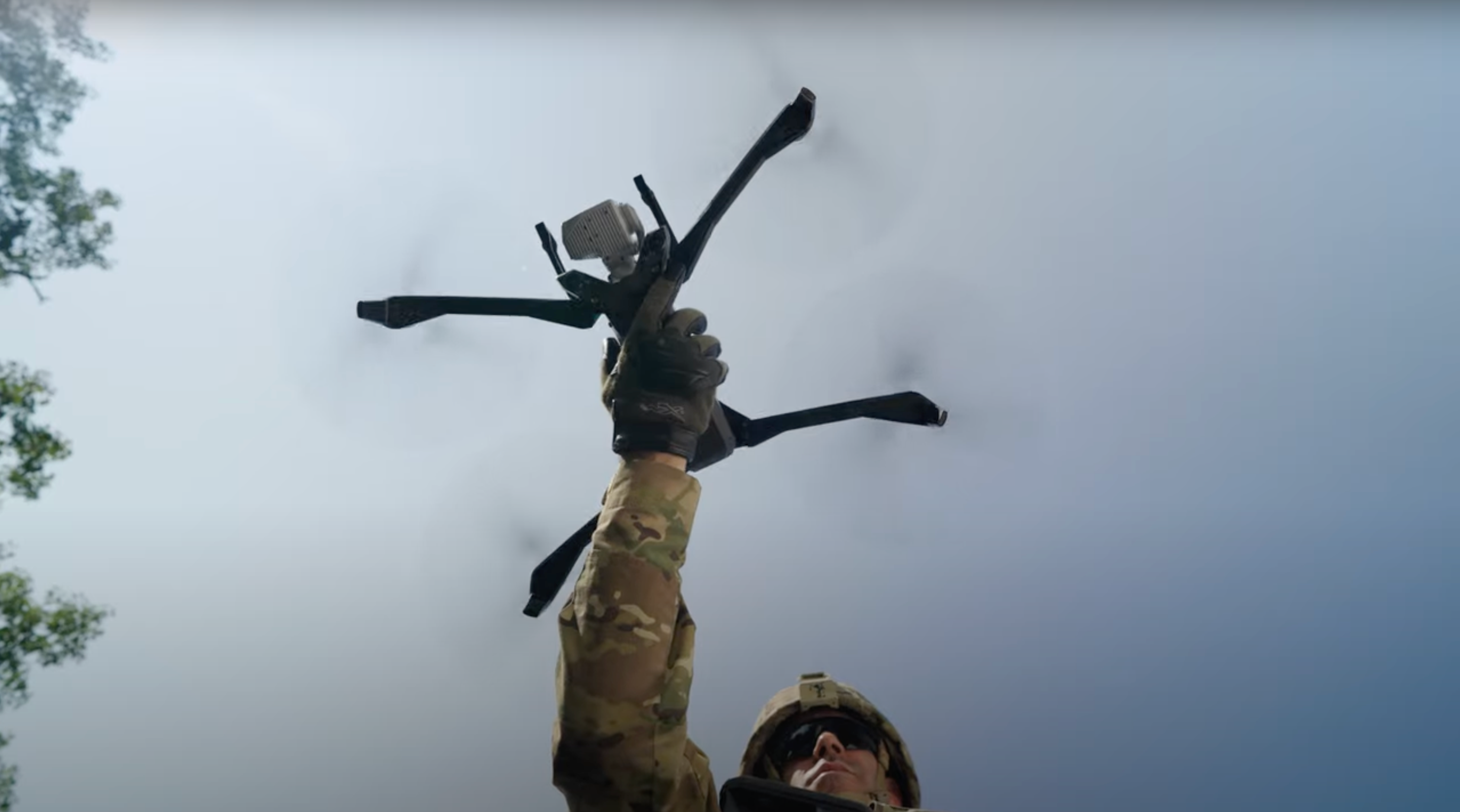
- launching them in the field, either via controller
- or just setting it on the
- ground and having the remote pilot initiate and fly the entire mission.
- This provides patrol overwatch for any situation, uh, for any
- type of call, and it's scalable to any type of agency.
- Next, please.
- All right. So when Skydio comes in, we're, we're a one-stop shop.
- We're not gonna just hand you some hardware and say,
- "Go do it." We wanna make sure
- we're taking care of you from the inception of your program, whether that's
- documentation, regulatory support, making sure you're set up with the right
- hardware, software packages to fly the operations
- you want to fly.
- And then lastly, we're gonna make sure you have the right
- training to get value
- and, um, fly your successful missions from day one.
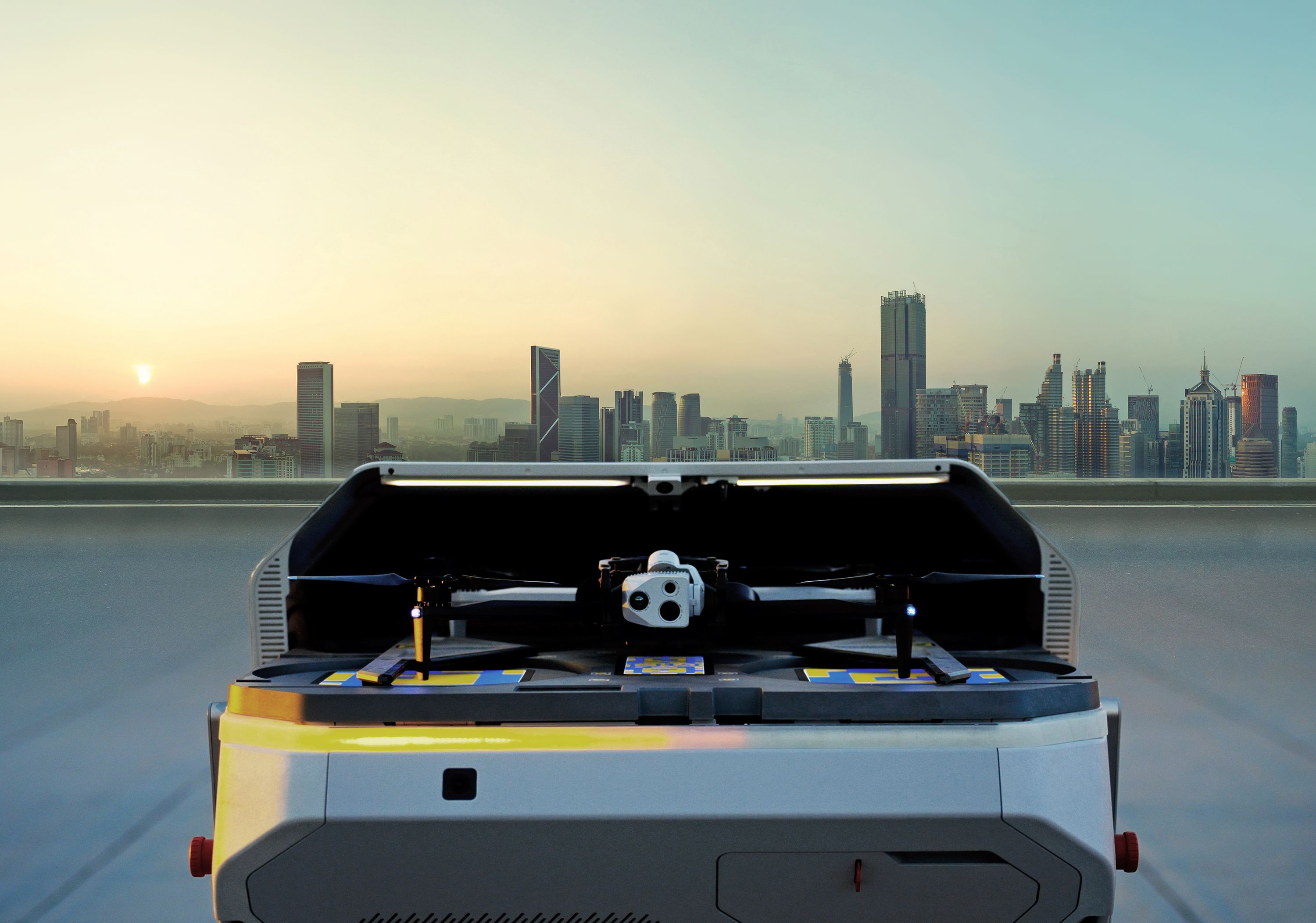
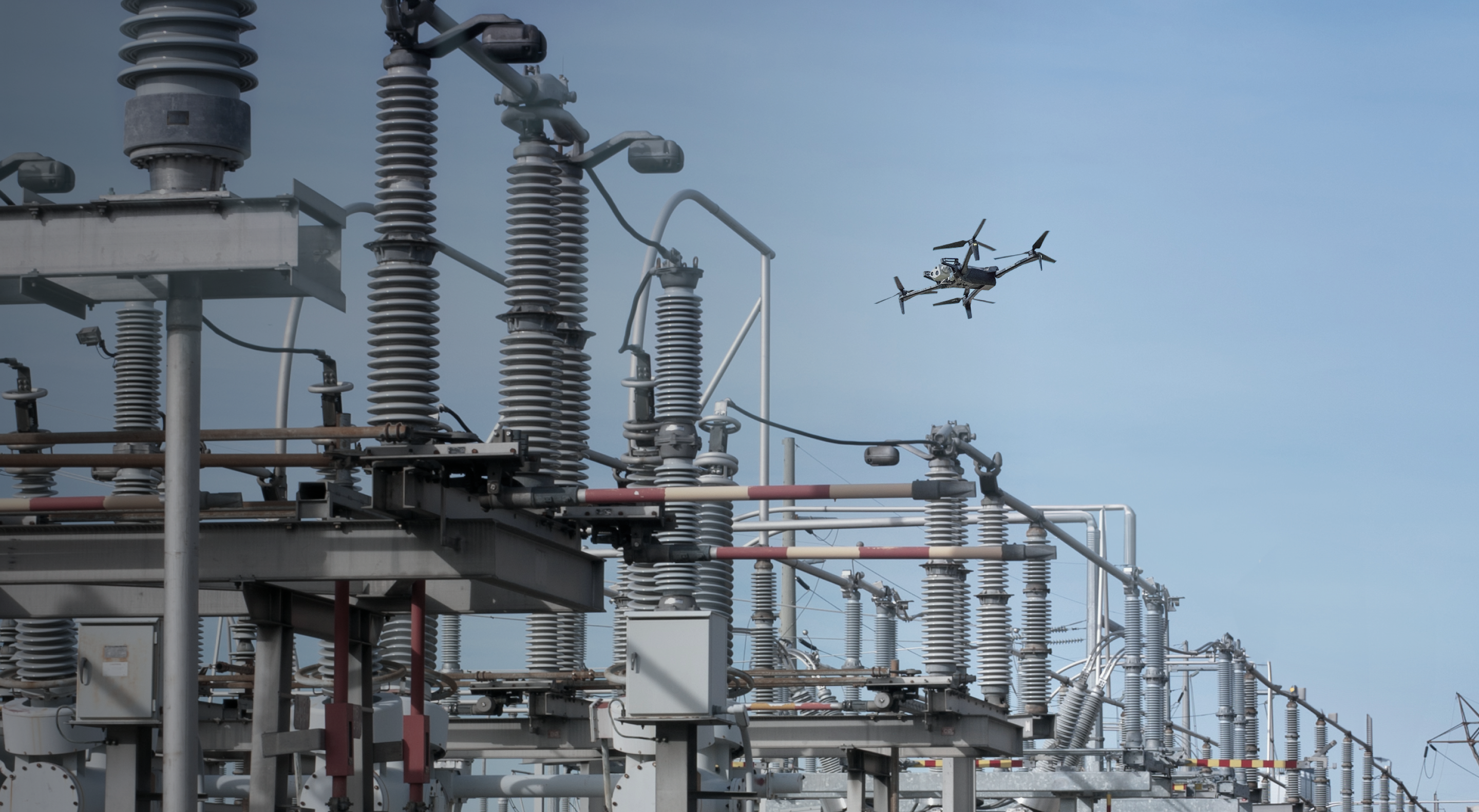
- Today, we're gonna feature the Skydio X10. This is our newest drone.
- It's,
- um, purpose-built for, um, cases just like this.
- We've got easy use with rapid deployment.
- So what I want y'all to pay attention to when we're flying is this drone can get
- off the ground or from zero power to off the ground in 40 seconds.
- We're gonna talk about our, or we're gonna show you our autonomy
- and obstacle
- avoidance. We can fly in some locations where other
- drones
- can't possibly fly. And then finally, the sensor packages.
- We have some great telephoto capabilities and thermal pack, um, thermal
- sensors that we're gonna show off today.
- Unfortunately, we're flying during the daytime,
- so we can't show off some of the
- night flight capabilities.
- Next up is our remote flight deck. We're gonna be flying this drone over a
- 5G connection, um, with a remote pilot.
- And the beauty about this is the remote pilot can fly the entire
- mission or do a
- handoff, which we'll, we'll show today.
- Next up.
- And then I want to talk about just how we're flying today.
- We are helping agencies enabling, enabling them to fly this by
- working with the right regulatory, um, bodies, particularly the FAA, to
- make sure they have a certificate of auth-authorization or COA in place
- to fly these type of missions, um, where today it's gonna be a
- visual observer on the ground, remote pilot flying beyond visual line of
- sight.
- Uh, Skydio is actually operating under our
- Part 107 waiver, which
- allows us to fly nationwide. Um, the one caveat we have is we have to file
- some NOTAMs, um, as well to make sure we're flying safely
- and
- correctly.
- And then speaking of where we're gonna fly, um, we're gonna have Brian that's on
- the ground in Florida. He's gonna be launching it.
- And then Deepu's gonna be flying from his, uh, remote operations
- center, AKA his home office up in New York City.
- Uh, and with that, I want to hand it off to Fritz to kind of
- lay the groundwork, and we'll get flying.
- Yeah. Thanks, Lee. I'm super excited about this, uh,
- this demo.
- Um,
- I think the video and just watching it's gonna speak for
- itself mostly.
- So you'll get all of us basically chiming in with just, you know, why this
- capability's important, why Skydio is unique in being able to do
- this. Um, you know, obviously the patrol-led deployment
- where we're just... You know, people are giving drones to people in patrol, and
- they're flying by hand. Everyone kind of understands
- that use case.
- And then DFR, uh, where you're flying, uh, from a, a
- pre-position trying to get ahead of ground units.
- People are generally getting that.
- And then this patrol-led DFR in that world, uh, where you're
- flying remotely drones that are deployed in the field really opens up
- a world of use cases. Um, and we're-- we have our own ideas
- obviously, and we're interested in hearing from
- everyone else who, uh, can
- vision this happening in their agency, how they'd use it, and how they'd, uh, use
- it to resolve incidents and then, you know, serve their community.
- So, uh, you... Like, uh, Lee said, uh, Brian King, he'll be
- our first responder out in the field.
- Uh, you know, the scen-scenario might be he's alone.
- He'd like to have cover, but maybe the cover's 20 minutes out.
- Um, Deepu John sitting back at HQ or real-time crime center or a JOC a
- miles away ready to assist by jumping in a drone.
- Um, and so
- with that lead up, we'll just start the mechanics of what it
- looks like
- All right. Thanks, Fritz. Um, so thanks everybody for joining us,
- and what
- you're looking at right here is a live screen of, uh, of the video feed
- from the drone that, uh, that our first responding officer has, uh,
- powered on. He's, he's at a felony car stop.
- He's at a remote location, and he wants an extra set of eyes over his
- shoulder just
- in case, [beep] uh, something bad happens. So, uh, he's powered on the drone.
- I've, uh, done my safety checks and my settings and everything
- and ready to go.
- Um, so I'm just gonna communicate with Brian,
- my VO there.
- Brian, am I clear to launch as far as airspace?
- All right. Hearing that, we are good to go.
- Uh, what I'm gonna do is I'm gonna hit the launch button here.
- And, uh, I'm gonna be using a game controller to,
- to fly the drone.
- You can u- pretty much use any game controller that's
- available from Best Buy or
- anything. Connect that to your laptop, and you can, uh, fly the drone using that.
- Um, and for the remainder of this, I'm gonna have my video off
- but my audio on.
- So the drone is up in the air. I have positive control of the aircraft.
- Uh, put my gimbal down. So just kind of going with the scenario
- that this is a felony car stop, and, and Brian wants to keep
- eyes on this vehicle as he's, uh,
- as he's, uh, going to be, uh, interacting with the
- subject. So I'm just gonna bring the drone up a
- little bit, tilt the camera
- down.
- And we can see Brian right there.
- So just to show you that Brian isn't actually flying the
- drone, his hands are free.
- That's the key aspect of this, right? You're all by yourself.
- You, you can't launch a drone and fly it by hand.
- You'll be busy staring at the screen. Uh, who's covering you?
- Uh, so drones really aren't, uh, deployed until you have three
- or four people on
- scene, and you can spare one or two people.
- Here, he's all by himself, and yet, uh, because the agency
- has positioned Deepu as a remote pilot ready to assist
- maybe dozens of officers out there at a moment's notice, he's, uh,
- instantly got a cover unit that can obviously see a great deal,
- cover a lot more ground. Um, you know, obviously we'd hope
- other units would get there and cover Brian, but while he's alone,
- he's
- not.
- Um, he's not-
- Just to-
- This is all 5G.
- W-
- While he's flying here, I just wanna give a quick environmental
- update.
- Um, on the ground here I've got anywhere
- between 10 to 12 mile per hour wind.
- So, uh, just keep that in mind as he's elevated.
- Uh, th- that he, he's gonna see much higher winds.
- Um, we're gonna see with the video quality
- here, um, the X10 can handle
- that, uh, very easily.
- Other use case, it doesn't have to be a traffic stop.
- I mean, it just, it's endless, right?
- You maybe, maybe Brian's first unit on scene on a
- missing child.
- Uh, you know, the first duty is to talk to mom and search the house.
- Um, but they're worried about how far this kid
- could wander.
- There's a lot of wander- water around.
- So he goes to the trunk, just pulls out the drone that's in a,
- in a go kit, so it's
- already spread out, ready to go. Puts it on the ground,
- tells Deepu to jump in
- it, and meanwhile, Deepu can fly around, um, look for that child,
- use thermal to see the water's edges.
- Um, collect some license plates in the area
- just in case there's a, you
- know, a la- missing child turns into a crime.
- And just, you know, cover
- 10X more gr- ground than someone on foot with a,
- with basically a 2D level view of the world.
- Yeah. And just to add to that, this is truly a force multiplier.
- Um, you know, most law enforcement agencies in this
- country are struggling to hire
- and retain police officers for the ability to launch this technology,
- provide overwatch at many different, different types of call for
- service, uh, where that, that person who launches at the officer in
- the field
- w- then is the visual observer and reduces the cognitive load of them
- being the
- pilot. Uh, this is really, uh, impactful for agencies.
- And, uh, those agencies that wanna do DFR, this really enables that,
- um, for several reasons. One is you could obviously do DFR with this
- capability,
- right? You could have a couple of people sit at
- a, a, a, a location,
- maybe a special event, and, and fly remotely.
- And all they have to do is worry about changing the battery
- and essentially
- replicate what a dock does.
- Um,
- and, uh, but you, you can also do DFR-type, uh,
- situations in the field. How often does a, a police officer hear of a
- call, uh, maybe a mental health issue? The person's got a knife.
- Uh, they stage, they develop a game plan. Maybe they're waiting for less lethal.
- Um, you can launch that drone and have the drone, uh, go ahead of
- you and arrive first, essentially.
- So get DFR-level, level capability with this.
- Um, and then everyone can jump in their car
- and drive over to the scene, and a
- drone can follow them, and then be landed over at the, uh,
- location of the
- incident.
- So, a- and, and keep in mind, DFR, as it is now for
- agencies, uh, with any other type of drone,
- they have to stay above the tree line.
- Um, and they're limited by the range of the
- controller.
- Uh, here you have a drone that doesn't hit anything, can fly
- comfortably amongst the trees,
- and it's all 5G connected. So where
- Deepu is and where Brian King is is totally irrelevant.
- So if you had a huge county with no hope of having DFR from
- fixed positions covering your entire county, you can have D- DFR-level
- capability immediately.
- One of the things I want to point out for, for the pilot is the level of comfort
- that you get from, uh, knowing that you have that, uh,
- full 360-degree obstacle avoidance, uh, available to you.
- So even though I'm flying remotely and my, uh, you know, it's kind of
- like looking through, uh, looking through a pipe.
- I don't have situational awareness around, uh, around me to the left and right.
- Um, I know that that obstacle avoidance is working for me continuously, so
- I can get up close to objects. Um, if I,
- uh, if I'm doing a suspect search and I need to get below the canopy of a
- tree,
- uh, and, and look up, uh, I can safely do that knowing that the
- obstacle avoidance is going to kind of keep, keep me
- and the drone safe.
- So I'll kind of demonstrate that as we get, uh,
- by these palm trees here.
- Yeah, you can fly up to that truck and, like, your cover unit on the T-stop or
- something.
- Yep.
- Yeah, not only is the remote pilot -
- Oh, it's-
- ... doing this live stream, but, you know, with, with Skydio Cloud
- and the X2, you have the ability to live stream this
- video to boots on the
- ground decision makers and commanders as they're responding to
- this incident.
- So let's say your SWAT team is en route, you can share the live
- stream with those commanders, and they can start to build out the attack
- plan while they're still driving to the incident. Really important.
- Yeah, that's a good point on the example we're
- using of missing child.
- So, um, Brian's inside talking to mom.
- Uh, Deepu's flying around, sees a couple of possibles,
- zooms in on them, and then
- Brian shows with his phone, "Hey, is this your kid?" And, "Oh, yeah, we
- found him playing over in the dugout there nearby or something."
- Yep. That live stream link can be shared to a
- mobile phone, a tablet,
- where anyone in the field can open that live stream link and view in real
- time the feed directly coming right from the drone.
- And we can-
- We a- we actually have the ability to assign
- alerts to different groups
- within agencies or organizations.
- So if a certain group, uh, had a, had a mission going on, they would all get
- emails. Um, they would get emails to be, to see that the live stream is
- happening. Um, this is my kid's sword that he likes to play with.
- [laughs]
- Uh, but, uh, the, uh, [laughs] the, uh, the o- th- one- the other
- thing I want to touch on was Deepu. Uh, is right now he's flying with a game
- controller, Xbox controller. Um, you also have the ability to use the
- keyboard.
- Uh, W, A, S, D, shift, space bar, uh, mouse
- controls. So there's definitely a, a, a variety of options to qua-
- to, to use for piloting. So if you have somebody
- that likes to use a game
- controller, uh, or somebody that has no idea how to use a game
- controller,
- um, you have, you have some, uh, some options there for piloting.
- So the ability to be able to, uh, fly up high and be able to zoom in
- real close c- really, uh, enhances, uh, the ability to
- cover large areas and be able to zoom in
- and look at points of interest.
- So just want to kind of demonstrate that zoom capability here.
- So, you know, just kind of going with that same idea of looking for a missing
- child. Um, you know, if you see a point of interest, you can,
- you know,
- with, with the 128x zoom on the, the Skydio
- X10, you can actually really, uh, get very close to, um,
- to the subject that you're looking at, and then be able to zoom out and get that
- wide area view to get a better idea of the area you n- you need to cover.
- Yeah, I don't know if there's any-
- Here in a minute, he's gonna zoom to the...
- He's gonna, he's gonna zoom to the left and, you know,
- maybe sometimes you don't
- need... Y- y- you're, you're really far away,
- and you just need to get situational
- awareness. You just need to understand, hey, how many people are there, what's
- going on, so on and so forth. And with the capability here,
- you're gonna see he's
- gonna zoom in to just about two miles away straight distance,
- uh, to a pier. And you're gonna see, hey, there's, there's X amount of people
- there. You know, you may not know what they're doing
- or what they have, but you're
- able to, before the officers get to the scene,
- "Hey, you have 15 people out there
- that are, that are in that area." So, y- you know, they can prepare themselves for
- that type of situation.
- And again, this is about two miles straight distance
- away.
- Right. If this was a low light, you could leverage a thermal camera, um,
- to, to see
- those people out on the pier.
- It really is a paradigm shift because traditionally people think of drones as
- only
- in large incidents, right? You only get this value
- when it's an important
- incident, and that's 'cause there's multiple people
- and lots of resources.
- But now you can have it on every incident, like a one-person
- T-stop where the person, uh, you know, maybe has a warrant,
- and you're nervous that
- they're gonna run or something. So you get this level of capability on
- the smallest, most insignificant incidents,
- and you could
- have multiple streams coming into a real-time crime center.
- So command staff chief could walk into RTCC,
- see several things going on in his city.
- One side of the city is a traffic stop.
- The other is a, a, you know, missing child.
- Another one's a fatal accident, um, or any kind of car accident.
- So having this level of, of situational awareness that the drone
- provides on your lowest level incidents, um, and we
- know those are the ones that blow up and become the big ones because, uh, there
- just wasn't enough attention or resources early on.
- It's just really democratizing something that is,
- you know, game-changing on, on any incident.
- And, and it's a collection of evidence, repository for what happened,
- increases accountability for officers on scene.
- You get command, you know, on, on a,
- uh, an awareness of w- how your officers
- are working in the field.
- Hey, Fred, since you just mentioned, um, evidence collection, we actually had a
- question come in here that was asking, um, "Do we have the ability to rec-
- record audio while the drone flies?" Asking for...
- And how they collect. 'Cause I know we collect all the video
- and any images you
- take.
- Yeah, that's actually a really good question.
- I can cover it. [laughs] Um-
- Yeah
- ... we actually don't, uh, collect the audio.
- Um, we will be having a speaker and mic attachment
- that you could put on this
- drone. So over time, what will happen, um, if it's
- too loud to collect, uh, microphone when you're flying.
- But what that feature will have is a perch feature.
- So if you were doing a s- search and rescue operation,
- the drone could land, and
- then you could have two-way comms, and it would record that.
- So that one, that was from the drone itself, but, uh,
- there's also maybe a need to
- collect the conversation at the pilot level, too, from, from any
- controller or maybe even Deepu's conversation.
- So, uh, those are yet to be explored, I think.
- Yeah, and a lot of what I think the use cases
- and are, is most officers are, you
- know, wearing body-worn these days.
- So-
- Yeah, that's true
- ... you could collect all your audio on site
- there, and it would all be tied
- together. We do have integration points with Axon
- evidence, so that would all
- come in and create a kind of seamless timeline of the event.
- That's a good point.
- You gotta wear, wear a body cam in the c- in the flight room now, Deepu.
- [laughs] One of the other things I want to point out, uh, you know,
- just kind of going with that same search theme, is the,
- the improved thermal camera
- on the Skydio X10, uh, which has a new 640 by
- 512 FLIR Boson+ thermal camera. And it is
- the best thermal camera available f- on a drone this size.
- Um, what you're gonna notice is how, uh, the, the level of detail that you
- can get from, um, I'm at 150 feet, 145 feet in the air,
- and, uh, you can clearly see, uh, the subject moving around over there.
- Um, and there's not a lot of difference in
- temperature, I'm sure, um, from, from
- the ground to ambient temperature.
- I'm sorry, from ambient temperature to, uh, body temperature.
- So, um, even with that, uh, low difference in temperature,
- uh, the, the camera can pick up, uh, body heat and, uh,
- you know, the images of people very quickly
- and very fast.
- And then Deepu, we got a question that's kind of related,
- not quite related to
- this. But while you're flying here, what's the response time you're seeing
- between
- the controls and the drone reacting, and kind of the round trip ping for that?
- So, yeah, it's a great question. Um, it, it does take a little bit of getting used
- to. There is just, like, a, a, a slight little lag in,
- in the controls from when you input to, to when the drone actually responds.
- Um, but nothing that's, uh, in any way that's kind of
- preventing me from flying safely here. Um, I can...
- I know that when I, uh, do an input, there's maybe a half a
- millisecond of, of la- latency, which, uh, is
- something that you kind of train on and get used to.
- Um, but here we got some folks getting, uh, getting ready to play some soccer, so
- it was a good way to show off the, uh, the thermal camera here.
- And then we also have this split screen.
- So on the right of the screen you can see the, the map view of where the drone is
- located and also the field of view of what it's looking at.
- So, uh, if you're trying to, uh, guide ground assets into a
- specific location, you can kind of guide them in based on
- that, um, based on
- where the drone is looking.
- Yeah, Deepu, there's also a question here, does the drone software record the
- flight path? And the answer is yes.
- So, um, the telemetry data from the drone
- flight will sync to Skydio Cloud post-flight, which will breadcrumb trail
- the exact path of the drone.
- And that could be part of, uh, your evidence, uh, presentation, uh,
- in a court
- proceeding.
- That's a very good point. And then, um, couple other things to mention about the
- aircraft itself. Um, it is very quiet.
- Uh, the drone is designed to be, uh, incredibly quiet.
- So if you are trying to do any kind of law enforcement work, like, uh,
- court-ordered search warrants, court-ordered surveillance,
- things like that, um, at
- about 150 feet up and 150 feet away in urban, uh,
- sound environments, the drone is gonna be pretty much inaudible.
- You're not gonna be able to hear, um, which, which can be very beneficial when
- you're trying to do, um, any kind of court-ordered, uh,
- reconnaissance work.
- Great. And we had another, uh, question come in around how we're flying
- under a
- Part 107 waiver, um, and why is it required.
- We are flying, as I kind of mentioned to, to tee this one up, we're flying...
- Skydio has a nationwide Part 107 waiver that allows us to have a VO
- on the ground and operate in an area when we file a
- no-tam. So we're following those to the T here.
- Most of our agencies, um, that we're helping get approved
- are flying under COAs,
- which is allows them a little more freedom of operation.
- Still the VO is required, but the pilot can be remote from an op
- center,
- um, they're flying remote. Jason, any other things you're seeing out in the
- field
- there?
- Nope.
- All right. Covered that one.
- And then, uh...
- So Lee, I know we spoke before about, uh, evidence and, and Axon, um,
- evidence.com. So, you know, most agencies have a use
- policy where the entire recording or the flight must be video
- recorded. And, you know, agencies really must consider early on in
- development of
- their program how they will manage digital evidence.
- Um, if they don't work through that early, uh, it becomes
- not scalable. One of our key integrations
- is with evidence.com.
- So let's say this was a, uh, real call for service flight,
- and, uh, the pilot recorded as they should
- according to their use policy.
- After the drone lands, um, and the drone is connected to power,
- that video evidence can sync through Skydio Cloud right into
- evidence.com, where it can be housed right along with
- body
- camera video or in-car camera video or other video that's in, uh,
- evidence.com, digital evidence management system.
- And what that does is really create a, uh, end-to-end,
- um, chain of custody through the evidence
- audit trail on evidence.com re-
- removing the human interaction in that chain of custody, which,
- um, which provides a really solid, um, chain of custody and,
- um, no doubt of any, um, you know, changes made to that video
- authenticity.
- All right, I think our pilots are gonna start bringing us in here,
- 'cause we know
- we got about three minutes left of this demo.
- And we're gonna try to keep answering questions on the fly here
- while we're doing
- that. Um,
- let's see here. I do have a question that's kind of
- timely. It's about endurance.
- Our drone here is rated for, I believe, 40 minutes of flight time.
- And then the second part is, uh, charge time.
- Uh, Deepu, do you know, what is it, what's our state of charge time there?
- Sure, yeah. The charge time for the battery, um,
- is about, uh,
- 38 minutes when from 20% charged to 90% charged.
- So usually that last 10% and, uh, the bottom 20% of the,
- uh, what take the most time. Uh, but about an hour, uh, with, uh, the
- supplied 230 watt charger, uh, for, from, from fully
- depleted battery to fully charged.
- But most of the time on the use cases, uh, you're gonna be charging when the
- battery's down to about 20%, so it's about 38 minutes to get it back up
- to
- 90%.
- And then kind of related to that, um, I know you've flown a bunch of these.
- Have you seen any battery differences in flying over 5G
- versus the controller?
- That's a great question. No. So it, it really doesn't, um...
- There's no noticeable difference in flight time when you're flying over 5G versus
- controller.
- Um, and, uh, Brian, I'm gonna hand control over back to you,
- so if
- you wanna take over and land, it's your controls.
- Okay.
- Yep. Taking control.
- Your controls.
- So-
- Got it. Thank you.
- So obviously the Brian is commandeering it,
- and you can fly through 5G without hand
- controller as well. So, uh, not only could Brian do that,
- but another deputy or officer miles away could pull over,
- pull out
- their controller, and commandeer this drone and fly it.
- So-
- Oh, and Brian.
- I'm sorry, Fritz. Brian, while you're in there-
- Yeah
- ... there was a request to show a license
- plate, which I, I wasn't able to do.
- So if you could just do that real quick.
- Sure thing.
- There you go.
- All right.
- And, and taking off is, is probably easier to manage
- operationally than landing. Um, I'm sure we can all imagine scenarios
- where,
- you know, the officer isn't available to take
- control of the drone.
- Maybe they've, uh, jumped in their cars
- and raced off after a murder suspect,
- or they're inside of a house, you know, and that battery time is, is due,
- um, and you need to land and you have no one to play catch.
- Uh, so operational protocols will be in place
- where you could land this thing
- safely on a, on a rooftop somewhere and just have it perch and waiting for
- someone to be able to come, come and get it.
- Or if you did have a DFR operation with, uh, launch sites nearby, you could
- fly home that way. If you had DFR from
- pre-positioned locations, this would be a good way to have sustained
- overwatch and
- do battery swaps or actually drone swaps right on scene.
- So the first drone flies out, it's overhead gathering intel.
- Uh, when it's time to return to home, uh, you let the officer on scene know to
- replace it with the, the drone that's in their trunk.
- Um, they reach out, set it down, and then you jump in that one, and
- now you've got sustained overwatch, and you can swap between multiple drones.
- In an ideal world, every one of these officers would have one
- of these in their
- trunk and, uh, you could have a lot of,
- uh, you know, sustained overwatch operations pretty
- simply.
- All right, just a little call out for time here.
- I know we're at about our 30 minutes, but we're gonna stick around for at least
- another five minutes here while he's bringing it in
- and address a bunch of
- questions that have been flying in as well.
- Um, just while we're getting into that position,
- um, let's see here. Oh, I had a question come in and ask
- if this is available on
- the X2. Um,
- while the X2 can fly from a dock and have remote-based operations, it
- does not... it's not enabled, uh, with cellular today.
- All right. And as we can see here, I'm gonna pause for questions while Brian
- brings it in for a home.
- Gonna get that hand catch today.
- A little showing off in the field is always fun.
- Uh, let's see here.
- A couple technical questions come in here. I got one on weather rating.
- Uh, anyone wanna take that one for the drone?
- Sure. Yeah. The Skydio X10 is, uh,
- IP55 rated, so it is rated to fly in, uh, light to
- moderate rain. Um, so and then, um, it can handle temperatures
- from, uh, minus four to 113 degrees.
- Thank you very much.
- And then let's see here. Here's another good one to follow up for
- that.
- Do you move... Does our drone have active tracking
- that can...
- uh, in this case, they were looking for ATVs,
- and does the-
- Yeah. That's a great question. So because of the autonomy
- and the AI that's built
- into the drone, there is some pretty advanced, uh,
- tracking capabilities that you
- can do. So you can do, uh, tracking on...
- using the electro-optical camera, using the, the RGB camera, and we
- also have tracking enabled on the thermal camera.
- So if you are doing any kind of, um, work, uh, during the night and you're trying
- to do any kind of surveillance, you can do that, um, and use the,
- the thermal
- camera to actively track the subject, um, pers- persons and vehicles.
- All right. And now while you're on... That's great.
- And now while you're on the thermal camwa- camera, we had some folks, um, chime in
- and ask if it was just white hot only, or do we have different heat views
- Great question.
- ...
- So a little bit more about the thermal camera.
- It is a, uh, 640 by 512 radiometric FLIR
- Boson+ camera. Um, it has, uh, right out of the
- box, you have palettes for black-hot, white-hot, uh, rainbow,
- and rainbow. And that radiometric is, uh, is really useful.
- I mean, I've, I've heard of people using it, uh,
- for use cases like
- looking for, uh, hidden grave sites and things like that.
- Um, just there, there's some incredible research being
- done, um, just
- using the thermal camera to, you know, to, to aid in investigations.
- Great.
- Well, let's see here. I'm trying to keep these here.
- Oh, uh, just kind of related or somewhat related.
- We had a lot of battery questions. Uh, I'll just give you two right here.
- One is like, "What's the lifespan of the battery?"
- And then the second one is in,
- "In flight, what's the return, uh, behavior when a battery's,
- um, getting low?"
- So I'll, I'll answer the second question first.
- Um, so we leave a lot of those decisions to
- the pilot.
- So, um, uh, as a pilot, you can have the drone, uh,
- remind you when you are at low battery.
- So when you're at, uh, we call bingo fuel, just enough battery to get back to
- base, um, the drone will let you know you're at low
- battery, and you can
- ignore that and decide to stay on target and stay flying.
- Um, and when you're at two minutes, uh, at...
- when you have two minutes of flight time left, the, the drone will again remind you
- that you have two minutes of flight time left.
- At that point, you can again ignore that and the countdown will start,
- and at the
- end of those two minutes, the drone will start to descend, and then,
- um, you, um,
- uh, can- The ability to control the drone left
- and right if it landed in a safe
- place, but the drone is going to auto-land at that point.
- Um, and what was that first question?
- Um, I think it was the lifespan of the
- battery.
- Oh, the battery, yeah.
- How many charge cycles.
- The, yep, the batteries are ch- uh, are rated for 200 charge cycles.
- All right. I got about three more hot questions
- that are coming in.
- And by the way, there's probably more questions than we
- can ask here today.
- So, um, we'll get back to you if we can't address them all.
- The one I have here, is your platform able to integrate with
- Axon Respond or
- Fusus?
- Yeah, so we currently do. So we can live stream video to Axon
- Respond.
- So if agencies are currently using that with body camera or fleet video,
- we can
- actually live stream while the drone is in flight to those platforms.
- In addition to Axon Respond, I see the question
- is also Fusus specifically.
- We offer a program called Ax- um, Skydio Extend,
- which we have a full suite of API extensions, and it allows our system
- to integrate with other platforms that agencies are using.
- So we can push our live stream to many platforms.
- Axon Respond is live today.
- All right. Then I got another question here
- that I'll take.
- It says, "Are you developing a Dock for X10?" Uh,
- yes, we announced that at
- our, um, user conference at the end of last year,
- so that
- is in development. Um, we already have some agencies, as I
- mentioned earlier, using that X2 today with our current generation
- of Docks to do
- some tests for, um, DFR programs. Those are going very well, and
- we're just really excited and gonna be able to bridge the gap
- and bring you a, a
- new Dock with the X10 later, later this year.
- Um, let's see here. Anything else?
- That looks good. I wanna get one more.
- Oh, here's one good one, just flight operations-wise.
- In case of an emergency, how do you recover the Dock
- if they have to make a
- landing? Like say they want to stay on station too
- long and then just you land in
- the field. How do you find it?
- Yeah, that's a great question. So, uh, if you do, uh, have to land the drone,
- uh, on station, uh, the last known location of the drone will
- be displayed on
- the map. So the controller will have the last known
- GPS location.
- So you just go out to that location.
- That'll be the, uh, the good starting point to look for the
- drone.
- All right. Um,
- let's see here.
- Actually, I do have time for a couple more
- questions. I was just informed.
- I thought it was 30 minutes, and we actually have a few more.
- So I'm not taking up everyone's time after all. Uh, let's see here.
- Um, next up it says...
- We got the black and white hot. Oh, batteries.
- Are they hot s- hot-swappable?
- So the batteries are not hot-swappable.
- So the Skydio X10 only has one flight battery, so it's not
- hot-swappable. Um, and the way we kind of solve for that
- is the,
- um, the reboot time. So when you take the battery out
- and you pop a new battery in,
- power the drone on, you're, you're able to get back in the air in
- about 30 to 40
- seconds. So, um, you know, if, if you want to have a hot-swappable
- battery, you got to have dual batteries, which will increase the size of the
- aircraft. And the Skydio X10 is a very, uh, very small form
- factor for the, for its capabilities.
- All right, great. And then I got...
- I'm gonna probably wrap it up here 'cause our question flow is slowing down.
- What are the options for downloading your data? Is it USB, wireless?
- I'm gonna go through those.
- Jason, you want to take that?
- Sure, yeah, both of those and more.
- So in a more manual process, um, a pilot could pull the SD card
- and, and offload the digital evidence and store them in whatever
- system they use. In a more automated way, you can use, uh,
- Media Sync, which is a product we offer.
- When the pilot gets back to their command or even from the field if they have a
- reliable network source like a hotspot, you can connect the drone to power.
- It will connect to that network, network source and upload that digital
- evidence right from the field right to Skydio Cloud, where it can house it.
- And then, as I mentioned before, if it was integrated, uh, the
- agency had evidence.com and Skydio Cloud was integrated with that,
- that
- media would automatically push over to evidence.com, where it would be housed as
- their digital evidence management system, where they could empower all of
- the Dems feature that evidence.com has, including evidence audit
- trail, retention in categories. And also easily sharing that to
- prosecution stakeholders, right?
- So agencies capture all this digital evidence, and now what do they do with it?
- Where do they store it, and how they share it? Um, there
- is a solution for that.
- Don't reinvent the wheel.
- Great. I do have one more
- here that came in. It says, "The county has limited coverage for
- T-Mobile today,
- about 50%. What's the plan for Verizon, uh, or for
- FirstNet type of things? And then can it work with Starlink?"
- Uh, there's a lot in that question.
- You want to take it, or I can take some pieces of that as well.
- Lee, you want to take the first crack and then I'll fill it in?
- Yeah, sure. So in terms of our cellular coverage,
- AT&T is, or I'm sorry,
- T-Mobile is our partner for this release.
- We are working with Verizon and AT&T and hope to roll those out
- in the future. But it's not as simple as a cell phone.
- We've actually built a new technology, so we really needed a partner that would
- work with us and, um, help us capture the complexities of,
- um, flying a drone over the cellular, which has not been
- done to date. It has different angles in terms of you
- can be flying
- 300, 400 feet up in the air and, um, some streaming capabilities.
- So yeah, we'll be working on it, but T-Mobile's our partner out the gate
- here.
- Deepu, you want to take the rest?
- Yeah, I, I actually just want to talk about
- that capability in general.
- I mean, when, when we were starting the drone program over at
- the NYPD,
- the, the idea of flying over LTE was, you know, it
- wasn't even possible at that time.
- You know, a- a- anytime you're operating in an area with
- congested RF
- environments, you know, the ideal way to, would be to operate over LTE.
- So now seeing the Skydio actually bringing that out and be- being able to
- enable that for agencies is, is really a game changer.
- Especially in, you know, one, one of the things is flying remotely
- and using, uh,
- using the drone as a DFR. And then the other part of it
- is actually flying in these
- RF congested environments where sometimes LTE is a better option.
- That's great.
- And then on kind of somewhat related, we have a question here.
- It says, "What type of hardware or software needed for the remote pilot?
- Can the drone be operated from a laptop?"
- I think you pretty much showed that one off [laughs] today, Deepu, but-
- So yeah, I mean, if you want to look at, I, I basically have a laptop and I have a
- game pad controller connected to my laptop,
- and that's really essentially all you,
- uh, all you need. Um, you know, for when you're flying remotely, you need
- to, um, en- enable Remote ID so the pilot's location
- is broadcasted through the Skydio app.
- So your location is broadcast in real time as well, um, to confuse the
- folks over at FAA, FAA, uh, to show them [laughs]
- that I'm flying from New
- York. Um, but yeah, uh, so all the regulatory stuff has been
- handled as well.
- Great. And then it says, um, "For remote pilots,
- are you looking at any AR,
- VR capabilities for the UX?"
- I'm sorry, can you repeat that question one more time?
- I think for the remote pilot, they're looking to see
- if we're gonna add any, um,
- AR, VR capabilities to the UX.
- Yeah. We're, uh, anytime we're, we're going out in the field
- and talking to
- customers, we're taking feedback from them,
- and there's some great, um, updates
- that are coming to Remote Flight Deck.
- Um, I don't wanna put any spoilers out there,
- but, um, a lot of, uh, a
- lot of user interface updates are coming, um, to, to be able to help
- the remote pilot with situational awareness for, for being,
- being able to plan the missions better and to be able to execute the missions
- better and coordinate with, uh, ground units.
- All right. Well, I think that's gonna wrap us today.
- Kendyl, you just wanna
- switch back? Just kind of message I leave you with
- is we're already working with a
- ton of public safety agencies. Uh, we're running these type of
- operations today, and we'd love to, uh, hear from you after this event
- and see if we can't, uh, help get your patrol led BFR program off
- the ground
- too.
- Um, esteemed panel here, thank you for putting on the demo today,
- and
- audience, thank you for your great-
Watch Time
38 Mins 17 Secs
Related Webinars

Episode 9: Choosing Your Path: Part 107 vs Part 91 for DFR
Watch webinar
Inside LVMPD’s Multi-Drone DFR Operations
Watch webinar
Pre-Incident Planning for FIFA: Turning Drone Data into 3D Operational Readiness
Watch webinar