The Realities of DFR: What's working, what's not, and your plan for what's next
Join Skydio’s Phil Gonshak for a candid conversation with public safety drone leaders Kabe Termes (Skydio) and Vern Sallee (Axon) as they trace the evolution of the Drone as First Responder (DFR) model—from its early beginnings in Chula Vista to today’s fully autonomous, dock-enabled deployments. They explore key lessons from pioneering DFR programs, discuss the growing role of drones as scalable infrastructure for cities, and highlight how Skydio’s X10 drone and Axon’s ecosystem are driving new standards in real-time awareness and operational efficiency. The session wraps with a live Q&A covering BVLOS waivers, transparency strategies, rural deployment challenges, and what’s next for DFR at scale.
- All right. Welcome, everybody. Thanks for, uh, joining us on a beautiful
- Wednesday morning here. And, uh, I have some two fantastic,
- uh, pioneers of drone as first responder, both from Axon and Skydio.
- Uh, my name is Phil Gonschak. I obviously am the Director of Strategic
- Initiatives
- for Skydio, and I'm happy to be here, uh, in these two pioneers' presence, and then
- of course all of you joining us live.
- Let me do some brief introductions, and then we'll just jump right in since
- we're,
- uh, driving down 59 minutes from now, so...
- It's my pleasure obviously, uh, Vern, nice to have you here.
- Vern Suly, a nationally recognized leader in public
- safety drone innovation,
- and currently the Axon Air Strategist at Axon.
- Vern brings over 25 years of distinguished law enforcement experience, which
- is pretty, uh, fantastic considering our Police Memorial
- Week this week.
- Having retired as both the Patrol Operations Division captain
- and the second in
- command at the Chula Vista Police Department.
- He founded and led the department's pioneering drone as first responder,
- or DFR
- program, which has become a national model for
- integrating unmanned aerial
- systems into emergency response and has supported thousands of public
- safety
- missions.
- As a subject matter expert, Vern has presented at major national
- and international
- conferences, advised on federal working groups,
- and co-testified before the
- President's Commission on Law Enforcement regarding police use of drones.
- He's a graduate and a fellow graduate of the FBI National Academy.
- I think 270, right Vern?
- 70.
- Great. I'm 260, so all those folks out there listening in,
- that's kind of our
- bragging rights.
- [laughs]
- Nonetheless, California Post Command College, which
- is very impressive.
- And now at Axon, Vern helps agencies across the country
- develop world-class,
- uh, unmanned aerial system programs focusing
- on leveraging drone technology to
- enhance officer safety, improve community outcomes,
- and support transparency in
- policing. Please join me in welcoming Vern Suly.
- Thanks so much. Appreciate it.
- You bet. Next, uh, but certainly not least,
- I'm excited to introduce a fellow
- friend of mine, Cabe Tormes, a recognized unmanned aerial systems
- industry
- leader and a co-inventor of the drone as first responder model as well.
- With over 15 years of experience, uh, spanning both public safety, federal,
- and/or
- commercial sectors, Cabe has been at the forefront of driving
- innovations, shaping
- dra- drone regulations, and ensuring customer success.
- Cabe currently serves as Senior Director of Solutions Engineering at Skydio, where
- he leads an international team delivering mission-critical autonomous drone
- solutions to organizations across four continents.
- He was one of the Skydio's first enterprise-focused hires,
- pivotal in transitioning
- from consumer drones to advanced enterprise and government applications.
- Before joining Skydio, Cabe was instrumental in launching the nation's
- first DFR
- program along with Vern at the Chula Vista Police Department while Cabe was
- employed with CAPE, setting a precedent for public safety
- drone
- operations nationwide. Following CAPE's acquisition by Motorola
- Solutions, Cabe led the go-to-market strategy for the
- Motorola aerial suite.
- Please join me in welcoming Cabe Tormes. Cabe?
- Yeah.
- Nice to have you.
- Happy to be here.
- Yeah. Just a little bit of, like, a modest-
- [laughs]
- ... intro to the two of you, so.
- Yeah.
- Yeah.
- Yeah. Seriously, it's, it's, it's incredible to be amongst both of you
- all here as,
- as we work through drone as first responder and our conversation about
- what's
- really working in the DFR market, what's not working, and really most
- importantly about what's happening next.
- So with those introductions, we've kind of talked about this before the
- cameras
- went on. I think it's kind of important to
- understand about the beginnings, right?
- And how Axon and Skydio's vision for drones in public safety aren't about
- what's really happening forward, but really what we're doing live today.
- So maybe, uh, Cabe, you can talk about your beginning days at
- CAPE, and then kind
- of work us through what we're doing at Skydio and how, uh...
- a bit about what, what was then versus what is now,
- and then where we plan to go
- with, with Skydio today.
- Yeah. Yeah, absolutely. Um, so this was always hard for people 'cause my
- name's
- Cabe and I worked at CAPE. [laughs] And my colleague there, his name was Gabe.
- So it was really hard for... Every time we got on a call,
- it's difficult for
- everybody, but yeah. Uh, yeah. So when I was with, uh, with CAPE, we spent
- a good five years really trying to bridge the gap.
- I think bring, you know, uh, enterprise use cases to the drone space,
- and this goes
- way back to the Section 333 days, which those on the, on the
- webinar here will... probably a few of you will remember that.
- And it was a much different world then. Regulatory space was extremely
- complicated.
- I mean, even just to fly drones, you had to have, um, a commercial or, uh,
- manned
- aircraft license. Um, so, you know, started really from the
- origin story of this whole thing, um, and evolved, you know, the, the use
- cases and the... and how we were gonna actually deploy these things to
- the point
- where we developed, uh, I think the first consumer at least, uh,
- version of where you could remotely teleoperate drones through the internet.
- Um, which that, you know, we tried a few different plays with that,
- but where we
- really found some traction with it was, um, assisting first
- responders in their, uh, calls for service
- and expediting how quickly you could
- get eyes on scene. Um, so it was, it was really, you know, a nascent
- technology. I think the first instance of this
- was maybe 2016,
- 2017, when we deployed something similar in, uh,
- the Middle East, uh, helping
- security with the Arab League Summit, um, which then dovetailed
- into some more POCs for, uh, public safety use cases.
- Um, a big one was down in Ensenada, Mexico, where we, um, assisted with the
- police department there and their rapid response.
- Slightly different version of DFR, but that was really kind of the first
- inroads
- to getting public safety agencies interested in what would eventually turn
- into DFR 1.0 really. So Vern and, um, you
- know, the team from Chula Vista, uh, obviously took an interest in that being
- as close as it was. It's just south of the border from where
- they were at in the
- suburbs of San Diego. Um, and we got a chance to talk about it a
- little bit and, and really, uh, hats off I think to, to Vern, the
- Chula Vista Police Department. Um, Chief Roxana Kennedy was a huge
- driver in this thing.
- Some other colleagues, certainly Fritz was involved in this whole thing, uh,
- in the
- early days in shaping and scoping how we could bring
- that technology,
- um, domestically back home and start to do pre-positioned response
- locations. Um, and yeah, through the, the IPP program and getting to
- know Vern and the Chula Vista Department, we were able to really kind of forge that
- initial deployment and instance, and ended up leading to some really cool
- things.
- But, but Vern, I think you have some really good insights
- on this from, you know,
- the insider perspective, being within an agency
- and hearing what might have seemed
- like a little bit of a hair-brained idea to start with, but, you know, I- Yeah ...
- applaud you guys for, you know, seeing through the, the fluff
- and really getting
- the, the driving force behind this, 'cause it doesn't happen without the
- departments, obviously. Sure. Yeah.
- And, and I appreciate, you know, uh, you know,
- one of the reasons I wanted to do
- this webinar was kind of like bring part of the old team back together, and I just
- really want to emphasize the team aspect of it.
- None of this, DFR, Chula Vista PD, would have ever happened without
- really technology partners, a public s- a public-private
- partnership between CAPE and Chula Vista PD, a team of,
- of really, you know, highly, you know, um, skilled professionals,
- including the leadership of Chief Roxana Kennedy. Absolutely.
- You know, we have to acknowledge that none of this ever would have
- happened.
- She re- honestly took huge risks, let us run hog wild into this
- space of, like, that none of us really understood
- necessarily where it was gonna
- go. Uh, acknowledging the, you know, the role of Fritz. Like- Mm ...
- and really you and Fritz probably had a lot of brainstorming that I wasn't even
- aware of. You know, Fritz had retired, um, uh, slightly before the
- IPP actually started. Um, I'd founded the drone program,
- um, you know, back in two- 2015. He took it, uh, you know, asked to take
- it over when, when I, um, when he made captain.
- And, and really he was the drone hobbyist, and it totally made sense, and he,
- he had the idea, uh, you know, of DFR along with kind of working with
- you, like what this actually could, could look like.
- And I, I feel like the one that was kind of coming along trying to keep up
- with
- you guys in terms of where the, the art of the possible. So- Yeah ...
- really was important, but I, I thought, you know, what was interesting to me is
- like a quick look back at what we started seven years ago and
- where we are today, and really where it's going between the
- two companies that are
- really at the pinnacle of police technology- Mm ...
- being Axon in our whole en- entire ecosystem of, uh, police
- technology products, and then really Skydio,
- the leading American-made drone
- company, uh, especially with the Dock for X10, the X10,
- you know,
- where it's at today, we're really seeing that take traction.
- Uh- Absolutely ...
- and we're gonna cover some of that today as well. Yeah.
- Yeah, and I think, I think what's important
- is also kind of not just, and
- appreciate the background on both of this, but also where, um, the
- evolution then really began. So if you could, if we go for kind of Chula
- Vista's, uh, Drones First Responders program maybe,
- Vern, you could kind of walk
- the audience through, like, what are some of the most, like,
- significant lessons
- that you guys had at the very beginning, the very beginning that became, I
- would say, almost kind of the core part of what
- public safety operations truly are
- today? Tell them about maybe some of those urban
- challenges and rural challenges,
- both the territorial aspects of it. Maybe you could highlight some of that.
- Yeah, for sure. I mean, it, it was...
- You have to just remember, like, we were just absolutely cutting new trails,
- and
- the FAA didn't even understand what we were trying to do, right?
- And in fact, when we were at these FAA IPP meetings they're
- like, "Why are
- you adding another, like, person into the mix?
- Why don't you just have a pilot on the roof flying this mission?" We said, "No,
- this is not just about piloting a drone in that, that, that a-
- aspect of airspace. It's about total situational awareness
- and really
- getting these first responders' eyes out of a controller and getting up,
- up on screens where they actually have mult- multiple sources
- of data, decision-quality data that then they can use in live
- streaming this to, to get this infor- information out to decision
- makers and other first responders." And that's what we're really starting to
- see
- today at Axon. I mean, seven years ago live streaming
- was pretty hard.
- Uh, just- Yeah ... the simple act of live streaming a drone
- was hard, it was
- inconsistent. Um, much less, you know, streaming body-worn cameras and,
- and pulling CCTV cameras. Uh, but today we can see via, you
- know, FUSIS, uh, uh, with Axon and then Skydio drones, the
- ability to pull in, um, all these different sensors.
- So now today we can have body-worn cameras, fleet cameras, um,
- CCTV cameras, and drone footage on a single pane of
- glass.
- It just gives- Mm-hmm ... absolute total situational awareness, um,
- in re- in
- real time. And the ability to now have a reliable
- American-made drone that has a dock system, um, in, in
- fact, a hive system that can literally just give you 24 hours
- of, of, of- Of system overwatch ...
- system overwatch because you're able to, to relieve each drone and just keep
- it running and charging and things like that is just...
- That was our dream- Mm-hmm ... seven years ago,
- and to really see it get to this
- point is phenomenal. Yeah. Yeah, some of the main pain points I know
- that we went
- through when we were first starting this, which a lot of that has now been relieved
- through technology that Axon and Skydio have put together.
- But, um, really just the, the person on the roof,
- having to staff that, make sure
- somebody was actually there maintaining line of sight, fulfilling all the FAA
- requirements. Um, the ability to stay connected to the
- drone, you know, you know,
- being able to fly at a altitude so high that, you know, a lot of times you didn't
- get all the best angles on things 'cause that was what was required at the time,
- which, you know, some progress has certainly been made
- there, which I know we'll
- talk about a bit more here. Um, but in general, just, like, community
- acceptance and, you know, putting together a transparent, uh,
- use case so
- that the community can understand this isn't, you know, police trying to spy on
- anybody. It isn't, you know, any kind of, like, Big Brother scenario.
- It really is, like, expediting when you call 911, how quickly you get a
- response and how quickly you can start to pass that information out to everybody.
- And that, that really I think, you know, as even once the program stood up
- and running, we didn't really see a ton of pushback
- from the community side because
- I think they immediately saw the value as well too.
- A- and that was really intentional, right?
- So I, when I started the drone program in 2015,
- the SWAT commander came to me and
- said, "Hey, you know, we want to start using drones." And, um,
- so having been
- to command college and it- which is a futures course for anybody who
- doesn't know,
- um, you know, I kind of learned to scan for threats and,
- like, where, where,
- where can technology be the good, the bad, and the ugly, right?
- And so, um, simple searches showed that agencies that
- were more on the cutting edge than we were had started drone programs
- and then literally had community pushback because, um, they thought it was,
- like, a surveillance program or s- like, what are the police even do- even doing?
- And so I realized, like, we're not telling our story.
- If we're not telling our story about what we're doing with drones, somebody else
- will tell it and it won't be to our benefit.
- And so really that opened up the, you know, what you see today, the
- transparency dashboard. We were the innovators of that.
- We created that email. You could email directly our
- UAS team, and more importantly, we would answer you.
- Uh, we would bring you in, let, let people see and touch the drone,
- show them the
- capabilities, and you demystify this technology.
- Tell them the technology that's there and have community meetings, give input
- into your policies, things like that to show, um, you know,
- at Chula Vista, we are very early on, especially with DFR, we made a policy that
- we're not randomly patrolling with these drones, right?
- Which I think is really, really important.
- So when I talk to the community, I was able to say, "If you see a Chula Vista
- PD drone, it is, it's taking off to an emergency, a
- call for service. It is helping a- officers to restore order.
- And as soon as order's restored and the scene is safe, the drone
- returns for the next call. It's not out to...
- they're loitering to see, like, if we can catch you doing something."
- When you tell
- that story and you put it in policy and you, more importantly, follow that
- policy and enforce it, then that shows that this is a tool for
- good. We value privacy. We're all Americans.
- We all have Fourth Amendment rights.
- We're not out s- looking in your backyard to see
- if you have two weed plants,
- right?
- I think what was one of the most impactful moments in using drones,
- uh, for, for, so in the SWAT space, right, is I think
- I had a really proactive city manager and city council, even a
- mayor, that that was really kind of a,
- uh, inventor in the space of understanding
- technology.
- And I think what was the coolest point, which I, I hoped we could talk about here
- for just a couple minutes, was the ability to have the remote in
- option, the ability to see action as it's
- happening live, whether it's a SWAT
- operation or any other kind of, uh, investigation that we're performing.
- So maybe, maybe Cave or, or either one of you could discuss kind of
- the
- evolution of Skydio's QR code-
- Mm. Yeah
- ... a kind of like really just game-changing
- for every one of our
- demonstrations that we do, and how we can pass
- that on to command staff or,
- or city council members that are in the know or have the right to know
- or reason to
- know.
- Mm-hmm.
- As well as a city manager to be able to see live operations kind of occur
- as they unfold. Maybe you can-
- Yeah, absolutely. Yeah. So this was one of the, I think, key
- innovations, honestly, that, that Skydio helped to drive.
- And one of the things we really struggled with in my previous role, whether it was
- at CAPER, eventually at Motorola, Motorola Solutions, um, was just how do
- you distribute that live stream? 'Cause everything you're saying
- is absolutely
- right. Like, a, a single drone by- flown by a single pilot is not
- that valuable. But a flying camera that can distribute a video feed about
- what's
- actually happening on the ground to anybody that needs to know is extremely
- valuable. Um, but that distribution of the live stream can
- be a real challenge, you
- know, and a lot of different companies have
- tried to tackle this.
- And I think what Skydio did in a really slick and, uh, you know, pretty
- advanced fashion was develop what we call the Ready Link, which allows just a
- simple QR code scanning, um, which send, sends you to a
- URL that if you have the correct permissions, you're able to view
- that live stream.
- That can be for the single flight or it can be for, uh,
- a longer duration any time
- that drone takes off. But the, the distribution of that live stream
- and getting
- it out to people without having to jump through a bunch of different, uh, two
- factors, assuming that they're within the right
- organization, that allows for
- rapid viewing of, of live stream. It allows the viewer on, you know, mobile
- phone or computer, whatever it may be, to have their own actual interaction
- with that stream, including the, the EO camera, a thermal camera.
- You can click on the map and it doesn't affect what the pilot
- is seeing or doing.
- But you can, you know, increase your own situational awareness as
- a viewer
- without disrupting the operation, which is super critical.
- Again, you know, there's like everybody has a different
- flavor of what they're
- looking for, um, when it comes to these operations,
- and I think the, the
- advancements that we've made there are, are super impactful and it's really just
- gonna get better from here.
- Yeah, they keep coming, right? And, and one of the things that we were talking
- about during, uh, last week when we first started talking about doing
- this webinar,
- we're discussing the actual webinar, was you mentioned the, the...
- We're quoting you 'cause Cave and I are stealers for the team.
- Yeah. Yeah.
- Why don't you explain what that means really quick?
- Yeah, I mean, it's, it's, it's really the game of angles is,
- you know, there,
- there's some in the industry that claim that, you know, flying up to
- 400 feet is, you know, really the best way, the s- the gold
- standard of everything. And the reality is, it, it's
- fantastic to fly up there and the Skydio X10 can fly to 400 feet
- just like any
- other drone and the camera's fantastic.
- Um, you know, the sweeter zone for the X10
- is right there, you know, around 200
- feet is, is really, you know, many, many of our customers, which is,
- you know, where a lot of the shielded operations,
- um, you know,
- waivers are today, 200 feet and below.
- So this is the absolutely ideal drone for, for shielded operations.
- Um, but more importantly, the game of angles.
- Uh, the game of angles is the higher you are, uh, you have a
- challenge to look under things that are sheltered, to look under tree
- canopies, to look under pergolas, or to look into buildings that
- are down low.
- Yeah.
- And so not only can an X10 fly high, but the X10 is
- the only drone that has the most a- uh, advanced obstacle
- avoidance on it-
- Mm
- ... that can fly extraordinary- extraordinarily low, low, meaning
- down to just a few feet off the ground.
- And, you know, we can consistently show demos of going
- from 400 feet
- all the way down in between complex tree canopies or complex structures,
- take the drone down to get footage under canopies and search for
- things that you otherwise could never do from your, your
- larger drone with a big 400X zoom camera on it
- from a high, a high, um, altitude. That game of angles
- is critical in DFR, and that's something
- that nobody else in the industry is able
- to do. They're not even thinking about it.
- They're talking about, you know, 2 to 400 feet.
- We can go, you know, uh, this far, whatever that might be.
- But we've, we've solved all those same challenges
- and more because we can get you
- down to where the action really is and get you the closest, not just
- the closest to the action, but the lowest altitudes to solve the
- angle problem
- that nobody else can solve.
- I mean, obstacle avoidance is hugely important with that.
- I think Skydio sets an industry obstacle avoidance when it comes to the, the
- system that we've built here really around that autonomy engine.
- Um, but it'd be remiss not to mention the
- Connect fusion 'cause that is not
- possible to go lower than, you know, 300 feet, 400 feet in a lot of
- cases and still maintain direct line of sight to the drone, which is a requirement
- for just about every drone on the market with the exception of the X10.
- Um, and by leveraging, you know, existing infrastructure, 4G, 5G
- connectivity that's, you know, pretty well nationwide at this point, um,
- by
- leveraging that as a connection, uh, cellular connection, uh, device
- for these drones, we can prioritize if the direct link is working well
- from the antenna where the drone took off, we'll use that.
- But as soon as you get behind a building or as soon as you drop low down to street
- level to get a better vantage point of whatever the situation is,
- like traditional
- drones on the market will 100% disconnect in that scenario.
- And leveraging the, the Connect fusion
- that we built into these systems, uh, the
- operator really
- visibly doesn't see much of a difference when it's going from a direct link or
- switching over to LTE, which is just so important.
- 'Cause end of the day, we're not trying to make better
- and better pilots, we're
- trying to let police do their job by letting the system, uh, the autonomous
- Skydio systems take over a lot of the, like, hard parts of, like, staying
- connected, not running into things, and just treat it really like, you know,
- a node
- at the end of an IoT device that's just transferring information back to the
- people
- that need it. So that's really the, the tackling of the hard technical
- problems
- were the stuff we, we just struggled with on a daily basis
- back in the Chula
- Vista days. Um, and now it's starting to really, you know,
- resolve a lot of the big
- tech issues that we were going through.
- And, and so moving kind of to a, a different direction, uh, I'm gonna g-
- kind of nerd out into my post, uh, police world with finance accounting
- management
- and some of the things that I think drones really help with,
- or understanding not
- just what the public safety uses were, but things like avalanches and rock
- slides and mudslides and emergency management
- and things like that.
- And so Vern, I guess as the, as we move into drones at San Diego County
- and state
- infrastructure, maybe you could talk about our moonsh-
- our moonshot of having
- all of our American-manufactured drones serving our communities in other ways,
- not just public safety. So how do you envision drones as like a
- shared
- infrastructure for city departments or, or county departments, like state
- departments and not just public safety?
- Maybe both of you can dovetail on each other there.
- Yeah.
- Topic.
- Yeah, and I, I actually want to give tons of credit to
- Adam Bry, the CEO of
- s- of Skydio, really was the one that kind of like flipped
- that switch in my mind
- when he started talking about drones as infrastructure, right?
- And really is the next step beyond DFR 1.0 and DFR 2.0,
- is really these are infrastructure assets.
- Once you've actually saturated, uh, an area with
- hives of drones that are able to do your standard DFR
- tasks, yes, that's their highest level work,
- you will still have drones in
- between calls available to do other tasks, right?
- And, and this is an emerging, um, opportunity for agencies and
- as, as a county administrator, somebody that really looked globally at
- something.
- You know, while it's great that your sheriff's department
- or police department or
- whatever has this asset, you care about the, the global
- one budget, uh, to solve all these other problems.
- So if this same asset in a hive can perform the
- DFR tasks and improve public safety and in
- between DFR missions or with your second or third drone
- fly perhaps an ins- a pre-storm inspection mission to make
- sure, hey, all of my flood channels are clear, uh, the homeless people
- have been evacuated from there so that we don't have unnecessary deaths.
- Uh, post-storm inspection documentation for
- FEMA, perhaps
- even facilities inspections, things like that, that, that
- Skydio has its roots in as well as, you know, we, we don't talk
- about that enough 'cause we're all in the DFR space, and Cabe can s- probably speak
- to the infrastructure part, but Skydio is probably one of the most important
- infrastructure inspection platforms in the world, especially in
- Japan with bridges and power lines and things like that.
- So I think this drones as infrastructure is absolutely the next step.
- In that topic,
- uh, we're, we're now strategic partners with Axon.
- Maybe you can start really quickly and I'll come back to Cabe on that
- infrastructure part. Maybe you can talk about how it integrates
- with the body-worn
- camera-
- Yeah
- ... and our beacon and stuff like that.
- Yeah, I mean, to... The reason I'm so excited about the Skydio
- and Axon
- relationship is really they're, these are the two foremost technology
- companies that really control the full stack of their technology,
- right? So, uh, Skydio is the only American-made drone company
- that's
- manufacturing to full scale, that controls the stack all the way from
- the
- code base to the hardware, software, um, to the, to the
- docks, and to, to, to everything like that.
- And Axon's the exact same way with regard to our ecosystem.
- And we have this really deep partnership that unlocks things that no
- other drone company, uh, or technology company can do with
- regard to integrating with our body-worn cameras, uploading to
- evidence.com very, very seamlessly.
- Um, also pull it into FUSIS for our customers
- that use FUSIS to have a
- single pane of glass, uh, that n- is now pulling in all of these
- different feeds. And, and as amazing drones, as drones are, you
- know, it's a sensor that's at a, a incredible, you know, perspective
- that you can't get anywhere else. But in the end, if, you know,
- you view it as,
- "Hey, it's just another sensor. I don't want to think about how my sensor
- got
- there. I just need the sensor to do a task,"
- right?
- And so, um, the ability of, of this Axon-Skydio
- relationship to use and leverage both of our technologies
- at a foundational level a- and then starting to bring in, you know,
- uh, Axon's becoming huge in the AI space
- and especially police
- technology AI space. Um, and to integrate those things into our
- body-worn cameras to allow officers to use drones in ways
- that are, we couldn't even imagine seven years ago,
- it's really incredible.
- That is really the point, right? Like when we first started doing this with
- this,
- uh, back 2017, 2018, you know, the, just trying to get the drones
- to respond to a call for service was a massive undertaking.
- Like, I think we both were, you know, fantasizing about a world where like you
- didn't have to have people on the roofs and the drone stayed connected.
- But really, I think what the two companies
- and combining our, our tech stacks
- allows for is even the next generation beyond that, where it's like it's a full
- integration of, you know, the, the tactical devices that police
- are using on
- a daily basis, including those body-worn cameras
- or their, their dash cams or
- any of that piece to really create like- a web of technology that's there to
- protect the community, it's there to protect the officers,
- and just, uh, add to the
- efficiencies, which I think are so critical as we're seeing police
- staffing
- shortages-
- Yeah
- ... across the country and, like, you know,
- making technology help to fill that gap
- to, again, like, bridge, bridge a little bit of the hardship
- that our, you know,
- first responders deal with on a daily basis.
- That's, that's what gets me excited-
- Yeah
- ... about all this.
- And I was just gonna dovetail into that.
- Like, when I was the captain, and you'll know that I probably told you
- this as
- well, 'cause I was the, the technology captain for Chula Vista PD
- for a long time.
- And I told my technology-
- Yeah
- ... whoever came to us as a vendor, said, "I, I don't want to be your customer.
- We are technology partners. This is too complex." Right?
- I, I need to have a tech- a, a person who's a partner for so
- when this goes down or if I have a problem that, that you're,
- the, that has
- continuity of operations because this partnership is so deep
- and so strong that I can rely on you to be here through the pain.
- I need one throat to choke. So the Axon-Skydio relationship-
- That throat for you. [laughs]
- [laughs] The Axon-Skydio relationship is, like, a single throat
- to choke, right? And, and, and really the reason I came to
- Axon, and I could have gone to a few different
- places, is this
- was m- my dream was to come to Axon because I
- really did believe that
- Axon could execute on the, the vision of
- DFR that we had, right, to take it to the next level.
- Um, when I retired, you know, I, I was the captain that ran
- DFR from, um, May of 2018 until I
- retired in, in October of 2020 and came over to Axon.
- And I came to Axon because I really viewed...
- We had about 2,000 missions under our belt, and I said, "Hey, I've, I've
- kind of," and the IPP was coming to an end, and I said,
- "I've kind of done
- everything that I can do at Chula Vista.
- Like, how do I bring this now, um, to the, to the m- you know, to the
- masses, to my other law enforcement colleagues
- throughout the nation and the
- world?" And I really v- viewed it as one company could do
- that at the time, and that was Axon.
- And, and it's, you know, it's not been a painless process, right?
- It's been slower and, like, you know, sometimes as captains and chiefs,
- you know,
- like, we get used to this, like, make it so, and, like,
- there's no make it so in
- tech. It's hard. These companies that are, are saying that
- they're going to design and build a drone in one year.
- Yeah.
- But maybe not even just a drone, but a software stack, a dock,
- and a drone, and all the an- ancillary services and things that go to
- make this successful,
- we can see today they're not delivering. We can see today.
- We've got customers that have been promised products, um,
- and these are good
- people, these are good companies, but tech is hard.
- Drones are even harder. They are aircraft.
- There's a lot of things that Adam could go into,
- deep into the weeds about what
- goes into making these drones, you know, hyper reliable and, and
- fantastic products. Um, but it's really, really, uh, been a, a
- hard road to hoe, not just for Axon to get to where we
- are today, but, but for
- Skydio.
- Yeah. Absolutely. You know, and it's, it's been 11 years that Skydio's been
- grinding on this thing. I've been with them for five and a half,
- and yeah,
- absolutely, there's, there's been hardships along the way
- and there's just a lot of
- lessons that you have to learn by releasing generation after generation of,
- of drones and of docks and of software pushes
- and cloud releases and,
- you know, hot fixes occasionally.
- Like, if, if you haven't gone through those cycles
- and you're trying to dive
- headfirst into this industry, like, frankly, it puts a lot of people's,
- you know,
- in dangerous positions when you're over-promising
- and under-delivering, which is
- something I never want to be a part of.
- And I think, you know, that's been a driving force for me being
- at Skydio is, like,
- when we say we're gonna do something, we actually deliver it.
- Do we get it right 100% of the time? Absolutely not, but I like to think that
- we're, we're very transparent and we tried, you know, our damnedest,
- and I think
- we're in pretty good position, especially with the partnership with Axon,
- to, to
- truly deliver what will be the future here.
- But just to quickly go back to the, the Hive and the, you know,
- smart city kind of
- infrastructure piece, I really think that is the direction this is going.
- Like, DFR public safety is so clear and obvious, I think everybody
- has kind of accepted that at this point.
- But frankly, that's scratching the surface of how
- valuable, uh, dock-based
- drones really can be when it comes to, like, the needs of a, of a
- municipality or of a, you know, larger government entity.
- Just because, like, you know, you think about all the things
- that you have to roll
- trucks on or send people up ladders or just anywhere
- that you have to put people in
- a dangerous position just to go and look at something, it's crazy.
- Yeah.
- I mean, this is happening all over the place every
- day when just a simple flying
- camera that can, you know, collect data for you, you know, it's,
- it's faster, it's
- more efficient, it keeps people out of harm's way and,
- you know, ultimately drives
- efficiency, which is just so important, so.
- And I, before you take us, I, I just wanna d- you know, like,
- piggyback on this other part, this whole infrastructure discussion
- that we didn't
- think about. Like, I wanna pull in the whole thing about
- Dedrone and Dedrone Beyond
- right now as well, right? So we're seeing not just
- friendly drones, right, uh, that, that we're using for good, but there's
- nefarious drones out there, um, that we've seen,
- especially internationally, that
- we've seen in Mexico, we see it in Ukraine, what,
- the damage they can do.
- It's only a matter of time that drones will be used here for,
- for nefarious means
- or for just careless means, like we saw in the Pacific Palisades fire,
- a
- drone take, you know, take out, uh, puncture a wing of a firefighting, uh,
- aircraft that took it out, took it out of the fight for a few days,
- right?
- And so just the airspace awareness aspect that we didn't think
- about so much seven years ago in terms of like, okay, here's a human on a roof that
- clearly can't see a drone at past a mile.
- Now today, we have not just docks for the...
- You know, I like to just say, like, care and feeding of a drone,
- 'cause people can
- understand that, right? Like, right now there's a human on the roof
- that's doing
- the care and feeding of a drone. The dock now can do the care
- and feeding of the
- drone. The second role that these people that
- are on the roofs at some agencies
- still, uh, is airspace awareness, and honestly, humans are the worst at
- that, right? Like, I, I, I would go up on the roof as the captain
- and catch my,
- my RPIC, like, in their phone, uh, while the, the, the plane is,
- is, or, you know, the, the drone's off on a mission.
- Like, this is completely un-sad. But it, but it's also like- Um, really,
- really tough to watch airspace for, for 40 minutes, you know, uh, and, and
- really not, you know, as the drone's being remotely controlled
- and you're not doing
- anything, right? So, um, and it's also not possible to,
- to put people on the
- roof to do that 24/7 'cause it's expensive, but then you can't do it in
- Vegas in the summer and you can't do it in Detroit in the
- winter, right?
- You just can't subject humans to that.
- So this is a story about we're using technology, not just
- on the proactive end with the drones to, to put drones for good in our
- space, but also
- 3D awareness, right? Instead of cops have always thought of 2D,
- we're always on the
- street. Now we're to this whole 3D world
- that we have to get used to
- within, within in- infrastructure.
- So as long as we're talking about infrastructure,
- we've got the proactive drone
- infrastructure, but we unlock airspace awareness with
- D-Drone
- Beyond, but also, you know, the sensors of, uh,
- nefarious drones and tracking down, you know, where those drones are
- that don't
- belong in our airspace or that are, are a threat.
- So I just wanna touch base on that. That's also the future
- that people should be
- thinking about.
- Yeah. And, and I think before I, you know, hand to Skydio's cuss
- groupers, uh, and so kind of three things the two of you
- kind of discussed that I
- think it's important for our audience to hear is, um, uh, when we
- talk about Skydio's transparency, and kind of going back to
- that discussion, is really the reason I came here.
- Um, we, we have a number of different posts from
- our CEO, Adam Bry, who
- is on LinkedIn, and every time we have a failure
- or make a mistake or do something
- that, uh, we could have done better at a- another point in time, we come out and
- say it. Um, secondly, I think building those transparency models
- where we actually show telemetry and give the, the, the ideas in
- the space for people to see and be aware of what we're doing.
- And then lastly, kind of going back to, I'd really, Caden, if you don't mind, just
- kind of highlighting those areas besides public safety that we're in.
- So things like Department of Transportation and commercial space.
- Maybe you could just highlight some of those things that we're doing.
- Yeah, yeah. Absolutely. So, so Skydio really looks at three main
- verticals.
- We have obviously the public safety space. DFR is a lot of a play there.
- But then the, the utilities market, emerging industries kind of falls in that
- subset. And then, uh, defense, uh, government security is really the
- way we view that. So we really, you know, cut our teeth early, early
- on back in probably 2020, 2021, um, getting into the
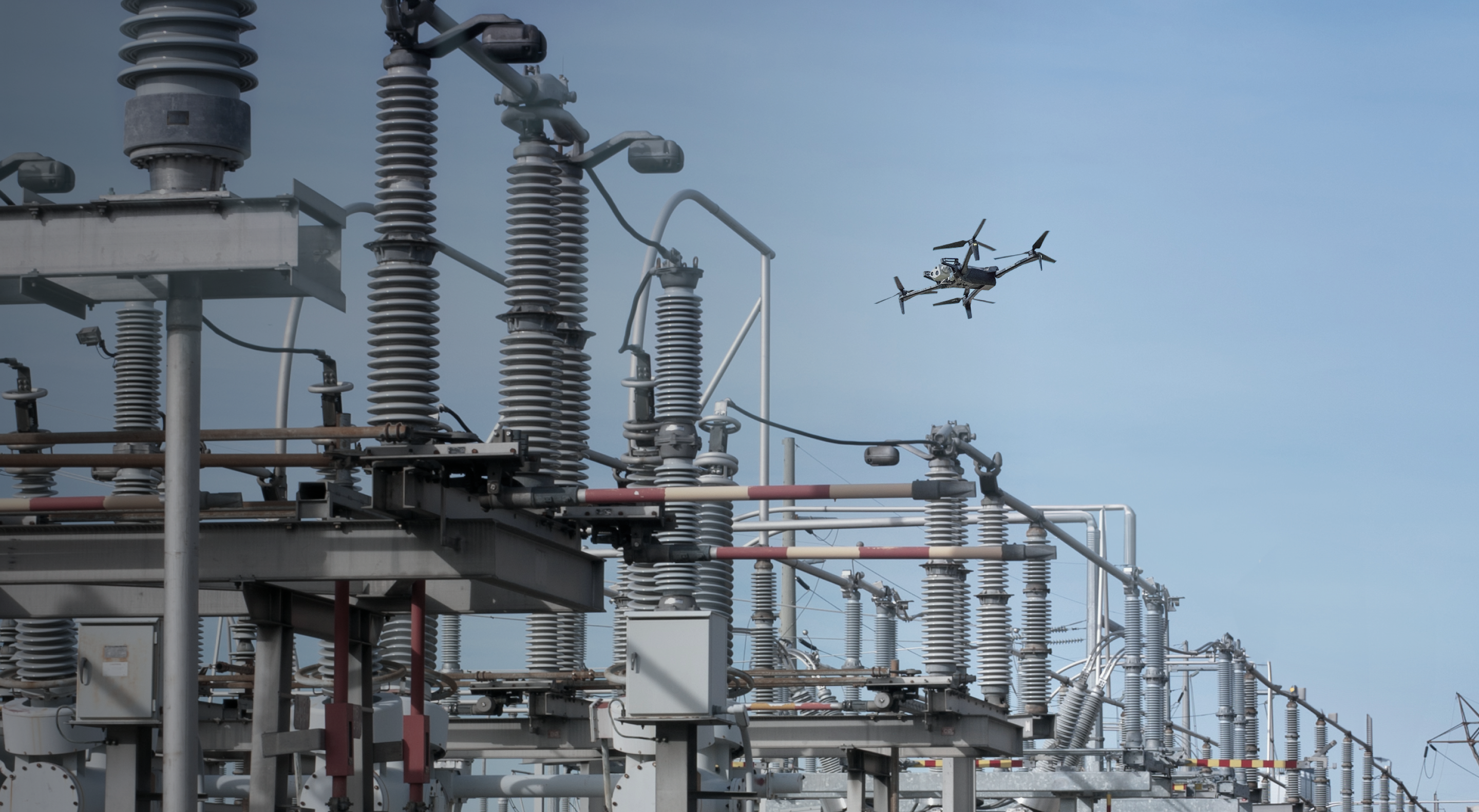
- utility space. And one of the key advantages of the
- Skydio system is that we
- use, um, a, a non-dependent on GPS navigation.
- It's called visual inertial odometry, which allows the drones to be able to fly
- in, um, like, high electrified environments.
- So we routinely are flying through substations.
- We're doing, uh, critical inspections on, uh, high voltage
- distribution lines. Um, a lot of that is really essential and something
- that many other drones on the market just can't do because there's so much
- electromagnetic interference, and if you're relying on, you know,
- traditional
- navigation systems, on like what we use for like a visual
- navigation
- system, um, that can really hinder your operations,
- and frankly, pretty
- unsafe because if you lose control of that drone, it goes into a power line,
- that
- creates a big problem for everybody.
- Um, so you know, that's, that's one of the advantages
- that even in urban
- environments for DFR, just having that resiliency to
- electromagnetic interference or a non-dependency on GPS, 'cause we've
- seen this in many urban canyons where if you're flying around there and you're
- getting bad GPS data or a lack of GPS data,
- all of a sudden that drone
- switches into a much more manual kind of flying, which can result in bouncing off
- of a building pretty darn easily. Um, so again, this is, this has been
- a lot of building blocks that have led to this point.
- Like, I left, um, the, the Motorola
- Solutions about five years ago to join with Skydio.
- At that time was, you know, still pretty consumer-focused,
- and it's been
- five years of putting these building blocks in places.
- It's the, it's the obstacle avoidance, it's the connectivity story, it's the, the
- dock, and now we're on our third generation of a
- dock, which not a lot of people
- know, but there's a lot of lessons learned over
- the course of releasing a hardware
- product, um, doing it correctly and doing it at scale, which is also a,
- a whole subject that's worth discussion.
- Um, especially if you're gonna manufacture in
- the United States and be NDAA
- compliant in our current times with tariffs and blockades and everything else
- that's going on. Like, all of this makes for a very complex, um,
- deployment. So being able to address multiple
- different
- industries, um, be it, you know, public safety with the DFR
- docks or the DFR, uh, deployment model or, you know, subsequently
- having those same drones being able to be used for multi purposes,
- not only is that much more effective for everybody that's going down this road, um,
- it also is, is a way that you can unlock some additional
- funding to help pay for
- these things as well too.
- The of the state of Colorado, uh, and, and obviously
- understanding large open spaces and things of environment concern.
- Maybe, Vern, you can highlight how drones can help in
- some environmental
- concerns or even the Florida hurricane case that we checked out with in, in North
- Carolina as well before.
- Yeah, absolutely. I mean, so Axon, uh, has, um,
- uh, you know, a,
- a, a nonprofit wing, uh, called Axon Aid, and we actually
- use, uh, drones to, you know, s- we send for free to our
- customers. We'll, we'll send Axon Aid team members out to
- post-disaster, um, incidents and we'll help
- agencies in their time of need to map out, um, uh,
- the, the areas as well as, you know, giving free evi- uh, access to
- evidence.com and store all of that because it becomes really important
- for,
- uh, post-disaster, uh, funding f- via FEMA to show
- here's all the damage, uh, estimates and helps do that very, very quickly.
- And so having products like Skydio to be able to go in and do post,
- um, emergency inspection and easily put that into evidence.com,
- uh, is really, really critical. Also, um, is, you know, without tr-
- diving into all the specs, which, you know, I'm sure a lot of people,
- you know, but
- the, you know, the, um, the thermal camera on the X10 is, is
- one of the best in class. Uh, you know, the, the Boson+ camera,
- and then it's got a really fantastic zoom.
- I think it's a one twenty-eight total, uh, total, uh, you know, uh,
- total zoom on it as well. Um, and so really it's, it's a fans-
- -tastic drone for that and, and really highly portable in a lot of
- different ways, right? A single small Pelican case.
- It weighs less than p- than five pounds.
- And a lot of DFR drones today are, you know, big
- honking drones, right? Like, 22 pounds plus
- with the payload flying over your urban environment, right?
- And so even with the parachute, uh, in any aircraft,
- any aircraft, uh, y- you know, when you fly unlimited or,
- you know, infinity flights, you are going to have crashes, failures,
- things like that, right? It's, it's absolutely inevitable.
- So the parachutes are critical, and, and Cabe can talk about that aspect
- coming soon. Uh, but also just the inertial weight of a,
- of a
- drone at 22 pounds, even with a parachute, versus less than five
- pounds with a parachute coming down onto whatever happens to be in
- your urban environment when it fails.
- Uh, I think that's pretty important to say,
- look, the lighter the better, right?
- This is, this is purposefully tasked for the
- mission at hand with a great
- camera, both thermal and visual camera, but also not, like,
- oversized and too beefy, uh, to be less safe
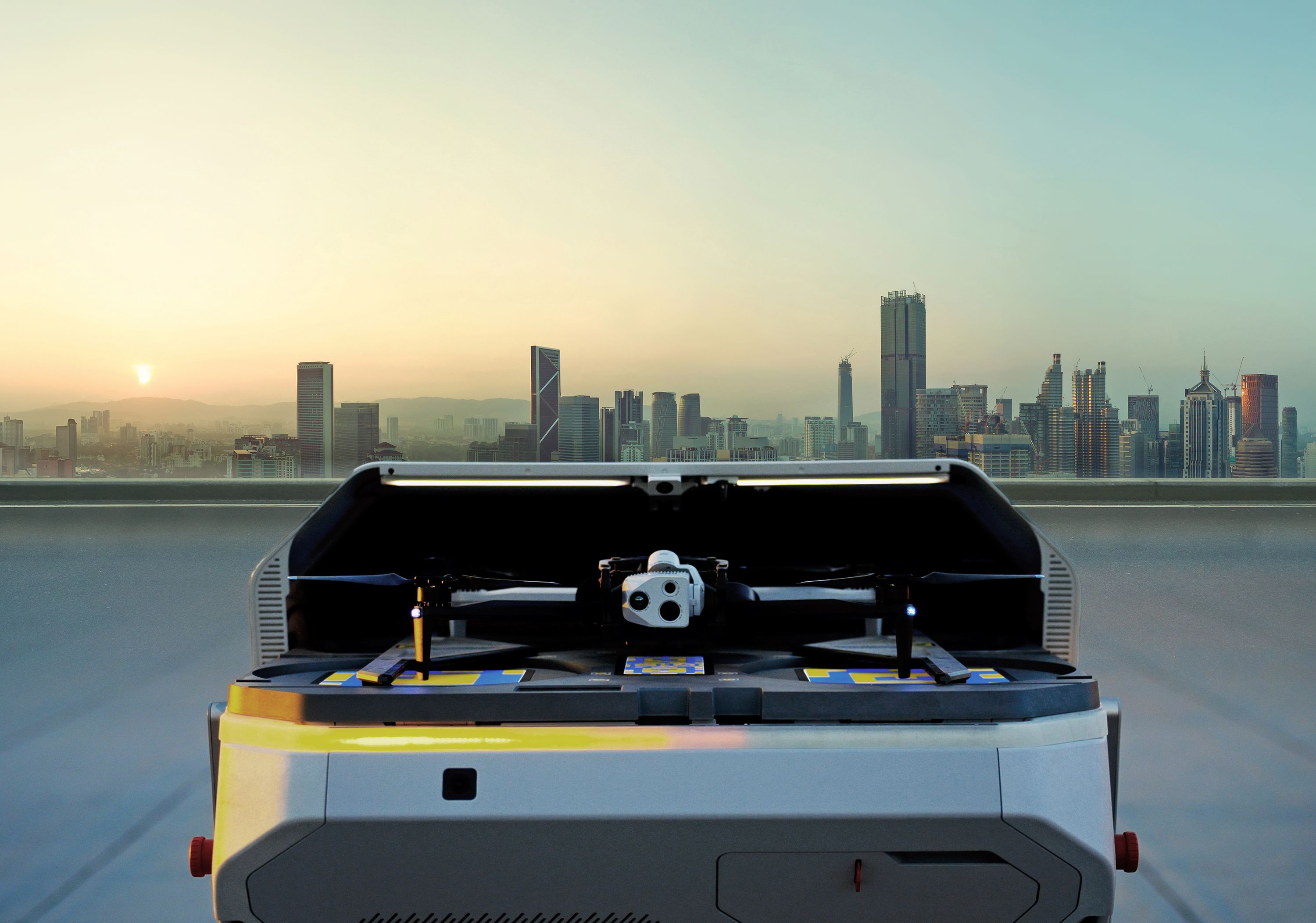
- should there be a failure. Um, and also the dock is like, honestly,
- um, when I first saw it, when it was unveiled, it's, it's a master
- class of industrial design. It's the perfectly sized for
- this drone. Um, they put a lot of thought into, like,
- even just how it
- opens. Like w- like, you know, they kind of jokingly,
- customers call it the
- barbecue, uh, because it opens like this.
- And Adam was explaining, like, look, you know, leaves and things fall down
- onto drone docks. The snow, right?
- And so literally when it opens, it's designed like all
- that stuff sloughs off
- the back versus some open like this, and, like, sometimes that
- snow or whatever just gets plopped down onto the drone or leaves and things are
- into your dock.
- I think on that point too, one of the, the main things that I love about the
- design
- of the X10 dock is frankly just the portability of it.
- Like, that breaks in two pieces. It can fit through a standard doorway.
- It's a two-person lift, which means that we can deploy docks onto most
- every rooftop without having to do, you know, elaborate clain- craning
- efforts or, you know, set up super, uh, specific infrastructure
- to support them. We're not putting up 50-foot mast,
- you know, masses to put the
- radio antennas on top of. Like, the docks are really designed with
- some same kind of ideas the drones is.
- Like, let's make sure we're building for the job
- that we need and not
- over-engineering something because that's our first try trying to make these things
- work, you know?
- I, I had a, a chief that actually has, uh, an X10 dock and,
- uh, a competitor's dock, and I honestly, I want all the
- companies to succeed. There's plenty of business out there.
- I, I don't want,
- um, anybody to, you know, especially for sake of our customers,
- to fail.
- But I was like, "Hey, you know, Chief, how's, you know, you just got this dock.
- How is it?" And he's like, uh, his words out of his mouth,
- "I'm trying to figure
- out why I have a Volkswagen on my roof,"
- because it's so big. Versus, like, why the same size drone
- is this dock
- so huge and so heavy versus the same size drone where
- the, the kind of, uh, uh, Skydio barbecue size one is, is,
- is, is there.
- Yeah, the cringing. Hey, I'm a mast- I'm a master of marketing.
- So, um, so but, but really it comes down to
- really Adam and the design team at Skydio having
- a, a true background in aviation design
- and aeronautical
- engineering, understanding what needs to be, what,
- you know, what the
- drone really needs to do to accomplish the mission, but also then the dock.
- What does the dock need to have in terms of all the environmental factors, the,
- the, you know, HVAC systems to, you know, keep, keep the drone
- in a happy place so it can launch 24/7 anywhere in the world.
- So the, you know, it's very clear when you look at this
- system in totality in Ax- uh, uh, Skydio's full stack and
- then alongside Axon's full stack, like,
- there's just no total system that's out there anywhere in the
- world that is as powerful as these two companies working together in DFR.
- Yeah. These are all things that you need to consider, right?
- So, like, the whole purpose of this conversation
- is what are some of the lessons
- learned. And, like, we've gone through
- a bunch of iterations of this and, like, I think one of the major lessons we've
- learned is, like, this is already a complicated problem.
- You don't have to make it more complicated with the solution you're trying to
- provide. So portability, reliability,
- manufacturing at scale, having it be, you know, as American-made as humanly
- possible, certainly NDAA compliant.
- Like, that is all how you build a program that's
- gonna be sustainable for not just
- this year or next year, but for five to 10 years from now.
- And I appreciate you saying that because we have about three minutes
- left, and I
- kind of want to get to community engagement and scaling up and the looking
- ahead piece, right? And so, um, what are we at now
- specifically at Skydio? How many drones are we building a month
- and, and,
- and can you talk about that maybe for scalability purposes in
- comparison to other
- competitors, what we're doing now?
- Yeah. I mean, I, I can't speak to other competitors',
- you know, capabilities here,
- but Skydio is developing thousands of drones a year.
- We've been building now for, for many years where we've got a
- manufacturing facility that's, you know, tens of thousands of feet right across the
- bay in Hayward, California.
- Um, we are now on our, let's see, one, two, three, I think the fourth generation
- drone, third generation dock. Um, we've got a company that's
- approaching, what? Over 800 employees now.
- We have 700 public safety agencies that use Skydio on a daily basis.
- We have more than two million flights, um, underneath the, the Skydio
- platforms that have been flown. Those are just the ones that are from online
- systems. We have a whole subset of our company
- that are, uh, military
- users that are flying offline, of course.
- So we don't know how many flights they've done.
- But, [lip smack] you know, from a, from a maturity and manufacturing
- capability, um, you know, that I think is, uh, gonna be something that's critical.
- And, you know, certainly with you, Vern, I, I wish everybody the best, um, our
- competitors 'cause we're all trying to solve a very critical problem here.
- But that's gonna be a real hard reality for people is when you try to move into
- build- building flying robots that stay airborne, you know,
- 99.9% of the time and that they can, uh, produce at a
- mass scale, is gonna be just a really hard problem for
- anybody, especially that's
- trying to manufacture here domestically.
- And one last question, uh, before we get to the community comments
- here really
- quickly. This one's for you, Vern.
- What's, uh, what's your and Axon's vision, uh, with Skydio over the
- next five years, and how do you envision drones reshaping
- how cities and,
- uh, counties and states operate with their
- residents and drones in, in that space?
- If you can just highlight real quickly.
- Sure, absolutely. So I, you know, I can first off say that Axon is fully
- committed to DFR all the way up, uh, to the C-suite.
- Um, in fact, um, our CEO, Rick Smith, was just at a, a,
- a agency last week where he personally
- demonstrated flying, uh, an X10, uh, from a dock,
- uh, for the chief of police, right?
- So that, that's the first thing, is, like, Axon's all in on DFR,
- and that's hence the partnership with Skydio. We're all in with Skydio.
- Um, and so I think the vision really comes
- down to, uh, uh,
- adding Skydio and enhancing our full ecosystem and suite of products
- that we have at Axon for real-time situational awareness.
- So our real-time awareness teams, the core of this is FUSIS and
- Evidence.com bringing drones into this seamless
- ecosystem of, um, of Axon onto that screen,
- pulling in D drone so that radar data is now also shared
- within Skydio DPR-Command so that we have automatic
- autonomy in terms of, like, deconflicting with other, uh, threats
- that may be in
- the airspace. All of these things are, are really happening at a rapid
- pace. And, you know, Axon's also starting to move, um,
- deeper into not just... You know, tr- traditionally, you know, we've had, like,
- police departments and sheriff's departments,
- like a public safety focus.
- But really, in the end, these things, like FUSIS, are going to
- become just citywide infrastructure-type assets.
- It'll be an, "Of course we have this to manage all of
- these
- different feeds into one place." And that's gonna help decision-makers
- and people that, you know, do budgets and need to plan resources,
- give them real-time data to then solve the problems of their city and
- just make them a lot more efficient.
- And AI tools, and, and I'm not an AI expert by any
- means, but Axon's taking a really, really deep dive.
- You know, Rick is just on the absolute forefront of,
- of, of
- AI thinking in this and pushing Axon to a
- huge extent to, to start to utilize AI in every aspect
- of what we do.
- I say that's the, gonna be the most important thing
- that you see between Axon and
- Skydio as well, and I don't think anybody's gonna execute
- as well as
- these two companies.
- Yeah. It's in the DNA.
- Perfect. And so we're gonna move now, transitioning into some of the questions
- from
- our audience here. Uh, the first one comes from, it's, uh,
- Casey Staverd.
- I th- hope I'm saying these names correctly.
- A compliance inspection supervisor at the New Mexico Environment Department.
- Uh, their question is, "I'm currently working to create our drone
- program here in
- New Mexico. What steps did you take with the public to
- ensure you could utilize
- drone over properties?" Maybe you could both talk about the Chula Vista base and
- how that worked.
- Yeah.
- Yeah.
- I think, yeah, by all means start with the,
- the community outreach.
- Yeah.
- So critical.
- For sure. It was the foundation at Chula Vista.
- Um, you know, the, like I said, um, when we started the drone program, the
- first thing that we realized was, like, we need to, to get community input.
- So we, we actually held forums. We, we looked at best practices
- and policy. We requested policy input from our
- community and, and from those that we knew would be concerned about it.
- So, like, we approached the ACLU and said, "Hey, do you have s- you know,
- concerns or suggestions?" Of course they did.
- Uh, we didn't have to take every concern
- and exception, right?
- Because clearly there were some that we thought went a little too far in
- terms of
- the privacy aspect. But there were areas where, like, data retention,
- we said,
- "That's, that's reasonable. We can change the data retention on some
- of this." So
- my advice is, you know, first, all politics is local.
- You know your, um, community best.
- Mm-hmm.
- Um, my email is vsallee@axon.com.
- V like Victor, S-A-L-L-E-E @axon.com.
- Um, to this person asking the question or anybody else with a question, please
- email me. I'm happy to help on public safety
- or even just,
- um, you know... My role at Axon is, is to really help agencies
- with anything on the drone program.
- But that's my first bit of advice, is transparency.
- Understand, um, and, and get the information out there.
- Like, look at Chula Vista PD's publicly-facing
- dashboard. We built that.
- You know, we were the first ones ever to build that,
- and we share all of the data,
- the maps, so that the public can really see this
- is what we're doing with
- drones. We're not doing anything nefarious with
- them.
- Yeah. And to that point, like, that is such a critical part of really how this
- tech
- stack should work. Like, with the, the Skydio D- DPR-Command, one
- of the just offerings that's included in that software suite is a transparency
- dashboard. So, like, agency, you know, decides how much they wanna publish.
- But you can put out every single flight that you've taken, the telemetry with it,
- the takeoff time, the landing time, the, even the, the camera look
- angles that the drone was flying around at.
- Um, that's something that we publish, and you can put it out just in a
- public-facing website just through the suite itself.
- So it, it is critical, and it's something
- that we encourage people to, to be open
- with, 'cause nothing about this is nefarious, you know?
- Right.
- We're trying to get a job done and help people.
- Uh, David, uh, Wohlgemuth from Livonia, Michigan Police
- Department. He's a patrol officer there.
- He asks, "How do you get around," uh, it's an interesting question.
- "How do you get around the FAA line of sight requirement?" I think his question
- really is how do you get to BVLOS or beyond visual line of sight?
- Can you maybe walk through-
- Sure, yeah. There's-
- ... our partner with Jakie?
- Yeah, yeah, yeah. Good old, good old Jakie. Uh, [laughs] um, so yeah.
- W- within Skydio, we have a, a dedicated regulatory team that
- really, I mean, I, I consider them the best in the industry,
- um, really paving the
- path forward for this. So there's a couple different avenues for
- it.
- You can go under the Part 107- By like a commercial pilot, um, that does
- have limitations, especially for public safety.
- Um, so to, to really unlock and get to that beyond visual line of
- sight,
- uh, the recommended path is going down the certificate of
- authorization,
- uh, pathway. And now that once you have that in place, um,
- which our
- website actually has a lot of really good literature on this, on the exact process
- to get there, then you can start to operate under those
- COAs and get beyond
- visual line of sight waivers, again, within that shielded envelope, which
- is where
- the connectivity story and the obstacle avoidance
- that comes inherent in the Skydio
- X10 is so critical to get, you know, that shielded operations
- flying at low altitudes without having to go through a whole bunch of, uh,
- elaborate infrastructure, like putting giant radar towers throughout
- your entire
- city that can cost hundreds of thousands of dollars.
- I, I was just gonna call out officially for
- our law, law enforcement, uh,
- colleagues that are viewers. A couple nonprofits that were critical
- to, to, to helping develop all of this as well is
- droneresponders.org. Uh, droneresponders.org, they're
- free to join. They have a resource guide that's there
- that's got, uh,
- examples and COAs, and they also have a couple conferences a
- year.
- Uh, also Law Enforcement Drone Association,
- leda.org, is another really,
- really great one-
- Mm-hmm
- ... that's r- that's run by professional law enforcement
- leaders
- that run drone programs. So I would encourage you to, to look at
- those two different organizations.
- And there's probably a few more that are out there.
- Uh, but those are the ones I have
- relationships and have...
- And, and I know them and can speak to their professionalism
- and how important
- they are, um, to... And, and they run great conferences as well.
- So in- it's not only just investing in the
- hardware, the technology, the
- software, but it's investing in your people in terms
- of training and
- professionalism. One of the things that I always tell our customers is,
- "You know,
- look, you're not just buying drones from us.
- We're here to help you build a professional aviation program." Because in
- the end,
- you're putting an aircraft into the national airspace,
- and you better know what
- you're doing. So invest in that training.
- Build a culture of professional aviation, uh, within your
- agency. That instills confidence in the community.
- And I said, like I mentioned, uh, when you're flying, uh, an
- infinite number of flights, you're going to have an incident.
- And so therefore, when that's investigated,
- you need to be able to go back to the
- public, to the elected officials-
- Mm-hmm
- ... to the FAA and show, "Yes, this was, this incident
- occurred. It was unfortunate. These were the protocols we had in place
- despite all these, you know, things.
- This, this bad thing happened, and here's how we're gonna avoid it in the
- future."
- Right? And so that, again, that culture of professional aviation
- is really, really
- critical. And, um, you know, I just would encourage you to invest in
- your
- people and, and invest in training. It's critical.
- Next question is, is actually a really good question because
- even when I first came
- to Skydio, I was like, "How do we determine this?" Uh,
- this one is from a police
- officer named John Domingo from Cherry Hill Police Department.
- He asks, uh, "If the goal is to have drones responding to
- emergencies
- autonomously without a person on the roof, how does the drone verify its
- airworthiness?" And what I think he's asking is basically instead of having a
- human
- physically look at it, how do we check airspace wor-
- airspace worthiness?
- And I don't know.
- I'm happy to take that one. Yeah. So this is obviously, like,
- a big transition
- point. Like, once you stop having a human standing
- directly over to the drone to do
- those pre-flight as- assessments, like, how can you ensure it's safe?
- And it's something we thought about long and hard as we were developing the, the
- X10 dock. So, uh, within the, the X10 dock, there actually is what's
- called inspection mode, which allows you to leverage, uh,
- a whole series
- of cameras inside of the, the dock itself as well as the opening and
- retracting, uh, roof, which allows you to do the visual
- inspection piece.
- And then internally and through the c- direct connection that we have to
- that drone
- via the cloud, there's a whole suite of internal software
- checks that
- happen before, uh, the drone takes off.
- So from a, both a software and a physical inspection side,
- we're able to address
- that and have met, then checked the box with the FAA, that's,
- that that is
- sufficient in order to, you know, approve airworthiness before taking off.
- Perfect. Any more on that, Vern?
- Uh, no. I just, I would say that inspection mode was,
- is really an incredible
- feature that nobody else has, right?
- Um, where it's actually you're able to, like, spin the props within the dock,
- uh, to show, like, hey, these props...
- And, and you can actually, you know, look for hairline cracks
- and things like that
- that you'd be doing, you know, visually.
- So that inspection mode is really, really important.
- But that being said, you know, as the cadences, uh, you know, are,
- are set
- up in terms of inspections, I'd say that, you know, uh, I don't know what be- best
- practices are, are out there from Skydio yet.
- But I'm sure, like, perhaps, you know, uh, once a day or once
- a week-
- Yeah. Daily check
- ... you know, a daily check physically of the dock,
- you know, prior to, like,
- operations, just to make sure and, you know-
- Oh, and I, I'm... When I was saying daily check-
- Yeah
- ... I think that's the remote connectivity
- check.
- Right.
- Or like in terms of, like, maintenance and when you need to go physically inspect
- the dock, we wanna keep that as limited as possible.
- Right.
- Probably gonna be dependent on use case environment more so than
- operational, uh, specs on it. But, like, you'll, you'll know if the dock has any
- kind of failures because of all the sensors in, inside of the thing.
- And you'll know if the drone's, you know, safe to fly based on that inspection
- mode.
- Yeah. Okay. Uh, this one is Nicholas Payne.
- He's a detective and the drone team lead at Elko County Sheriff's Office.
- The question is, "How does the DFR dock
- and remote connection operations,
- the ability to connect and its connectivity in rural areas?" How,
- can you talk
- about how that works in those rural areas and the connection?
- Sure. Yeah. So depending on how rural, um, [laughs] again, with the Skydio
- Connect Fusion, you really have two different pathways for
- maintaining connection
- to the drone. Um, and that is either through a traditional kind of
- radio
- link. So we have an external antenna that, that would come standard with the
- docks that will basically maintain that point to point.
- It's an omnidirectional antenna, so you can fly any direction out from the
- drone,
- um, and stay connected. You know, reasonable range out to it,
- I think right now,
- like, we'd seen optimization up to, uh, seven miles.
- I think that's probably, you know, in the cleanest of environments.
- But operational range is certainly with that direct link.
- Um, and then depending on what the LTE
- connection is in that
- environment, um, that really then moves it into where you
- don't have
- any limitation on, uh, range from where you took off from.
- It just becomes a question of, like, how much flight time do you have to go out
- and
- then still get back to the dock
- Um, so if it's a totally, like, LTE disconnected environment, like, you'd
- leverage the external radio and be able to go miles out.
- And if you're, uh, able to switch over onto LTE through any
- of the standard
- carriers out there, nothing special about this.
- It's the existing infrastructure that's already in the country.
- Uh, really, the range is no longer an issue.
- It's just a question of battery life.
- And I was also just gonna mention, um, at Axon Week, Skydio had this
- amazing trailer that, you know, this ruggedized trailer that
- actually had enough battery packs and solar to keep the
- Skydio Dock system running for days without shore power, and then
- Starlink connectivity.
- Mm.
- So just to answer, like, the rural aspect, um, you know, having
- a Dock, uh, the connectivity's always gonna be the
- biggest challenge in a, in a
- rural area. But having, you know, s- uh, Starlink to then
- enhance to make sure you're able to then-
- Yeah
- ... connect to Skydio Cloud, live stream, all those types of things, having
- sufficient battery pow- you know, power or whatever, you know, clean power that's
- available to power the, the Dock is gonna be really, really critical.
- But again, um, you know, feel free to reach out, uh, to, to Cabe
- or I to
- discuss that further on specific use cases of, of what your
- jurisdiction is.
- All right, couple more questions for the next three
- minutes that we have here.
- Can you talk about... This is from Scott Porter,
- public safety practice lead at
- Seneca Holdings. Uh, can you talk about some of the key
- integrations
- specifically between Skydio and Axon, uh, for example, live-streaming
- video, downloading of video into evidence.com,
- and where do you see the key
- integrations going forward if there are any additional ones?
- Yeah, so I mean, you know, really today, you know, right now, the, it live-
- live streams seamlessly, not just through Skydio Cloud,
- but into Axon
- Fusos. Um, and Axon Respond is, is slowly being absorbed and
- transitioned over into Axon Fusos.
- So the live stream is there, and the, the QR codes as, as Cabe, uh, mentioned.
- Also, the integrations with body-worn cameras.
- Today, uh, within the DFR, uh, command piloting screen,
- you... there's a- actually features where you can see a
- body-worn camera that's
- represented as a pillar, as the, as where, this is where the
- officer is. This is where you're flying to exactly, so
- that you can start to orient your camera and start to get situational awareness,
- and that's only gonna improve over time.
- So, um-
- And, and allowing those officers that are wearing the body-worn cameras now to
- just
- press a simple button and say, "Send drone to me," you know.
- Like, I, I think what we're gonna see is, like, the drones become so
- intertwined with standard operations that it's gonna become as part of a
- standard
- kit for a police officer as a body-worn camera, as a pistol, as a radio, as drone
- support when you need it. So having that connection to where we have
- situational
- awareness of where the body-worn cameras are, where the vehicles are, and those
- officers then also being able to see that live stream come in, it really
- is just a
- series of, of APIs. And, you know, we're continuing to expand our library of
- APIs that are available, um, and that's gonna work with a m-
- a whole suite
- of different carriers as well too.
- The Axon story is extremely strong, and I think that's where, you know,
- a lot of
- this is gonna be differentiated. Um, but it, it also opens up to a bunch of
- different, you know, integrators out there as well too.
- And we use the term API amongst us three in, in, in the business quite a
- bit. Maybe for those who don't know what an API
- out there, maybe you could just hit
- on that real quick.
- Yeah, yeah. Yeah, it, uh, basically, the API allows us to, to push out, like,
- critical information, like the live stream from our side of the
- house or with Fus-
- uh, uh, Fusos. They're able to, like, provide an API for us
- that allows us to get
- access to the, uh, body-worn cameras', you know, critical information, like
- their live stream, their GPS position.
- Um, and it allows for, you know, a, a whole different suite of, like,
- connected
- devices and, uh, technology to work together.
- So Axon's our strongest partner for this, especially in the public safety space,
- but, you know, again, we have, uh, a whole host of these that
- are available for
- other agencies too.
- I was also just thinking back to the rural deputy question is
- we didn't even touch on the, uh, patrol-led DFR aspect, right?
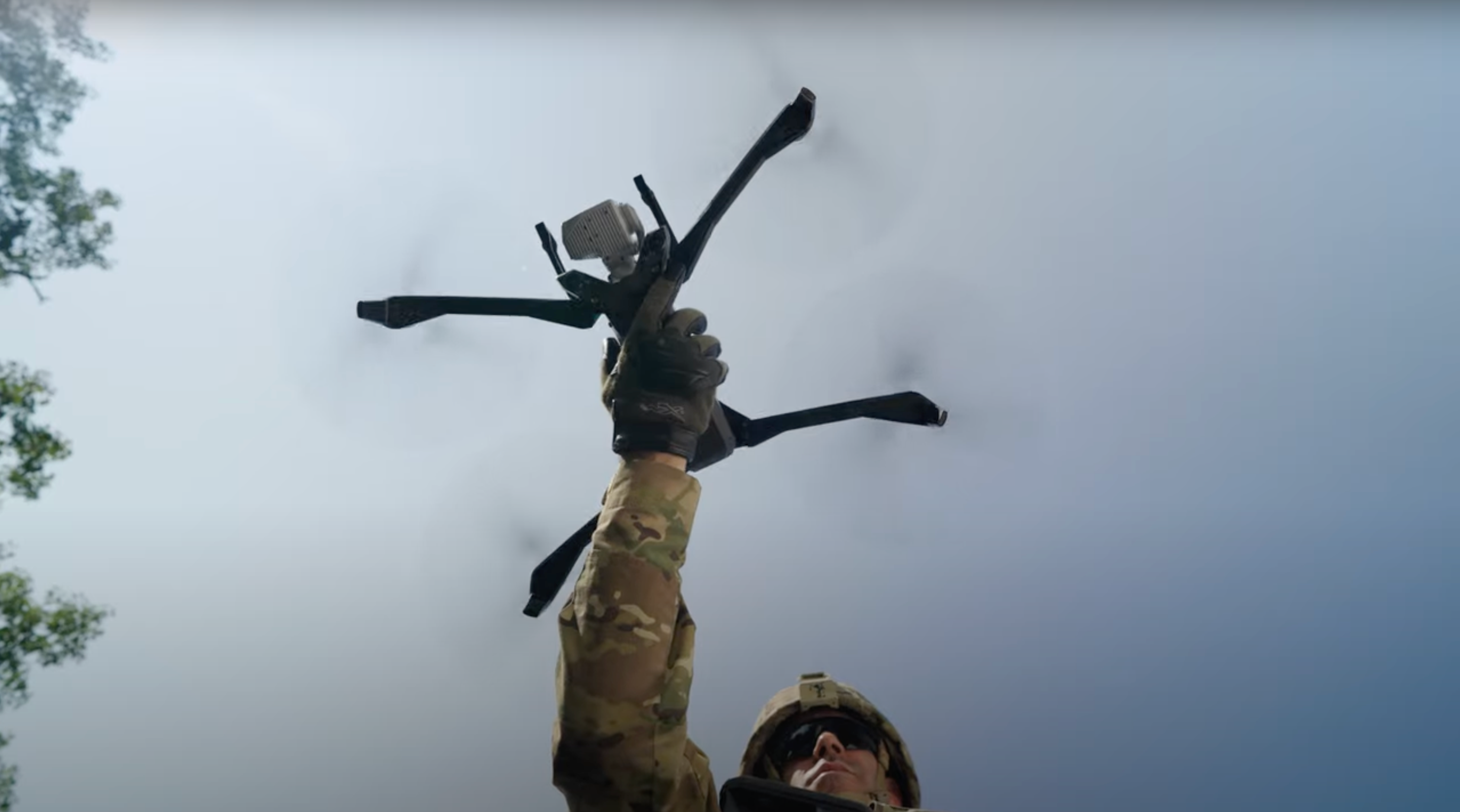
- So I know we've talked a lot about Dock for X10, but, you know, the, the coolest
- part of all this is this drone is the same drone that's in the
- Dock as it is your patrol tactical drone.
- The only thing that's different in the Dock-based drone is the battery itself
- has,
- has a slightly different, uh, attachment for, for, uh, you know,
- connectivity, but it's the same drone, uh, across your fleet.
- So there's this standardization aspect that's incredible.
- And then look to Oklahoma City as the model for patrol-led
- and Dock-based DFR, this mix where you've got Dock-based
- DFR within urban environments, but also their officers can
- have a drone that's in a trunk, drive to a scene,
- put the drone on the ground, and
- have it remotely taken over so that, again, you get your first responder doing
- first responder stuff. It's great that cops wanna be, uh,
- drone pilots, and they're really, really excellent at that, but really,
- in the end,
- autonomy's taking the human out of that part of the loop and
- l- allowing them to then do their highest
- level work, which is solving the problem
- at hand, not being a drone pilot. And autonomy is key to that, and that's
- why the X10 and, and Axon are the best in the world at that, and
- will, will continue to evolve on that.
- And that's the power of having a connected drone that's able to just access the
- existing LTE infrastructure that's out there simply by turning the thing on
- that's
- built into it.
- We are at 61 minutes.
- Are we?
- So I think-
- Oh, man.
- I think that about wraps it up. I, I do wanna give one shout-out to,
- is it maybe
- Sean Fierro, a commander at the Auburn Police
- Department.
- He says, "I just wanna thank you, gentlemen, uh, for your experience
- and insight.
- This technology and further innovation by Skydio and Axon is creating
- safer communities for both law enforcement officers and its citizens." And then
- #PoliceWeek. On behalf of all of us, Varun Salih, Cabe
- Tormes here, Phil Gonczak at Skydio and Axon, we really appreciate you
- all tuning in today. And if there's any other questions,
- feel free to send us a
- message on LinkedIn or, or shoot us up via email.
- It's a pleasure to meet with all of you, and thank you, gentlemen, for being here
- today.
- Yeah, thank you, Phil, and thank you, everybody.
- Thanks, everyone, for being on.
- Yeah.
Watch Time
1 Hr 39 Sec
Related Webinars

Episode 9: Choosing Your Path: Part 107 vs Part 91 for DFR
Watch webinar
Inside LVMPD’s Multi-Drone DFR Operations
Watch webinar
Pre-Incident Planning for FIFA: Turning Drone Data into 3D Operational Readiness
Watch webinar