Small, smart and survivable sUAS: Engineering organic ISR for the modern battlefield
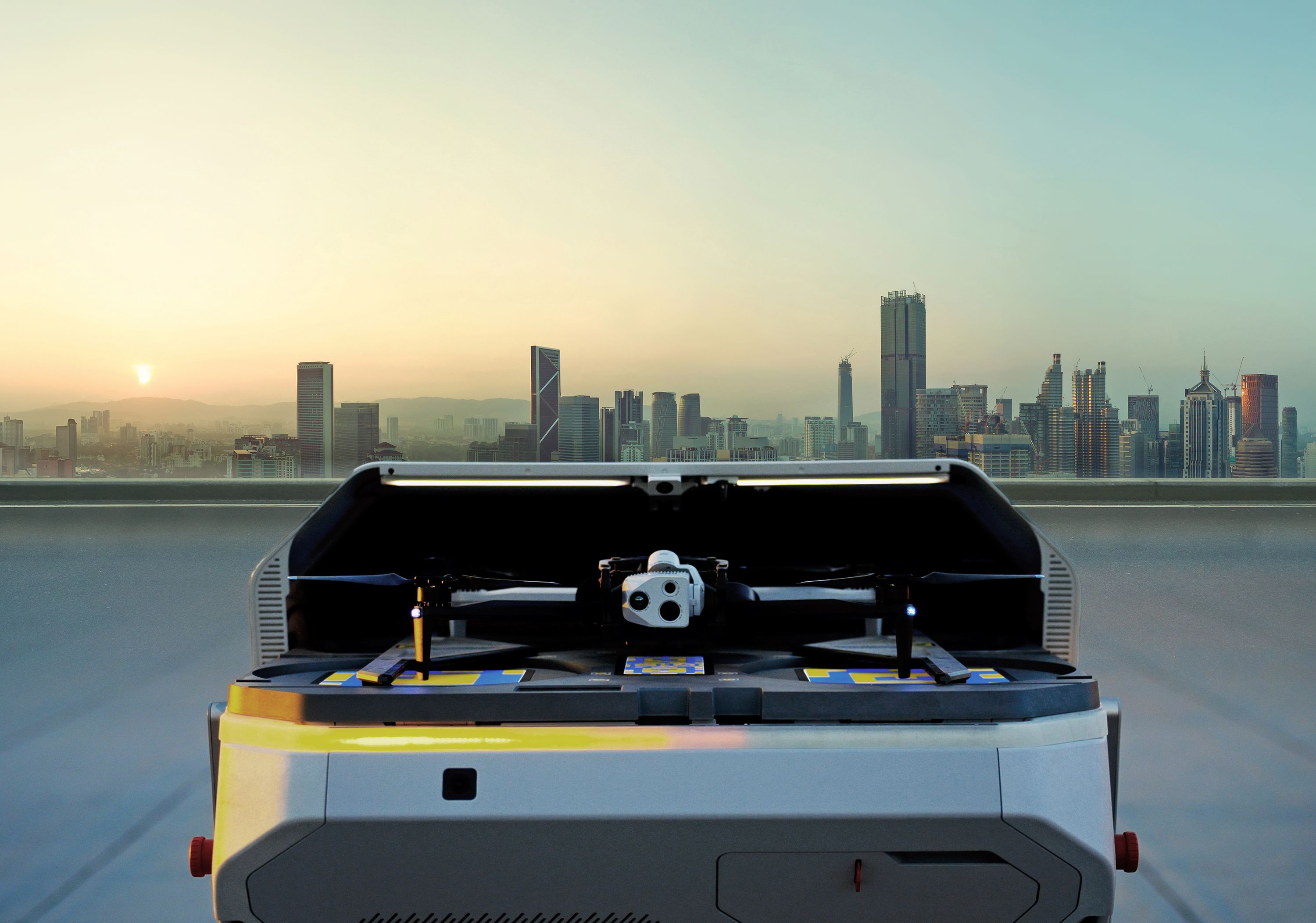
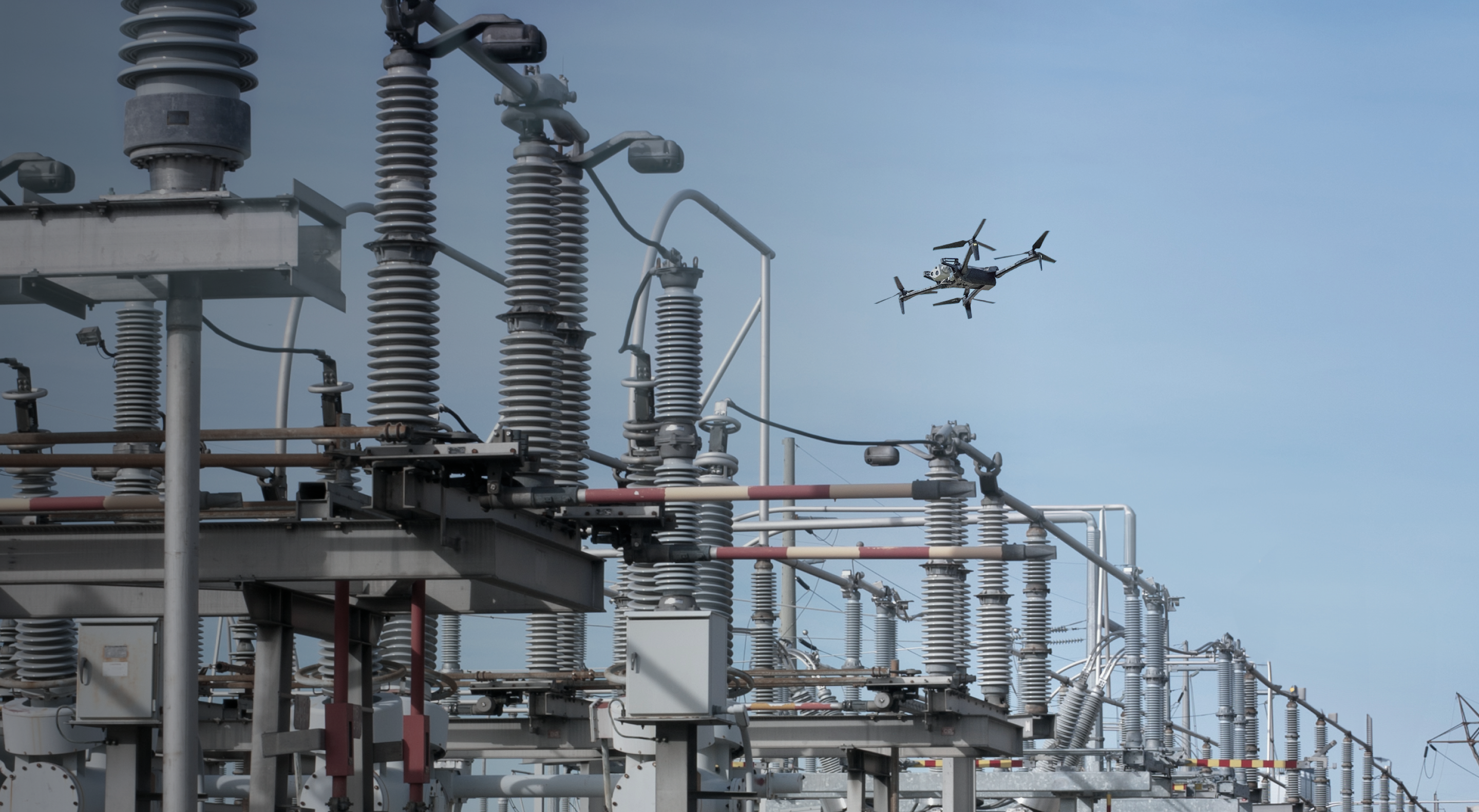
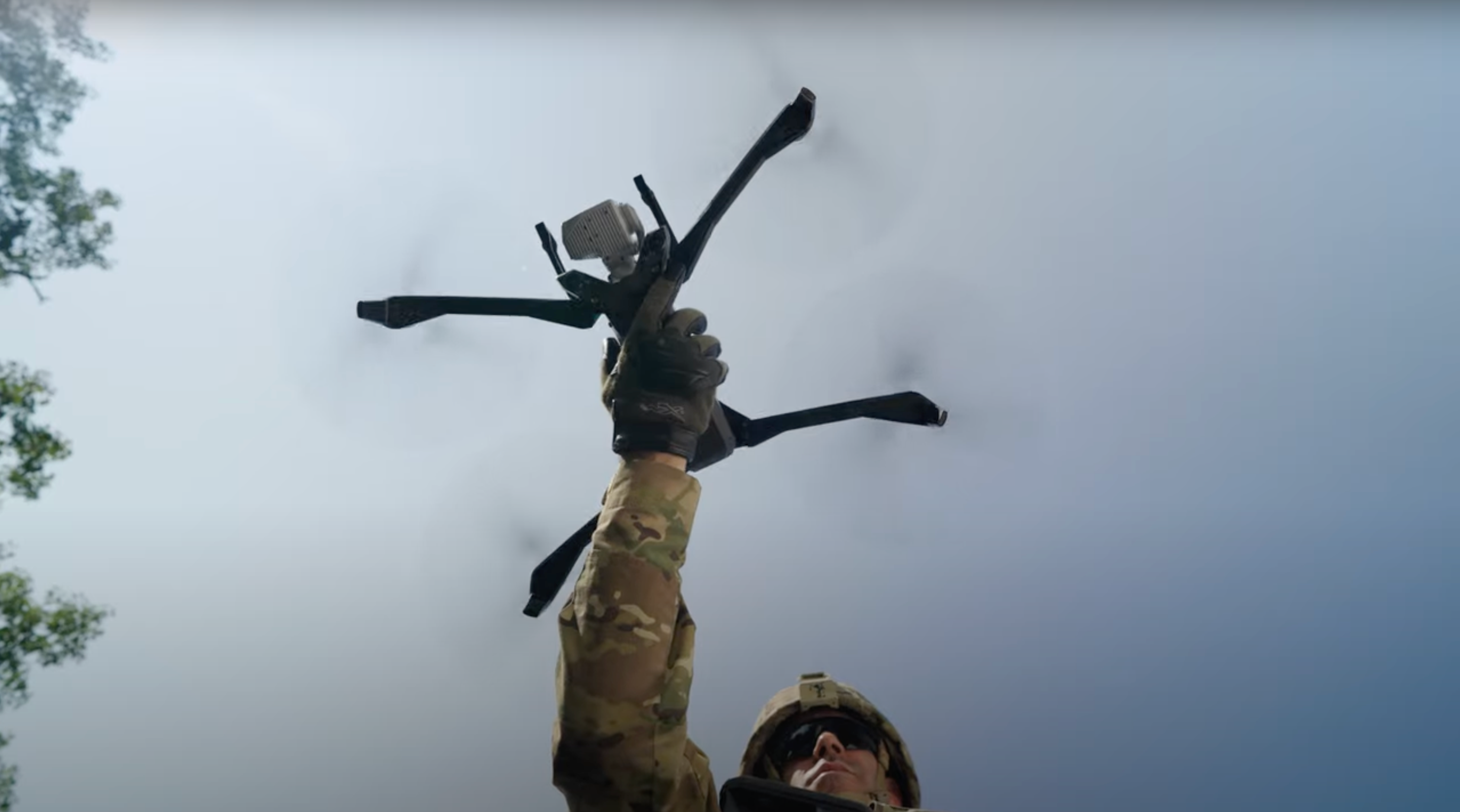
Explore the remarkable features and significant impact of X10D, a drone that epitomizes the fusion of AI-driven autonomy, superior thermal imaging, and sophisticated decision-making processes to provide the optimal solution for on demand organic ISR. Hear about our rigorous software development and flight testing regimen, a process honed through over 10 years and three generations of UAS development.Plus, learn about X10D’s trajectory over the coming months, with a particular focus on enhancing electronic warfare resilience (EWR) and survivability.
Learn more about Skydio for Defense.
- I'm Kelsey. I'm the director of product management for
- our federal business line
- and global government use cases. I'm gonna cover quite a few things today.
- I'm gonna start with the differentiating capabilities of X10 as a
- whole, and then go into the differentiating
- capabilities of X10D,
- which is our all gray offline dual-use variant, um,
- that we've added some additional resiliency, security, and modularity
- components to to make it optimal for the federal and global government use
- cases. So starting with the X10 capabilities,
- Skydio provides AI-powered small UAS solutions that allow
- customers to see and sense the world around them.
- So this is incredibly important because it allows pilots to accomplish complex
- tasks while also lowering the cognitive load and allowing
- you to get back to the mission sets that you actually care about
- and the things
- that you wanna be doing on a daily basis.
- So one of the th- ways that we do this is by our groundbreaking
- vision-based navigation system.
- This isn't an add-on, something that we've seen, um, and tried to
- iterate on with GPS-denied environments.
- This is something that's inherent to Skydio products that we have
- been honing and adjusting and really becoming experts on over the
- last 10 years. Um, we have honed this through our dual-use
- products and through government use cases.
- But, um, from the landscape that I've seen, this is something
- that a lot of people
- have added on with different attachments, tried to get vision-based
- solutions, but we're probably five to seven years
- ahead in this
- space because of the way that we've built the hardware and
- that we've integrated
- our vision-based solutions.
- Um, this is really impactful, like I mentioned, for the GPS denied space
- because we inherently have a vision-based solution that we're able to
- employ when GPS denial happens or, um, you need another
- visual positioning system to use as a contingency.
- So the way that we do this is we have six embedded navigation
- cameras inside the aircraft that provides 360
- degree navigation view bubble around the outside of the aircraft
- that provides you, um, another world view.
- So if you think about the GPS frame that you're operating in for
- navigation systems, we also have a navigation frame that we're
- able to... Or a, a visual navigation frame
- that we're able to navigate off
- of.
- Um, we also have a new capability that's
- launched this year called Night Sense,
- um, which is part of what you're seeing here,
- which allows you to be able to
- fly and use these vision-based capabilities at night.
- So that's one of the attachment capabilities that I'll talk about a little
- bit
- later. But we have, like I said, six embedded custom navigation
- cameras that can be either visual or infrared, um,
- that provides you 360 degree coverage around the aircraft,
- industry-leading obstacle avoidance, and visual base positions in
- GPS denied environments. And this isn't only for
- battlefield applications or specifically for military applications,
- it has
- many other dual use applications as well, including flying in places like
- subway tunnels, under bridges, really any area where you think that you
- could potentially have intermittent GPS, GPS spoofing, any type of
- GPS denial, this is able to cover that for you.
- Um, and I think we're gonna show a cool video
- of... Yep.
- So this is some indoor capture, um, that we've done from, uh,
- GPS denial using our vision-based position systems and kind of the sense of the
- world around you as you're using these vision-based position systems.
- Uh, another thing that we've done with our X10 platform
- is we
- now have 10X compute, which [laughs] I know
- is just the inverse of the other.
- Um, but we have 10X compute of what we had on
- X2.
- So this is really impactful because it allows you to, uh,
- have additional pixels on target for, uh, precision and data capture,
- and also allows you to have exceptional edge computing on the
- platform, which unlocks an entire myriad of things
- that you
- can do with the platform that you wouldn't be able to do with
- lesser compute.
- Um, so with this, we are empowering a bunch of different
- algorithm sets. We do 2D and 3D map capture,
- onboard modeling, uh, subject tracking.
- It, it, the possibilities are endless for what we're actually able
- to do here.
- We've had the scout capability for a while.
- This also employs the scout capability, and it also is
- very impactful for what we're seeing in contested environments
- and for the hardware
- as a whole because it allows us to continue to grow and adapt with the
- continually evolving mission needs.
- So we're using a portion of that compute now,
- but we have the capability to grow
- over time to encompass whatever mission sets that we're going to be able to
- accomplish. Um, and on the 2D and 3D map
- capture and onboard modeling side, we have one of our experts on the line
- too.
- And Jonathan, do you have anything to add on any of
- those?
- Yeah. So Skydio, um, as everyone's mentioned, we're,
- we're built
- around computer vision and autonomy.
- Um, and one of the core features we've had,
- you know, for a while now on our
- previous platforms was 3D scan, which is basically the drone
- having an autonomous flight path to capture data to make robust 3D and 2D
- models, um, 2D maps and 3D models. Um, with X10,
- we took this up, you know, beyond the sensors,
- which Kelsey will get into and
- things like that. Uh, we took this to another level, um,
- with the, the
- additional compute, is essentially we have a workflow now
- where you can fly
- a map capture, which is our 2D, um, a 2D flight plan or our 3D
- scan. Fly that, the, the drone autonomously, so you'll see,
- um, captures the data, which is, is, you know, not unique to us, but, uh,
- we do it pretty simplistically. This is a 2D map capture
- that you're seeing here.
- Um, and then once we capture that data, which is all, you know, you can, you can
- set a lot of, uh,
- parameters up front, um, to get the GSD you want, to get the
- angles you want, et cetera. Um, what happens when you land
- is you can actually
- process the scan, and this is a little bit sped up, but it's,
- it's matter of
- minutes, um, not, not hours. Uh, but essentially you process this scan
- and onboard the drone. Give it a second to show here.
- You do, onboard the drone, you actually get a, both a 3D model, um,
- and
- when you're doing a 2D map capture, you get a GeoTIFF, which is a,
- a geo-rectified
- orthomosaic- Which can be utilized for, um, mapping
- purposes and, and base maps and things like that.
- So what's really neat about this and, and being an avid drone user for the last
- 15 years, is that you actually can see the data, um,
- that you've captured, make
- sure you got the, the correct information.
- From an ISR perspective, it gives you pretty much edge, you know,
- offline
- capability to,
- to show, uh, you know, a post, post-mission, uh,
- report or a, a pre-mission plan. So you get this data in the field
- without connecting to an online source, not needing a, you know, a computer
- program, like a photogrammetry program to create
- these models and
- GeoTIFFs. Um, they're lower resolution than you'd get
- on, on that 'cause they're
- lo- they're lightweight, but they're, they're...
- You can see a lot of detail still, and you still get the, the raw files
- that you
- can post-process as well. But it's a cool new feature
- that we've launched with X10.
- Um, I've used it a lot. It's been impressive on demos
- and just in general use.
- Um, and I, I'm excited to see how our customers use
- this, you know, moving forward.
- Great. Yeah, thank you. Um, and I think as you saw in the video,
- this also
- unlocks several other readiness use cases that we see acro-
- across the global government space, including, uh, asset health
- management, asset inspection, base security.
- There are multiple different things that you're able to do though with this
- all in
- one platform, not having to expand with different
- variations of the
- platform, different attachments. This is all built into the platform inherently.
- Awesome. Okay, so, um, as the director of product management for
- our
- federal vertical, I'm in charge of all of our feature sets
- and use
- cases, and the user experience and design, and we take that
- experience very seriously.
- Um, so the way that we do this is we're talking directly to the end user
- to be able to use their feedback and directly iterate
- that into the product.
- Um, we do this as quickly as possible and use a build and iterate approach to
- be able to accomplish this.
- And, um,
- in doing this, we're able to iterate extremely quickly,
- get that feedback into the
- product line, and use our expertise within our
- cross-functional teams
- to be able to build the right solutions.
- So the way that I do this personally is, um, making sure that we
- understand the customer use cases, taking those and generating the
- requirements that are needed, and then taking those to the
- cross-functional
- engineering teams and allowing them to really think through
- the problem sets, make
- sure they understand the problem, and come up with the best solution,
- sometimes a
- very novel solution that we hadn't thought of before,
- and iterate and build
- quickly. And we have the testing completely
- integrated into this, and Nicole will
- talk about that a little bit later.
- Um, but it's really important to build quickly
- and make sure that we're getting the
- feedback from the customers, and we have, uh, groups of subject matter
- experts that we're continuously leveraging.
- We're talking to our customers all the time.
- We try to go out and really meet the customers where they are,
- being on site with
- them, traveling to different events.
- Um, really seeing what they're experiencing
- with the product and making
- changes as quickly as possible. But also really inherently
- embodying the principles of reliability and making sure that we're not just
- building development products. We're building products
- that can scale over time,
- um, have very high rebla- uh, uh, reliability, work out of the
- box the same way every single time, um, and are able
- to get into customers' hands and be the easiest user experience
- possible, so that you're not using up your cognitive
- load to be able to operate
- those products.
- So based on all the feedback that we've gotten,
- we have customers all over the
- globe employing these products, and have gotten a lot of great feedback.
- And we've taken that feedback and used that to create
- X10D, which is the product that we're gonna talk about now, which I,
- as I
- mentioned, is our offline dual use variant.
- Uh, it's an all-gray variant that we've implemented a bunch of other
- resiliency, modularity, and security features into.
- Um, so because we are operating all over the world in
- different
- environments, we're seeing the feedback coming out of
- our near-peer, uh,
- conflicts that are happening in Europe.
- We need to take a very layered approach to make sure that we're able
- to accomplish the needs that we have for all of the,
- the different dynamic
- environments that we're encountering.
- So the way that I personally think about this is kind of divided
- into two different groups when you're talking about resiliency, um,
- and that's the
- first concept that I'm gonna talk about for X10D.
- So, um, on the resiliency front, we know that these are happening
- simultaneously. We know that they're encountering, uh,
- radio frequency
- denial and GPS denial simultaneously, but you can
- think about them kind of in two different lines of effort.
- So on the RF denial front, really starting from the basics,
- you need a wide range of frequencies to be able to operate within.
- Um, so we have a multiband radio. You're able to
- select a frequency that you think will give you the best
- operating, uh,
- environment a- as opposed to just picking like 1.8 or
- 2.4, picking a discrete frequency.
- We have a wide range of frequencies that you're able to choose from.
- If the frequency that you've chosen isn't optimal
- and you do encounter
- jamri- jamming, we've implemented another capability, um,
- essentially allowing you to have agile frequency switching,
- um, where if you encounter jamming while you're in the middle of your
- flight, you're able to transition to another
- frequency and hopefully evade that
- jamming. So we have a proprietary algorithm that's
- based on a bunch of different
- thresholds for a GPS and jamming environment that allows you to
- constantly evade, um, any type of enemy signal or de-
- degraded environment. Even in a CONUS environment,
- if you're experiencing something
- that is degrading your RF signal, it allows you to immediately jump to a new
- signal, um, and potentially have better capability.
- Another really cool thing that we've done for radio frequencies
- is we now
- have an external radio capability where you're able to
- connect to your radio, position that new radio hundreds of feet away
- from you, and fly from an area with better cover
- and concealment.
- Um, really cool feature that we're getting a lot of great feedback
- on,
- um- Essentially allowing you to fly from
- within a bunker or a vehicle,
- somewhere where you have better cover and concealment, or even
- if you just want to
- relax and sit down somewhere that's outside [chuckles] and not next to the
- LZ, you're able to do that now with this new capability.
- Um, and something that we're seeing really impactful in
- contested environments and
- in Ukraine is, uh, being targeted for an RF signal.
- It allows you to be distanced from that RF signal, um, and be in an
- area that is potentially more safe.
- So that's the RF front. On the GPS front, as I mentioned, we already have
- a lot of inherent capability built up for GPS denial with our vision-based
- solutions. So if you do encounter GPS denial,
- you're able
- to, um, use your vision-based solutions
- that we have inherently built in the
- platform as the first level of resilience, which generally
- is impactful in itself. Um, but if you do need additional
- contingency measures, we also have, uh, the industry
- standard attitude mode that you're able to fall back to.
- [clears throat] This capability we had on
- X2, but we've made a lot of really great
- improvements for our
- new X10 capabilities. It allows it to be a more stable attitude
- mode, um, able to continue out,
- accomplish your mission, and come back and potentially recover the airpa-
- aircraft. So with our vision-based solutions
- and attitude mode, that
- already provides you a, a pretty good solution to be able to
- potentially accomplish
- your mission in these GPS degraded environments.
- And also with our new vision-based capabilities and the improvements
- that we've made into our navigation and camera lenses,
- we're now able to fly at
- even higher altitudes than we were previously for our vision,
- vision-based
- solutions, which has been really impactful.
- Um, [clears throat] another thing that we've seen from our
- discussions with end users and that we've just seen on the battlefield in
- general,
- is that customization is really important.
- Um, it ... Depending on the mission set
- and depending on what the mission
- entails, many different users want other
- configuration settings for
- what the drone will actually do when it encounters some of these degraded
- environments. For example, um, if you encounter
- a degraded environment, we now have the capability to return back
- towards your
- home location as opposed to just landing, um, and doing an
- emergency landing in a contested environment zone and potentially not
- recovering
- that aircraft. We now have the ability to come back,
- and there are many
- different settings that you're able to go into
- and determine how long you hover,
- where you return to, just multiple different options to be able
- to set
- contingencies and make that work in the best way possible for
- your mission
- specifically.
- Um, so outside of the specific EW
- resiliency measures that we've put into the aircraft,
- we also have multiple
- security measures in general that help deter any type of hostile
- action, um, that could potentially happen to the
- aircraft.
- So all of our components are NDA compliant.
- They're sourced from the same companies and vendors that we personally hold
- ourselves the same standard to. We utilize AES
- 256 re- uh, encryption for our wireless link.
- We also have digital and physical security, including,
- um, but not limited to encryption on our hard
- drives
- with password protection. We do key burn-in, uh,
- utilizing YubiKey and
- multiple other security options.
- So on top of our, uh, digital resiliency measures that we have
- for just EW specifically, the aircraft and the links and
- controller are also very, very hardened to be able to deter any type
- of enemy action.
- Uh, additionally, so we talked about resiliency,
- we talked about security a
- little bit, and now we're onto the modularity of the
- platform. Um, so as I mentioned, we have that 10X compute available that
- allows you to adapt to continuing solutions on the battlefield.
- We do have a, a software defined platform, so we're able to continue to
- advance as needed. Um, [clears throat] but
- lots of different levels of modularity here with our platform, starting with the
- gimbal solutions. So this is something that we've taken a lot of
- pride in,
- increasing our sensor fidelity, making sure that we're actually able to
- get the
- imagery in real time that you need to make decisions on the
- battlefield.
- We have two different gimbals that we're using to be able to do
- this. Um, one of them is references th- uh,
- VT-300 Z, which is the, the gimbals you can kind
- of think about in two different flavors.
- They're primarily based on use cases, so the Z
- variant provides more situational awareness.
- It can be used for inspections in a very capable way.
- But the other variant, the L variant, is for inspections
- specifically. Um, both of these have our
- FLIR Boson+ included in it, which provides
- groundbreaking radiometric thermal capability.
- Um,
- Jonathan, do you have anything to add on the gimbal
- front?
- Yeah, sure. So, you know, as Kelsey mentioned,
- we have two gimbal packages.
- I think what's interesting, uh, with the X10 over some of our previous
- iterations here is, is these are upgradable sensor packages.
- So as we release new, um,
- sensor packages on, on the front part of the aircraft,
- we can replace these.
- Um,
- you know, and that, that, that's an a- lets you have future
- modular- modularity and future upgradability of this platform.
- So it truly is a platform. I think specifically on our two sensors
- that we have,
- uh, to date, the VT-300 Z, as Kelsey mentioned, is really the de
- facto ISR and tactical, um, tactical
- package that we're, we're selling, uh, across the world right now.
- Um,
- d- diving into the sensors a little bit, the Boson+, um, we were the first to
- integrate this. It is a 640, uh, radiometric sensor
- with about 30 to 40% more sensitivity than the typical Boson.
- Um, and we take that a level further with our
- custom tunes on this.
- So we're really focused, like as you can see here,
- on the recon element, um, when
- it comes to ISR. So we have a specific tune for recon,
- which really
- lets, you know, in reconnaissance when, and search and rescue
- and things like that,
- uh-
- You can see a, a, a person or a vehicle, and it really pops
- when you're in con- convoluted locations like forests
- and things like that.
- So I've used this quite a bit. Um, we, we've done some demos here.
- Our customers have been using this, and it's really, like, it,
- it's a game changer
- in terms of sensor performance and,
- yeah, this size of, of aircraft. Um, when it goes to the, the
- electro-optical sensors, the visual sensors, we have two,
- as Kelsey mentioned,
- on this VT300 Z. So we have a 64 megapixel,
- uh, narrow, so it's about 50 field, 50 degrees field of view.
- And then we have a 48 megapixel, um,
- telephoto, which is about 13 degrees field of view.
- So it's similar to some iPhones work.
- So we, we
- smoothly, uh, when you're zooming, you smoothly transition over to the other
- sensor on, on the electro-optical side.
- Um, our UI's, in my opinion, improved too from previous
- iterations where you can actually cycle through these quickly.
- You can reset the sensor package. Um, you can go to a, a max
- 128 zoom really fast or back to zero.
- Uh, actually, .5 is what we call it, which actually stitches the nav cams
- together.
- So you have a lot more optionality there.
- Um, and, you know, standoff distances are much more improved.
- So this, this aircraft's pretty quiet.
- I, I personally think it's quieter, depending on, you know,
- what frequencies your
- ears are tuned to than the X2. Um, but our standoff capability is, is
- much increased. So this is a very, uh,
- for ISR purposes, this, this, this aircraft is very stealthy.
- Um, and jumping over to the VT300 L, um,
- the, the difference there is the L versus Z.
- That is the, uh, de facto inspection package.
- Um, though, you know, both of these sensors can be used in many
- use
- cases. Um, all our functionality works on both in
- terms of 3D scan and things
- like that. But the L brings a little bit different.
- It gives you a wide sensor, so one inch, so more light, more,
- um, per pixel essentially. So it's, it's a, a better detail at,
- at low light and then close up to objects.
- It's wide in the sense it's 93 degrees field of view.
- So for mapping and modeling and things like that, um, you can
- essentially take less pictures to cover the same object.
- And then you have the nar- the same narrow sensor as well, which was,
- uh, the 50
- field of view. You also have the FLIR here,
- so for inspections,
- um, you know, for
- hotspots, uh, solar inspections, a lot of other, you know,
- commercial use cases
- and, and other use cases. It's, it's great for that.
- And then it comes with a flashlight as well.
- So I personally use this in tunnels, as Kelsey was mentioning earlier,
- um, where it's pitch black. We're flying pitch black with Night Sense,
- which is an
- attachment we'll talk to you in a little bit.
- Um, but you can turn this flashlight on
- and see around you too.
- So it's, it's pretty useful for inspections
- when you're close up.
- Our, obviously, it's all tuned with our obstacle
- avoidance, so you're not concerned
- about, um, crashing or hitting anything.
- You can get really close to objects, inspect them with our, with our stop at
- structure mode. You can basically, it's sticky on the object you're looking
- at.
- So we- it's a system of systems here.
- We build these sensor packages in, in li- with our obstacle avoidance,
- with our autonomy, and it just really works really well.
- Thanks, Jonathan.
- Yep.
- So we talked a little bit about the upgradable sensor packages, um,
- which we just discussed. We also have a suite of first-party
- payloads that we've launched with X10, um, that ties
- into the four avail- available payload ports
- that we have on the
- aircraft as well. So some of the payloads
- that we have available that have launched
- with X10 are Night Sense, which we talked a little bit about,
- which allows you the
- capability to fly at night. We have, uh, an RTK/PPK
- module. We have a speaker mic, a spotlight,
- and a parachute, um, that all are able to be configured onto the
- airframe very easily. Um, and you're able to maneuver between
- those different attachments. Um, because we have these payload ports
- available,
- this also provides us the capability within the X10D variant to
- be able to accommodate third-party payloads as well.
- Um, so we're continuously working with
- different vendors.
- Um, we have done a lot of integration work.
- We're compatible with MAVLink. We're at, uh, RASA 1.2 compliant.
- We're doing a lot of integration work, um, with specific people to be able to
- unlock capabilities and continue to grow the platform
- and utilize that
- 10X compute to be able to accomplish the mission sets that we are
- aiming to accomplish. Um, and this video is showing a multi-ship
- integration
- that we've done recently, um, utilizing some of those common standards
- and
- the open source platform that we have available to us to be able to
- continue to
- grow.
- We've also made a lot of improvements on the ruggedization front, able to fly in
- the rain. Um, if you look at X2 and X10 next to each
- other, you can see a clear difference between the
- X2 and X10 platform in terms
- of ruggedization. Um, really impressive hardware structure,
- um, and ruggedization ability that we have there to be able to launch
- quickly and
- easily for customers and be able to be resilient against a
- bunch of different
- environmental capabilities, uh, that we have a great test suite for.
- Um, and with that, I'll hand it over to Nicole to talk about
- the testing.
- Awesome. Thanks, Kelsey. Uh, I'm Nicole.
- I'm the director of testing here at Skydio.
- So I have the fun job, but also very, uh, serious job.
- Um, my team is basically the last line of
- defense before, you know,
- anything gets out to a customer. So we make sure we cross our T's and
- dot our I's very seriously. Um, so today I'll kinda
- give everybody, uh, just a breakdown approach to our
- validation as a
- whole. Um, we'll go into a little bit of how we do
- our wireless testing,
- our core validation, um, some environmental extremes that we test
- in, and then just some additional testing
- that we do overall.
- Um, so
- my team, uh, let's just say, like, we start off with, uh, a
- new product and, um, Kelsey's team will- Decide, okay,
- what, what, what features are going into this product, right?
- And so from there, um, we get this feature set,
- and my team is responsible for kinda doing the exploratory phase, and this is
- the initial phase of our testing. Um, what are these features?
- How are they gonna work? Examples being Night Sense, blackout
- mode, dynamic channel switching, EO/IR tracking, right?
- And so we'll take all this feature set, and we'll gather tons of data on
- how is the user going to use these skills, use these
- features, and we'll start developing, um, test cases
- from that. And we have a large database
- that we capture a lot of our test cases in.
- Um, it's called Test Rails, which is really great 'cause we have thousands
- of test
- cases, right? And they are across all of our product platforms
- and features.
- And so once we kinda understand the feature context, we'll start creating
- these test cases against these features, and we'll break those
- down into regression and smoke testing.
- And so regression, um, for us is just every single
- test case, both nominal, off nominal, it may not be included in the
- user's nominal flow. And smoke testing is kind of like your
- basic, um, from start to finish of a life
- cycle of the flight, right? So anything a user would generally go
- through in
- pre-flight, in-flight, um, post-flight and landing, media, that kind of thing.
- And so smoke tests are slightly different in
- that they're very much more important
- if they fail, then, um, it's, it's just not a good thing.
- So, um, once we develop a test cases, separate those smoke
- regressions, um, we'll run final sanities once we get
- this kind of final PAC candidate for software.
- And, um, that final PAC candidate is what we're really looking at to
- make sure, is the user experience seamless?
- Do all of the features flow and, um,
- operate as intended? And then in addition to when we're
- testing that final software or hardware, we also give ourselves
- really solid requirements, um, for goals on our product, right?
- And so we break down what is our total automation time that we want,
- what is our
- total manual time that we want. And, um, we have what we
- call a dock warehouse, where we have these vehicles
- literally taking off and landing multiple vehicles, eight,
- eight
- to ten, um, all day, every day, and they're accumulating flight hours on
- these, um, both the final hardware and the final
- software to understand, okay, at the end of the day,
- when we rack up these
- hours, [smacks lips] what are our analytics?
- And so we have a full stream analytics dashboard where we can look at,
- um, total flight time. How long is it taking a user from, uh,
- getting to the flight screen to actually take off? Are they hitting any faults?
- Um, have we seen any
- ir-irregularit-irregularities, um, in flight,
- any
- emergency landings, any lost comms that shouldn't have been lost comms,
- that kind
- of thing. And so the analytics dashboards
- are really useful for us to
- understand are we ready or not to ship the product
- out, um, and what does our performance look like.
- So with all of that being said, that's kind of like a brief overview
- of our breakdown to validation as a whole.
- Um, but getting into a little bit more of the
- nitty-gritty and pulling out some, um, major teams
- that have core focus areas, one being our wireless testing team.
- And so
- this team has been really important in making sure we
- characterize every single
- environment across multiple, um, validations.
- So we have rural environments, urban subur-- um,
- environments, suburban environments, and ensuring that
- we run consistent band channel sweeps.
- And so we do this across every release, right?
- And we'll run band channel sweeps, making sure we don't regress.
- What was our performance like in the previous release versus this release?
- Um, we also work really closely with the
- autonomy team.
- We're running so many tests. We're pushing these vehicles out so far.
- We get cool learnings like, oh, our flying at optimal speed
- is thirteen meters per
- second to get our best range. Let's make sure that's working.
- Um, and we're also running real-world use case
- scenarios when we're running
- wireless testing, right? And so, um, this is really based off of the
- customer needs, um, whether that be in our EAP
- release. But we're working with customers across
- all verticals to test
- improvements for EMI resilience of our platforms,
- which include, you know, uh, utility customers in Ukraine, um,
- just to name a few. But the wireless testing aspect
- is super important, and that's
- just kind of like one big part of, of the testing.
- Uh, another,
- uh, component of our testing is our core validation.
- And so
- when I say core validation, this team, um, specifically,
- uh, is involved with the controls testing, the state, uh, estimation
- testing, our dense mapping testing, any new features,
- um, such as Night Sense, um, any changes to our vision
- model, encryption, that kind of thing.
- And so this controls team actually goes out, um, real-world
- environments, validates, uh, we call it crit-critical
- validation,
- um, making sure we didn't con-- regress in any of our controls.
- If we bumped up the speed, how does that look here at sea level versus high
- altitude? And we're actually going to these high
- altitude environments and running
- these drones, um, in real-world use cases to make sure a
- customer isn't
- gonna have any issues, um, against the specs that we, we push out,
- um, to everybody.
- And, um, so that kinda is the core validation
- component.
- And then there's also another component to our testing, which
- is the, uh, just basic overall resistance to
- environmental extremes, right? And so,
- uh, cold versus hot temps. And so we run these vehicles through
- cold cha-temp chambers, hot temp chambers, um, consistently
- making sure, you know, when, when do we fail, um, our max wind
- tests? What do we feel confident with the
- controls that we
- have in the vehicle performance as far as our max wind
- test resistance? Um-
- ... visual, uh, navigation testing, right?
- And so, um, if, like I mentioned earlier, if there is any
- changes to the model,
- running those vision-based tests, um,
- against high-texture environments versus low-texture environments,
- how are we doing there?
- Um, and so that's kind of the wrap-up of just
- extreme,
- um, environment testing in a release as well.
- And then, um, the last two things, one is just mobile
- validation. So some people won't necessarily think
- mobile validation goes
- along with flight testing, but is, it is very important, and we have a team just
- dedicated to this. Um, and they are really making sure what
- the customer sees from a UX/UI standpoint makes sense,
- has flow, ha- doesn't have any issues, right?
- When you're going to use blackout mode, um,
- are the toggles making sense? Does it make sense how you get to the
- toggles?
- Is it seamless? And so this, this team is really,
- really focused on the kind of
- surface level testing of our products, and it's, it's
- very important, like I, I mentioned.
- Um, and last but not least, we, we do do a good amount of customer
- ride-alongs, and this is really, really useful for my team in
- general, just because we,
- um, gather a, a good amount of information from the
- customers, and
- it... we take that back and understand how can we develop
- additional test cases or what are we missing from our test
- cases that aren't necessarily covered in what a, a
- use case customer would use it in. And, and so this is kind of when we
- developed a lot of the, um,
- different environments for scanning, different environments for tracking
- EO/IR, um, you name it. And so the, the
- customer ride-alongs have been really, really great to hear kind of how the
- customers are using our product and how we can tailor our testing towards
- that.
- RF and GPS denial, integrating those systems together to make
- sure that you have a
- layered approach to be able to overcome anything that you're encountering in the
- environment. As we've seen, it's incredibly dynamic.
- Um, on any given day you could be encountering
- any type of jamming systems,
- whether they're wide or narrow band, in different places at different
- distances. So it's really important to have all of
- these different layers
- that I outlined, um, all operational at once so
- that no matter what you encounter,
- you're able to overcome that environment.
- Um, so as I mentioned, kind of starting with like the basics
- of both of the two features, making sure that you have the frequency
- ranges
- available to be able to potentially overcome the jamming and also the
- navigation solutions to be able to overcome
- GPS denial at a minimum. Um, we do that by vision-based
- solutions, which we actually use as the primary
- navigation
- solution in a lot of cases because it is so honed over the last 10 years to be
- able
- to be the most robust vision-based position system.
- Um,
- and then all of those coupled together should give you a very impactful
- EMI solution to be over- able to overcome a lot of the
- different dynamics that you're going to encounter.
- But it's really important to have the next layer or two layers down of
- contingency management that you're able to access.
- Um, if you do encounter something that you hadn't encountered
- before or TTPs change and tactics change and equipment
- change over time, um, you're able to fall back to those
- contingency measures like attitude mode, different contingency settings to
- save your aircraft and potentially accomplish your mission.
- Um, and then also being able to go even
- farther from
- that to, okay, now there are new TTPs that nobody's ever experienced.
- What do we do? Um, in a lot of cases in the past you've
- needed
- a completely new platform, and you're basically starting over from
- scratch with
- your hardware and your sensor packages and your modularity to be able to
- overcome what you've seen and the new challenges
- that have kind of emerged on the
- battlefield. Um, but that's where we've taken
- that next step,
- where no matter what you encounter, you're able to utilize the
- modularity and create new payloads, utilize the compute on
- board, tie everything together to be able to
- create a new TTP with an aircraft
- that currently exists. So not waiting that one to two to three years
- to get a new hardware platform. You're able to use the hardware platform
- you have,
- quickly iterate on the software side, and hopefully have a new TTP
- and a new tactic
- that you can employ and push to the, the hardware in a matter of weeks and not
- years.
- Yeah. So just to repeat the question.
- So what have the, the newest features that have been most impactful for
- customers? Um, I ki- I kind of depends on the use case.
- I think,
- you know, the, the X10 overall, um, with the improvements that we
- have, um, just in general around our sensor
- performance is very, like, the
- most eye-popping thing you see both in, you know, new customers and then
- demonstrations to customers that the standoff ability
- that we discussed, the, the
- Boson Plus, just the, the massive improvements
- that we have there from a
- thermal capability. I think
- we're still early here, but the, the Night Sense attachment
- and the ability to
- operate, you know, twenty four/seven, all environments is, is huge.
- Um, especially in locations like tunnels and,
- and caves and,
- and urban canyons that we c- wouldn't be able to
- previously. Um, we touched on kind of the map capture
- onboard modeling. I think that's still 'cause it's pretty
- new, um, there's not many
- folks doing similar
- things to that. Uh, it, it's opening up a lot of eyes on what's
- thought of possible
- and, and decreasing time for workflows to get,
- you know, actionable intelligence,
- uh, from a ma- mapping perspective.
- And then I think lastly, um,
- you know, what I've seen most, uh, beyond just, is just the general
- improvements with some of our, our
- functionality. Um, you know, like Kelsey mentioned, you know,
- our improvements to
- visual
- navigation, our improvements with, with RF, uh,
- spectrum management and things that let us operate in contested
- environments.
- Um, those are harder to test to and demonstrate obviously for various
- reasons, but
- when we've been able to, the customer's been really impressed.
- So, you know, kind of at the running list, I think it's, um,
- all the improvements, you know, you know, a lot of incremental improvements and a
- lot of, you know, robust improvements have just made it
- awesome,
- um, for folks to, you know, experience what X10 can do for them.
- Great. Thanks, John. Um, so I think that concludes our X10 deep
- dive. Thank you all so much for joining.
- Um, if you have any additional questions, we're gonna send out this recording and
- some more information. Um, but really appreciate everyone's
- attendance, and
- thank you so much.
Watch Time
36 Mins 43 Secs
Related Webinars
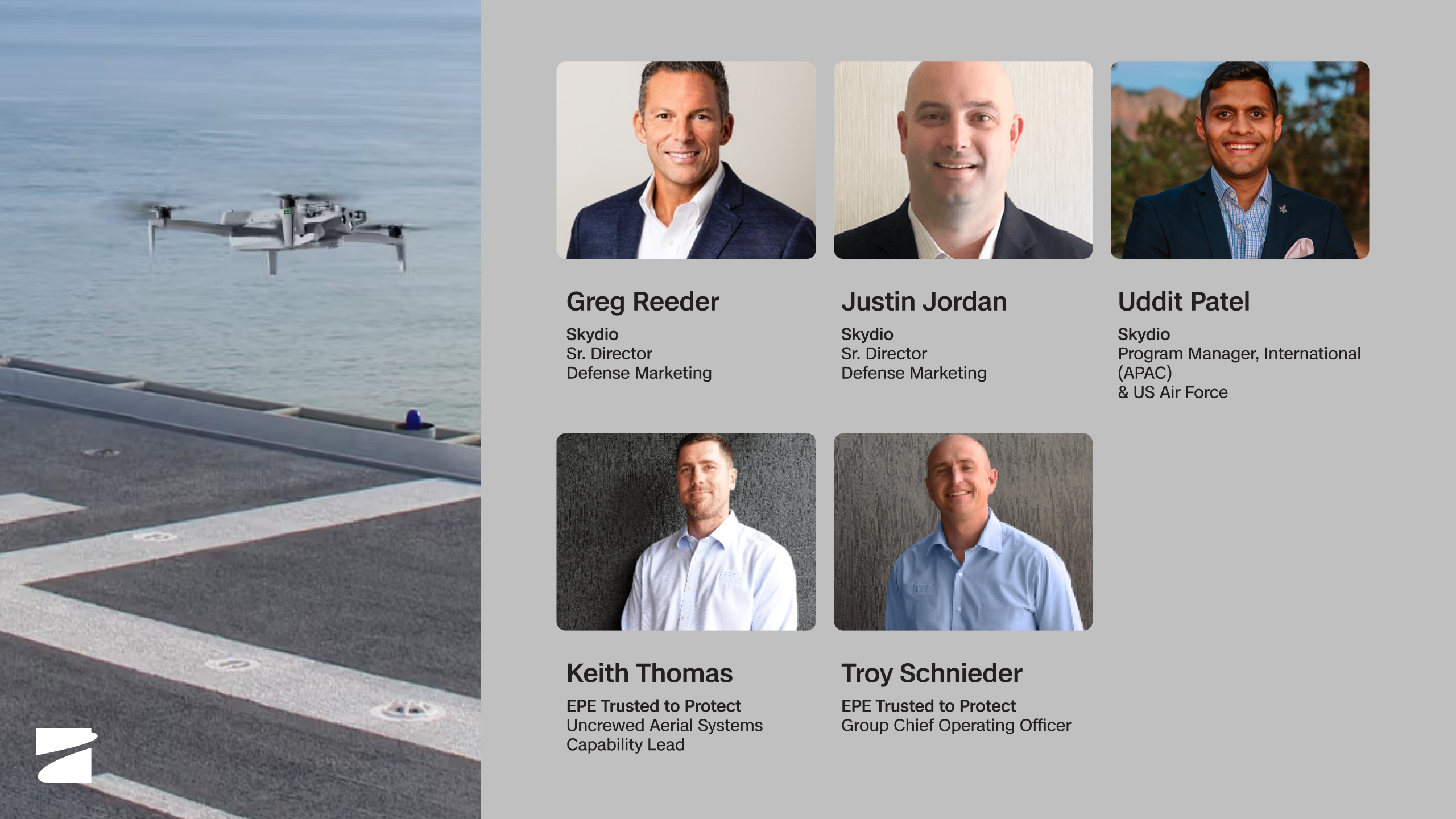
Partners in defense: Leveraging drone technology for allied security
Watch webinar
AUSA 2024 | AUSA Contemporary Military Forum: Enabling Transformation
Watch webinar
Enabling defense forces with intelligent and autonomous drones
Watch webinar