
Utility maintenance strategies for aging infrastructure
As utility infrastructure ages, identifying warning signs becomes critical to avoiding asset failure.
Tune in as we discuss the big question: How can utilities optimize inspection & maintenance strategies to maximize performance of aging assets, while minimizing risk and resources required?
We’ll explore:
- More effective asset management: How should utilities monitor aging infrastructure for warning signs?
- Mitigating risk: How can better inspection mitigate risks around aging infrastructure?
- Maximizing efficiency: How can utilities maximize resources through more efficient inspection workflows?
Learn more about how to improve reliability and resilience in utilities.
- [on-hold music] Hi,
- everyone. My name's Christina Park.
- Uh, I am new to Skydio, but actually not new to the utility
- industry.
- Uh, I spent 15 years at the New York Power
- Authority.
- I started as a hydro engineer, uh, working in power generation, and
- then in the last three years, I actually switched over to strategic
- operations and
- asset management. So, as of March, I was the senior director of
- a division called Asset Intelligence Solutions, where we actually had
- multiple, uh, parts of the department that looked at the way
- that we do operations
- and maintenance out in the field, and also looking at technology
- and technical
- solutions and analytics that existed, um, out in, in
- commercially available solutions, and trying to figure out what was viable,
- what could be operationalized, and how we would scale
- and implement the solutions.
- Uh, here at Skydio, I'm the senior director of energy
- marketing, so here I
- work on the strategy to connect the problems that are out in the field with
- the
- solutions that we have in-house. And I'm really excited today to kick off
- this
- series and talk about, uh, aging infrastructure and the problems
- that we face out in the utility industry.
- [upbeat music]
- So, aging infrastructure is kind of like an aging body.
- Um, I don't know about you guys, I'm pretty much middle-aged, but as,
- [laughs] as
- time goes on, it becomes more and more important, uh, to be intentional
- about having an accurate understanding of your health and doing the
- appropriate, uh, checks and maintenance to ensure that each
- part of you, or parts of your assets, are functioning well and not at risk
- of failing, right? So, uh, if I could give a little bit of a story.
- Once upon a time, before I had children, I was a competitive TaeKwonDo athlete,
- and in my 20s, I could pretty much train however I
- wanted, uh,
- get bumped and bruised and, and broken even,
- and I would bounce back pretty
- quickly, right? Uh, even in the face of overuse, right?
- Um, so that was something that I could do in my 20s.
- I noticed in my 20...
- in my 30s, actually, that injuries went from being
- acute to chronic, and healing happened much more slowly than
- I would have
- liked. Uh, and now that I'm in my 40s, I think those days are long
- behind me, and, you know, just getting up in the morning hurts,
- right?
- So, when I look at, uh, how often I went to the doctor,
- when I look at
- how often I stretched, uh, and, and warmed up and cooled
- down, uh, that actually changes with age, right?
- And so I think that our infrastructure and our assets are really the
- same way. They need checkups, they need inspections, uh,
- in the same way,
- and as your infrastructure ages, you need to increase the
- frequency or be more intentional about the way that you inspect them.
- [upbeat music]
- It's actually not just the failures, but the indicators that lead to
- failures that are important to, to diagnose and to assess, right?
- So, you know, at the end of the day, what ends up being in the news
- is when you have something that leaks, something that cracks, something that
- breaks, right? Or you have something that explodes.
- You have a stator that's on fire. You have a transformer that exploded in a
- substation. So, these are the endpoints that you don't want to
- get to, um, but ahead of those, there are actually indicators
- that you can look for and monitor that would, uh,
- that would let you know that failure is imminent or that failure
- is, uh, something that you should keep your eye out for,
- right?
- So, some examples of those are cracks, uh, if you
- have concrete, if you have steel, right?
- Uh, looking at rust, uh, and, and the effects of corrosion,
- and also looking at, uh, thermal hotspots, right?
- Uh, wherever you have electrical connections.
- And be- really being able to understand, uh, how to measure
- and, and how to quantify,
- uh, quantities such as, as temperature or, or measurements,
- um, or
- gradients that, that you can see. So, uh, reliability is
- something that's really important to think of, and it's actually a little bit
- difficult to measure. But reliability depends really heavily on
- the
- quality of maintenance and the mitigating actions that
- are taken to lengthen
- the life of each asset, right? So, no matter what your asset is,
- you really want
- it to last as long as possible. Um, so if we go back to the
- analogy of health and the body, um, much like ignoring mild chest
- pains could lead to a heart attack, unawareness of hotspots can lead to
- breakdowns, or not knowing that there are cracks can lead to leaks.
- So, this is why it's really important to look
- at those anomalies early
- on, uh, before you lead, uh, to a failure.
- [upbeat music]
- So, I think traditional inspections are really
- done by your people, right? Like, whether you have linemen, whether you
- have operators, uh, whether you're looking at a gauge
- or whether you're
- actually looking at the amount of rust that's, that's on a component, right?
- Um, the reality is that a lot of your assets
- are in places that are hard to
- get to, uh, and it's actually quite dangerous in
- some instances, uh, to be able to get your eyes, uh,
- where you need to see, uh, the components.
- So, uh, I think there are two things you can see here that
- often it requires rappelling, uh, down the side of something.
- Like, if you're doing a dam inspection or a smoke stack inspection or a pen stock
- inspection, uh, it requires harnessing somebody up in a
- way and, and rappelling them down, which has inherent, uh, safety factors
- involved. Uh, the other is if you have an environment like
- a substation that's energized. I think anyone who works in a utility has
- a
- separate set of clothing, uh, for your FR, your fire-resistant clothing, right?
- Um, and I think that the first time as an
- engineer that I took my
- training in, in arc flash, I was a little bit scared to step foot in a
- substation
- because all you see are, uh, things exploding and,
- uh, people catching on fire. And so I think when we think about the
- reality of those environments that we have to walk into as utility
- professionals,
- um, there is a certain amount of risk and danger that's in- that,
- that's involved.
- Some of the other factors that, that have to be considered are that it's
- really intensive on your resources.
- So depending on the location of what you need to inspect, it could
- be very arduous to get to. I think substations
- are another example where many of
- them are remote. Um, some of them could be a two-hour drive
- away, a
- seven-hour drive away, uh, for your personnel,
- and depending on how many people
- need to go, uh, that's going to be a, a carbon foot- footprint on your
- truck rolls as well as, uh, the labor hours that are n- that are
- necessary to not only do the inspection, but to get to the inspection.
- Uh, traditional meth- methods can be
- inefficient and insufficient. So again, if we go back to the
- idea that some of the components that need to be ins- inspected
- are in hard-to-reach areas, um, it's going to be difficult to get
- somebody on there and to get every inch of it inspected, uh,
- as accurately as possible, as frequently as you would like.
- So I think there are quite a bit of trade-offs that have to be taken into
- consideration given how many assets are critical, uh,
- to the operation of your facility and, and how often you think you need
- to inspect them.
- [upbeat music]
- In order to mitigate the risk, you really have to have a
- way of assessing what the risk is, right?
- And understanding and, and... Or having an accurate
- understanding of the state of your infrastructure itself at any given time,
- right? So, so then when you find an anomaly, then you can ask
- yourself the question of, "Do I repair it, do I replace it, or do I run it to
- failure?" And there isn't necessarily one right answer to these
- questions. It really depends on how you operate it,
- um, and, and
- your circumstances. But depending on your company's risk
- tolerance
- and your risk mitigation strategy, those answers are going to vary, right?
- So, um, when I think about it,
- I think almost like how it's recommended that you go to the
- dentist twice a year for a checkup, right?
- So that is your way of mitigating the risk to your teeth, because you assume that
- within six months, if there is a cavity that starts forming, uh,
- if you
- have gum recession that starts forming, that is something that can be detected,
- uh, in early stages if you go once every six months, right?
- And you have some sort of diagnostic.
- So in the same way, I think when you look at your assets, such as
- transformers or circuit breakers or battery banks,
- depending on what they are,
- um, there is some sort of recommendation, typically by the
- OEM, uh, when you first install an asset, uh, in terms of
- how often you should be checking it.
- But as your infrastructure ages, uh,
- that may not apply, right? Um, depending on how you run your
- equipment, depending on your weather conditions
- and, and where it's sitting, uh, and, and a whole host of other factors, uh,
- there's going to be... There's going to need to be some change to
- how you,
- uh, how often you decide to inspect, um, or, or how often...
- Whether you decide to repair, replace, or run to failure.
- [upbeat music]
- Ultimately, the goal of any utility, whether you're in the generation,
- transmission, or distribution space, it's really to keep the lights on for the
- customer, right? So when a piece of equipment goes down,
- there's not
- only the cost of the loss or replacement of
- that one piece of equipment,
- but it cascades, right, into the cost of the outage, the
- cost of the downtime, um, and depending on supply chain issues, the
- wait for when a replacement might become available.
- So at the end of the day, I think it is critical, actually,
- to have maintenance strategies, uh, and to actually
- revisit your maintenance strategies periodically to make sure that you are
- optimizing them, uh, for your infrastructure,
- because you really just can't
- afford... Depending on what your asset is, they are all connected, and
- you really just can't afford to go down.
- [upbeat music]
- So here, this is one example where you can see a
- substation, and
- as the video clip goes on, you will see what happens
- when a transformer
- failure occurs. Uh, this is obviously catastrophic,
- not only for the
- safety of the personnel, uh, and for the component itself, which is
- most likely a total loss here, but the components around it that
- will be affected by a failure, as well as
- the aforementioned other downstream effects, such as supply chain, in
- order to, uh, not only mitigate the cost of replacing
- it, but
- the time that it would take to, to get a new one to show up on site.
- [upbeat music]
- So I think one thing utilities are all trying to do now
- is try to make more
- data-driven decisions. So I think especially as infrastructure
- ages and we really try to understand the state of our asset health,
- uh, ut- a lot of utilities have moved into using
- IoT sensors and
- trying to get more data or data streams and analyze that
- data in order to, uh, get an accurate understanding of
- when they see anomalies and, and raise cases for
- detecting those small problems before they become big problems.
- So examples of IoT sensors are vibration sensors, temperature
- sensors, uh, for maybe bearing oil or quantities such as that,
- um, or doing gas analysis on, on your transformers.
- So I think this is something that many utilities are doing.
- Um, some are sharing data with each other to
- really understand best practices.
- So I think that moving along this journey of
- sensoring is really interesting, um, and I think that the
- next step in this is
- thinking about the assets that you can't sensor, right?
- So a lot of the equipment that utilities are choosing to sensor
- are their high-criticality, uh, high-value assets, such as
- transformers, such as circuit breakers, or, uh, battery
- banks. So
- it's not realistic, and it's really not scalable to
- sensor every single asset that you need to do an inspection on.
- So if we think about transmission It just doesn't make
- sense to put a sensor on every single insulator of every single pole.
- Um, it, it's something that would be very arduous,
- it would be very costly, and it
- would actually add to your, uh, maintenance routine because you would have
- to
- maintain the sensors. So this is where a solution with
- robotics and AI analytics really comes into play
- because you have at your disposal the ability to have an aerial
- mobile sensor. So here you can actually cut out a lot of
- the safety risk
- of, as we said before, going into places that are hard to reach,
- um, but you also have the ability to have a
- sensor that
- you can capture multiple areas. Like if we go back to the transmission
- example, you could go down a transmission line,
- you could see all of the
- insulators, you could see where there are woodpecker holes, you could see
- where you have overgrown vegetation.
- So you could actually sensor for things that are not practical
- or possible to sensor for.
- [upbeat music]
- So I think that technology is
- advancing rapidly, and I think one of the
- things that I was looking at in my old role, if I put my utility
- hat back on, in
- a technology implementation or technical enablement
- function, is we were looking at robotics
- as one avenue, um, sensors as another, and analytics
- as a third. And I think one thing that Skydio does that's very
- exciting is that you actually can lump all of those solutions in
- on one product, right? So we have the payload,
- we have the robot that can go
- out and capture the data. The sensor is, uh, either a
- visual camera sensor or a thermal sensor, can get you the data that you
- need. Um, and our drones have built-in software
- that is
- smart enough to know what it's looking at and to avoid obstacles, uh,
- when they see them and, and to really make it as easy as
- possible to use. Uh, for anyone to learn how to use,
- but also to have
- the data, uh, in the cloud and accessible to the decision-makers
- when they need it.
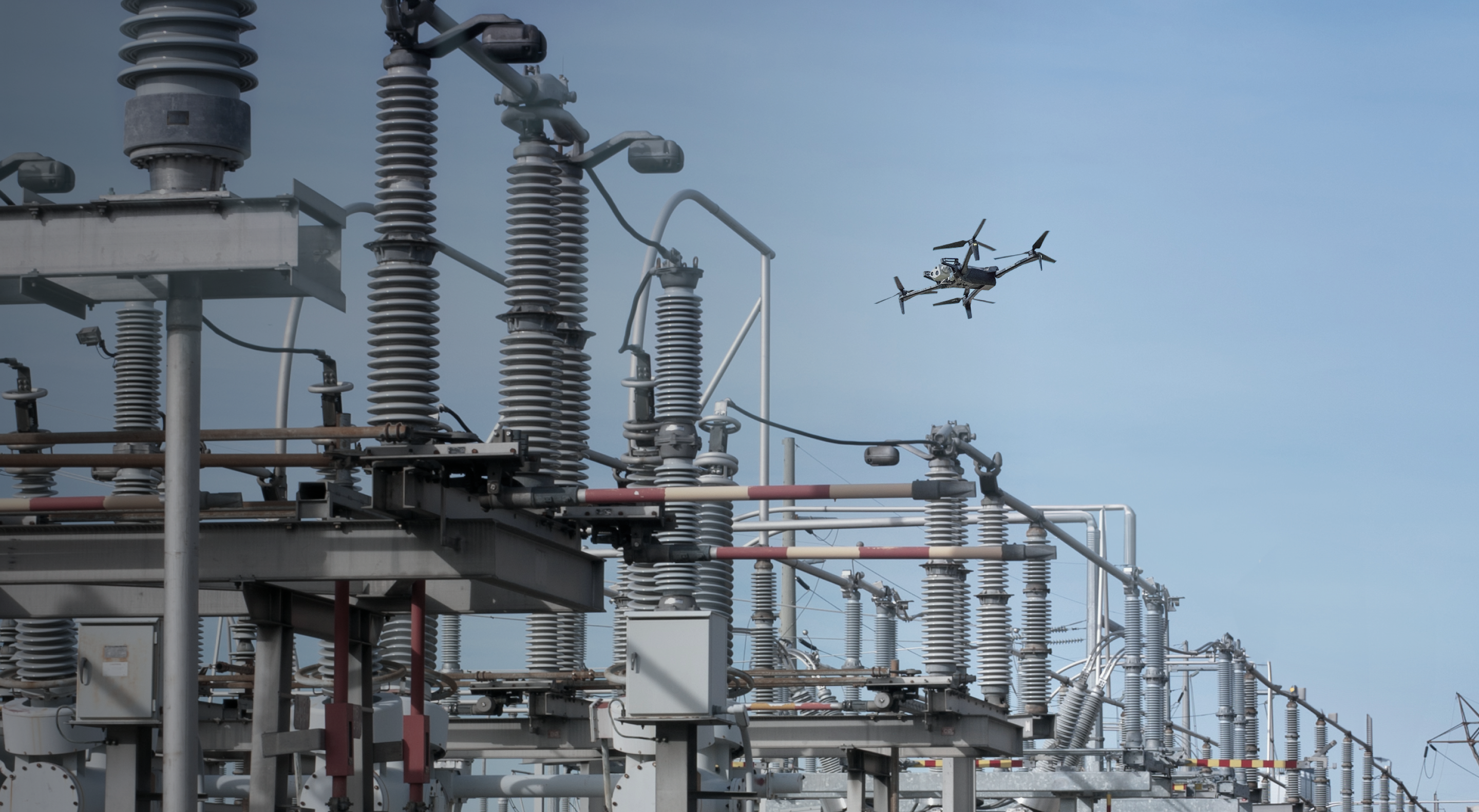
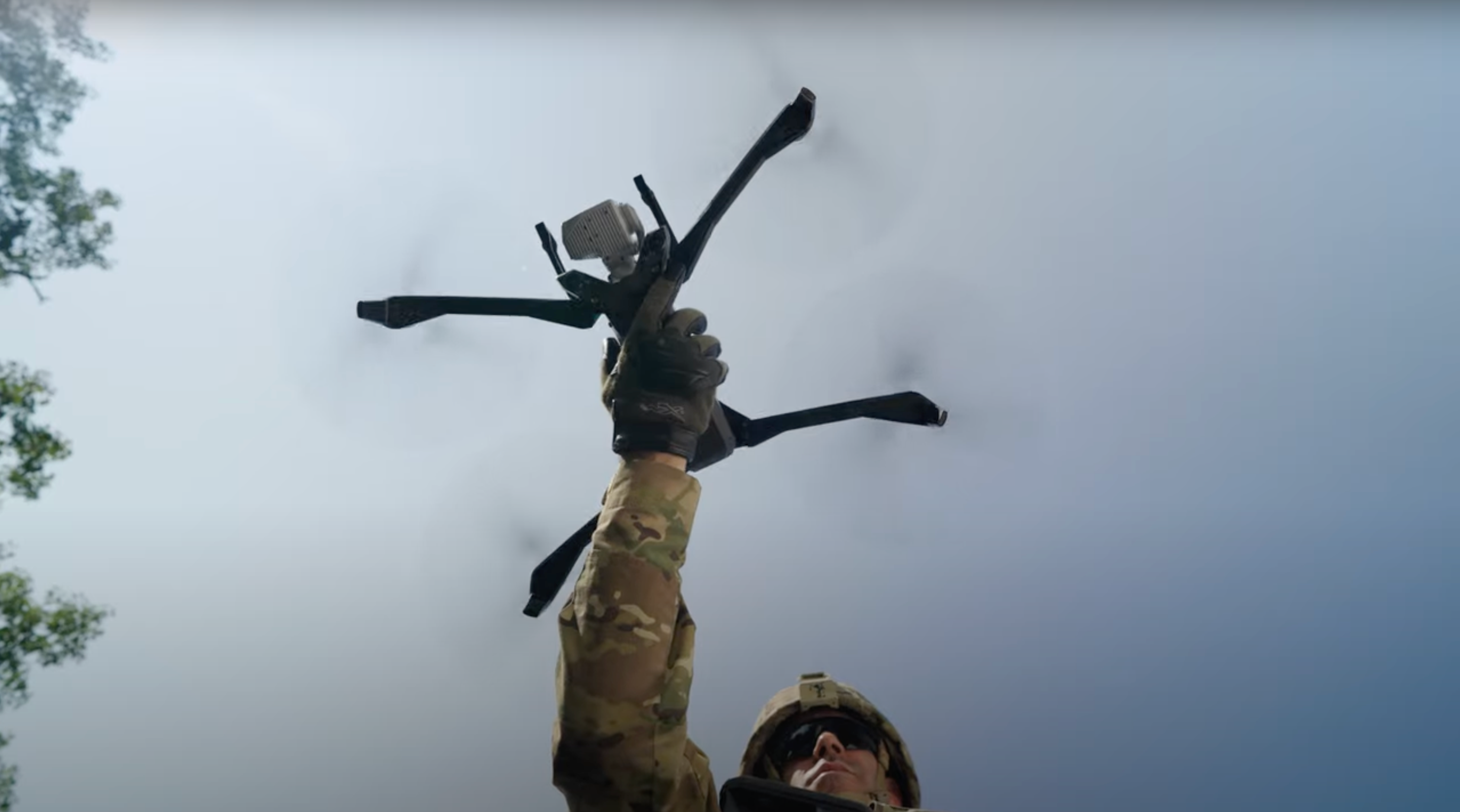
- So here you can see some actual live footage of the
- drones doing the inspections in the utility environments.
- So you can use these drones in substations, in
- transmission, in distribution, uh, and even to inspect some of your
- generation assets. So regardless of what you're looking at,
- you can have
- confidence that these drones can get to hard-to-reach areas that,
- uh, it would be much more arduous or unsafe to send a person, and that
- the drone can do this, uh, with efficiency and with clarity.
- And on top of that, you would actually end up with a full
- digital record of your
- inspection, which you would not normally have with a
- manual traditional
- inspection. So you can recreate your
- traditional inspections. For example, if you needed to go and get
- gauge readings, you could recreate that path and have the drones go.
- Our drones actually can go and stop at a structure
- and get a closer look
- if they need to look at something like a gauge.
- Or you can do a more holistic inspection of insulators
- or, uh, circuit breakers or switches, and you can go up and around and get
- a whole 360-degree comprehensive view where you normally would not
- be able to do that from the ground.
- So before we dive into the questions, please be on the lookout for an invitation
- for episode two of the Smart Grid series.
- Uh, there will be a link in the chat, and you'll also be receiving an email.
- Uh, so thanks for joining us today. Really appreciate you taking your time.
- Um, I think there's a reason that the three largest utilities and
- 70-plus others are using Skydio drones, and I would love to share more
- about this with you. Um, if there are any questions, uh,
- please continue to drop them in the chat, and we will
- address them now.
Watch Time
16 Mins 9 Secs
Related Webinars
Dock for X10: Remote Inspection & Patrol, From an Office Chair
Watch webinar
Dominion Energy: Asset inspection, from an office chair
Watch webinar
Summiting mount regulation for utilities drone inspection programs
Watch webinar